If you have sinking concrete around your home in Bexar County, you are not alone. We see it all the time in San Antonio, out toward Boerne, and over in Schertz. One section of driveway drops, a sidewalk panel starts holding water, or a patio settles just enough to create a trip hazard. Around here, the combination of Texas heat, long dry spells, sudden heavy rain, and shifting soils can move concrete faster than most homeowners expect.
The good news is that sunken concrete does not always need to be torn out and replaced. In many cases, foam concrete lifting can raise and stabilize the slab with less mess, less downtime, and lower cost than replacement. At Hill Country Slabs, we use modern leveling methods to bring concrete back into line on driveways, walkways, patios, and residential slabs across Bexar County.
If you are searching for concrete leveling in Bexar County, TX, here is what to look for, how the process works, and why so many property owners choose repair first.
Signs You Need Concrete Leveling in Bexar County
Most settling starts small. A slab may only be down half an inch at first, but that is enough to change drainage, create a rough edge, and put more stress on the surrounding concrete. In Bexar County, we deal with a lot of clay-heavy soils that expand when wet and shrink when dry. That movement is hard on flatwork.
Common warning signs include:
- Uneven driveway panels where one slab sits lower than the next
- Trip hazards along sidewalks, walkways, and pool decks
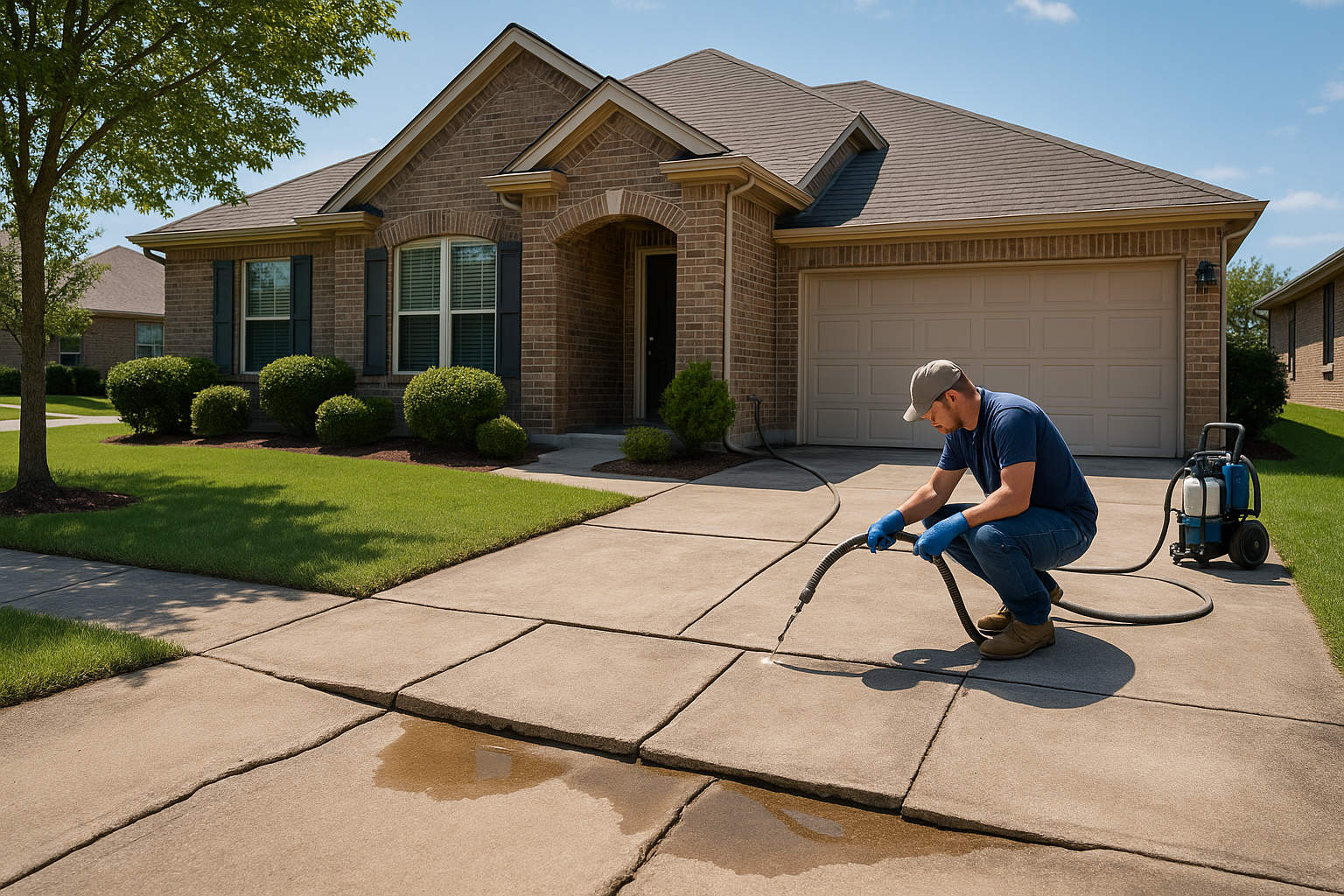
- Water pooling near the house, garage, or patio after rain
- Gaps under concrete caused by soil washout or erosion
- Patios tilting toward the foundation instead of draining away
- Front porch or entry slabs settling and making the step uneven
We also tell homeowners to pay attention to expansion joints. When joints open up, crack apart, or let water run below the slab, the soil underneath can start washing out. That is one of the reasons we recommend maintaining your expansion joints. If you want to understand why sealing those joints matters, take a look at sealmyjoints.com.
In this part of Texas, blackland clay and other expansive soils can be a real problem. Add in intense summer heat, drought conditions, and flash rain events, and you have a recipe for voids under concrete. Once support is lost, the slab starts dropping. If you catch it early, leveling is usually more straightforward and more affordable.
How Foam Concrete Lifting Works
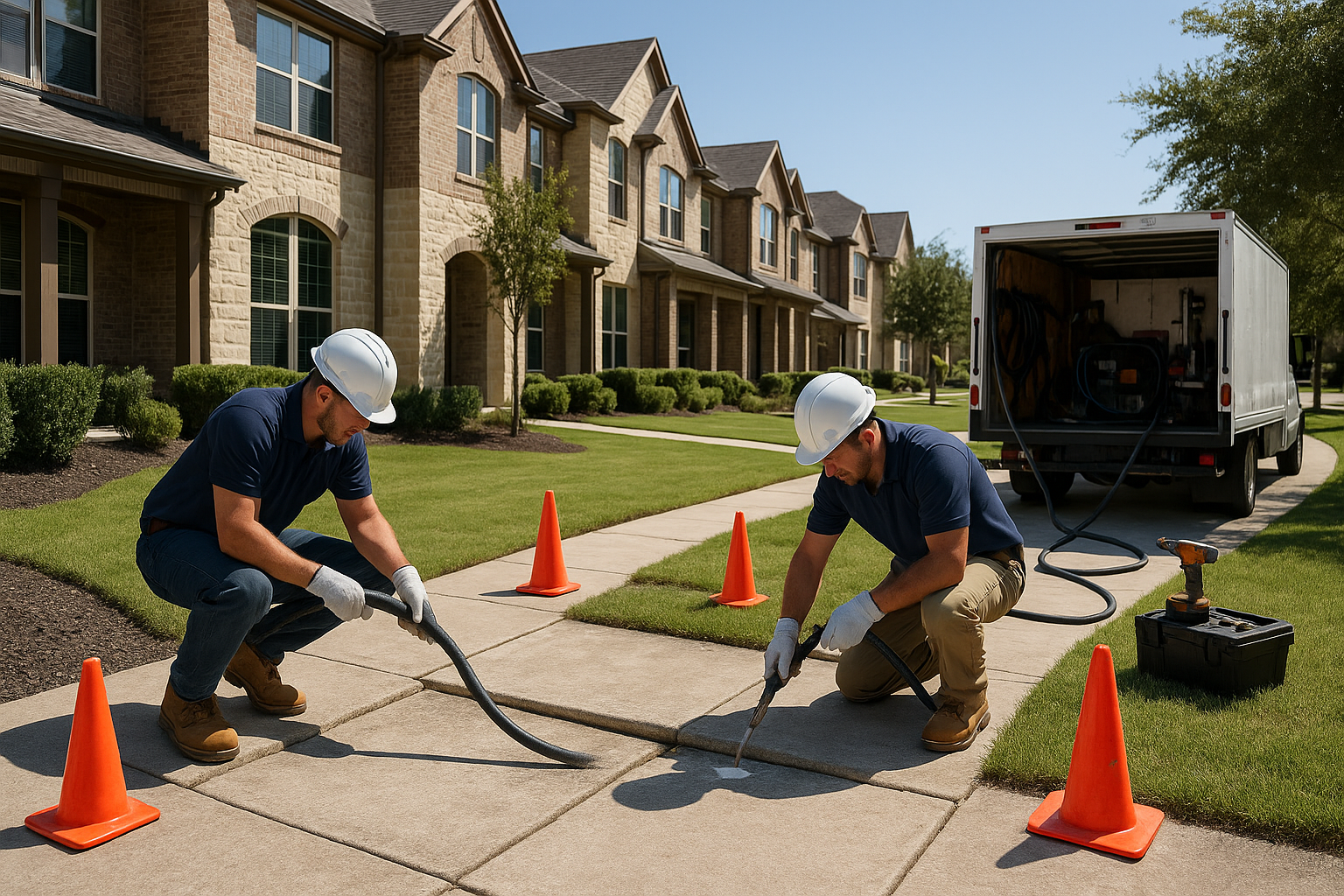
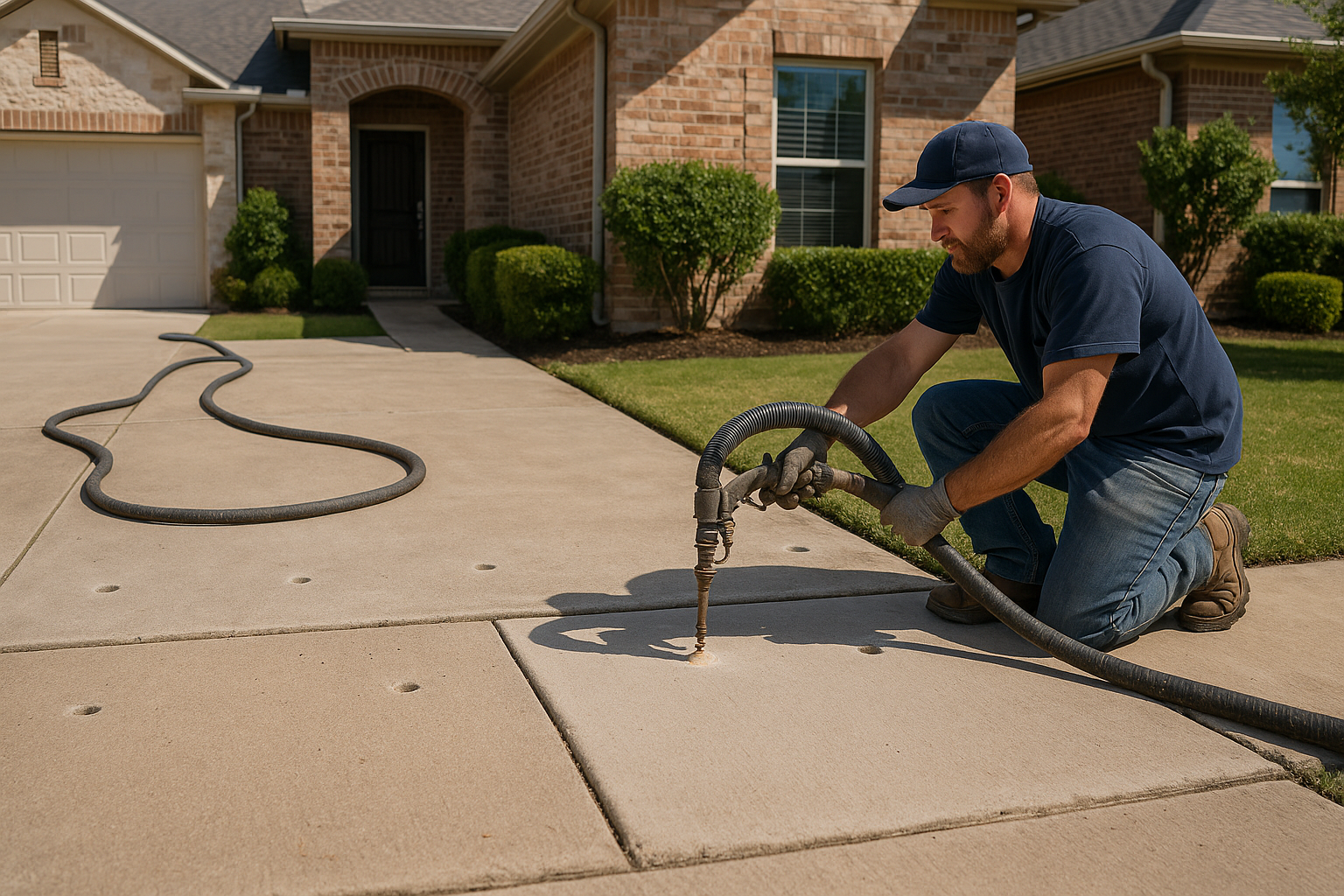
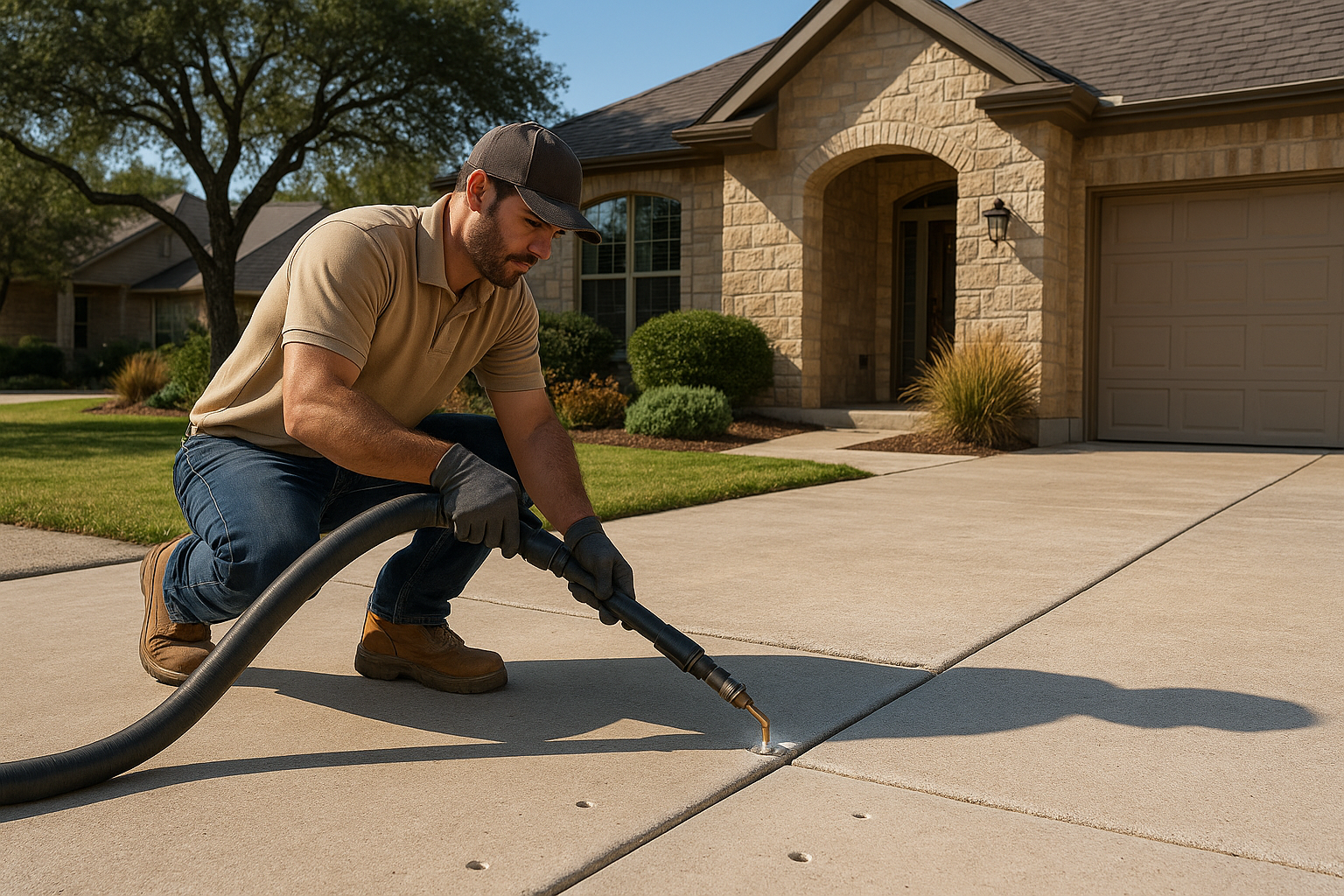
Foam concrete lifting, also called polyurethane concrete leveling, is a repair method that raises settled slabs from below. Instead of demolishing good concrete, we drill small holes through the slab and inject a two-part structural foam underneath. As the material expands, it fills empty spaces, compacts weak areas, and gently lifts the concrete back toward grade.
Here is the basic process:
- We inspect the slab, measure settlement, and identify where support has been lost.
- We drill small injection holes in strategic spots.
- We inject high-density polyurethane foam below the concrete.
- The foam expands to fill voids and lift the slab in a controlled way.
- We patch the drill holes and clean up the work area.
This method is popular because it is fast and precise. In many cases, the slab can be used again the same day. There is no long cure window like you deal with when pouring brand-new concrete. For busy homeowners, that matters.
Foam lifting also uses much smaller access holes than older mudjacking methods, and the material itself is lightweight. That is important when you are trying to stabilize settling concrete without adding more load to already-moving soil. On the right project, it is a clean solution that gets strong results.
Not every slab is a candidate for leveling. If concrete is broken all to pieces, severely heaved, or structurally beyond repair, replacement may still be the better route. But if the slab is mostly intact and the problem is settlement, foam lifting is often the smart move.
Why Homeowners Repair Instead of Replace
For a lot of folks in Bexar County, the first thought is that sinking concrete has to be ripped out. Sometimes that is true, but not nearly as often as people think. If the slab still has decent integrity, leveling can solve the problem without the time and cost of full replacement.
Here are the biggest reasons homeowners choose leveling first:
- Lower cost: Concrete leveling is often 30% to 70% less expensive than tear-out and replacement, depending on the slab size and condition.
- Less downtime: Many jobs are completed in hours, not days.
- Less mess: No major demolition, no haul-off, and less disruption around the property.
- Preserves existing concrete: If the slab is in good shape, there is no reason to throw it away.
- Improves drainage and safety: Raising settled concrete helps reduce water issues and trip hazards.
From a budget standpoint, that difference can be significant. A full replacement project may include demolition, disposal, new base work, forming, pouring, and curing time. Leveling avoids most of that. While every job is different, homeowners are often relieved to learn they may be able to fix a settled section for hundreds or a few thousand dollars instead of jumping straight to a much larger replacement bill.
There is also the appearance factor. A repaired and leveled slab usually blends in better than a patchwork replacement next to older concrete. Especially on driveways and front walkways, keeping a consistent look can help curb appeal.
Driveways, Sidewalks, Patios, and Slabs We Level
At Hill Country Slabs, we handle a wide range of residential concrete leveling work across Bexar County. Different parts of the property settle for different reasons, but the goal is the same: restore support, improve alignment, and help the slab perform the way it should.
Driveways
Driveways take a beating in Texas. Heat, vehicle traffic, runoff, and soil movement all work together on them. If one panel has dropped near the garage or the approach is uneven, we can often correct it with Driveway Leveling. Leveling can reduce that hard bump when you pull in and help keep water from running back toward the house.
Sidewalks and Walkways
Sunken sidewalks are more than an eyesore. They are a liability and a safety issue. One raised edge can be enough for someone to catch a toe. We provide Sidewalk Repair for residential walkways, front paths, and connecting flatwork around the property. This is one of the most common repair calls we get in neighborhoods around San Antonio.
Patios and Outdoor Living Areas
Back patios settle all the time, especially where drainage is poor or runoff has been washing under the slab. If your patio has started leaning toward the house or pulling away at one corner, Patio Leveling may be the fix. In Bexar County, that matters because one heavy thunderstorm can send a lot of water exactly where you do not want it.
Residential Slabs and Attached Flatwork
We also repair settled sections with Concrete Slab Repair when the issue involves attached slab areas, porches, and other supported flatwork. Every project starts with figuring out why the slab moved in the first place. If there is poor drainage, failed joints, or erosion under the concrete, that needs to be addressed along with the lift.
Homes in San Antonio and surrounding Bexar County neighborhoods can see movement from expansive clay, dry weather shrinkage, plumbing leaks, roof runoff, and poor grading. Out toward the Hill Country edge near Boerne, rockier conditions can change how water moves under slabs. In areas like Schertz, we still see the same pattern: water gets under the concrete, support changes, and one section starts to settle. That is why local experience matters. You need a contractor who understands what Central Texas soil and weather actually do to concrete.
What to Do Next if Your Concrete Is Sinking
If you have noticed uneven concrete, do not wait until the drop gets worse. Small settlement problems are usually easier to correct before the slab cracks more, drainage gets worse, or someone gets hurt. Start by checking the area after a good rain. Look for standing water, erosion at the edge, and open joints that may be feeding water below the slab.
Then get a professional evaluation. A good contractor should tell you whether the slab is a candidate for leveling or if replacement is truly necessary. The honest answer is not always replacement, and it is not always lifting either. It depends on the slab condition, the amount of settlement, and what is happening underneath.
If you need concrete leveling in Bexar County, TX, Hill Country Slabs can take a look and give you a straight answer. We work with homeowners across San Antonio, Boerne, Schertz, and nearby communities to raise sinking concrete and help stop the problem from getting worse.
Ready to talk about your driveway, sidewalk, patio, or slab? Contact Hill Country Slabs today or call (737) 287-4308 to schedule an estimate.