In Texas, driveway drainage is not a small issue. Between hard clay soils, sudden downpours, long dry spells, and shifting ground, a concrete driveway can start holding water faster than most homeowners expect. We see it all over Austin, TX, San Antonio, TX, and Houston, TX: standing water near the garage, erosion along slab edges, joints opening up, and sections of driveway settling just enough to change the way water moves.
If you are dealing with concrete driveway drainage problems in Texas, the main thing to understand is this: water is usually not the only problem. Poor drainage is often tied to soil movement, slab settlement, failed joints, or runoff patterns that were wrong from the start. In many cases, the fix is not tearing out the whole driveway. A targeted repair like Driveway Lifting or Concrete Slab Repair can restore slope, reduce pooling, and help protect the slab from further damage.
Signs Your Driveway Has a Drainage Problem
Some drainage issues are obvious, and some show up slowly over time. The sooner you catch them, the better chance you have of fixing the slope before the slab settles more or erosion gets worse.
- Water stands on the driveway for more than 24 hours after rain.
- Pooling forms near the garage door, sidewalk connection, or street apron.
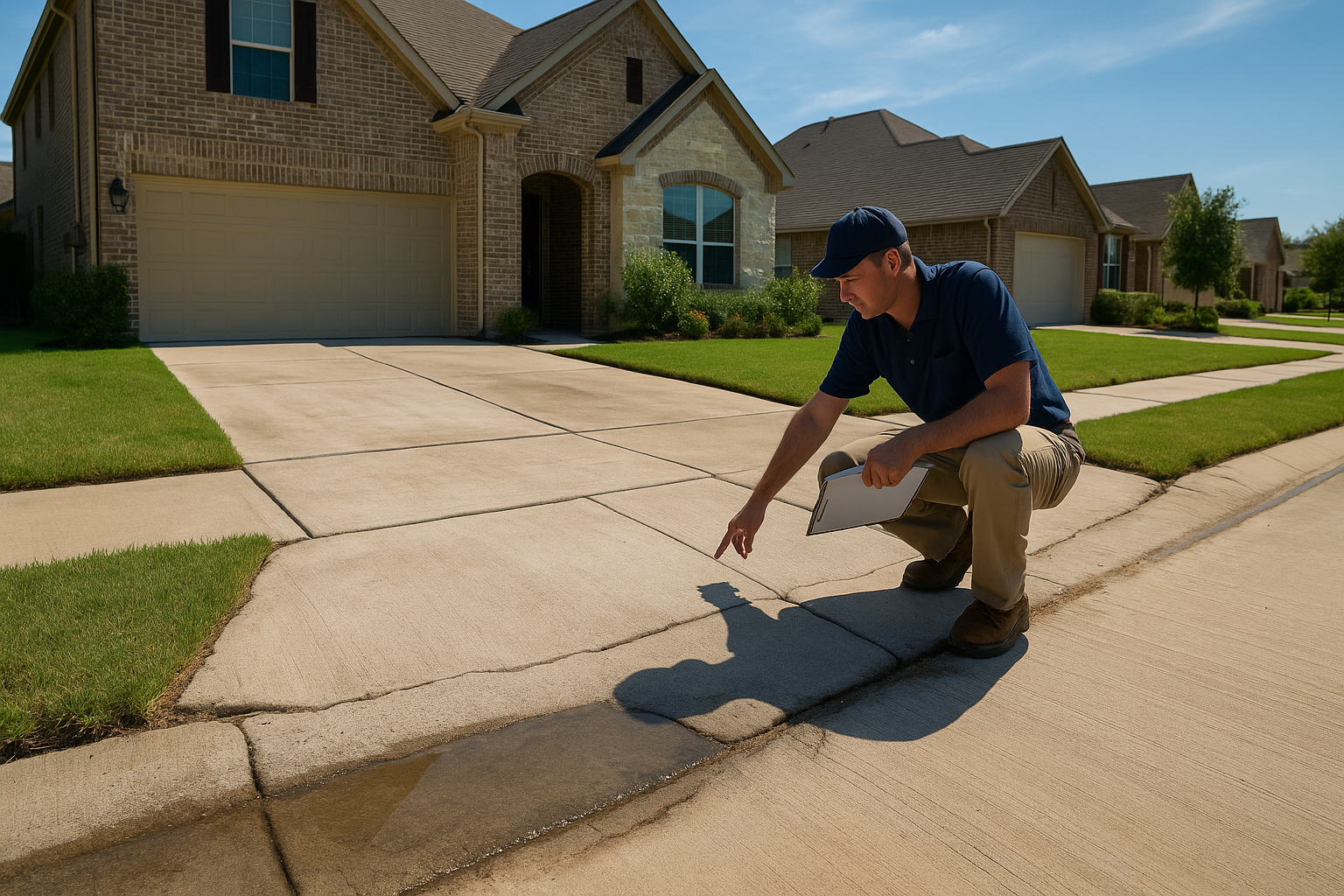
- The driveway has low spots or birdbaths that collect runoff.
- Soil is washing out along the slab edges.
- You notice cracking at corners, joints, or across sunken sections.
- Expansion joints are separating, dried out, or no longer keeping water out.
- Water is draining toward the house instead of away from it.
In Central Texas, expansive clay soils can shrink during drought and swell when rain returns. That movement can leave one section of driveway lower than the next. Along the Gulf Coast, especially around Houston, sandy and silty soils can erode under slab edges when runoff is not controlled. In both cases, the surface drainage problem often starts below the concrete.
Another sign homeowners miss is when the driveway and adjacent walk no longer line up. If the walk, porch, or driveway approach has shifted, runoff can get redirected into places it was never meant to go. That is where repairs like Sidewalk Repair may also come into play to keep water flowing consistently across connected concrete surfaces.
What Causes Water Pooling Around Concrete Driveways
Water pooling around a driveway usually comes from a combination of grade, settlement, and runoff. In Texas, we regularly see a few common causes.
1. Expansive clay soil movement
Much of Texas sits on clay-heavy soils that move a lot with moisture changes. During hot, dry stretches, the soil shrinks and leaves voids. When heavy rain comes through, the soil swells back up unevenly. That repeated cycle can tilt or drop sections of driveway and create low areas where water collects.
2. Poor original slope
A driveway should move water away from the home and off the concrete surface. If the slab was poured with too little fall, or if the finish trapped shallow depressions, even a newer driveway can hold water. In our market, a lot of drainage complaints come down to a slab that was borderline on slope from day one.
3. Washed-out base material
When runoff gets under the slab, it can carry away supporting soils over time. That creates voids, and the concrete starts to settle. Once one panel drops, more water stays in that low area, which speeds up the problem. It is a cycle we see often after major storms.
4. Clogged or failed joints
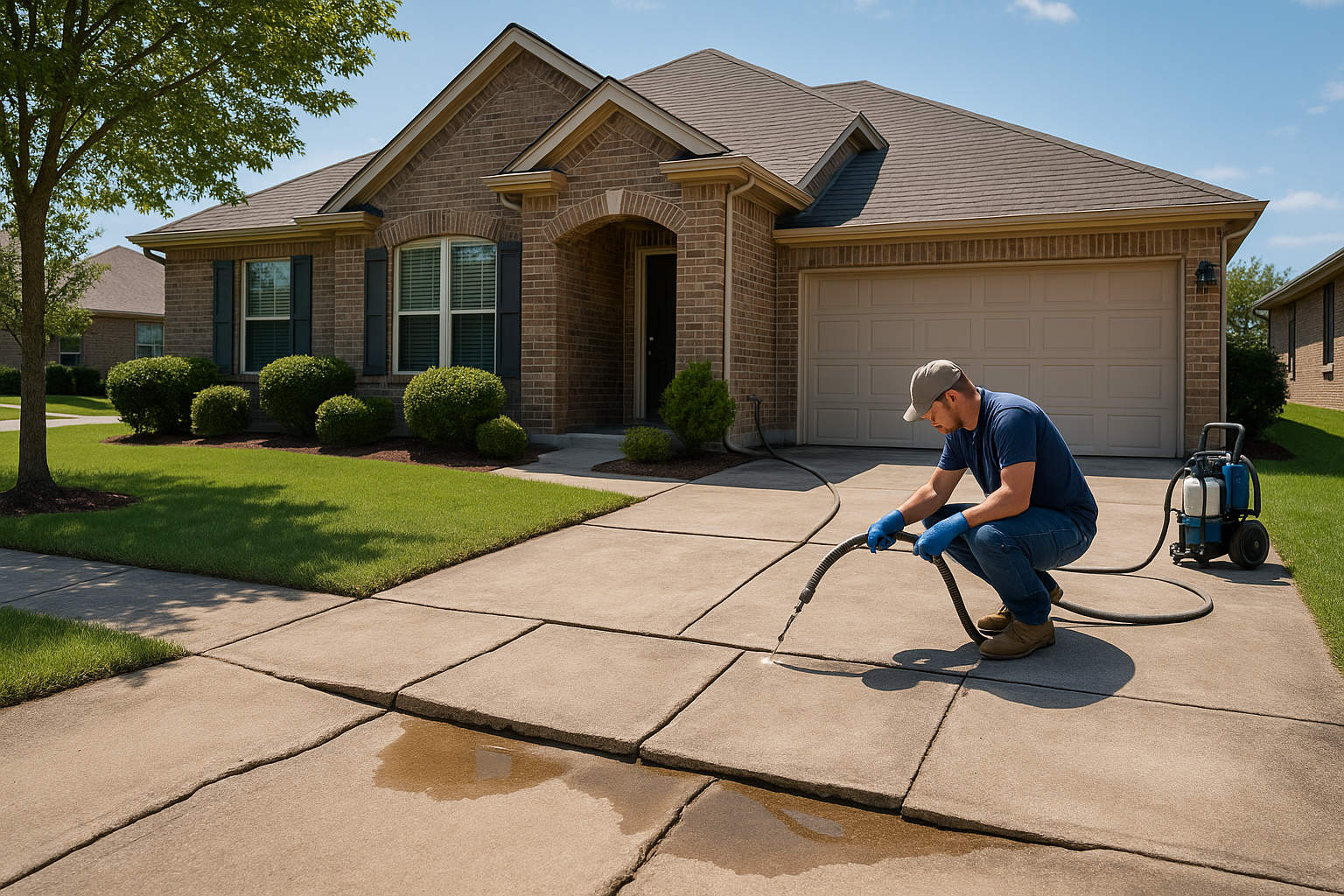
Expansion joints matter more than most people think. When they dry out, split, or disappear, water gets straight down into the base. That can soften soils, widen voids, and increase movement. If your joints are open, sealing them properly is part of protecting the repair. Homeowners can learn more at /expansionjoints or get joint sealing information from sealmyjoints.com.
5. Roof runoff and landscaping drainage
Sometimes the driveway is not the original source of the water. Downspouts that dump next to the slab, flower beds that trap runoff, and yards pitched toward the concrete can all overload one side of the driveway. In those cases, fixing the slab without addressing the water source is only half a repair.
When Concrete Leveling Can Fix Driveway Drainage
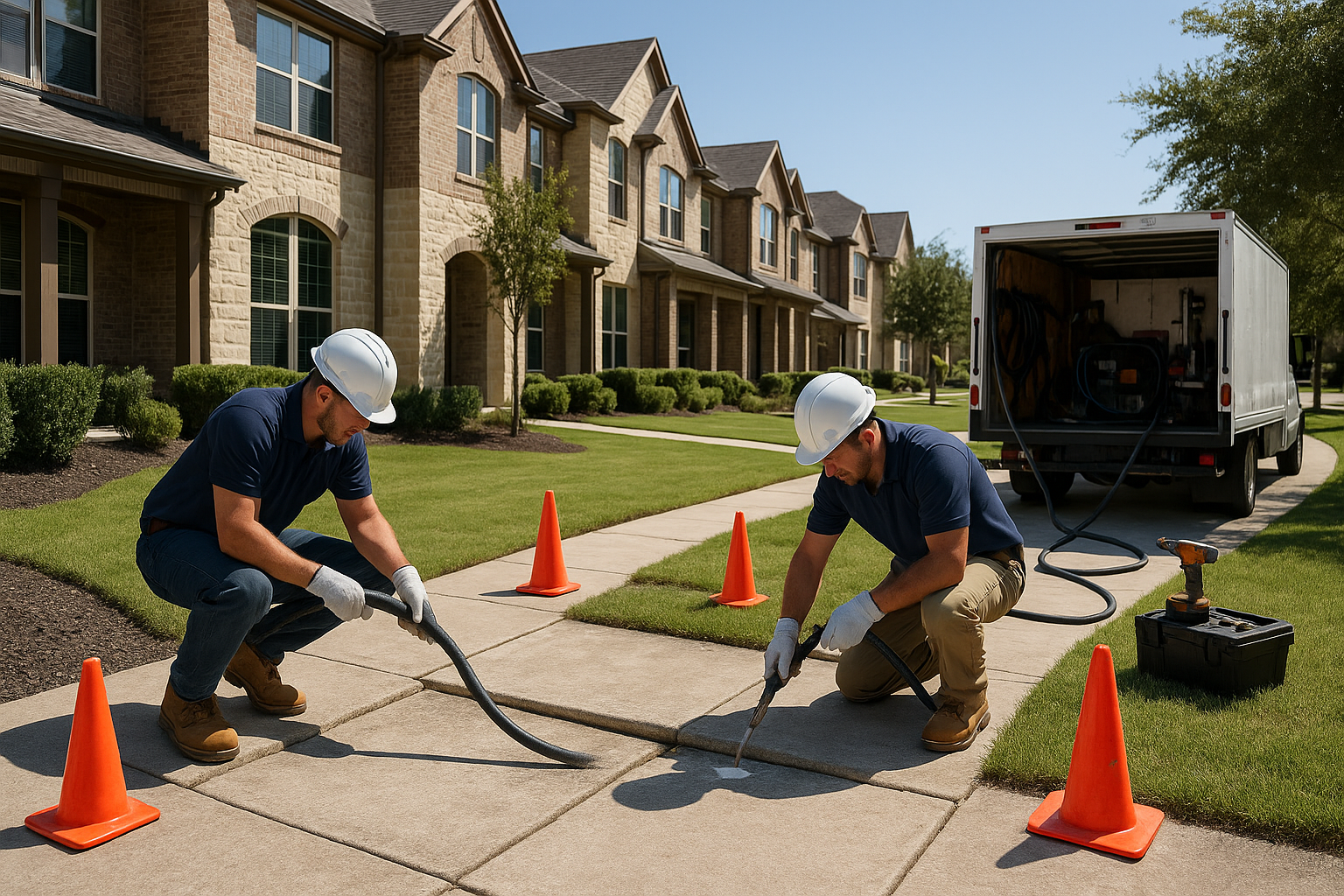
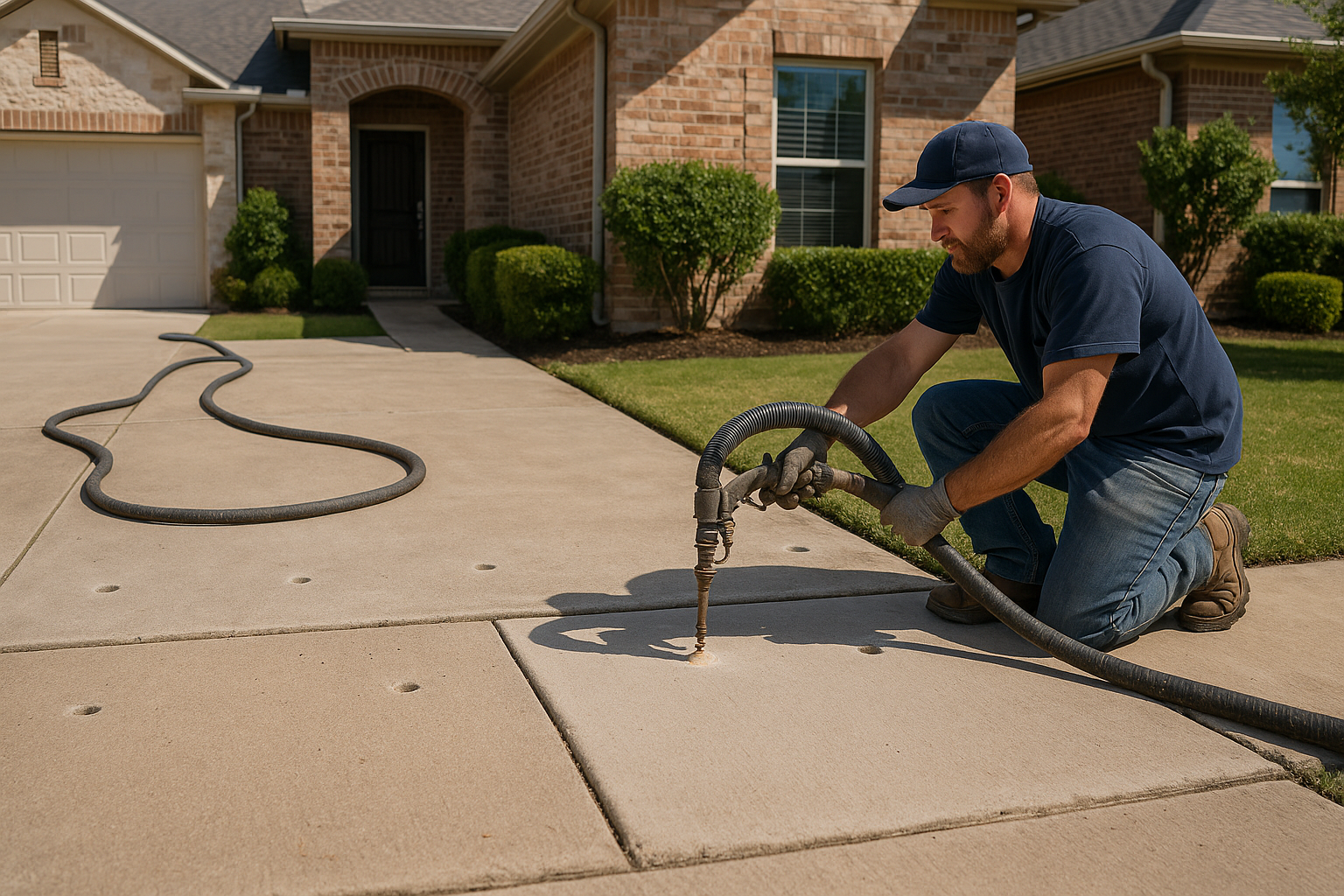
Not every drainage problem needs replacement. If the concrete is still in decent structural shape and the main issue is settlement or loss of slope, leveling is often the best-value repair. With polyurethane foam lifting, we can raise sunken sections, fill voids under the slab, and restore a more effective drainage path without the mess and cost of full removal.
Concrete leveling works best when:
- The slab has settled but is not completely broken apart.
- Pooling is caused by one or more low panels.
- Water is running back toward the garage because of minor elevation loss.
- There is erosion under the slab that needs stabilization.
- You want to preserve the existing driveway and avoid long replacement timelines.
For many Texas homeowners, lifting is more practical than replacement because it is faster and less disruptive. A leveling repair is often a fraction of the cost of tearing out and repouring a driveway. Depending on size and severity, targeted repairs may fall in the range of hundreds to a few thousand dollars, while full replacement can run into the many thousands. The exact number depends on slab thickness, access, settlement depth, and how much grade correction is realistically possible.
That said, leveling is not magic. If a driveway was poured with almost no slope to begin with, or if tree roots, major cracking, or severe base failure are involved, lifting may only solve part of the issue. A good contractor should tell you upfront whether slope can be improved enough to change drainage in a meaningful way. Sometimes the answer is a combination of slab lifting, joint sealing, and runoff correction around the driveway.
If your driveway has trip hazards, separated panels, or settled areas near the walk or approach, Driveway Lifting and Concrete Slab Repair can often correct those sections before water damage spreads further.
How to Prevent Erosion and Future Slab Settlement
Once the driveway is holding the right slope again, the next step is keeping water from causing the same problem twice. In Texas, prevention matters because the weather works both sides of the issue: dry conditions pull soils apart, and stormwater finds every weak spot when the rain comes back.
- Keep water moving away from the slab. Extend downspouts, clear drainage paths, and make sure landscaping does not trap runoff against the driveway.
- Maintain expansion joints. Open joints let water reach the base material. Sealing them helps reduce washout and movement over time. Visit /expansionjoints or sealmyjoints.com for more on joint protection.
- Watch the slab edges. If you see soil pulling away, mulch washing out, or gaps opening under the concrete, have it checked before the panel drops farther.
- Control irrigation. Overwatering next to one side of the driveway can create uneven moisture conditions in clay soils. That can lead to differential movement over time.
- Address nearby settled concrete. If connecting surfaces are lower or out of line, repairs such as Sidewalk Repair may be needed to keep drainage patterns consistent.
In areas like Austin and San Antonio, where rocky soils and clay mixes can create uneven support, regular visual checks after big storms are worth it. In Houston, where intense rainfall and softer soils are more common, edge erosion and washout can show up quickly. Different regions, same bottom line: if water is staying around the slab, the driveway is at risk.
The best time to fix a drainage-related slab problem is before it becomes a replacement job. If you are seeing pooling water, erosion, or settlement around your driveway, Hill Country Slabs can evaluate whether lifting and stabilization will solve it. We handle repairs across Texas with practical recommendations based on the slab, the soil, and the way the water is actually moving on your property.
Need help with concrete driveway drainage problems in Texas? Contact Hill Country Slabs today at (737) 287-4308 or visit /contact to schedule an inspection.