In Texas, a sunken slab is usually not a mystery. We see it every day around homes and light commercial buildings from Austin down to San Antonio, especially after long dry spells, heavy rains, or a combination of both. When the soil under a slab loses support, concrete can settle, crack, tilt, and create trip hazards or drainage problems. In some cases, that settlement affects a patio, walkway, driveway, garage floor, or interior slab section. In more serious situations, it can point to broader foundation movement.
The good news is that not every settled slab needs to be torn out and replaced. Depending on the cause, location, and condition of the concrete, lifting and stabilization may be an option. At Hill Country Slabs, we look at the slab, the supporting soils, water patterns, joint condition, and surrounding structures before recommending the right repair. If you are dealing with uneven concrete, start by understanding why slabs sink in Texas and what repair options make sense.
What Causes a Sunken Concrete Slab in Texas?
Texas gives concrete a tough environment. In Central Texas and South Texas, expansive clay soils are one of the biggest reasons slabs move. These clays swell when they get wet and shrink when they dry out. That constant cycle can create voids under the slab or uneven bearing support. Once a slab loses support in one area, settlement starts.
We also see problems caused by poor compaction during construction. If fill soil was not compacted correctly before the slab was poured, the ground can compress over time under the weight of the concrete. That kind of settlement may take years to show up, but once it does, the slab can drop enough to create visible cracks, separation, or low spots that hold water.
Another common issue is drainage. Gutters dumping next to the foundation, broken irrigation lines, plumbing leaks, negative grading, or runoff from storms can wash out soil and weaken support below the slab. In Texas weather, it is common to go from a hard drought to a heavy rain event fast. That swing is rough on subgrade soils. The same slab that looked fine in August can show movement after fall rains if the ground below has shifted.
Tree roots can also play a part. Large oaks, elms, and other thirsty trees near the house pull moisture from the soil. In expansive clay areas, that uneven drying can make one side of a slab settle more than the other. We see that around neighborhoods with mature landscaping where the slab edge, driveway, or walkway starts to sink near root zones.
Typical Texas slab settlement causes include:
- Expansive clay shrinking during dry weather
- Poorly compacted fill soil under the concrete
- Water intrusion from drainage issues or plumbing leaks
- Soil washout under driveways, patios, and walkways
- Tree root moisture draw near foundations
- Erosion after intense rainstorms
When homeowners ask about cost, the answer depends on the extent of settlement, access, slab thickness, and whether stabilization is needed. Minor lifting for exterior flatwork may be much more affordable than full replacement, while deeper structural concerns need a broader repair plan. In many cases, homeowners are trying to avoid replacement costs that can run into the $8,000 to $20,000+ range for larger tear-out and repour projects. That is why a proper inspection matters.
Signs Your Slab May Need Repair
A sunken slab usually tells on itself if you know what to look for. Some signs are obvious, and some are subtle. On exterior slabs, you may notice a corner that has dropped, a step-up where the concrete used to be flush, standing water after rain, or cracks that keep widening. On interior slab areas or foundation-supported sections, signs may include tile cracks, doors sticking, wall cracks, or baseboard separation.
One thing we tell folks all the time is this: a crack by itself does not always mean major foundation failure, but a crack combined with settlement, rocking concrete, or drainage issues needs attention. The longer a sunken slab is left alone, the greater the chance that water gets under it and makes the problem worse.
Watch for these warning signs:
- Uneven or sloping concrete surfaces
- Trip hazards at sidewalks, porches, and driveways
- Cracks across slabs or near corners
- Pooling water near the home after rain
- Gaps forming at expansion joints or against the house
- Garage or patio slabs pulling away from adjacent concrete
- Interior flooring cracks over slab-on-grade foundations
- Doors and windows getting harder to open
Expansion joints matter more than most people realize. If joints are missing, deteriorated, or not sealed properly, water can work down beside the slab and soften the supporting soil. That is one reason we recommend homeowners understand joint maintenance and water control. You can read more at /expansionjoints, and for joint sealing products and information, visit sealmyjoints.com.
If the slab is settling near the home, we also want to know whether it is isolated flatwork movement or part of a bigger structural issue. A sinking driveway panel is different from active movement at the foundation perimeter. A contractor who knows slab behavior in Texas should be able to explain that difference clearly.
Can Concrete Leveling Fix a Sunken Slab?
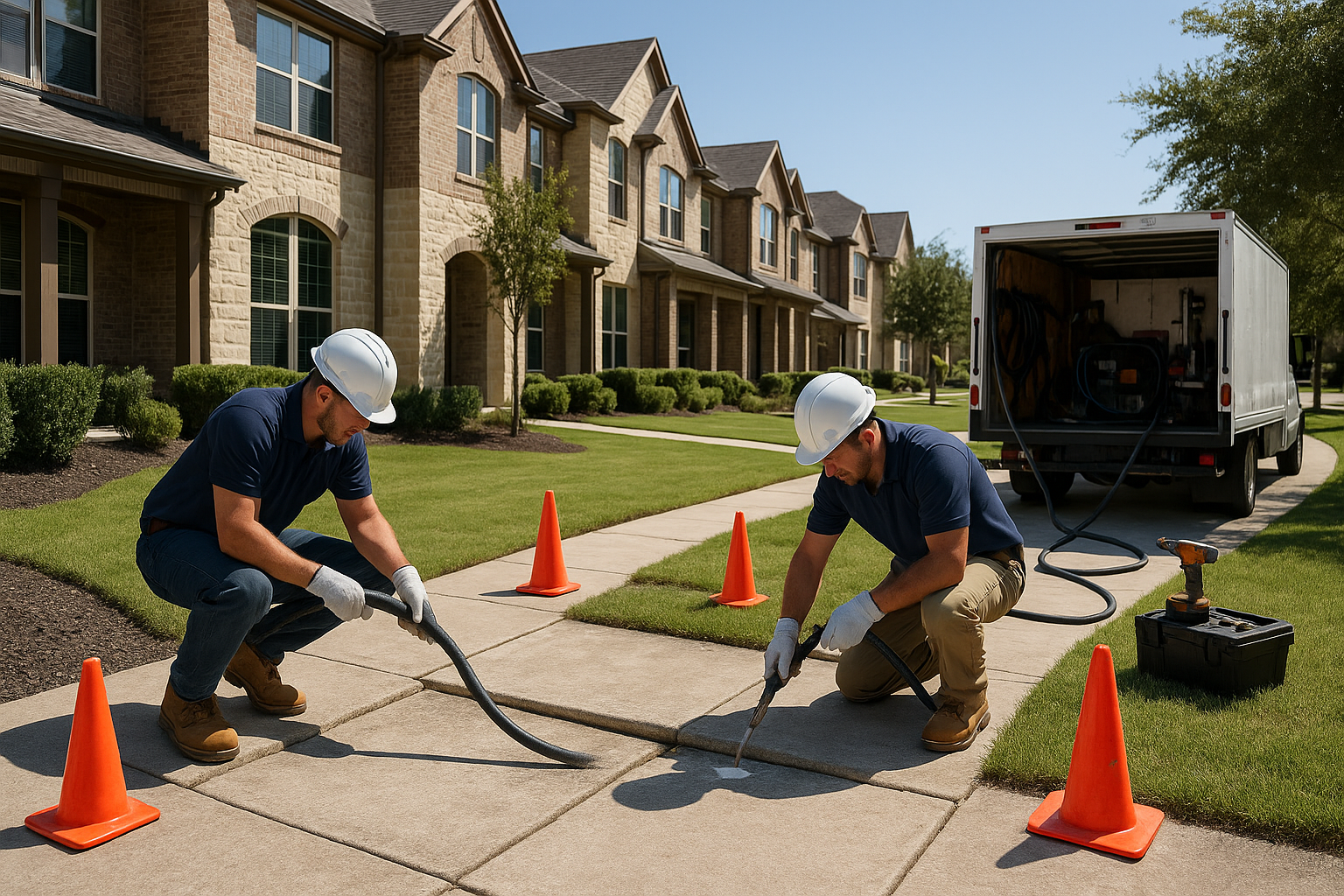
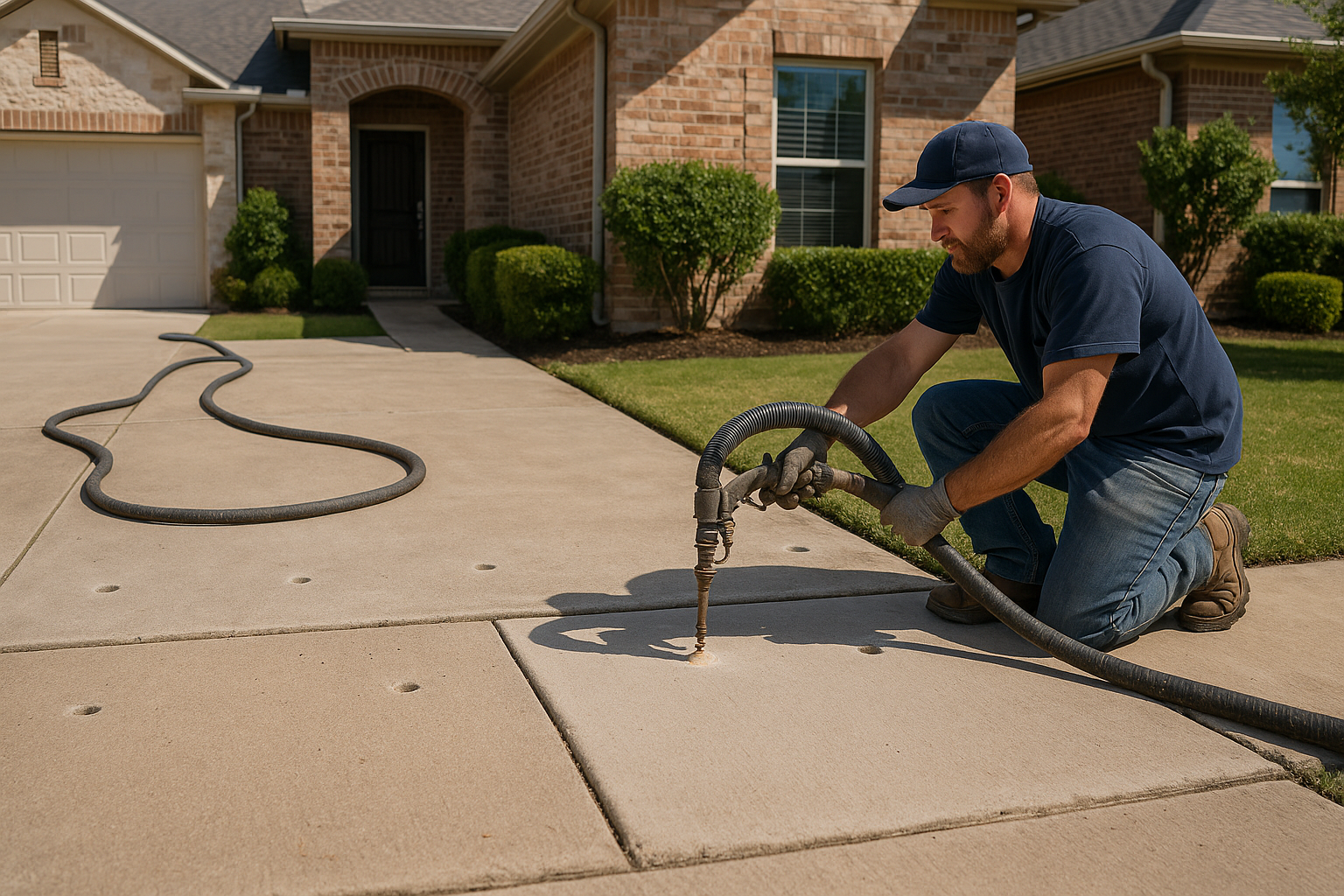
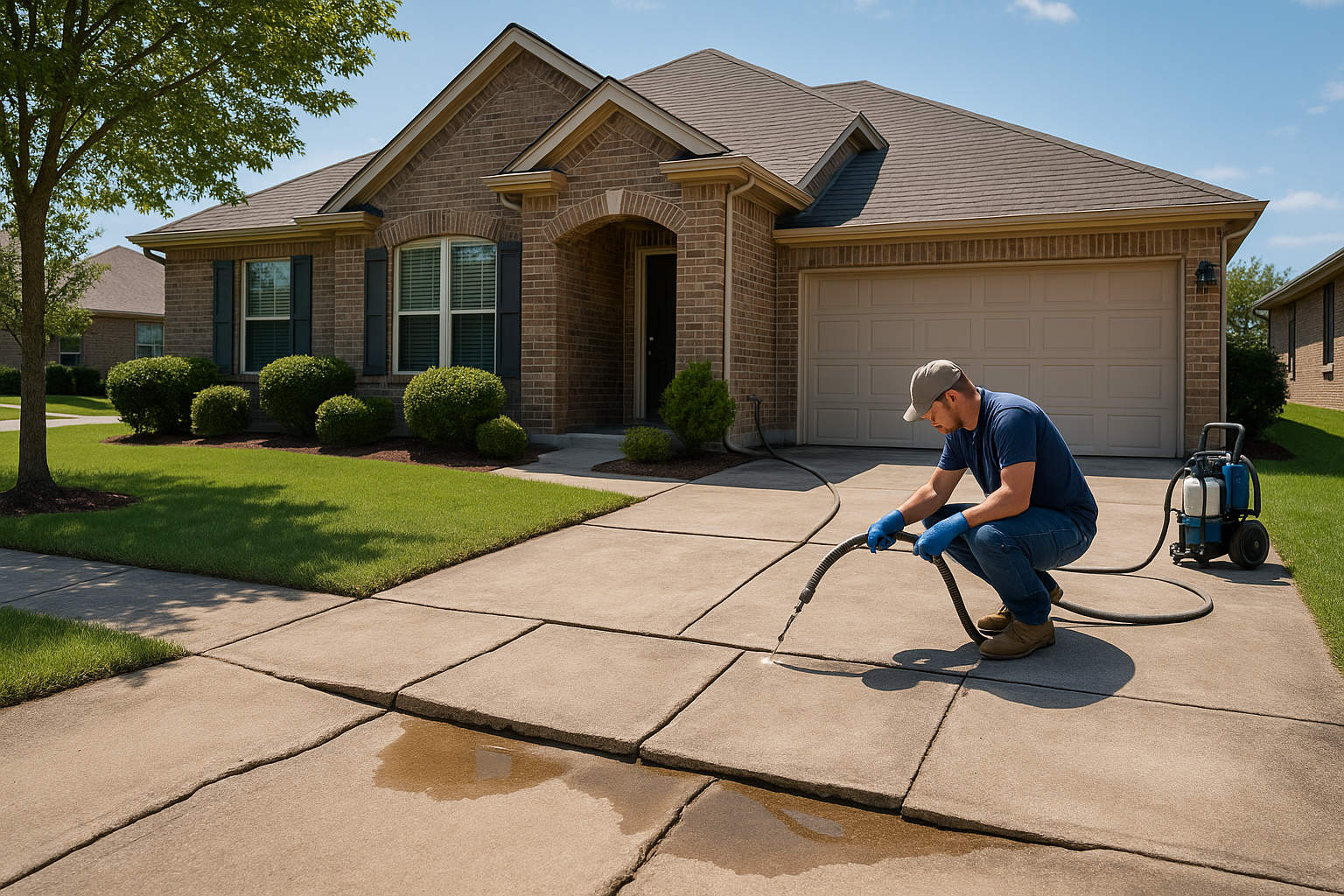
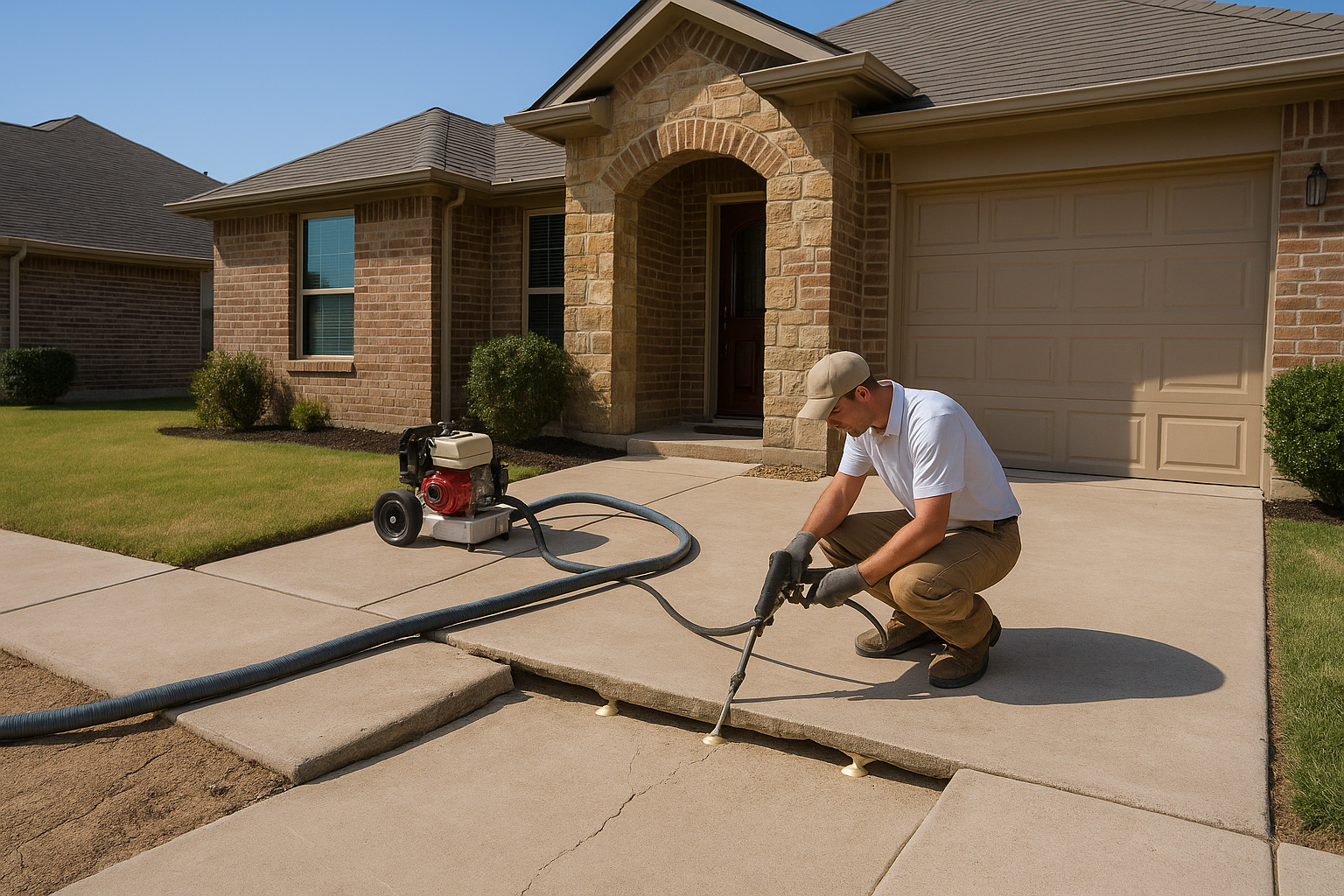
Sometimes, yes. Concrete leveling can be a very effective repair for a sunken slab when the concrete is still in decent shape and the problem is loss of support underneath. For many exterior slabs, polyurethane foam injection or similar lifting methods can fill voids, stabilize the subgrade, and raise settled sections back toward grade without removing the entire slab.
This approach is commonly used on sidewalks, pool decks, patios, porches, garage floors, and driveways. The big benefit is speed and reduced disruption. Instead of demolition, hauling debris, reforming, and repouring, the slab can often be lifted and stabilized with small injection points. In the right situation, that means lower cost, less mess, and faster return to service.
Typical benefits of concrete leveling include:
- Less invasive than replacement
- Faster turnaround time
- Helps reduce trip hazards
- Can improve drainage by correcting low spots
- Stabilizes voids beneath the slab
- Often costs less than full removal and replacement
That said, leveling is not a cure-all. If the slab is badly broken, severely undermined, too thin, or tied into a larger foundation failure, lifting alone may not solve the real problem. A slab with active water intrusion or ongoing soil movement may settle again if the drainage issue is not fixed. This is where experience matters. You do not just want somebody to pump material under concrete and leave. You want the root cause addressed.
For many Texas property owners, concrete leveling lands in a practical middle ground. Depending on scope, repairs may fall in the $1,500 to $5,000+ range for smaller flatwork sections, while replacement is often much higher. Structural or widespread settlement can exceed that, especially if there are plumbing leaks, erosion control issues, or multiple slab areas involved. If you want to learn more about repair options, see our Concrete Slab Repair in Texas and Concrete Leveling Near Me in Texas service pages.
We also look at access and finish expectations. If a front walkway has decorative concrete, preserving it may matter more than replacing it. If a driveway panel has multiple full-depth cracks and edge breakdown, replacement may be the better long-term value. Good repair recommendations depend on conditions on site, not guesswork.
When to Call for a Concrete Slab Inspection
If you can see vertical displacement, standing water, widening cracks, or movement near the home, it is time to get the slab looked at. You do not need to wait until the concrete becomes dangerous or the crack turns into a major gap. Early inspection usually gives you more repair options.
In Texas, we especially recommend inspections after:
- Extended drought followed by heavy rain
- A sudden plumbing leak under or near the slab
- Noticeable new cracks in concrete or interior finishes
- Water draining back toward the house
- Soil pulling away from the slab edge during dry months
- Recent purchase or sale of a home with visible settlement signs
An inspection should cover more than just the concrete surface. We look at drainage, nearby downspouts, grading, joints, surrounding soil behavior, and whether the slab movement appears isolated or structural. Around Austin, rocky limestone conditions can interact with clay pockets and create uneven support. Around San Antonio and other parts of Central and South Texas, expansive soils and heat cycles are frequent contributors. Local conditions matter.
If you are seeing signs of a sunken slab, do not assume replacement is your only option. In many cases, lifting and stabilization can buy back performance and safety without the cost and disruption of a full tear-out. The key is getting an honest assessment from a contractor who understands Texas slabs, Texas soil, and Texas weather.
Hill Country Slabs helps property owners evaluate settled concrete and determine whether leveling, stabilization, joint work, or more extensive slab repair makes the most sense. If you need help with a sunken slab, foundation-related settlement concerns, or uneven concrete around your home, contact us today through /contact or call (737) 287-4308. We will take a look and point you in the right direction.