If you sell houses in Texas, you already know buyers notice concrete before they ever step inside. A sunken driveway, a lifted sidewalk panel, or a porch slab that has dropped at the front door can make a listing feel neglected in about five seconds. That is why concrete leveling for realtors in Texas is one of the quickest ways to clean up curb appeal, reduce trip hazards, and keep small slab issues from turning into bigger deal killers during option periods and inspections.
Across Austin, Round Rock, and Cedar Park, we see the same story all the time. Homes shift because Texas soil moves. Expansive clay in Central Texas swells when it gets wet and shrinks when it dries out. Add long summer heat, flash rains, drainage problems, and tree root activity, and concrete starts settling unevenly. The good news is you usually do not need demolition to make it presentable again. In many cases, foam leveling can lift and stabilize slabs fast, with minimal mess and downtime.
Why Realtors Recommend Concrete Leveling Before Listing
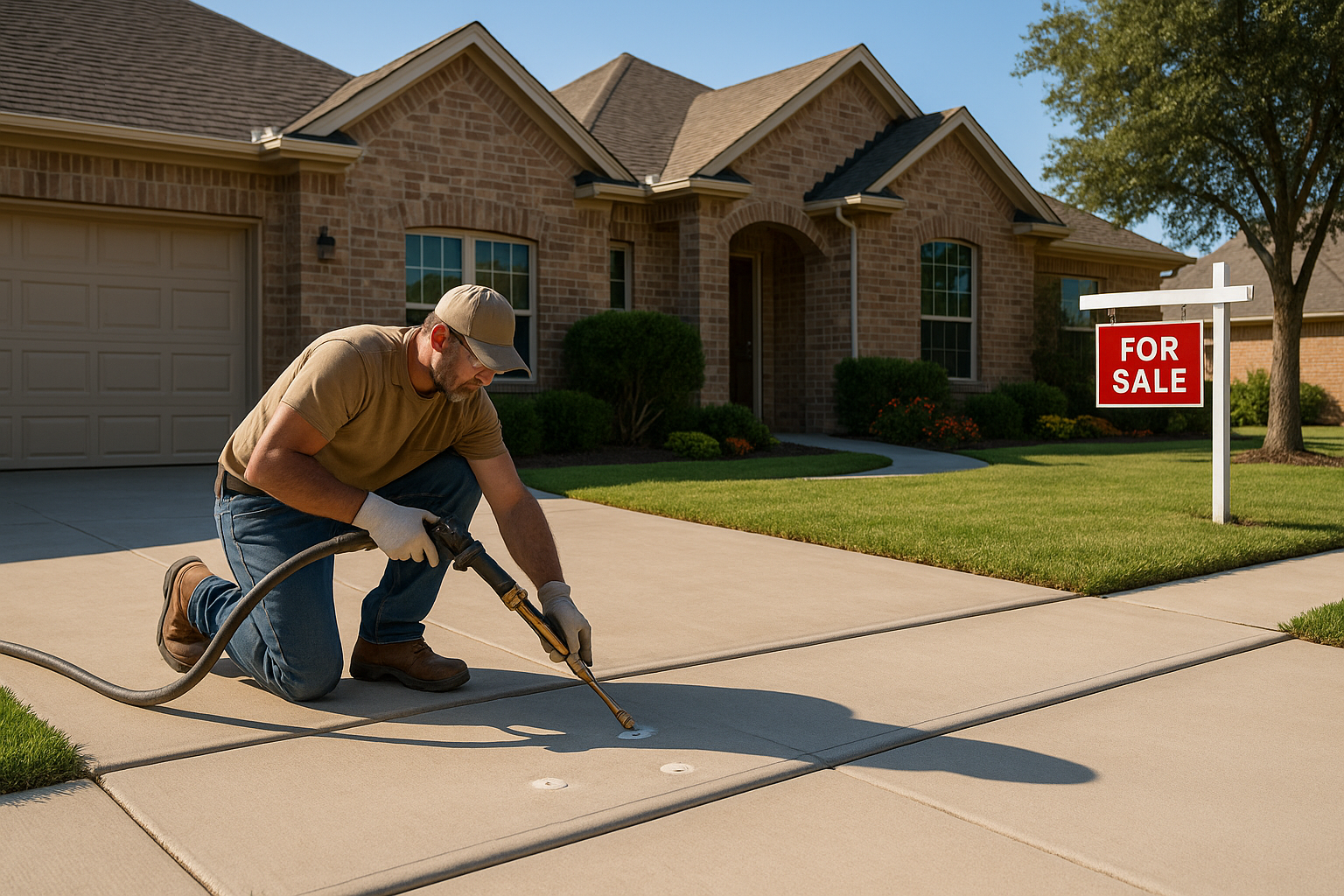
When a seller asks what to fix before photos or showings, uneven concrete should be on the list. Buyers read exterior condition as a signal for how the rest of the property has been maintained. If they walk up to a home and see a driveway lip or a sidewalk that looks unsafe, they start wondering what else has been ignored. That can hurt confidence before they ever get to the kitchen or primary bath.
Realtors recommend leveling because it solves several problems at once. First, it improves first impressions. Second, it addresses a safety issue buyers and appraisers can flag. Third, it often costs a lot less than replacement. For many listings, leveling is a better value play than tearing out and repouring otherwise sound concrete.
In plain terms, if the slab is structurally decent and just settled, lifting it is usually the smart move. Foam leveling is clean, fast, and practical for sellers who need work done on a listing timeline. Compared to replacement, the savings can be significant. Full removal and replacement may run into the thousands to tens of thousands of dollars once demo, hauling, forms, finishing, and cure time are included. Leveling is often completed for a fraction of that, depending on the area and severity.
It also helps avoid last-minute concessions. A buyer who sees a trip hazard at a front walk or garage apron may ask for repairs, credits, or price reductions. Taking care of it before the listing goes live gives the seller more control over the conversation.
What Uneven Concrete Can Do to a Home Sale
Uneven concrete causes more trouble in a transaction than most sellers expect. At the start, it hurts listing photos and drive-up appeal. During showings, it becomes something buyers physically feel under their feet. During inspections, it becomes a documented issue. And if someone thinks the settlement might be tied to drainage or foundation movement, the concern can grow beyond what the actual slab problem really is.
We are not talking only about big failures. Sometimes a height difference of 1 to 2 inches at a sidewalk joint is enough to make a property look rough and create a trip hazard. In Texas neighborhoods where homes compete closely on condition, those details matter.
Here is what uneven concrete can do to a sale:
- Reduce curb appeal right from the street
- Create trip hazards at walks, porches, patios, and driveways
- Trigger inspection notes that lead to repair requests
- Raise drainage concerns if slabs slope toward the house
- Make buyers assume foundation problems even when the issue is isolated slab settlement
- Lead to concessions or delays during the option period
In Central Texas, where we move from drought to hard rain in a hurry, concrete movement is common. That does not mean buyers are comfortable with it. Realtors know the difference between a normal regional issue and a negotiable defect, but buyers often do not. Getting the slab corrected before listing helps keep the story simple and the showing experience clean.
If the problem involves joints that have opened up or separated after settlement, pairing leveling with joint care can help the finished result last longer. Sealed joints help reduce water intrusion under the slab, which matters in our clay soils. That is why it is worth learning more about expansion joints and proper sealing. In some cases, sellers also ask about maintenance options through sealmyjoints.com to help protect repaired concrete from future moisture-related movement.
Best Areas to Level Before Showings and Inspections
Not every slab on a property needs attention before a home hits the market. The smart play is to focus on the areas buyers see first, walk first, and inspectors are most likely to note. These are the spots where leveling tends to make the biggest difference for both presentation and safety.
1. Driveways and garage approaches
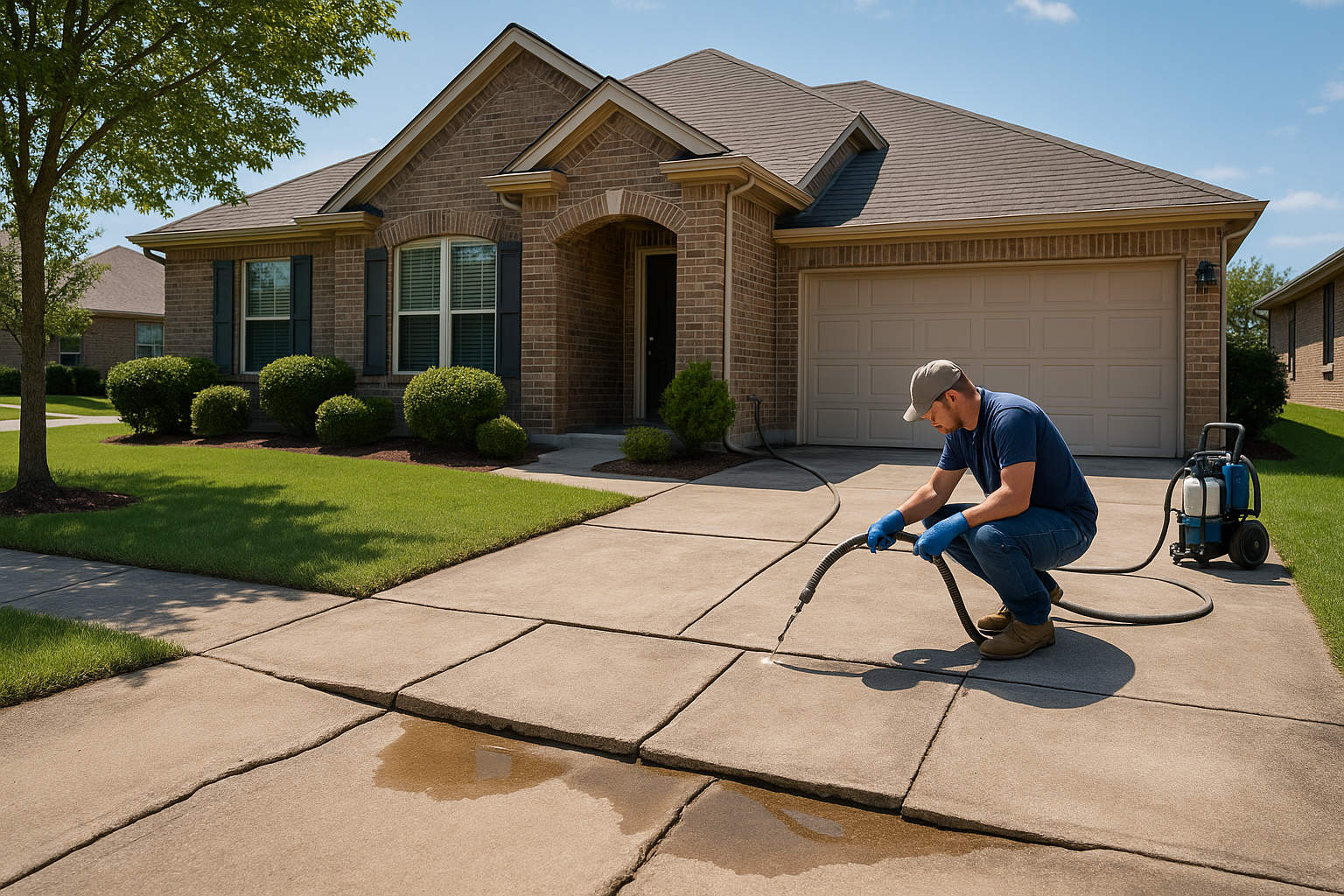
The driveway is one of the largest visible concrete surfaces on most homes. If the driveway has settled near the garage, street, or control joints, it can look rough from the listing photo alone. It can also create a harsh bump for vehicles and an obvious tripping point for foot traffic. For these cases, Driveway Lifting is often the fastest way to improve appearance without replacing an entire section.
2. Front walks and entry paths
If buyers have to step over offset sidewalk panels to get to the front door, that first impression sticks. Front walks are high-value repair areas because they affect both curb appeal and liability. A clean, even path tells buyers the property has been cared for. If settlement has affected public-facing or private walkways, Sidewalk Repair is a practical pre-listing fix.
3. Porches and front stoops
A dropped porch slab or stoop at the front entry can make the house feel older than it is. It can also hold water against the home or create an awkward step at the threshold. These are exactly the kinds of exterior issues that buyers remember after seeing several homes in one day.
4. Patios and rear entertaining areas
Backyards sell houses in Texas. In places like Austin and Round Rock, outdoor living space matters. If the rear patio has settled and is holding water or pulling away visually from the house, buyers notice. Leveling can make the space feel more usable and maintained, especially before listing photos.
5. Pool decks and side yards
Where allowed and appropriate, leveling around a pool area or side access path can improve safety and function. These spots are especially important if there are obvious trip points or drainage issues that make buyers uneasy.
6. Isolated slab settlement near the house
Sometimes the issue is not the foundation itself but an exterior slab that has settled next to the structure. In those cases, sellers may need a targeted solution like Concrete Slab Repair to correct the affected area and keep the transaction from getting sidetracked by avoidable questions.
Why Fast Foam Leveling Works for Texas Listings
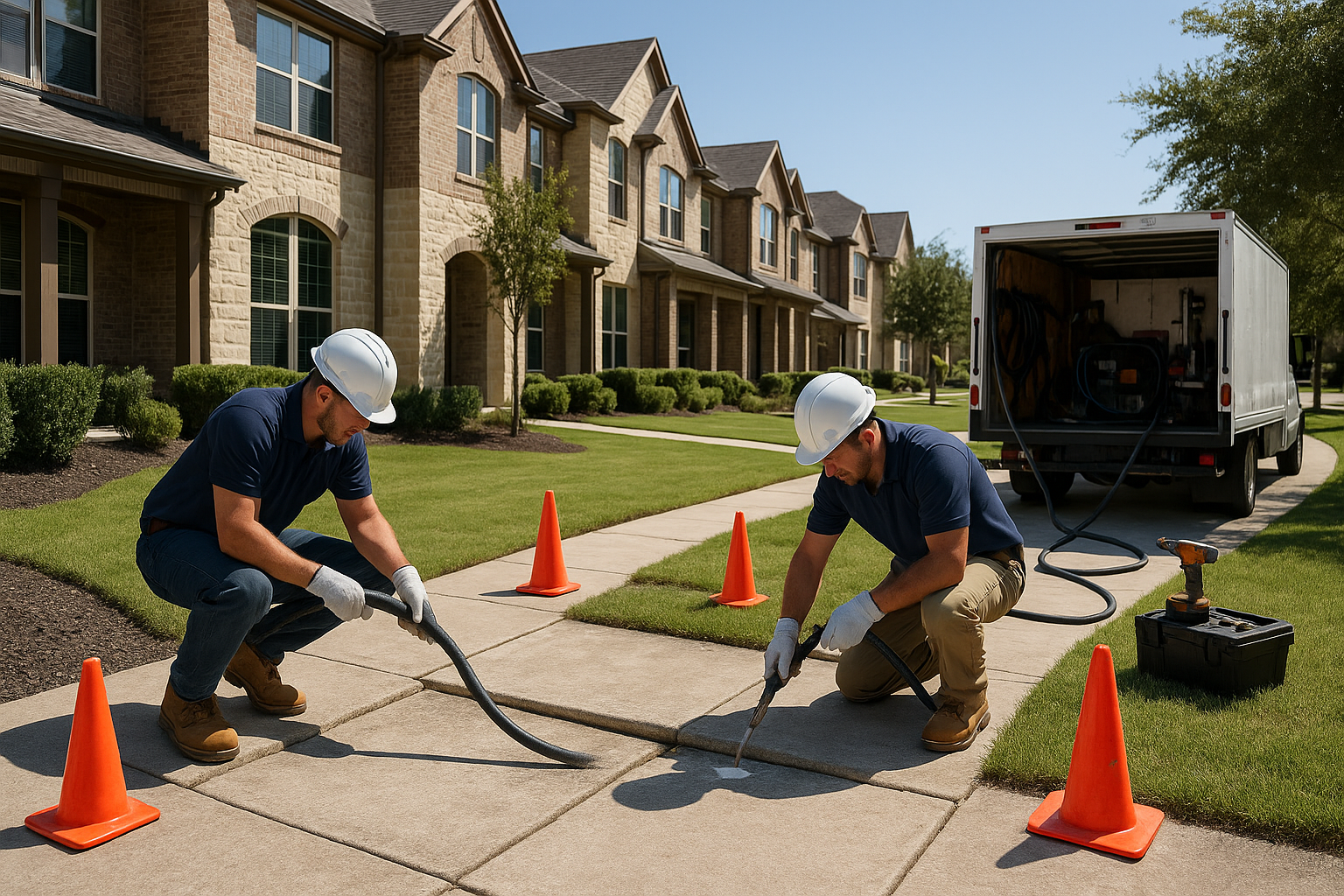
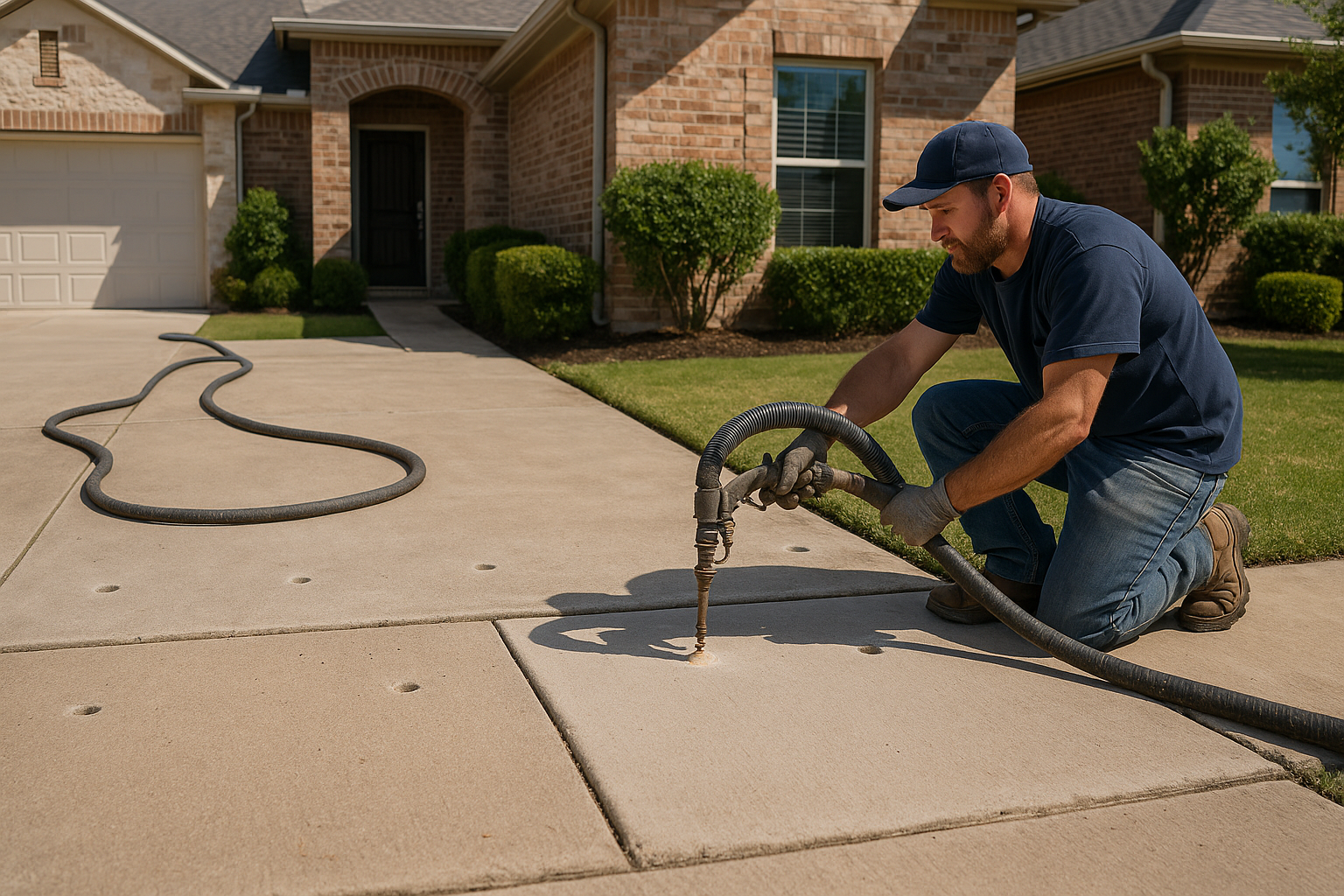
For active listings and pre-listing prep, time matters. Sellers do not want weeks of disruption, and realtors do not want a front driveway torn out while photos are scheduled. That is where polyurethane foam leveling makes sense. Instead of demolishing the slab, we drill small injection holes, place expanding foam beneath the concrete, and lift it back toward grade. The foam fills voids, supports the slab, and allows the area to be used quickly in many cases.
This method works well in Texas because so much of our slab movement is tied to soil behavior under otherwise usable concrete. Blackland clay and other expansive soils around Central Texas can leave voids after dry periods, then shift again with sudden moisture. Foam leveling addresses the support issue below the slab without the mess of full replacement.
For real estate timelines, the main benefits are straightforward:
- Fast turnaround for pre-listing and option-period work
- Minimal mess with no large-scale demolition debris
- Good curb appeal improvement before photos and showings
- Lower cost than replacement in many situations
- Less disruption for occupied homes
That speed matters. A foam leveling job can often be scheduled and completed much faster than tear-out and repour work, and there is no long concrete cure window holding up access. For sellers trying to protect momentum, that can be the difference between fixing a problem cleanly and negotiating around it for the rest of the deal.
Texas weather is another reason to act early. Summer heat, sudden storms, and repeated wet-dry cycles can make slab movement worse over time. If a listing already has visible settlement, waiting through another season rarely improves it. Getting ahead of the issue before a home hits the market is usually the better call.
For agents, the value is simple. You get a listing that shows cleaner, presents safer, and invites fewer objections. For sellers, you get a cost-effective repair that protects price and reduces stress. And for buyers, you remove one more visible concern from the decision-making process.
If you are a realtor or homeowner getting a Texas property ready for market, Hill Country Slabs can help you figure out whether the concrete should be lifted, stabilized, or further evaluated. We work on the kinds of slab settlement issues that show up in everyday transactions across Austin-area neighborhoods, and we understand how important speed, appearance, and practical pricing are when a sale is on the line.
Need help before photos, showings, or an inspection? Contact Hill Country Slabs today or call (737) 287-4308 to talk through your project and get your listing market-ready.