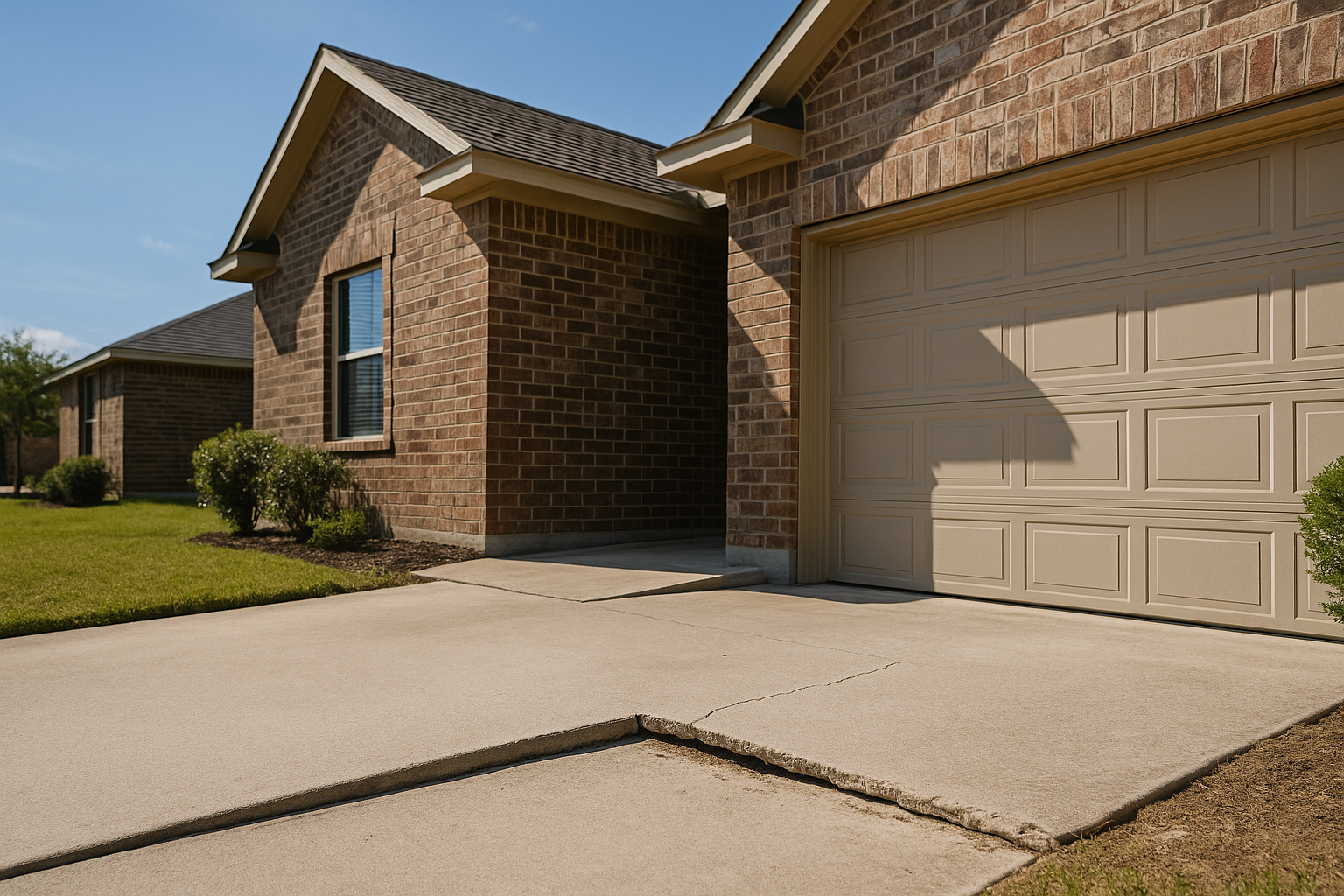
If your driveway is sinking near the house foundation, don’t ignore it. Around homes in Texas, this usually starts as a small drop where the driveway meets the garage slab or front entry, then turns into a bigger trip hazard, drainage problem, or stress point at the foundation. We see it all the time in places like Austin, San Antonio, and across Central Texas where shifting clay soils, heat, and heavy rain work against concrete year after year.
The good news is not every sinking driveway needs to be torn out. In a lot of cases, foam leveling can lift and stabilize the slab without a full replacement. The key is figuring out why it settled in the first place and whether the concrete is still in good enough shape to save. If you’re comparing options, take a look at our Driveway Leveling in Texas and Concrete Slab Repair in Texas services.
Why a Driveway Sinks Near a House Foundation
Most homeowners assume the concrete failed. A lot of times, the slab is not the real problem. The soil underneath is. In Texas, especially in areas with expansive clay, the ground swells when it gets wet and shrinks when it dries out. That constant movement creates voids under the driveway, particularly near the house where drainage patterns, roof runoff, and utility trenches can weaken the base over time.
Here are the most common reasons a driveway drops next to a house foundation:
- Expansive clay soil movement: Blackland Prairie soils around Central Texas are notorious for swelling and shrinking. That movement can leave one side of the driveway unsupported.
- Poor compaction during construction: If the fill soil next to the foundation or garage was not compacted properly, settlement can show up years later.
- Water intrusion: Downspouts, poor grading, sprinkler overspray, and standing water wash out soil and create empty pockets under the slab.
- Utility trench settlement: Plumbing, electrical, and drainage lines often run through backfilled trenches beside the house. Those areas settle faster than undisturbed soil.
- Joint failure: When expansion joints dry out or split open, water gets down between the house and driveway and starts undermining support. If the joint is cracked or missing, visit /expansionjoints for more information, and for joint sealing products and details, see sealmyjoints.com.
One thing we tell homeowners all the time: a sinking driveway by the house does not always mean the house foundation is failing. Sometimes the driveway settles independently because it is poured on different soil preparation than the foundation. Still, when the movement is tight to the garage or stem wall, it needs to be evaluated so you know whether you’re dealing with slab settlement only or a larger drainage and soil issue.
Signs the Problem Is Getting Worse
A small lip at the garage can turn into a bigger repair if you wait too long. Watch for these warning signs that the driveway settlement is active or accelerating:
- A widening gap where the driveway meets the garage floor, sidewalk, or foundation edge
- Water draining back toward the house instead of away from it
- Cracks radiating from the settled section, especially near corners and control joints
- Trip hazards of 1 inch or more at the slab edge
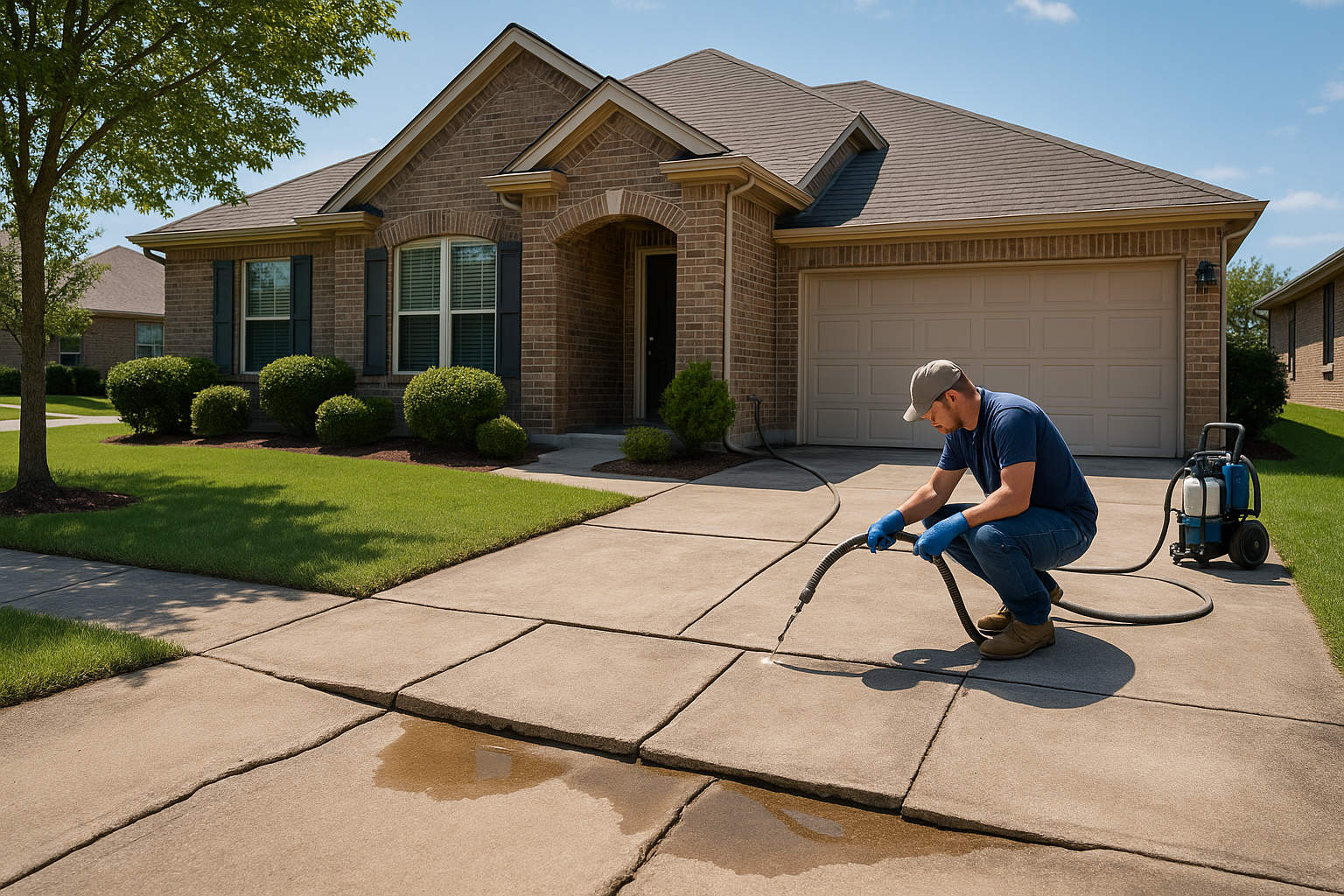
- Pooling water after rain near the garage door or front entry
- Separation at expansion joints or torn-out filler material
- Void sounds when you tap the slab or drive over it
In Texas weather, these problems can change fast. A long dry stretch in summer can shrink clay soils hard, then a heavy storm can send water straight into cracks and open joints. That wet-dry cycle is rough on flatwork. We’ve seen driveways in Austin and San Antonio go from a minor cosmetic issue to a noticeable drop in one season when drainage is poor.
Another red flag is when the driveway is pulling away from the house but the concrete surface itself still looks mostly intact. That usually points to loss of support below the slab, not surface wear. That’s exactly the kind of issue foam leveling is built for.
Can Foam Leveling Fix a Sinking Driveway by the House?
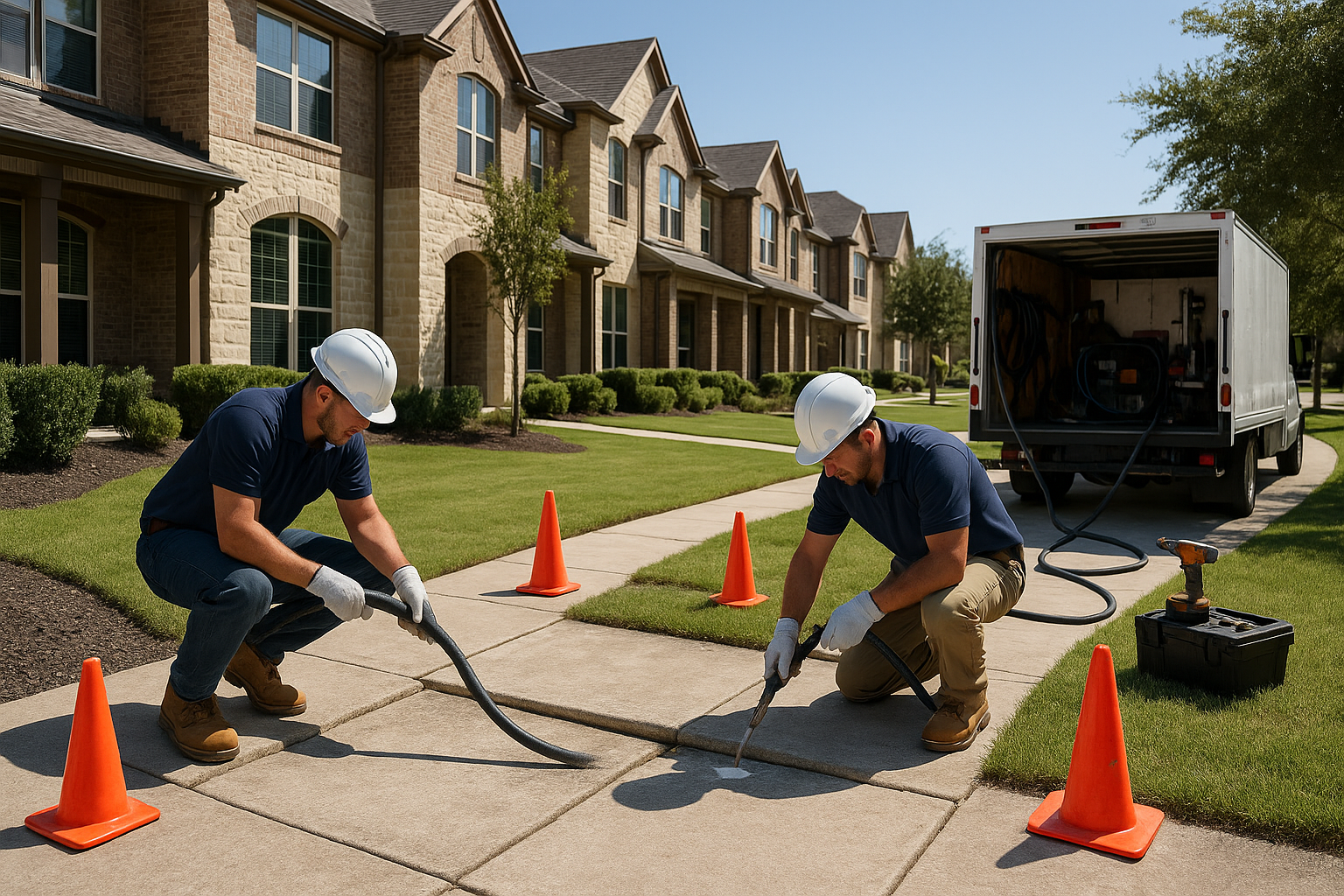
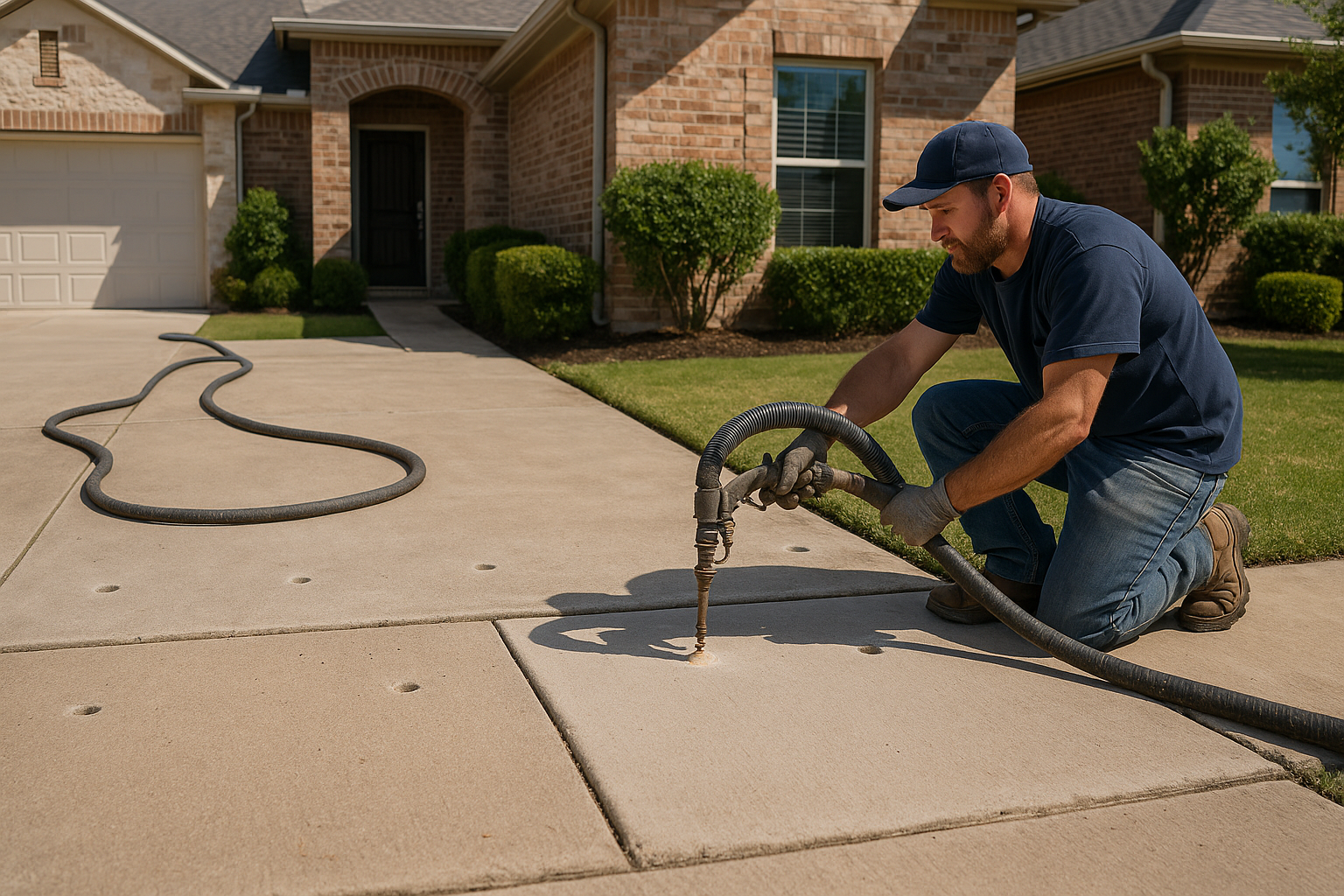
In many cases, yes. Polyurethane foam leveling is one of the best repair options when the driveway slab is still structurally sound but has settled because of weak or missing support underneath. Small injection holes are drilled through the concrete, high-density foam is injected below the slab, and the expanding material fills voids, compacts loose soils, and lifts the concrete back toward grade.
This works well near a house foundation because foam is lightweight, precise, and quick. Unlike full replacement, you are not tearing out concrete next to the garage or trying to match new pours to old surfaces. Most jobs can be completed in a day, and the driveway is often ready for use in a matter of hours.
Foam leveling is usually a good fit when:
- The slab has settled but is not badly shattered
- The concrete has a manageable number of cracks
- The sinking is caused by voids, erosion, or poorly compacted fill
- You want to restore drainage away from the house
- You need a fast repair with minimal disruption
Typical repair economics matter too. In many situations, foam leveling runs at about 30% to 50% less than full concrete replacement, depending on access, slab thickness, and how much lift is needed. It also saves the time and mess of demolition, hauling off broken concrete, and waiting on a new pour to cure.
That said, foam leveling is not a cure-all. If the slab is broken into multiple loose pieces, if the subgrade is constantly being washed out by uncontrolled water, or if the adjacent foundation is actively moving, you need to fix those underlying issues as part of the repair plan. Lifting a slab without correcting drainage is just buying time.
What Foam Leveling Does Best
- Fills hidden voids under the driveway
- Lifts settled concrete with control
- Improves water runoff away from the house
- Reduces trip hazards at garage and walkway transitions
- Limits disruption compared to removal and replacement
If you want a closer look at whether your slab qualifies, our Driveway Leveling in Texas page covers the process in more detail.
When to Repair vs Replace the Concrete
This is where experience matters. Not every settled driveway should be replaced, and not every driveway can be saved. We look at a few practical things before recommending one direction or the other.
Repair the Driveway if:
- The slab is mostly intact
- Cracks are limited and not severely displaced
- The main problem is settlement, not widespread surface failure
- The driveway can be lifted close to original grade
- The drainage issue can be corrected
For homeowners, this is usually the sweet spot. You keep the existing concrete, fix the trip hazard, improve drainage, and avoid the cost of full replacement. On many projects, that means a faster turnaround and a lower total bill.
Replace the Driveway if:
- The concrete is extensively broken or crumbling
- There is major heaving and settlement across multiple panels
- Rebar corrosion or severe surface deterioration is present
- The slab cannot be lifted without risking more damage
- You have long-term drainage or soil issues that require reconstruction of the base
As a rule of thumb, if the concrete has good bones, lifting and stabilization are worth a hard look. If the slab is beyond saving, replacement may be the smarter long-term investment. We also pay attention to the amount of drop. A settlement of 1 to 2 inches at the garage edge is often repairable. Once damage gets more severe and the slab has multiple failures, the conversation changes.
Another cost factor is what happens if you do nothing. Water running back toward the house can contribute to erosion near the foundation, stained garage floors, and more joint failure over time. A driveway issue that starts as a nuisance can end up affecting adjoining slabs and entry walks if it’s left alone too long.
For many Texas homes, the best approach is a combination: lift the settled slab, seal the joints, and correct the drainage path so water moves away from the structure. That’s especially important in clay-heavy regions where moisture swings drive most of the movement in the first place.
If your driveway is sinking near the house foundation, get it looked at before the drop gets worse. Hill Country Slabs helps homeowners across Austin, TX, San Antonio, TX, and surrounding areas figure out whether concrete leveling or slab repair is the right call. Visit /contact or call (737) 287-4308 to schedule an evaluation.