Average Driveway Leveling Cost Per Square Foot in Texas
If you are trying to figure out concrete driveway leveling cost per square foot, the short answer in Texas is that most homeowners land somewhere around $5 to $12 per square foot for professional leveling, depending on how far the slab has dropped, how easy it is to access, and what is going on under the concrete. In lighter repairs, you may see pricing closer to $3 to $5 per square foot. In more involved jobs with multiple settled panels, voids, poor drainage, or heavier concrete sections, pricing can push toward $10 to $15 per square foot.
That range is wide for a reason. A driveway in Austin sitting on expansive clay and taking runoff from a bad gutter line is a different repair than a driveway in Dallas with base washout near the street. In Central Texas and North Texas, we deal with long dry spells, hard rain events, shrinking soils, and movement that keeps working under the slab year after year.
For a typical two-car driveway repair, many Texas homeowners end up with total project costs in the ballpark of $1,200 to $3,500. Smaller isolated lifts may come in below that. Larger driveways with several dropped sections or approach panels can run higher. The best way to think about it is this: leveling is usually priced by the repair conditions first and square footage second.
If the slab is still structurally decent and just needs to be brought back into plane, leveling is often the most cost-effective option compared to tearing out and replacing concrete. If you want to learn more about the service itself, take a look at our Driveway Lifting work.
What Affects Concrete Driveway Leveling Pricing
There is no one-size-fits-all number because driveway leveling cost depends on what caused the settlement and how much correction the concrete needs. Here in Texas, a few factors show up on estimates over and over.
Amount of settlement
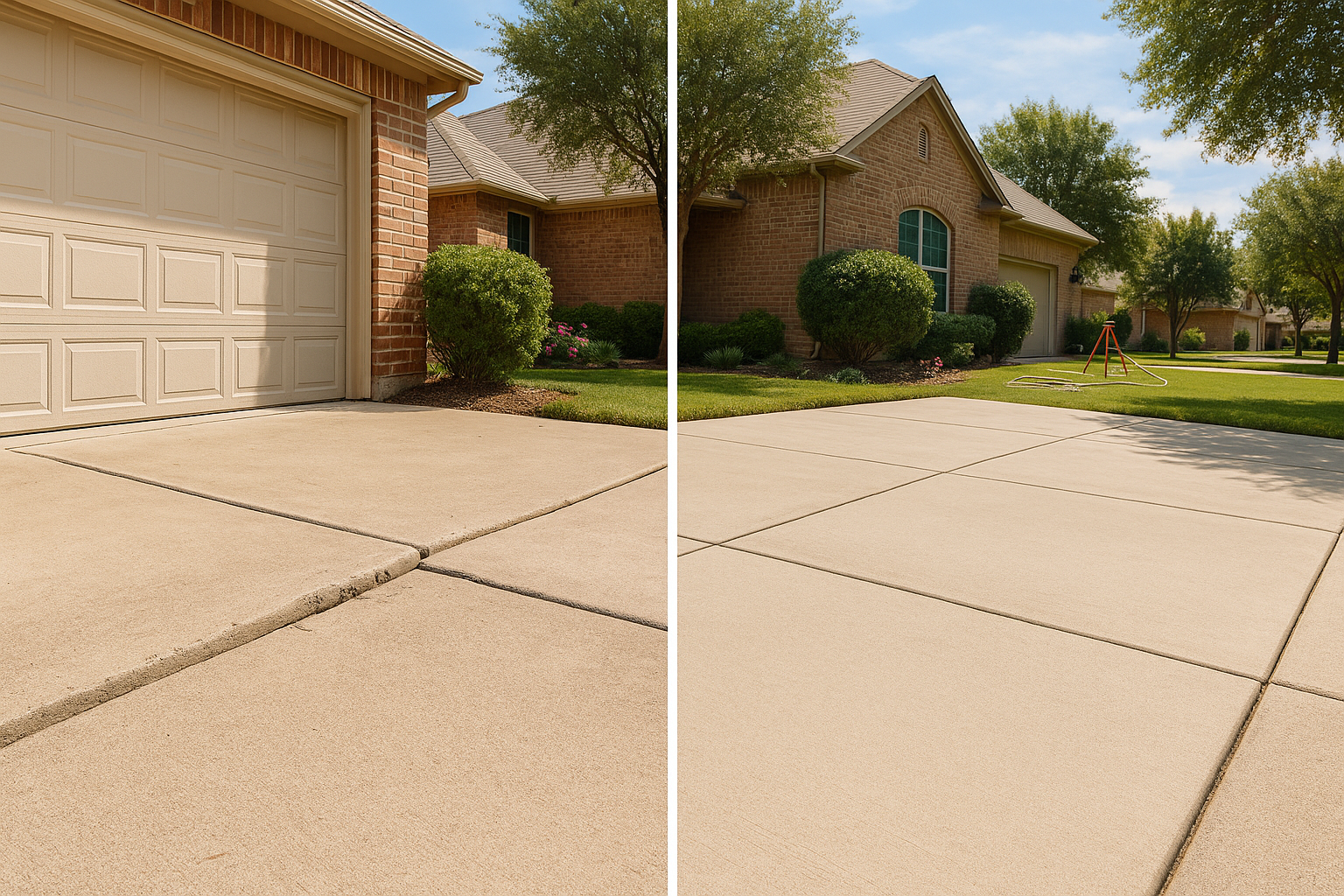
A slab that has dropped 1 inch is usually simpler to lift than one that has dropped 3 inches or more. The more movement we need to correct, the more material, setup, and time the job takes. Bigger elevation changes also raise the chance that nearby sections need to be blended to reduce trip hazards and drainage issues.
Soil conditions under the driveway
Texas soils are a big deal. In the Austin area, we regularly see expansive clay that swells when wet and shrinks when dry. Around parts of Dallas-Fort Worth, you get similar movement along with erosion and washout problems. Sandy pockets, fill soils, and poorly compacted subgrade can all create voids under a driveway. If the base has washed out, the repair is not just lifting concrete. It is stabilizing the slab so it has support again.
Drainage and water intrusion
If water is getting under the driveway from roof runoff, broken sprinkler heads, poor grading, or open joints, that has to be part of the conversation. Otherwise, you can lift it today and watch it start moving again later. That is why we often talk to customers about joint sealing and water management. Open joints let water reach the soil below, and in Texas that is asking for trouble. Learn more about expansion joints and why sealing matters. For additional joint sealing information, visit sealmyjoints.com.
Size and layout of the driveway
Not all square footage is equal. A clean rectangular panel with good access is faster than a driveway with tight side clearance, decorative borders, multiple cracks, or sections tied into sidewalks and garage aprons. Curved drives and steep approaches can also take more time to set up and lift correctly.
Repair method used
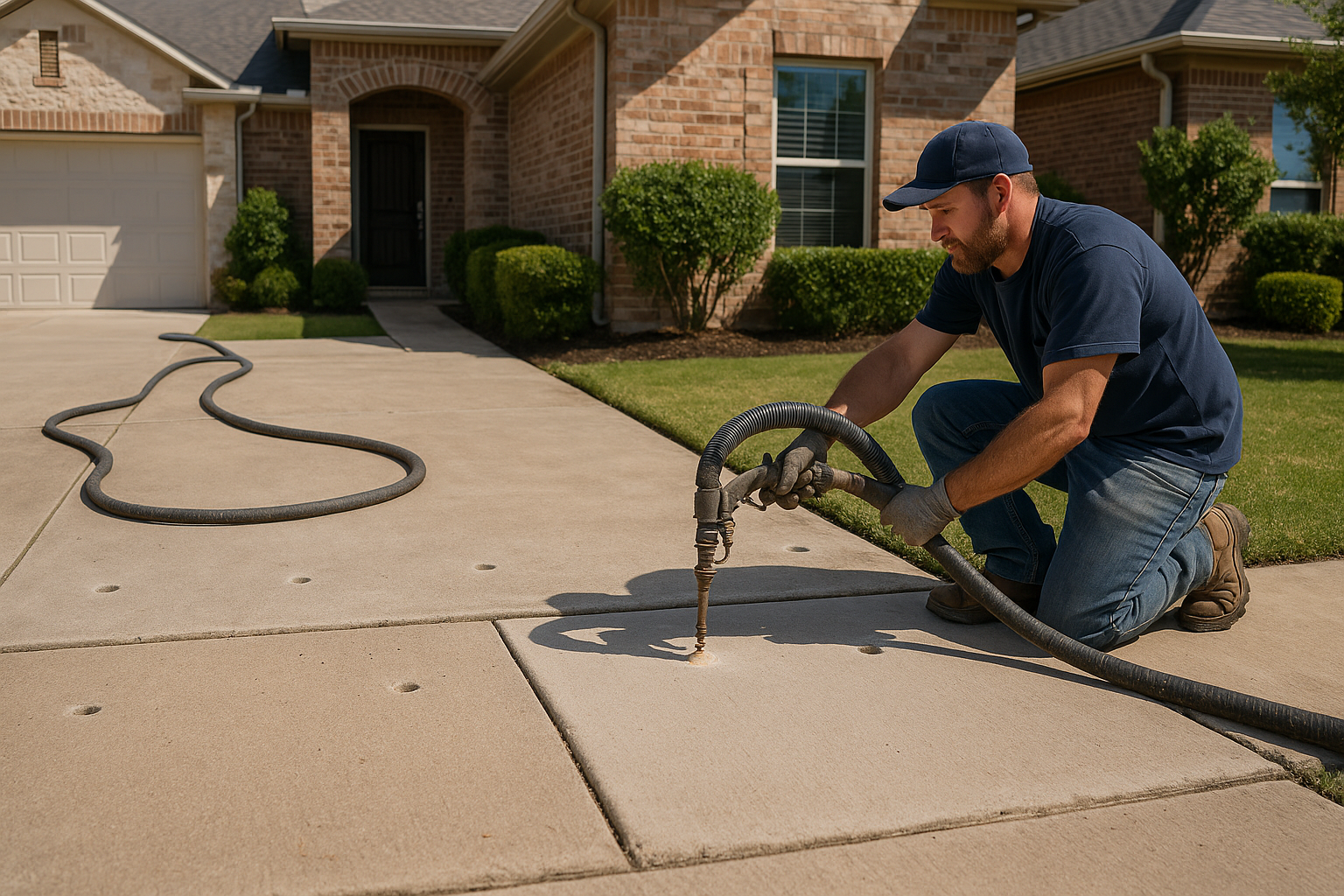
Most homeowners asking about concrete driveway leveling today are really comparing modern polyurethane foam lifting to replacement. Foam injection is clean, fast, and lighter on the soil than older slurry-style methods. It works well for many residential driveways because it fills voids, stabilizes weak spots, and lifts without the mess and cure time of replacement concrete.
Condition of the slab itself
Leveling makes sense when the concrete is still worth saving. If the driveway has widespread breakage, severe surface deterioration, or major structural cracking, replacement may be the better route. We also look at whether the slab edges are intact and whether the concrete can be lifted safely without crumbling apart. In some cases, there may also be underlying issues better addressed through broader Concrete Slab Repair.
Leveling vs Replacement: Which Costs Less?
In most cases, leveling costs less than replacement. That is the simple truth. If your driveway is sunken but not destroyed, leveling is usually the better value.
Across Texas, full driveway replacement can easily run $8 to $18 per square foot or more depending on demolition, haul-off, base prep, forming, reinforcement, finish, and concrete pricing in your area. For decorative or oversized driveways, the number can go even higher. Once you add the inconvenience of tearing out usable concrete and waiting on new placement and cure time, replacement becomes a much bigger project.
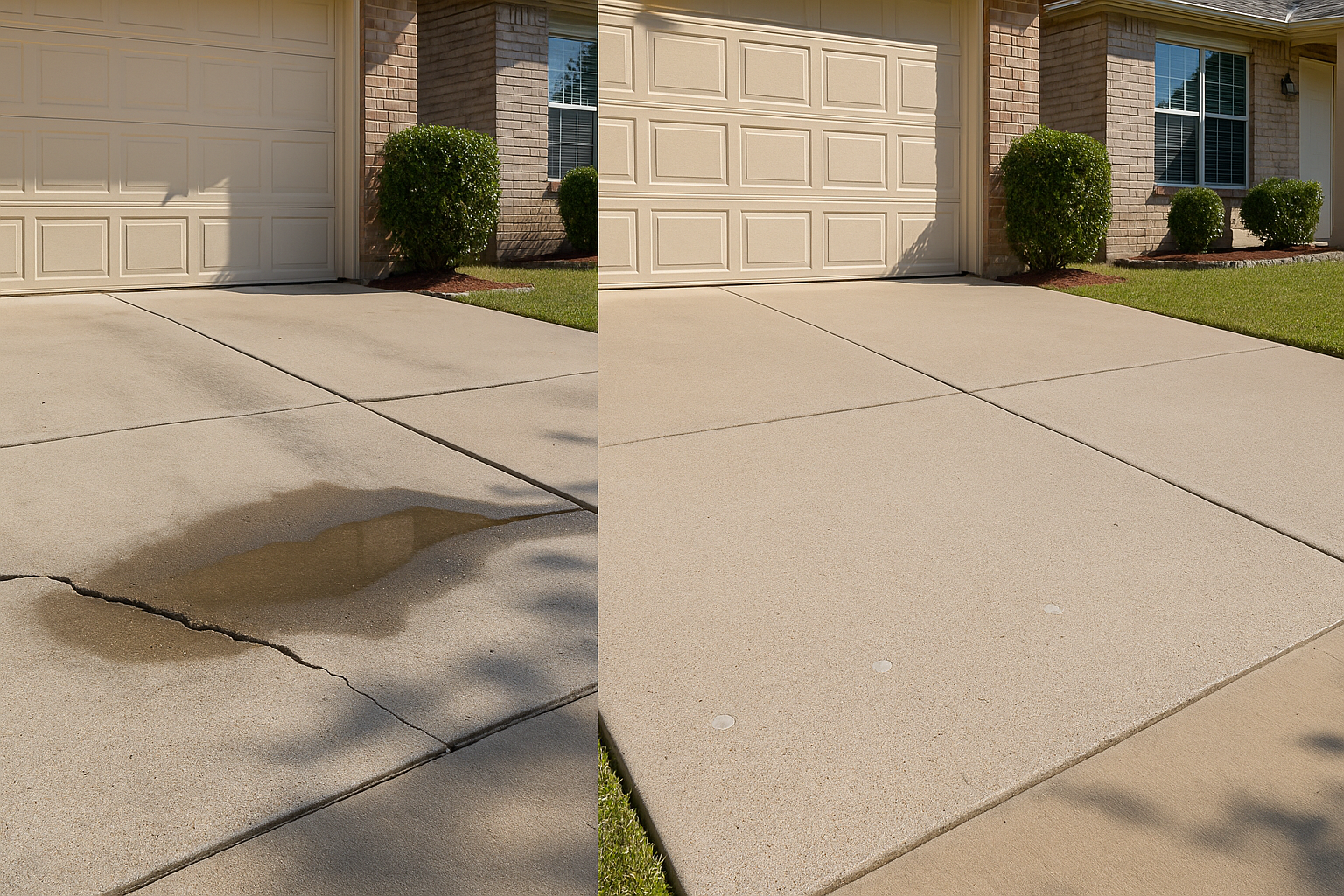
By comparison, leveling commonly falls into that $5 to $12 per square foot range and often gets done in a fraction of the time. Many jobs are completed in a day, and the driveway is typically back in service much sooner than a replacement project. For homeowners dealing with a trip hazard, ponding water, or a slab that has settled near the garage, that matters.
That said, cheaper is not always better if the slab is too far gone. Here is the contractor answer:
- Choose leveling when the concrete is mostly sound, settlement is the main issue, and you want a faster, lower-cost fix.
- Choose replacement when the slab is badly broken, crumbling, or has design and drainage problems that cannot be corrected by lifting alone.
We tell customers all the time that the right repair is the one that solves the actual problem. If water is getting under the driveway and washing out support, you need to address that too. If tree roots are pushing one side while clay shrinkage drops the other, the repair plan needs to match those conditions. A good estimate should explain not only the price, but why the driveway moved in the first place.
When to Get a Driveway Leveling Estimate
The best time to get a driveway leveling estimate is when you first notice movement, not after it gets bad enough to create major cracking or edge failure. Early repairs are usually simpler and more affordable.
Here are a few signs it is time to have someone take a look:
- One panel has dropped and created a trip hazard
- Water ponds on the driveway after rain
- The driveway is pulling away from the garage slab
- Cracks are getting wider or changing elevation
- You can see soil washout near the edges or joints
- Your vehicle bottoms out or scrapes at the transition
Texas weather is hard on flatwork. Summer heat bakes the ground, then fall and spring storms put moisture right back into it. That expansion and contraction cycle is rough on driveways, sidewalks, patios, and slabs around the house. If you are in Austin, Dallas, or surrounding Texas communities, it is smart to inspect settled concrete before the next heavy rain season makes the voids worse.
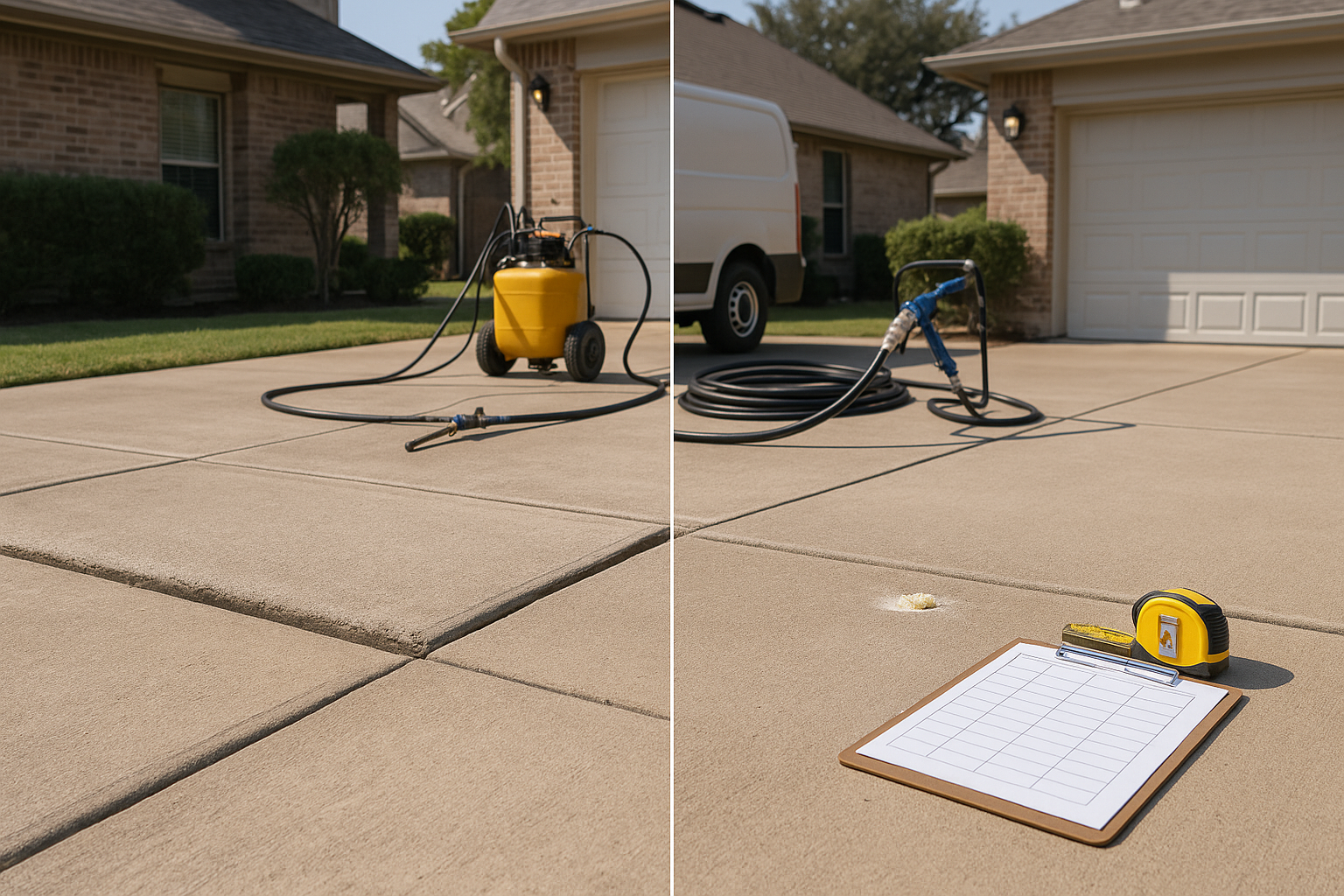
A proper estimate should cover more than a price per square foot. It should identify the settled areas, explain likely causes, outline the lift method, and talk through what can and cannot be corrected. Some slabs come back beautifully. Others improve a lot but still show existing cracks or cosmetic wear. Straight answers matter.
If you are comparing bids, make sure you are comparing the same scope. One contractor may price a basic lift, while another includes void fill, stabilization, and attention to nearby joints. That is why two numbers can look far apart. The lower bid is not always covering the same repair.
Bottom line: for many Texas homeowners, concrete driveway leveling cost per square foot is far less than replacement, especially when the slab is still in good shape overall. Getting it looked at early can save money, reduce liability from trip hazards, and help protect the rest of the driveway from additional movement.
If your driveway is settling and you want a straight answer on repair options, contact Hill Country Slabs for an evaluation. We will tell you if leveling makes sense, what it should cost, and whether replacement is actually necessary. Reach out through our contact page or call (737) 287-4308.