In Texas, sunken concrete is not hard to find. We see it in driveways in Austin, patios around San Antonio, sidewalks in new subdivisions, and pool decks all over the Hill Country. The usual pattern is the same: the slab was poured fine, then the ground underneath moved, dried out, washed out, or settled unevenly. Before long, you have trip hazards, standing water, ugly gaps, and a slab that looks worn out before its time.
One of the best repair options for this problem is polyurethane foam injection concrete leveling in Texas. Instead of tearing out decent concrete and starting over, foam injection lifts the slab back toward grade by filling voids and stabilizing the soil below. In the right situation, it is faster, cleaner, and more cost-effective than replacement.
If you are comparing repair options, take a look at our Polyurethane Concrete Leveling in Texas service and our breakdown of Concrete Leveling vs Replacement in Texas. The main question is not whether a slab is ugly. The question is whether the concrete still has enough structural integrity to be lifted instead of replaced.
What Is Polyurethane Foam Injection for Concrete Leveling?
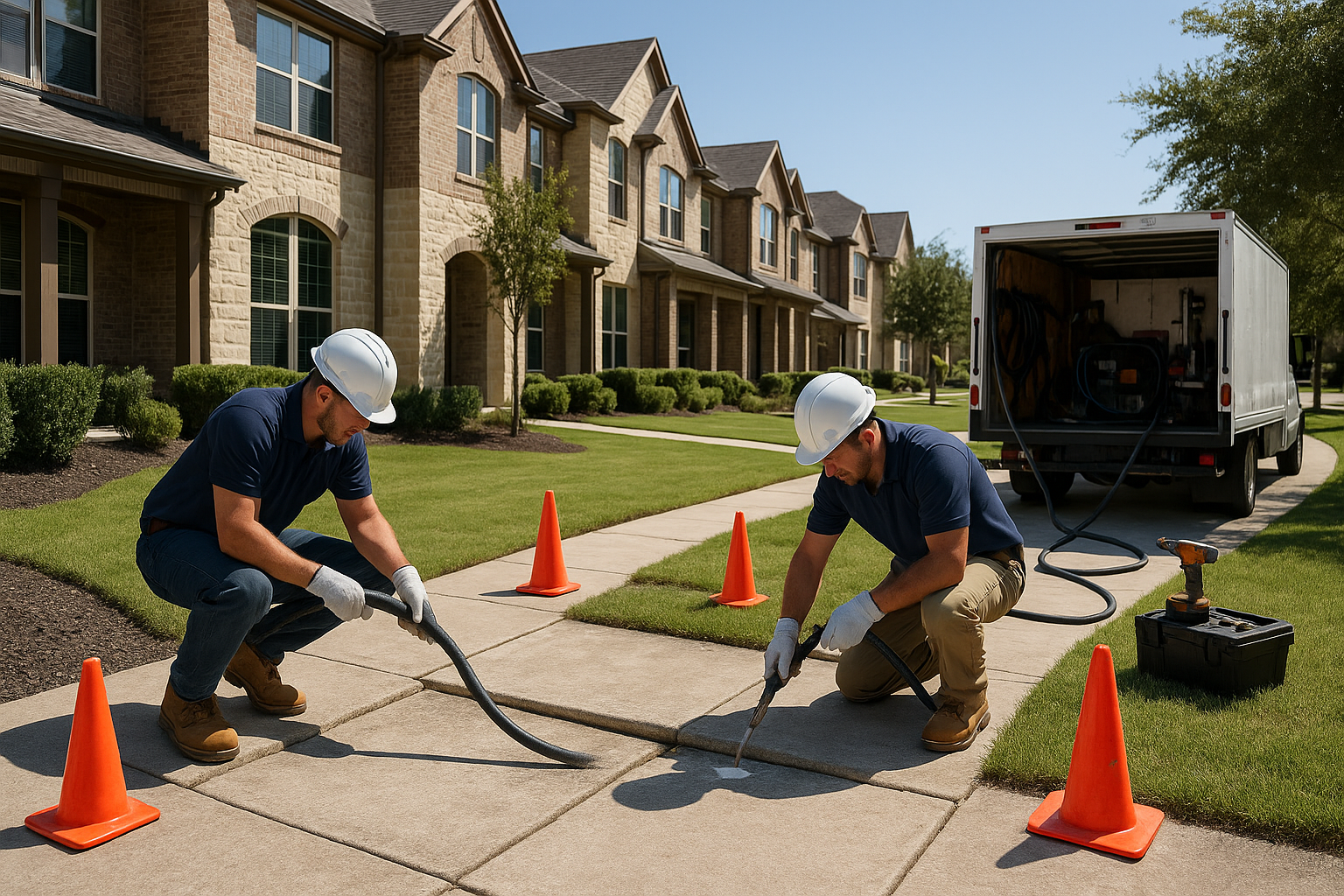
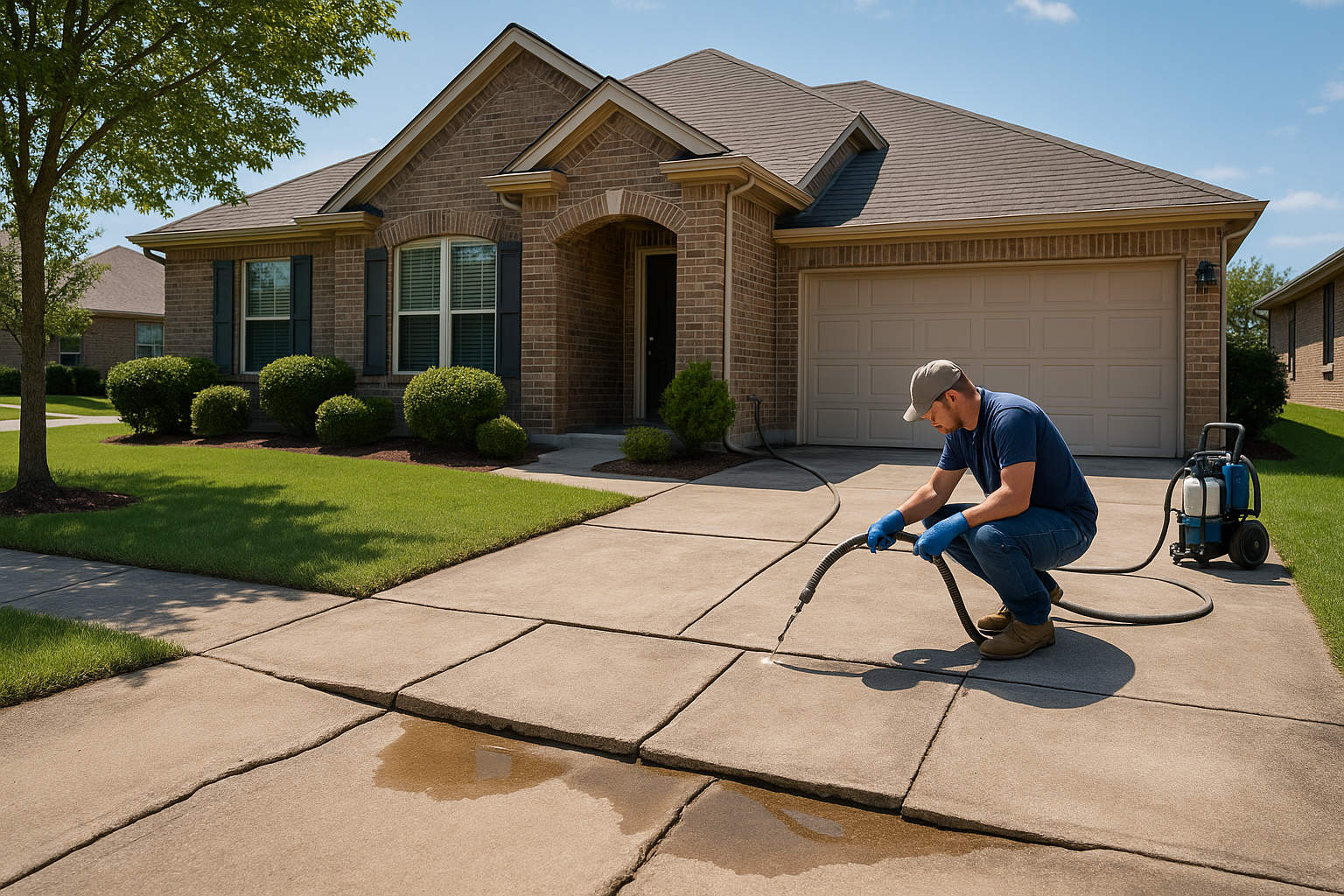
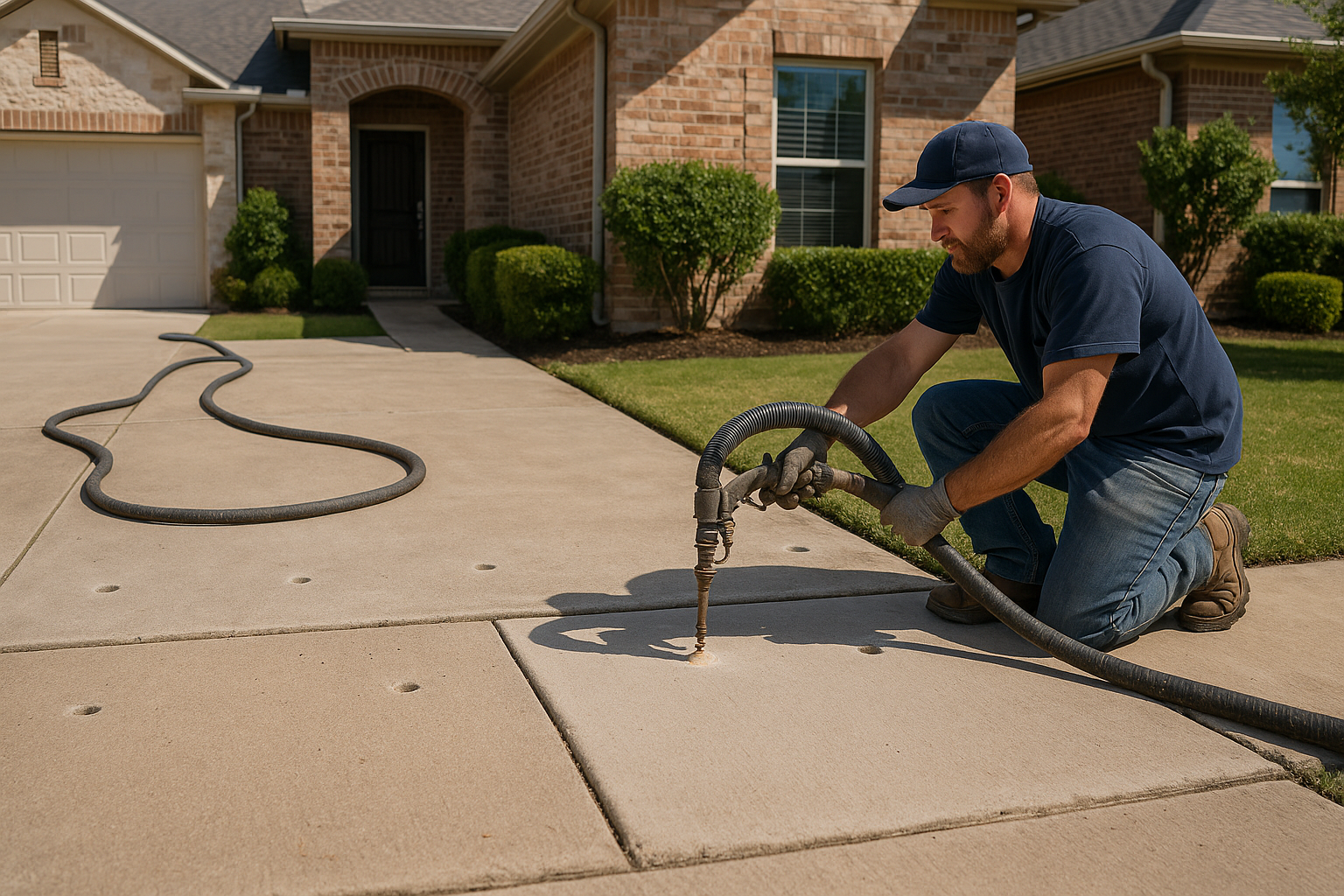
Polyurethane foam injection is a slab lifting method that uses a two-part expanding foam. We drill small holes through the settled concrete, inject the material beneath the slab, and the foam expands to fill empty space, compress loose areas, and raise the concrete in a controlled way.
For Texas property owners, the appeal is simple. The holes are small, the material is lightweight, and the slab can usually be used again quickly. On a residential job, that can mean less disruption to your driveway, walkway, porch, garage floor, or pool deck.
Texas soils make this repair especially useful. Across Central Texas and South Texas, we deal with highly active clay soils that swell when wet and shrink when dry. In parts of Austin, Buda, Kyle, New Braunfels, and San Antonio, that movement can create voids under flatwork or leave one section of concrete unsupported. In other areas, erosion from poor drainage, gutter discharge, or broken sprinkler patterns washes material out from under the slab. Foam injection helps address the support issue under the slab without a full demolition.
That said, foam injection is not magic. If the concrete is badly broken, heaved, or too thin to perform well, replacement may still be the right call. But when the slab is mostly intact and the problem is settlement, polyurethane leveling is often the smarter repair.
When Foam Injection Is the Best Option for Sunken Concrete
We usually recommend foam injection when the slab has settled but is still in serviceable shape. Typical examples include:
- Driveways with one panel lower than the next
- Sidewalks with trip hazards at joints
- Patios sloping back toward the house
- Pool decks with minor settlement
- Garage floors with isolated low sections
- Porches and steps that have dropped slightly
In these cases, the goal is to restore support and improve elevation without replacing good concrete. Foam works well when the slab has enough strength to be lifted and the settlement is tied to voids, washout, or minor to moderate subgrade movement.
It is also a good option when access matters. If you have landscaping, fencing, finished surfaces, or tight working space, a non-invasive lifting method is usually easier on the property than tearing out and repouring.
Texas weather is a big reason these issues show up. Long hot summers dry out expansive clays. Then heavy rain events soak the soil fast. That wet-dry cycle creates movement under slabs year after year. Add in runoff from downspouts, poor grading, or leaking irrigation, and you have the perfect setup for settlement. In many cases, leveling the slab is only part of the repair. Managing water around the concrete is what helps protect the fix.
That is why we also pay attention to joints and drainage details. Open joints let water run below the slab, and once fines start washing out, the support gets weaker. If your slab has separation at the joints, sealing them can help reduce future washout. You can learn more on our expansion joints page, and for joint sealing products and info, visit sealmyjoints.com.
How the Foam Injection Process Works in Texas
On a typical job, we start by evaluating the slab and the surrounding conditions. We look at crack patterns, amount of settlement, drainage, nearby foundations, and whether the concrete is a good candidate for lifting. If the slab is shattered or the base failure is too severe, we will tell you straight. Not every slab should be foamed.
When it is a fit, the process usually goes like this:
- Layout and assessment. We identify the low areas, check elevations, and mark injection points.
- Drilling small holes. Small holes are drilled through the slab in strategic locations.
- Foam injection. The polyurethane material is injected beneath the slab, where it expands into voids and begins lifting.
- Controlled slab raising. We monitor the lift carefully to bring the panel back into better alignment without overlifting.
- Patching holes. The drilled holes are patched after the lift is complete.
- Review of water control. We look at what caused the settlement in the first place, including drainage and joint issues.
One advantage of foam in Texas is that the material adds support without the heavy weight of more concrete-based fill. That can matter where the underlying soils are already unstable. Another benefit is speed. Many foam leveling jobs are completed in hours, not days, and the slab is often ready for traffic much sooner than a replacement pour.
Still, good results depend on proper diagnosis. If the real problem is active erosion from a downspout dumping at the slab edge, lifting the slab without fixing the water path is only half a repair. If tree roots are pulling moisture from one side of the slab in a drought-prone area, that moisture imbalance needs to be part of the conversation too. In Texas, concrete movement is usually tied to soil and water together.
Foam Injection vs Concrete Replacement: Cost and Results
For many property owners, the biggest question is cost. While every job is different, polyurethane foam injection concrete leveling in Texas often costs less than full replacement, especially when you factor in demolition, haul-off, forming, new concrete, finishing, and cure time.
As a ballpark, homeowners often find that leveling costs significantly less than replacing an entire slab section. Replacement may be necessary when concrete is badly deteriorated, but if the slab is basically sound, paying to remove and repour it can be more expense than the situation calls for.
The other big factor is downtime. With replacement, you are dealing with demolition noise, debris, possible damage to adjacent surfaces, and waiting on the new concrete to gain strength. With foam lifting, the process is cleaner and usually much faster. For a busy homeowner or commercial property, that matters.
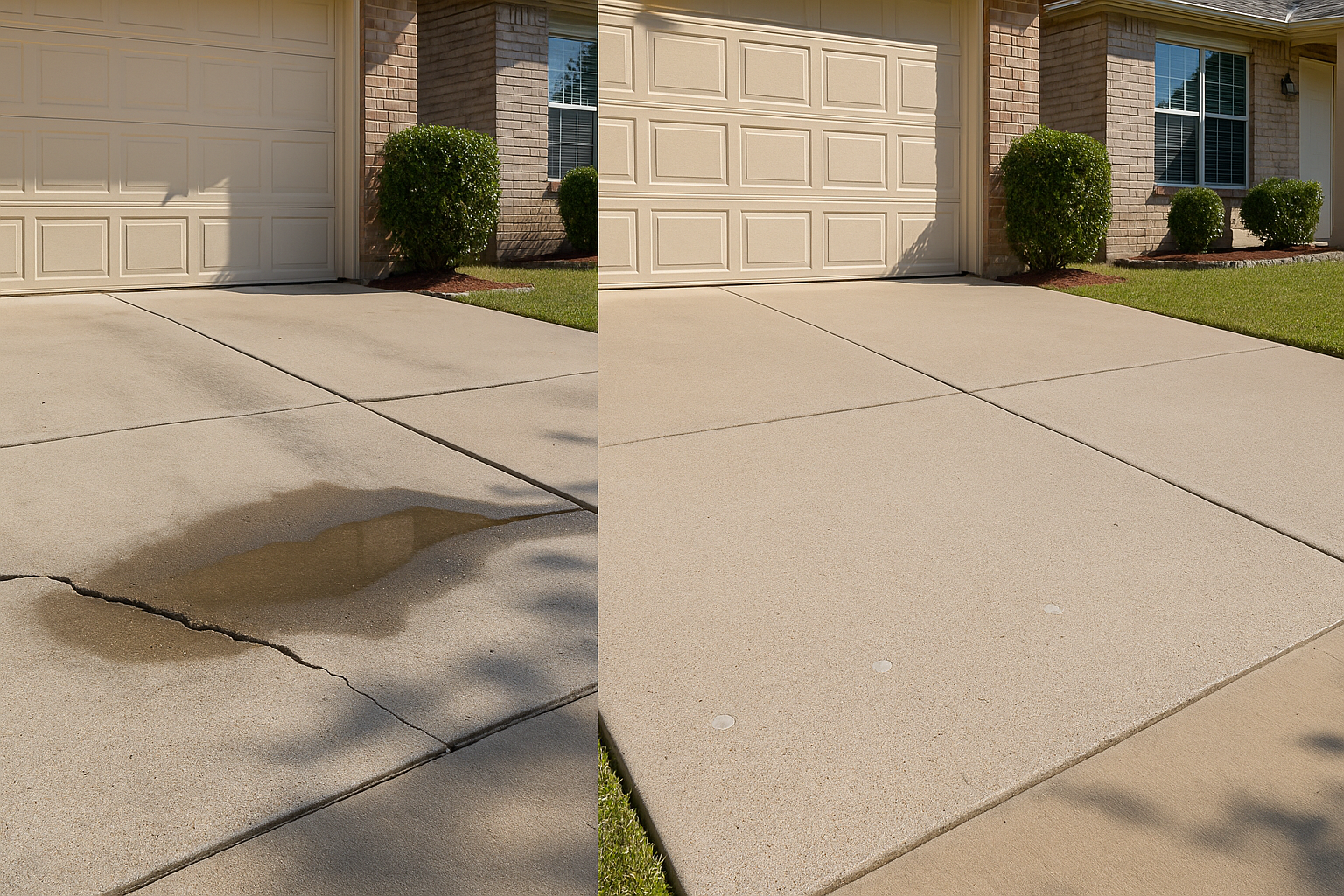
Results also depend on the condition of the slab. Foam injection can improve slope, reduce trip hazards, and restore support very effectively, but it does not make old concrete look brand new. Existing cracks, discoloration, and surface wear will still be there unless additional repairs are done. What it does do is address the settlement problem in a targeted way.
Replacement makes more sense when:
- The slab is crumbling or badly fractured
- There is major heaving or severe displacement
- The concrete was poured too thin or poorly reinforced
- You want a full redesign, not just a repair
Foam injection makes more sense when:
- The slab is mostly intact
- The issue is settlement, not total failure
- You want a faster repair with less mess
- You want to preserve surrounding landscaping or finished areas
- You are trying to avoid the higher cost of replacement
In Texas neighborhoods from Austin to San Antonio, this repair is commonly used on residential flatwork where settlement has created a safety issue or drainage problem but the concrete still has years of life left in it. A good contractor should be able to tell you quickly whether your slab is a candidate or whether replacement is the more honest recommendation.
What Texas Property Owners Should Do Next
If you have a slab that has dropped, do not wait too long to deal with it. Small settlement problems have a way of getting worse when water keeps moving underneath the concrete. A low driveway panel turns into a bigger edge. A patio that traps water starts feeding more moisture toward the house. A sidewalk joint opens up and becomes a trip hazard.
The best first step is to have the slab evaluated by a contractor who understands Texas soils, drainage, and concrete behavior. Around here, you are not just fixing concrete. You are dealing with expansive clay, heat, drought, flash rain, and the way all of that affects support under the slab.
If you want to know whether foam injection concrete leveling in Texas is the right fix for your property, contact Hill Country Slabs. We can help you decide whether lifting or replacement makes more sense and what should be addressed to help the repair last. Visit /contact or call (737) 287-4308 to schedule an inspection.