Texas HOAs stay busy. Between sidewalks, pool decks, shared drive lanes, clubhouse approaches, mailbox pads, and walking trails, there is always concrete somewhere in the community starting to settle. In our part of the state, that usually comes back to shifting soils, hard summer heat, heavy rain events, and drainage problems that wash out support under slabs. The good news is you do not always need to tear out and replace good concrete just because it has dropped.
Concrete leveling for HOA communities in Texas gives boards and property managers a faster way to correct trip hazards, improve drainage, and clean up the look of common areas without the disruption of full replacement. For many communities, foam leveling can lift settled concrete in a matter of hours, not days, and the cost is often 30% to 70% lower than replacement depending on access, slab condition, and how many areas are being repaired at once.
If your association is dealing with uneven walks or shared-area slabs, our Commercial Concrete Leveling Texas service and Concrete Sidewalk Repair in Texas service are built for exactly this kind of work across communities in Austin, TX, San Antonio, TX, and surrounding areas.
Why HOAs in Texas Choose Concrete Leveling
Most HOA boards are balancing three things at the same time: safety, appearance, and budget. When a sidewalk panel settles an inch or two, residents see it right away, and so do insurance carriers, board members, and property managers. Uneven concrete in common areas creates liability exposure, but replacing every affected slab can be expensive and disruptive.
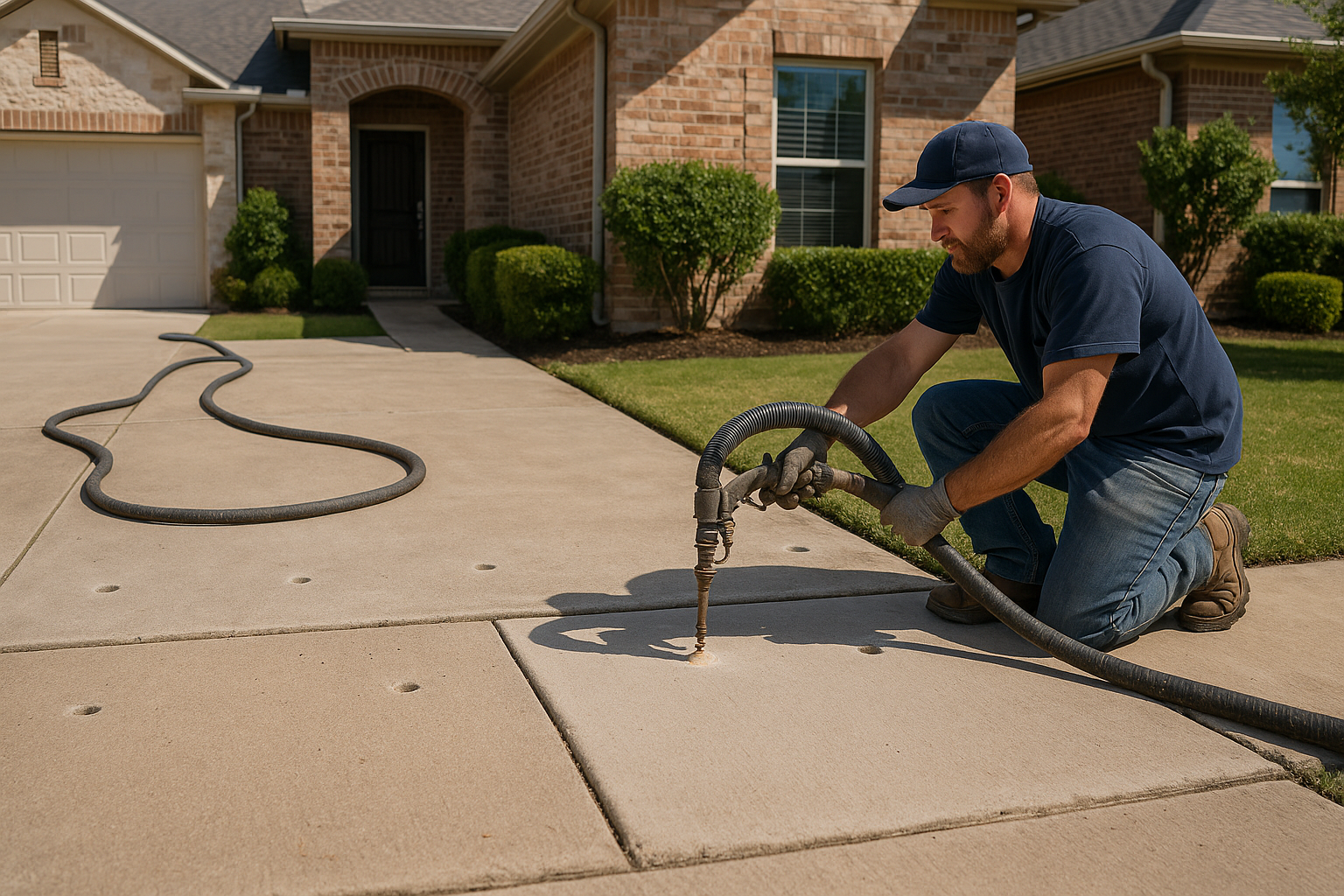
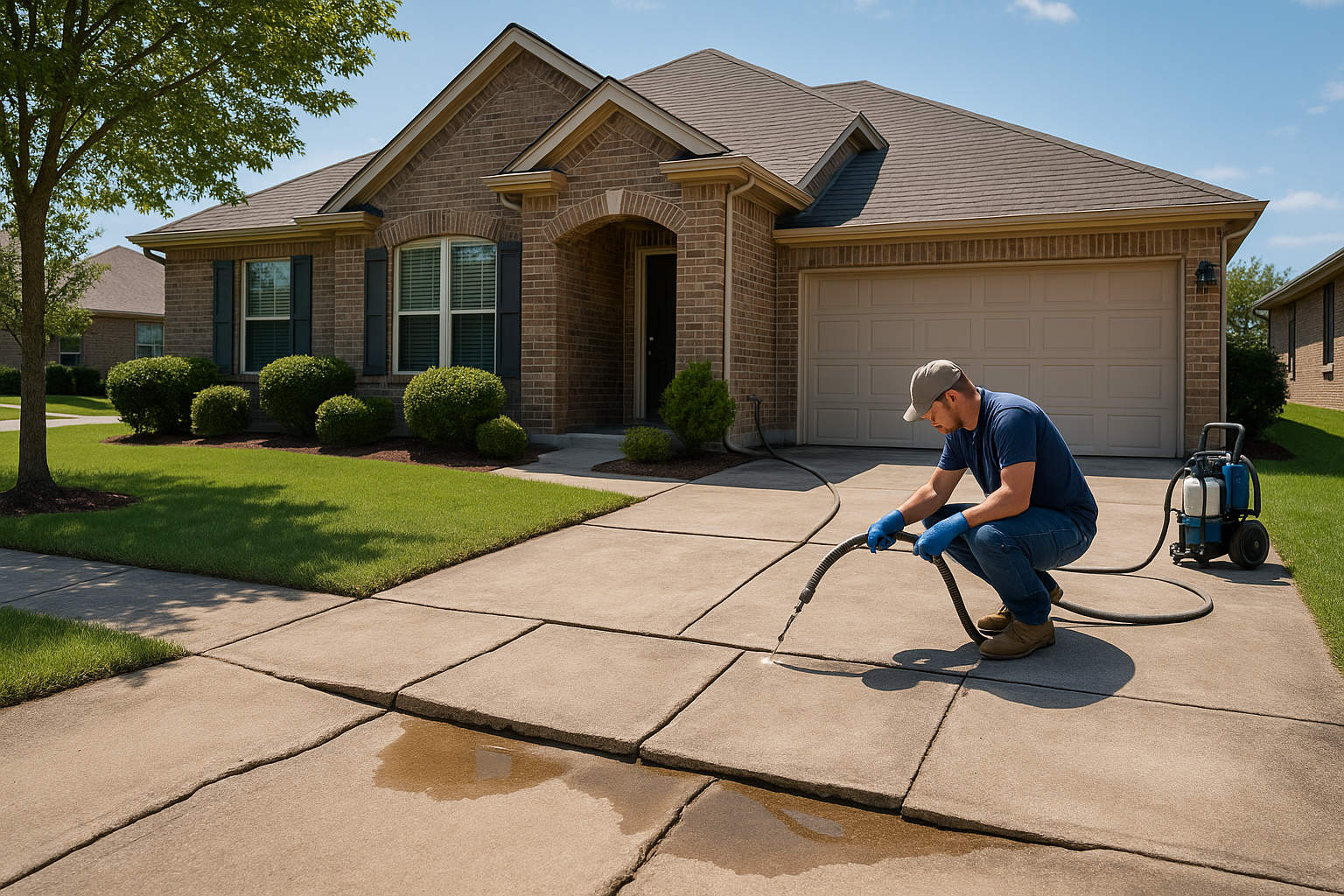
That is why more Texas HOAs choose foam leveling. Instead of demolition, we drill small holes through the slab and inject a structural polyurethane foam underneath. The foam expands, fills voids, and lifts the concrete back toward grade. In many cases, residents can use the area again the same day.
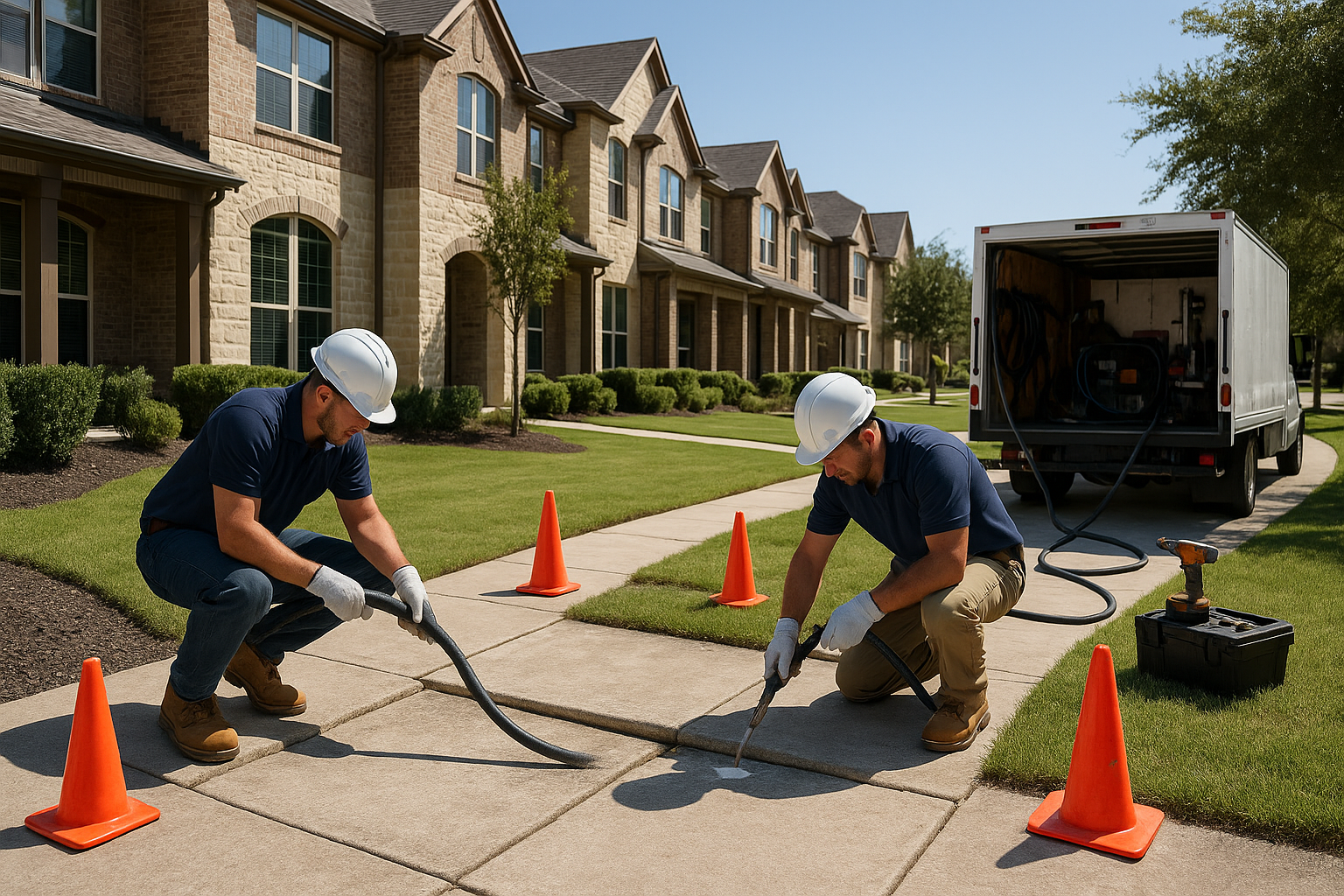
For communities with active foot traffic, that matters. You do not want a main sidewalk closed off all week near a clubhouse, dog park, mail kiosk, or school bus stop. A leveling crew can usually target the worst trip hazards first, phase larger repairs by section, and keep the community functioning while the work gets done.
Texas conditions also make leveling a practical option. In Central Texas and South Texas, we see expansive clay soils that swell when wet and shrink when dry. That movement is a big reason slabs settle and tilt. In other areas, sandy or loamy soils can wash out under sidewalks during heavy storms. Add in irrigation overspray, poor drainage around downspouts, and root activity from mature landscaping, and it is easy to see why HOA concrete moves over time.
For boards trying to stretch reserve dollars, the value is straightforward. Typical HOA leveling projects can often be completed in 1 day for targeted areas, and costs per panel are commonly far below what it takes to demo, haul off, reform, pour, and cure new concrete. Replacement still has its place, but if the slab is structurally sound, leveling is usually the first option worth pricing.
Common HOA Concrete Problems in Sidewalks and Shared Areas
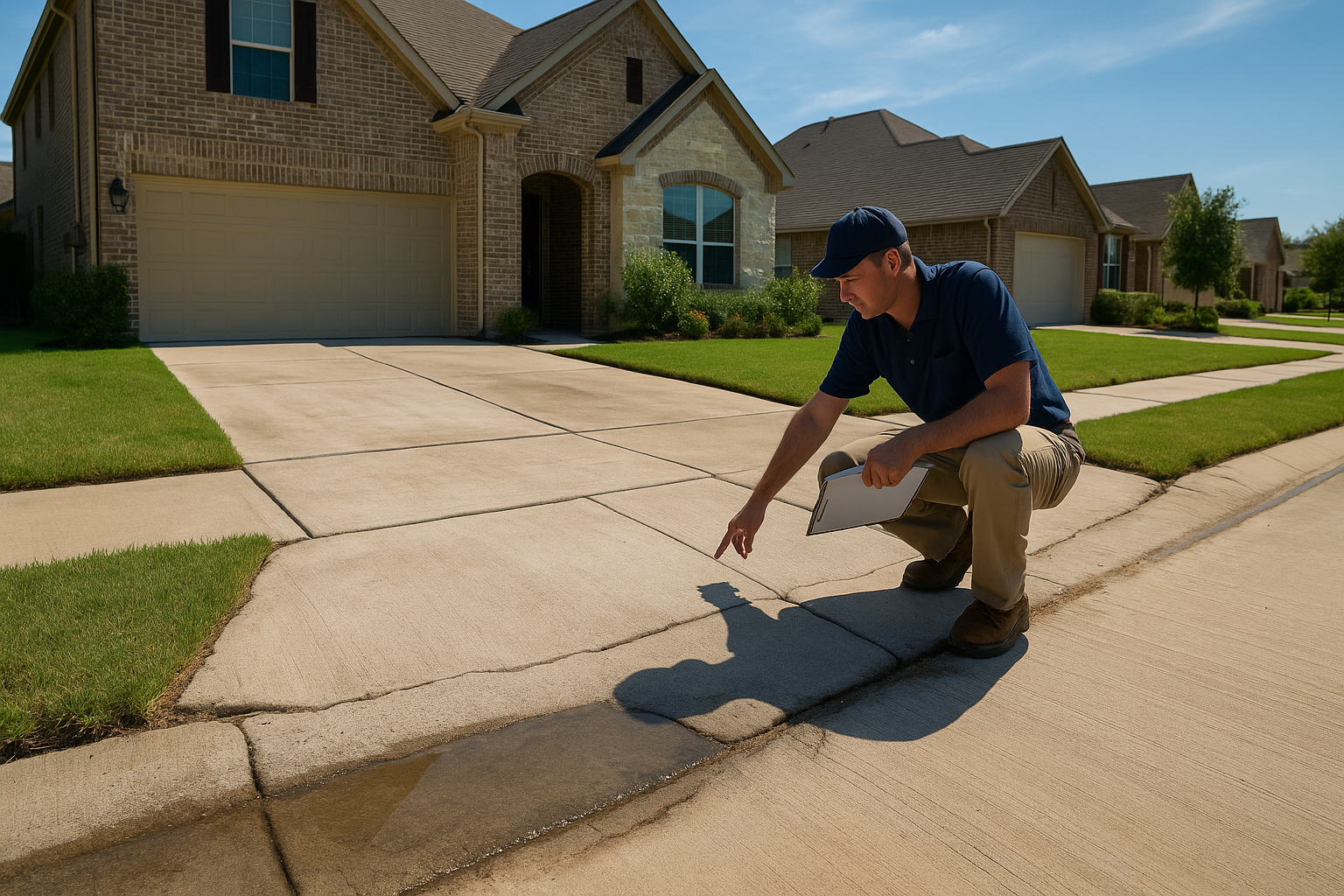
We see the same patterns over and over in Texas neighborhoods. The most common issue is sidewalk settlement at panel joints. One panel drops while the next stays put, leaving a lip that catches shoes, strollers, bikes, and mobility devices. Even a height difference of 1/2 inch to 1 inch can turn into a resident complaint fast.
Another common problem is drainage-related settlement around common-area walks. If water stands near a sidewalk after storms or irrigation cycles, it can soften or erode the base under the slab. The result is a low area that keeps getting worse. In HOAs, these are often found near amenity centers, retention areas, trail systems, and fence lines where runoff patterns were never corrected.
Shared drive approaches and alley access lanes also settle, especially where utility trenches were backfilled years earlier. In townhome and condo communities, we often find slabs dipping near garage entries, dumpster pads, and parking transitions. Those areas take repeated vehicle loads, and if the base was weak to begin with, settlement shows up sooner.
Pool decks and clubhouse walks are another big one. These areas need to look good, but they also need to drain correctly. If a slab pitches water toward a building or leaves birdbaths where residents walk barefoot, that is a maintenance and safety problem. Foam leveling can often improve the grade without tearing up the whole area.
Then there are trip hazards caused by tree roots and seasonal soil movement. Trees add value and curb appeal, but they can also affect sidewalks in landscaped common areas. Sometimes replacement is needed if a panel is badly cracked or heaved. But in plenty of cases, the bigger issue is loss of support under the slab, not total failure of the concrete itself.
For HOA boards, it also helps to look beyond the slab and think about joints. Failed or open joints let water get below the concrete, which leads to base erosion and repeat settlement. That is why we often recommend reviewing joint condition and sealing needs at the same time. You can learn more about joint protection at /expansionjoints and at sealmyjoints.com.
Foam Leveling vs Concrete Replacement for Community Repairs
There is a time for replacement and a time for leveling. A good contractor should tell you the difference. If a slab is shattered, severely spalled, broken into multiple loose sections, or failing because of a larger structural issue, replacement may be the right call. But if the concrete is still in decent shape and has simply settled, foam leveling is usually the smarter repair.
The biggest advantage is speed. Replacement means saw cutting, demolition, hauling debris, grading the base, setting forms, pouring new concrete, and waiting on cure time. That can leave HOA sidewalks and amenity areas restricted for several days or longer. Foam leveling is much less invasive. We drill small holes, inject the material, monitor lift, patch the holes, and move on.
The second advantage is cost. While every property is different, foam leveling is often 30% to 70% less expensive than full replacement for settled slabs that are otherwise sound. On larger HOA projects with repeated problem areas, bundling repairs can improve the per-area cost even more.
The third advantage is appearance and continuity. In established communities, new concrete patches can stand out against older sidewalks and shared slabs. Leveling preserves the original section, which usually keeps the finished look more consistent across the property.
There are also fewer disruptions to landscaping and resident traffic. You are not bringing in demo equipment for every sunken panel, and you are not generating the same level of noise, dust, and debris. For occupied communities, that matters a lot.
What leveling does not do is fix everything around the slab. If drainage is washing out support, that drainage issue needs to be addressed. If joints are open, they need attention. If irrigation is oversaturating a planter strip beside a walk, that should be corrected too. The best HOA repair plans treat the cause, not just the symptom.
How HOA Boards Can Plan a Concrete Leveling Project
The best HOA projects start with a clear site walk. Have the property manager, board representative, and contractor identify the worst hazards first. Mark sidewalk offsets, low spots holding water, settled drive approaches, and any common-area slabs affecting accessibility or appearance. Photos help, but walking the site together is better.
Next, sort repairs into priorities. We usually recommend three categories: immediate trip hazards, drainage-related settlement, and cosmetic or long-term maintenance items. That helps a board decide what must be fixed now and what can be phased into the next budget cycle.
It also helps to group repairs by area. Instead of tackling one panel here and one panel there over six months, it is often more efficient to handle all clubhouse walks at once, all mailbox areas at once, or all front-entry sidewalks in one phase. Mobilization matters, and grouped repairs are usually easier on both the schedule and the budget.
Ask your contractor about slab condition, access, and the likely cause of settlement. In Texas neighborhoods, the answer may be expansive clay, poor surface drainage, broken irrigation lines, utility trench settlement, or old base washout from stormwater. In places like Austin and San Antonio, we regularly see movement tied to alternating drought and heavy rain cycles. That pattern is hard on flatwork.
Boards should also think about communication. Let residents know where work will happen, how long each area will be limited, and when access will be restored. One reason leveling works so well for HOAs is that the disruption window is short. In many cases, residents are surprised how quickly a walkway can go from unsafe to serviceable again.
Finally, get a realistic plan for follow-up maintenance. That may include reworking drainage, sealing joints, or monitoring areas near large trees and downspouts. Concrete repair lasts longer when the underlying water and soil issues are not ignored.
At Hill Country Slabs, we work with Texas property managers and HOA boards that want practical repair options, not sales pressure. If your community has sunken sidewalks, uneven shared concrete, or common-area trip hazards, we can help you evaluate whether leveling makes sense before you spend money on replacement.
Need a quote for your HOA community? Contact Hill Country Slabs at (737) 287-4308 or visit /contact to schedule an inspection. We serve communities across Central and South Texas with straightforward recommendations and clean, efficient repairs.