If you’ve got sunken concrete around house areas in Texas, don’t ignore it. What starts out looking like a low sidewalk panel, tilted patio edge, or dropped driveway apron can turn into a drainage problem fast. Around homes in Austin, Round Rock, Georgetown, Temple, and all across Central Texas, we see concrete settle for the same basic reasons: shifting clay soils, poor compaction, water moving where it shouldn’t, and long dry spells followed by hard rain.
Most homeowners first notice it when water starts ponding near the slab, the walkway pulls away from the house, or somebody catches a toe on a lip that wasn’t there a year ago. The good news is that not every sunken slab has to be torn out. In a lot of cases, foam lifting can raise and stabilize the concrete without the mess and cost of replacement. If the settlement is affecting larger structural flatwork, our Concrete Slab Repair team can usually evaluate whether the slab is still a good candidate for lifting.
What Causes Sunken Concrete Around a House?
In Texas, the soil under and around a house is usually the whole story. Expansive clay is common throughout the Austin and Round Rock area, and that soil swells when it gets wet and shrinks when it dries out. That constant movement creates voids under sidewalks, porches, driveways, and approach slabs. Once support is lost, the concrete starts dropping.
We also see settlement caused by poor fill compaction during construction. A lot of homes have backfilled soil around the perimeter after the foundation was poured. If that material wasn’t compacted properly, it can settle over time, especially near front walks, garage entries, AC pads, and side yard paths. After a few Texas summers and a couple of heavy rain seasons, the slab above it starts to sink.
Drainage is another big one. If your gutters dump too close to the house, if downspouts aren’t extended, or if the yard grade pushes water back toward the foundation, the soil gets soft and unstable. Then when the weather flips dry again, that same soil contracts. That wet-dry cycle is rough on flatwork. Areas with missing or damaged joint sealant are especially vulnerable, which is why we often recommend homeowners inspect and maintain expansion joints. Proper sealing can also help limit water infiltration, and resources like sealmyjoints.com are useful if you want to understand why joint protection matters.
Tree roots can contribute too, but not always in the way people think. Roots may lift some sections, while soil moisture changes caused by large trees can dry out adjacent ground and lead to settlement in nearby slabs. Add in intense heat, drought conditions, and sudden thunderstorms, and Texas gives concrete plenty to deal with.
- Expansive clay soils that swell and shrink
- Poor compaction of backfill around the home
- Drainage issues from gutters, grading, or runoff
- Drought followed by heavy rain creating voids under slabs
- Washed-out base material near driveways, walkways, and patios
When Sunken Concrete Becomes a Foundation Risk
Not every settled slab is a foundation problem, but some of them absolutely create conditions that can lead to one. The biggest issue is usually water. When concrete around the home settles toward the house, it can direct runoff back to the foundation instead of away from it. That increases the chance of standing water, soil expansion, and inconsistent moisture around the slab edge.
In Texas foundation work, consistency matters. You don’t want one side of the house staying soaked while another side dries out and shrinks. That imbalance is what contributes to movement. If your front walkway, patio, or driveway edge is creating a trough that traps water along the home, it’s time to deal with it before it turns into a bigger repair.
Here are the warning signs we tell homeowners to watch for:
- Concrete has pulled away from the house and left a visible gap
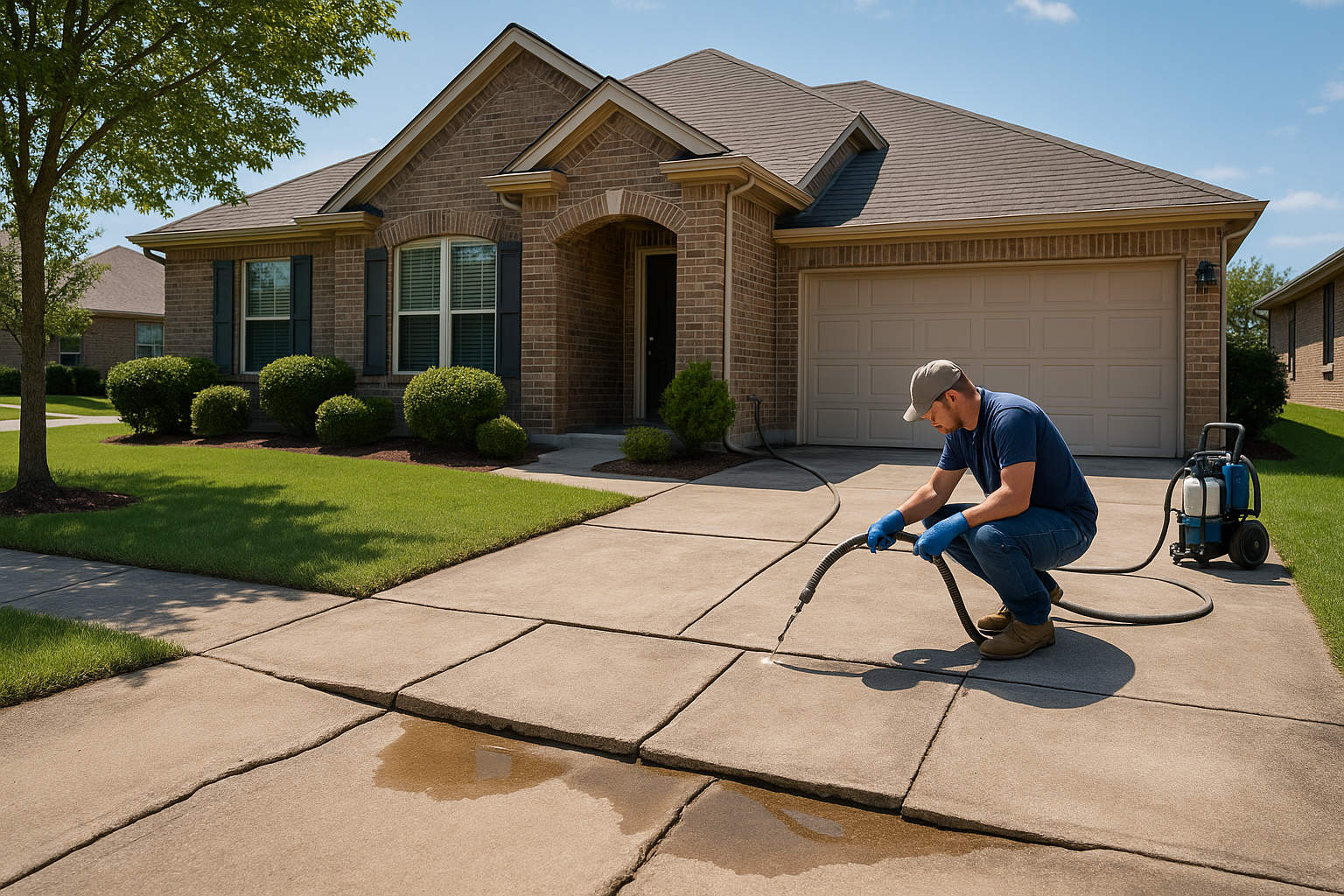
- Water ponds against the slab after rain
- Walkways or patios now slope toward the home
- Garage entry or driveway has dropped near the foundation
- Cracks are showing up in nearby brick, sheetrock, or interior floors
- Expansion joints are open and allowing water down beside the slab
If you’re seeing those issues around homes in Austin, TX or Round Rock, TX, it’s worth getting the concrete evaluated sooner rather than later. A settled walkway may seem minor, but if it changes drainage, it becomes more than a trip hazard. It becomes part of a moisture management problem.
As a general rule, a height difference of 1 inch or more is enough to create both a safety issue and a drainage concern, especially near entryways. Once the slab starts holding water near the house, the cost of waiting can go up fast. A simple lift now may prevent much bigger foundation or replacement work later.
How Foam Lifting Fixes Concrete Around the Home
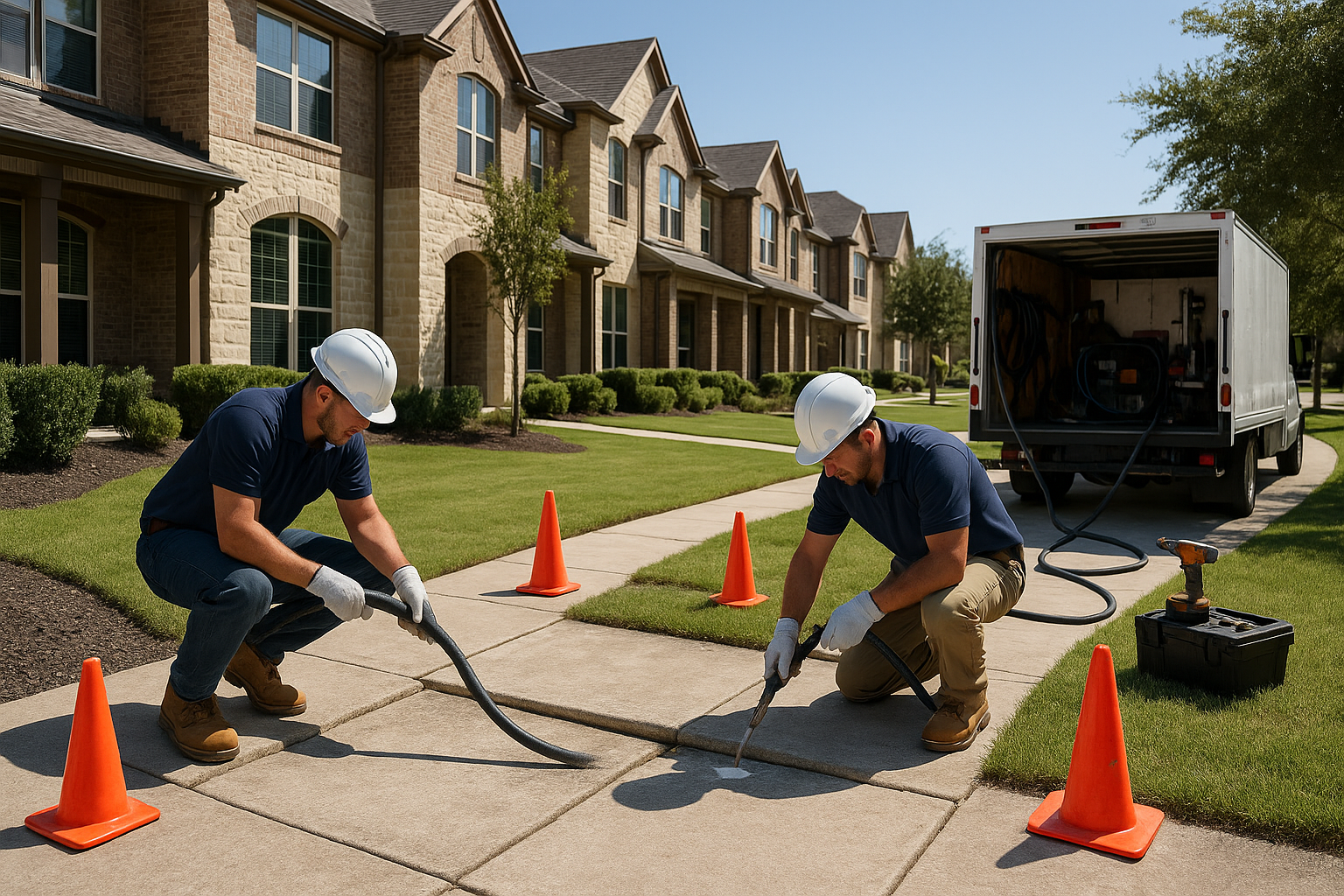
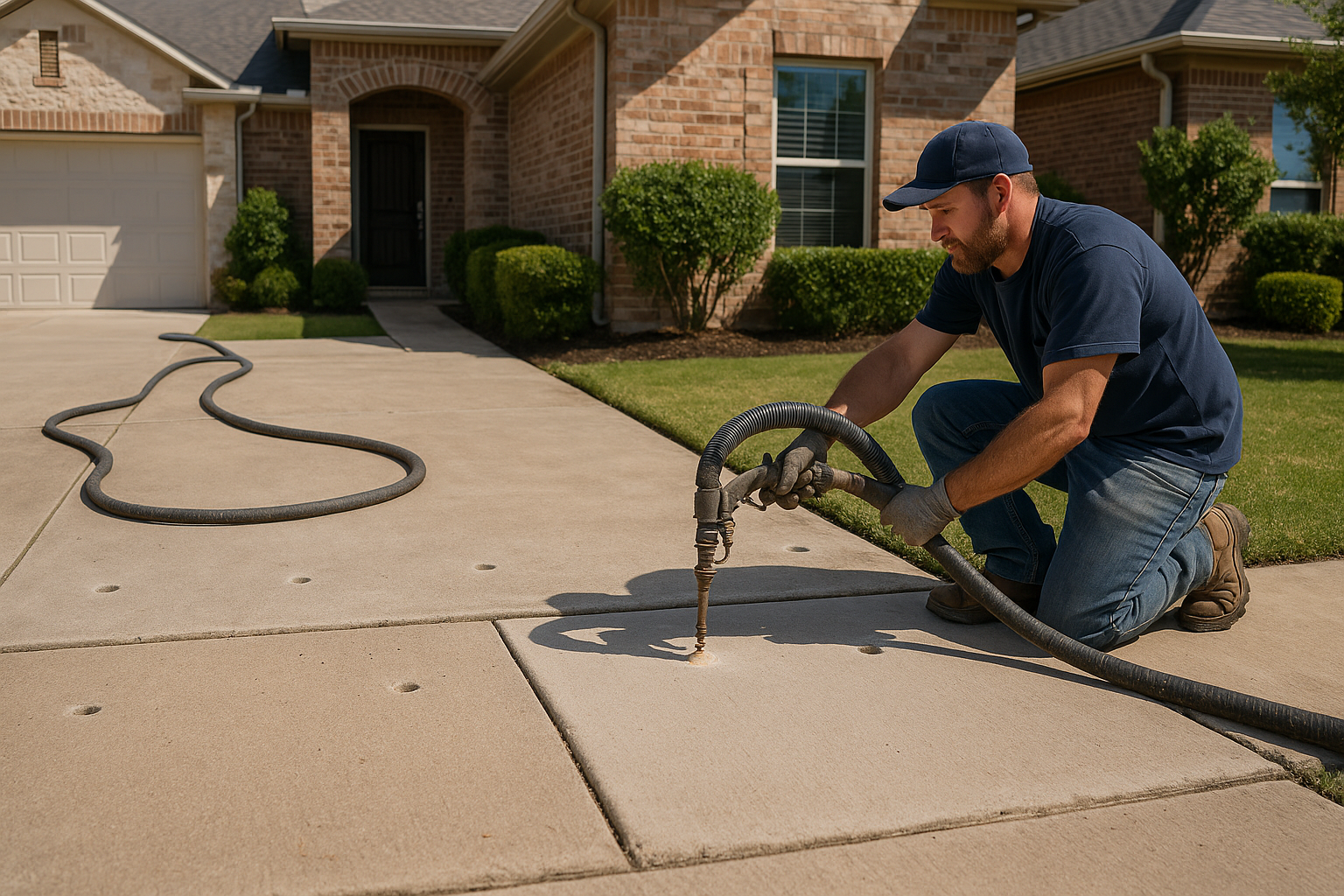
For many residential jobs, polyurethane foam lifting is the cleanest fix. We drill small holes through the settled slab, inject high-density foam underneath, and use that material to fill voids, stabilize loose soil, and lift the concrete back toward grade. It’s a good fit for sidewalks, patios, pool decks, driveway sections, and other flatwork around the house.
The reason homeowners like foam is simple: it works without turning the yard into a demolition site. There’s no need to remove full slabs, haul off debris, wait on new concrete, and then stay off the area for days. In most cases, the section can be used again quickly after the repair.
Foam lifting is especially useful when the concrete itself is still in decent shape. If the slab is structurally sound and just lost support underneath, lifting is often the smarter play. That’s true for residential flatwork and in some cases for larger surfaces tied into our Driveway Lifting work as well.
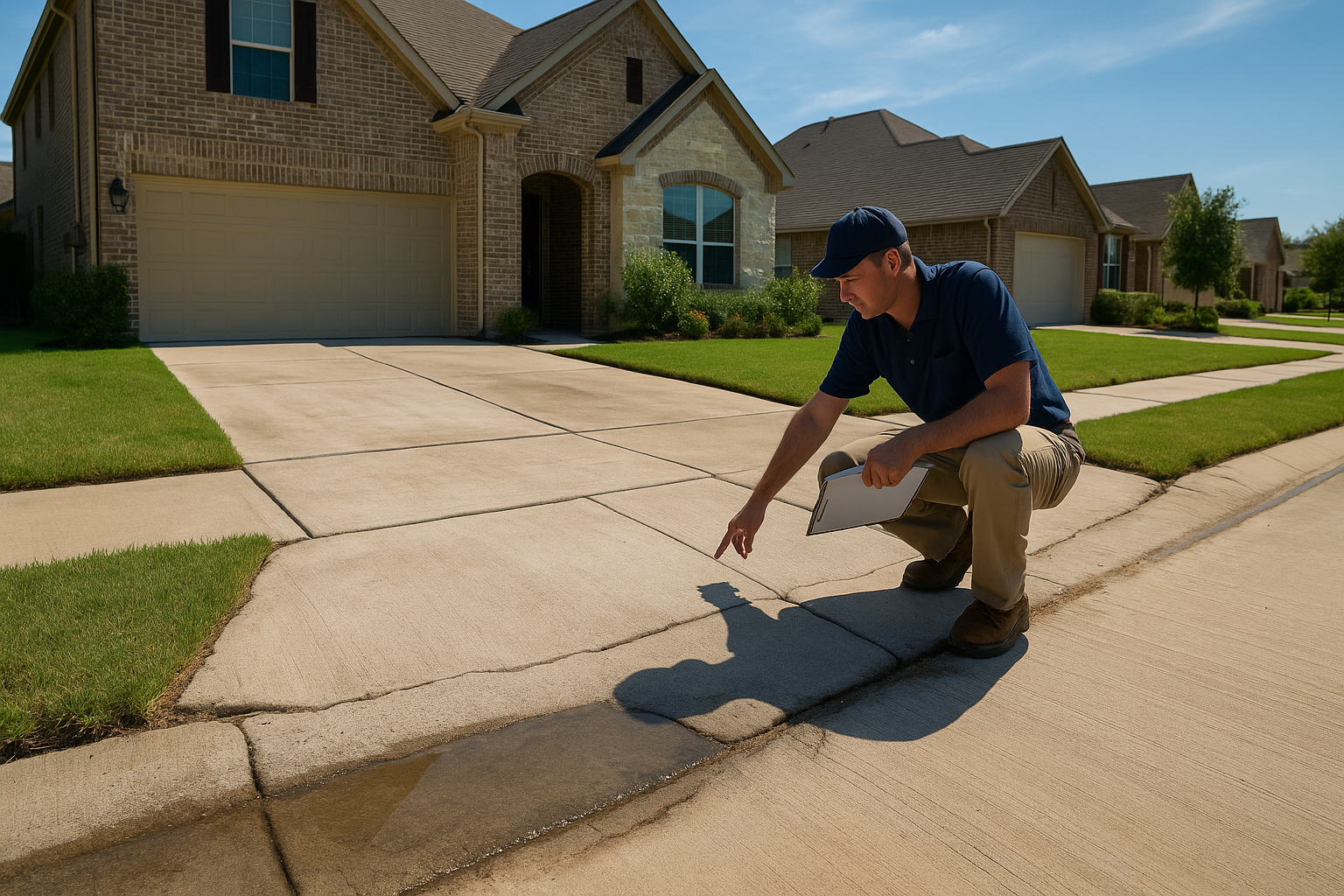
- We inspect the slab, surrounding grade, and drainage pattern.
- We identify voids, settlement depth, and whether the concrete is still a good candidate for lifting.
- Small injection holes are drilled in strategic locations.
- Foam is injected under the slab to fill gaps and raise the panel.
- The slab is brought back to a safer, better-draining position.
- Holes are patched and the area is cleaned up.
Typical advantages of foam lifting include:
- Less mess than demolition and replacement
- Fast cure time with minimal downtime
- Lightweight material that won’t overload weak soils
- Precise lifting control near homes, porches, and garage entries
- Lower cost than full replacement in many situations
On many residential jobs, lifting costs land around 40% to 70% less than replacement, depending on access, slab condition, and how much settlement has occurred. That’s why homeowners often choose lifting first when the concrete is still salvageable.
When to Repair vs Replace Sunken Concrete
This comes down to condition. If the slab is mostly intact, settlement is the main problem, and there isn’t severe breakup, foam lifting is usually worth serious consideration. If the concrete is heavily cracked, broken into multiple loose pieces, badly spalled, or has underlying drainage failure that hasn’t been corrected, replacement may be the better long-term move.
We usually lean toward repair when:
- The slab has settled but is still structurally sound
- Cracks are limited and panels remain largely intact
- The main issue is voids beneath the concrete
- Drainage can be corrected along with the lift
- The homeowner wants a faster and more cost-effective option
Replacement makes more sense when:
- The concrete is shattered or missing significant sections
- Surface deterioration is severe
- The slab was poured too thin or built poorly from the start
- Tree root damage or erosion has made the area unstable beyond a simple lift
- You’re already planning a full redesign or new layout
For most homes, the smartest move is to fix the settlement and fix the water issue at the same time. If you lift the slab but leave open joints, bad grading, or short downspouts, there’s a good chance the problem comes back. We always tell folks that concrete repair and drainage control need to work together.
If you’ve noticed sunken concrete around house areas, uneven walkways, pooling water, or slabs pulling away from the foundation, don’t wait until it becomes a bigger foundation headache. Hill Country Slabs handles concrete leveling and slab stabilization for homeowners across Central Texas. Contact us through our contact page or call (737) 287-4308 to schedule an evaluation and find out whether lifting or replacement makes the most sense for your property.