If you are searching for concrete driveway lifting before and after, you probably want to know one thing: is the change really worth it? In Texas, the answer is often yes. We see it all the time in Austin, Round Rock, and surrounding areas where shifting soil, hard summer heat, and sudden rain leave driveway slabs uneven, cracked, and holding water.
The biggest difference in a before-and-after driveway lifting job is not just appearance. It is safety, drainage, and keeping the slab you already paid for instead of tearing it out too early. In many cases, foam leveling can raise a settled panel in just a few hours, improve curb appeal the same day, and cost a whole lot less than replacement.
If your slab is dropping at the garage, sinking at the sidewalk connection, or creating a trip edge near the street, Driveway Lifting may be the right fix. If settlement is tied to broader structural movement, it may also make sense to look at Concrete Slab Repair before the problem gets worse.
What Concrete Driveway Lifting Before and After Really Looks Like
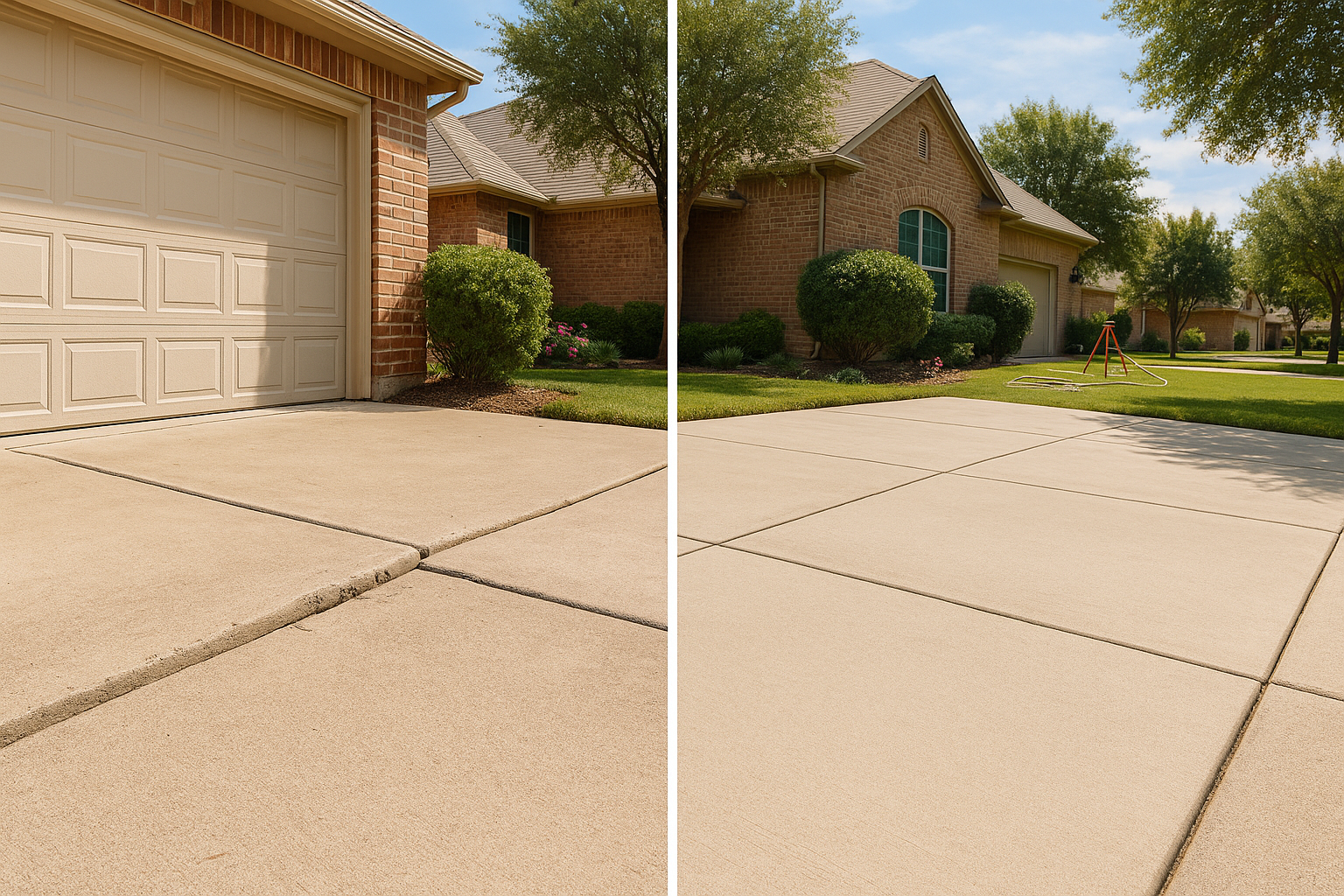
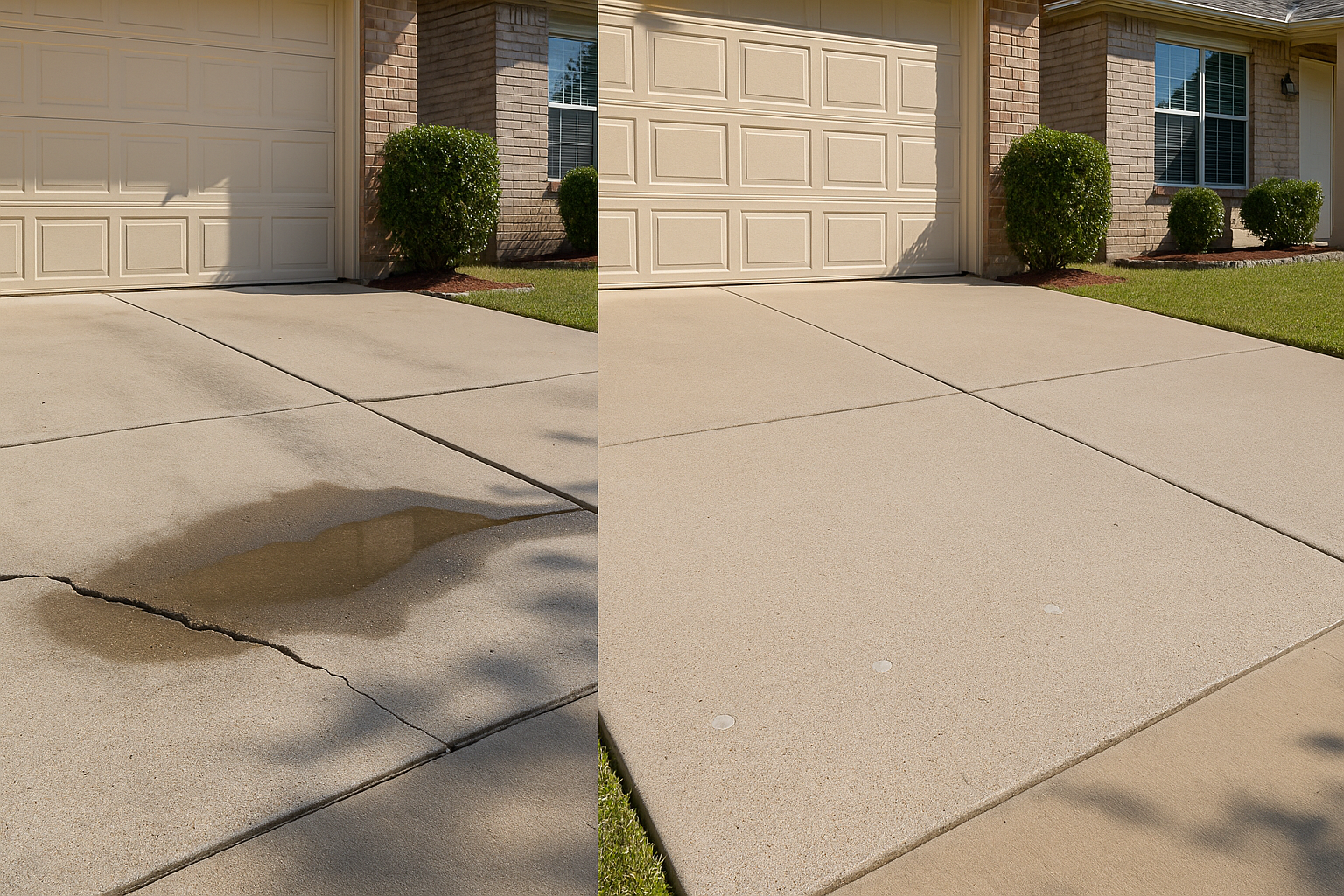
Before lifting, most Texas driveways show the same set of problems. One slab panel sits lower than the next. Water ponds after a storm. The edge near the garage lip starts taking more impact from vehicles. You may also see cracks opening around joints where movement has been going on for a while.
After lifting, the change is usually straightforward and noticeable:
- The sunken section is brought back closer to original grade.
- Trip hazards at joints are reduced or removed.
- Water drains better instead of sitting against the slab or garage.
- Injection holes are patched and left clean.
- The driveway looks more uniform without the cost and mess of full demolition.
What homeowners like most is that a good lift does not look like a patchwork rebuild. It still looks like your driveway, just reset to where it should have been. On a proper job, the “after” is cleaner, flatter, and more functional without weeks of downtime.
In Central Texas, expansive clay soils are one of the biggest reasons we get these calls. Clay around Austin and Round Rock swells when wet and shrinks when dry. That constant movement can leave one portion of a driveway supported while another slowly settles out. Add in poor runoff, leaking downspouts, or erosion under the slab, and the drop can become pretty obvious.
In other parts of Texas, sandy or mixed soils can wash out under the concrete faster than homeowners expect. After a few heavy storms, the surface may still look intact, but voids can form underneath. That is where lifting with foam often makes sense, because it both raises the panel and helps fill the unsupported space below.
Signs Your Driveway Is a Good Candidate for Lifting
Not every driveway needs to be replaced. A lot of the slabs we inspect are still solid enough to save. Usually, lifting is a good option when the concrete is structurally decent but has lost support or settled unevenly.
Common signs the slab can likely be lifted
- One or more sections have sunk 1 to 3 inches.
- Cracks are minor to moderate and the slab pieces are still mostly intact.
- Water pools near the garage, front walk, or expansion joints.
- There is a visible lip creating a trip hazard.
- The driveway settled because of soil movement, erosion, or washout.
- You want a faster repair with less disruption than replacement.
Texas homeowners often call after they notice tire scrape, standing water, or a bump when pulling into the garage. Those are all signs the slab elevation has changed. If caught early, lifting can keep the driveway serviceable for years without the expense of tearing everything out.
It is also smart to check the joints. If the driveway has open or failing joints, water gets down below the slab and keeps the cycle going. That is why we tell homeowners not to ignore joint maintenance. If yours are separating or brittle, take a look at expansion joints and quality joint sealing at sealmyjoints.com. Keeping water out matters in Texas.
How Foam Leveling Changes a Sunken Driveway
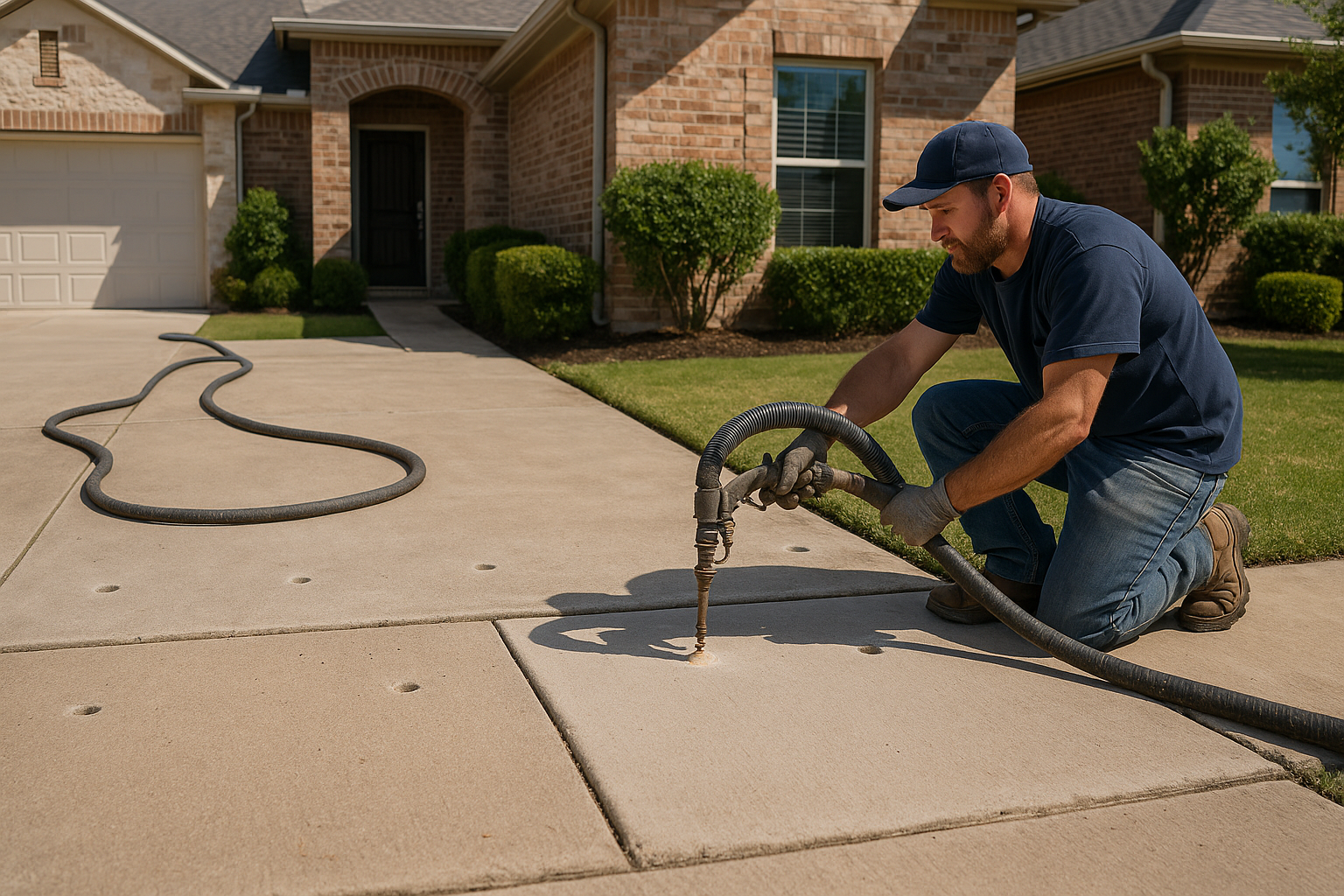
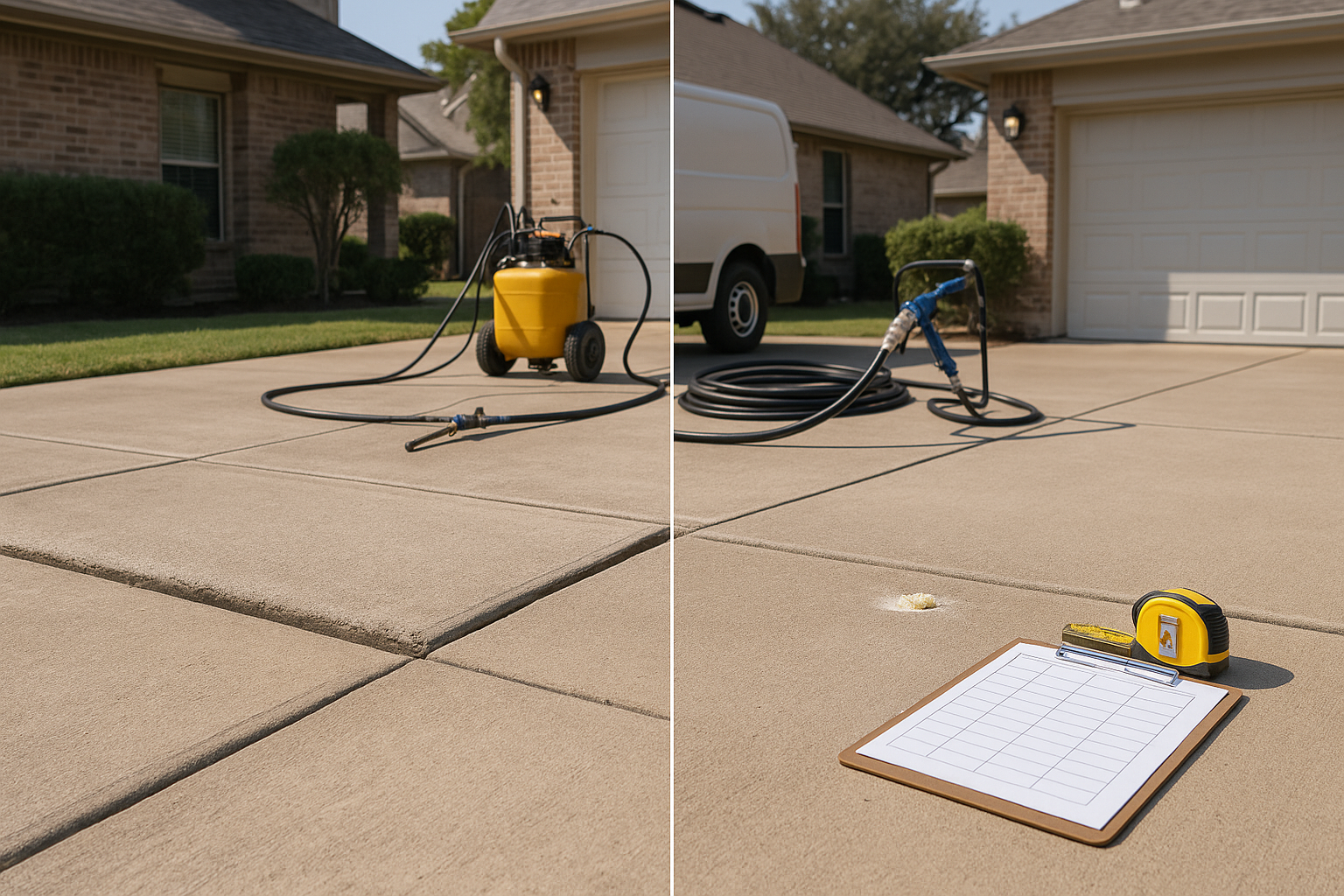
Foam leveling works by injecting expanding material beneath the concrete through small drilled holes. As the foam expands, it fills voids, adds support, and carefully lifts the slab. The goal is controlled movement, not forcing broken concrete into place.
The before-and-after difference with foam leveling is usually immediate. You can often watch a sunken panel rise while the crew checks grade and alignment. On most residential driveways, the work is completed in a few hours, and the slab is typically ready for use much faster than newly poured concrete.
What improves after foam leveling
- Elevation: The settled panel is lifted closer to level with adjoining slabs.
- Drainage: Water has a better path away from the garage and house.
- Support: Voids below the slab are reduced, helping prevent more rocking or movement.
- Safety: Uneven edges that catch shoes, bikes, and tires are minimized.
- Appearance: The driveway looks straighter and more maintained.
For many homeowners, the cost difference is what gets their attention. In Texas, driveway lifting commonly runs far less than replacement, depending on access, slab condition, and how much area has settled. While every site is different, a lift is often in the range of 40% to 70% less than full replacement. That is a major reason folks choose leveling first when the concrete is still salvageable.
Another big factor is timeline. Replacement can mean demolition, haul-off, base work, forming, pouring, finishing, and cure time. With lifting, there is no need to rip out good concrete just because one section dropped. If your slab is a good candidate, you get the practical “after” result without turning your driveway into a week-long project.
That said, foam leveling is not magic. If the slab has major break-up, severe heaving, or widespread failure, lifting can only do so much. A good contractor should tell you honestly whether the driveway can be improved, partially improved, or whether replacement is the better investment.
When Driveway Replacement Makes More Sense
There are times when the before-and-after result from lifting will not be enough. If the slab is too far gone, replacement is the more responsible answer.
Replacement may be the better option when
- The concrete is badly shattered or broken into multiple loose pieces.
- Settlement is extreme, often more than 3 to 4 inches.
- The driveway has major surface deterioration or scaling throughout.
- Tree roots, drainage failure, or base loss have caused repeated structural damage.
- The slab was poured too thin or was built poorly from the start.
We see this in older Texas driveways that have been through years of drought, heavy rain, and deferred maintenance. Blackland clay can put concrete through a lot of movement, especially if moisture around the slab has been inconsistent. In some neighborhoods, one repair was skipped too long and now several panels are affected instead of one.
If replacement is needed, that does not mean lifting was a bad question. It just means the slab has moved past the point where leveling gives lasting value. A straight answer up front saves money.
The best jobs are the ones where homeowners act before the slab turns into a full replacement project. If your driveway is showing early settlement, getting it evaluated now usually gives you more repair options, lower cost, and a better finished result.
What to Expect From Before-and-After Results in Texas
Most homeowners should expect a noticeable improvement, not perfection. Lifting can bring a slab back into much better alignment, improve drainage, and remove the obvious hazards. Existing cracks may still be visible, and an older driveway may still show its age, but the function is usually much better after the repair.
Here is what a realistic Texas before-and-after should look like:
- Before: sunken slab, standing water, uneven joints, driveway bump, widening gaps.
- After: improved slope, cleaner transitions, patched drill points, reduced trip risk, better support underneath.
That is what most homeowners are after anyway. They want the driveway to be safe, drain correctly, and look cared for without spending replacement money unless they have to.
If you are in Austin, Round Rock, or nearby and want an honest assessment, Hill Country Slabs can help you figure out whether lifting or replacement makes the most sense. We know how Texas soils behave, and we know the difference between a slab that can be saved and one that needs a bigger fix.
If your driveway has dropped and you want to see your own before-and-after result, contact Hill Country Slabs today or call (737) 287-4308. We will take a look, explain your options, and help you stop the problem before it gets more expensive.