In Texas, concrete does not usually fail all at once. Most of the time, it starts underneath. A driveway, patio, sidewalk, or foundation approach slab can look fine on top while the soil below is washing out, shrinking, or pulling away. That empty space is the problem. Once a slab loses support, it starts to crack, settle, rock, or break at the corners. That is where void filling under concrete in Texas comes in.
At Hill Country Slabs, we see this all over Austin, Round Rock, and the surrounding Hill Country. Between expansive clay, drought, flash rain, plumbing leaks, and runoff erosion, slabs in Central Texas take a beating. In a lot of cases, filling the void under the concrete with polyurethane foam can stabilize the slab and help you avoid a full tear-out. That usually means less mess, less downtime, and a lower cost than replacement.
If you have a slab that sounds hollow, has started dropping at one edge, or is showing new cracking after a wet-dry weather cycle, this is the kind of repair worth looking at early. Catching it sooner can keep a manageable repair from turning into a full replacement job.
What Causes Voids Under Concrete in Texas?
Voids under concrete happen when the slab loses contact with the soil that was originally supporting it. In Texas, that can happen for a few different reasons, and most of them tie back to local soil and weather conditions.
Expansive clay soils
A lot of Central Texas sits on highly active clay soils. These soils swell when they take on moisture and shrink when they dry out. During a long hot summer, the ground can contract and pull away from the underside of the slab. After that, a heavy rain can wash loose material into new paths and leave open pockets behind. That cycle repeats year after year.
Erosion from runoff and drainage problems
If water is flowing under the edge of a driveway, sidewalk, porch, or pool deck, it can carry fine soils with it. We see this after poor grading, short downspouts, sprinkler overspray, or roof drainage dumping near flatwork. North Texas and Central Texas storms can dump a lot of water in a short time, and even a small washout can become a bigger void fast.
Plumbing leaks and moisture migration
On some properties, an underground leak or constant moisture source softens the soil and moves material out from under the slab. Once the water path is there, the support starts disappearing. If the source is not fixed first, any repair can be short-lived.
Poor compaction during original construction
Some slabs were poured over fill soil that was never compacted well enough. It may hold for a while, then settle later as traffic loads and moisture changes work on it. This shows up on driveways, walkways, and additions more often than people think.
Texas weather makes all of this worse. Long drought stretches followed by hard rain are rough on subgrade soils. That is one reason void filling under concrete in Texas is not just about lifting a slab. It is about restoring support under it before more damage shows up.
Signs You May Need Void Filling Under a Slab
Most homeowners do not spot the void itself. They notice the symptoms. Here are a few common signs the slab may be unsupported underneath:
- A section of driveway, patio, or sidewalk has settled lower than the next slab.
- The concrete sounds hollow when you tap it.
- Cracks are forming near corners, control joints, or slab transitions.
- One panel rocks slightly when weight is applied.
- Water is draining toward the house instead of away from it.
- You can see erosion gaps at the slab edge.
- Trip hazards are forming between adjoining sections.
In many cases, homeowners assume the slab has to be replaced. Sometimes it does. But if the concrete is still structurally decent and the main problem is loss of support, void filling may be the smarter option. A contractor can usually tell pretty quickly whether the slab is a candidate for stabilization or whether it has already deteriorated too far.
This is especially common on driveways and walkways tied to Concrete Slab Repair work. If one area settles and starts channeling water wrong, the surrounding concrete often follows. Early repair helps stop that chain reaction.
How Polyurethane Void Filling Works
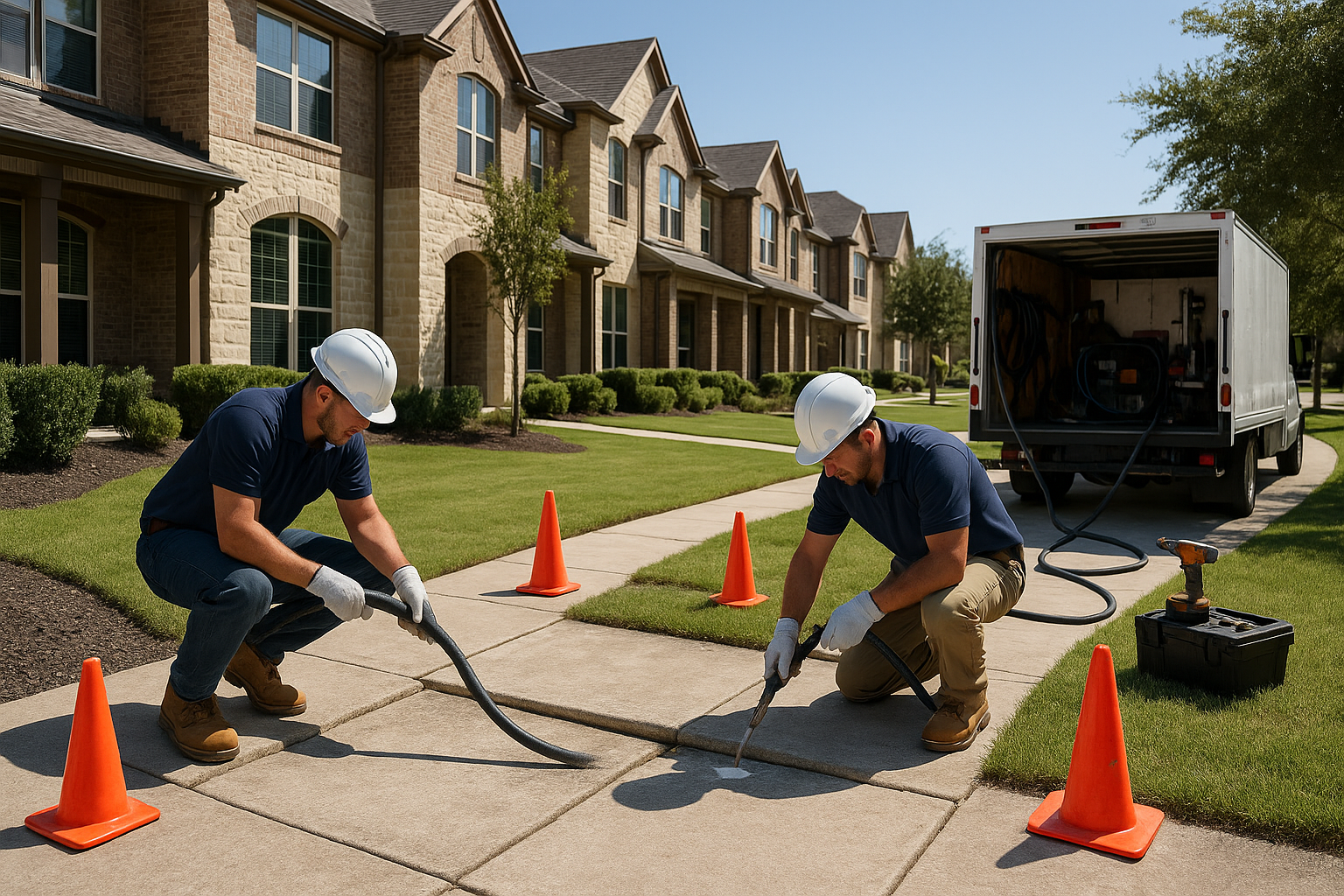
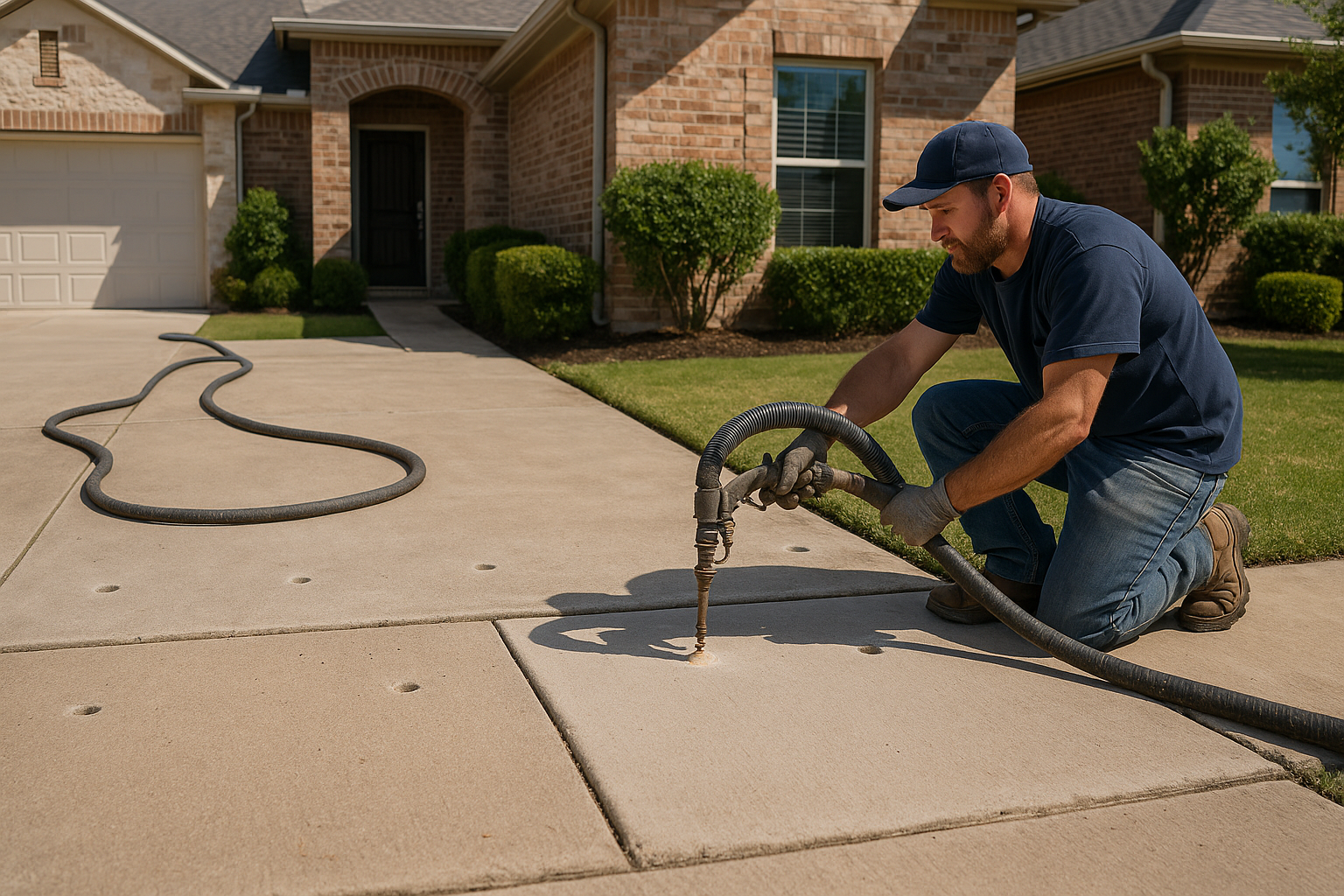
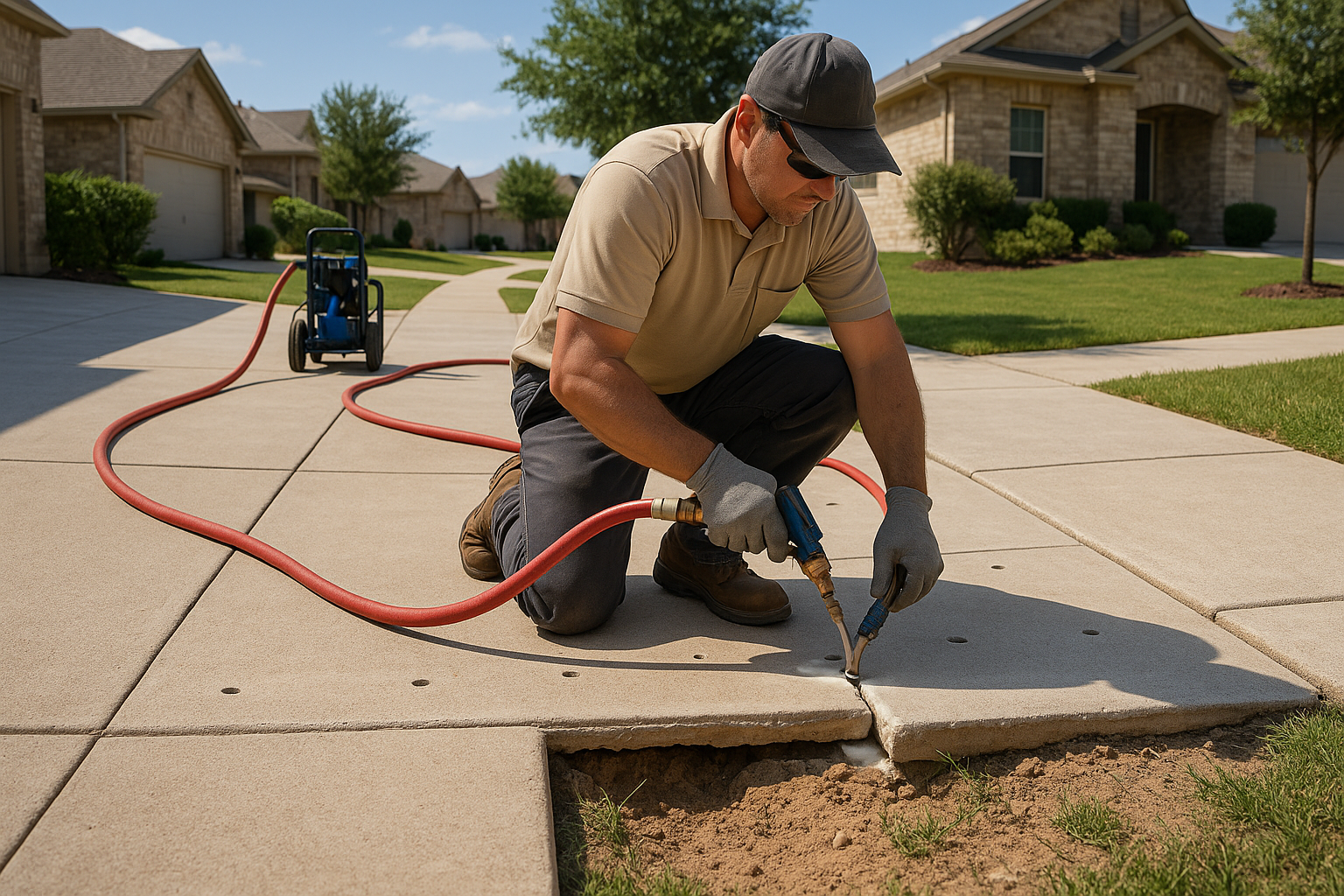
Polyurethane void filling is a process where small holes are drilled through the concrete and a two-part expanding foam is injected beneath the slab. The foam travels into the empty space, expands, and fills the void. If needed, it can also lift the slab back toward grade in a controlled way.
Here is the basic process:
- Inspect the slab and identify settlement, cracking, drainage issues, and likely void locations.
- Drill small injection holes in the affected concrete.
- Inject polyurethane beneath the slab in measured stages.
- Monitor movement as the foam expands and restores support.
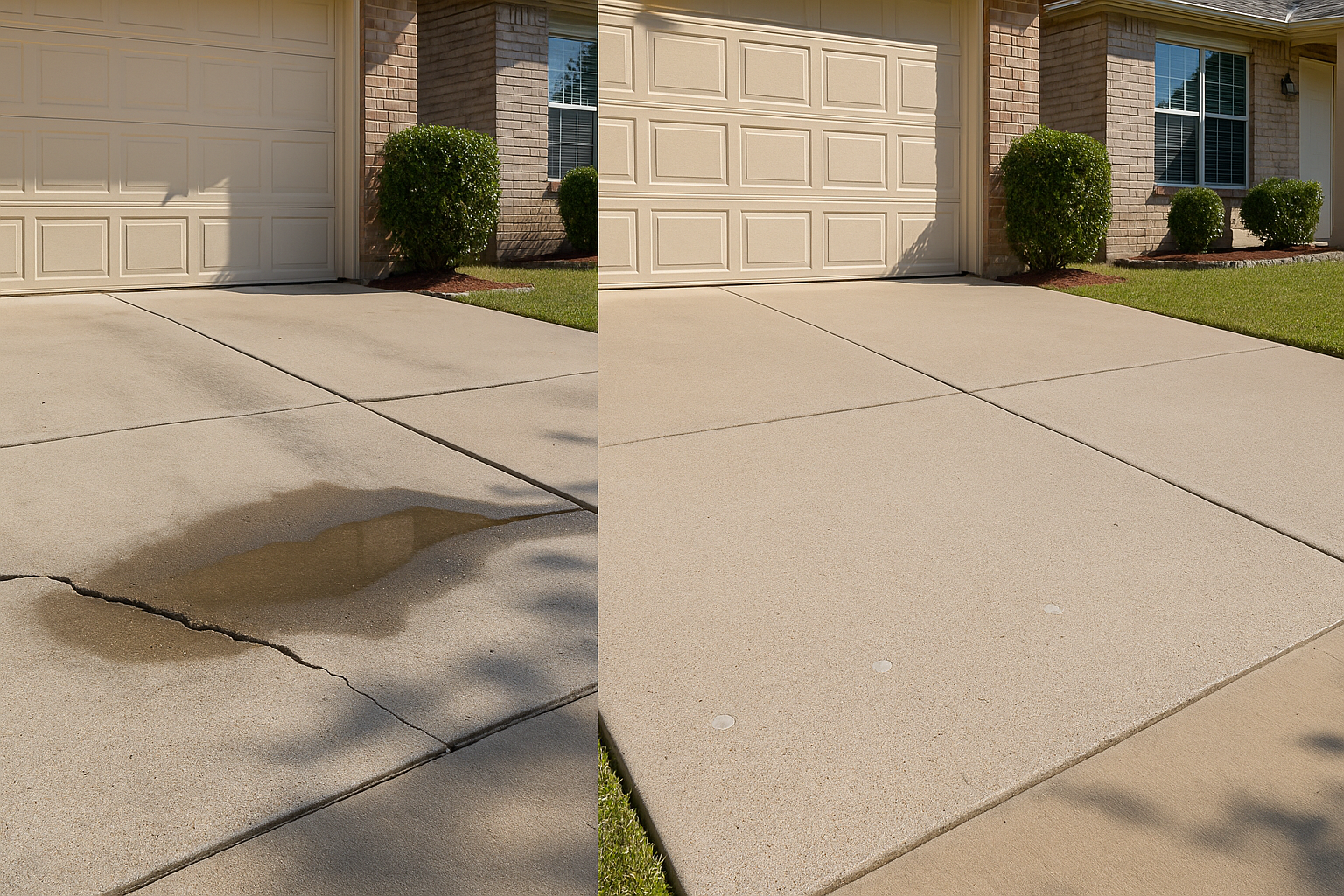
- Patch the drill holes and clean up the area.
The big advantage is that polyurethane is lightweight and fast. Unlike older mudjacking methods, it does not add a lot of extra weight to already unstable soils. It also cures quickly, which means many surfaces can be back in service the same day.
For Texas conditions, that matters. When soils are already stressed from moisture swings, adding heavy fill under a slab is not always the best answer. Polyurethane works well for filling erosion pockets and stabilizing concrete without creating as much load on the subgrade.
Another benefit is precision. On a sidewalk, driveway apron, patio, or garage approach, the installer can make small adjustments as the slab moves. That helps reduce trip hazards and restore drainage more accurately.
Costs vary by access, slab thickness, extent of the void, and whether lifting is needed, but void filling is often far more affordable than replacement. In many Texas residential cases, stabilization can come in at hundreds to a few thousand dollars, while full tear-out and replacement can climb into several thousand to well over $10,000 depending on the area and finish. The right number depends on the site, but the cost gap is usually significant.
If joints between slabs have opened up or water is entering through failed joint lines, it is also smart to address the joints after stabilization. You can learn more at /expansionjoints or get product-specific info from sealmyjoints.com. Sealing the joints helps keep surface water from working back under the slab again.
When Void Filling Is Better Than Concrete Replacement
Replacement has its place. If the slab is shattered, badly heaved, too thin, or has widespread structural failure, replacement may be the right call. But a lot of concrete in Texas gets replaced when it could have been stabilized.
Void filling is often the better option when:
- The slab is mostly intact and the main issue is unsupported soil beneath it.
- Settlement is moderate, not extreme.
- You want to avoid demolition, hauling, and long cure times.
- You need a faster repair with less disruption to the property.
- The problem is tied to erosion pockets or shrinkage voids rather than total slab failure.
For homeowners in places like Austin and Round Rock, this can make a big difference. A driveway panel that has dropped an inch or two near the garage does not always need to be ripped out. A back patio with edge washout after storms may just need support restored underneath. Sidewalk sections with minor settlement can often be corrected without replacing every panel.
That said, the repair only works when the cause is handled too. If downspouts dump water beside the slab, drainage needs to be fixed. If a leak is washing soil out, the leak has to be repaired. If expansion joints are open, they should be sealed. Void filling solves the support problem, but long-term performance depends on controlling water around the concrete.
One thing we tell property owners all the time is simple: do not wait for a small hollow spot to become broken concrete. Once corners start snapping off or cracks widen enough to move independently, repair options get narrower and more expensive. Early stabilization usually gives you the best chance to save the slab.
Why Texas Homeowners Should Act Early
Texas slabs live in tough conditions. You have expansive clay in many areas, caliche and rocky soils in others, sudden rain events, dry heat, and constant movement from one season to the next. That is why small support problems underneath concrete tend to grow quickly here.
A void under a slab is not just empty space. It is a warning sign that the load is no longer being carried the way it should. Once that happens, every vehicle tire, every rainstorm, and every heat cycle puts more stress on the concrete above. Acting early can help you avoid larger cracking, drainage issues, and a much higher replacement bill later.
If you are seeing settlement, hollow spots, edge erosion, or uneven concrete, Hill Country Slabs can take a look and tell you whether stabilization makes sense. We handle repair work across Central Texas and can help you figure out whether void filling, lifting, joint sealing, or broader concrete slab repair is the right move for your property.
Need help with void filling under concrete in Texas? Contact Hill Country Slabs today or call (737) 287-4308. We will give you a straight answer and help you protect the slab before replacement becomes the only option.