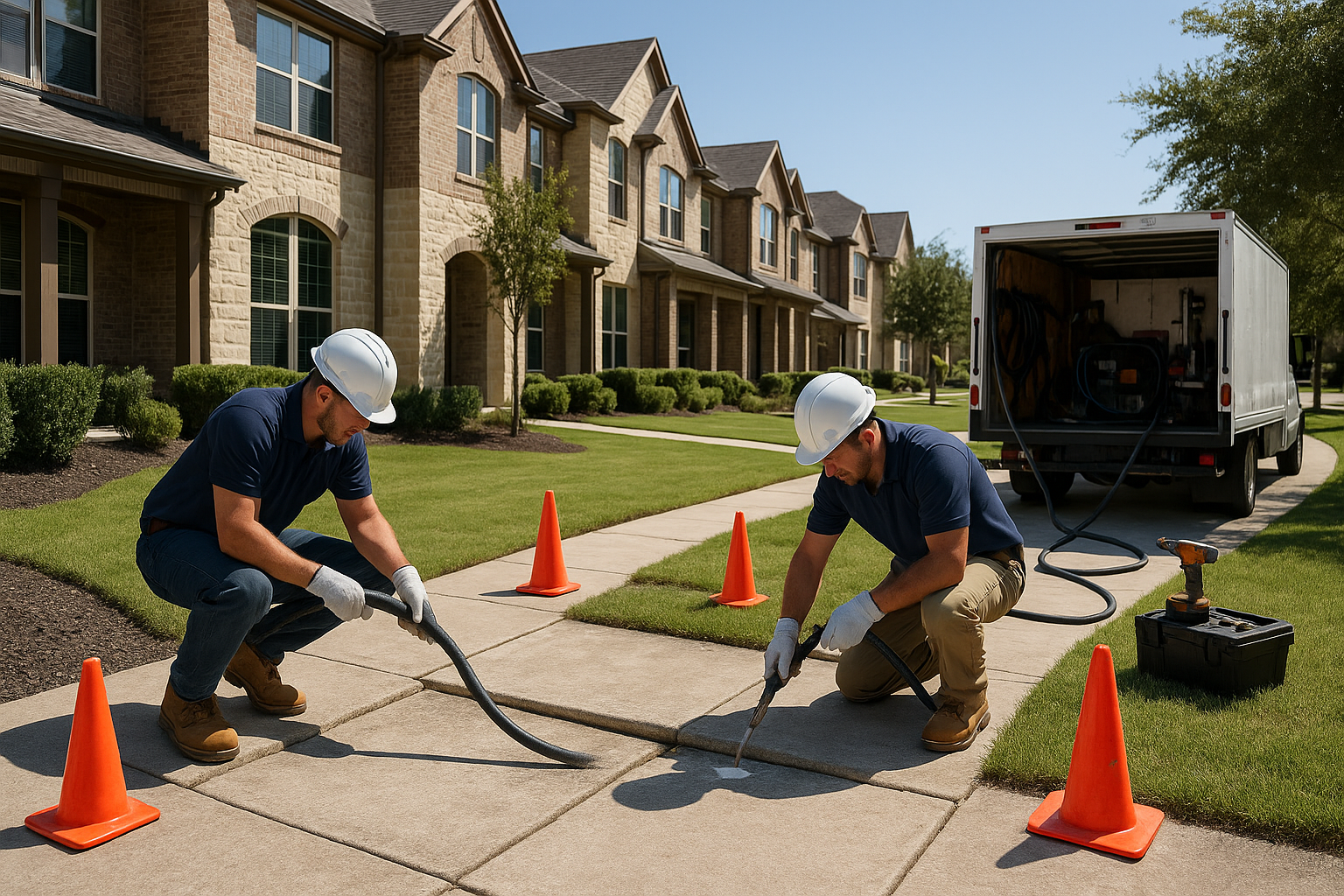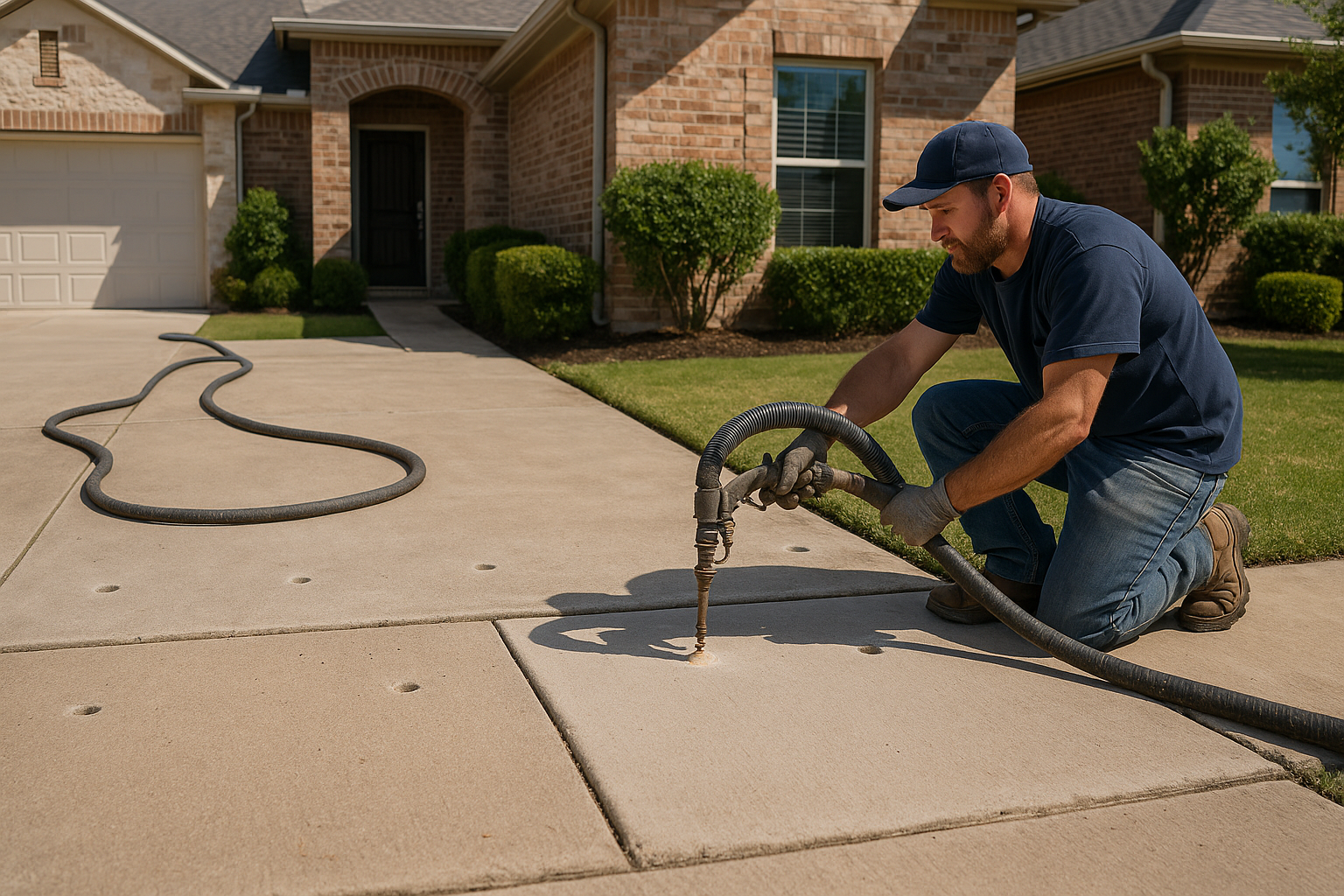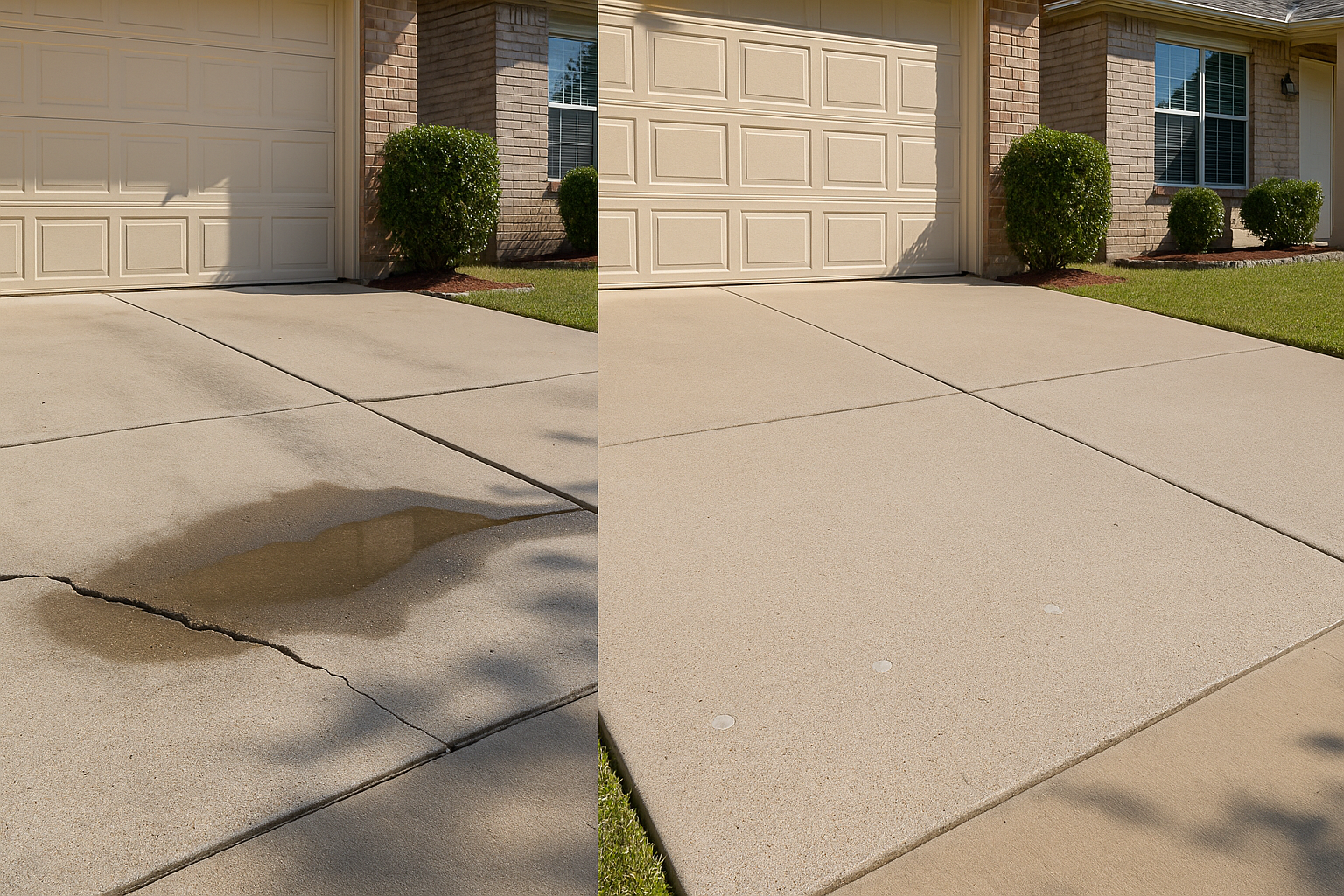
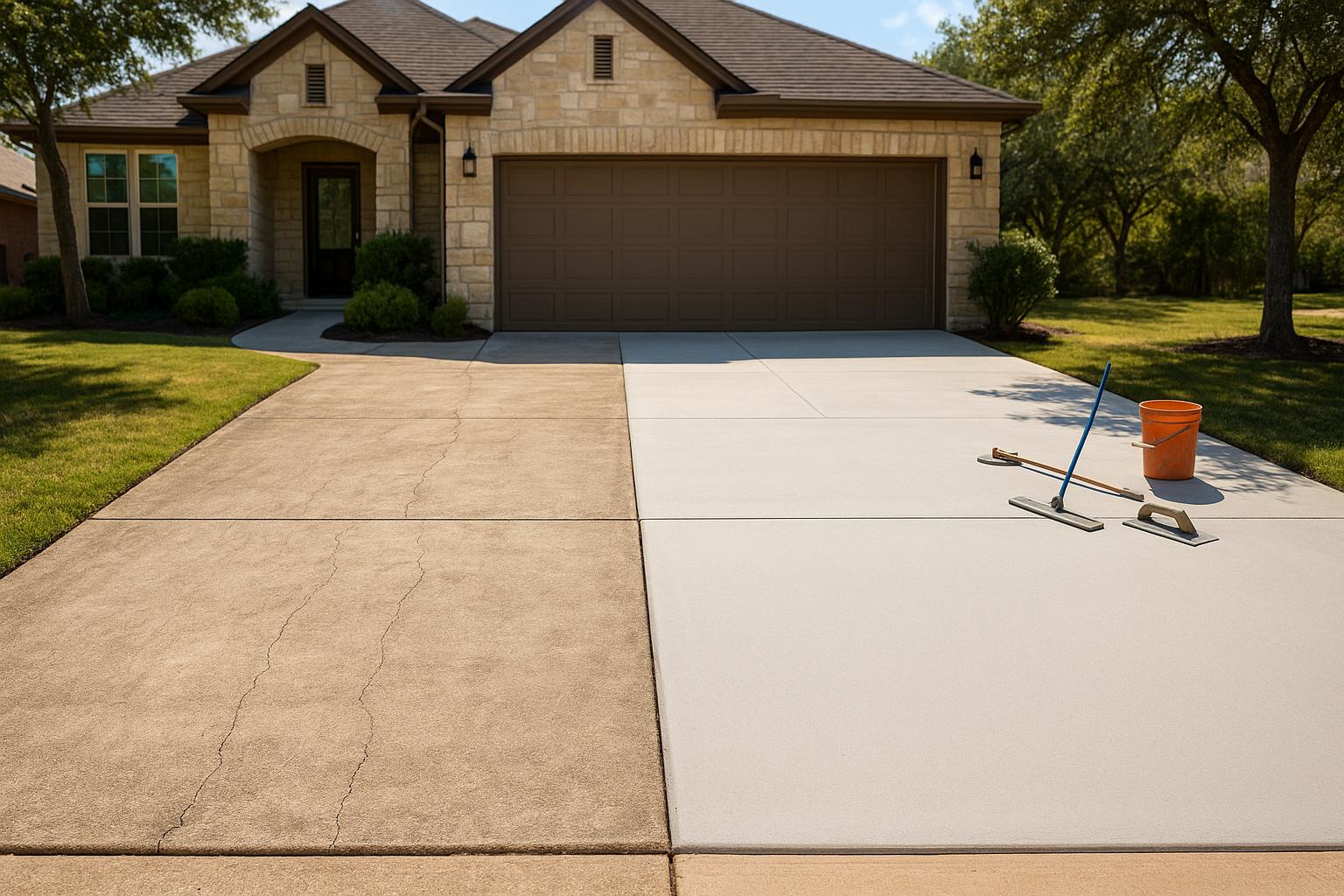
If you’ve got a driveway, patio, or walkway in Texas that looks rough but is still mostly intact, concrete resurfacing can be a solid option. We see it all over Austin, Round Rock, and the surrounding Hill Country. The surface gets worn down from UV exposure, foot traffic, rain, irrigation, and plain old age. Homeowners start thinking they need a full replacement, but that’s not always the case.
The big question is whether the slab has a surface problem or a structural problem. That matters a lot in Texas. Between expansive clay soils, summer heat, sudden rain, and movement from seasonal moisture changes, a slab can look bad for different reasons. If the concrete is just worn, scaled, or lightly cracked on top, resurfacing may buy you more life at a much lower cost. If the slab has settled, lifted, or cracked from soil movement, leveling or slab repair is usually the smarter fix.
At Hill Country Slabs, we like to keep it simple: don’t put a pretty finish over a moving slab. First fix the cause, then fix the appearance.
What Is Concrete Resurfacing?
Concrete resurfacing is the process of applying a thin cement-based overlay over existing concrete to restore the look and texture of the surface. It is not the same thing as replacing the slab, and it is not the same thing as leveling a sunken section. A resurfacer is basically a repair layer that bonds to sound concrete when the base slab is still in decent shape.
In Texas, resurfacing is commonly used on driveways, sidewalks, pool decks, porches, and patios where the top layer is faded, pitted, flaking, or stained. It can also help blend minor surface imperfections and hairline cracking. In many cases, resurfacing costs about 50% to 70% less than full replacement, depending on prep, square footage, and the condition of the slab.
That said, prep is everything. If the slab is dirty, soft, separating, or actively moving, the new surface won’t last. Good resurfacing starts with cleaning, crack prep, surface profiling, and making sure control joints and expansion joints are handled correctly. If the joints are dried out or failed, we also recommend proper joint sealing. You can read more about that at sealmyjoints.com.
When Resurfacing Works in Texas
Resurfacing works best when the concrete is ugly, not unstable. That’s the line. We usually recommend resurfacing when the slab has:
- Surface discoloration from sun, irrigation, or vehicle traffic
- Light scaling or flaking on the top layer
- Minor cosmetic cracking
- Small pits or rough texture
- Good overall drainage and no major settlement
Texas weather beats up concrete differently than cooler states. In Central Texas, the combination of high heat, hard sun, and occasional heavy downpours can dry out one season and saturate the next. In areas with expansive clay, including much of Austin, Round Rock, San Antonio, and DFW, moisture swings can move the soil under the slab. If that movement is minor and the slab remains mostly even, resurfacing can still make sense. If one side has dropped or heaved, that is usually a leveling issue first.
We also look at the type of wear. If a driveway has a chalky, tired surface but no major trip hazards, resurfacing can be a good value. Typical resurfacing jobs in Texas often fall around $3 to $7 per square foot, while full replacement may run $8 to $15+ per square foot depending on demo, thickness, reinforcement, and access. Those are broad ranges, but the gap is real.
One thing homeowners miss is drainage. If water stands on the slab or runs back toward the house, resurfacing alone will not fix that. You may end up with the same problem showing back up. On Texas homes built over clay-heavy soils, water management is tied directly to slab performance.
Resurfacing vs Leveling: Which Fix Do You Need?
This is where a lot of people get pointed the wrong way. Resurfacing fixes the face of the concrete. Leveling fixes the position of the concrete. If your slab is uneven, settling, or creating a trip hazard, resurfacing is not the first step.
Here is the easy breakdown:
- Choose resurfacing if the slab is structurally sound but looks worn.
- Choose leveling if part of the slab has sunk, tilted, or separated.
- Choose slab repair if movement, cracking, or subgrade issues are driving the damage.
We handle a lot of projects where the right answer starts with Driveway Leveling or Concrete Slab Repair, not a fresh overlay. In Texas, settlement is common because different soil types react differently to moisture. Expansive clay swells when wet and shrinks when dry. Sandy soils drain faster but can wash out support. Caliche and rocky areas can be more stable, but even then drainage and compaction still matter.
If you resurface a slab that is actively settling, the new topping will usually crack right along with the old movement below. That is money wasted. We’d rather tell you the truth upfront than sell the wrong fix. In many cases, leveling can lift a driveway or walkway back into position for far less than replacement, often with less mess and faster turnaround.
Another factor is crack type. Hairline surface cracks may be acceptable candidates for resurfacing if they are dormant and properly treated. Wider structural cracks, offset cracks, and repeated crack patterns usually point to movement underneath. That needs a different repair strategy.
When to Repair Instead of Replace
A full tear-out is sometimes necessary, but not nearly as often as people assume. If the concrete has decent thickness, most sections are still sound, and the main issues are settlement, surface wear, or isolated cracking, repair is usually worth looking at first.
Repair instead of replace when:
- The slab is mostly intact with only isolated trouble spots.
- The concrete is uneven but can be lifted and stabilized.
- The top surface is worn but the base slab still has strength.
- You want to improve appearance without paying for full demolition.
- You need a faster project with less disruption to the property.
Replace when the slab is broken up throughout, badly undermined, or has widespread structural failure. If the subgrade was poorly prepared from the start, or roots, drainage, and erosion have done too much damage, replacement may be the long-term answer. But even then, we still talk through the why, because the same Texas conditions that damaged the old slab can damage the new one if they are not corrected.
For homeowners in Austin, Round Rock, and nearby communities, the smartest approach is usually a site-specific evaluation. We want to know what the slab is doing through dry weather, after rain, and around irrigation zones. We also check joints, nearby grading, downspouts, and edge support. Sometimes the best project is a combination: level the slab, repair cracks, seal joints, and then resurface if the concrete is a good candidate.
A Few Texas-Specific Tips
- Keep moisture around the slab as consistent as possible, especially on clay soils.
- Don’t ignore joint maintenance. Failed joints let in water and speed up edge damage.
- Watch for standing water after storms or sprinkler cycles.
- Address trip hazards early before settlement spreads or cracks widen.
- Ask whether the issue is cosmetic, structural, or both before choosing a repair.
If you’re trying to decide between resurfacing, leveling, or replacement, we can help you sort out what actually makes sense for your slab and your budget. The goal is a repair that lasts in Texas conditions, not just something that looks good for a few months.
Need a straight answer on your concrete? Contact Hill Country Slabs today or call (737) 287-4308. We’ll take a look and let you know whether resurfacing, leveling, or repair is the right fix for your property.