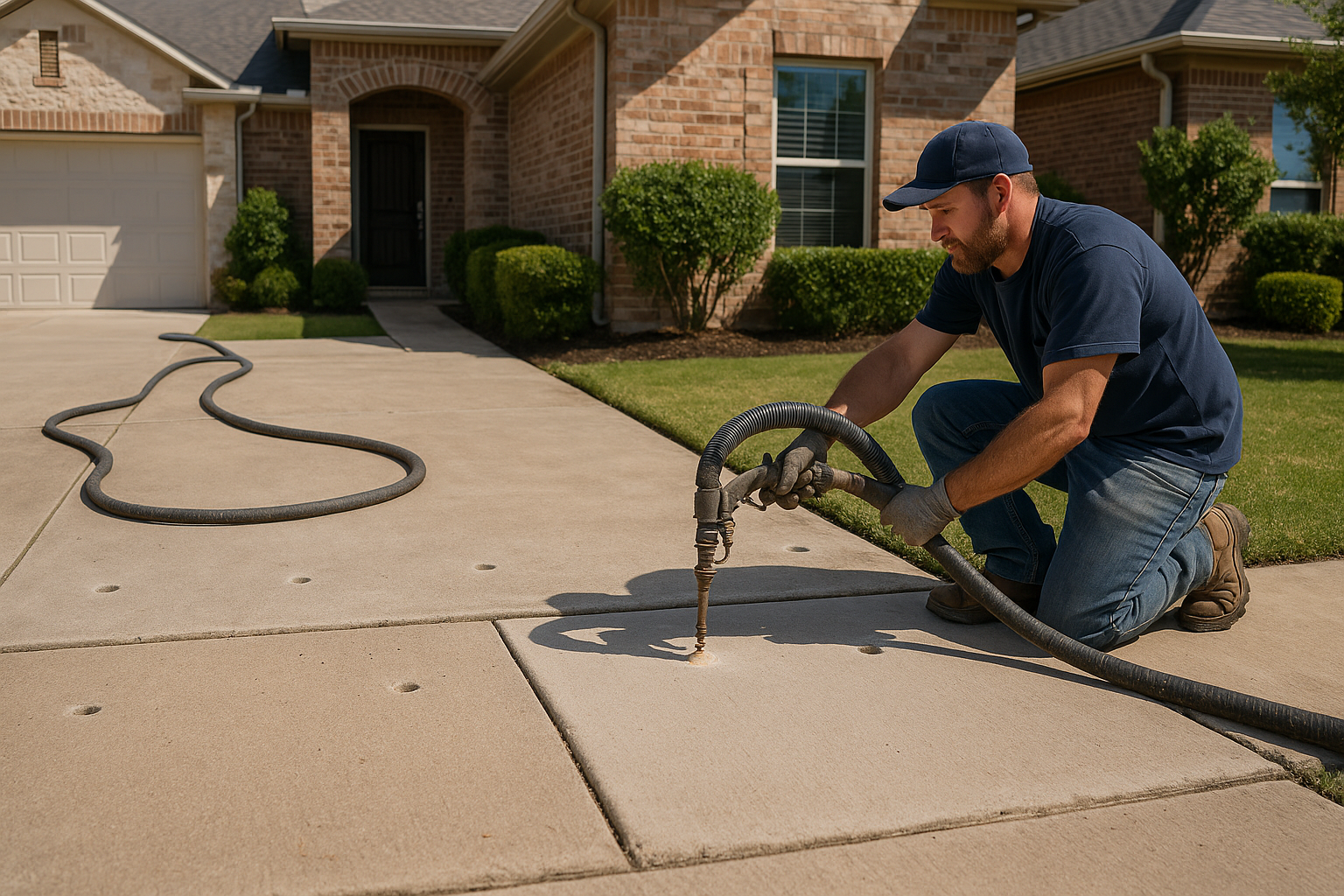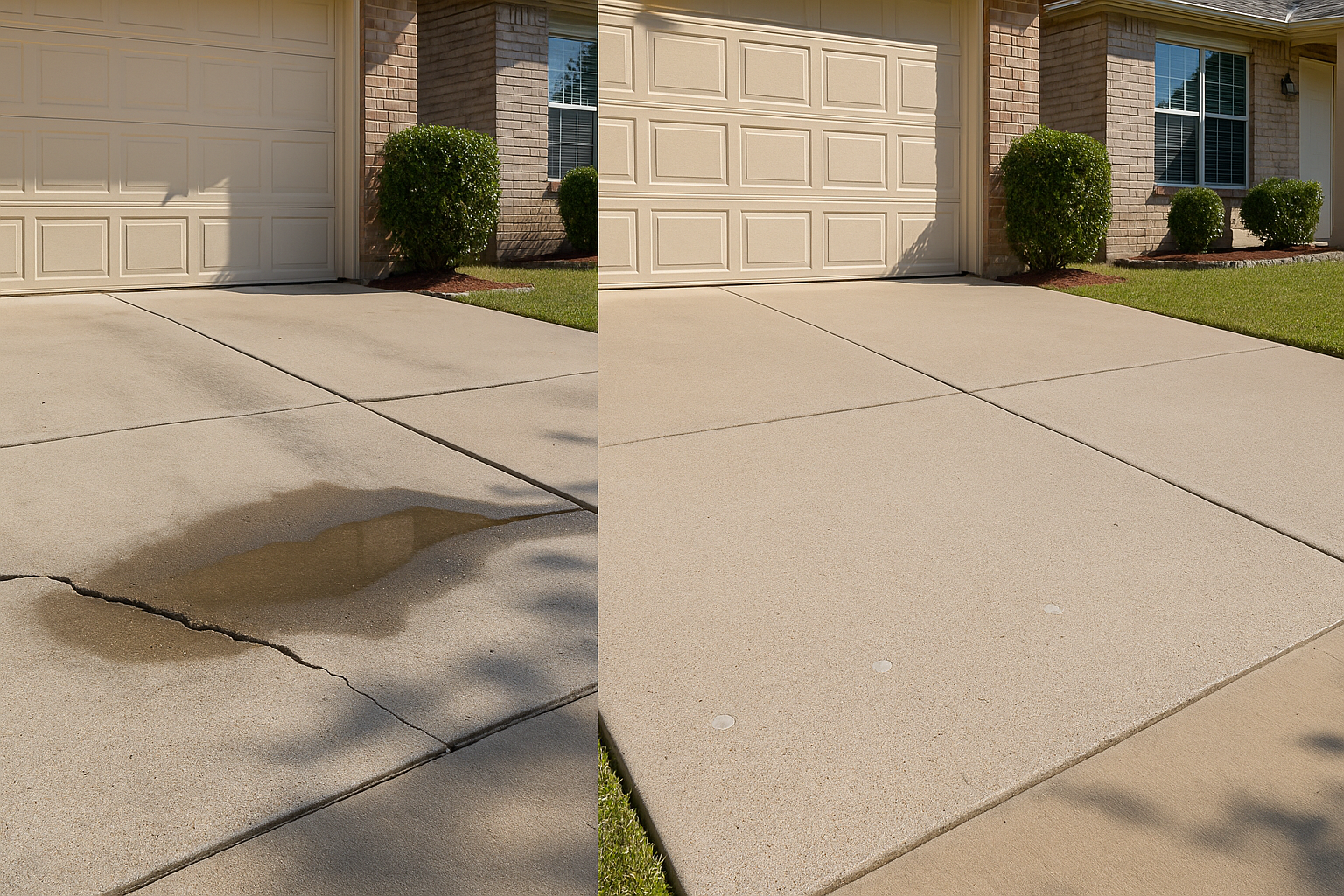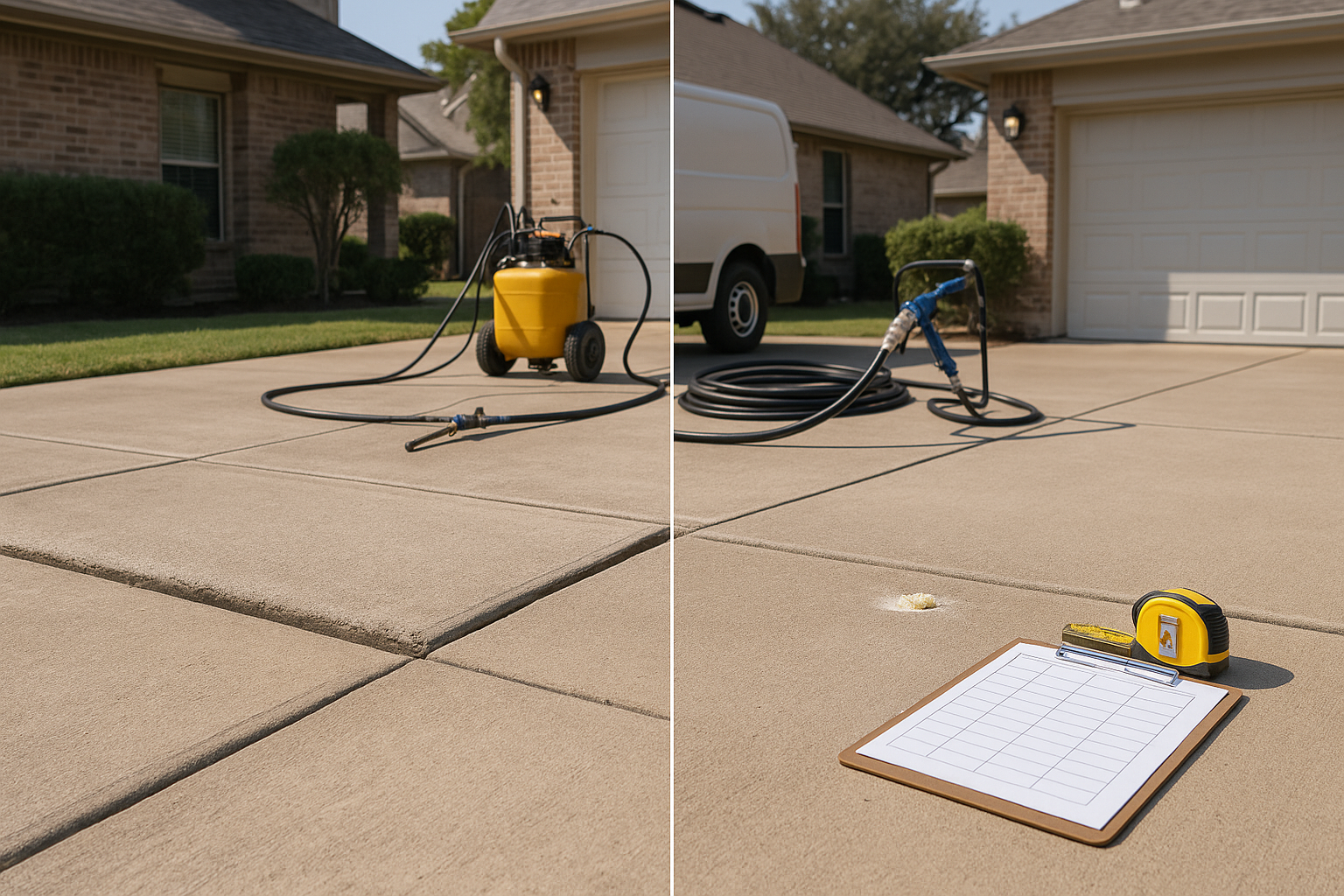
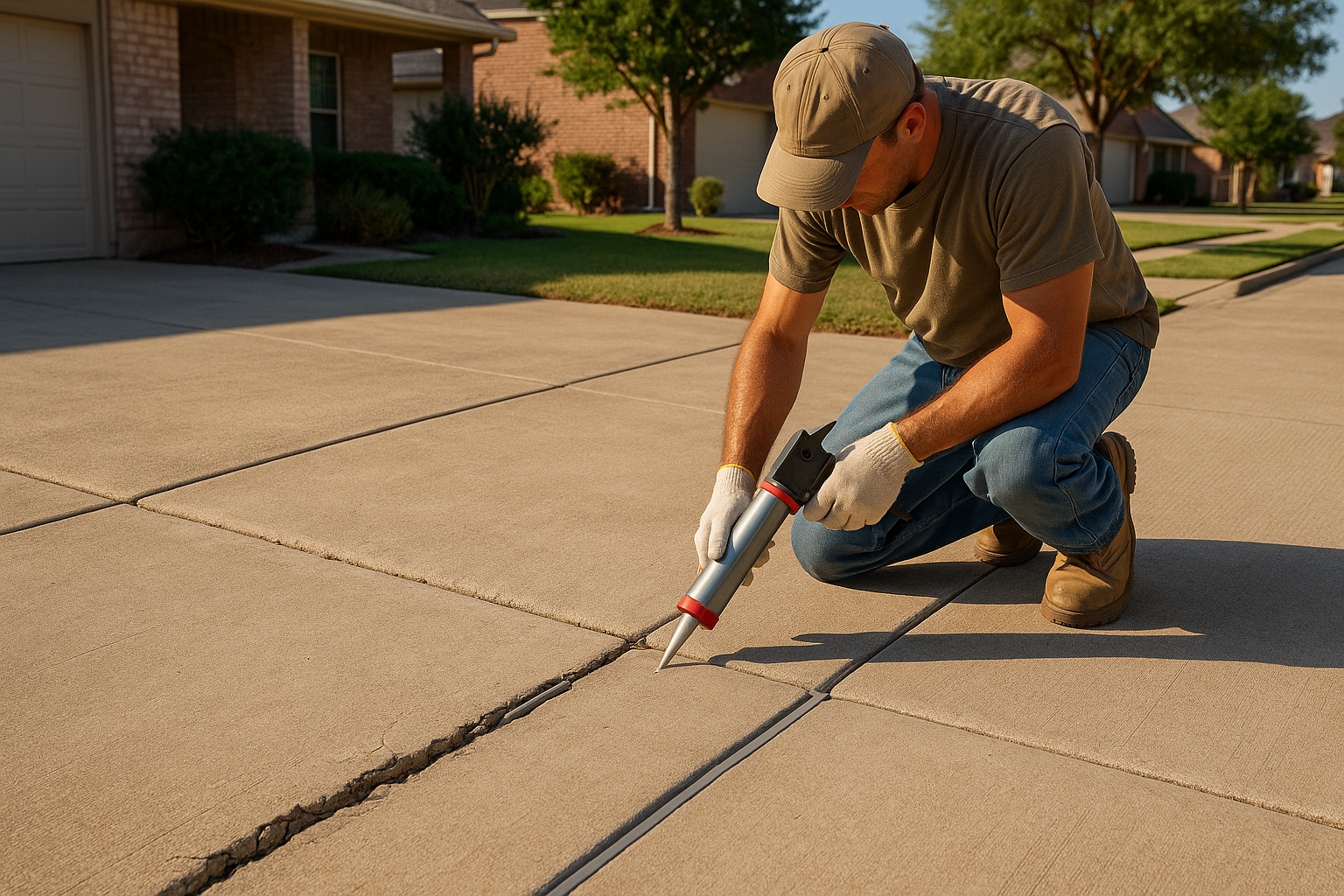
In Texas, driveway joints take a beating. Between long heat waves, sudden downpours, shifting clay soils, and heavy vehicle traffic, those joints are one of the first places a driveway starts to fail. If the joint sealant dries out, pulls away, or disappears altogether, water gets down between the slabs and into the base. From there, it does what it always does in this state: softens the subgrade, washes out fines, and sets the stage for cracking, separation, and settlement.
That is why concrete driveway joint repair in Texas is not just a cosmetic fix. It is preventive maintenance that can help you avoid bigger structural repairs later. In many cases, repairing open or damaged joints early can save a slab that would otherwise start sinking or breaking apart. If your driveway already has movement, joint repair also works hand in hand with services like Driveway Leveling and Concrete Slab Repair.
What Causes Driveway Joint Damage in Texas?
Texas driveways fail differently than driveways in milder parts of the country. Here, the combination of weather and soil movement is the real problem. In the Austin, Round Rock, and Cedar Park area, a lot of homes sit on expansive clay soils. These soils swell when they get wet and shrink when they dry out. That constant movement puts stress on the concrete and especially on the joints that are supposed to absorb expansion and contraction.
When a driveway joint is sealed properly, it helps keep surface water from running down into the gap. But once that seal breaks, the damage speeds up. We see several common causes over and over:
- Texas heat and UV exposure dry out old sealant and make it brittle.
- Heavy rainstorms push water deep into unsealed joints and wash out the supporting base material.
- Expansive clay soils in Central Texas create repeated movement under the slabs.
- Poor drainage around the driveway keeps moisture concentrated along slab edges.
- Vehicle loads from trucks and SUVs increase pressure on unsupported joints.
- Tree roots and nearby landscaping can also push slabs out of alignment.
In other parts of Texas, like areas with caliche, sandy loam, or mixed fill, the exact soil behavior may be different, but the end result is often the same. Once water starts getting through the joint, the base underneath is at risk. That is why timely joint maintenance matters whether you are in Austin, Round Rock, or Cedar Park.
Signs Your Concrete Driveway Joints Need Repair
Most homeowners do not notice the joints until the driveway starts cracking or one panel drops lower than the next. The truth is, the warning signs usually show up earlier. If you catch them soon enough, repair is usually straightforward and much less expensive than replacement.
Here are the main things to look for:
- Missing joint sealant or gaps where the filler has pulled away from the concrete.
- Open expansion joints that collect dirt, weeds, ants, or standing water.
- Spalling or edge chipping along the sides of the slab.
- Hairline cracking radiating out from the joint corners.
- Uneven slabs where one side has started to settle.
- Water ponding near the joint after a rain.
If you are seeing these conditions, the joint is no longer doing its job. A good repair generally involves cleaning the joint thoroughly, removing failed material, installing backer rod where needed, and applying a proper flexible sealant. If you want to understand more about how these systems work, visit /expansionjoints. For product-specific information and ongoing joint maintenance, we also recommend sealmyjoints.com.
In our line of work, one of the biggest mistakes we see is waiting too long. Homeowners think a joint gap is minor because the slab still looks mostly intact. Then one wet season later, the soil under that edge starts moving, and now the repair is not just sealant anymore. Now we are talking about lifting, stabilization, or slab repair.
How Driveway Joint Repair Helps Prevent Sinking and Cracking
Concrete does not usually sink for no reason. In Texas, settlement often starts when water gets where it should not be. Open joints are a direct path for runoff to reach the base under the slab. Once enough water gets in, it can soften the subgrade, erode fines, and leave voids below the concrete. The slab edge loses support, and the concrete starts to crack under load.
That is why joint repair is such an important part of long-term driveway performance. Done correctly, it helps in a few key ways:
- It blocks water intrusion. Sealed joints reduce the amount of runoff reaching the base and subsoil.
- It protects the slab edges. Flexible sealant cushions movement and helps reduce edge damage and spalling.
- It limits erosion under the driveway. Less water movement means less washout below the concrete.
- It supports adjacent repairs. If a panel has already moved, sealing the joints after leveling helps keep that repair protected.
For many Texas properties, this matters more than people realize. We can have a stretch of drought where clay pulls away and shrinks, followed by a hard rain that saturates the same area fast. That cycle is rough on flatwork. A driveway with healthy, sealed joints stands a much better chance of riding through those changes without major slab displacement.
On cost, joint repair is usually one of the more affordable concrete maintenance items a homeowner can do. While every job depends on footage, joint width, and condition, basic driveway joint sealing and repair is often far less than tearing out and replacing concrete. In many cases, homeowners are comparing hundreds of dollars or low thousands for repair versus several thousand to well over $10,000 for full driveway replacement. If the slabs are still structurally sound, that is an easy conversation.
When to Repair Driveway Joints Instead of Replacing Concrete
Not every damaged driveway needs to be replaced. That is good news for Texas homeowners, because replacement is expensive and usually unnecessary when the main problem is at the joints. We generally look at a few factors before recommending repair over replacement.
Repair usually makes sense when:
- The slabs are mostly intact with only minor to moderate cracking.
- The joints are open, deteriorated, or missing sealant.
- There is slight settlement that can still be corrected with leveling.
- The slab edges have limited chipping but no widespread structural failure.
- The driveway drainage can be improved to keep water away.
Replacement may be the better option when:
- The concrete is badly broken in multiple sections.
- There is severe heaving or settlement throughout the driveway.
- The base failure is widespread and the slab has lost overall integrity.
- Previous repairs have failed repeatedly because the concrete is too far gone.
For a lot of homeowners in Central Texas, the right approach is a combination of services. First, correct any settled panels with Driveway Leveling. Next, address underlying problem areas with Concrete Slab Repair if needed. Then finish by restoring and sealing the joints so water does not keep attacking the same spots. That sequence gives the repair the best shot at lasting.
As a rule of thumb, if the issue is mainly open joints, early cracks, or slight movement, repair is almost always worth looking at before replacement. The sooner it gets handled, the better your odds of keeping the existing driveway in service. Waiting until slabs have settled hard or edges have broken off just narrows your options and increases the bill.
At Hill Country Slabs, we look at driveways the same way we look at any slab around here: stop the water first, protect the base, and fix the movement before it spreads. That is the practical side of concrete driveway joint repair in Texas. It is not flashy, but it works, and it can extend the life of a driveway by preventing the conditions that lead to bigger failures.
If your driveway joints are open, cracked, or washing out after rain, now is the time to deal with it. Contact Hill Country Slabs for an inspection and honest recommendations, or call (737) 287-4308 today.