If you are trying to figure out the concrete driveway leveling cost in Texas, the short answer is that most homeowners land somewhere between $900 and $2,500 for a typical repair. Smaller lifts can come in lower, and bigger jobs with multiple settled panels, voids under the slab, or heavy edge drop-off can run higher. Around Central Texas, that price usually depends less on the square footage alone and more on how far the concrete has moved, what is happening underneath it, and whether the slab can still be saved without tearing it out.
We see this all the time in places like Austin, Round Rock, and Georgetown. A driveway may look like it just dipped a little near the garage or at the approach, but once you check the base, you find washout, shrinking clay, poor compaction, or water getting through open joints. Texas soil is rough on flatwork. Between expansive clay, long dry spells, sudden rain, and heat that bakes the ground hard, slabs move.
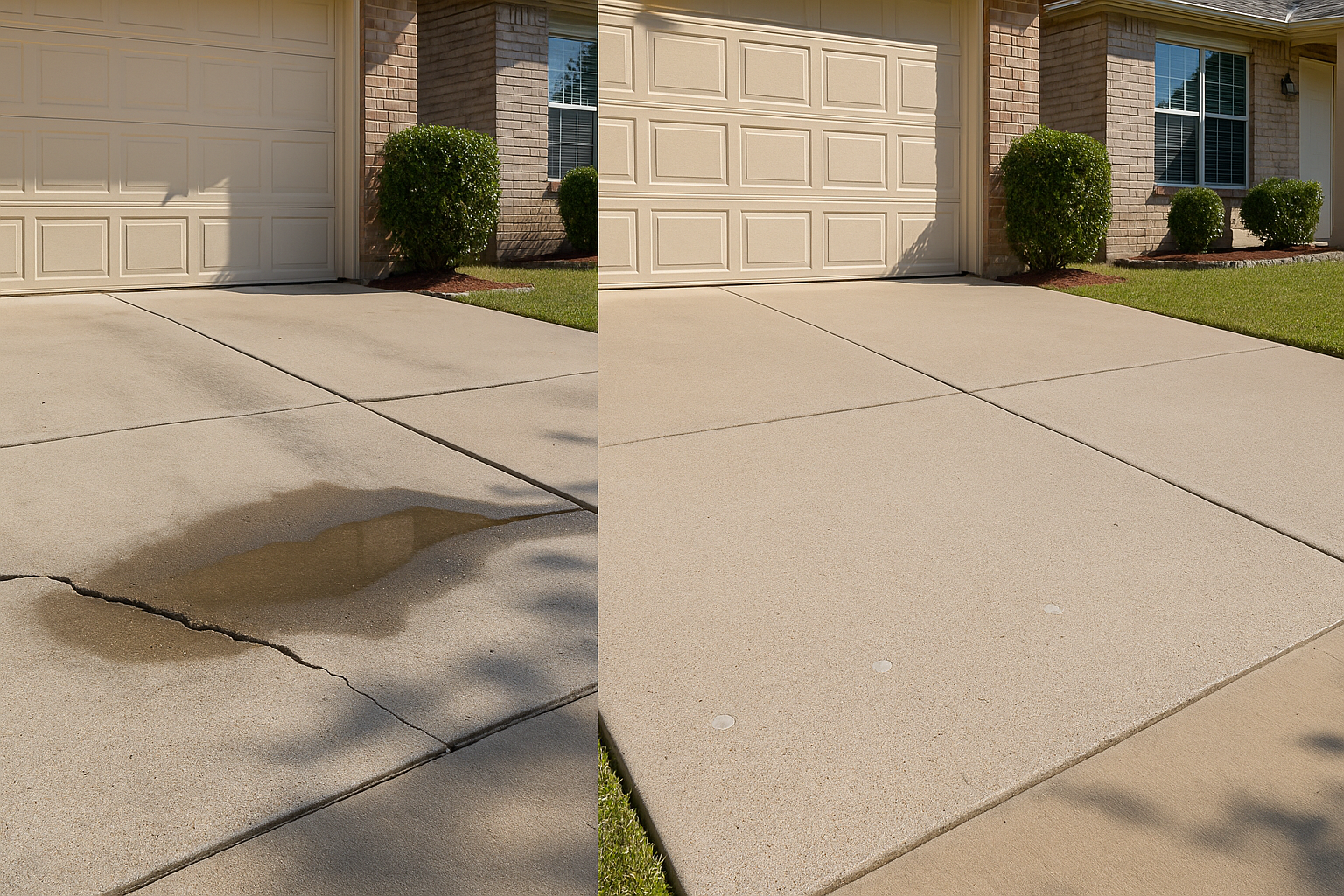
The good news is that replacement is not always the first move. In a lot of cases, Driveway Leveling with polyurethane foam can lift the concrete back into position faster and for a lot less money than demo and repour. If the slab is still structurally sound, leveling can handle trip hazards, drainage issues, and that ugly settled look without turning your property into a construction zone for a week.
What Does Driveway Leveling Cost in Texas?
For most Texas homeowners, driveway leveling usually falls into a few common ranges:
- $900 to $1,500 for a smaller repair with one or two panels that need minor lifting
- $1,500 to $2,500 for an average driveway with moderate settlement and some void filling
- $2,500 to $4,000+ for larger driveways, deeper settlement, heavier slabs, or more complex stabilization work
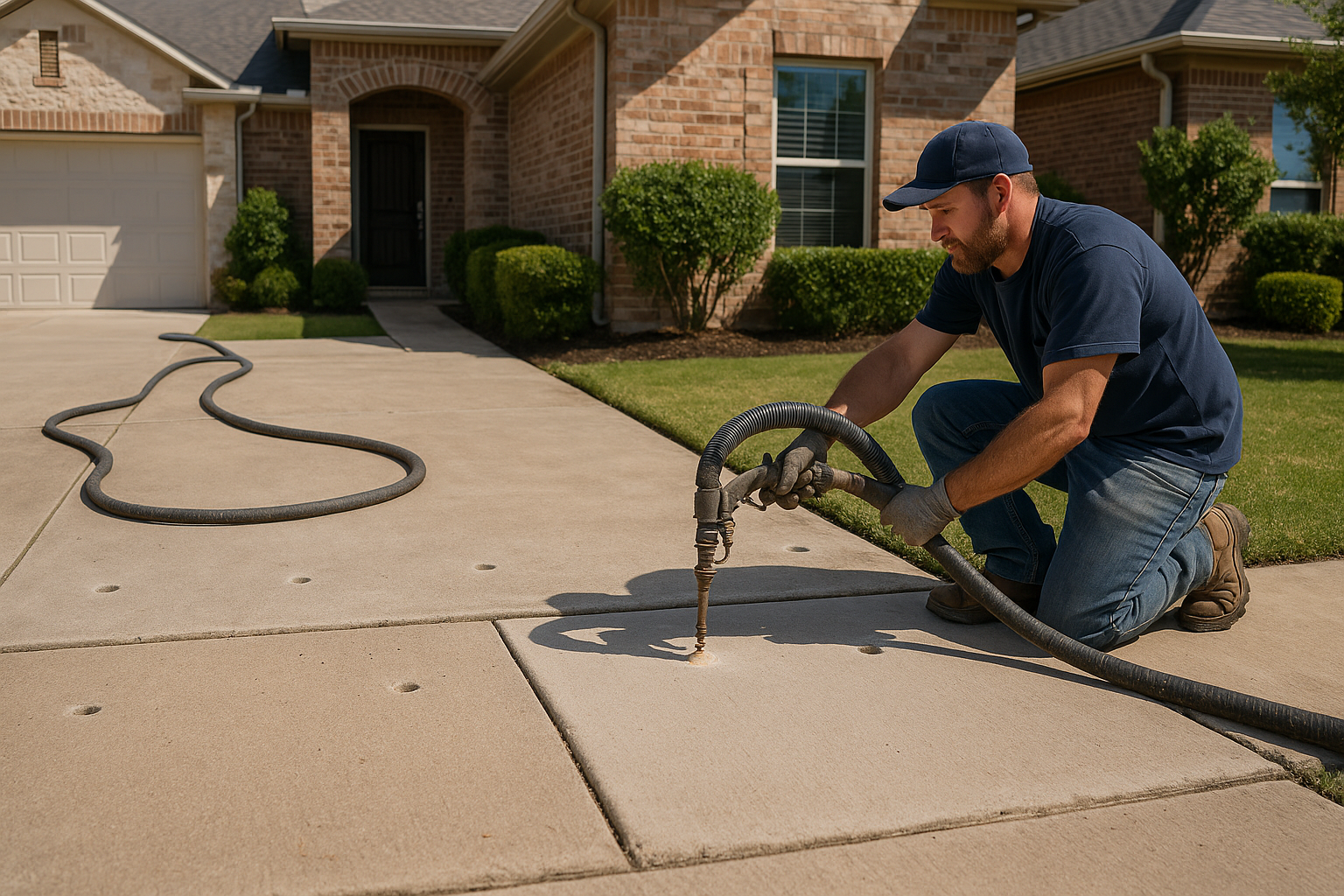
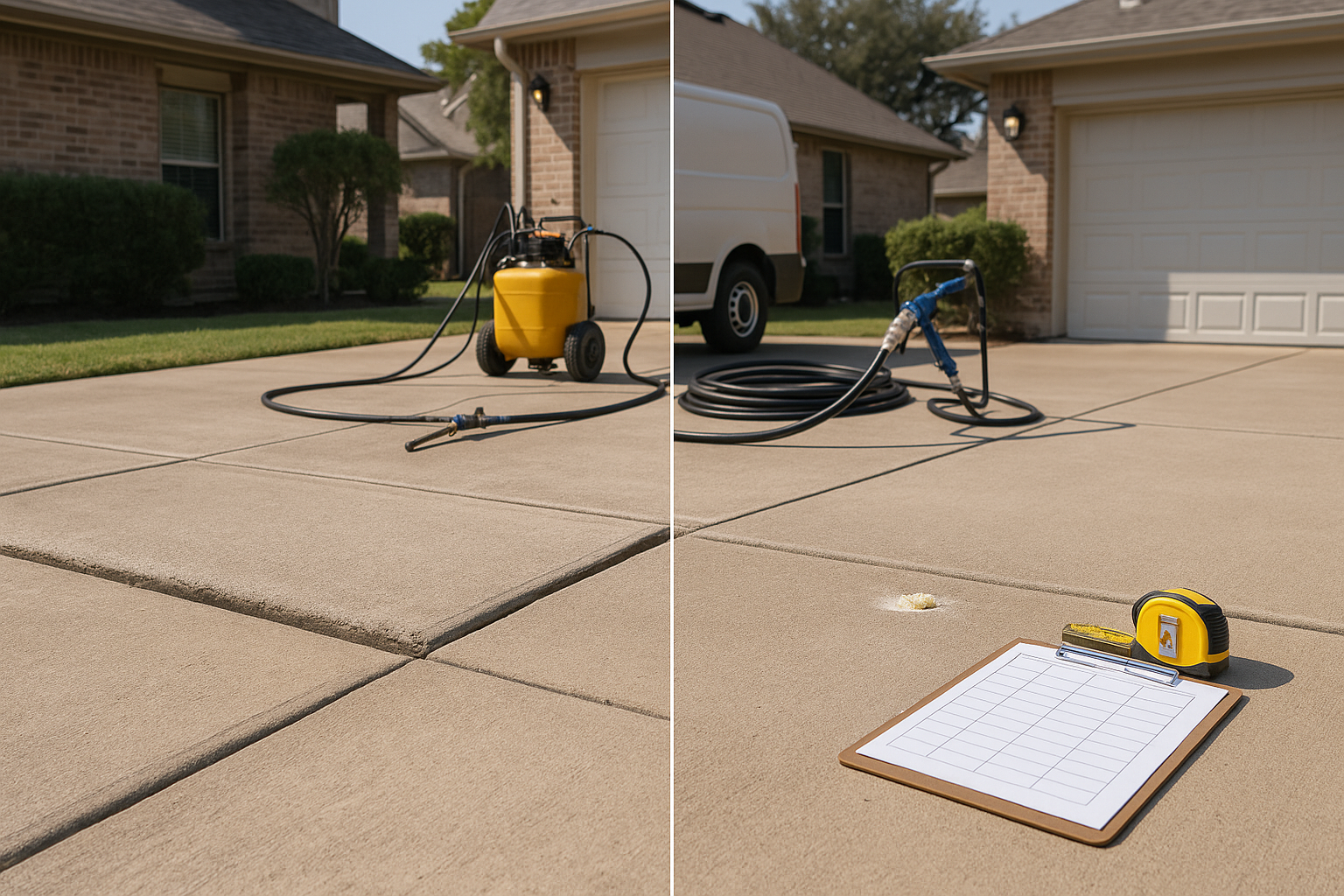
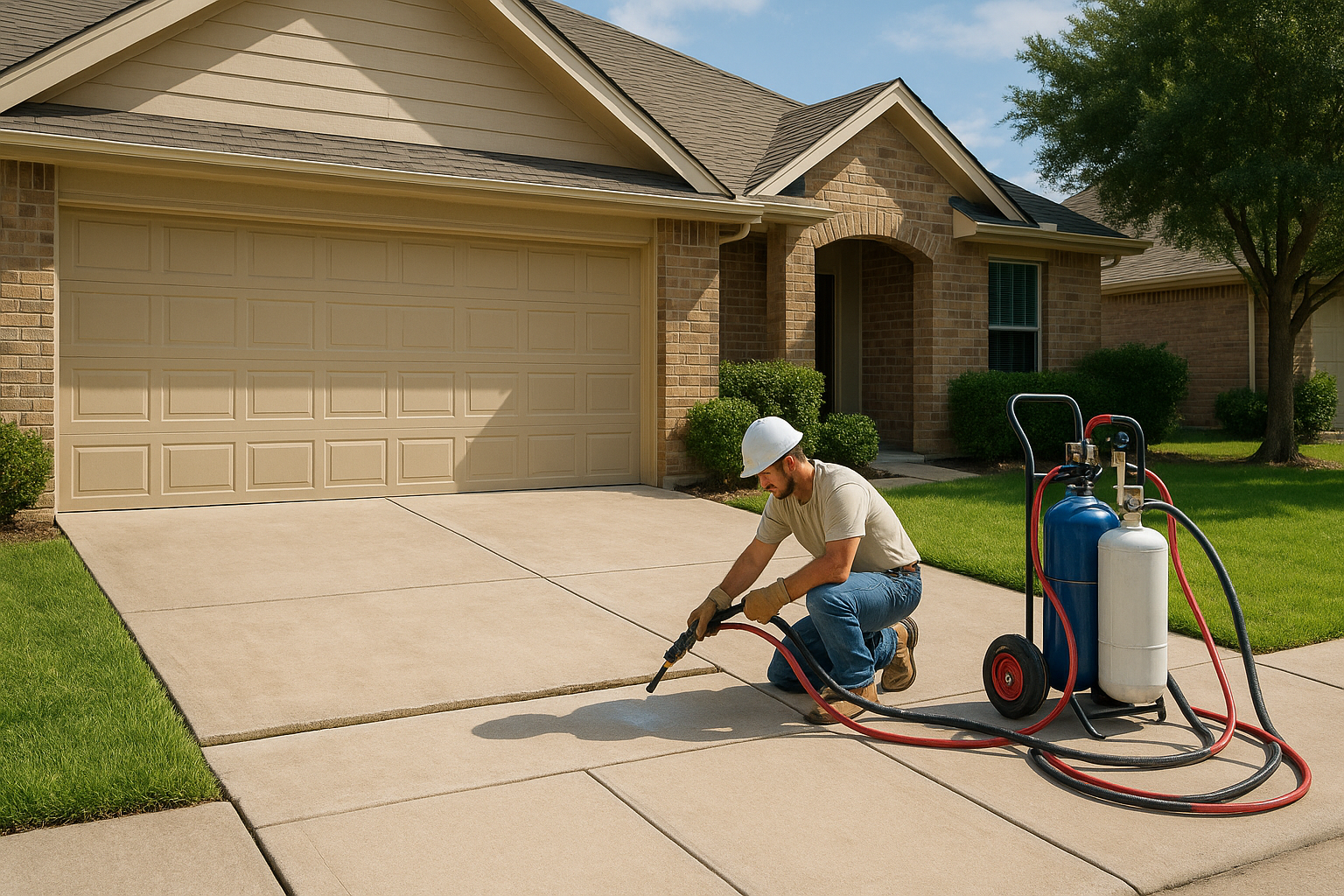
Those numbers are not pulled out of thin air. They reflect what changes the labor, material, and risk on a leveling job in Texas. Foam injection is precise work. The contractor has to map the settled areas, drill access holes, inject at the right rate, and lift the slab without overcorrecting or putting extra stress on cracked sections. When done right, it is fast, clean, and strong. When done wrong, it can leave you with mismatched elevations and more cracking.
Compared to replacement, leveling is often the better value. A full driveway tear-out and repour in Texas can easily run $5,000 to $12,000+ depending on size, thickness, reinforcement, access, and finish. That is before you add the downtime, haul-off, forming, curing time, and the chance that the same soil conditions will keep causing trouble if the base issues are not addressed.
That is why a lot of property owners start by pricing Concrete Slab Repair and leveling before jumping straight to replacement. If the slab is intact enough to lift, the savings can be significant.
What Affects the Cost to Level a Driveway?
There is no one-size-fits-all number because every driveway settles a little differently. In Texas, these are the big things that move the price.
Amount of settlement
A slab that has dropped 1 inch is usually a simpler repair than one that has dropped 3 to 5 inches. The deeper the settlement, the more foam it can take to fill the void and bring the concrete back up safely. Bigger lifts also require more control and more time.
Size of the affected area
If one panel near the garage is down, that is one thing. If the driveway approach, middle section, and sidewalk tie-in are all out of level, the cost will go up. Contractors price based on the real repair area, not just the total driveway footprint.
Voids under the slab
One of the biggest issues we find is empty space below the concrete. Water gets under the slab through cracks, poor drainage, or open joints and carries away fines. Once the support is gone, the slab settles. Filling those voids takes material, and more material means a higher quote.
Texas soil conditions
Central Texas and a lot of the I-35 corridor deal with highly expansive clay soils. In dry weather, that clay shrinks and pulls away. In wet weather, it swells. That constant movement is hard on driveways. In some areas you also run into rocky limestone soils, thin topsoil over caliche, or poorly compacted fill around newer subdivisions. All of that affects how and why the slab moved, and what it takes to stabilize it.
Drainage and joint condition
If water is running toward the driveway or entering through failed joints, lifting the slab is only part of the fix. We always tell folks that protecting the joints matters. If your expansion joints are broken down or missing sealant, water has an easy path under the concrete. That is why it is smart to look at expansion joints after leveling and keep them sealed. For more on that side of maintenance, visit sealmyjoints.com.
Cracking and slab condition
Leveling works best when the concrete is still in repairable shape. A few stable cracks are common and usually not a deal-breaker. But if the driveway is shattered, heaving in multiple directions, or badly deteriorated from age and surface failure, replacement may make more sense. The cleaner and stronger the slab, the better the candidate it is for foam lifting.
Access and layout
A straight residential driveway with easy truck access is simpler than a tight layout with gates, retaining walls, steep grades, or decorative concrete that needs extra care. Access can affect setup time and production, which shows up in the final cost.
When Foam Leveling Costs Less Than Replacement
This is where a lot of Texas homeowners save real money. If your driveway is sunken but not destroyed, foam leveling usually costs far less than ripping everything out. In many cases, leveling runs 40% to 70% less than replacement. It also gets the driveway back in service faster, often the same day.
Foam leveling makes the most financial sense when:
- The slab has settled but is still mostly intact
- The main issue is loss of support under the concrete
- You want to remove trip hazards without replacing the whole driveway
- Drainage has changed because one section dropped
- You need a faster repair with less mess and downtime
We see good candidates all over the region. In Austin, older neighborhoods often have driveways affected by long-term soil movement and drainage changes. In Round Rock and Georgetown, newer developments can still have settlement where fill soils were not compacted evenly around the house pad and driveway. A slab does not have to be old to move in Texas.
Replacement usually becomes the better call when the concrete has widespread structural failure, severe spalling, major separation, or repeated movement tied to bigger site issues that have not been corrected. Even then, a good contractor should explain why replacement is necessary instead of just selling the bigger ticket.
One more thing that matters: if joints and water entry are ignored after the lift, the same conditions can start the cycle over again. Foam solves the support problem under the slab, but drainage and joint maintenance help keep it that way.
How to Get an Accurate Driveway Leveling Quote
If you want a real number instead of a ballpark guess, have a contractor look at the driveway in person. Good quotes are based on conditions, not just photos. Here is what should be checked:
- How much each panel has settled and whether the slab can be lifted safely
- Where the voids are located and how much material will be needed
- Whether water is getting under the slab through joints, cracks, or drainage problems
- The overall condition of the concrete to decide whether leveling or replacement is the better investment
- Access to the repair area and any obstacles that affect setup
Ask whether the quote includes void filling, lift stabilization, and recommendations for sealing joints afterward. If a contractor gives you a flat number over the phone without asking about settlement, cracks, drainage, or soil conditions, that is usually a red flag.
At the end of the day, the best value is not just the cheapest quote. It is the repair that fixes the cause of the settlement, restores the slab elevation, and helps prevent the same issue from coming right back. In Texas, where heat, drought, and clay movement are part of the deal, that approach matters.
If your driveway is sinking, separating, or creating a trip hazard, Hill Country Slabs can take a look and tell you honestly whether it should be lifted or replaced. Contact us at /contact or call (737) 287-4308 to get a driveway leveling quote in Texas.