If you have been looking up concrete leveling before and after photos, you are probably trying to answer one simple question: is this actually going to make my slab look and perform better, or am I better off tearing it out and starting over? Around Texas, that is a fair question. Between expanding clay soils, long dry spells, sudden heavy rains, and plenty of older flatwork in places like Austin and Round Rock, we see settled concrete all the time.
The short answer is this: good foam leveling can make a slab go from a clear trip hazard to something safe, usable, and a whole lot better looking in a single visit. But the before and after result depends on the condition of the concrete you already have. Leveling lifts and stabilizes. It does not erase every crack, every stain, or every sign of age. If you go in with the right expectations, the value can be hard to beat.
For homeowners dealing with settled patios, sidewalks, pool decks, and driveways, this is often the middle ground between doing nothing and paying for full replacement. In many cases, it ties in well with broader Concrete Slab Repair work or targeted Driveway Leveling where only certain sections have dropped.
What concrete leveling before and after really looks like
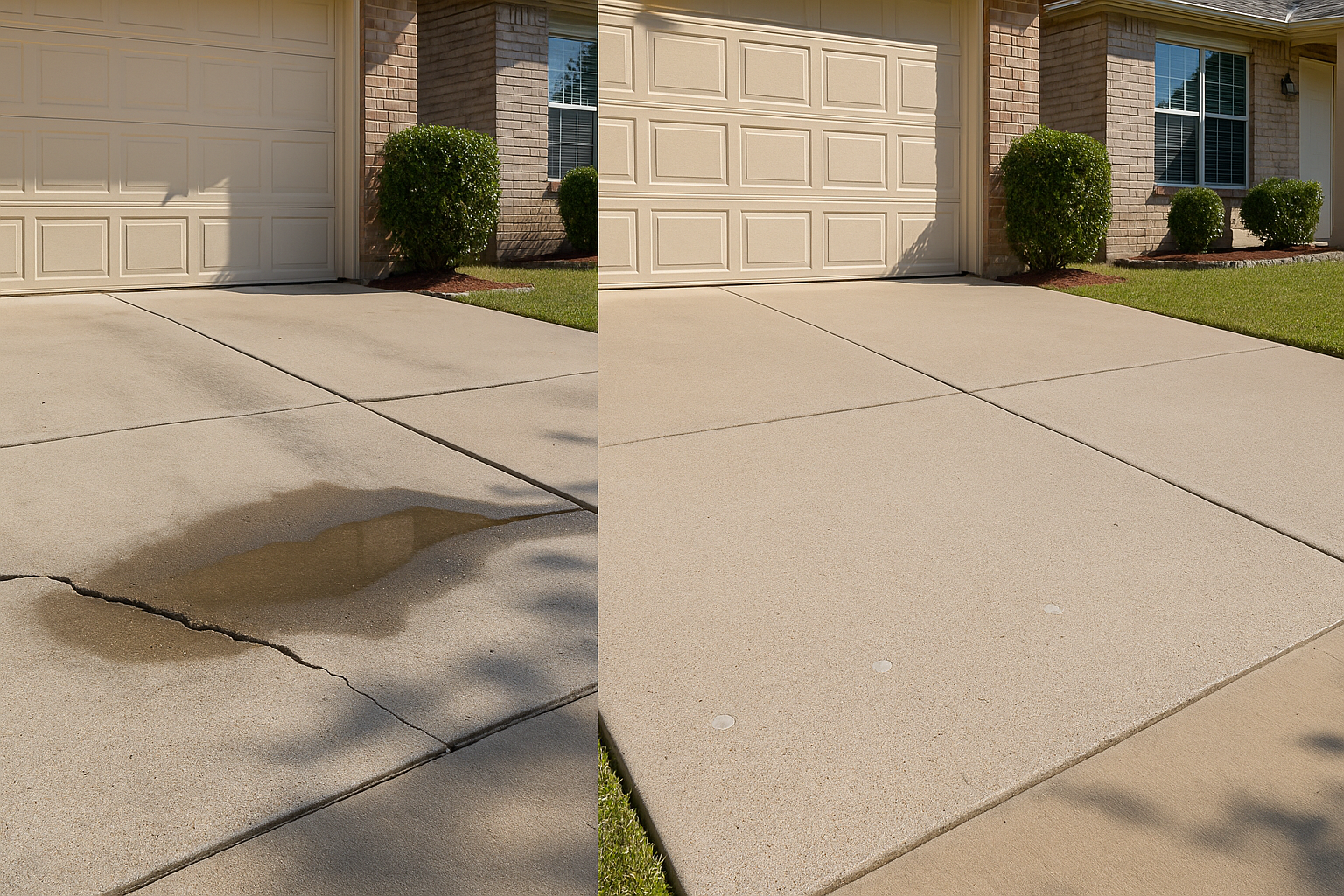
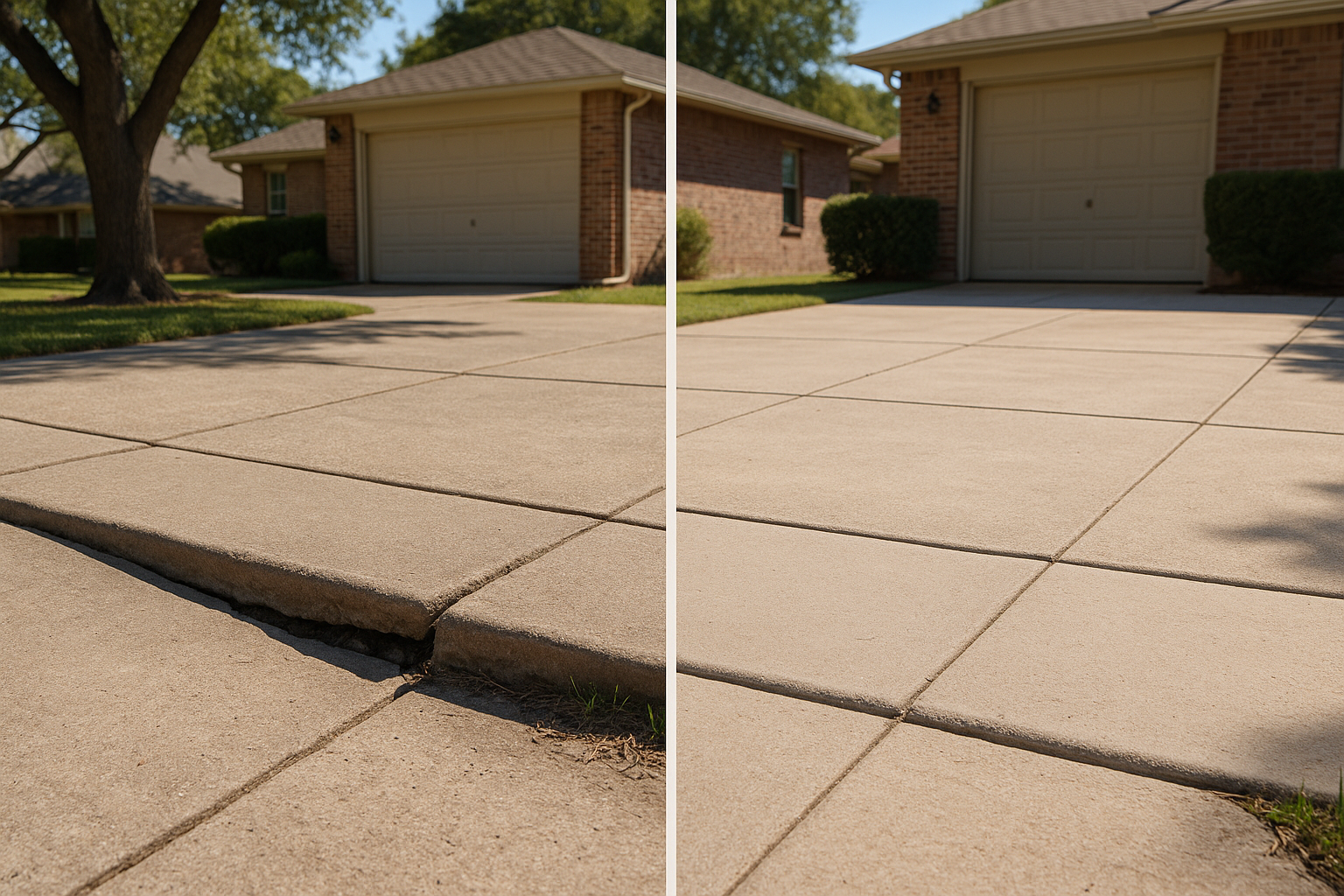
Before leveling, the most common issues are easy to spot. One side of a sidewalk panel sits lower than the next. A driveway edge near the garage has dropped and holds water. A patio has a corner that settled away from the house. Expansion joints may be wider than they should be, and you may notice separation where soil has washed out underneath.
After leveling, the biggest visual change is alignment. The slab is brought back closer to its original elevation so the height difference is reduced or removed. Trip hazards improve fast. Water usually drains better. The slab feels more solid underfoot. Doors, gates, and transitions nearby may work better once the surrounding concrete is back where it belongs.
What does not change? Existing surface wear. If the slab already has cosmetic cracking, discoloration, spalling, or old patchwork, those signs may still be there after lifting. Foam leveling is a structural correction first. The appearance usually improves because the slab is no longer sunken and out of plane, but it will not make old concrete look brand new.
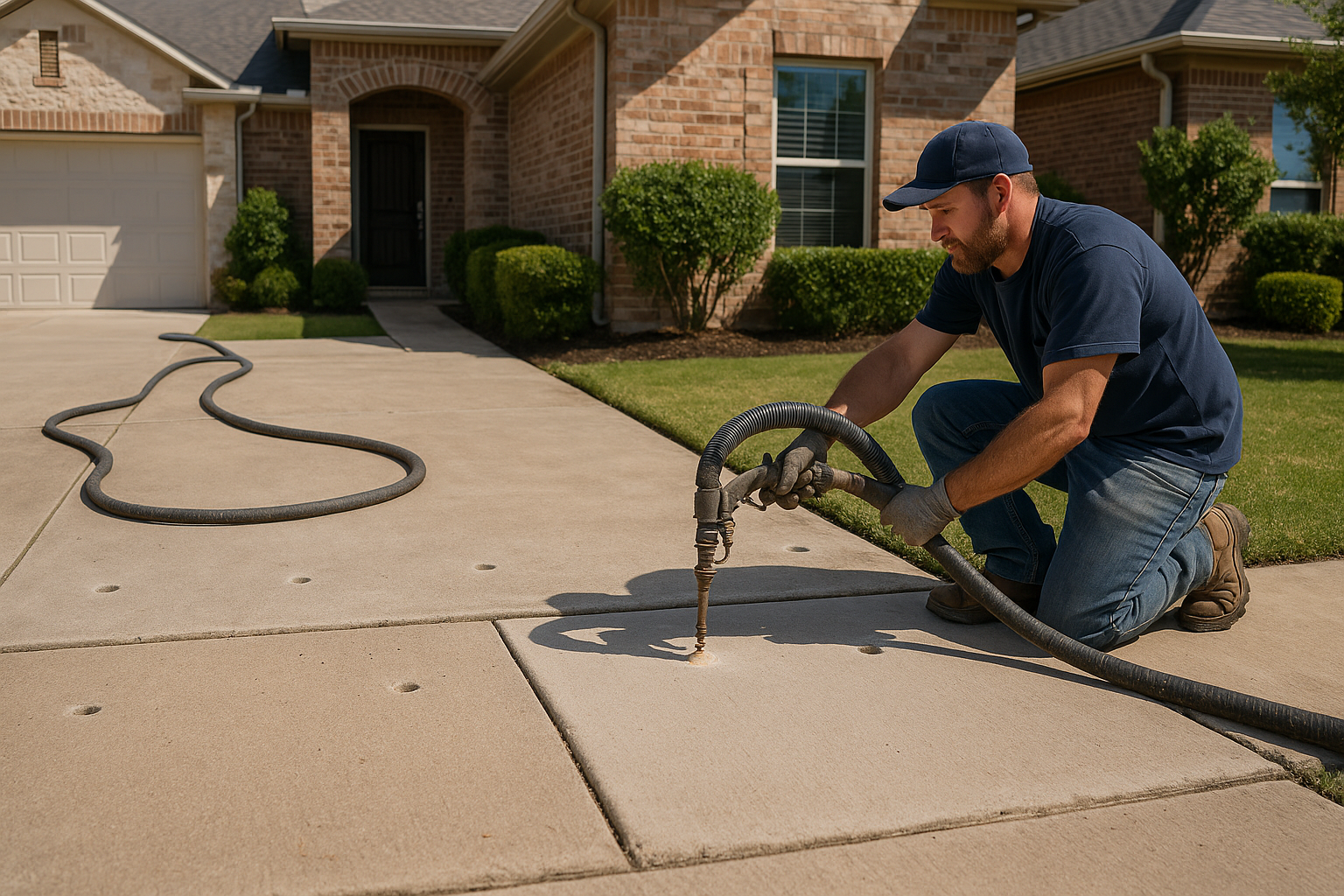
That is why honest before and after jobs in Texas usually show a few small injection holes patched after the lift. Those are normal. On a well-executed job, they are minor compared to the disruption of demolition and replacement. Most homeowners are happy to trade a few patched holes for a safer, level slab without hauling out tons of concrete.
Another part of the before and after story is the joint line. If your slab has open joints or movement, it often makes sense to follow leveling with proper joint sealing. That helps limit water intrusion and future soil washout. If you have not looked into it yet, read more about expansion joints and joint protection, or visit sealmyjoints.com for more information on sealing and long-term maintenance.
Problems foam leveling can fix without replacement
Foam leveling works best when the concrete itself is still in decent shape but the support underneath has changed. In Texas, that usually means one of a few things. We see shrink-swell movement in clay-heavy areas, erosion after runoff, poor compaction under older flatwork, and settlement from plumbing leaks or drainage problems. Central Texas soils are notorious for movement, especially when a dry summer is followed by a hard rain.
Here are some of the most common problems that leveling can often fix without a tear-out:
- Sunken sidewalk panels creating trip hazards near entryways or side yards
- Driveway settlement near garage doors, approaches, or control joints
- Patio slabs pulling away from the house or dropping at one corner
- Pool deck sections that have settled and created uneven walking surfaces
- Void-related movement where water has washed soil out from under the slab
- Drainage-related low spots that hold water after a storm
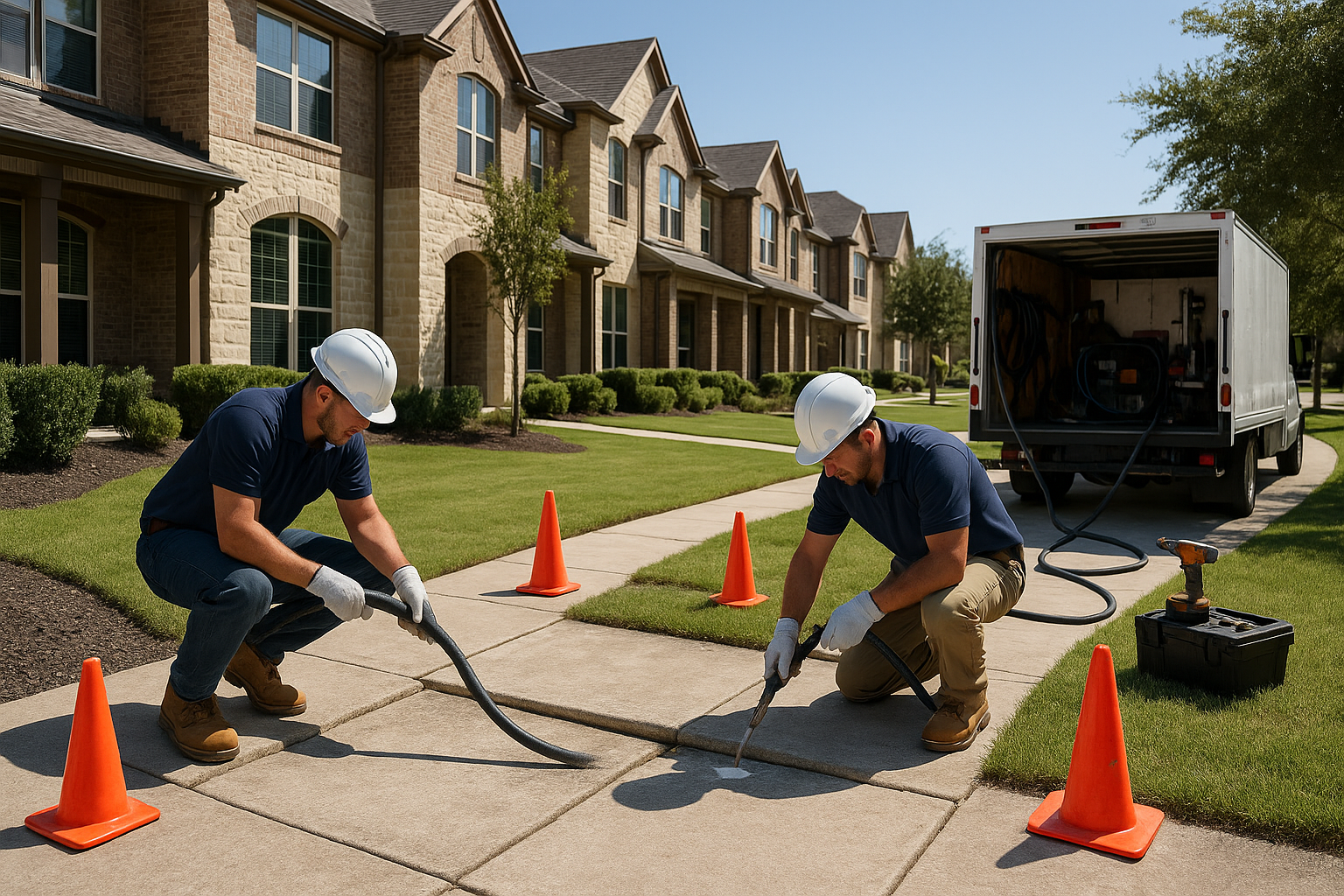
In these cases, polyurethane foam can be injected below the slab through small holes. As the material expands, it fills voids and gently lifts the concrete. One big advantage is speed. Most projects are completed faster than replacement, and the area can often be used much sooner.
For many Texas properties, that matters. You do not want a torn-up driveway during a busy week, and you probably do not want to wait on a full repour and curing schedule if the slab can be salvaged. Depending on site conditions, leveling is often the cleaner and more practical repair.
That said, it is not magic. If a slab is shattered, severely heaved, undermined by major root issues, or broken beyond structural use, replacement may still be the right call. The key is whether the concrete has enough integrity to be lifted as a unit.
When before and after results are worth the cost
This is where homeowners usually want straight talk. If the slab can be saved, leveling often gives one of the better returns on repair dollars. In a lot of cases, foam leveling costs far less than removal and replacement. While every project is different, homeowners are often looking at a repair cost that is significantly lower than a full tear-out, especially when you factor in demolition, haul-off, forming, pouring, and curing time.
The before and after result is worth the cost when the lift solves a real problem, not just a cosmetic one. If you are reducing a trip hazard, improving drainage, protecting the edge of a garage slab, or stopping further movement from getting worse, then the repair has practical value from day one.
It can also help with curb appeal. A driveway or walkway that looks dropped and uneven sends the message that the property has been neglected, even when the fix is relatively straightforward. A leveled slab looks maintained. That matters whether you plan to stay in the home or sell it later.
We usually tell people to think about value in three buckets:
- Safety by removing or reducing uneven transitions
- Function by improving drainage, access, and day-to-day use
- Cost control by avoiding unnecessary replacement when repair will do the job
If your slab is still sound, the before and after difference can be dramatic enough that replacement makes no financial sense. On the other hand, if the slab has widespread structural failure, paying for leveling just to postpone replacement may not be money well spent.
Another factor in Texas is seasonal timing. During hot, dry stretches, soil can pull back and leave support gaps under flatwork. After rains, those weak areas can shift again. Addressing settlement sooner usually helps prevent the slab from continuing to move. Waiting too long can mean more cracking, more joint separation, and a harder repair later.
How to tell if your slab is a good candidate
A good candidate for concrete leveling usually has settlement, but not total failure. The slab may be tilted, dropped, or uneven, but it still holds together well enough to be lifted. A few cracks do not automatically rule it out. In fact, many slabs we level in Texas already have some cracking from age and soil movement. What matters is whether the concrete is still structurally serviceable.
Here are a few signs your slab may be a good fit for foam leveling:
- The concrete is sunken but mostly intact
- The height difference developed over time rather than from one catastrophic break
- Water drains under or around the slab and likely contributed to soil loss
- You can see voids, separation, or open joints that suggest loss of support
- You want a faster, less invasive fix than full replacement
And here are signs replacement may need to be on the table:
- The slab is badly broken into multiple loose sections
- The surface is severely deteriorated from scaling, spalling, or poor original concrete
- Movement is tied to a bigger structural issue that has not been corrected
- Tree roots, plumbing leaks, or drainage failures are still actively damaging support soils
In our part of Texas, underlying conditions matter as much as the slab itself. Blackland clay can swell when wet and shrink when dry, which is a major driver of movement from Austin up through Round Rock and across a lot of Central Texas. Sandy soils can have different drainage behavior, and properties with poor grading can lose support after repeated storms. A solid evaluation should look at both the concrete and the cause of settlement.
The best before and after results happen when the repair plan deals with the whole picture. Lift the slab, improve drainage if needed, and protect joints so water does not keep getting underneath. That combination gives the repair a better chance to hold up.
If you are comparing concrete leveling before and after results, focus on realistic improvements. The slab should be safer, flatter, and better supported. Drainage should improve. The property should look cleaner and more cared for. You may still see old cracks or minor patch points, but those are small tradeoffs when the slab is back in service without a full replacement.
If you want an honest assessment of whether your driveway, patio, sidewalk, or other flatwork is a good candidate, contact Hill Country Slabs. We will tell you straight whether leveling makes sense or if replacement is the better investment. Visit /contact or call (737) 287-4308 to get started.