If your front steps have dropped, tilted, or pulled away from the porch, you are not alone. Sunken concrete steps are a common problem across Texas, especially in places like Austin, Round Rock, San Antonio, Temple, and the surrounding Hill Country. The good news is you usually do not have to tear them out and start over. In many cases, sunken concrete steps repair in Texas can be handled with polyurethane foam lifting, which is faster, cleaner, and far less disruptive than replacement.
At Hill Country Slabs, we see this issue on older homes, newer subdivisions, and commercial entries alike. Texas soil moves. Weather swings are hard on concrete. And when water gets under steps, settlement starts. What begins as a small drop can turn into a trip hazard, a drainage problem, and a bigger repair bill if it is ignored.
If you are dealing with settling entry steps, this guide covers what causes the problem, how the repair works, and when it makes sense to repair instead of replace.
What Causes Concrete Steps to Sink in Texas?
Most sunken concrete steps do not fail because the concrete itself is weak. The real problem is usually below the steps. In Texas, shifting soils and poor support under the concrete are the main reasons steps settle.
Expansive clay soils
Large parts of Central Texas sit on highly expansive clay. In the Austin and Round Rock area, that means the ground swells when it gets wet and shrinks hard during dry stretches. That constant movement leaves voids under steps and stoops. Once the support is gone, the concrete starts dropping. This same movement is why homeowners often need Concrete Slab Repair around the same time they notice step settlement.
Erosion from water runoff
Another big cause is water washing out the base material. Downspouts that dump near the entry, poor grading, sprinkler overspray, and roof runoff can slowly erode soil from under the steps. We see this all the time after heavy Texas storms. Even one side of the steps can lose support faster than the other, which is why some stair sets lean or twist instead of sinking evenly.
Dry weather and soil shrinkage
Texas drought cycles can be just as rough as heavy rain. During hot summers, soil moisture drops fast. Clay shrinks and pulls away from the concrete. When that happens, voids form beneath the steps. The next rain event can make the surrounding soil shift again, and the concrete settles into the open space.
Poor compaction during construction
Some steps sink because the fill under them was never compacted right to begin with. This is common on new builds where backfill around foundations and entryways settles after the first few seasons. If the steps were poured over loose fill, settlement can happen sooner than most homeowners expect.
Joint failure and water intrusion
Where the steps meet the porch, sidewalk, or home, failed joints let water run down into the base. That is why we always tell customers to pay attention to separation cracks and open joints. If those joints need attention, it helps to understand how proper expansion joints work and why sealing them matters. For additional joint sealing info, visit sealmyjoints.com.
How Sunken Concrete Steps Are Repaired Without Replacement
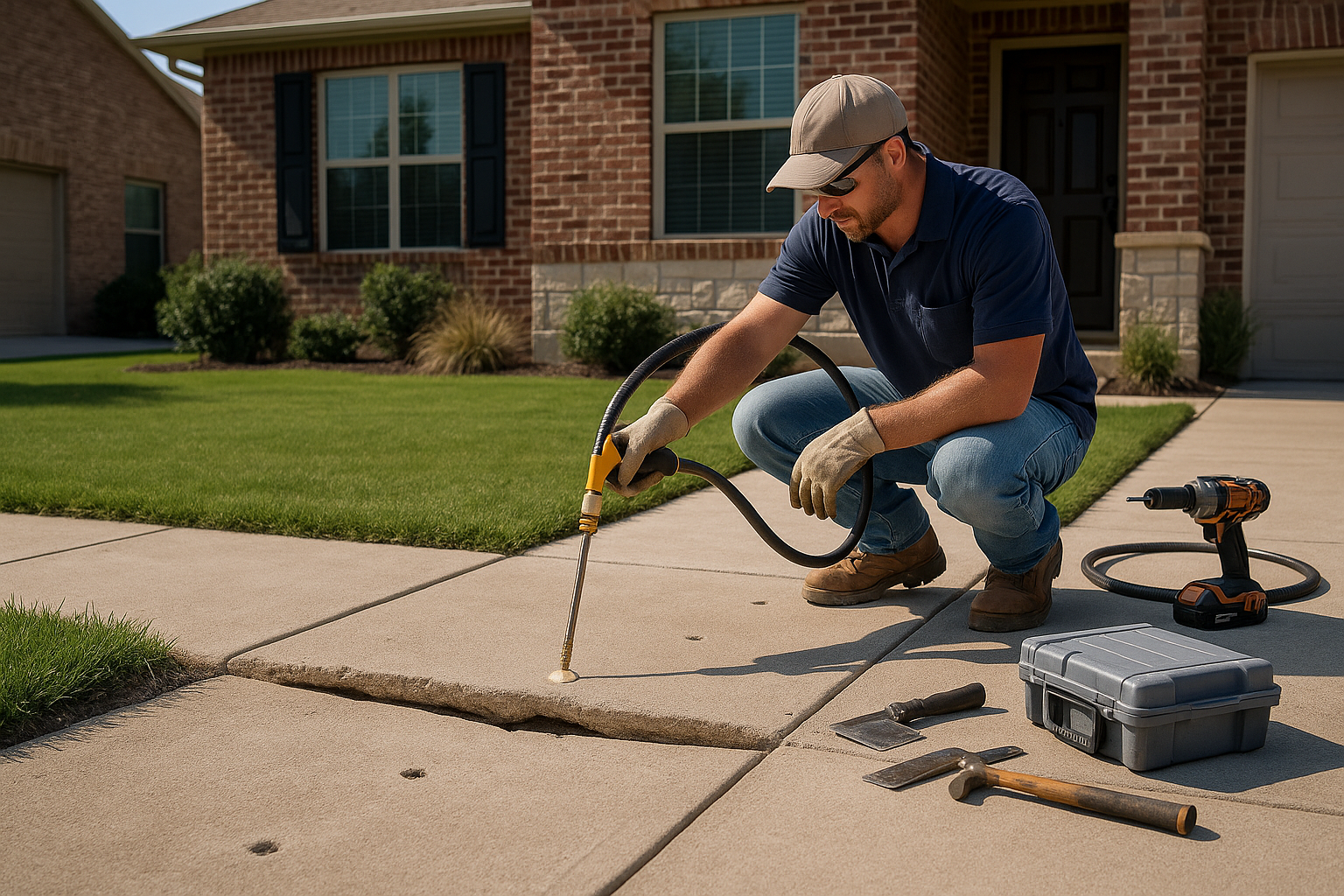
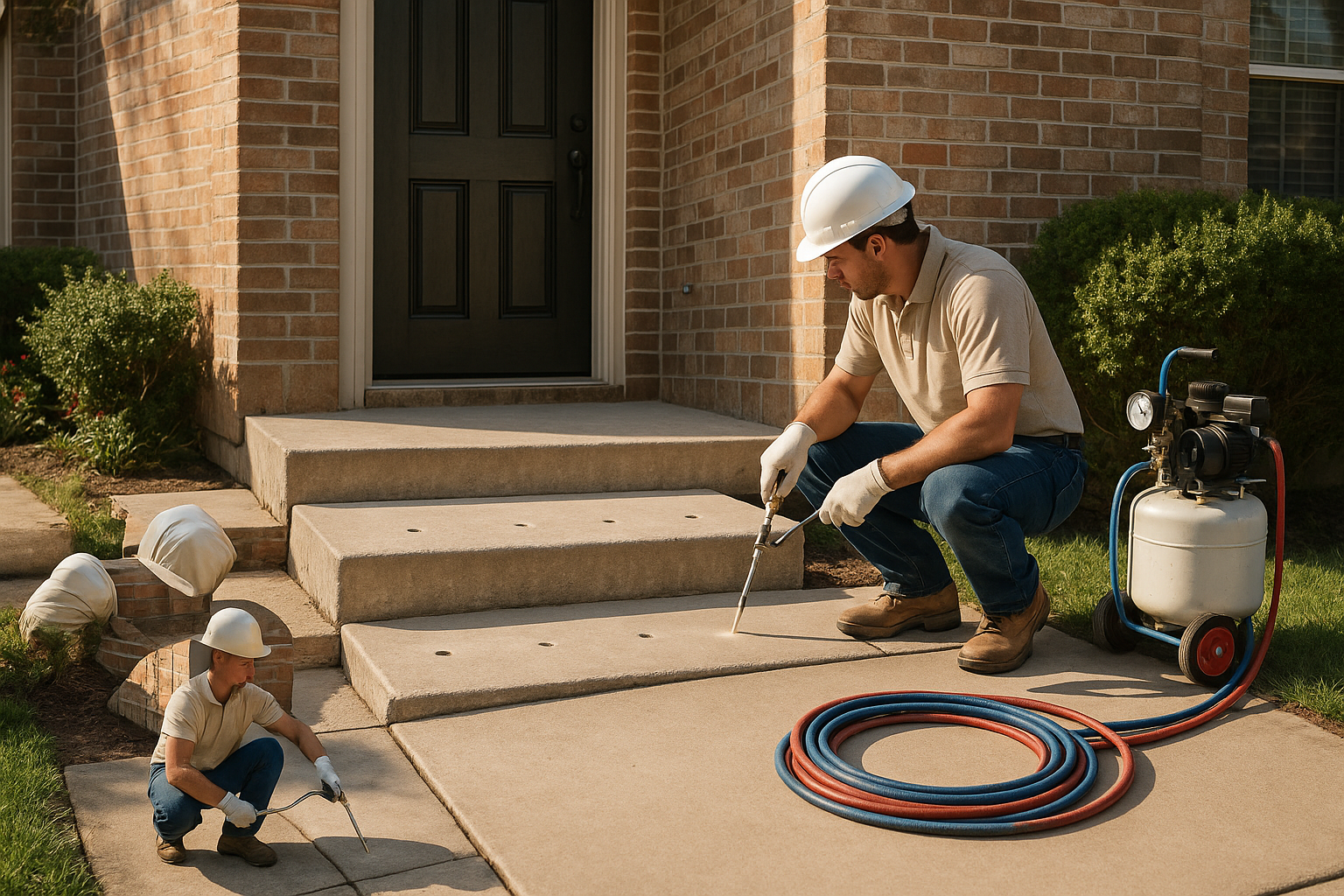
In many cases, the best fix is not demolition. It is lifting. Polyurethane foam injection lets us raise settled concrete steps by filling voids under the slab and applying controlled lift from below. The process is precise, quick, and usually finished in a matter of hours.
Step 1: Evaluate the amount of settlement
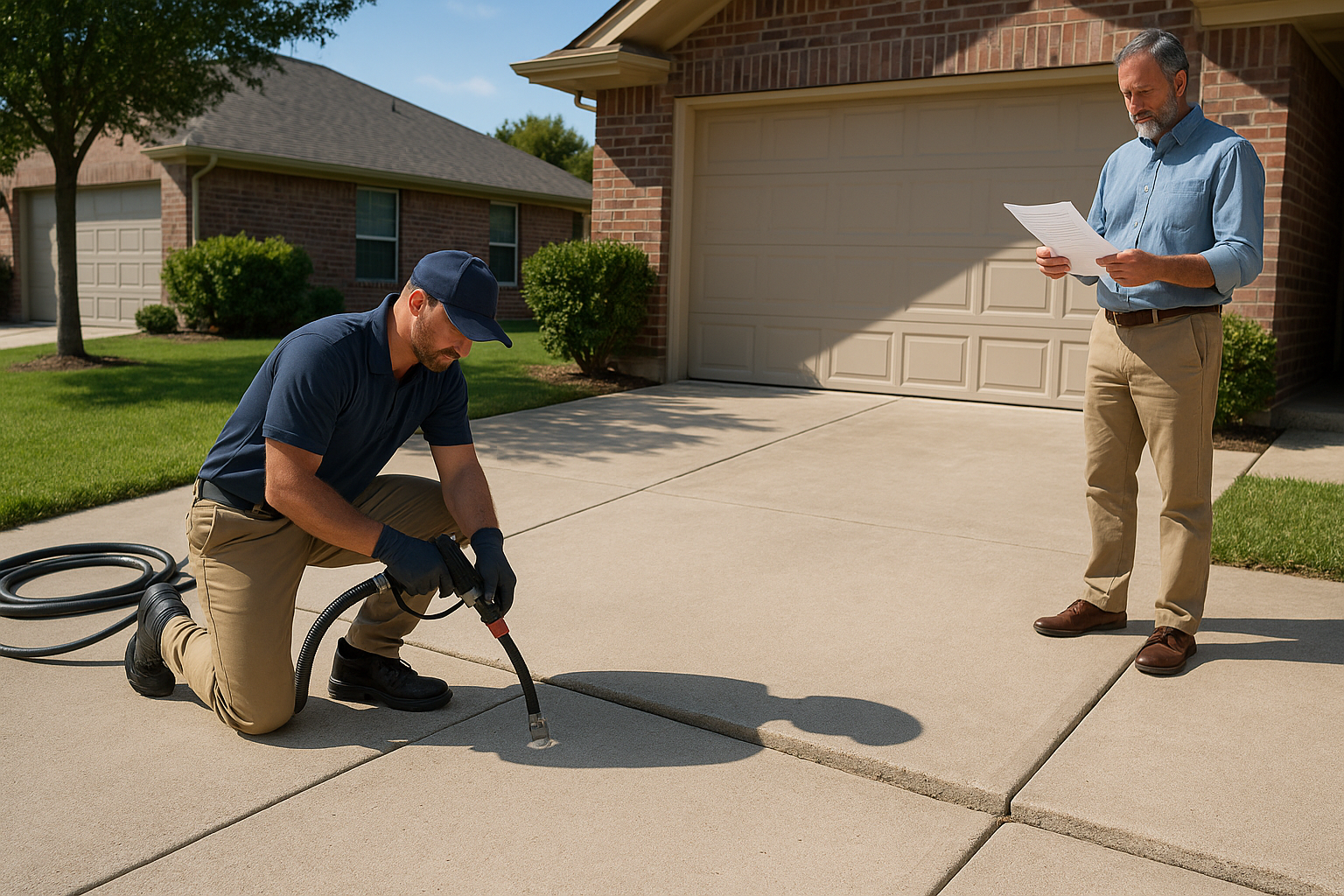
First, we inspect the steps, landing, porch connection, and surrounding flatwork. We want to know how far the steps moved, whether the concrete is still structurally sound, and what caused the support loss. If nearby walkways are settling too, we may recommend pairing the repair with Sidewalk Repair so the whole approach to the home is safe and level.
Step 2: Drill small access holes
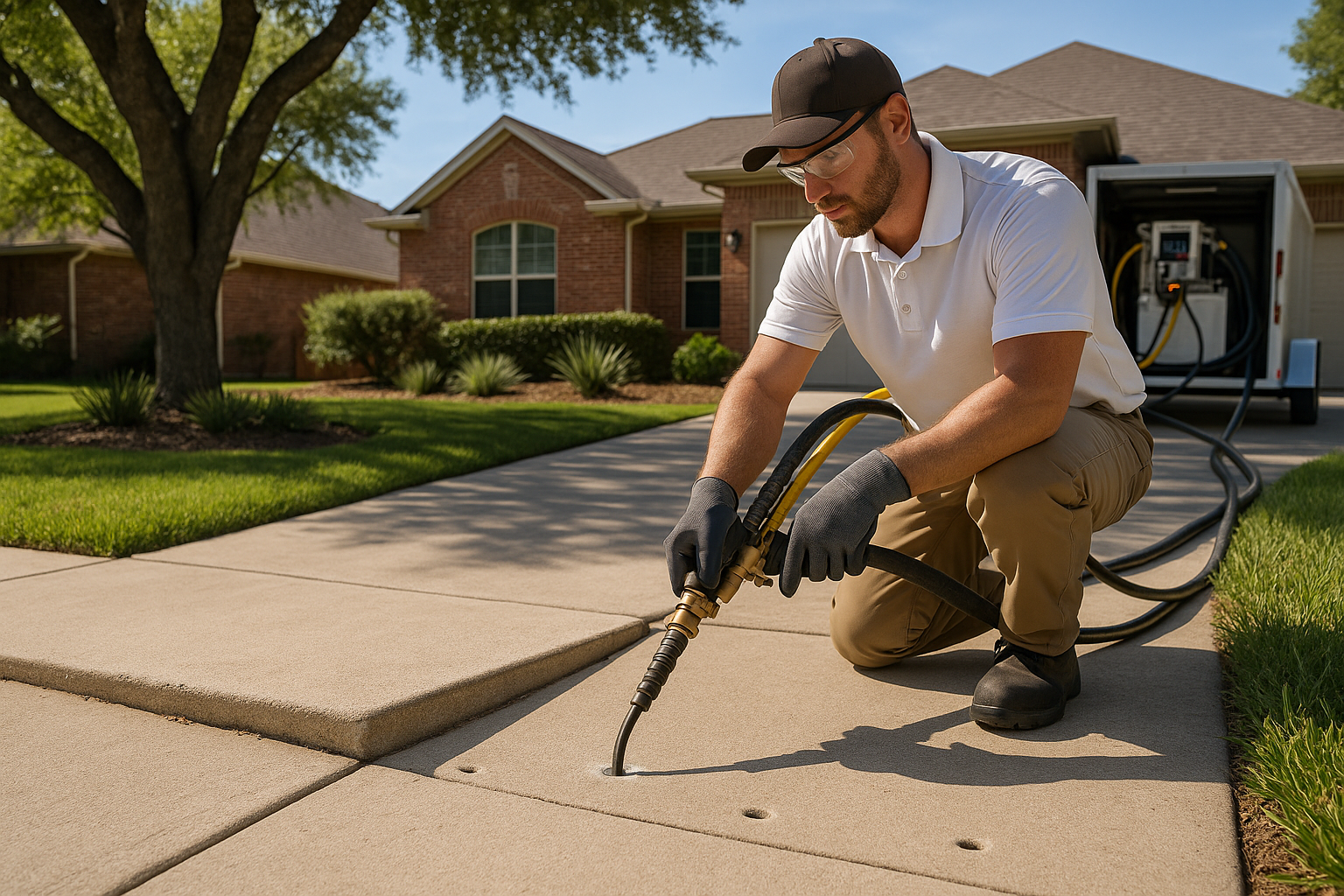
We drill small holes through the concrete in planned locations. These holes are much smaller than what you would see with old-school mudjacking. That means less patching and a cleaner finished look.
Step 3: Inject polyurethane foam
Next, we inject high-density expanding foam beneath the steps. The foam flows into empty spaces, fills voids, and gently lifts the concrete. Because the material expands with control, we can make fine adjustments as the steps come back up.
Step 4: Stabilize and restore support
This part matters just as much as the lift itself. We are not only raising the steps. We are restoring bearing support below them so they are not hanging over open air. Once the concrete is back where it belongs, the access holes are patched and the area is cleaned up.
Why homeowners choose foam leveling
- Fast turnaround: Most step lifting jobs are completed in a few hours, not several days.
- Minimal disruption: No heavy demolition, hauling, or long cure times.
- Lightweight material: Foam adds very little weight to already unstable soils.
- Accurate lifting: We can make controlled adjustments to bring steps back into alignment.
- Lower cost than replacement: Repair is often 30% to 70% less expensive than tearing out and repouring.
For many Texas homeowners, foam leveling is the best way to deal with uneven front steps without wrecking the landscaping, damaging nearby surfaces, or shutting down the front entry for days.
When to Repair vs Replace Concrete Steps
Not every set of concrete steps can be saved, but plenty can. The decision comes down to the condition of the concrete and how severe the movement is.
Repair usually makes sense when:
- The steps are sunken but still largely intact.
- Cracks are minor or limited.
- The main issue is voids, washout, or soil settlement below the concrete.
- The steps have separated from the porch but have not broken apart.
- You want a faster, cleaner, more cost-effective solution.
In those cases, lifting is often the smart move. Typical repair costs depend on access, size, and settlement severity, but homeowners are often surprised to learn sunken concrete steps repair in Texas can cost hundreds to a few thousand dollars, while full replacement can climb much higher once demolition, disposal, forming, and repouring are included.
Replacement may be necessary when:
- The concrete is badly cracked through multiple sections.
- The steps are crumbling, spalling, or structurally unsafe.
- Rebar corrosion has caused major internal damage.
- The original construction was too thin or poorly built to salvage.
- The settlement is tied to larger structural issues that require a different fix first.
If the concrete itself has failed, lifting alone will not solve it. But if the slab is sound and the support underneath is the real problem, replacement is often overkill.
One thing Texas property owners should not do is ignore the issue. Uneven steps are a real liability. They create trip hazards, collect water, and can get worse after each rain-drought cycle. We have seen small settlement problems in Central Texas turn into major rebuilds simply because water kept getting under the concrete year after year.
Get Sunken Step Repair in Texas
If your front steps are sinking, leaning, or pulling away from the house, the fix may be easier than you think. At Hill Country Slabs, we repair settled concrete using polyurethane lifting built for Texas conditions. We understand expansive clay, washout, and the way Central Texas weather beats up flatwork and entry slabs.
Whether you are in Austin, Round Rock, or nearby communities, we can take a look and tell you straight whether your steps should be lifted or replaced. If there is a related issue with the porch, walkway, or foundation-adjacent concrete, we can point you to the right repair path before the problem spreads.
Do not wait until somebody trips or the separation gets worse. Contact Hill Country Slabs today to schedule an evaluation for sunken concrete steps repair in Texas, or call (737) 287-4308 and we will help you get the steps safe, level, and solid again.