Uneven concrete is more than an eyesore in Texas. It is a liability issue, a safety problem, and in a lot of cases it gets worse faster than homeowners expect. If you have a sidewalk panel sitting higher than the next one, a sunken front walkway, or an entry path that holds water and creates a lip, you need to deal with it before somebody trips on it. At Hill Country Slabs, we handle concrete trip hazard repair in Texas with foam leveling that is fast, clean, and a whole lot less disruptive than tearing out concrete.
Across Austin, San Antonio, and the surrounding Hill Country, we see the same pattern over and over. Soil moves, moisture changes, tree roots push, and concrete panels shift out of plane. The good news is that many of these trip hazards can be corrected without demolition. If the concrete is still in decent shape, polyurethane foam injection can raise settled sections, improve alignment, and get walkways back to a safer condition with minimal downtime.
What Causes Concrete Trip Hazards in Texas?
Texas gives concrete a rough ride. Between long dry stretches, sudden downpours, intense summer heat, and highly expansive clay soils, it does not take much for one section of concrete to move differently than the slab next to it. That is where trip hazards start.
In Central Texas and South Texas, expansive clay is one of the biggest troublemakers. When clay-heavy soil gets wet, it swells. When it dries out, it shrinks and pulls away. That constant expansion and contraction leaves voids under sidewalks and walkways. Once support is lost, concrete starts to settle, tilt, or crack. In parts of the Hill Country, we also run into rocky, shallow soils where runoff can wash fines away from under the slab and leave unsupported spots.
Here are the most common causes we see:
- Expansive clay movement from drought and rain cycles
- Soil washout caused by poor drainage or runoff
- Tree root pressure lifting one section higher than another
- Improper compaction under new flatwork
- Water intrusion at joints that weakens support over time
Weather makes all of it worse. A dry August in Texas can open gaps in the soil, then a heavy fall rain can shift that same area again. If joints are open, water gets down below the concrete and speeds up erosion. That is why we also tell property owners to pay attention to joint protection. After lifting and stabilizing concrete, sealing joints can help limit water intrusion. If you want to learn more about that side of maintenance, visit /expansionjoints or check out sealmyjoints.com.
When Foam Leveling Is the Best Repair Option
Not every trip hazard needs replacement. In fact, a lot of uneven concrete in Texas can be fixed with foam leveling if the slab is structurally sound. That means the concrete has not completely failed, the surface is still usable, and the main issue is settlement or minor displacement rather than total breakup.
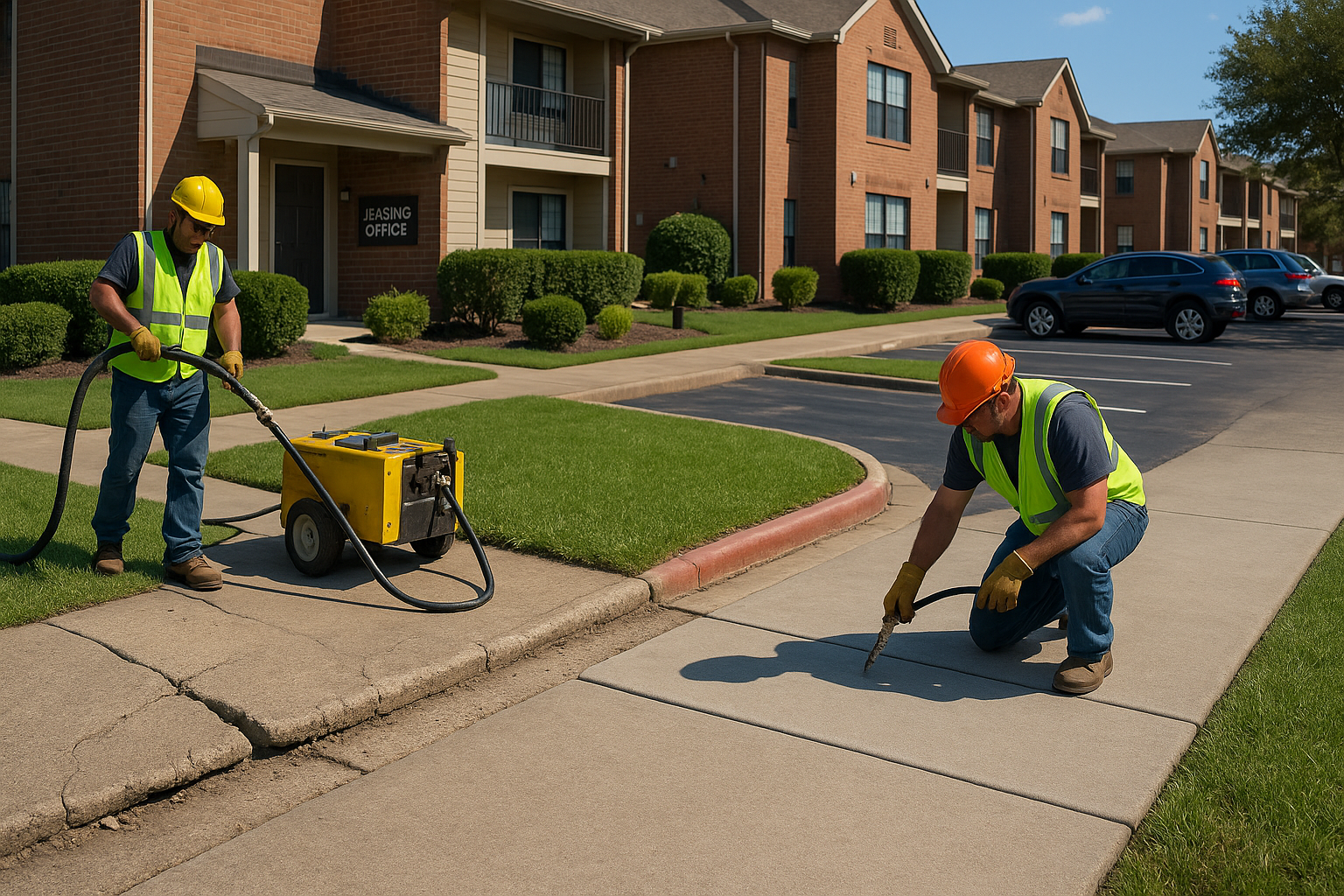
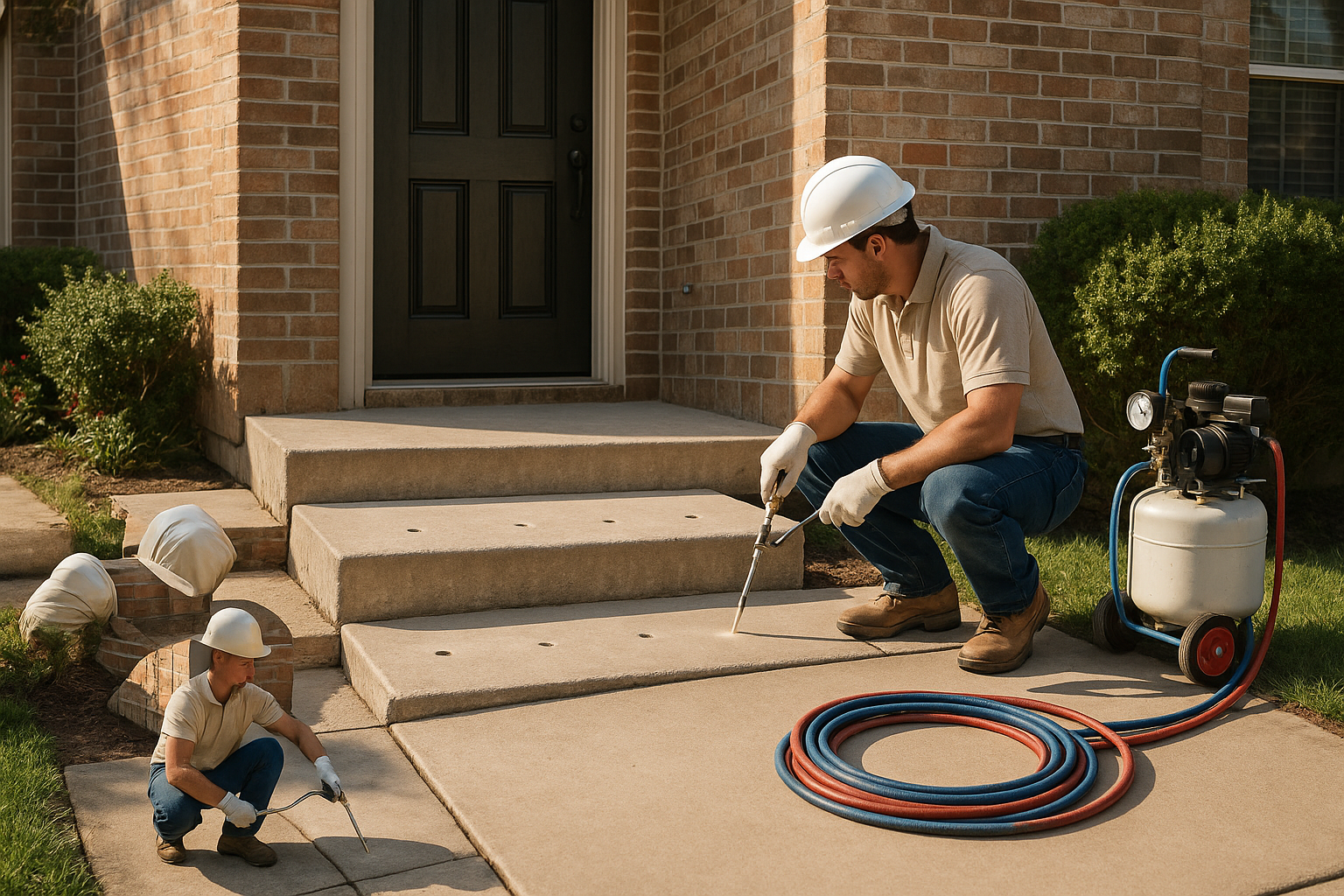
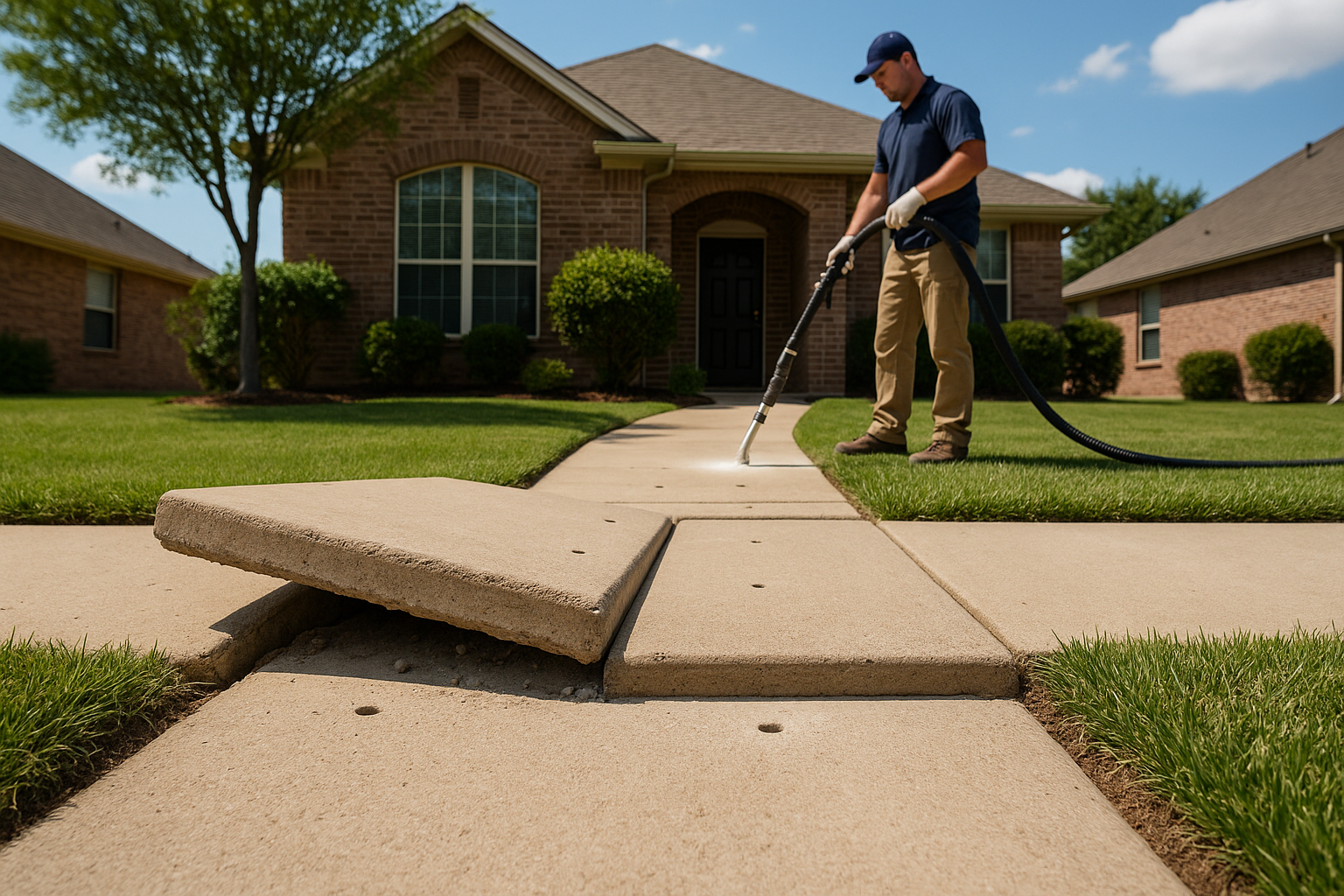
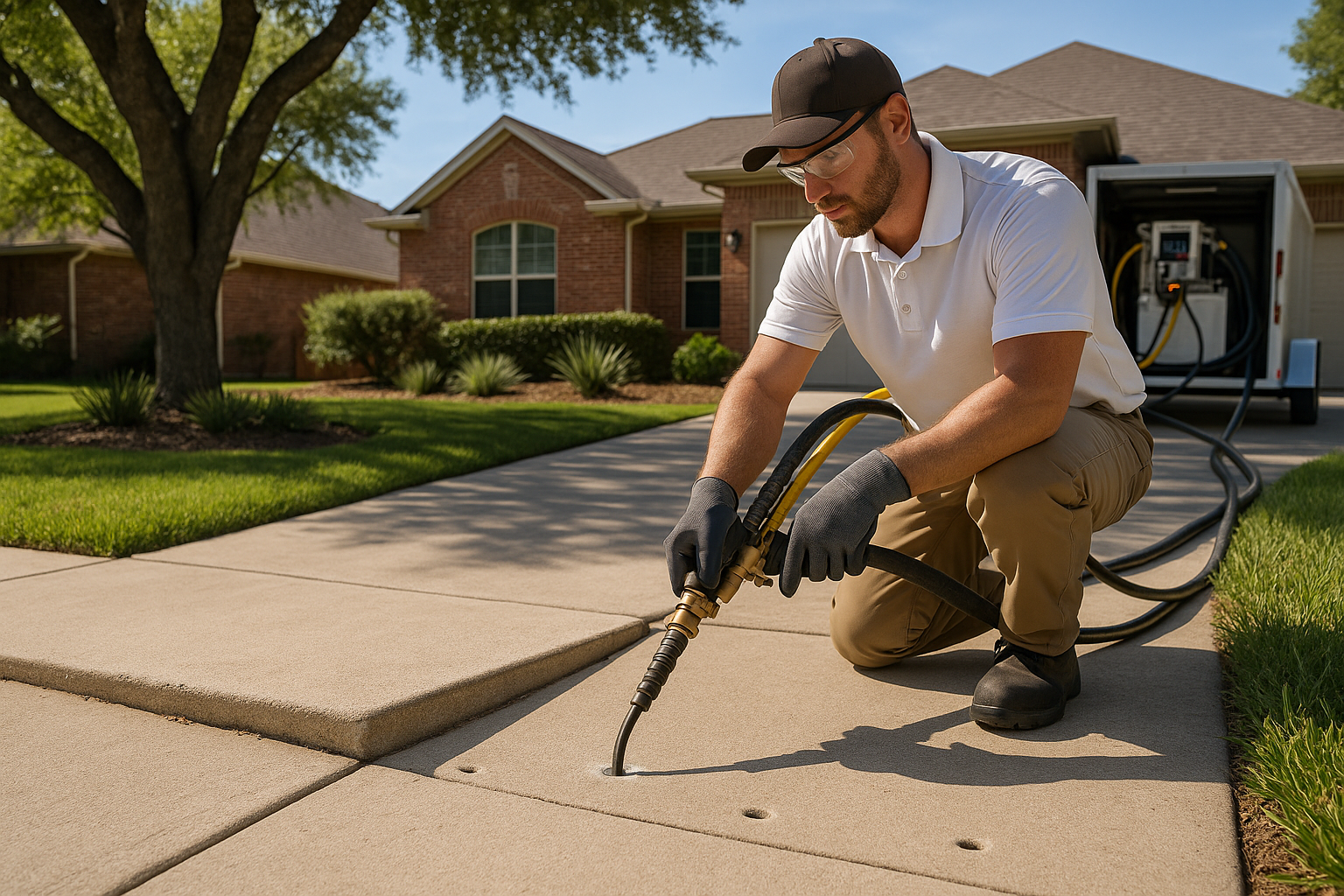
Polyurethane foam leveling works by drilling small holes through the affected slab and injecting a high-density expanding foam beneath it. The foam fills voids, compacts loose soil, and carefully lifts the concrete back toward its intended position. For trip hazards, that can mean reducing a raised edge, correcting a sunken panel, or restoring a smoother transition between sections.
Foam leveling is usually the best option when:
- The slab has settled but is not badly shattered
- The trip hazard is caused by voids or soil movement
- You want a repair with minimal demolition
- You need the area back in service quickly
- You want to avoid replacing multiple panels just to fix one problem spot
Compared to tear-out and replacement, foam leveling is faster and cleaner. There is no heavy demolition, no large disposal mess, and no waiting around for new concrete to cure for days. In many cases, the repaired area can be used the same day. That matters for homes, retail entries, apartment walkways, office fronts, and anywhere foot traffic needs to keep moving.
We also like foam because it is precise. On trip hazard work, the goal is not to overcorrect and create a new issue. It is to make the walkway safer, improve drainage where possible, and restore support under the slab. For broader settlement issues around homes and light commercial properties, our Concrete Slab Repair services address the underlying movement that causes these surface problems in the first place.
Trip Hazard Repair for Sidewalks, Walkways, and Entrances
Trip hazards show up in a lot of places, and each one matters. A lifted panel out by the public sidewalk is an obvious concern, but we also see plenty of hazards on private walkways, garden paths, ADA access routes, pool decks, and front entry approaches. Anywhere one slab edge sits proud of the next, you have a problem that can catch a toe, a walker, a stroller, or a delivery cart.
For residential properties, the most common spots are front sidewalks, drive approaches, and walkways from the driveway to the front porch. For commercial sites, we often see settlement near storefront entrances, dumpster pads, side access walks, and apartment breezeways. In cities like Austin and San Antonio, where properties deal with a mix of drought, flash rain, and shifting soil, these uneven surfaces are common.
Our repair process is straightforward:
- We inspect the concrete and identify what caused the movement.
- We check whether the slab is a good candidate for lifting instead of replacement.
- We drill small injection holes in strategic locations.
- We inject polyurethane foam beneath the slab to fill voids and raise the panel.
- We monitor lift carefully to improve alignment and reduce the trip edge.
- We patch the holes and leave the area clean.
The best candidates for this type of repair are slabs that are out of level but still intact. If the concrete is badly broken, root-heaved beyond correction, or deteriorated from long-term failure, replacement may be the smarter route. But in a lot of Texas trip hazard cases, lifting is the practical middle ground between doing nothing and starting over.
If your issue is mainly with pedestrian surfaces, our Sidewalk Repair service is built for exactly that kind of work. We can evaluate whether leveling, stabilization, or selective replacement makes the most sense for your property.
How Much Concrete Trip Hazard Repair Costs in Texas
Cost depends on the size of the affected area, how far the concrete has moved, how accessible the site is, and whether we are dealing with simple settlement or more complicated soil loss underneath. That said, foam leveling is typically more affordable than removing and replacing concrete, especially when the slab itself is still in decent condition.
In Texas, smaller trip hazard repairs may start around $600 to $1,200 for a localized lift, while more involved sidewalk or walkway leveling projects can run $1,500 to $3,500+ depending on scope. Full replacement can go higher once demolition, haul-off, formwork, and new concrete placement are added in. If multiple panels are affected, the cost difference between leveling and replacement can get significant.
There are a few things that affect price the most:
- Severity of settlement and amount of lift needed
- Number of slabs involved in the repair
- Void size under the concrete
- Access limitations around gates, landscaping, or tight entries
- Drainage and joint condition that may need attention to prevent repeat movement
What we tell customers is simple: do not wait until a small lip turns into a major displacement. Early repair is usually cheaper, safer, and easier to blend into the existing flatwork. Once water keeps getting underneath and the soil continues to move, the odds of needing more extensive repair go up.
In a lot of cases, the real value is not just the repair cost. It is avoiding a fall, cleaning up the appearance of the property, and extending the life of concrete you already paid for. A properly leveled walkway with sealed joints and better water control stands a much better chance of holding up through Texas weather swings.
If you have an uneven sidewalk, sunken walkway, or raised concrete edge creating a hazard, Hill Country Slabs can take a look and tell you whether foam leveling is the right fix. We provide honest recommendations for trip hazards across Central Texas and surrounding areas. Contact us today at /contact or call (737) 287-4308 to schedule your concrete trip hazard repair evaluation.