In Texas, sidewalk trip hazards show up fast and usually get worse quicker than folks expect. One slab lifts a little, another drops a little, and before long you have a lip big enough to catch a shoe, stroller wheel, walker, or lawn equipment tire. Around homes, HOAs, retail spaces, churches, and multifamily properties, that uneven concrete becomes both a safety issue and a liability issue.
The good news is that a lot of sidewalk hazards do not need full tear-out and replacement. In many cases, foam injection can raise settled panels, stabilize the base, and get the walkway back into safe shape without turning your property into a demolition site. At Hill Country Slabs, we handle Sidewalk Repair and Concrete Slab Repair across Central Texas, including Austin and Round Rock.
What Causes Sidewalk Trip Hazards in Texas?
Texas concrete moves for a reason. Most of the trip hazards we see come from shifting support under the slab, not because the concrete suddenly went bad on its own. In this part of the state, expansive clay soils are a major problem. When that clay takes on moisture, it swells. When it dries out during a hot stretch, it shrinks and leaves voids. That cycle repeats over and over, and the sidewalk starts moving panel by panel.
In Central Texas, you are dealing with a mix of clay-heavy soils, caliche, rocky areas, and fill soil around newer developments. In places like Austin, Round Rock, Georgetown, Cedar Park, Pflugerville, San Marcos, and Kyle, we regularly see sidewalks settle where trenching was backfilled poorly, where drainage runs along one edge, or where roof runoff keeps one side wetter than the other. Add a summer with **100-degree heat**, a dry spell, then a hard rain, and that slab has every reason to shift.
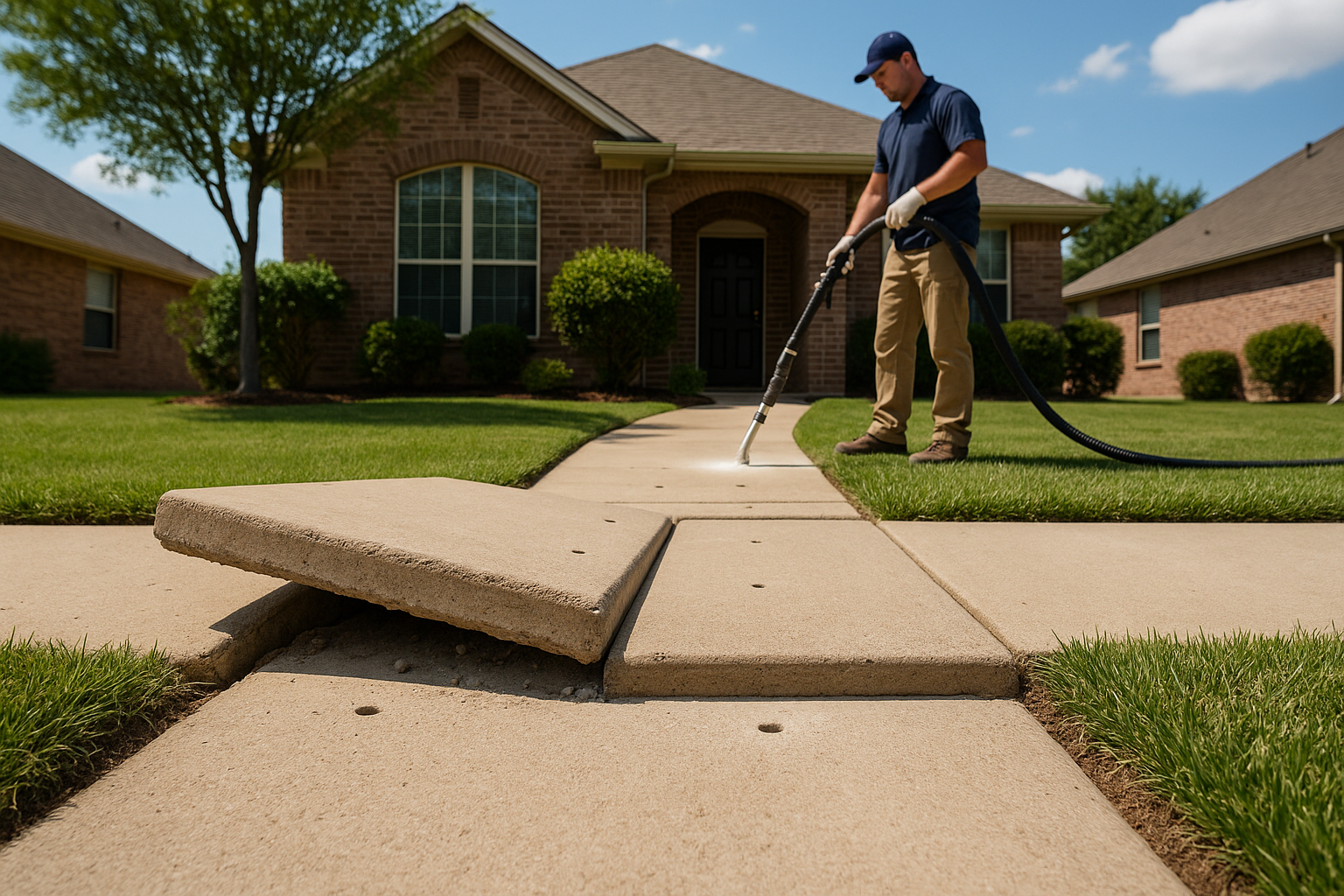
Tree roots can also create a raised panel, but settlement is still one of the biggest causes. Sometimes one section drops while the next panel stays put. Other times the edge curls and opens a gap at the joint. If the walkway was poured over poorly compacted subgrade, that problem can show up in just a few years.
Here are the most common causes we see in Texas:
- Expansive clay soil movement from drought and rain cycles
- Poor compaction under sidewalks in new construction or repaired utility trenches
- Drainage issues that wash out fines below the slab
- Tree root pressure lifting one side of a panel
- Erosion near joints where water enters and weakens support
- Heavy use on commercial walkways and apartment properties
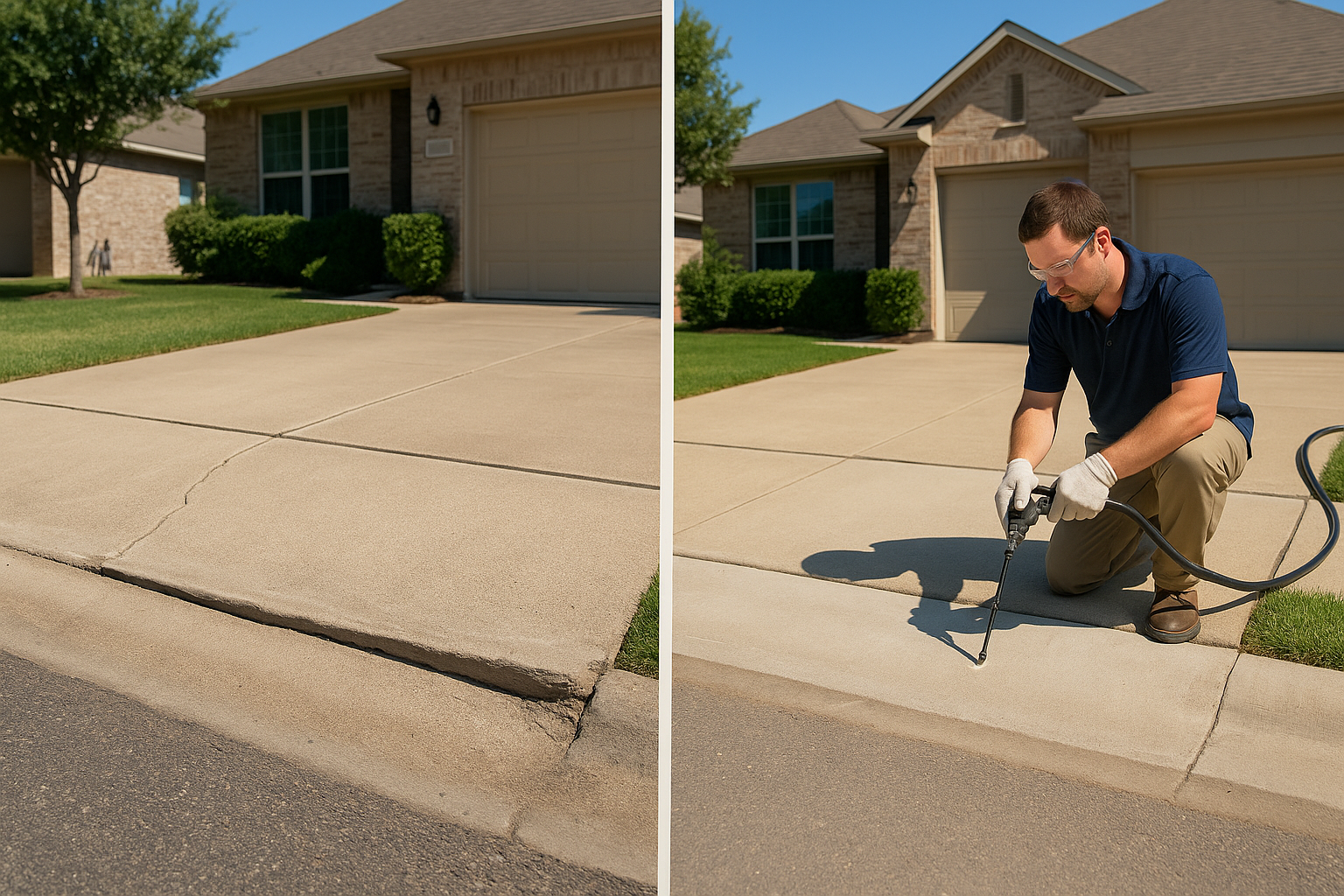
A lot of property owners wait until the offset is obvious, but even a small change matters. A height difference of around **1/4 inch to 1/2 inch** can already become a trip concern depending on traffic and visibility. Once that edge starts moving, it rarely fixes itself.
When Foam Leveling Is the Best Repair
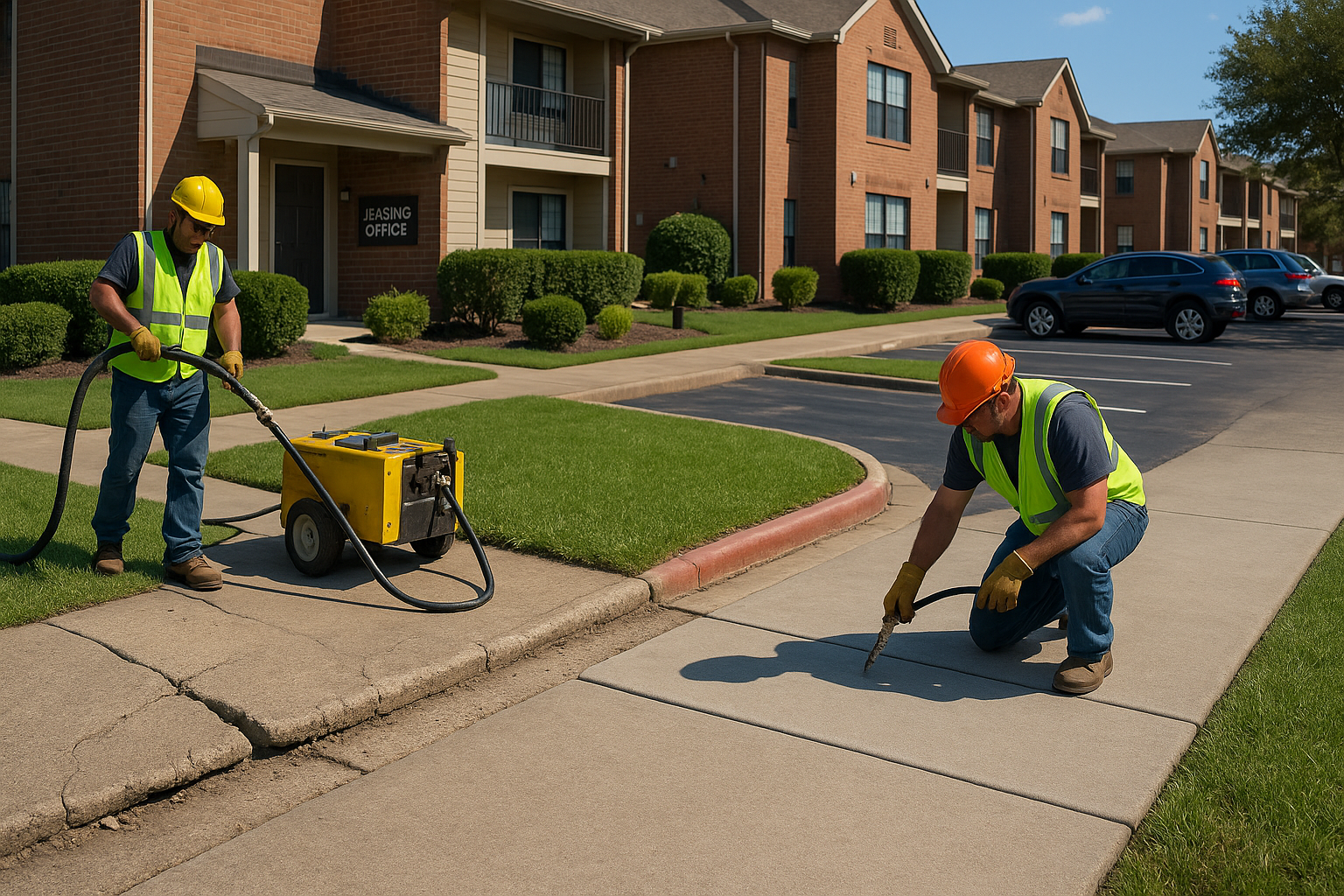
Foam leveling is one of the best options when the sidewalk slab is still structurally sound but no longer sitting where it should. Instead of tearing out good concrete, we drill small holes, inject high-density polyurethane foam beneath the slab, and lift the panel in a controlled way. The foam expands, fills voids, and helps support the concrete from below.
This method works especially well when the problem is settlement, washout, or loss of support. It is a strong fit for residential sidewalks, neighborhood walkways, pool paths, entry sidewalks, and many commercial paths of travel. It is also cleaner and faster than replacement. In many cases, the repaired walkway can be used the same day.
Foam leveling is usually the best repair when:
- The slab is intact and not badly broken apart
- One panel has settled lower than the adjacent slab
- The trip hazard is at a joint and can be corrected by lifting
- You want minimal disruption to landscaping, irrigation, and access
- You need a faster turnaround than tear-out and repour
For many sidewalk trip hazards, foam leveling costs less than replacement once you factor in demolition, hauling, forming, repouring, curing time, and cleanup. Depending on access, severity, and how many panels are involved, repair can often land well below the cost of a full replacement project. On a lot of jobs, property owners are looking at savings of **30% to 50% or more** compared to replacement.
That said, foam leveling is not the right answer for every sidewalk. If the slab is shattered, badly heaved by roots, or the concrete itself is failing, replacement may be the smarter long-term move. That is why we inspect the actual cause first. Lifting a slab without understanding the soil, drainage, and joint condition is how temporary repairs happen.
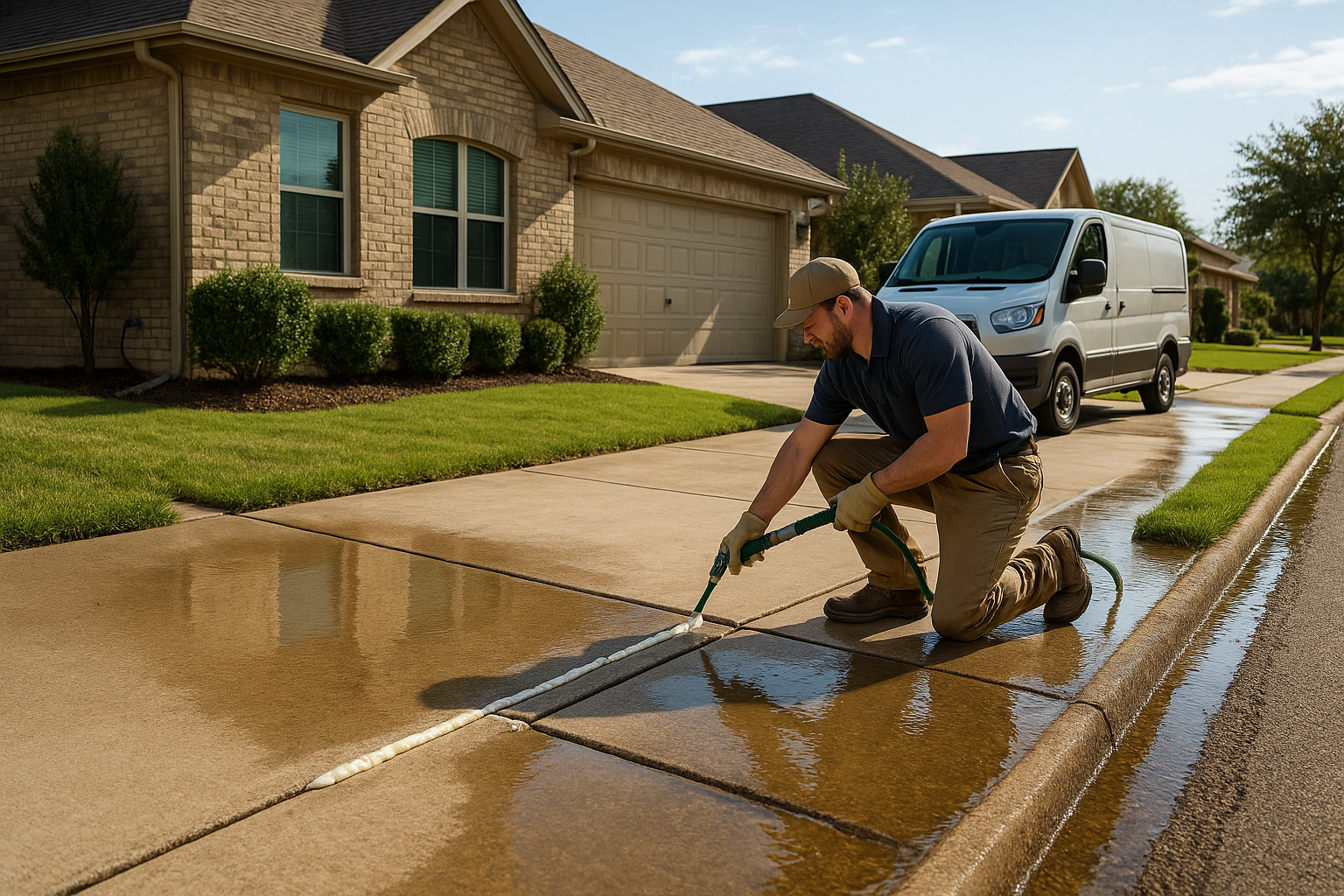
Expansion joints matter too. If water keeps entering open joints, the soil below can keep weakening. After lifting and stabilization, sealing joints helps reduce future washout and moisture-related movement. You can learn more about that at /expansionjoints and at sealmyjoints.com.
What the repair process looks like
- We inspect the sidewalk and identify why the panel moved.
- We check the amount of settlement, joint separation, and surrounding drainage.
- Small holes are drilled through the slab.
- Polyurethane foam is injected under the concrete.
- The slab is lifted carefully to reduce the trip edge.
- The holes are patched and the area is cleaned up.
On the right project, it is a fast, clean repair that avoids replacing concrete that still has life left in it.
Why Fixing Trip Hazards Early Saves Money
The longer a sidewalk hazard sits, the more expensive it tends to get. What starts as a minor lip can turn into a bigger elevation change, a wider void under the slab, more joint failure, and eventually a section that cannot be saved. Early repair is usually about protecting what is already there.
There is also the liability side. If customers, tenants, delivery drivers, or visitors are walking across uneven concrete every day, that hazard can become a real exposure. We have seen property managers put off repairs over a small offset, only to end up dealing with a much bigger project later after more panels shifted.
Early repair helps you:
- Reduce fall risk for residents, guests, and customers
- Avoid larger slab movement as voids expand below the walkway
- Protect adjacent panels from additional stress and edge cracking
- Lower repair cost by fixing a liftable slab before replacement is needed
- Maintain curb appeal and overall property condition
In Texas weather, timing matters. Long dry periods can pull moisture out of clay soils, then a heavy storm can shift conditions all over again. If your sidewalk already has movement, waiting through another season usually does not improve the situation. A quick inspection can tell you whether foam leveling will solve it now before the damage spreads.
For commercial and multifamily properties, quick repair also means less interruption. Full replacement often involves saw cutting, demo, haul-off, forming, scheduling concrete, and waiting for cure time. Foam repair is typically much more efficient. In practical terms, that can mean less downtime, less mess, and less impact on foot traffic.
Get a Free Sidewalk Inspection in Texas
If you have an uneven sidewalk, raised panel, or settling walkway, it is worth getting it looked at before somebody catches a toe on it. We work with homeowners, builders, HOAs, property managers, and commercial owners across Central Texas to identify the cause and recommend the right repair.
At Hill Country Slabs, we take a contractor approach. If the slab can be lifted and stabilized, we will tell you. If replacement makes more sense, we will tell you that too. The goal is a safe walkway and a repair that holds up in Texas conditions.
Whether you are dealing with sidewalk movement in Austin, Round Rock, or nearby communities, we can help you figure out the next step. If you are seeing separation at joints, water intrusion, or recurring slab movement, ask us about joint sealing options along with leveling so the repair has a better shot long term.
Need help with Sidewalk Repair or Concrete Slab Repair? Contact Hill Country Slabs for a free inspection and straightforward recommendations. Visit /contact or call (737) 287-4308 today.