If you own a home or commercial property in Texas, sooner or later you may deal with concrete that is no longer sitting where it started. Driveways dip, sidewalks separate, patios settle, and porch slabs drop enough to create drainage problems and trip hazards. Around here, that is not unusual. Between shifting clay, long dry spells, heavy rains, and plain old soil washout, concrete movement is part of owning property in this state.
At Hill Country Slabs, we see this across Central Texas in Austin, Round Rock, and surrounding areas. The good news is that sunken concrete repair in Texas does not always mean tearing everything out and starting over. In many cases, foam leveling can lift and stabilize slabs without the cost, mess, and downtime of full replacement.
If you are dealing with uneven concrete, it helps to understand what caused it, how the repair works, and when lifting the slab makes more sense than replacing it. For many projects, fast action can prevent bigger structural and drainage issues later on.
What Causes Sunken Concrete in Texas?
Texas concrete moves because Texas soil moves. A lot of this region sits on expansive clay soils that swell when they take on moisture and shrink when they dry out. That constant cycle creates voids, weak spots, and uneven support under concrete slabs. Once the base under the slab changes, the concrete starts to settle.
In Central Texas, we commonly run into a few repeat causes:
- Expansive clay soils: These soils expand during wet periods and contract during drought. That movement can leave one section of a slab unsupported.
- Soil erosion: Water moving under sidewalks, driveways, and patios can wash out fines and create hidden voids.
- Poor compaction: If the soil was not compacted properly during original construction, settlement can show up years later.
- Plumbing or drainage leaks: Leaks can soften the soil below a slab and lead to sinking over time.
- Improper drainage: Downspouts, negative grading, and standing water can undermine the base and make settlement worse.
We also see regional differences. Homes in the Hill Country often deal with shallow limestone and thin topsoil layers, while blackland prairie areas around Austin and points north can experience aggressive expansion and contraction from clay-heavy soils. In both cases, the result can be the same: uneven slabs, separation at joints, and water flowing the wrong direction.
Weather is another big factor. Texas can go from extended drought to sudden heavy rain in a hurry. That moisture swing is hard on slab support. One season the soil shrinks and leaves gaps. The next season rain fills those zones, softens the subgrade, and makes movement worse. That is one reason sunken concrete repair is such a common need here.
If the slab has started to separate at control joints or expansion areas, it is also worth looking at joint condition. Damaged or open joints allow more water into the base. You can learn more about protecting those areas at /expansionjoints and get additional maintenance information from sealmyjoints.com.
How Foam Leveling Repairs Sunken Concrete
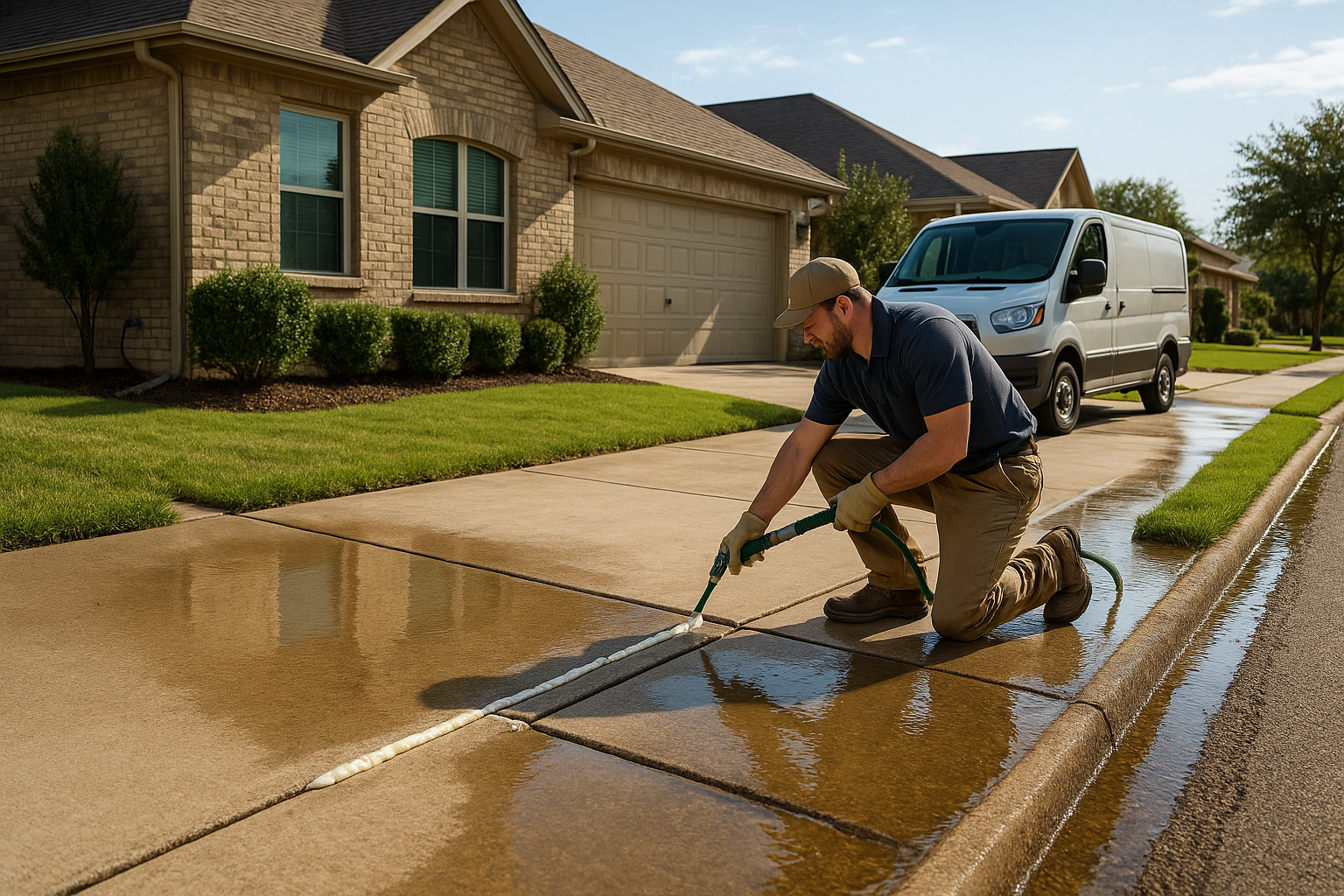
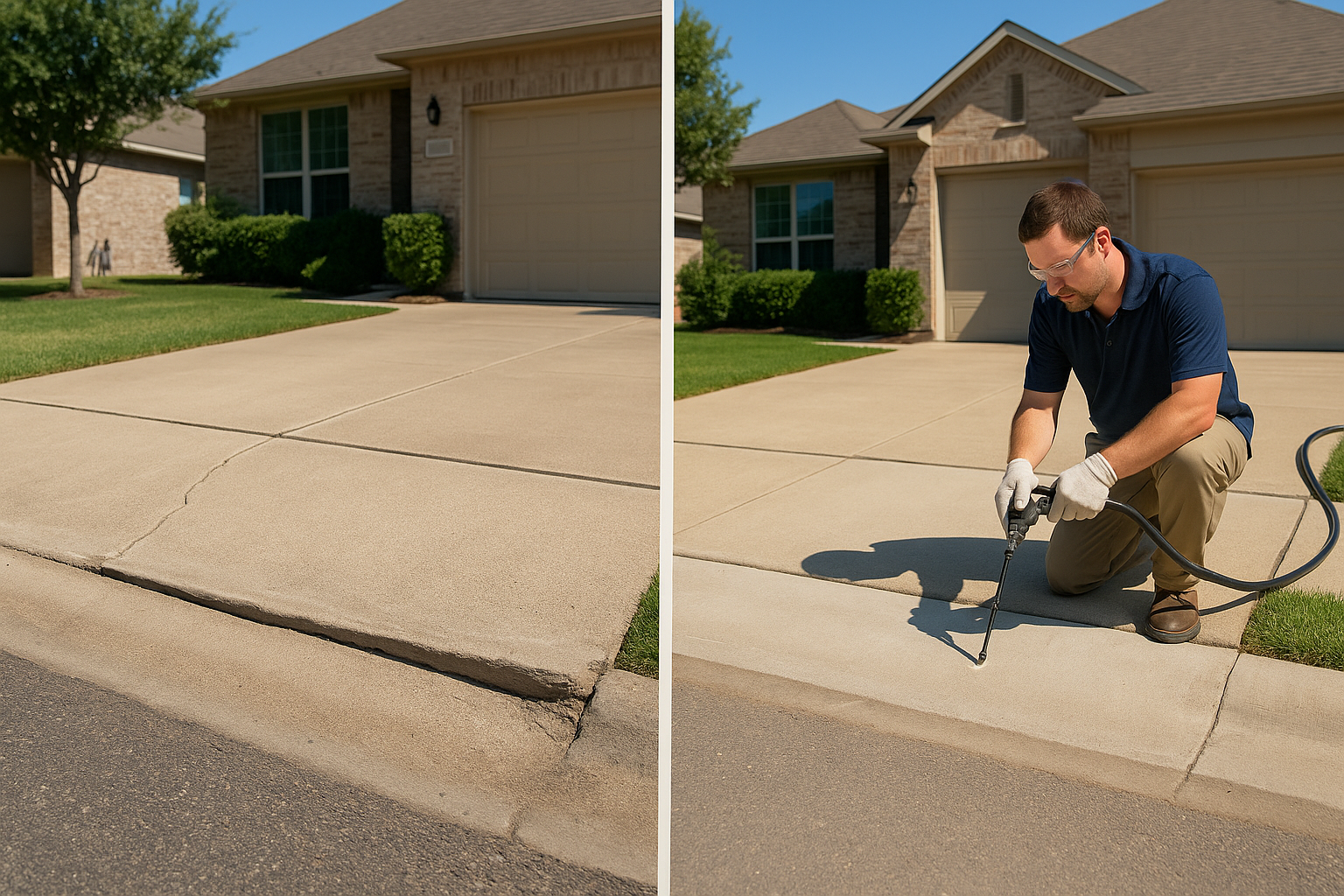
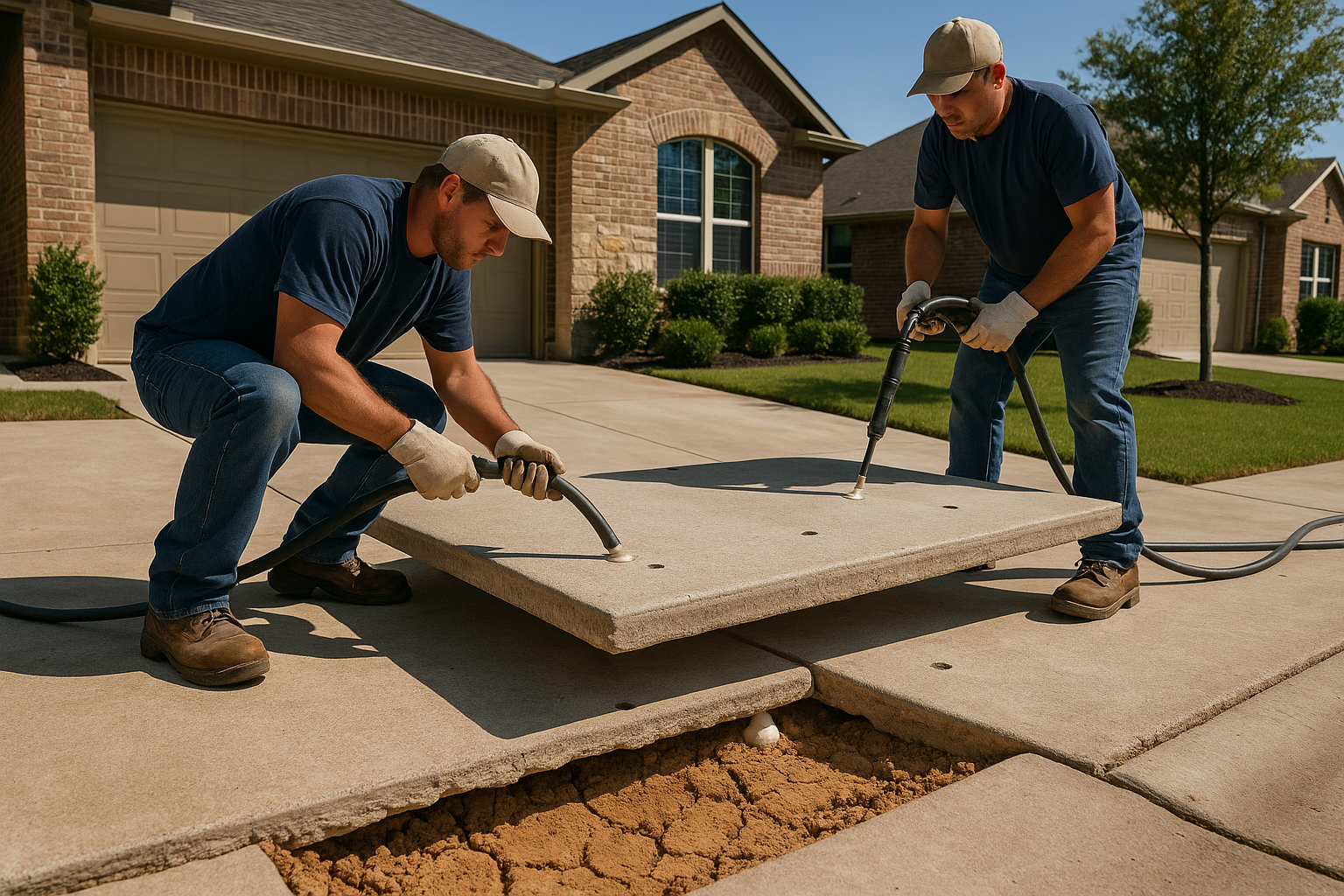
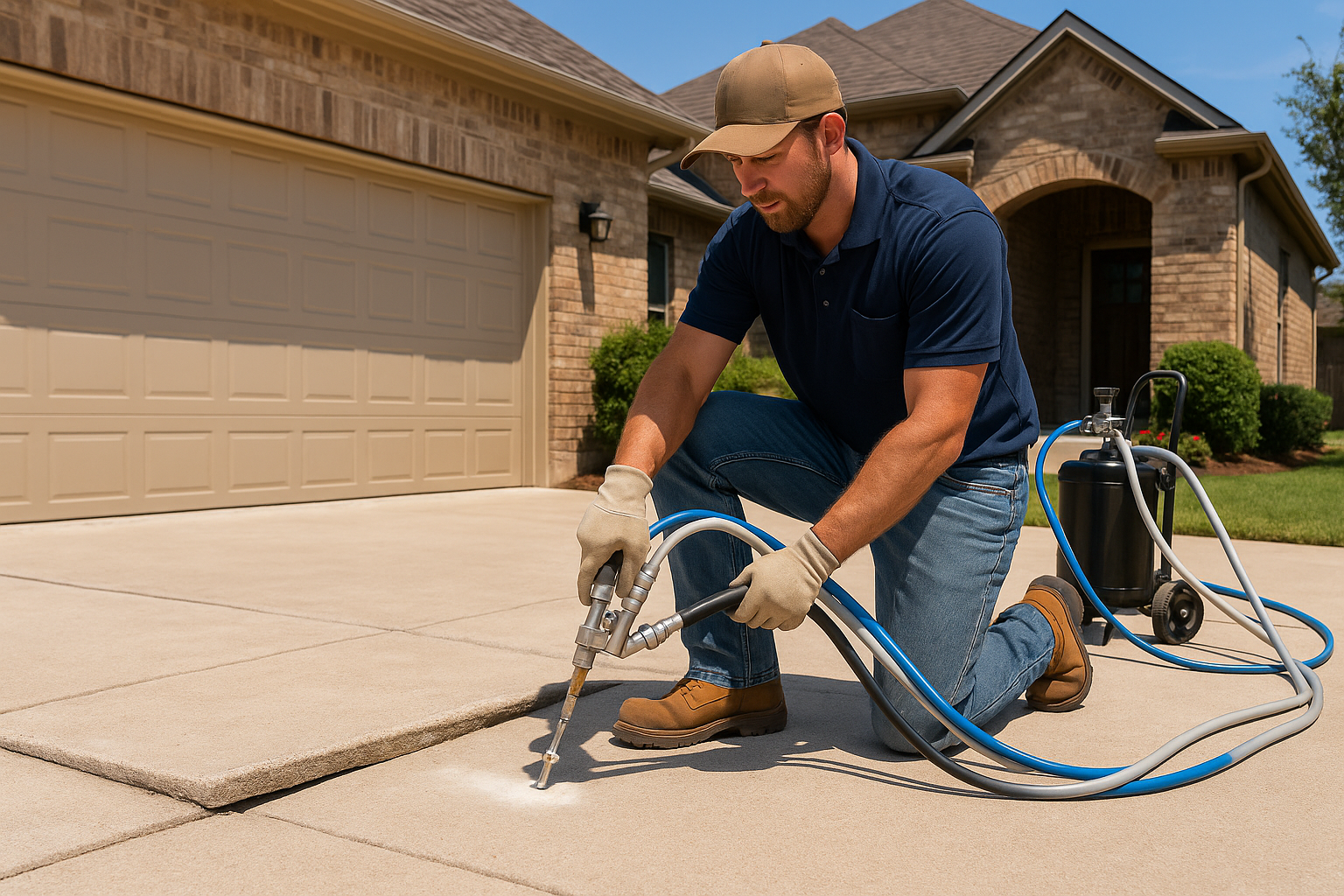
For the right slab, polyurethane foam leveling is one of the cleanest ways to handle settlement. Instead of demolishing the concrete, we drill small injection holes through the slab and pump specialized foam beneath it. As the foam expands, it fills voids, compacts loose soil, and gently raises the slab back toward proper elevation.
The process is straightforward, but it takes experience to do it right. We monitor lift carefully so we do not overcorrect the slab or put too much pressure in the wrong area. On a typical driveway, walkway, or patio, the goal is not just to make it look better. The goal is to restore support, reduce trip hazards, and improve drainage.
Foam leveling works well for:
- Driveways with settled panels
- Sidewalks with trip hazards
- Patios holding water near the house
- Pool decks with uneven sections
- Porches and entry slabs that have dropped
- Approach slabs and light commercial flatwork
Compared to replacement, foam leveling has some major advantages in Texas:
- Less downtime: Many slabs can be used again quickly after repair.
- Minimal disruption: No major tear-out, haul-off, or long cure time.
- Targets the real issue: The foam fills voids and improves support below the slab.
- Cost savings: Repair is often far less expensive than full replacement.
On many residential projects, homeowners are looking at repair costs that are significantly lower than replacement. While every slab is different, full removal and replacement can run 2 to 3 times more once demolition, disposal, forming, and repouring are included. That is why services like Driveway Leveling and Concrete Slab Repair are often the first place to start before considering a full tear-out.
When to Repair Sunken Concrete Instead of Replacing It
Not every slab can or should be lifted. If the concrete is badly broken, structurally failed, or too thin to respond well, replacement may be the better call. But a lot of sunken concrete in Texas is still in decent shape overall. The real problem is loss of support underneath, not the slab itself.
Repair usually makes sense when:
- The slab is mostly intact with limited cracking
- The sinking is caused by voids or soil settlement
- You want to fix drainage away from the home
- You need to remove trip hazards on walkways or entry paths
- You want to avoid the cost and inconvenience of replacement
Replacement may be necessary when:
- The slab is shattered or has major structural cracks
- The subgrade is severely compromised over a large area
- The concrete was poured poorly and is already failing
- There is major heaving, not just settlement
We always tell property owners the same thing: the earlier you address settlement, the better your options usually are. A small drop in a sidewalk panel can turn into a bigger trip hazard. A patio that slopes back toward the home can contribute to standing water near the foundation. A sunken driveway edge can keep getting worse as water finds its way into the gap and erodes more soil underneath.
If there is a drainage component, we also look at where water is going after the slab is lifted. Texas repair work is not just about elevation. It is about making sure the slab sheds water the way it should. That matters even more in areas that see intense downpours and flash runoff.
What to Expect From Sunken Concrete Repair in Texas
Most homeowners are surprised by how efficient the process can be. A standard repair starts with an evaluation of the slab, surrounding grade, joints, and probable cause of settlement. We identify low areas, measure elevation differences, and determine whether foam leveling is a good fit.
From there, the typical process looks like this:
- Inspection and diagnosis: We verify whether settlement, erosion, drainage, or weak base material is causing the problem.
- Drilling access holes: Small holes are placed in strategic spots through the concrete.
- Foam injection: Polyurethane foam is injected below the slab to fill voids and create lift.
- Precision leveling: The slab is raised carefully to improve alignment and drainage.
- Patching and cleanup: Injection holes are patched and the work area is cleaned up.
For many jobs, the repair can be completed in a day, and the slab is often ready for use much sooner than a newly poured replacement slab. That is a big advantage for driveways, sidewalks, and entry areas where access matters. It is one reason Texas homeowners and property managers often prefer leveling when the slab is a good candidate.
As for pricing, there is no honest one-size-fits-all number because slab thickness, access, amount of settlement, and square footage all matter. Still, foam leveling is commonly the more budget-friendly option. Homeowners often find that repairing a sunken slab costs far less than full replacement, especially when you factor in demolition and the inconvenience of losing use of the area.
The other benefit is preserving what is already there. If your existing slab is serviceable, lifting it avoids unnecessary waste and keeps the repair focused on the actual problem under the concrete.
Sunken concrete repair in Texas is not something to ignore and hope it stabilizes on its own. Between shifting soils, weather extremes, and drainage issues, settled slabs usually keep moving in the wrong direction. The sooner you deal with it, the more likely it is that leveling can solve the issue before replacement becomes necessary.
If you have a sinking driveway, patio, sidewalk, or porch slab in Austin, Round Rock, or nearby areas, Hill Country Slabs can help you figure out the right repair. Contact us today at (737) 287-4308 or visit /contact to schedule an evaluation.