In Texas, a concrete patio takes a beating. Between long dry spells, heavy rain, shifting soils, and brutal summer heat, it does not take much for a patio slab to start settling, cracking, or pulling away from the house. We see it all over Austin, Round Rock, and Cedar Park: one corner drops, water starts pooling, and before long you have a trip hazard and a patio that looks worse every season.
The good news is that a sunken patio does not always need to be torn out and replaced. In many cases, concrete patio repair in Texas can be handled with foam leveling. This process lifts and supports the slab from underneath without the mess, downtime, and expense of a full replacement. For homeowners dealing with uneven patio concrete, it is often the fastest and most cost-effective fix available.
If you are already seeing separation, cracks, or low spots, it is smart to address it early. Small settlement problems usually cost less to fix than major slab movement. And when the repair is done right, you can restore drainage, improve appearance, and make the space safe to use again.
Signs Your Concrete Patio Needs Repair
Most patio problems start small. A slab might settle a half inch near one edge, or a hairline crack may open after a summer drought. Homeowners often wait because it does not seem urgent, but that movement rarely stops on its own. In Texas, once the soil under a patio loses support, the slab usually keeps shifting.
- One side of the patio sits lower than the rest of the slab or nearby walkway.
- Water pools against the house or stands on the patio after rain.
- Cracks are widening, especially where the slab has dropped.
- Expansion joints have opened up or the sealant has failed. If that sounds familiar, learn more about expansion joints.
- The patio has become a trip hazard around steps, doors, or connecting concrete.
- The slab is pulling away from the home, outdoor kitchen, or adjoining deck area.
These are all signs the slab may be losing support underneath. Surface patching alone will not fix a void under the concrete. If the root cause is settlement, the patio needs to be lifted and stabilized, not just cosmetically patched.
What Causes Patio Concrete to Sink in Texas?
Texas soil is a big reason patio slabs move. In Central Texas especially, expansive clay soils swell when wet and shrink when dry. That constant cycle creates movement under concrete. A patio may look fine in spring, then show settlement after a hot summer followed by a hard rain.
We also see issues tied to regional soil conditions. Around Austin and much of the Hill Country, rocky ground and clay mixes can leave uneven support under a slab. In areas with looser fill soil around newer homes, the back patio may settle because the fill was never fully compacted after construction. In North and Central Texas, black clay can be especially hard on exterior flatwork because it expands and contracts so aggressively.
Some of the most common causes include:
- Drying and shrinking clay soils during drought conditions.
- Heavy rain washing out support under patio edges or nearby drainage paths.
- Poor compaction of fill soil during original construction.
- Leaking irrigation or downspouts saturating one side of the slab.
- Tree roots and root-related moisture loss changing soil conditions nearby.
- Erosion around expansion joints and slab edges where water gets underneath.
Texas weather makes these problems worse. We can go from extreme heat to driving rain in a matter of days. That swing in moisture content is rough on any unsupported slab. Once a void forms underneath, every storm and every footstep puts more stress on the concrete.
Concrete Patio Repair vs Replacement
One of the biggest questions homeowners ask is whether to repair the patio or start over. The answer depends on the condition of the slab. If the concrete is still structurally decent and the main issue is settlement, repair is usually the better route. If the patio is shattered, severely heaved, or badly deteriorated from top to bottom, replacement may be the only real option.
For a lot of Texas patios, repair wins on time and cost. Foam leveling can often be completed in a few hours, and the patio is typically ready for use the same day. Full replacement means demolition, haul-off, regrading, forms, new concrete, curing time, and a lot more disruption to the yard.
Here is the practical difference:
- Foam leveling repair often costs about 50% to 70% less than full patio replacement, depending on size and condition.
- Most repairs are completed in one day, with minimal mess.
- Replacement usually takes several days to over a week when you include demo, pour, and cure time.
- Repair preserves existing concrete if the slab surface is still in good shape.
If your patio has settled but is otherwise intact, our Patio Leveling service is often the right fit. If the problem ties into broader movement affecting adjacent slabs or structural concrete nearby, take a look at Concrete Slab Repair as well.
In short, replacement makes sense when the concrete is beyond saving. But if the slab is just low, uneven, or lightly cracked from settlement, repair is usually the smarter investment.
How Foam Leveling Repairs a Sunken Patio
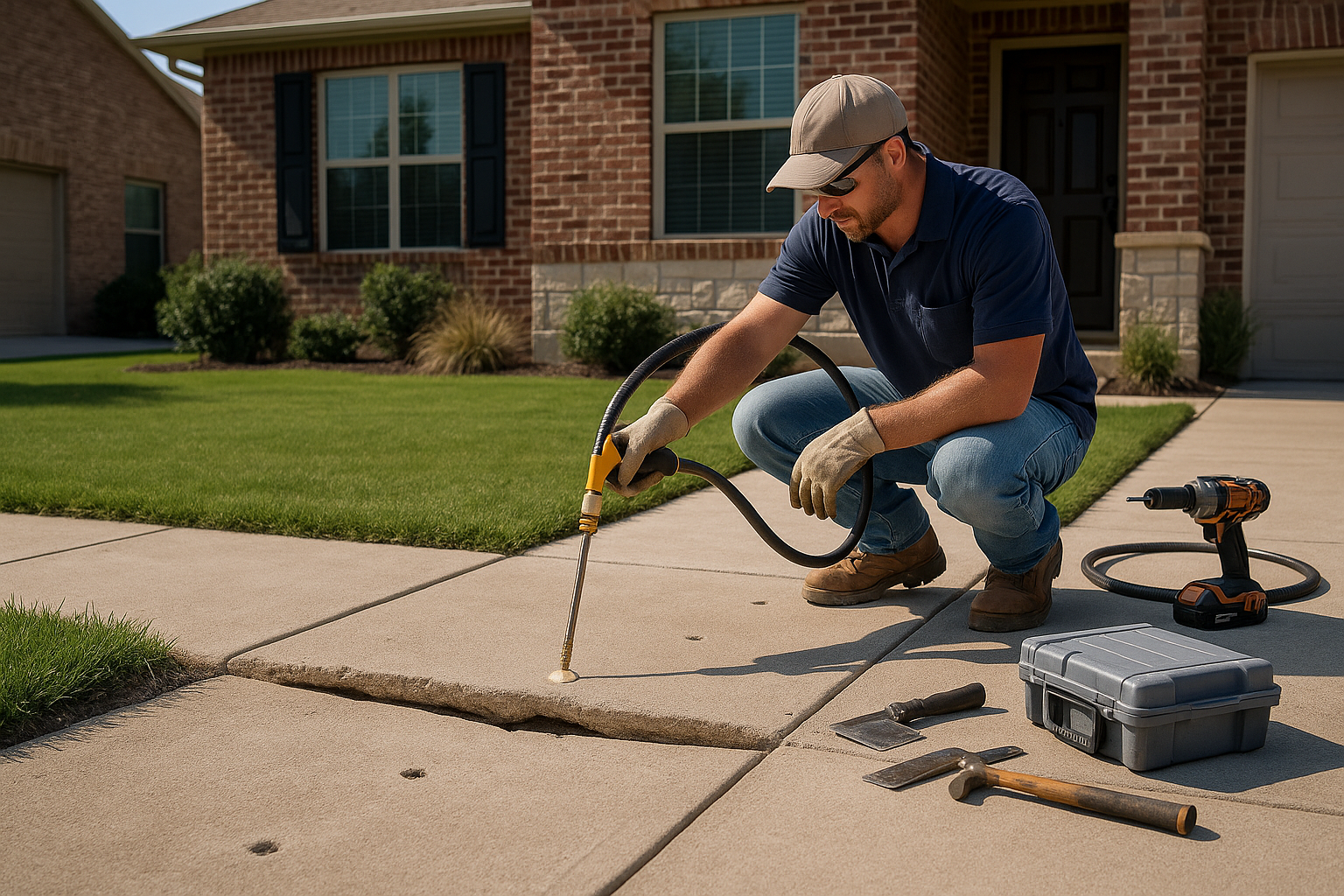
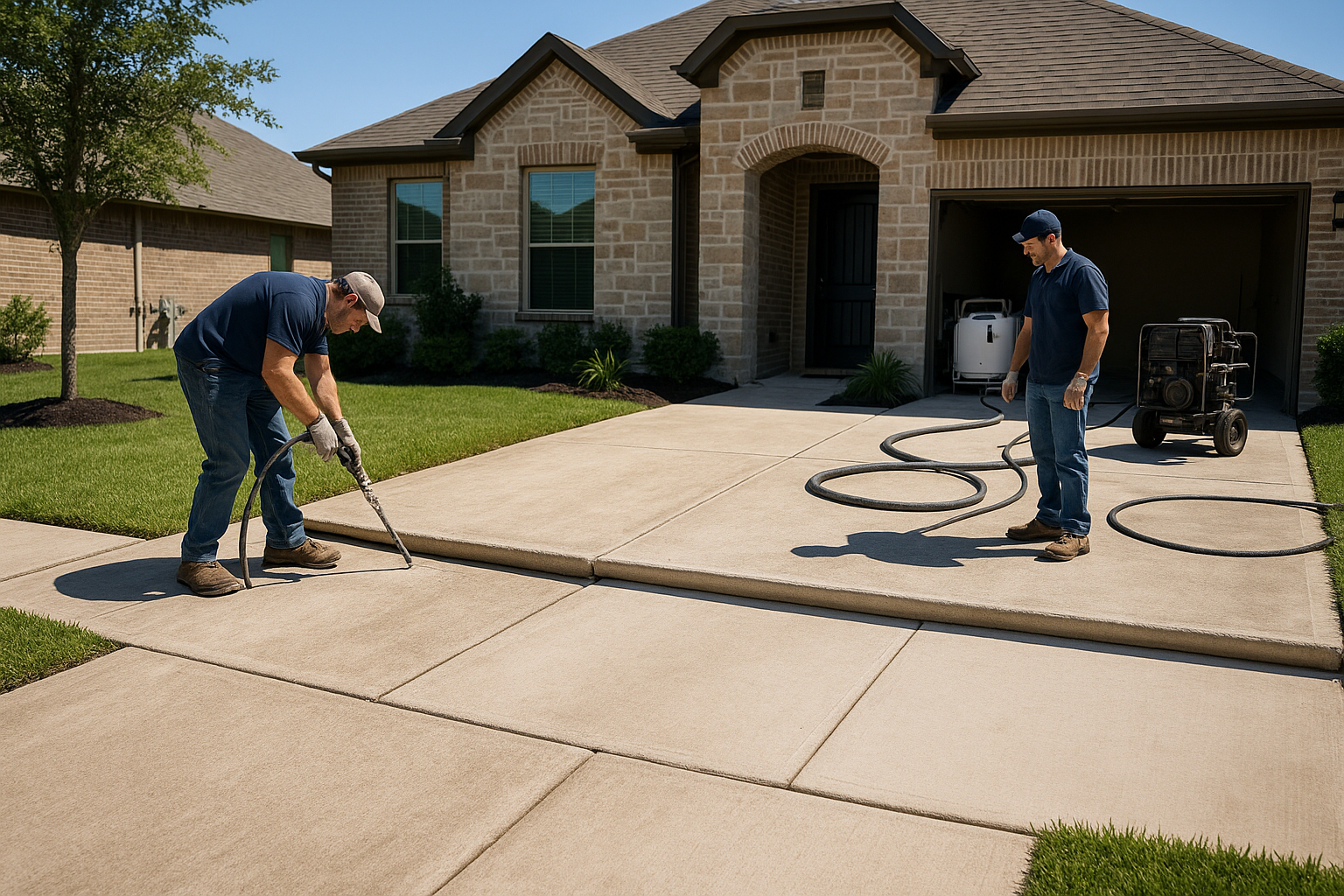
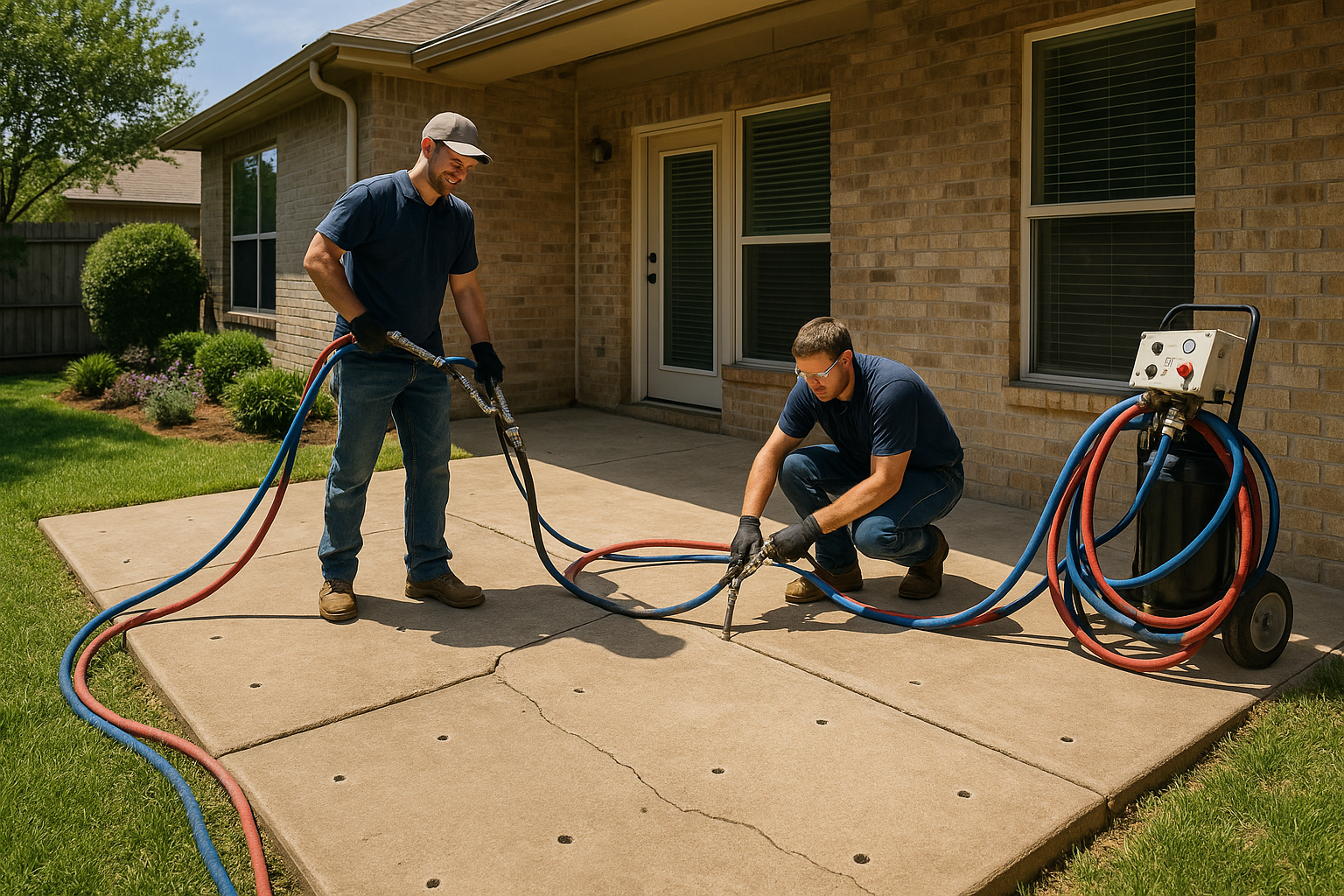
Foam leveling is a straightforward process, but it needs to be done with the right equipment and an experienced hand. We drill small holes through the affected patio slab, then inject expanding polyurethane foam beneath the concrete. As the foam expands, it fills empty spaces, compacts loose soil, and lifts the slab back toward its proper position.
Because the material is lightweight and strong, it adds support without overloading the soils underneath. It also cures fast, which is one reason homeowners like it for patio repair. In many jobs, the slab can be walked on shortly after the work is complete.
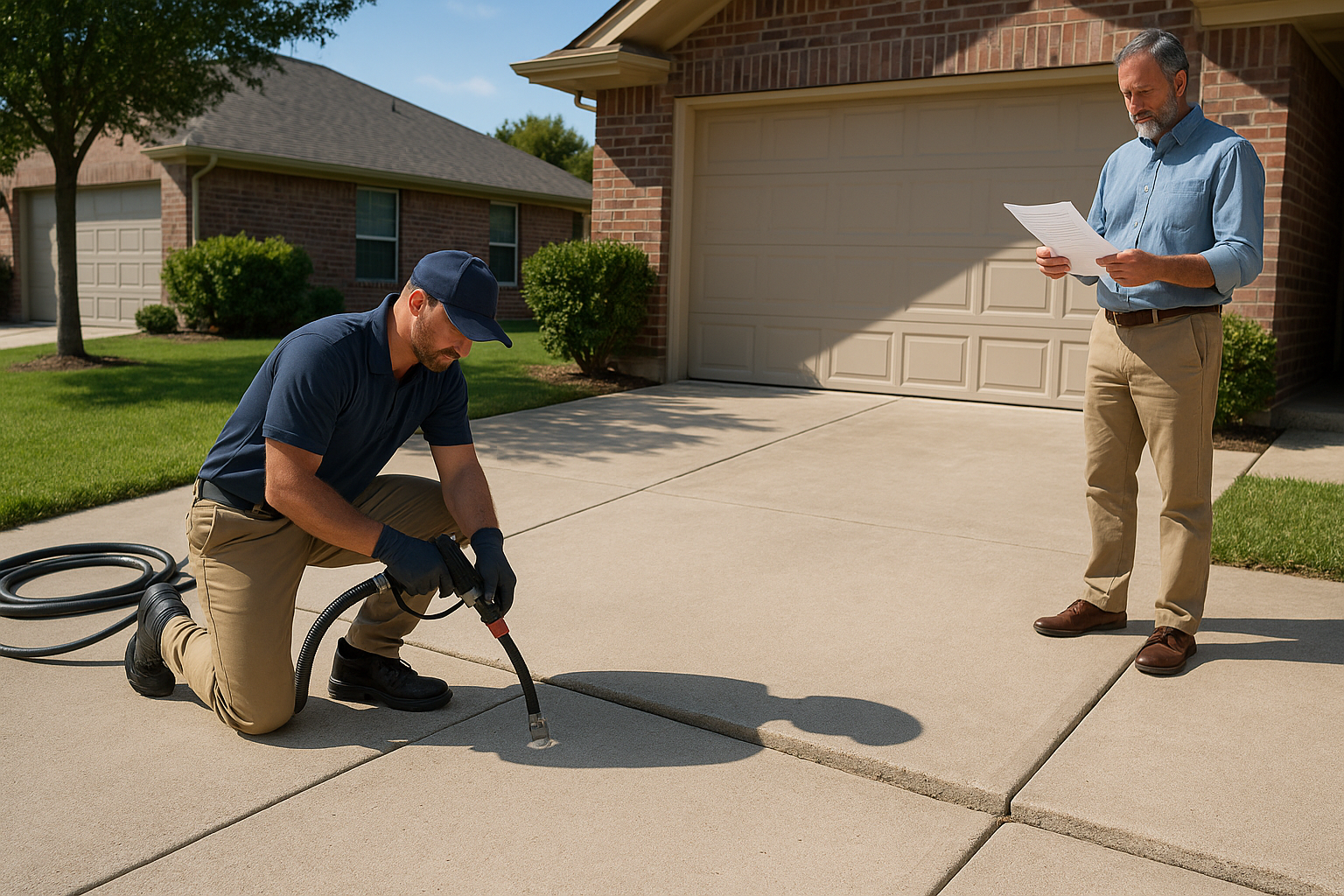
- We inspect the patio to identify settlement, drainage issues, and likely voids beneath the slab.
- Small holes are drilled in targeted locations.
- Polyurethane foam is injected under pressure below the concrete.
- The slab is carefully lifted and stabilized.
- The drill holes are patched, and the patio is ready for normal use quickly.
This method works well for patios because it is precise. We can lift one side, one corner, or a specific section without tearing out the whole area. It is especially useful where the patio meets a back door, covered porch, pool deck, or walkway and elevation matters.
After leveling, we also recommend paying attention to joint protection and drainage. If joints are open, water can continue getting under the slab. Proper sealing helps reduce future erosion. Homeowners can learn more about joint sealing at sealmyjoints.com.
Why Texas Homeowners Choose Foam Leveling
Most folks are not looking for a fancy process. They want the patio safe, level, and usable again without turning the backyard into a construction zone. That is where foam leveling really shines.
- Small drill holes instead of major demolition
- Fast cure time and quick return to service
- Less disruption to landscaping, fencing, and outdoor living areas
- Long-lasting support when the underlying issue is addressed
For many homes in Austin-area neighborhoods and surrounding communities, this approach makes a lot more sense than ripping out a patio that can still be saved.
What to Expect on Cost and Timing
Every patio is different, but most homeowners want a ballpark before they schedule an inspection. In Texas, concrete patio repair pricing depends on the slab size, how far it has settled, how accessible the area is, and whether there are voids or drainage problems that need extra attention.
As a general rule, foam leveling is usually far less expensive than replacement. A replacement patio can easily run into the thousands to tens of thousands of dollars once demo, disposal, forming, finishing, and curing time are included. Repair is often the better value when the slab itself is still serviceable.
Timing is another advantage. A typical leveling job is often wrapped up in a few hours, not several days. That matters when you use the patio regularly or do not want a backyard project dragging on for a week.
Do Not Wait on a Sinking Patio
A settled patio is not just an appearance issue. Low spots trap water, open joints let more runoff underneath, and uneven edges become a safety concern. In Texas, those problems usually get worse after another season of heat and storms.
If your patio is sinking, cracking, or holding water, now is the time to get it looked at. Hill Country Slabs provides practical repair solutions for Texas homeowners who want to fix the problem without unnecessary replacement. We work with homeowners across the region and understand how local soils and weather affect exterior concrete.
Need help with concrete patio repair in Texas? Contact Hill Country Slabs today at /contact or call (737) 287-4308 to schedule an evaluation.