If your front porch has started dropping away from the house, holding water after a rain, or showing cracks near the steps, you are not alone. We see this all over Central Texas, from Austin to Round Rock. Concrete porch repair in Texas usually comes down to one thing: the soil under the slab has moved, washed out, or dried up enough to leave the porch without solid support.
A lot of homeowners think a sunken porch means full replacement. Sometimes that is true, but not nearly as often as people think. In many cases, we can lift and stabilize the porch with polyurethane foam, close trip hazards, improve drainage, and save the existing concrete. That usually means less mess, less downtime, and a much lower bill than tearing everything out.
At Hill Country Slabs, we work on settled porches, patios, walkways, and foundation-related flatwork across Texas. If you are comparing repair options, it helps to understand why porches fail here, when leveling makes sense, and what the repair process actually looks like.
What Causes Concrete Porch Damage in Texas?
Texas is rough on concrete, especially at the front of the house where small slabs are poured near shifting soils, flower beds, downspouts, and sprinkler lines. The porch itself may be concrete, but the real problem is usually under it.
Expansive clay soils
In much of Central Texas and the Hill Country, we deal with highly expansive clay. These soils swell when they get wet and shrink when they dry out. That constant movement creates voids under concrete and puts uneven pressure on porches, steps, and entry slabs. One season the porch looks fine. After a long dry stretch or a wet spring, one corner starts to drop.
That is especially common around Austin, Round Rock, Georgetown, Cedar Park, Leander, San Marcos, and surrounding areas where soil movement is a normal part of home ownership. If you already have slab issues elsewhere, our Concrete Slab Repair service may also be worth reviewing.
Washout from drainage problems
We also see porch settlement caused by bad drainage. A downspout dumping near the porch, negative grading, leaking hose bibs, or heavy runoff during Texas storms can wash fines out from under the slab. Once that support is gone, the porch starts settling. Cracks may show up near the house, along the edge, or where the steps tie into the porch.
If your joints are open, water gets in even faster. That is why we often recommend sealing failed joints after lifting. You can learn more about expansion joints and long-term joint protection at sealmyjoints.com.
Heat, drought, and rapid moisture swings
Texas weather is hard to predict, but we know what it does to soil. We can go from a dry summer with weeks over 100 degrees to a heavy rain event that saturates everything fast. Those quick moisture swings are a big reason porch slabs move. Soil shrinks back during drought, then softens and shifts when the rain returns.
That movement can leave you with:
- Sunken porch corners
- Cracks across the slab surface
- Separation between the porch and home
- Uneven steps
- Water draining toward the front door
- Trip hazards at entries and walkways
The good news is that settlement does not always mean the concrete is beyond repair. If the slab is still in decent structural shape, leveling is usually the smarter option.
When Concrete Porch Leveling Works Better Than Replacement
Replacement has its place. If the concrete is shattered, severely heaved, or poured too thin to carry its load, removing and repouring may be the right move. But for a lot of Texas porches, the slab itself is still usable. The issue is loss of support underneath, not total concrete failure.
That is where leveling stands out. Instead of demolishing a porch that can still be saved, we fill the voids below it and carefully raise the slab back toward its proper position.
Signs your porch may be a good candidate for leveling
- The porch has settled but is mostly intact
- Cracks are limited and not completely broken apart
- The slab has dropped because of soil shrinkage or washout
- You want to reduce a step-up or trip hazard at the entry
- You want faster repair with less disruption
For homeowners, the biggest difference usually comes down to cost and downtime. Full porch replacement often means demolition, haul-off, form work, new concrete placement, and curing time. Depending on size and finish, replacement can run 2 to 4 times more than leveling. You also may be without use of the porch for days or longer.
Foam leveling is typically much faster. In many cases, the repair is completed in just a few hours, and the porch can often be used the same day. That matters when the porch is your main entry.
If the settlement extends into surrounding flatwork, the same repair approach may help with adjoining surfaces too. Our Patio Leveling service is often relevant when the front porch ties into nearby walkways or sitting areas.
Why replacement is not always the best answer
A new porch still sits on Texas soil. If drainage and subgrade problems are not addressed, replacement alone does not solve the root cause. We have seen brand-new pours settle again because the underlying voids, loose fill, or moisture issues were never corrected.
Leveling with polyurethane foam addresses support directly under the slab. When paired with proper joint sealing and drainage corrections, it gives homeowners a practical repair that targets the actual problem.
How Polyurethane Foam Repairs a Sunken Porch
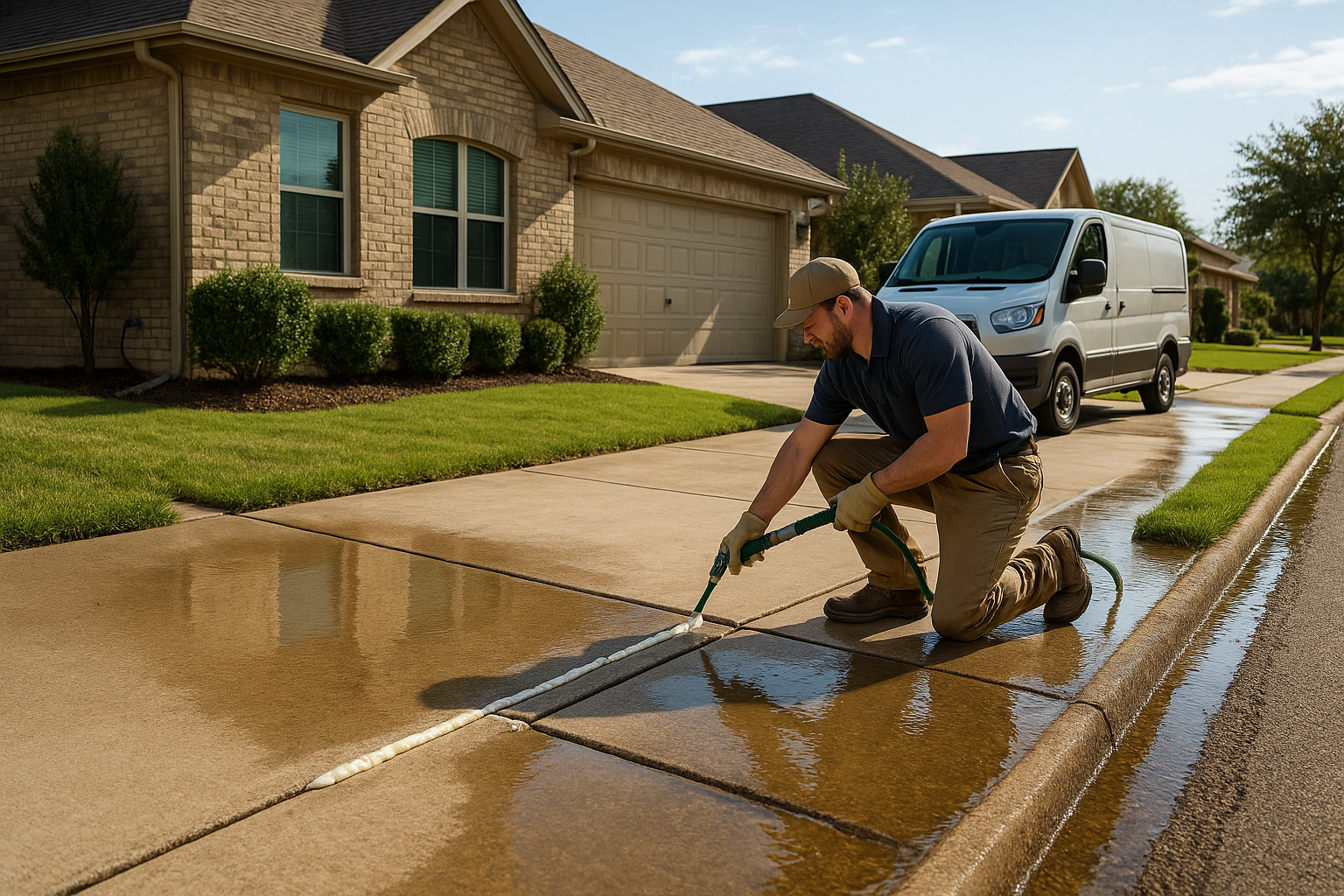
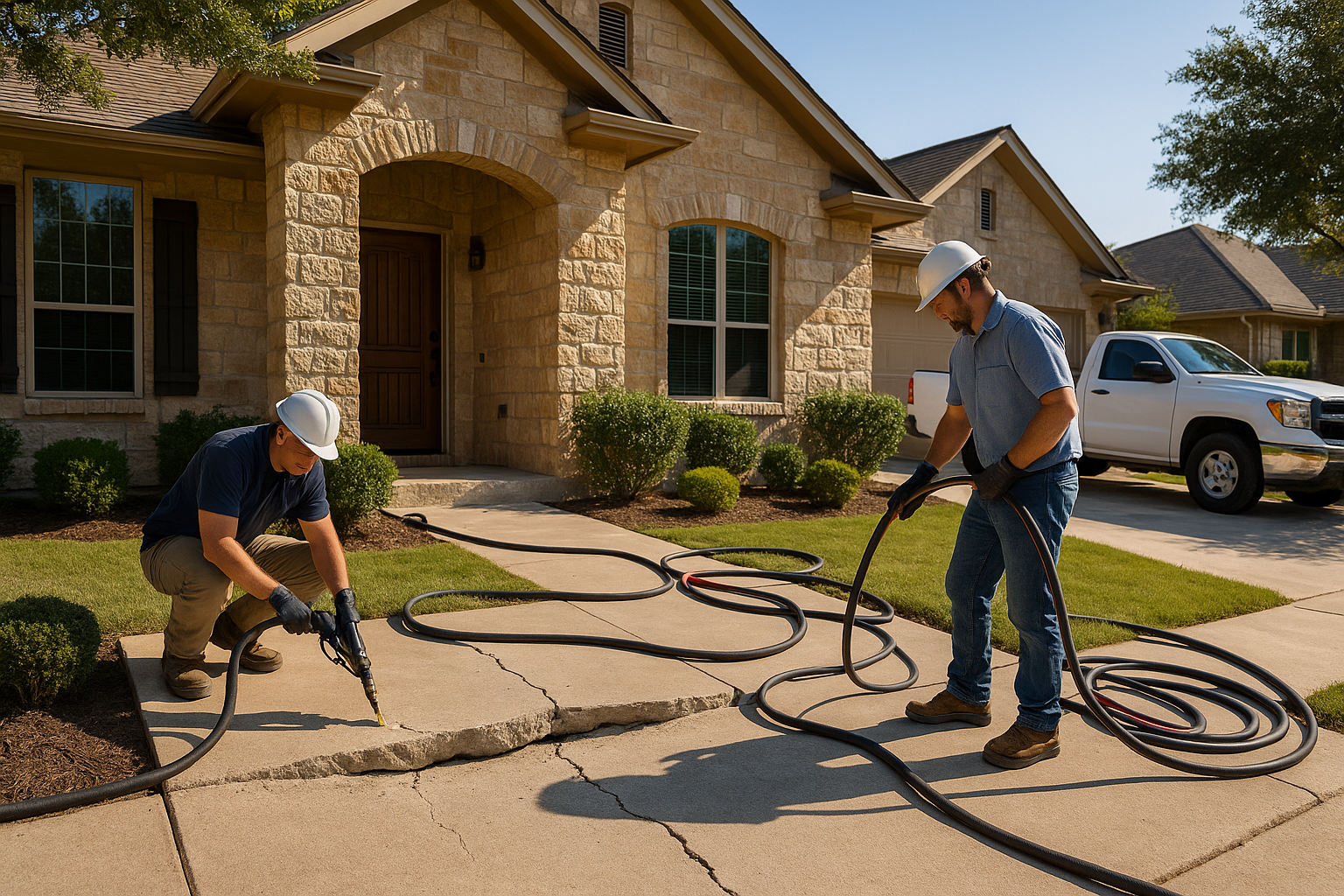
Polyurethane foam repair is a clean, efficient way to lift settled concrete. The process is straightforward, but it needs to be done carefully by a crew that understands slab behavior, load points, and how Texas soils react.
How the process works
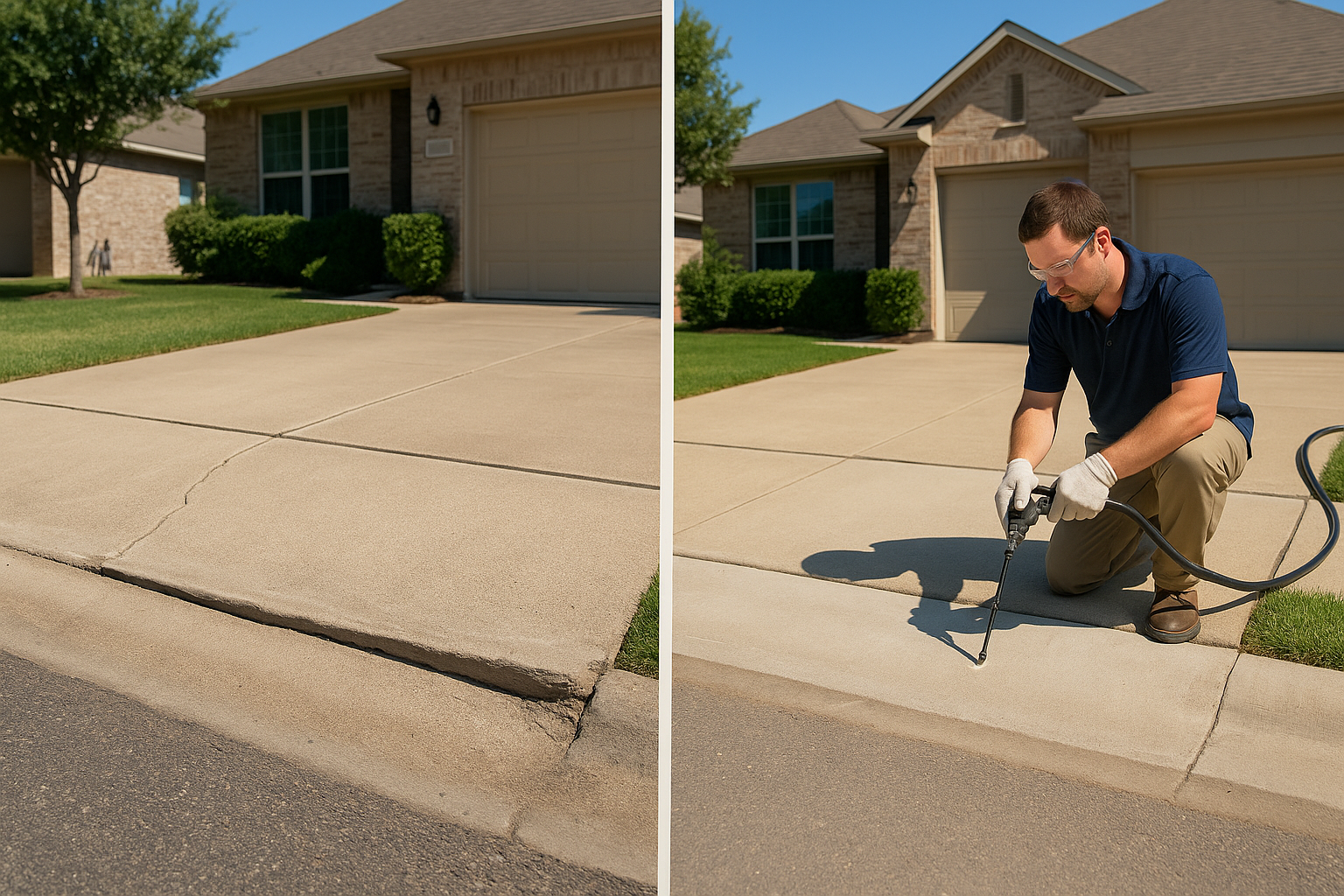
- We inspect the porch, surrounding grade, cracks, joints, and elevation loss.
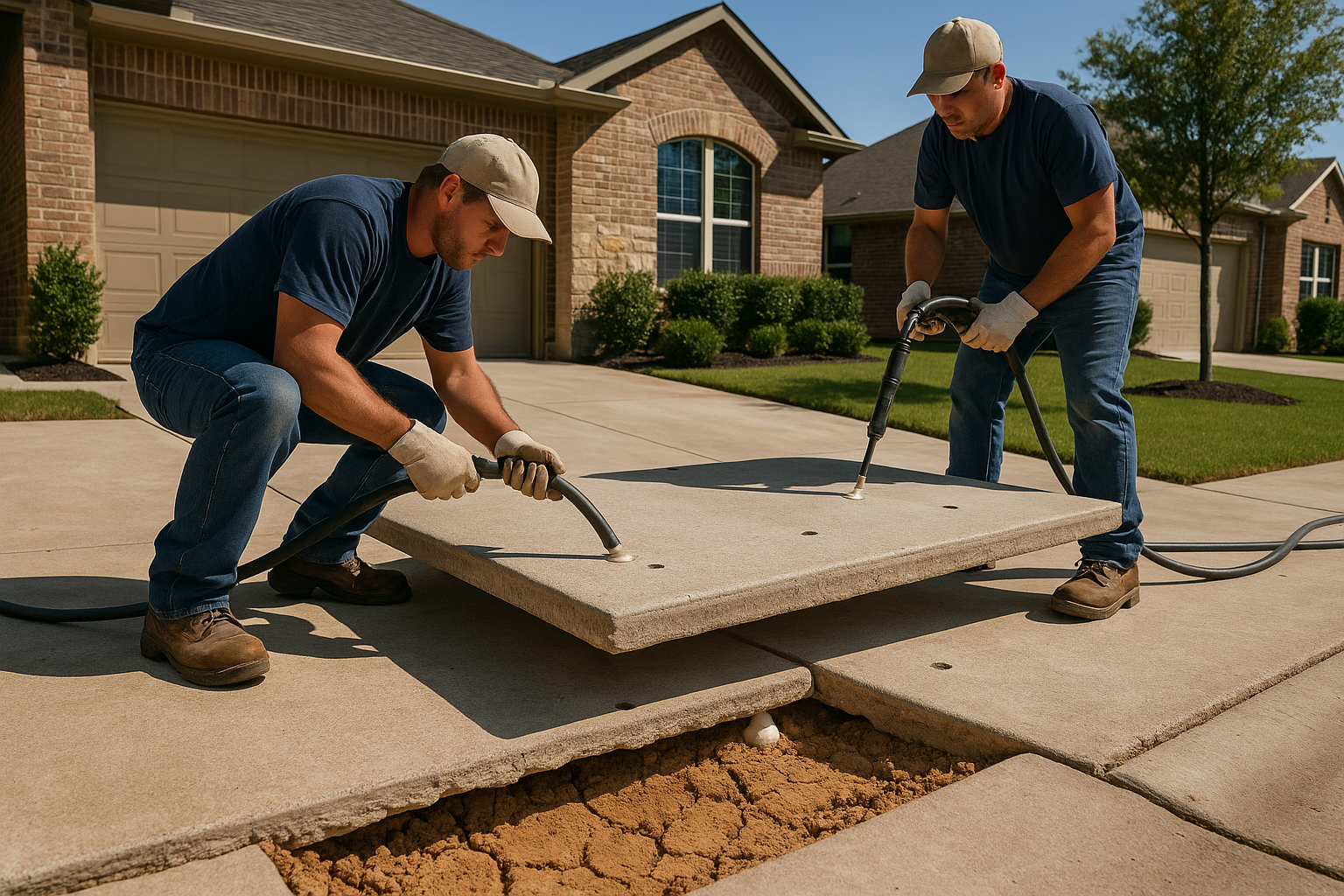
- Small injection holes are drilled through the slab in strategic locations.
- Two-part polyurethane foam is injected beneath the porch.
- The foam expands, fills empty space, compacts loose soils, and begins lifting the slab.
- We monitor the lift and make controlled adjustments to bring the porch back up as closely as practical.
- The holes are patched, and the area is cleaned up.
The main advantage is weight and control. Polyurethane foam is lightweight but strong, so it adds support without overloading already sensitive soils. It also cures quickly, which is why the porch can often be used again the same day.
Benefits of foam porch repair
- Minimal disruption to landscaping and entry areas
- No major demolition
- Fast turnaround
- Improved support under the slab
- Reduced trip hazards
- Lower cost than full replacement in many cases
For many Texas homeowners, that means fixing the real problem without turning the front yard into a construction site.
What foam repair can and cannot do
Foam lifting is excellent for settled concrete, but it is not magic. If the porch has severe structural failure, badly crushed edges, or major rebar-related blowout, replacement may still be required. Also, not every slab can be brought back to perfectly original elevation. Our goal is safe, stable, and functional repair with the best practical lift the slab will allow.
Once the porch is level again, we strongly recommend protecting the surrounding joints and managing water correctly. Keeping runoff away from the slab and sealing vulnerable joints can help prevent future washout. That is why we point homeowners back to expansion joint repair and sealmyjoints.com after lifting work is complete.
Get a Free Concrete Porch Repair Quote in Texas
If your porch is cracking, sinking, or pulling away from the house, it is better to deal with it early. A small drop today can turn into a bigger water problem, a worse trip hazard, or added stress at the entry if you wait too long.
At Hill Country Slabs, we help homeowners across Central Texas figure out whether a porch can be lifted, stabilized, and saved. We know the local soils, the drought cycles, and the drainage problems that cause these slabs to move in the first place. More importantly, we give straight answers. If foam leveling is the right fix, we will tell you. If replacement makes more sense, we will tell you that too.
For concrete porch repair in Texas, contact Hill Country Slabs for a free quote. Visit /contact or call (737) 287-4308 to schedule an evaluation.