If you are comparing repair bids and one company says the work is guaranteed while another hands you a one-page warranty, it is worth slowing down and reading the fine print. A concrete leveling warranty in Texas is not just a sales add-on. It tells you what the contractor believes about their materials, their installation process, and how the repair is expected to perform in real Texas conditions.
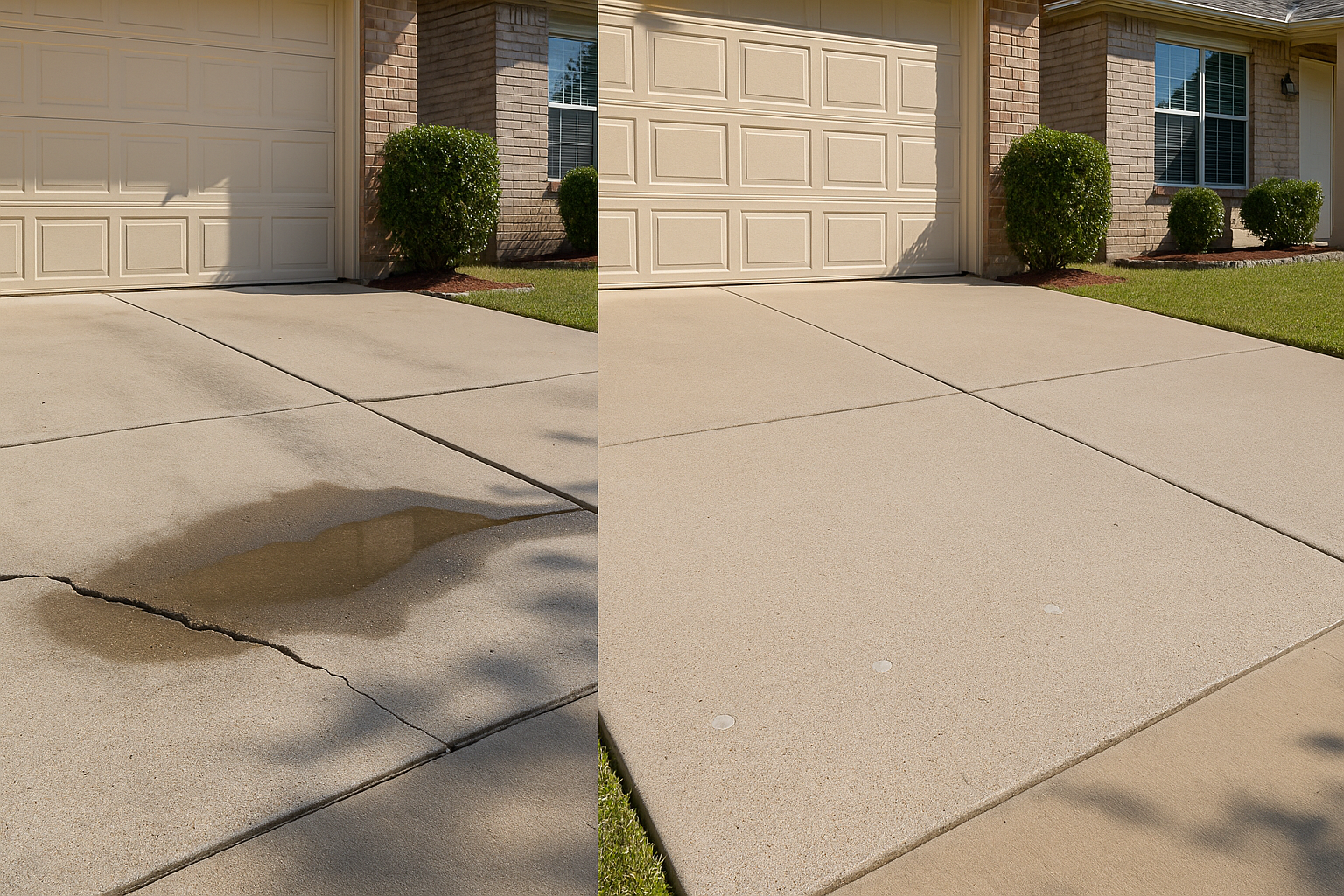
We see this all the time across Austin, TX, Houston, TX, and surrounding areas. One slab settles because of expansive clay. Another drops after a stretch of drought followed by heavy rain. A driveway panel starts holding water. A sidewalk near the porch becomes a trip hazard. In those cases, the warranty matters because Texas soil movement is not theoretical here. It is part of the job.
If you are looking at polyurethane foam lifting, mudjacking, or full replacement, you need to know what is actually covered, how long the coverage lasts, and what conditions can void it. The goal is not just getting the slab lifted today. The goal is making sure you are paying for a repair method and a contractor that will stand behind the work.
What a concrete leveling warranty usually covers
Most concrete leveling warranties cover the corrected elevation of the slab for a stated period of time. In plain English, that means the contractor is promising the slab will remain within an acceptable tolerance after it has been lifted. Some warranties are written for settlement only. Others cover both settlement and workmanship issues related to the repair process.
For Texas properties, a solid warranty should clearly explain a few things:
- What area is covered, such as a driveway section, walkway, patio, garage floor, or part of a foundation-adjacent slab.
- How long coverage lasts, whether that is 1 year, 3 years, 5 years, or longer.
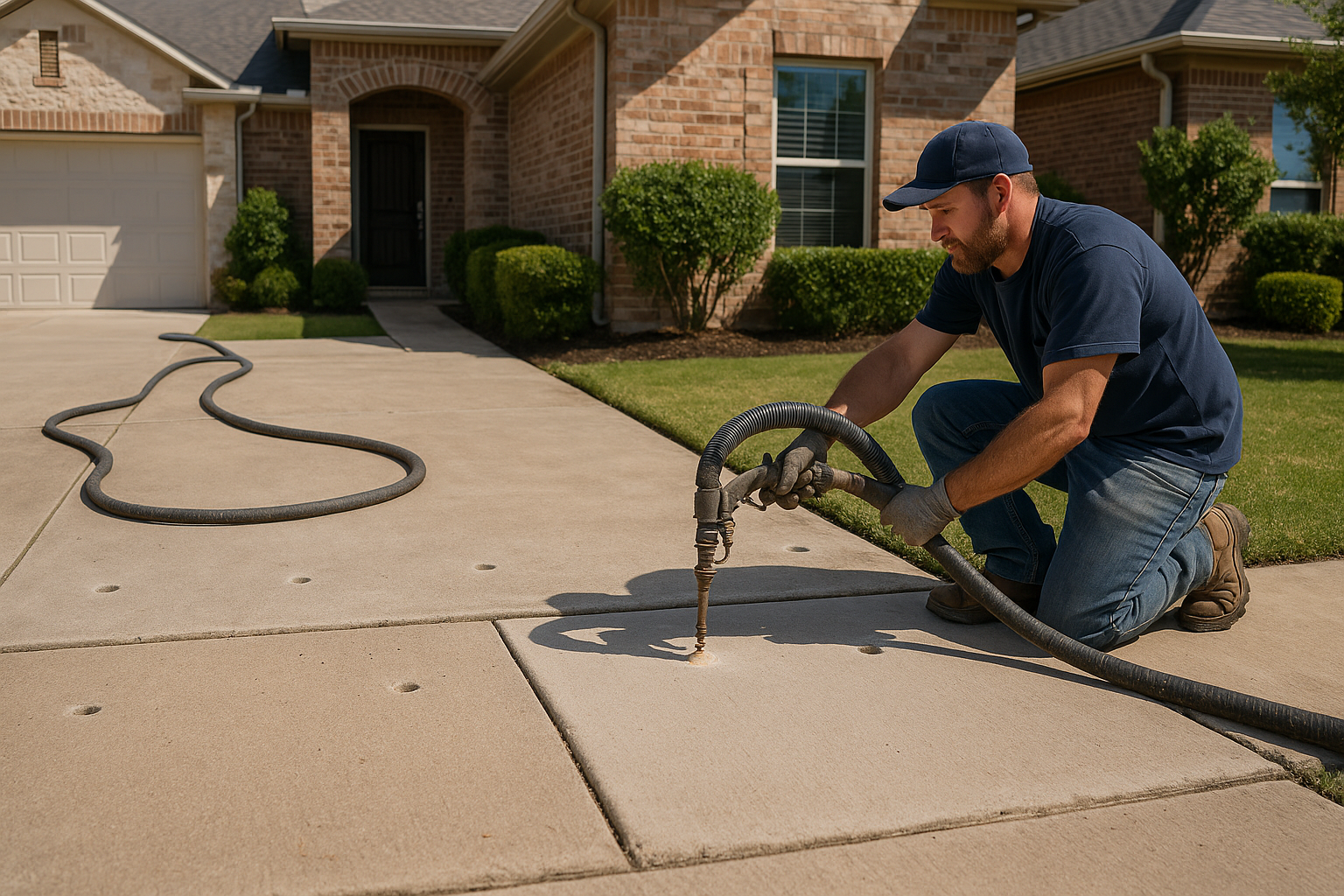
- What repair method was used, usually polyurethane foam injection for modern leveling jobs.
- What triggers warranty service, such as measurable resettling, loss of slope correction, or new movement in the treated slab.
- What is excluded, including flooding, plumbing leaks, tree root changes, or major subgrade washout.
On a good foam leveling job, you may also see language covering void filling and stabilization along with lifting. That matters because the slab did not just sink for no reason. Under many Texas homes and flatwork surfaces, the real issue is movement in the base material caused by moisture swings, erosion, or shrinking clay soils.
In Central Texas, expansive clay can shrink during long dry periods and leave unsupported spaces under concrete. In the Gulf Coast region, sandy and mixed soils can shift when water moves through the subgrade. North of San Antonio and around the Hill Country, rock and clay transitions can create uneven support conditions. A warranty should reflect that the contractor understands these regional causes and is not pretending every sinking slab is the same problem.
It is also important to understand what a warranty does not usually cover. If the concrete itself is badly cracked, broken into multiple pieces, or deteriorated from freeze-thaw exposure, salt damage, or age-related spalling, leveling may not be the right fix. In those cases, a contractor may recommend replacement instead. The warranty for leveling work will not typically cover unrelated cracking that continues outside the treated area.
Questions to ask before hiring a contractor
Before you sign anything, ask direct questions. A dependable contractor should be able to answer without dancing around the issue.
- Is the warranty written and itemized?
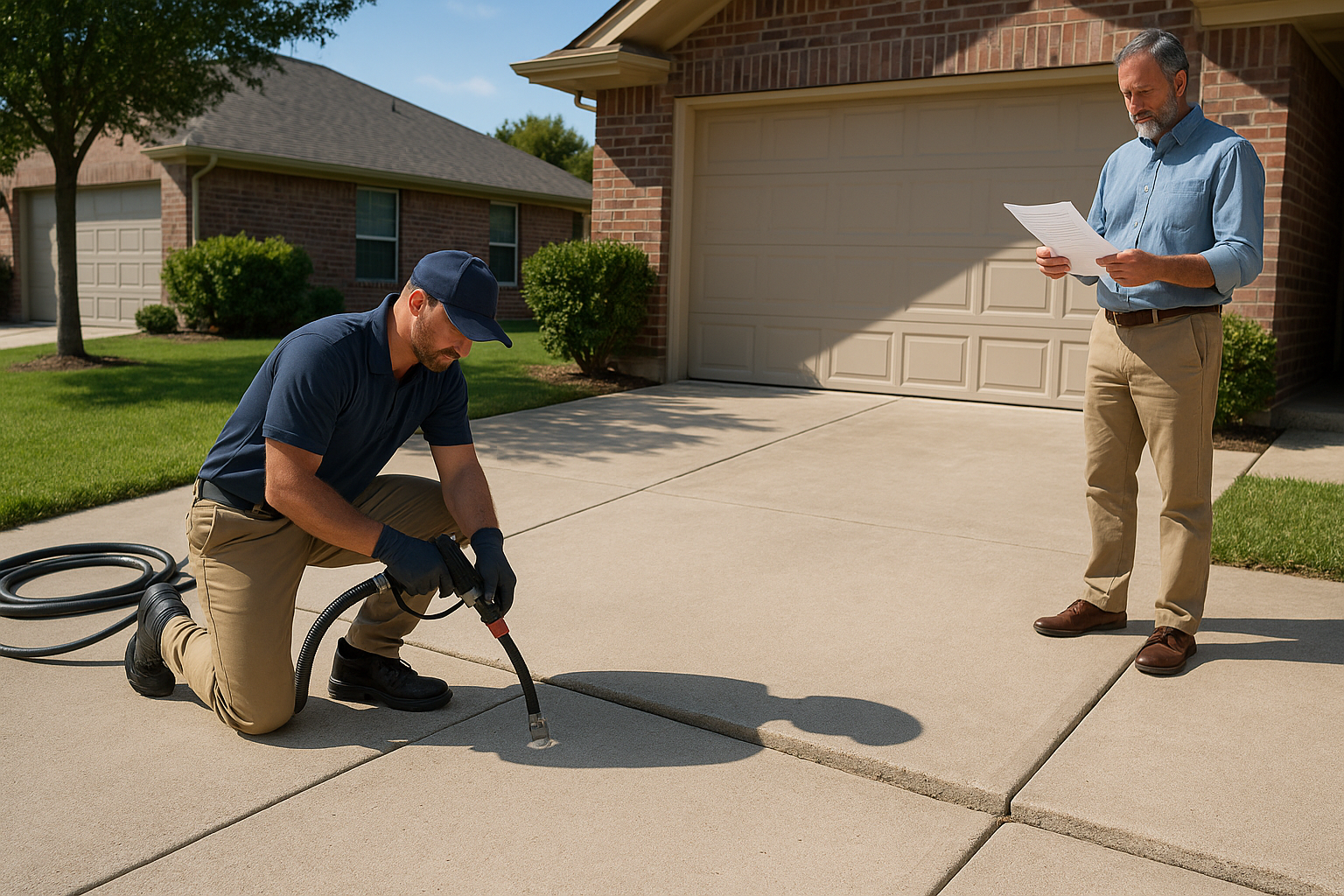
If it is not on paper, it is not much of a warranty. You should get a written description of what is covered, what is excluded, and who is responsible for follow-up service.
- Does the warranty cover labor and materials?
Some companies will replace foam or re-inject material but still charge labor or trip fees. Ask whether return visits are fully covered for a valid claim.
- What settlement tolerance is considered warrantable?
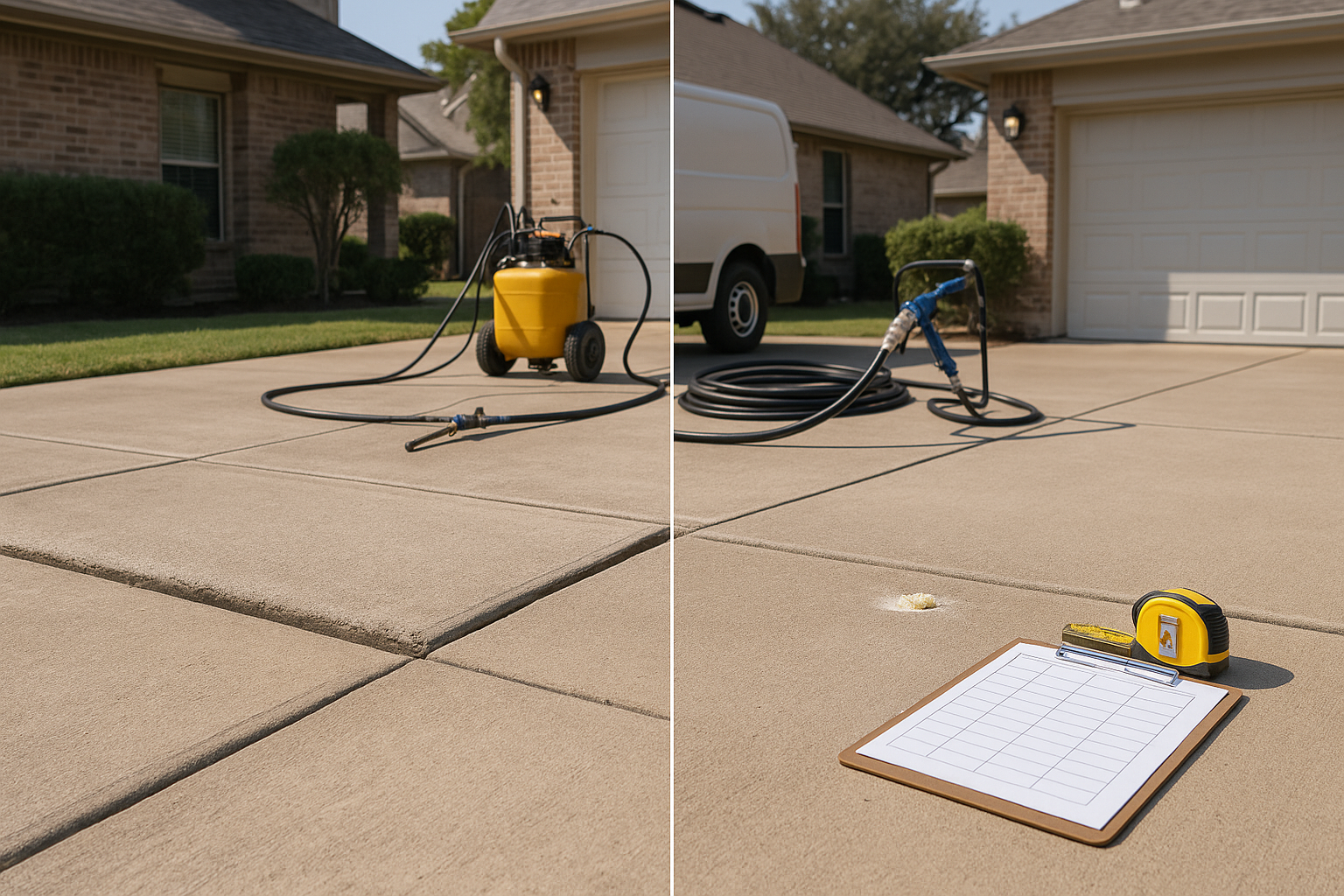
Concrete can move slightly over time. Ask how much movement qualifies for a callback. That keeps everybody on the same page.
- Is the warranty transferable?
If you sell the house, a transferable warranty can add confidence for buyers, especially on visible areas like driveways, sidewalks, and patios.
- What site conditions can void the warranty?
Underground leaks, poor drainage, gutter discharge, and missing expansion joints or failed sealant can all affect slab performance. If joint sealing is part of the long-term maintenance plan, homeowners should understand why. For more on joint protection, it is worth reviewing resources from sealmyjoints.com.
- Will you recommend replacement when leveling is not the best option?
A straight answer here tells you a lot. Not every slab should be lifted. If a contractor tries to level everything no matter the condition, be careful.
Ask for examples of similar work too. If they are performing Driveway Leveling on a home with active drainage issues, the warranty should not ignore the drainage problem. If they are handling Concrete Slab Repair near a foundation edge, they should explain how moisture changes and nearby landscaping may affect long-term performance.
How foam leveling compares to replacement
Homeowners usually start with cost, and that makes sense. In many Texas markets, foam leveling is often far less expensive than tearing out and replacing otherwise sound concrete. As a rough rule, leveling can come in at 30% to 70% less than replacement, depending on access, slab size, and severity of settlement. A small walkway repair may be straightforward, while a large driveway with multiple dropped sections takes more material and labor.
Replacement has its place, but it also comes with more disruption. Demolition, haul-off, forming, pouring, finishing, curing, and possible color mismatch are all part of the equation. Then you still need proper base support and drainage or the new slab can run into the same settlement issues later.
Foam leveling is attractive because it is fast, precise, and usually ready for use much sooner. On many jobs, the slab can be used the same day. That makes the warranty even more important. The speed of the process is a benefit, but the real value comes from whether the slab stays supported after the crew leaves.
When comparing warranties between leveling and replacement, do not assume the longer warranty automatically means the better deal. Read what is actually covered. A replacement warranty may only address finishing defects or surface workmanship. A foam leveling warranty may specifically address renewed settlement in the treated area. Apples to apples matters.
Also remember that concrete movement in Texas is often tied to water management. If downspouts dump beside the slab, irrigation keeps one side wet, or runoff is cutting beneath the edge, no warranty can overcome ongoing site problems forever. A good contractor will point that out before the job starts.
When warranty details matter most for Texas homes
Warranty language matters most when your property has conditions that make slab movement more likely. That includes homes built on expansive clay, driveways on fill soil, patios at the bottom of drainage slopes, and walkways where roof runoff repeatedly saturates the subgrade.
In Texas, we get long dry stretches, hard rains, and sudden moisture swings that can move soil fast. In places like Austin, clay-heavy soils can pull away and leave voids under flatwork. In Houston, persistent moisture and drainage challenges can soften support under slabs. Those conditions make it critical to know whether your repair warranty is built around real field conditions or just generic office wording.
You should pay especially close attention to warranty details if:
- The slab has settled before and was repaired once already.
- There are signs of washout, poor drainage, or gutter discharge near the repair area.
- The concrete is close to the house and movement could affect water flow toward the foundation.
- You are repairing trip hazards where future movement creates safety concerns.
- You are preparing to sell the property and want documentation for buyers.
It also helps to ask what happens if only part of the treated slab moves again. Some warranties cover the entire treated section. Others only cover the exact injection area. That is a big difference if one corner drops and starts holding water again.
From a contractor’s standpoint, the best warranty is backed by a good inspection, honest expectations, and the right repair method for the slab condition. If the concrete is structurally sound, foam leveling is often a smart solution. If it is broken beyond repair, replacement may be the better call. The warranty should match that recommendation, not cover up a bad one.
At the end of the day, a concrete leveling warranty in Texas should give you confidence, not confusion. Look for clear terms, realistic exclusions, and a contractor who understands Texas soil, drainage, and weather patterns. If you want help reviewing a sinking slab, comparing repair options, or getting a straight answer on coverage, reach out to Hill Country Slabs. Visit /contact or call (737) 287-4308 to schedule an inspection.