In Texas, it does not take long for a solid-looking slab to start losing support underneath. We see it all the time on driveways, sidewalks, patios, pool decks, and foundations from Austin to Round Rock. The concrete may still look decent on top, but if the soil below has washed out, shrunk, or settled, that slab is carrying weight with air pockets under it. That is where concrete void filling comes in.
Concrete void filling in Texas is one of the fastest ways to stabilize sinking or unsupported concrete without tearing it out and starting over. With polyurethane foam injection, we can fill empty space below the slab, restore support, and in many cases lift the concrete back toward grade. For homeowners and property managers, that usually means less downtime, less mess, and a lower cost than full replacement. On many projects, void filling costs far less than replacing an entire slab, especially when the concrete itself is still structurally worth saving.
At Hill Country Slabs, we use foam injection to solve the root problem under the concrete, not just patch the surface. If you are already looking into Concrete Slab Repair or Driveway Leveling, void filling is often part of the answer when erosion or soil movement has left gaps underneath.
What Causes Voids Under Concrete in Texas?
Texas soil is tough on slabs. In Central Texas, we deal with expansive clay that swells when it is wet and shrinks hard when it dries out. That constant movement opens the door for settlement and washout. In other areas, sandy or silty soils can shift and erode even faster when drainage is poor. Once water starts moving under concrete, it can carry fine material away and leave a gap behind.
Some of the most common causes of voids under concrete in Texas include:
- Expansive clay shrinkage during hot, dry weather
- Heavy rain and flash runoff washing soil out from slab edges and joints
- Broken irrigation lines or plumbing leaks softening and moving subgrade soils
- Poor compaction during original construction
- Improper drainage that funnels water under flatwork
- Joint failure that allows water intrusion through slab seams
We see this pattern all over the region. A homeowner gets through a long dry spell, then a heavy Texas storm rolls in and suddenly there is a new drop at the driveway, a hollow-sounding sidewalk panel, or a patio corner that started rocking underfoot. The slab did not fail overnight. The support underneath did.
This is also why maintaining joints matters. Open or failed joints let water reach the subgrade faster, which speeds up erosion and void formation. If your concrete joints are cracked or separated, it is smart to look at expansion joint repair and joint sealing. For more on joint protection, visit sealmyjoints.com.
Signs You May Need Concrete Void Filling
You do not always see the void itself, but the slab usually gives you a few warnings. The sooner you catch them, the better your odds of stabilizing the concrete before a bigger break or trip hazard develops.
Watch for these common signs:
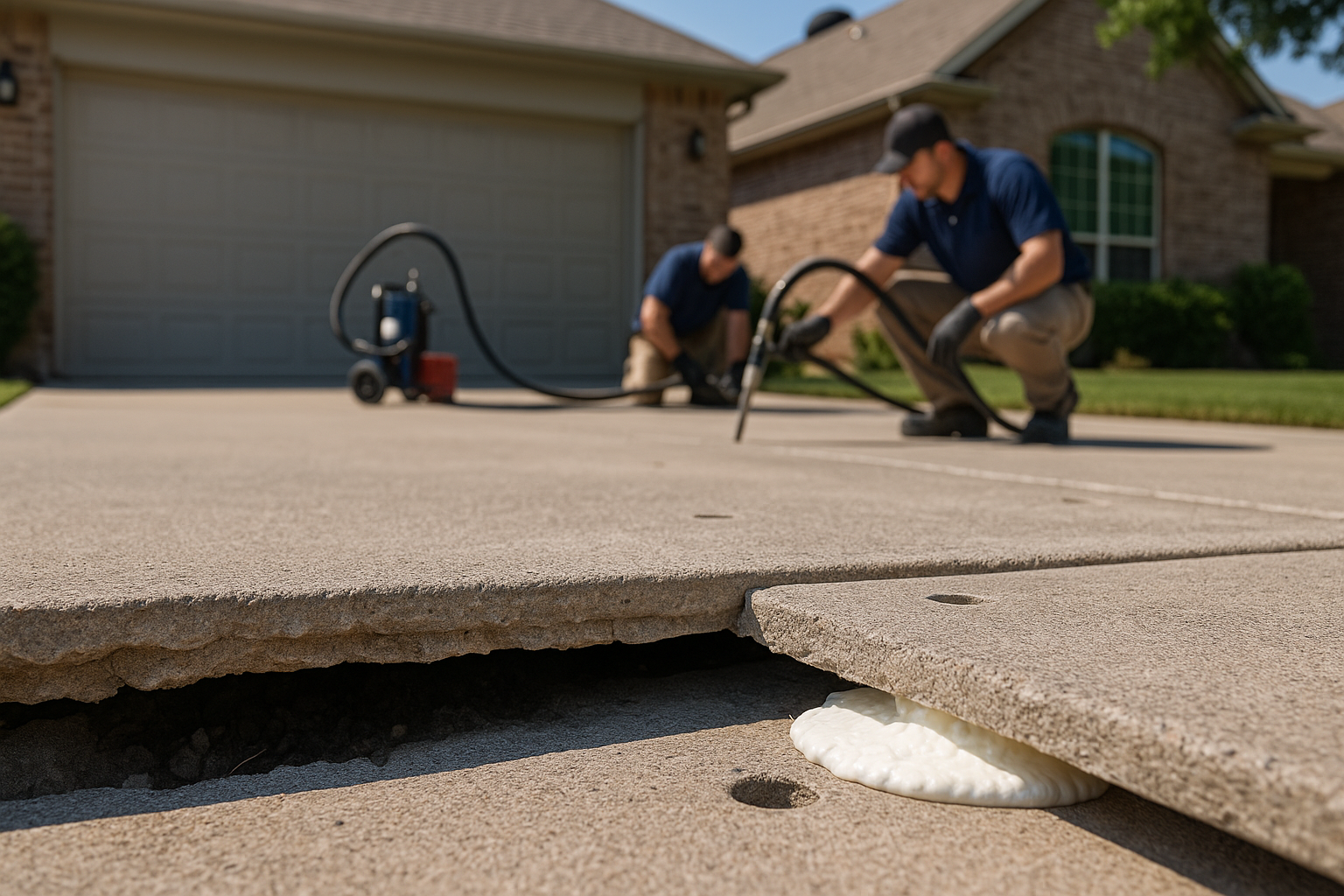
- A visible gap between the bottom of the slab and the soil
- Concrete that sounds hollow when tapped
- Sections of driveway or sidewalk that have dropped or tilted
- Cracks forming near unsupported edges
- Water draining under the slab instead of away from it
- Slabs that move slightly when driven or walked on
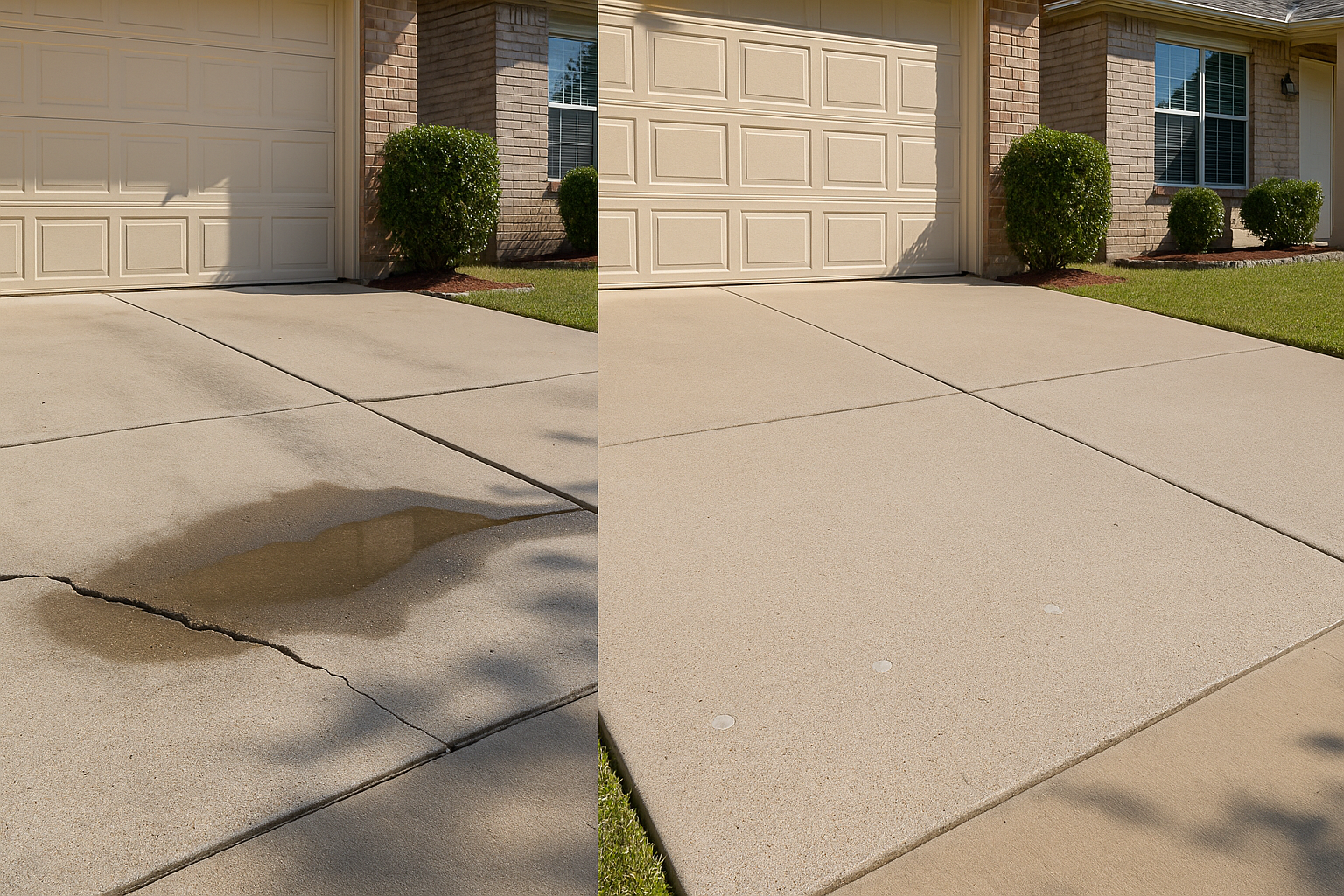
- Pooling water near joints, garage aprons, patios, or walkways
On driveways, one of the biggest giveaways is edge settlement near the street, garage, or control joints. On sidewalks, it is often a trip lip between panels. Around patios and pool decks, voids usually show up after water has been washing through unsealed joints for a while.
If you wait too long, an unsupported slab can crack beyond practical repair. At that point, replacement may be the only option. That is why getting an inspection early can save real money. A timely foam injection repair may cost hundreds or a few thousand dollars depending on the size of the area, while full tear-out and replacement can quickly run into several thousand to well over $10,000 on larger flatwork sections.
How Foam Injection Fills Voids Without Replacement
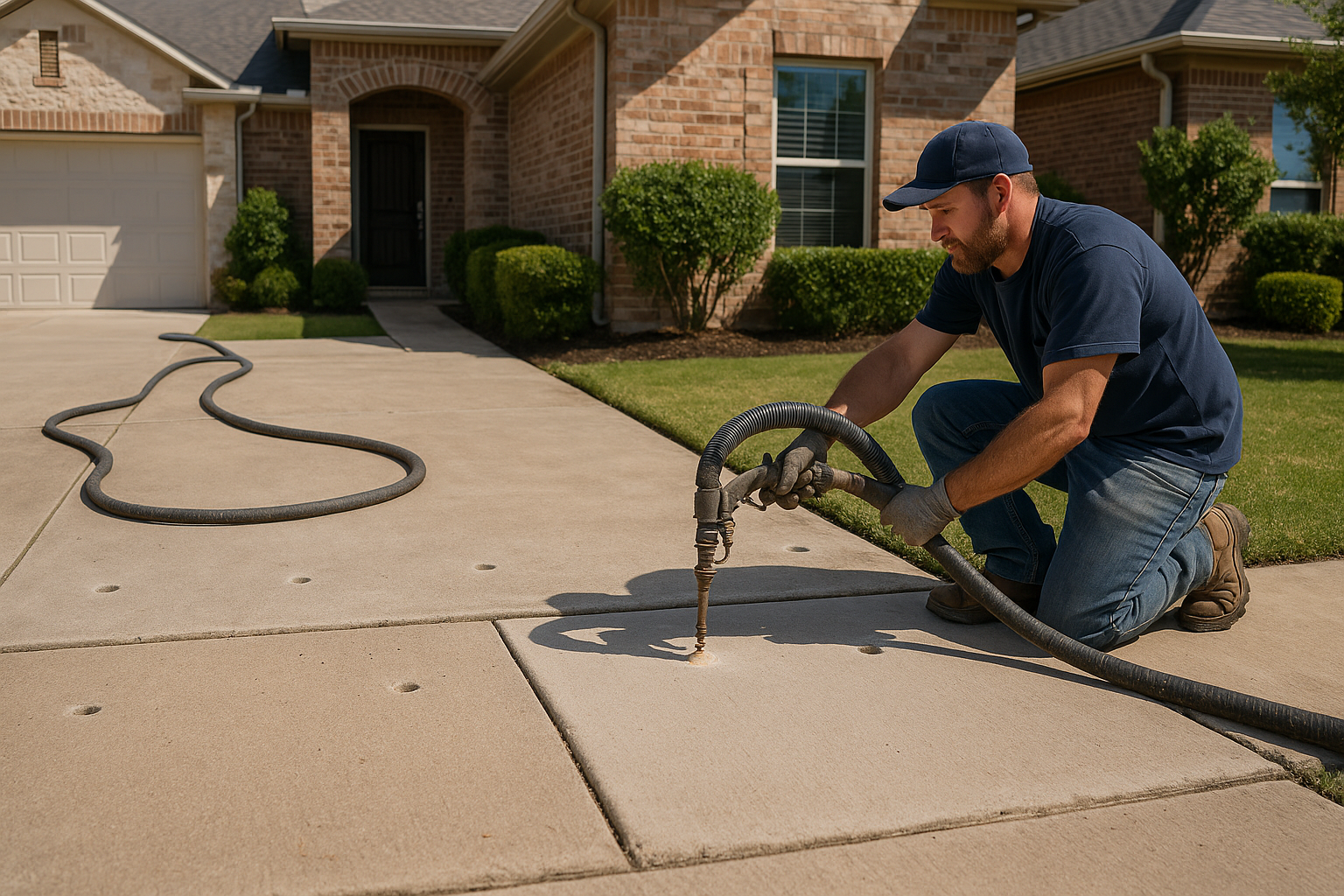
Foam injection is a clean, efficient way to fill voids under concrete. We drill small holes through the slab, inject expanding polyurethane foam beneath it, and let the material travel into the empty space. As the foam expands, it fills the void, compacts loose soils, and applies controlled lift where needed.
The process works well because the foam is lightweight, durable, and fast-curing. Unlike older mudjacking methods that add a lot of weight back into unstable soils, polyurethane foam keeps the load down while still restoring support. In many cases, the slab can be used again the same day.
Here is how a typical void filling job goes:
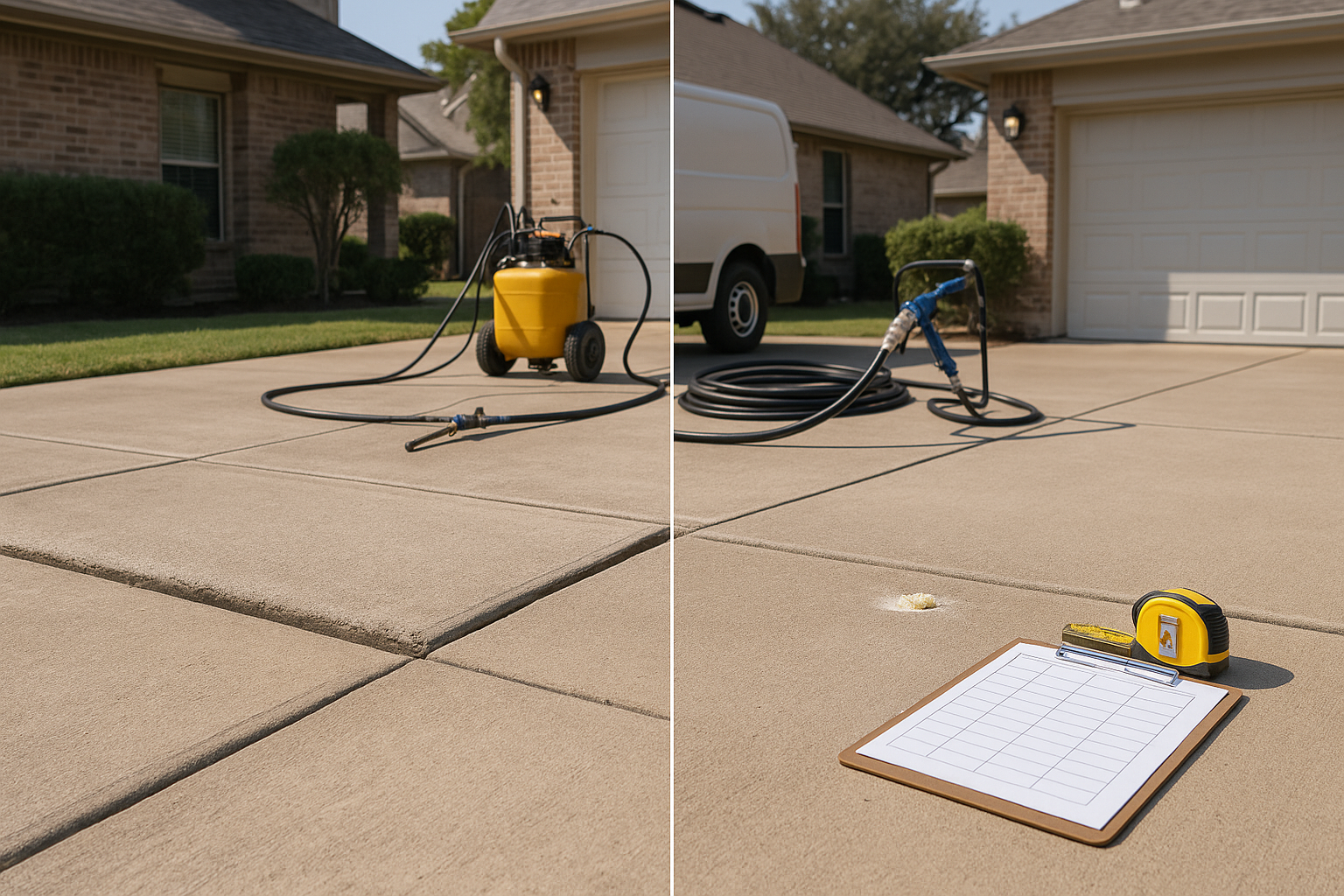
- We inspect the slab, identify settlement patterns, and locate likely void areas.
- We check drainage, joints, and surrounding soil conditions to understand why the support was lost.
- We drill small injection holes in the affected concrete.
- We inject foam in stages to fill the void and monitor slab response.
- We stabilize or lift the slab as needed.
- We patch the drill holes and review any drainage or joint-sealing recommendations.
This method is commonly used for residential driveways, sidewalks, porches, garage floors, patios, and some interior slabs. It is especially useful when the concrete surface is still in decent shape and the main problem is loss of support underneath.
In Texas, that speed matters. Between heat, storm cycles, and clay movement, a small unsupported area can become a bigger structural problem if left alone. Foam injection lets us address the issue before you are forced into replacement. On the right slab, that can mean saving 50% or more compared to replacement costs, while avoiding the disruption of demolition, haul-off, re-forming, and new concrete cure time.
Just as important, void filling is not guesswork. When done properly, it is a targeted repair built around soil behavior, slab weight, and real-time lift control. That is why it works so well on Texas properties where drainage and soil movement are constant factors.
When to Schedule a Free Void Filling Inspection
If you can see a gap under the slab, feel movement, or notice one section dropping more than the rest, it is time to get it checked. The best time to schedule an inspection is before the slab breaks apart or before the rainy season pushes more water through the problem area.
We recommend an inspection if:
- Your driveway, patio, or walkway has started settling after recent rain
- You see erosion at slab edges
- You have unsealed joints or failed filler between concrete sections
- You noticed new cracks after a hot dry stretch followed by storms
- Your home is in an area known for expansive clay soils
- You want to avoid replacement and see whether the slab can still be saved
Homeowners in Austin, Round Rock, and surrounding Texas communities deal with the same cycle every year: heat, drought, hard rain, runoff, movement. If your concrete is showing the early signs of lost support, void filling is usually worth looking at before the damage spreads.
A good inspection should not just tell you that the slab moved. It should explain why it moved. Sometimes the answer is erosion. Sometimes it is poor drainage. Sometimes failed joints are letting water under the concrete. If that part is not addressed too, the void can come back. That is why we often recommend joint sealing along with stabilization, especially on driveways, sidewalks, and patio sections exposed to runoff.
If you need concrete void filling in Texas, Hill Country Slabs can help you figure out whether foam injection is the right fix or whether a larger repair plan makes more sense. We will give you a straight answer based on what the slab and soil are doing.
Need a free inspection? Contact Hill Country Slabs today to talk about void filling, slab stabilization, and drainage-related concrete repair. Visit /contact or call (737) 287-4308.