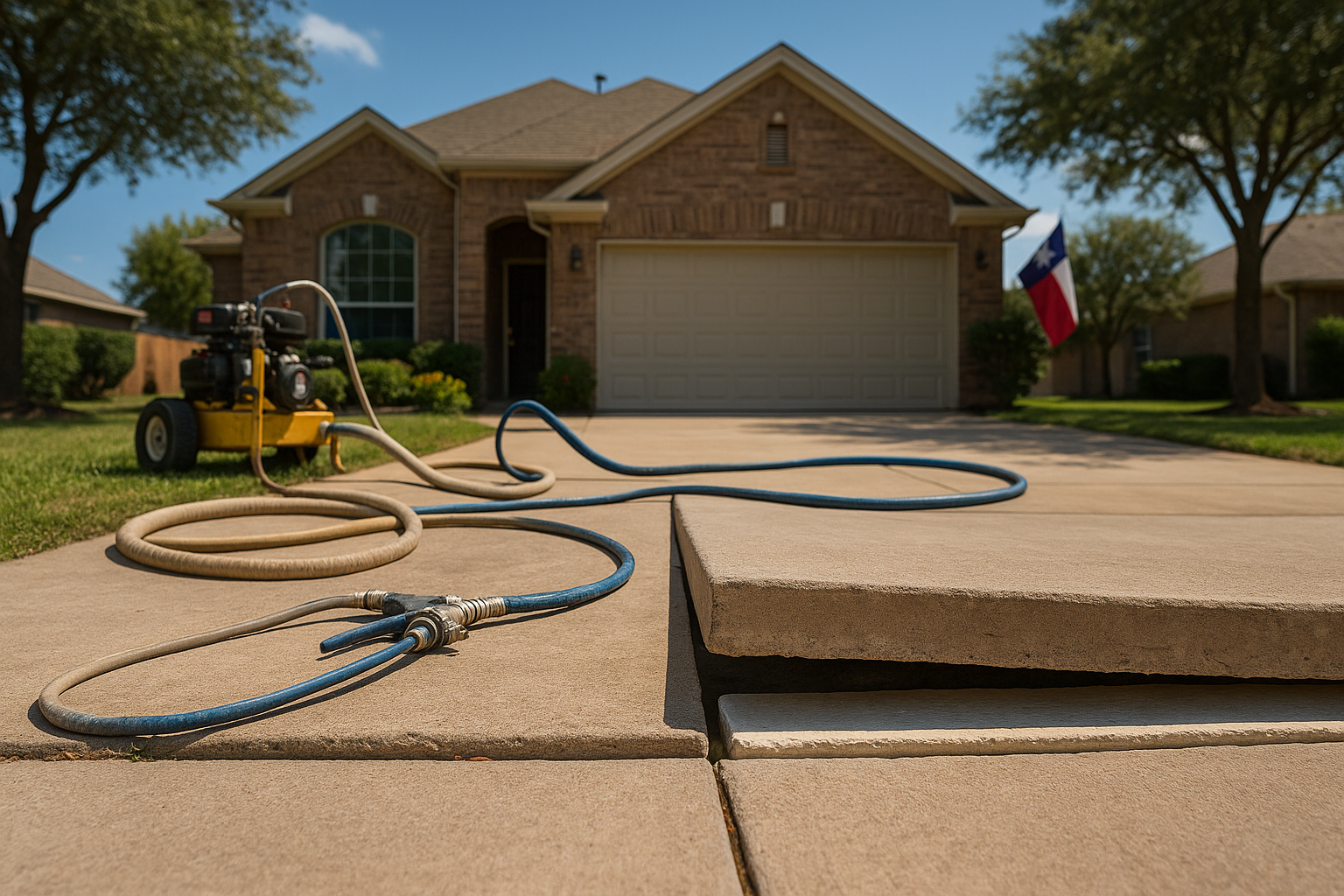
In Texas, sunken concrete is about as common as heat, clay soil, and foundation movement. We see it all the time on driveways, sidewalks, patios, pool decks, and garage floors. Homeowners want to know one thing first: what is concrete lifting going to cost?
The short answer is that most concrete lifting jobs in Texas fall somewhere between $600 and $2,500, depending on the size of the slab, how far it has dropped, access to the area, and what caused the movement in the first place. Bigger commercial jobs or heavily settled residential slabs can run higher, but in many cases lifting is still far cheaper than tearing out and replacing good concrete.
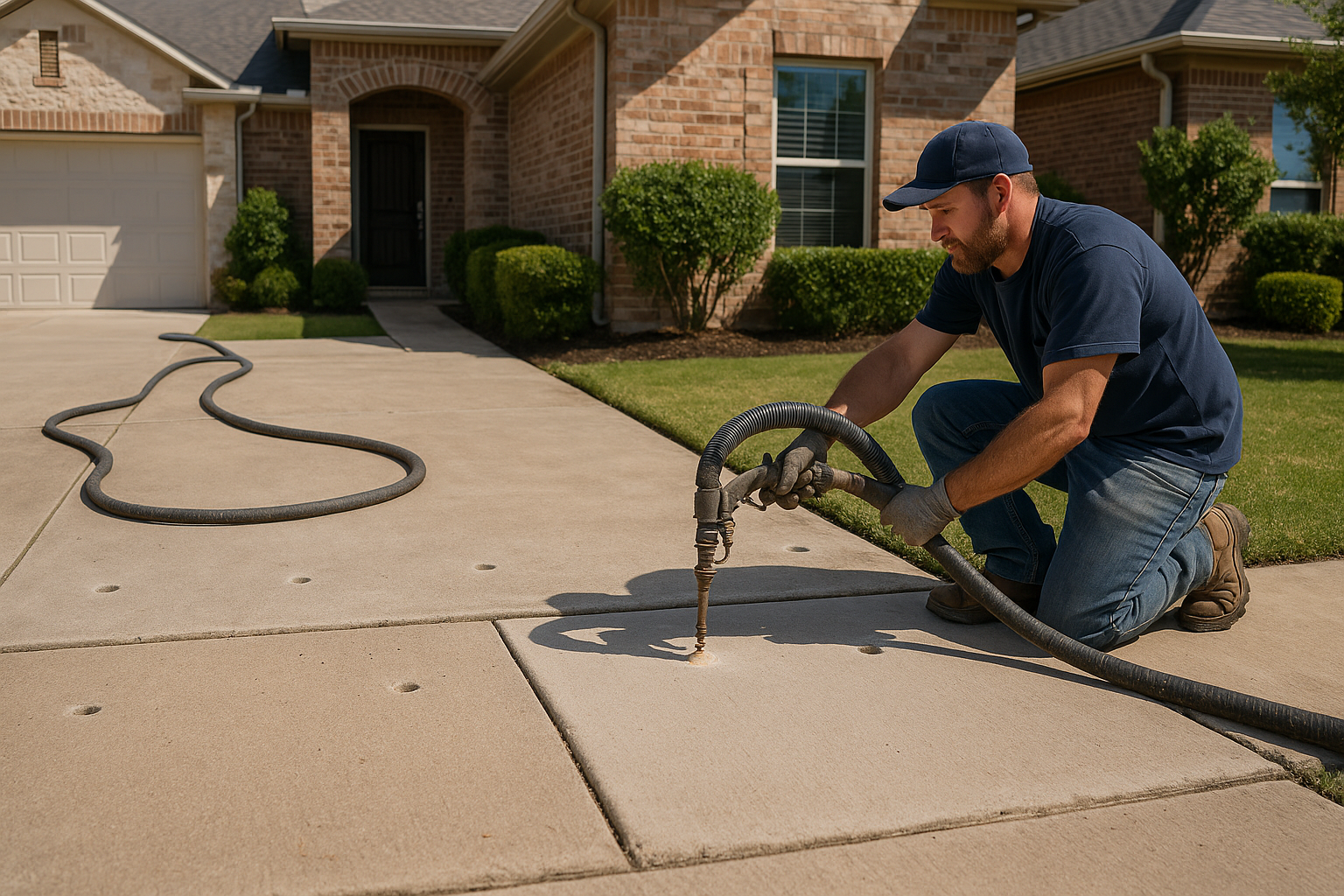
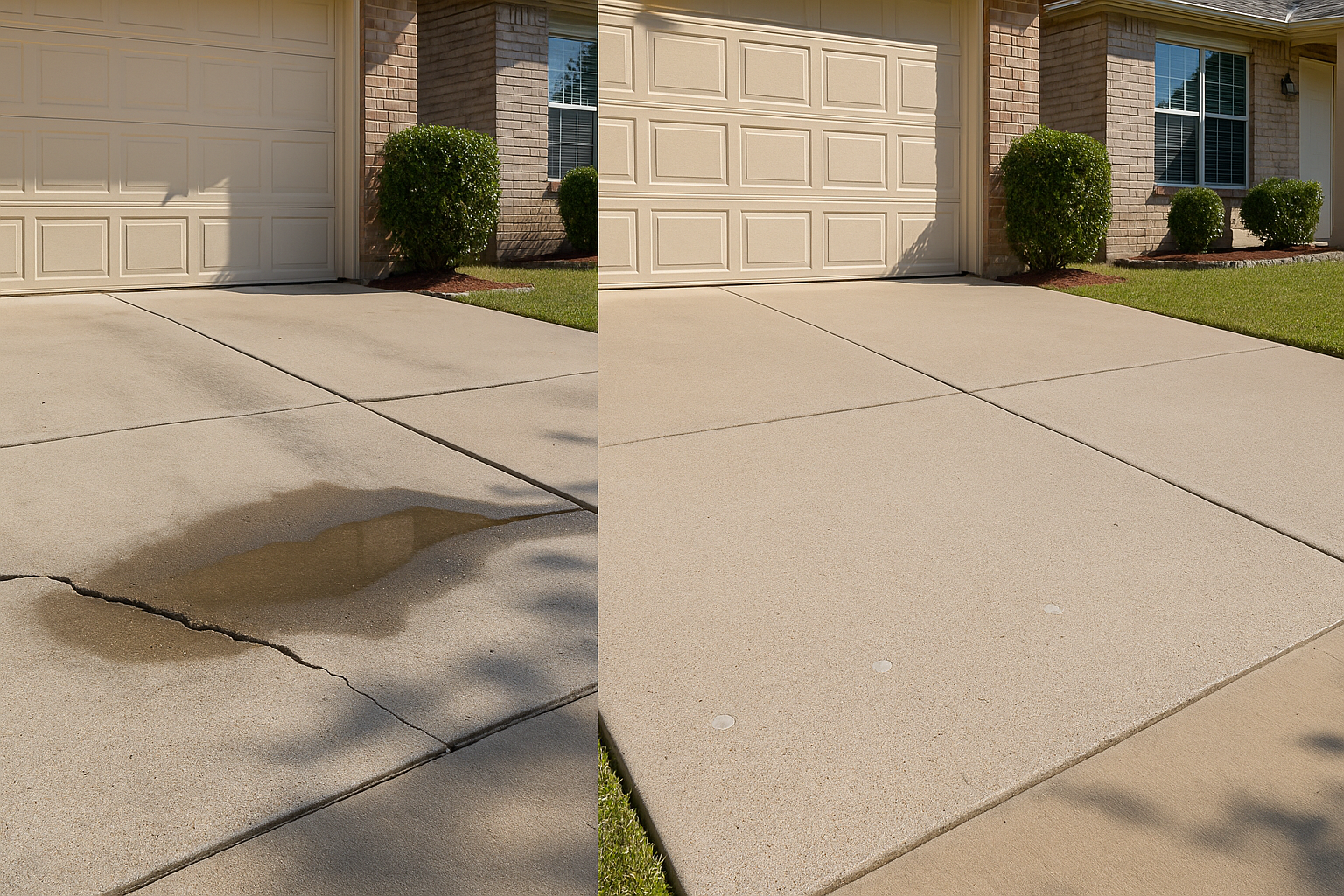
If you are dealing with uneven flatwork in Austin, Round Rock, or anywhere across Central Texas, foam lifting can often restore the slab quickly with less mess and less downtime. It is also a solid option to consider before full replacement, especially when the concrete is structurally sound.
What Does Concrete Lifting Cost in Texas?
For most residential projects, concrete lifting in Texas is priced by the slab size, the amount of lift required, and the amount of material needed under the slab. As a practical ballpark, homeowners usually pay around $6 to $15 per square foot for lifting, though some contractors price by the job instead of by square footage.
Here is a general range we see on typical Texas projects:
- Small sidewalk panel or short walkway section: $600 to $1,200
- Single-car driveway section or front approach: $800 to $1,800
- Patio or porch slab: $900 to $2,000
- Larger driveway leveling project: $1,500 to $3,500+
- Garage floor or interior slab section: pricing varies based on access and settlement conditions
Those numbers are not one-size-fits-all. A slab that only needs a small correction is usually cheaper than one that has dropped several inches because of washout, poor compaction, or long-term moisture changes in expansive clay.
Texas soils play a big role here. In areas around Austin, Round Rock, San Antonio, Temple, Waco, and Dallas-Fort Worth, expansive clay soils swell when wet and shrink when dry. That constant cycle puts stress under concrete. In other parts of Texas, sandy or loamy soils can wash out more easily, especially after heavy rain. Either way, voids form under the slab, and that is where polyurethane foam lifting can make sense.
If the slab is cracked into multiple pieces, badly spalled, or already failing structurally, lifting may not be the right repair. But when the concrete itself is still in decent shape, lifting usually costs far less than replacement.
What Affects the Price of Concrete Lifting?
There is no honest way to give a fixed price without looking at the slab. A few things drive cost more than anything else.
Size of the area
The larger the slab, the more foam and labor it takes to stabilize and raise it. A short sidewalk trip hazard is obviously going to cost less than a full driveway section.
How much the slab has settled
A slab that is down half an inch is simpler than one that has sunk two or three inches. The more lift required, the more material and adjustment time is involved.
Cause of settlement
If settlement came from soil shrinkage, erosion, plumbing leaks, or poor subgrade compaction, that affects how the repair is approached. In Texas, prolonged drought followed by sudden heavy rain is tough on slabs. Clay-rich soils expand and contract hard, and that movement can create repeating problems if the water management issues are not addressed.
Access to the work area
Backyard patios, tight side yards, enclosed courtyards, and interior slab locations can increase labor. Easy access generally means a lower cost.
Condition of the concrete
If the slab has a few stable cracks, it may still be a candidate for lifting. If it is broken apart, heavily deteriorated, or has major edge failure, replacement may be the better value.
Joint and crack sealing needs
After lifting, you do not want water getting back under the slab and starting the same problem again. That is why sealing joints matters. We always tell folks to pay attention to joint protection, especially around driveways, sidewalks, and pool decks. You can learn more about that at /expansionjoints or visit sealmyjoints.com for additional joint sealing information.
If you are comparing repairs, it also helps to look at the full scope. Some projects are really part of a bigger Concrete Slab Repair issue, while others are more straightforward Driveway Leveling jobs. A good contractor should tell you which one you are actually dealing with.
Concrete Lifting vs Replacement: Which Saves More?
In a lot of Texas jobs, lifting saves a substantial amount of money. Full replacement means demolition, hauling away broken concrete, forming, re-pouring, finishing, and curing. It also means more disruption to your home or business.
As a rough comparison, replacement often runs $12 to $25 per square foot or more in Texas, depending on thickness, reinforcement, finish, access, and haul-off. Decorative surfaces, colored concrete, or difficult access can push costs higher. That means a replacement project can easily cost 2 to 3 times more than lifting if the slab is otherwise worth saving.
Here is where lifting usually wins:
- The concrete is still structurally sound
- The slab is uneven but not shattered
- You want the repair done fast
- You want less mess around the property
- You want to reduce trip hazards without replacing large sections
Here is where replacement may be smarter:
- The concrete is crumbling or badly deteriorated
- There are major structural cracks throughout the slab
- The surface drainage was built wrong and needs to be reworked
- The slab has reached the end of its service life
One thing Texas homeowners should keep in mind is timing. If a driveway or walkway is becoming a safety issue, waiting usually does not make it cheaper. A minor settlement repair now may stay in the hundreds or low thousands of dollars. Let it continue to move, and you may be looking at a larger stabilization job or full replacement later.
That is especially true after extreme weather swings. Central Texas and the Hill Country can go from bone-dry summer conditions to intense rain events in a hurry. Houston sees its own share of moisture-related soil problems. North Texas gets shrink-swell cycles too. The pattern is the same: changing moisture in the soil equals slab movement.
When to Get a Free Concrete Lifting Estimate
If you notice one corner dropping, a section of driveway settling, or a sidewalk panel creating a trip hazard, it is time to get it looked at. The best estimates happen before the slab settles so far that adjacent concrete, garage lips, or drainage lines are affected.
You should get a concrete lifting estimate if you notice:
- Uneven sidewalk panels
- Driveway slabs that have dropped near the garage or street
- Patios pulling away from the house
- Pool deck settlement creating drainage or safety concerns
- Water running under slabs after rain
- Voids forming along slab edges
In Texas, we also recommend checking concrete after long drought periods, major storms, or plumbing leaks. Those are common times for hidden voids and soil movement to show up. What looks like a small cosmetic issue can actually point to subgrade loss underneath.
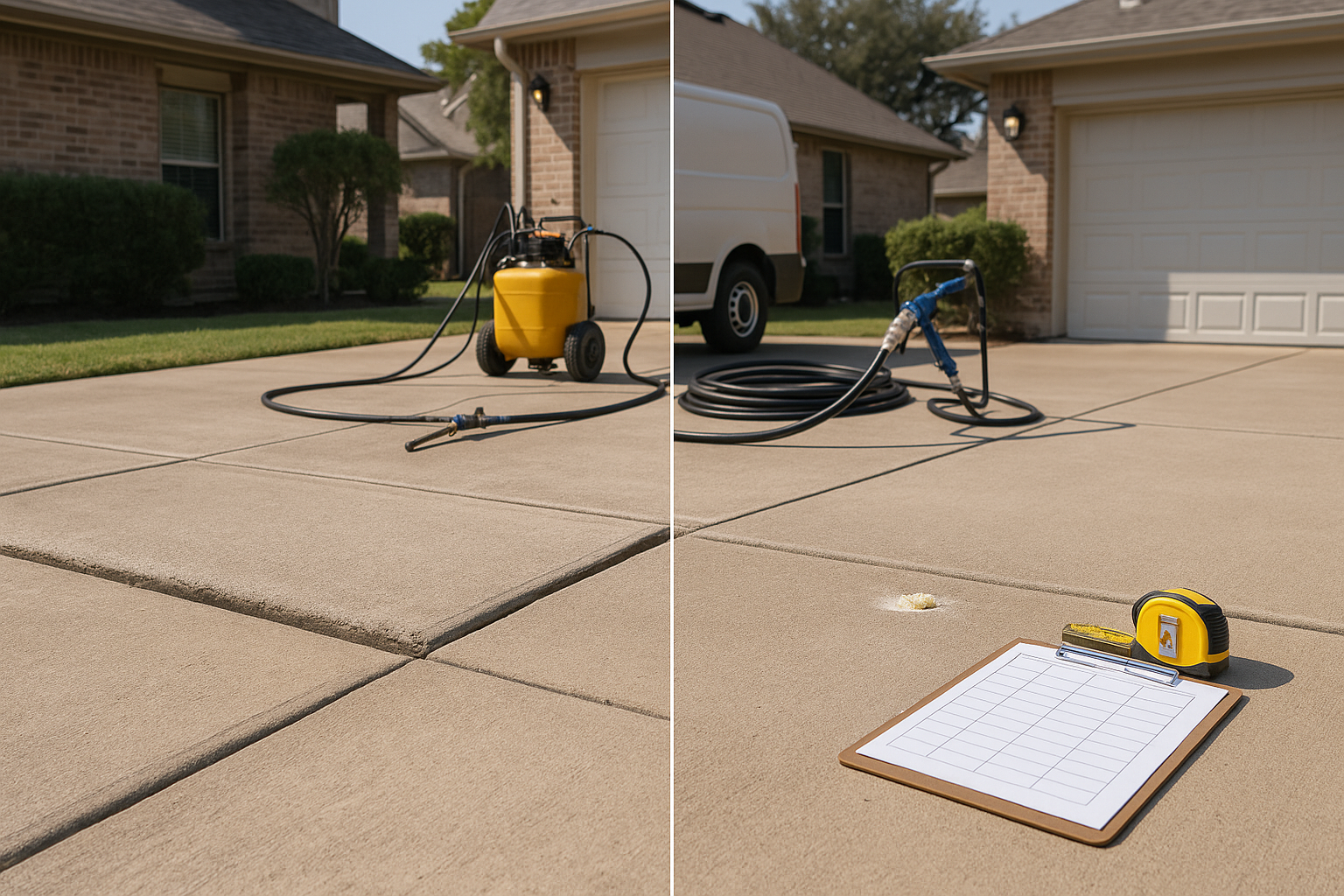
A proper estimate should include more than just a number. It should explain why the slab moved, whether lifting is the right fix, and what you can do to help keep the problem from coming back. That may include drainage corrections, maintaining consistent moisture around the home, and sealing open joints so water cannot keep washing below the slab.
If your slab is still in good condition, foam lifting is often the most practical way to restore it without paying replacement prices. It is fast, effective, and in many cases you can use the slab again the same day.
If you are dealing with sunken concrete in Texas, Hill Country Slabs can take a look and give you a straight answer on whether lifting or replacement makes more sense. Contact us at /contact or call (737) 287-4308 to schedule your free concrete lifting estimate.