If you’ve got a sunken front walkway in Texas, you’re not alone. We see it all the time in Austin, Round Rock, San Antonio, and just about every fast-growing area where homes are built on shifting ground. One slab drops, water starts pooling, and before long you’ve got a trip hazard right in front of the house.
The good news is a lot of these walkways do not need to be torn out and replaced. In many cases, sunken walkway repair can be handled with foam leveling, which lifts the slab back into place through small drill holes. That means less mess, faster turnaround, and a lower price than full replacement.
If you’re dealing with an uneven path to the front door, this guide covers what causes walkway settlement in Texas, how the repair process works, when replacement makes sense, and what you can expect to pay. If you need help with related work, take a look at Concrete Walkway Repair in Texas, Sidewalk Leveling in Texas, and Polyurethane Concrete Leveling in Texas.
What Causes a Walkway to Sink in Texas?
Texas concrete moves because Texas soil moves. That’s the short version. In a lot of Central and South Texas, we deal with highly active clay soils that swell when they get wet and shrink when they dry out. That constant expansion and contraction leaves voids under concrete slabs, and once the support underneath is gone, the walkway starts dropping.
In the Austin and Round Rock area, expansive clay is a major reason sidewalks and walkways settle unevenly. Around San Antonio, you’ll also see movement tied to drought cycles, runoff erosion, and poor compaction around newer homes. In some neighborhoods, fill soil placed during construction never got compacted the way it should have. It might look fine for a year or two, then the slab starts to sink as that soil consolidates.
Common causes of a sunken walkway in Texas include:
- Expansive clay soil that shrinks during hot, dry weather and swells after heavy rain
- Erosion from roof runoff, poor drainage, or broken sprinkler lines washing soil out from under the slab
- Poor soil compaction during original construction
- Tree roots lifting one section while another area settles
- Plumbing or irrigation leaks softening the subgrade
- Repeated drought and rain cycles that are common across Texas
We also see walkway movement around driveways, porches, and patios where water is not being directed away from the house. If expansion joints are missing, damaged, or full of debris, water can work down between slabs and accelerate settlement. That’s why joint maintenance matters. If your joints are open or failing, visit /expansionjoints for more information, and for joint sealing products and solutions, check out sealmyjoints.com.
How Sunken Walkway Repair Works
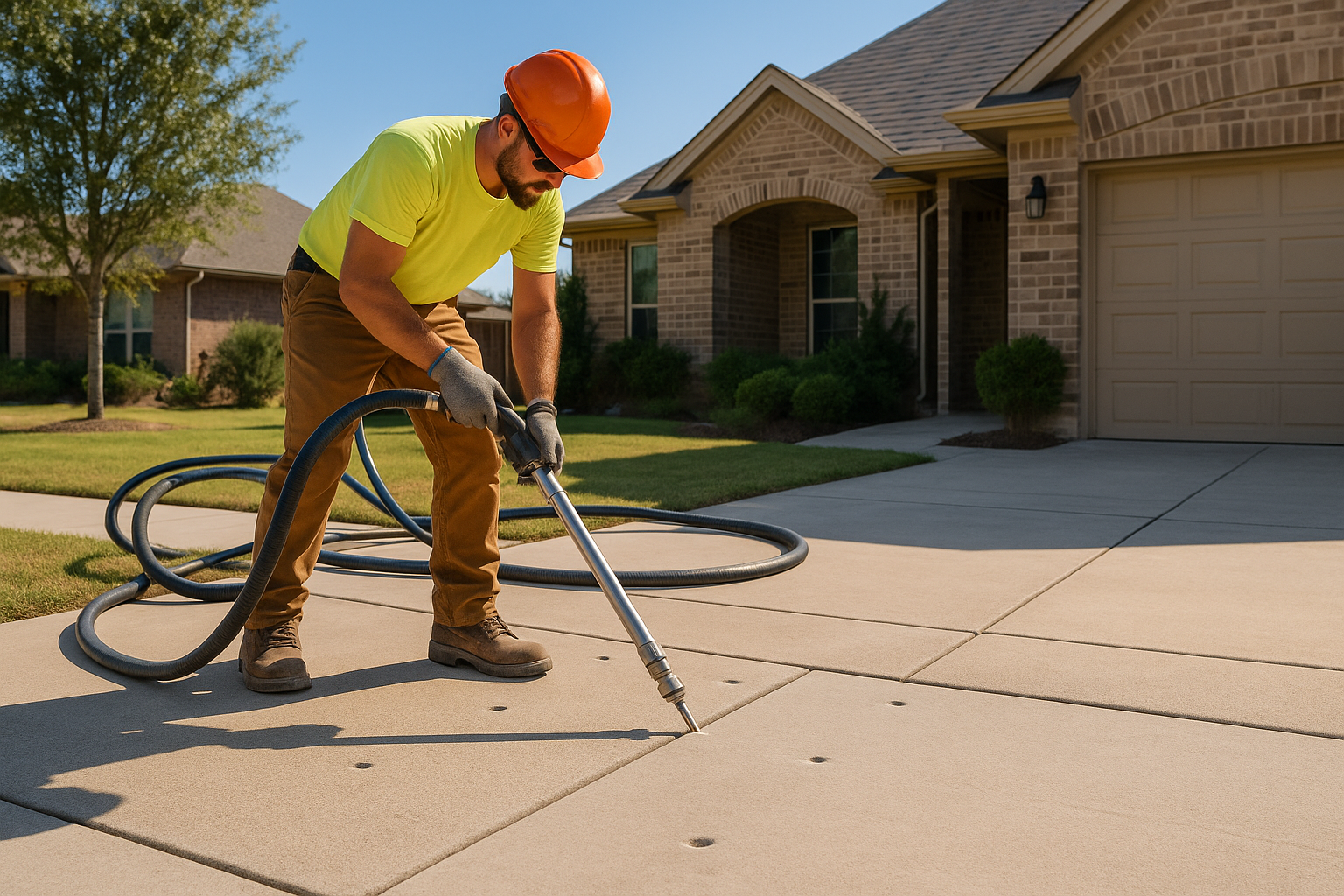
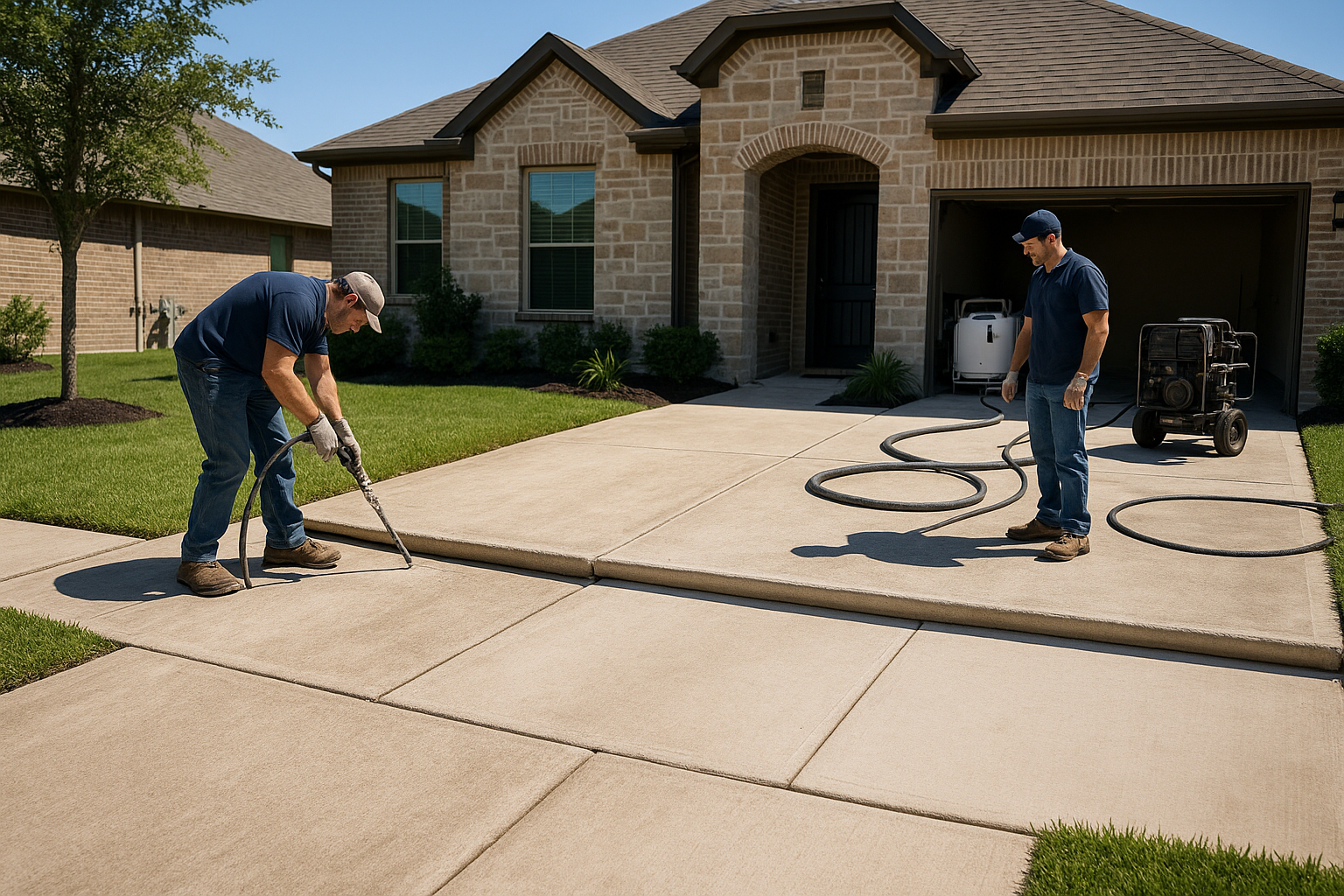
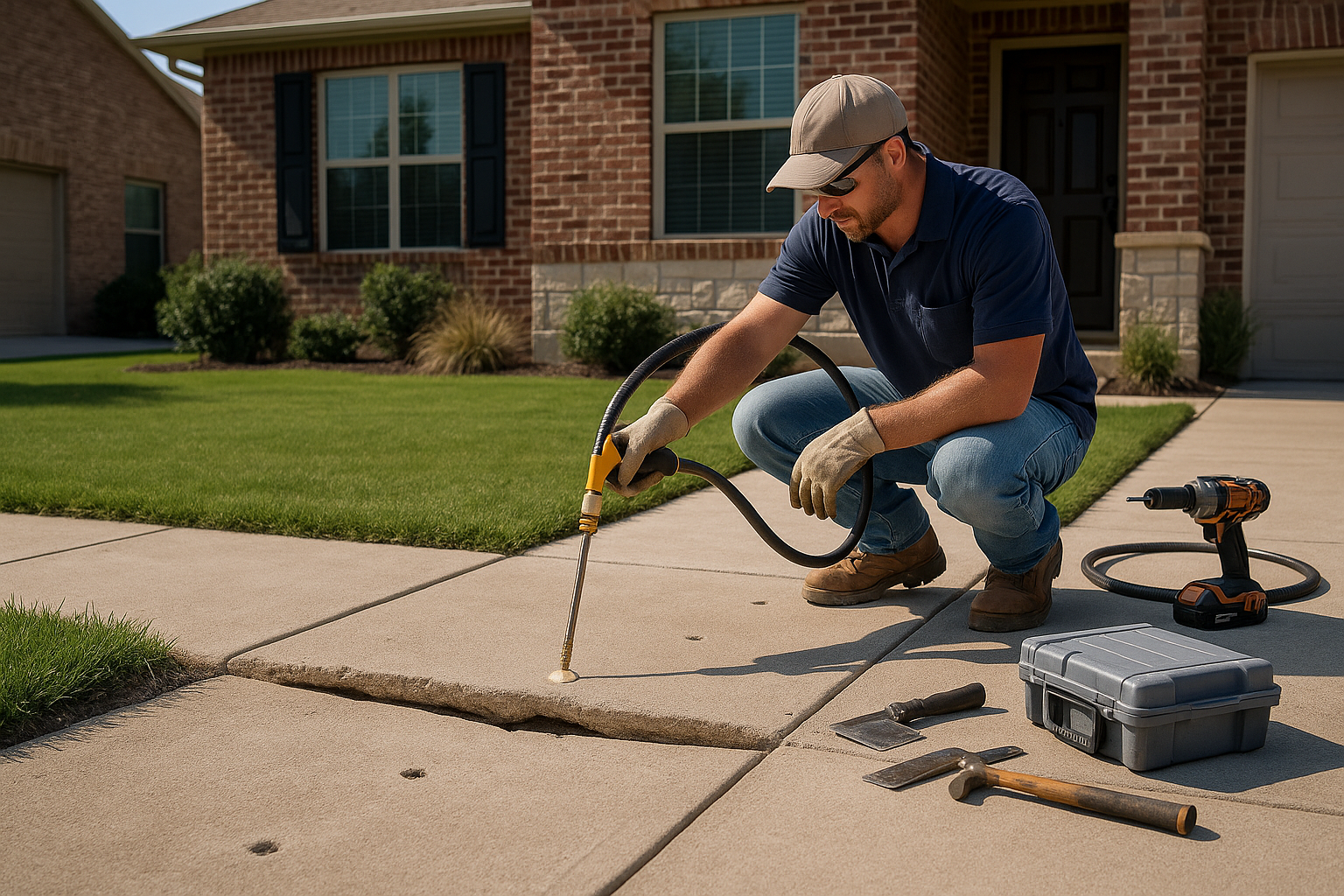
For most settled walkways, the fastest repair is polyurethane foam leveling. This process lifts the existing concrete instead of removing it. We drill small holes in the slab, inject a structural foam beneath it, and use that material to fill voids and raise the concrete back toward its proper elevation.
Here’s the basic process:
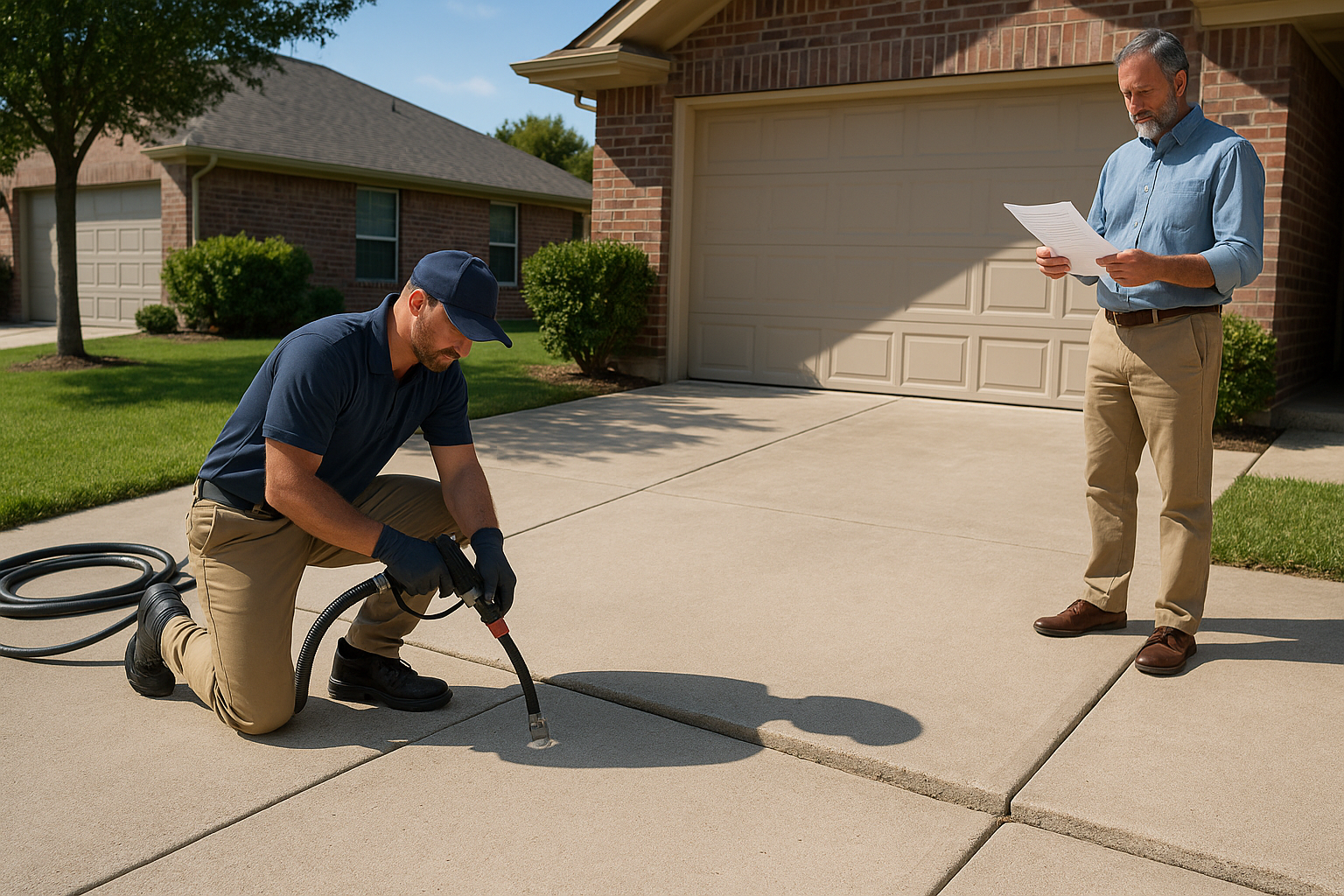
- Inspect the walkway to identify how much settlement has happened and what caused it.
- Check surrounding conditions like drainage, nearby joints, sprinkler overspray, and visible soil washout.
- Drill small injection holes in the affected slab sections.
- Inject polyurethane foam under the concrete to fill empty space and create lift.
- Monitor the lift carefully so the slab comes up evenly and safely.
- Patch the drill holes and clean up the work area.
One big advantage is speed. Most walkway leveling jobs are completed in a few hours, and the slab is often ready for foot traffic the same day. Compare that to replacement, where you’re dealing with demolition, haul-off, forming, pouring, curing, and a much longer disruption around the home.
Foam leveling also avoids the look mismatch that can come with new concrete next to older concrete. If the existing walkway is still structurally sound, lifting it usually gives the best result for the money.
That said, the repair only works long-term if the root cause is addressed. If downspouts dump next to the walkway, if grade slopes back toward the slab, or if leaking irrigation is washing out the base, those issues need to be corrected too. Otherwise, any slab in Texas can settle again.
Why Texas homeowners choose foam leveling
- Less invasive than tearing out the walkway
- Faster turnaround with minimal downtime
- Lower cost than full replacement in many cases
- Small drill holes instead of demolition equipment
- Can reduce trip hazards at the front entry and around the home
If you’re in Austin, Round Rock, or San Antonio, this is one of the most common concrete repairs we perform because it matches the way slabs fail in our region.
When to Repair vs Replace a Sunken Walkway
Not every walkway should be leveled. The question is whether the slab is still in decent shape or whether it has deteriorated enough that replacement makes more sense.
Repair is usually the better option when:
- The slab is mostly intact and not badly broken
- The sinking is caused by voids or soil settlement under the concrete
- The surface damage is minor
- You want the fastest, cleanest fix
- You want to avoid spending replacement money if the concrete still has life left in it
Replacement may be the better call when:
- The concrete is severely cracked or crumbling
- Sections are too thin or poorly poured to begin with
- Tree root damage has distorted the walkway beyond practical lifting
- The slab has major drainage design problems that require re-pouring with a new slope
- There is widespread surface failure, scaling, or broken edges
In our experience, a lot of homeowners assume replacement is the only answer because the slab looks low. But settlement by itself does not automatically mean the concrete is bad. If the slab is solid, leveling can buy you years of service at a much lower cost.
There’s also a safety angle here. A walkway lip of even an inch can catch a toe, especially for kids, older adults, guests, or anyone carrying groceries to the front door. Getting that hazard corrected quickly is usually smarter than waiting for more movement.
How Much Sunken Walkway Repair Costs in Texas
Pricing depends on access, slab size, amount of settlement, and how much foam is required to fill the voids below the walkway. In Texas, most small residential walkway leveling jobs fall well below the cost of full replacement.
As a rough rule of thumb:
- Minor sunken walkway repair: often around $600 to $1,200
- Moderate leveling with multiple sections: often around $1,200 to $2,500
- Full walkway replacement: often costs 2x to 4x more once demolition, haul-off, forming, and new concrete are included
Those numbers can move up or down based on conditions at the site, but the main point is simple: if the slab can be saved, leveling is typically the better value. It also keeps the area usable faster, which matters at a front entrance.
Homeowners should also think beyond the immediate slab. If poor drainage is what caused the problem, adding or repairing downspout extensions, improving grade, and maintaining joints can protect the repair. Joint sealing is especially important around adjoining slabs where water intrusion starts the cycle all over again. You can learn more at /expansionjoints or visit sealmyjoints.com.
What affects the final price
- How far the slab has settled
- How many walkway panels are involved
- How large the voids are underneath
- Ease of access to the repair area
- Whether drainage corrections are needed
- Condition of the existing concrete
The best way to know whether your walkway should be lifted or replaced is to have it evaluated on-site. A good contractor will look at the concrete itself, the soil and drainage around it, and any signs that water is getting through failed joints or eroding the base.
At Hill Country Slabs, we help Texas homeowners fix settled concrete without jumping straight to replacement when it isn’t necessary. If you’ve got a sunken front walkway, uneven sidewalk, or trip hazard around your home, contact us to talk through the options. Visit /contact or call (737) 287-4308 to schedule an estimate.