If you’re dealing with uneven concrete around your home, you’re not alone. We see it all the time in Lakeway, TX. One slab drops, water starts running the wrong direction, and before long you’ve got a driveway lip, a patio that holds water, or a sidewalk that turns into a trip hazard. The good news is that in many cases, you do not need to tear it out and start over. With professional concrete leveling in Lakeway, TX, we can often lift settled slabs back into place quickly and with a lot less disruption.
Here in the Hill Country, concrete moves for a reason. Between long dry stretches, sudden heavy rains, rocky ground, clay pockets, and slope runoff, the soil under a slab can shift more than most homeowners expect. That is especially true in places like Lakeway and nearby Bee Cave, where elevation changes, drainage patterns, and tough Texas weather all work against flatwork over time.
At Hill Country Slabs, we use polyurethane foam leveling to raise settled concrete without the mess and cost of full replacement. It works well for driveways, walkways, patios, pool decks, and other residential slabs when the concrete is still structurally worth saving.
Signs You Need Concrete Leveling in Lakeway, TX
A lot of homeowners wait until the slab gets bad enough that everybody notices it. Usually, the warning signs start earlier. If you catch it in time, repair is often more straightforward and less expensive.
- One edge of a slab sits lower than the next, creating a step-up or drop-off.
- Water ponds near the house instead of draining away after a storm.
- Driveways develop low spots where tires dip or water collects.
- Patios or pool decks tilt and create drainage problems or unsafe walking surfaces.
- Sidewalk panels become trip hazards from settlement between sections.
- Expansion joints separate or widen as slabs shift. If joints are open or failing, it is smart to look at expansion joint repair as part of the fix.
In Lakeway neighborhoods, we also see concrete settle near curb lines, garage approaches, and rear patios where runoff cuts under the slab. If the concrete is cracked into a few large stable sections, foam leveling can still be a good option. If it is shattered, badly spalled, or broken into many loose pieces, replacement may make more sense.
What Causes Concrete to Sink in Lakeway?
Most people think concrete settles because it was poured wrong. Sometimes that is true, but more often the real problem is underneath it. The slab is only as good as the base supporting it.
Expansive clay and mixed soils
Lakeway and the greater Austin area have a mix of limestone-based ground, shallow rock, and pockets of expansive clay. That clay swells when it gets wet and shrinks when it dries. Over repeated cycles, voids can form under concrete. Once part of the base support disappears, the slab starts to drop. That is common across Central Texas, including Lakeway, Bee Cave, Austin, Dripping Springs, and Round Rock.
Heavy rain after drought
Texas weather is hard on slabs. We can go through weeks of heat with little moisture, then get a strong storm that dumps water fast. That sudden runoff can wash fines out from under sidewalks, driveways, and patios. The Hill Country’s sloped terrain makes that worse because water moves quickly if drainage is not controlled.
Poor drainage
If downspouts dump next to flatwork, if grading slopes toward the slab, or if irrigation keeps one area too wet, the soil under the concrete changes over time. Some sections stay saturated while others dry out and shrink. That uneven moisture is a big reason slabs settle out of level.
Weak or poorly compacted base
Even a good concrete pour can fail if the subgrade was not compacted correctly. We see this on older patios, add-on walkways, and some driveway extensions where the base preparation was not strong enough from day one.
How Polyurethane Foam Leveling Works
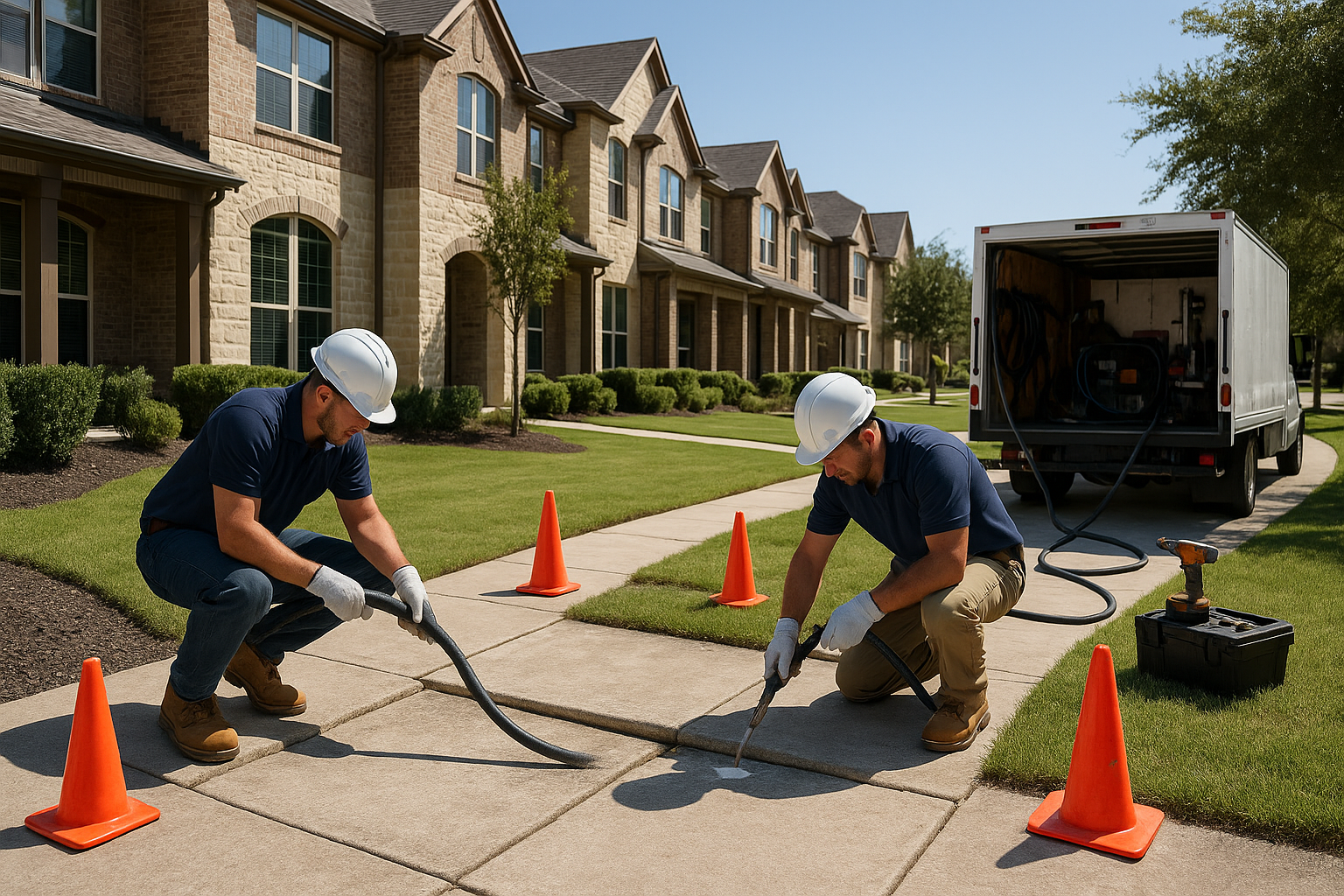
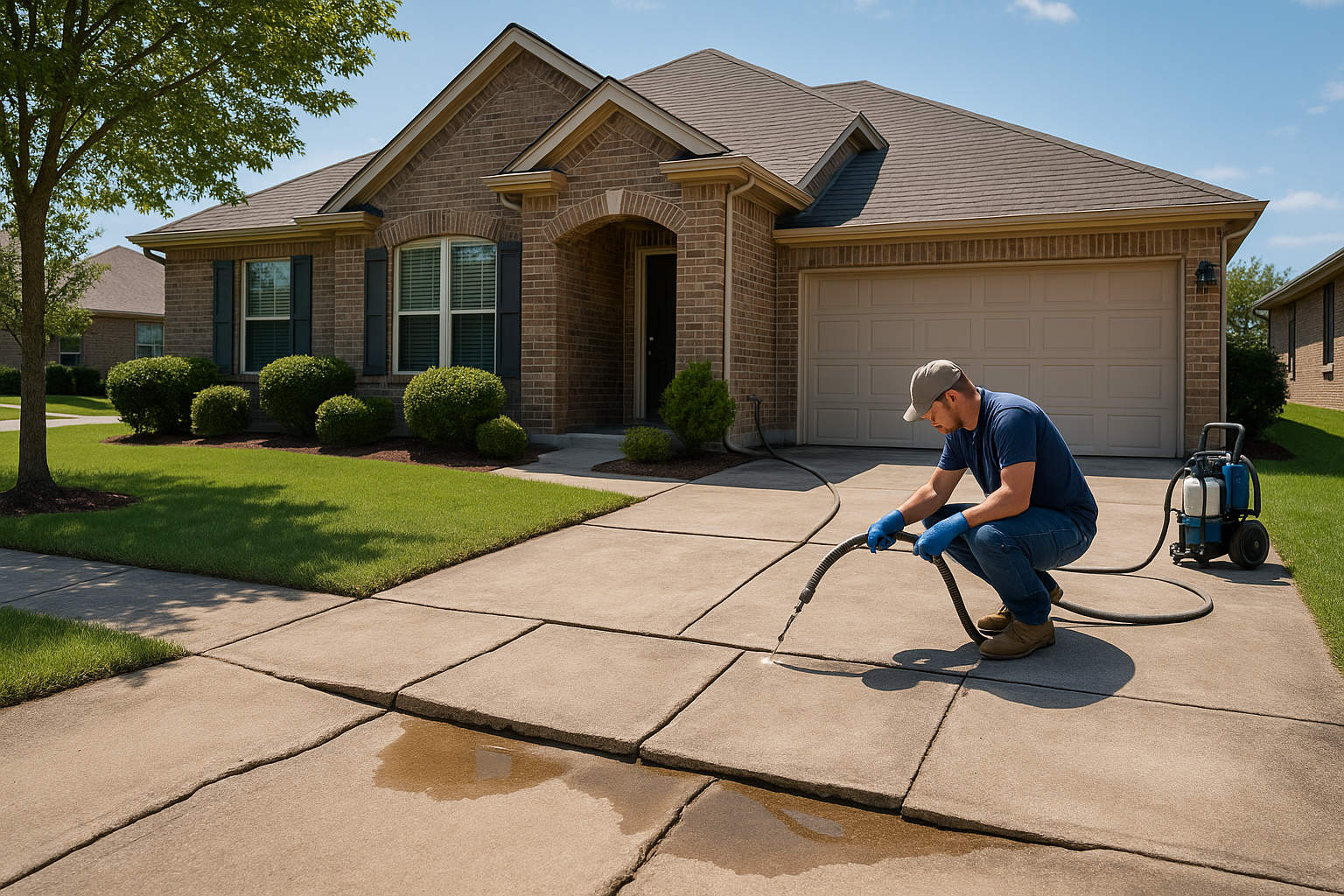
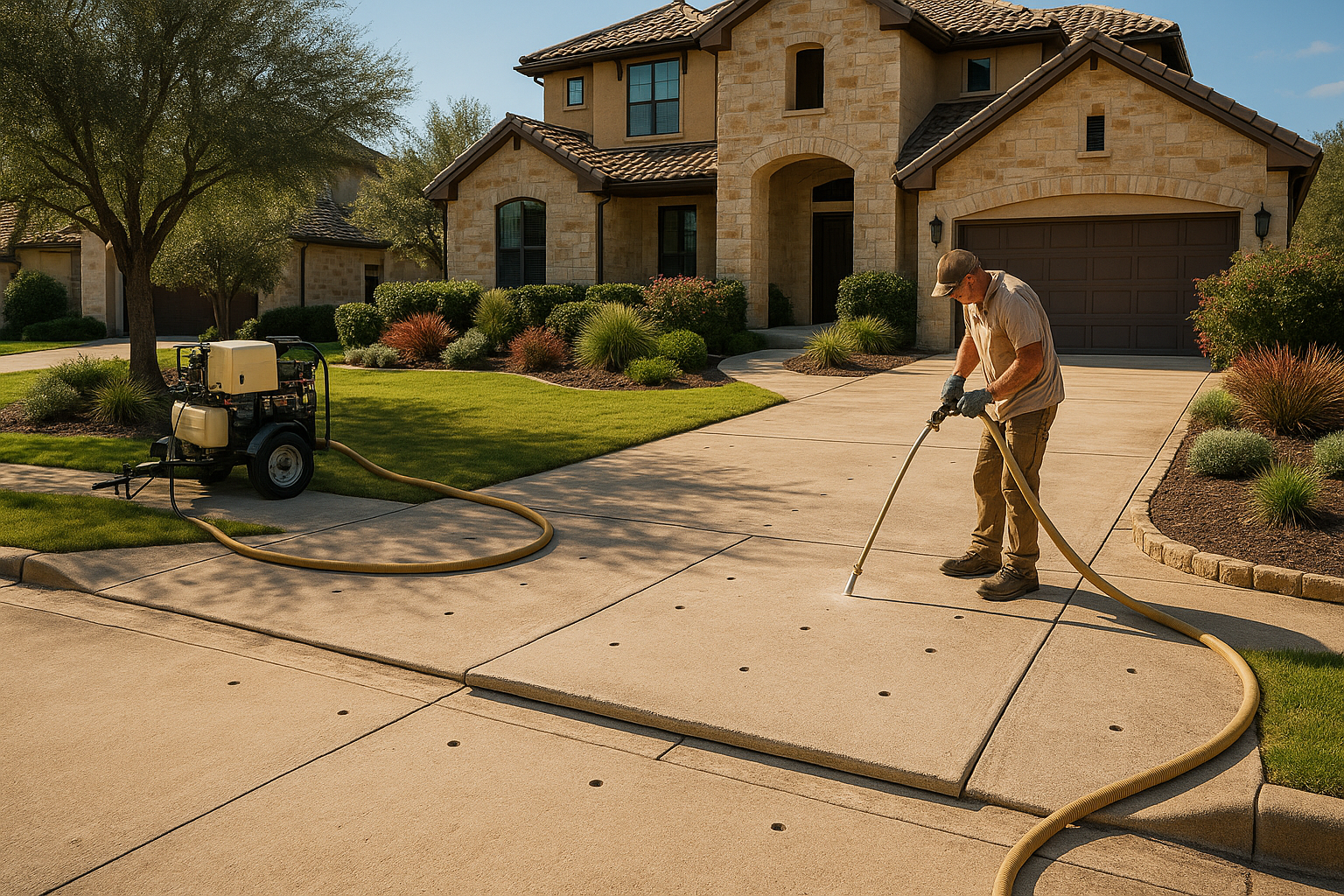
Foam leveling is a clean repair method that lifts settled concrete by filling voids below the slab and applying controlled pressure from underneath. The process is fast, precise, and much less invasive than tearing out concrete.
- We inspect the slab, identify the settlement pattern, and check whether the concrete is a good candidate for lifting.
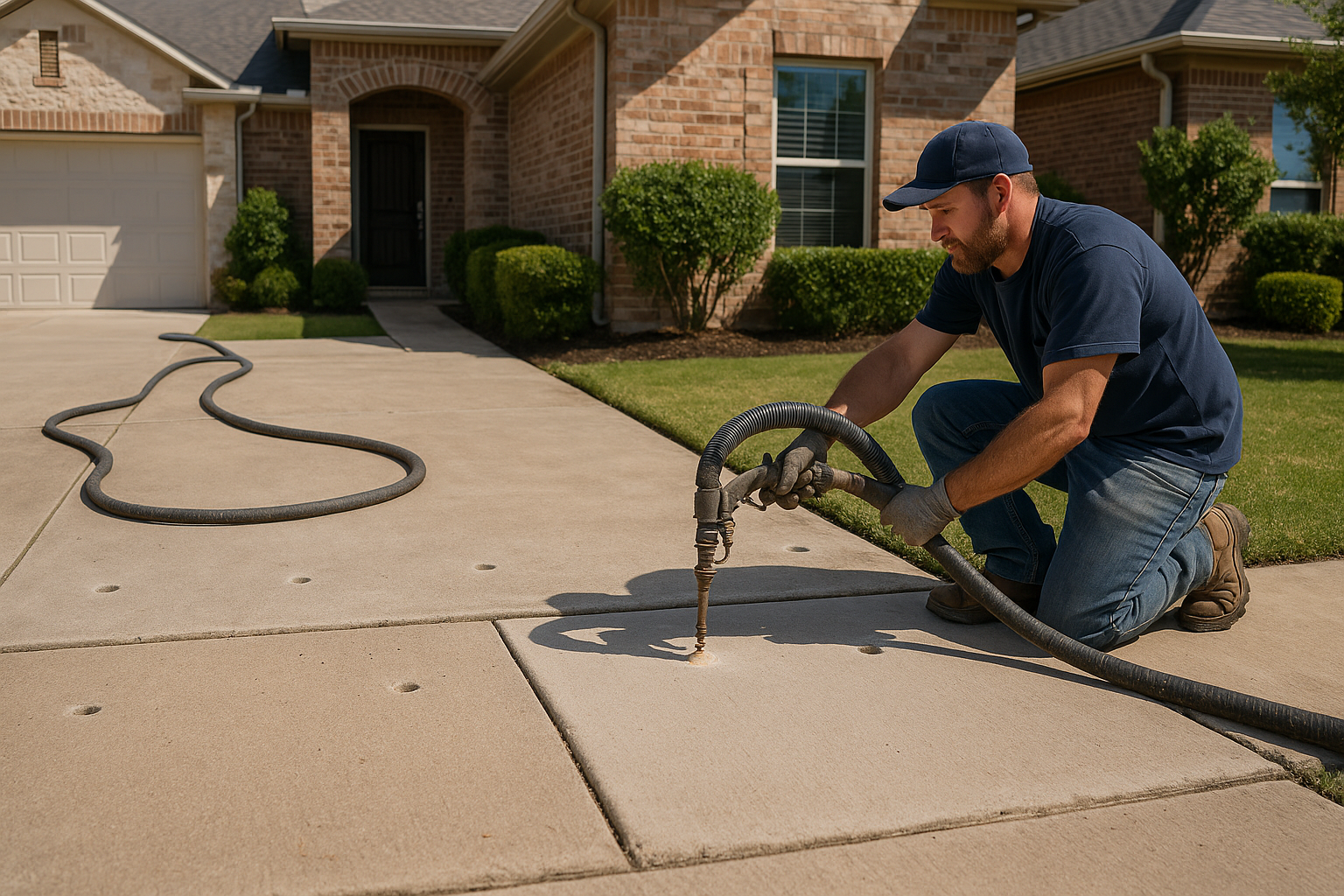
- Small holes are drilled through the slab in strategic locations.
- A two-part polyurethane foam is injected below the concrete.
- The foam expands, fills empty space, and gently lifts the slab back toward its proper position.
- The holes are patched, and the area is cleaned up.
One reason homeowners like this process is the speed. In many cases, the repaired slab is ready for foot traffic quickly and can often be used the same day. There is no long demolition process, no haul-off of broken concrete, and no waiting around for a brand-new pour to cure.
Foam leveling also adds very little weight to the soil below compared to older mudjacking methods. That matters in areas with unstable or moisture-sensitive soils. For residential work in Lakeway, it is a practical solution for Driveway Leveling, Patio Leveling, sidewalks, and pool decks.
Why Homeowners Choose Repair Over Replacement
If the concrete is still in decent condition, repair usually wins on speed, cost, and disruption. Full replacement has its place, but it is often more than you need for a slab that is mainly suffering from settlement.
Lower cost
In many situations, leveling costs far less than full tear-out and replacement. While every project is different, homeowners are often trying to avoid paying for demolition, debris removal, forming, repouring, and downtime. On the right slab, foam leveling can be the more efficient fix.
Faster turnaround
Replacement can stretch into several days when you factor in demo, grading, forming, pouring, and curing. Leveling is commonly completed in a fraction of that time. For busy households, that matters.
Less mess around the property
Lakeway homes often have finished landscaping, decorative stone, irrigation, and tight access around patios or side yards. Tearing out concrete can disturb all of it. Foam leveling is much cleaner and easier on the surrounding property.
Better drainage and safety
Leveling a settled slab can help redirect water away from the home, reduce standing water, and remove trip hazards. That is not just cosmetic. It protects usability and can help prevent bigger issues from developing around foundations and exterior surfaces.
After leveling, it also makes sense to seal joints and cracks where needed so water is less likely to get back under the slab. For more information on joint sealing, visit sealmyjoints.com.
When Replacement May Still Be the Better Option
We believe in repairing concrete when it makes sense, but not every slab should be lifted. If the concrete has severe structural failure, widespread surface breakdown, or major cracking throughout, replacement may be the better investment. A good contractor should tell you that up front.
The key is getting an honest evaluation. In plenty of Lakeway projects, the slab looks worse than it really is because it has dropped out of position. Once you restore support underneath it, the concrete can perform well for years. In other cases, damage has gone too far. The right answer depends on the condition of the slab, the soil below it, and what caused the settlement in the first place.
Concrete Leveling for Lakeway Driveways, Patios, and Walkways
We regularly see leveling needs in front-entry sidewalks, driveway approaches, pool deck sections, and rear patios where drainage and soil movement have caused panels to settle. In upscale Lakeway neighborhoods, homeowners usually want a repair that is effective without turning the property into a construction zone. Foam leveling fits that need well.
If your slab has started to sink, the best time to deal with it is before the movement gets worse. Small height differences can become bigger separation points after another hot summer or heavy rain cycle. Fixing the issue early can help you avoid more costly repairs later.
If you need concrete leveling in Lakeway, TX, Hill Country Slabs can take a look and tell you whether your slab is a good fit for foam lifting. We handle residential concrete repair across the area and focus on practical solutions that make sense for Texas conditions.
Ready to get your concrete checked out? Contact Hill Country Slabs at (737) 287-4308 or visit /contact to schedule an estimate.