If you’ve been searching for concrete driveway leveling near me, chances are you’ve got a slab that’s dropped, water running back toward the garage, or a trip hazard that keeps getting worse every season. Around Texas, that’s common. Between expanding clay soils, long dry spells, sudden heavy rain, and plain old washout under the slab, driveways do not stay put forever.
The good news is a sunken driveway does not always need to be torn out and replaced. In a lot of cases, lifting the existing concrete is the faster and more affordable fix. At Hill Country Slabs, we look at the base conditions, the crack pattern, drainage, and how far the panel has moved before we recommend anything. If the concrete is still structurally sound, leveling can usually save you time, money, and a whole lot of mess.
Homeowners in Austin, Houston, and across Central Texas deal with different soil conditions, but the result is often the same: settlement, separation, and uneven slabs. If you need a closer look at the service itself, visit our Driveway Leveling page or learn more about broader foundation and flatwork issues on our Concrete Slab Repair page.
Signs You Need Concrete Driveway Leveling
Most driveway problems start small. A corner drops a little, a joint opens up, or one panel sits higher than the next. Then Texas weather does the rest. Rain gets under the slab, heat dries out the surrounding soil, and the movement keeps going.
Here are the main signs it is time to have a contractor look at your driveway:
- One slab sits lower than the next, creating a lip that can catch tires, shoes, or lawn equipment.
- Water ponds on the driveway or drains back toward the garage instead of away from the house.
- Cracks are forming near settled areas, especially at corners and control joints.
- Gaps are showing up under the slab edge where soil has washed out.
- The driveway feels rough entering the garage because the approach slab has dropped.
- Expansion joints are failing and letting more water down into the base.
That last one matters more than most folks realize. If the joints between slabs are open or broken down, water keeps getting underneath the concrete and makes settlement worse. That is why we always tell homeowners to pay attention to joint maintenance. You can read more about that on our expansion joints page, and for sealing products and education, visit sealmyjoints.com.
What Causes a Driveway to Sink in Texas
Texas is hard on concrete. Not because concrete is weak, but because the ground under it is always changing. What causes a driveway to sink in one city may look a little different in another, but the usual culprits stay pretty consistent.
Expansive Clay Soils
In a lot of Central Texas and North Texas neighborhoods, you are sitting on clay-heavy soil. That clay swells when it gets wet and shrinks when it dries out. Over time, that repeated movement leaves voids under sections of the driveway. Once the support is gone, the slab starts to settle. This is especially common in places around Austin, San Antonio, Temple, Waco, and DFW.
Washout From Drainage Problems
In Houston and Gulf Coast areas, heavy rains can move a surprising amount of soil. If downspouts dump near the driveway, if grading sends water across the slab edge, or if joints are open, water can erode the base material underneath. That creates empty pockets the slab can no longer bridge.
Poor Compaction During Original Construction
Some driveways start failing because the base was never compacted right to begin with. That does not always show up in the first year. It may take several seasons before traffic loads and weather expose the weak spots. When that happens, the concrete itself may still be in decent shape, but the support underneath is not.
Tree Roots and Organic Material
Roots can lift concrete, but decaying roots or buried organic debris can also leave voids once they break down. We see that on older properties where the driveway was poured over fill that should have been removed or compacted better.
In many cases, the issue is not just the slab. It is the soil, drainage, and joints working together. A proper leveling job should account for all of that, not just raise the panel and leave.
When Leveling Is Better Than Replacement
A lot of homeowners assume uneven concrete means they need a brand-new driveway. Sometimes that is true. But not nearly as often as people think.
Driveway leveling is usually the better option when:
- The slab is structurally sound with manageable cracking.
- The settlement is localized instead of widespread across the entire driveway.
- You want to correct trip hazards and drainage without a full demolition.
- You need a faster repair with less disruption to the property.
- You want to preserve the existing concrete if the finish and overall condition are still good.
Replacement makes more sense when the concrete is badly broken, heaved in multiple directions, crumbling from age, or poured too thin to hold up long term. But if the slab has simply settled and can still be lifted safely, leveling is often the smart play.
For many Texas homeowners, the biggest deciding factor is cost. While every job is different, leveling is often significantly less expensive than full replacement. In many cases, homeowners spend thousands less by lifting and stabilizing the slab instead of tearing out and repouring the whole driveway. It is also much faster. A leveling project can often be completed in hours, not days, and there is no waiting on demolition, formwork, full-depth repour, and long cure schedules.
That matters if your driveway is your only access point or if you are trying to avoid a major disruption around the house. If the concrete can be saved, there is no reason to replace what is still doing its job.
How to Choose a Driveway Leveling Company Near You
If you are searching online for the best company near you, do not just look at who shows up first. Look for a contractor who understands Texas soil movement and who can explain why the slab moved in the first place.
Here is what to ask before hiring anyone:
- Do they inspect the drainage and subgrade conditions?
A good contractor should look beyond the surface. If water is washing out the base or joints are open, that needs to be part of the conversation. - Do they explain whether leveling or replacement is the better fit?
You want honest guidance, not a sales pitch. Not every driveway should be lifted, and not every settled slab should be replaced. - Do they work in Texas conditions regularly?
Expansive clays, drought cycles, flash rain, and regional base failures are all common here. Local experience matters. - Do they talk about protecting and sealing joints after the repair?
Leveling without follow-up joint care can let the same water intrusion keep causing problems. That is why maintenance through proper joint sealing is important. - Can they explain the expected result clearly?
Sometimes a slab can be brought back nearly perfect. Other times, the goal is to remove the hazard, improve drainage, and restore function as much as the existing concrete allows.
The right contractor should be straightforward with you. They should talk like a builder, not a salesman. They should explain what moved, why it moved, what they can fix, and what needs to be watched going forward.
If you are in Austin, Houston, or surrounding Texas communities, Hill Country Slabs can take a look at your driveway and tell you whether lifting is the right move. We handle settlement issues, slab stabilization, and practical repairs built around real site conditions, not cookie-cutter answers.
What to Expect From the Process
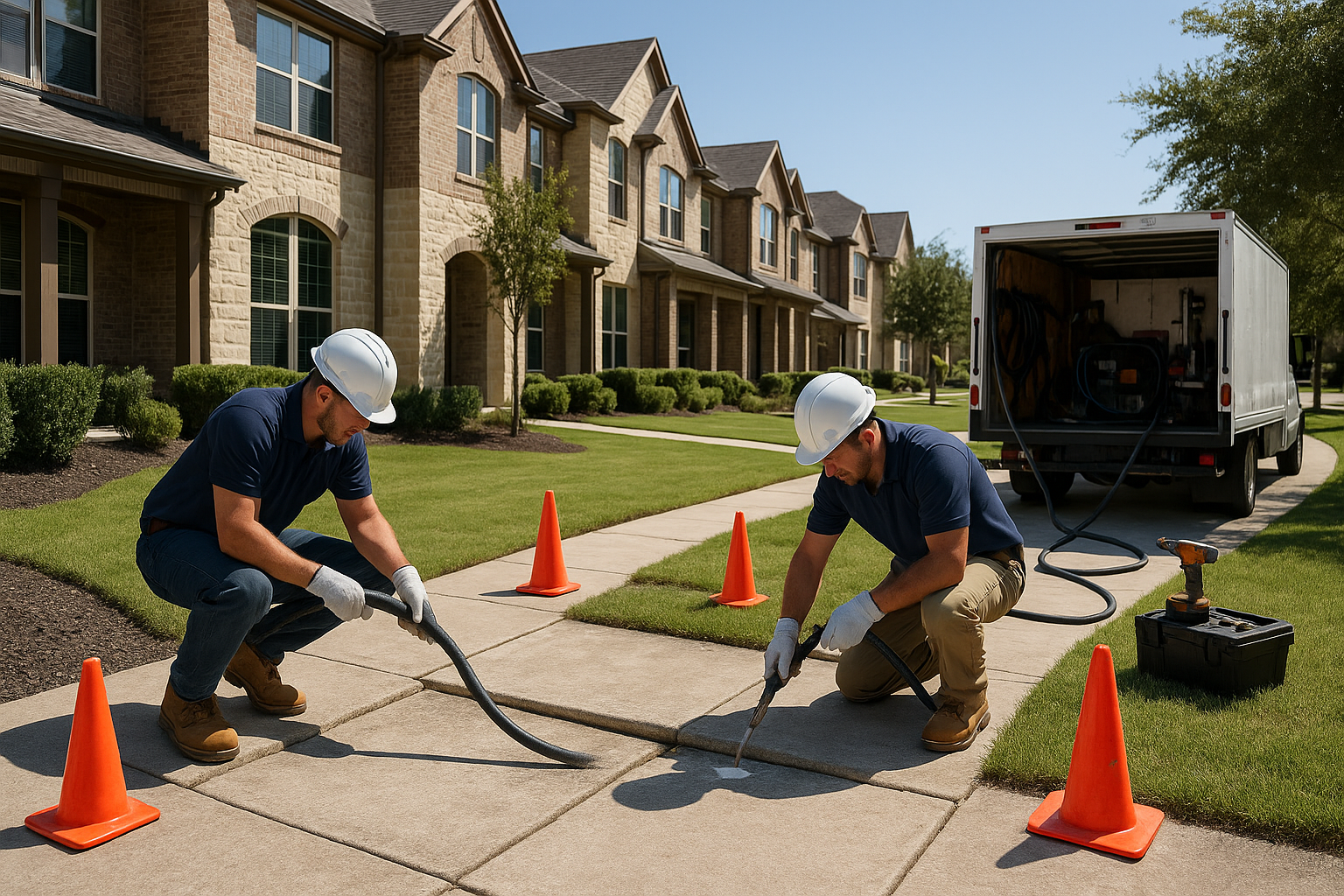
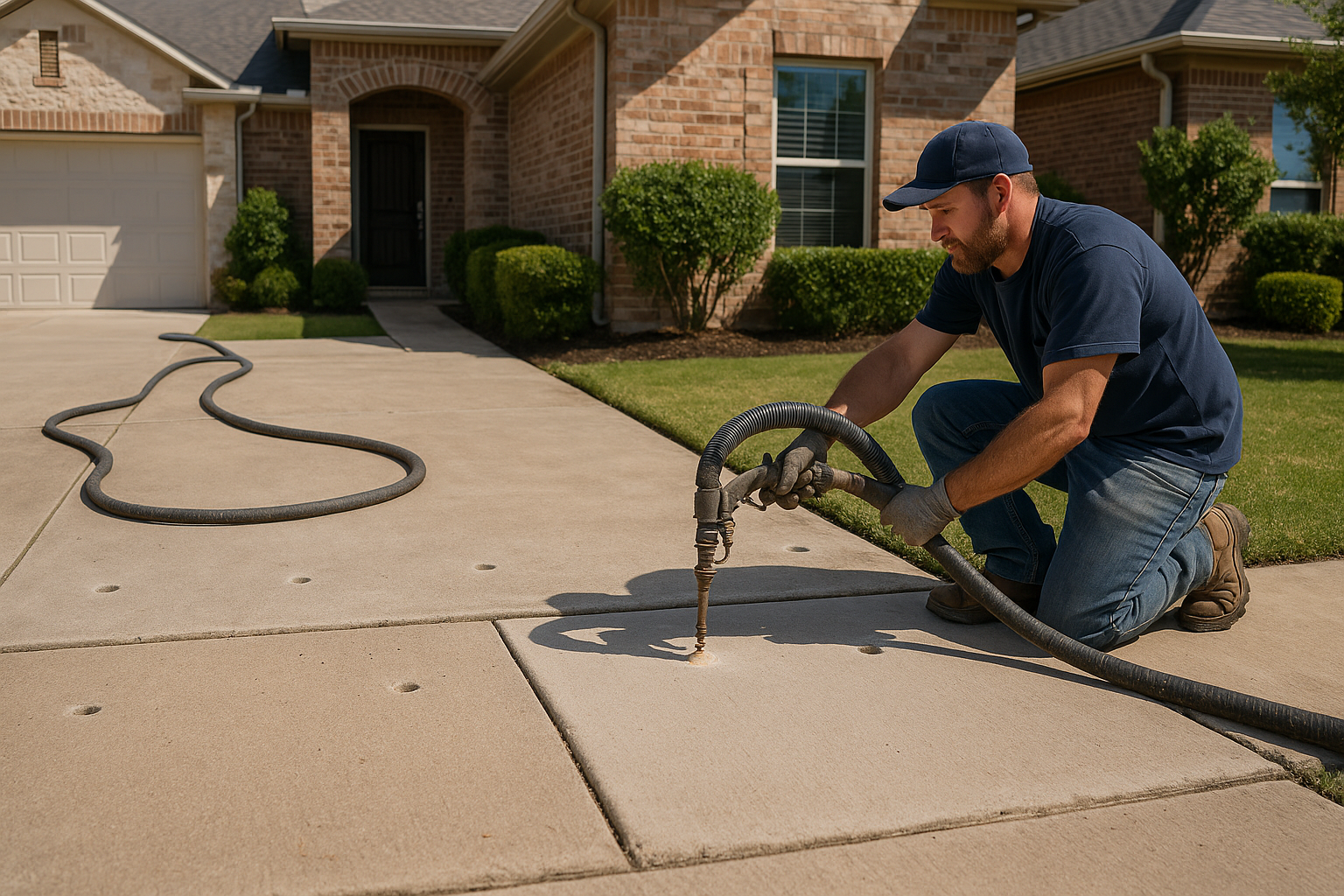
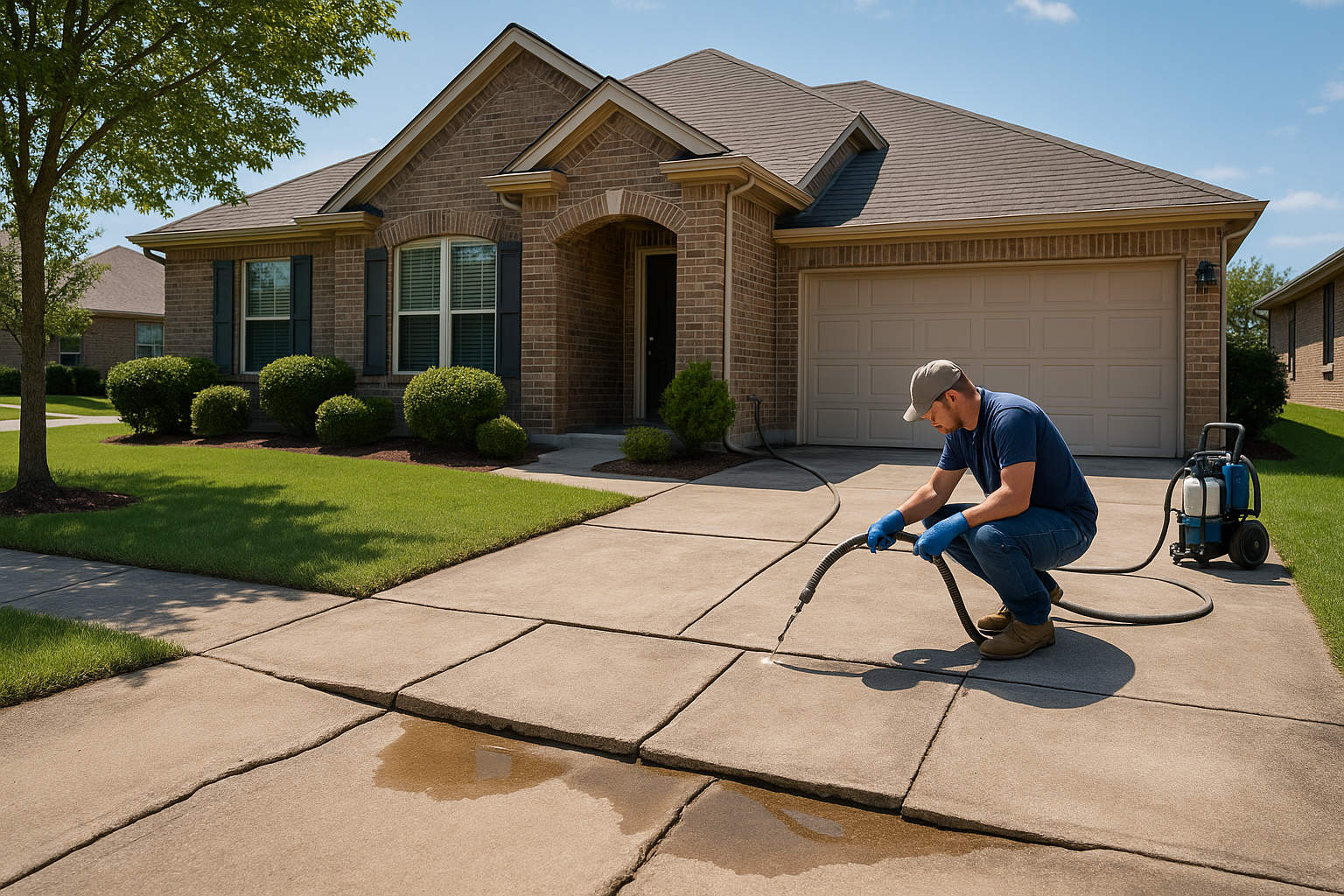
Most homeowners want to know what happens on repair day. In general, driveway leveling starts with checking elevation differences, identifying where support has been lost, and planning lift points. From there, the slab is raised carefully and the voids underneath are filled and stabilized. The goal is to restore support, improve alignment, and reduce future movement.
Just as important, we look at what caused the problem. If water is getting under the slab through failed joints, poor runoff, or edge erosion, that needs attention too. Otherwise, you are just treating the symptom and not the cause.
The best driveway repairs in Texas are the ones that account for the slab, the soil, and the water all together.
If your driveway is uneven, sinking, or turning into a drainage problem, do not wait until a small drop becomes a bigger repair. Contact Hill Country Slabs to talk through your options. We will give you a straight answer on whether leveling makes sense or whether replacement is the better route. Visit /contact or call (737) 287-4308 today.