If you need concrete leveling in Lago Vista, TX, the good news is you usually do not have to tear out and replace the slab. In a lot of cases, a sinking driveway, uneven sidewalk, dropped patio, or settled pool deck can be lifted back into place with polyurethane foam. It is fast, clean, and a whole lot more practical than living with trip hazards or paying for full replacement before you need to.
At Hill Country Slabs, we work with Texas concrete every day. Around Lago Vista, Jonestown, Cedar Park, and the greater North Austin area, we see the same pattern over and over: soil movement, water intrusion, heat, and poor compaction underneath the slab. Once that support gives out, concrete settles. The slab usually is not the problem. The ground under it is.
Foam leveling is a smart fix when the concrete is still in decent shape but has dropped out of level. If you are dealing with settled flatwork, you can learn more about Concrete Leveling in Texas and Polyurethane Concrete Leveling in Texas. If separation at control joints or slab edges is part of the issue, it also helps to understand how expansion joints and proper joint sealing at sealmyjoints.com protect the slab long term.
Why Concrete Sinks in Lago Vista, TX
Lago Vista sits out in the Hill Country near Lake Travis, and that means the ground conditions can vary a lot from one neighborhood to the next. Some properties have rocky limestone-based subgrades. Others have pockets of clay-heavy soil. Some lots were cut and filled during development, which can leave areas with inconsistent compaction under driveways, sidewalks, and patios.
In Central Texas, expansive clay is a big part of the story. When that soil gets wet, it swells. When the heat sets in and the ground dries out, it shrinks and pulls away. That constant cycle creates voids under concrete. Add in runoff from roof lines, poor drainage, irrigation overspray, or plumbing leaks, and the soil under one part of the slab can wash out or soften faster than the rest.
Lago Vista also gets hard summer heat, quick heavy storms, and long dry spells. That combination is rough on flatwork. We see it in neighborhoods throughout Lago Vista and nearby areas like Cedar Park and Austin. One side of a driveway may stay supported while the other side settles an inch or two. Sidewalk panels tip toward the house. Pool decks drop near expansion joints where water keeps getting underneath.
Some of the most common causes we see include:
- Expansive clay soils shrinking during dry weather
- Water erosion washing out fines beneath the slab
- Poor original compaction on fill soils
- Drainage problems around downspouts, slopes, and hardscape edges
- Joint and crack infiltration letting water reach the base material
That is why leveling is not just about lifting concrete. It is also about understanding why it moved in the first place, so the repair lasts.
Signs You Need Concrete Leveling
Most homeowners notice settlement before they realize what is causing it. A driveway that used to be smooth now has a lip at the garage or a panel that rocks under vehicle weight. A front walkway develops a trip edge. A patio starts holding water against the house. Around a pool, even a small height difference can become a safety issue fast.
Here are the signs it is time to have the slab looked at:
- One concrete section sits lower than the next
- There is a visible trip hazard at a sidewalk joint
- Water ponds on the slab after rain or irrigation
- Driveway panels slope the wrong direction
- Patio or pool deck sections have separated and dropped
- Cracks are forming because part of the slab lost support
- Gaps are opening under slab edges or near joints
If the concrete is structurally sound and not completely broken apart, leveling is often the better option. Full replacement makes sense when the slab is badly shattered, heaved beyond repair, or the base failure is too severe. But for a lot of settled slabs in Lago Vista, lifting the existing concrete can save time and money.
As a general ballpark, homeowners are often looking at far less than full replacement cost when polyurethane leveling is a fit. Replacing a driveway or large patio means demolition, haul-off, forming, pouring, finishing, and cure time. With leveling, the slab is usually back in service the same day. That matters when you are talking about your driveway, front entry, or pool area.
How Foam Leveling Works
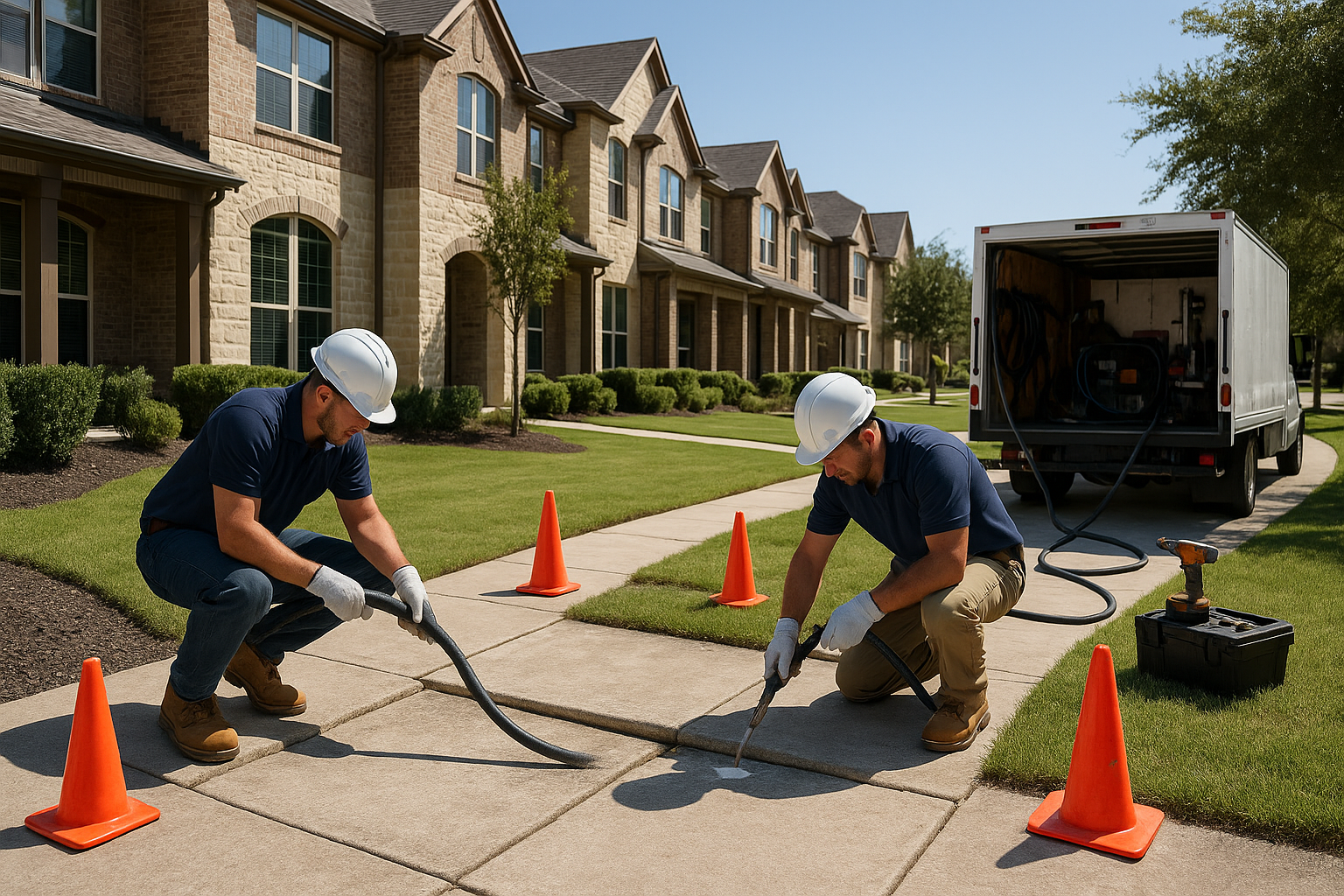
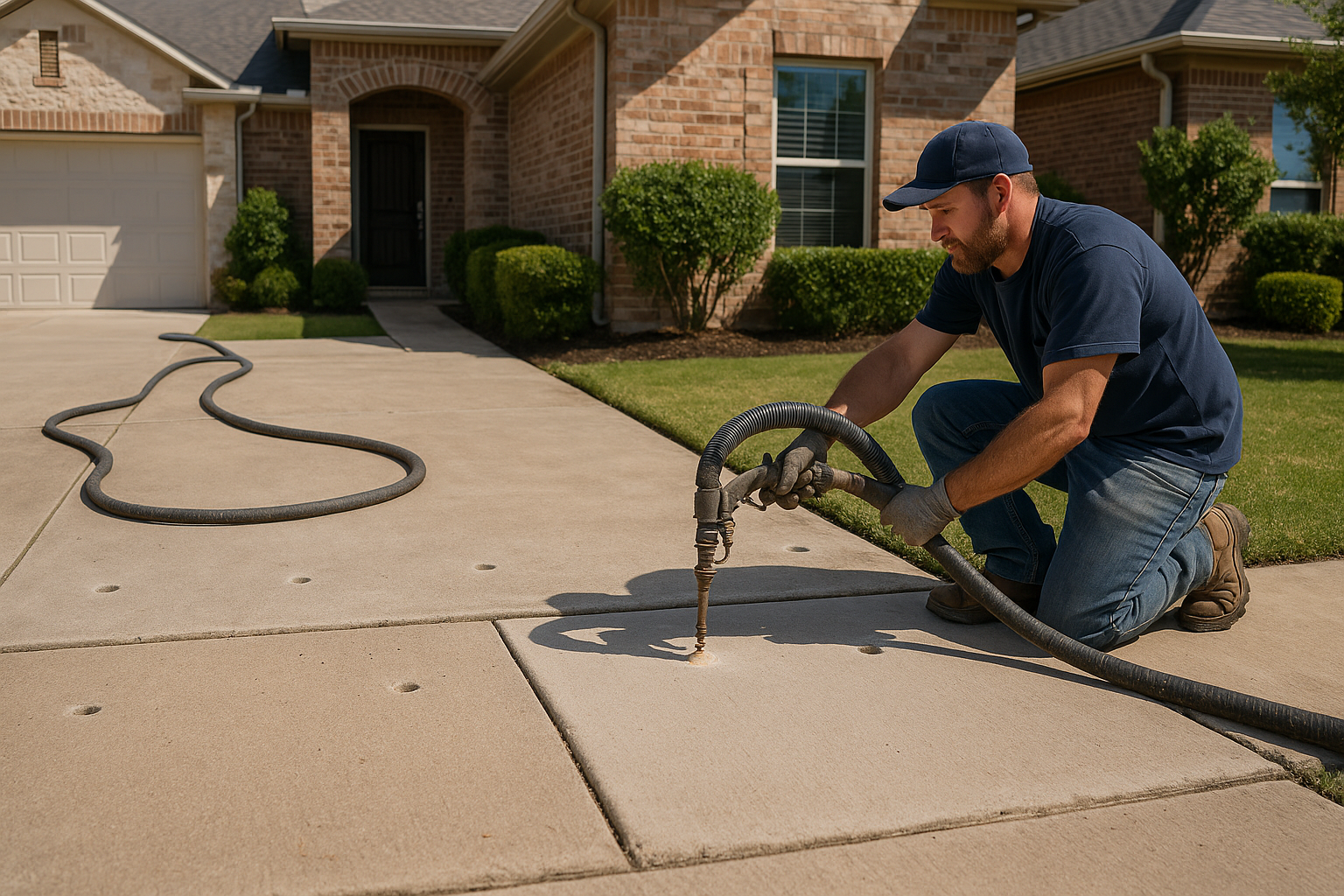
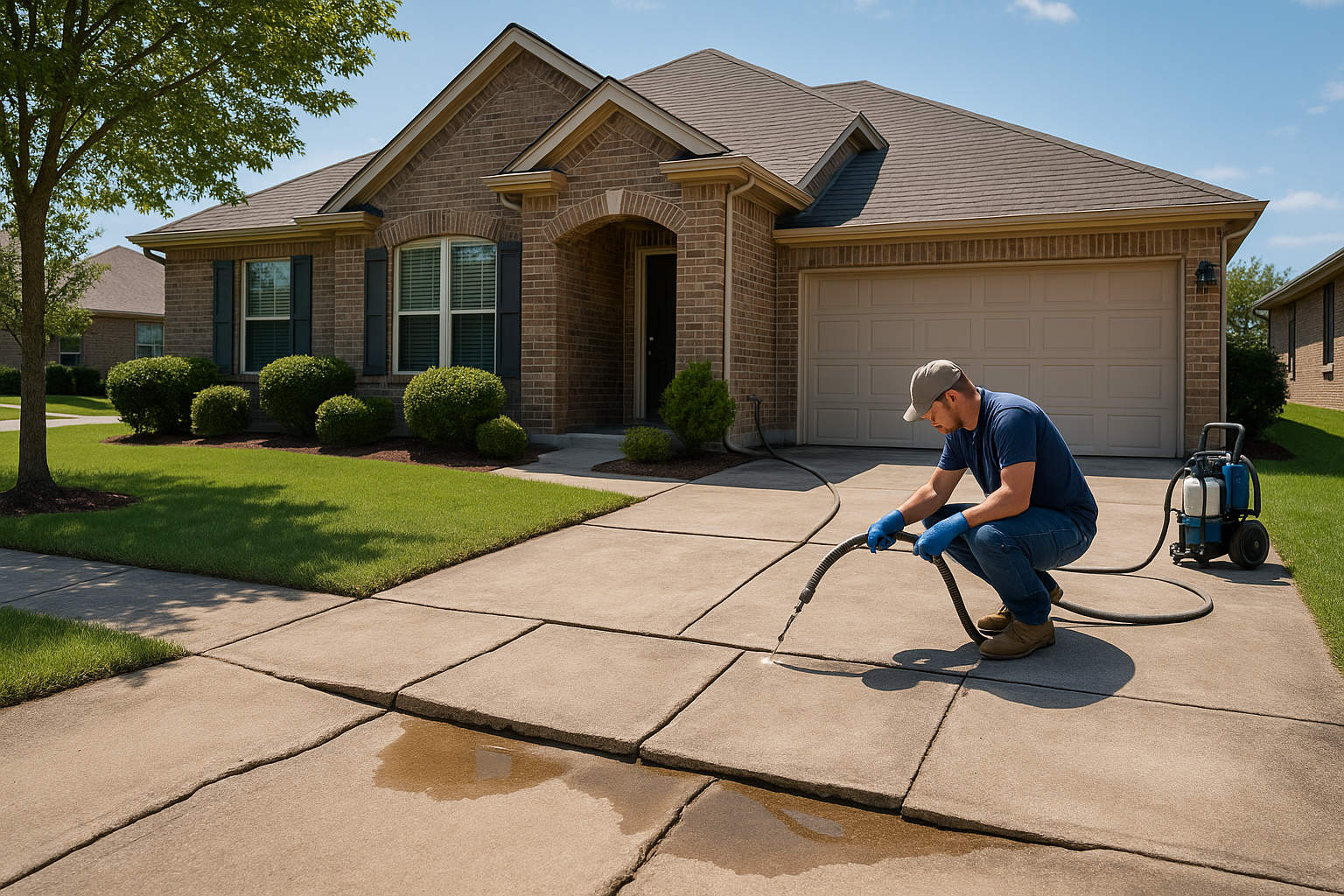
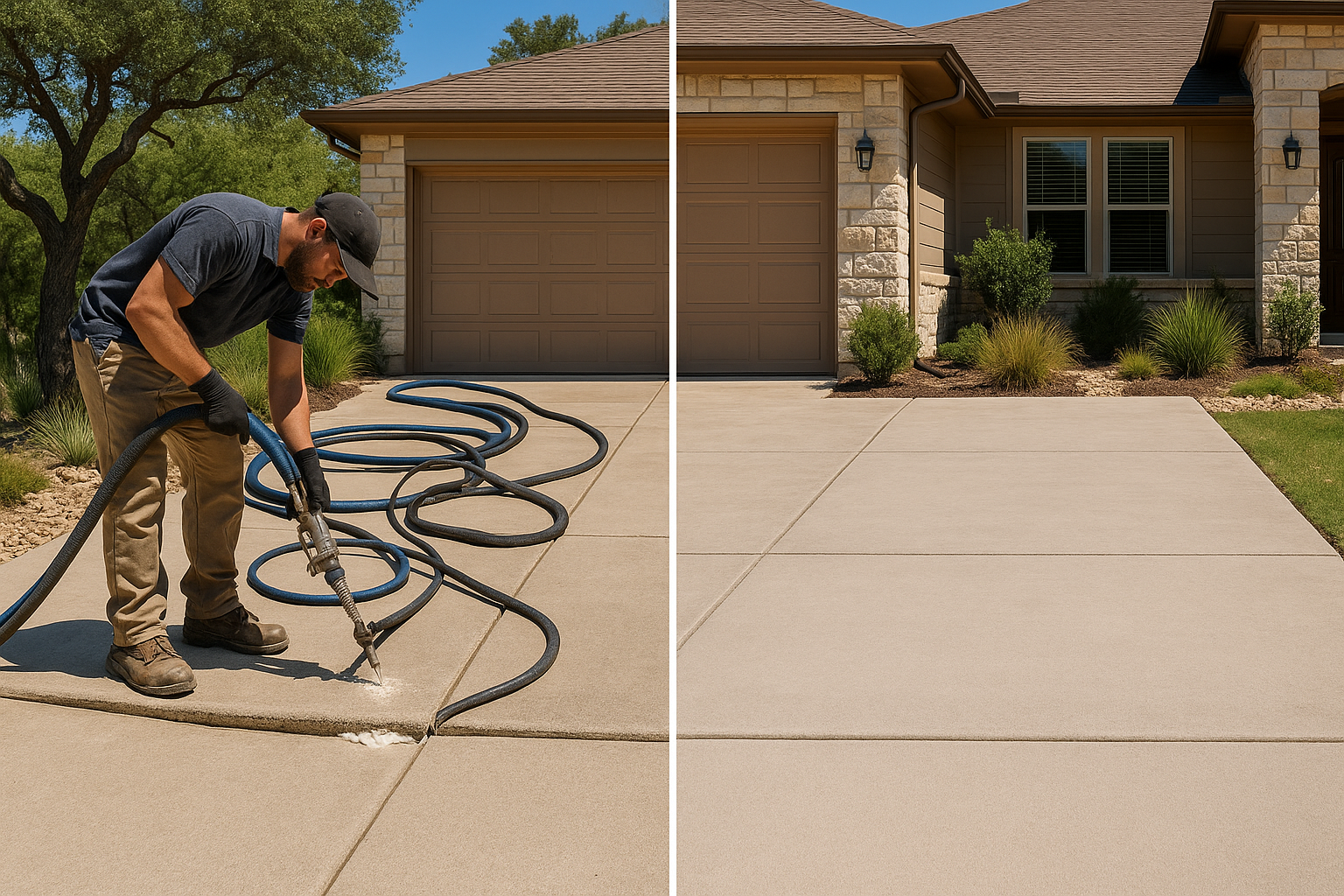
Polyurethane concrete leveling is a process where we drill small holes through the settled slab and inject a two-part structural foam beneath it. The foam expands, fills voids, and applies controlled lift to bring the concrete back toward its proper elevation. Once cured, it creates support under the slab without the mess and weight of older mudjacking methods.
Here is how the process usually goes:
- Evaluate the slab to figure out where the settlement happened, how much lift is realistic, and what caused the movement.
- Drill small injection holes in strategic locations.
- Inject polyurethane foam under the slab in controlled stages.
- Monitor the lift as the foam fills voids and raises the concrete.
- Patch the drill holes and clean up the work area.
The main advantage is control. We can target the low areas and stabilize loose zones under the slab without tearing everything out. The foam is lightweight, so it does not overload already weak soils. It also cures quickly, which means many surfaces can be used again in a matter of hours, not days.
For homeowners in Lago Vista, that is a big plus. You are not waiting around on a new pour to cure while your driveway is blocked off. In many jobs, we can lift settled concrete with minimal disruption and get you back to normal fast.
Foam leveling is commonly used for:
- Driveways
- Sidewalks and walkways
- Patios
- Pool decks
- Garage approaches
- Steps and entry pads
Cost depends on access, slab thickness, size of the affected area, and how much void fill and lift is needed. For many residential jobs, homeowners like this option because it can be significantly less expensive than replacement while still fixing the safety and drainage problems that come with settlement.
That said, a good contractor will be straight with you. Not every slab can be made perfect, and not every crack disappears just because the concrete is lifted. The goal is to improve safety, restore function, and provide stable support under the slab. In many cases, that means getting the concrete very close to level, improving drainage, and stopping further movement from getting worse.
After the lift, it is smart to address the water that caused the problem. Keep runoff away from the slab, make sure downspouts discharge properly, and seal open joints where needed. If water is getting in at the seams, take a look at expansion joints and the joint sealing information at sealmyjoints.com. That extra step can help protect the repair and keep the base from washing out again.
Get a Free Concrete Leveling Quote in Lago Vista
If you have a sinking driveway, uneven sidewalk, settled patio, or dropping pool deck, now is the time to deal with it before the trip hazard gets worse or water starts creating bigger problems. In Lago Vista, concrete movement is common because of the mix of Hill Country soils, heat, and runoff conditions, but that does not mean you have to replace the whole slab.
At Hill Country Slabs, we look at the actual cause of the settlement and recommend the repair that makes sense. If polyurethane foam leveling is the right fit, we can often restore the slab quickly with minimal downtime. Whether you are in Lago Vista or nearby communities like Cedar Park and Austin, we are here to help.
Need an honest opinion on your concrete? Contact Hill Country Slabs for a free quote on concrete leveling in Lago Vista, TX. Visit /contact or call (737) 287-4308 to get started.