If you are looking for a concrete leveling estimate in Texas, the first thing to know is that pricing can vary quite a bit from one job to the next. A small trip hazard on a sidewalk in Austin, TX is a different animal than a sunken driveway in Round Rock, TX or a back patio that has settled after years of drought and heavy rain. In Texas, concrete moves because the ground moves. That is just the reality of building on expansive clay, shifting moisture levels, heat, and storm runoff.
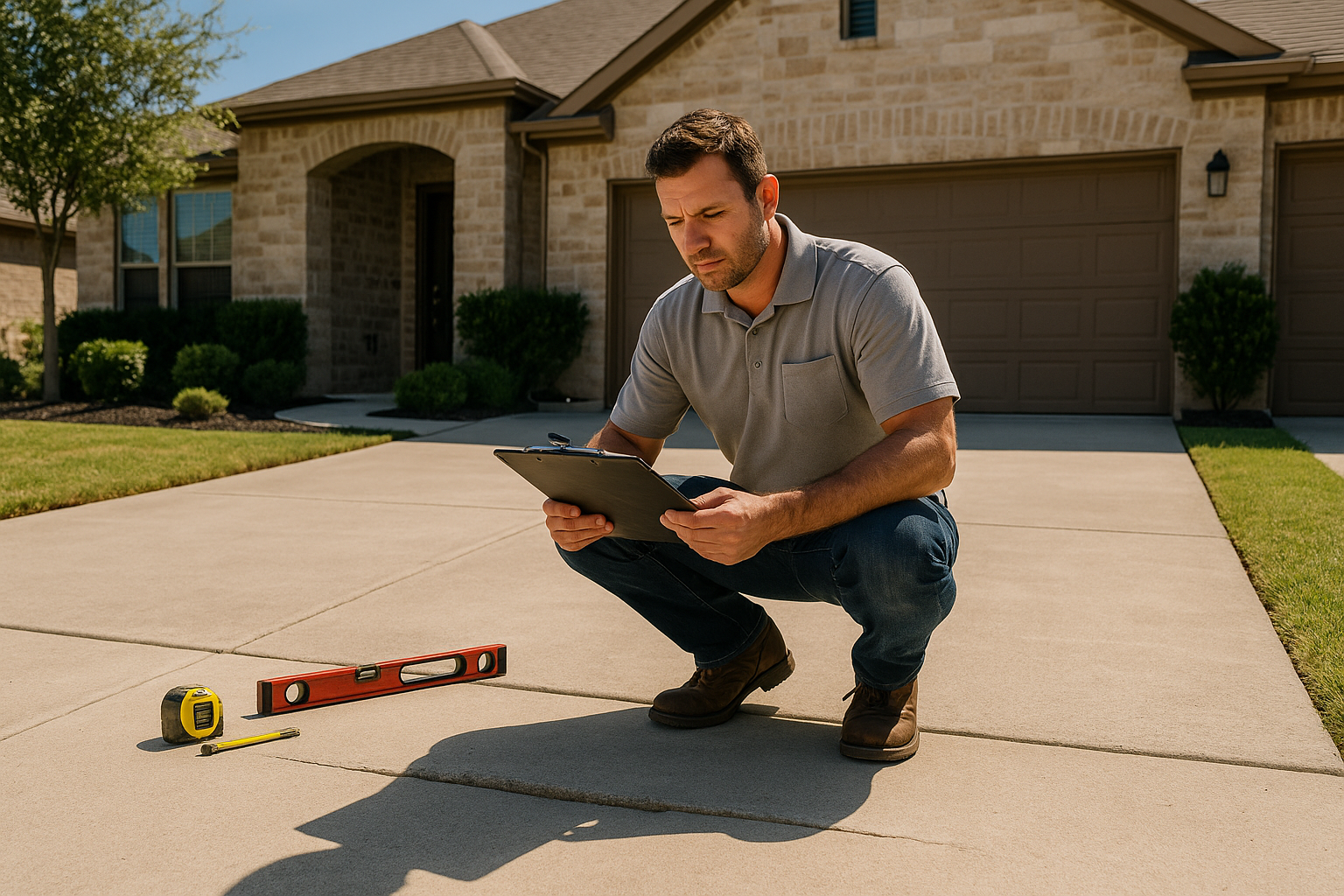
A good estimate should do more than throw out a number. It should explain why the slab settled, what repair method fits the job, and whether lifting the concrete makes more sense than tearing it out. At Hill Country Slabs, we like to keep it simple and straight. We inspect the slab, measure the drop, check the voids underneath, look at drainage and joint condition, and then recommend the most practical fix for your property and budget.
If you are comparing options, our Concrete Lifting in Texas and Polyurethane Concrete Leveling in Texas services are built for the kind of soil and weather conditions we deal with across Central Texas. In many cases, leveling is faster, cleaner, and far more affordable than replacement.
What Is Included in a Concrete Leveling Estimate?
A proper on-site estimate should cover more than square footage. We are looking at how the slab failed and what it will take to bring it back into service safely. That usually includes:
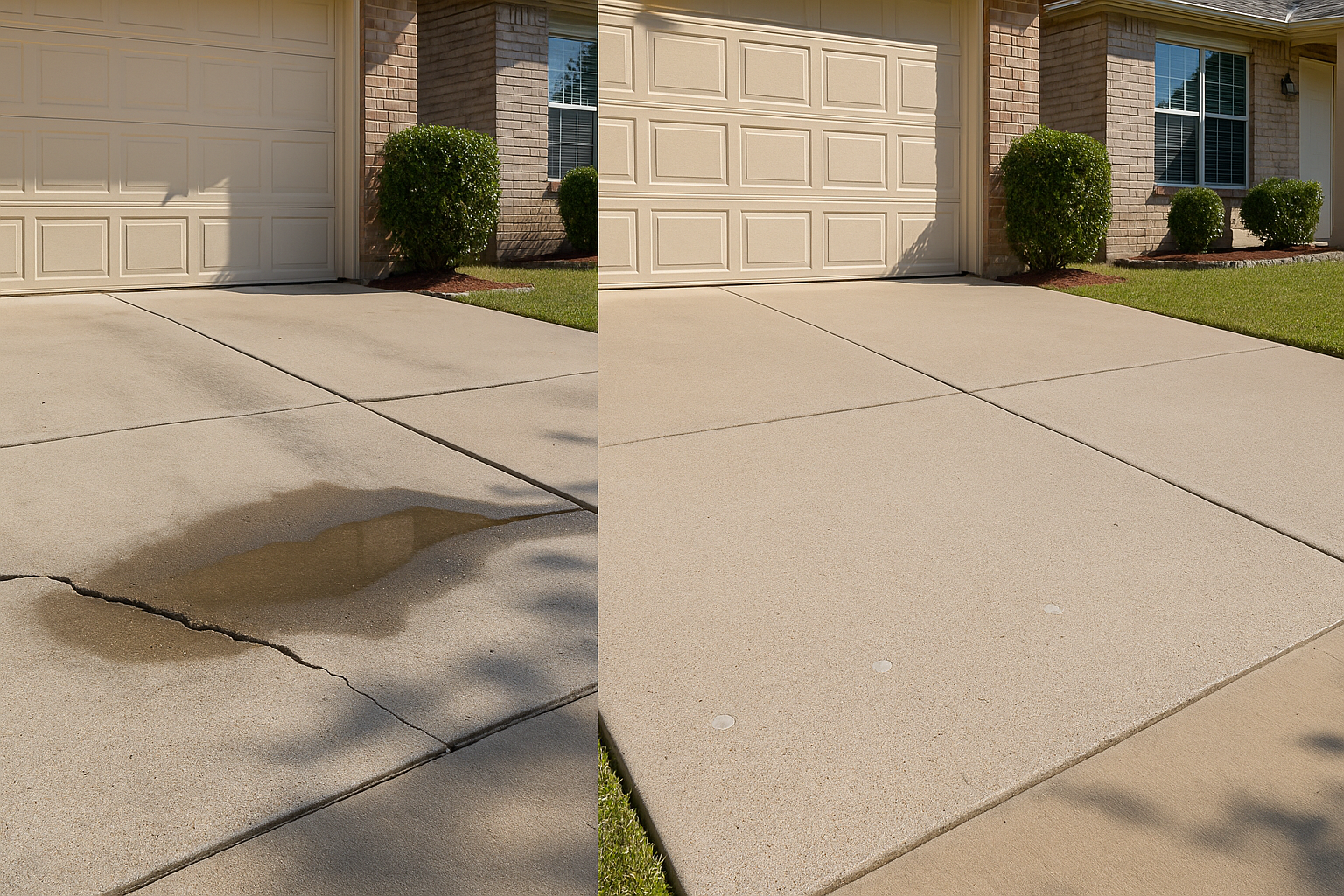
- Elevation changes between slabs, including trip hazards and low spots where water collects
- Type of slab, such as driveway, sidewalk, patio, pool deck, garage floor, or porch
- Access to the work area, since tight gates, fences, landscaping, and parked vehicles can affect setup
- Soil and moisture conditions under and around the slab
- Visible cracking and whether the concrete is still structurally sound enough to lift
- Joint condition and whether sealing is needed after leveling
- Drainage issues that may have caused washout or ongoing settlement
In Texas, we commonly see slabs settle because of expansive clay soils. When those soils dry out in a hot summer, they shrink. When they get soaked during storms, they swell. That cycle can leave voids under concrete or create uneven support. In limestone-heavy areas and neighborhoods with poor drainage, erosion can also wash material out from under a slab. A solid estimate accounts for those conditions.
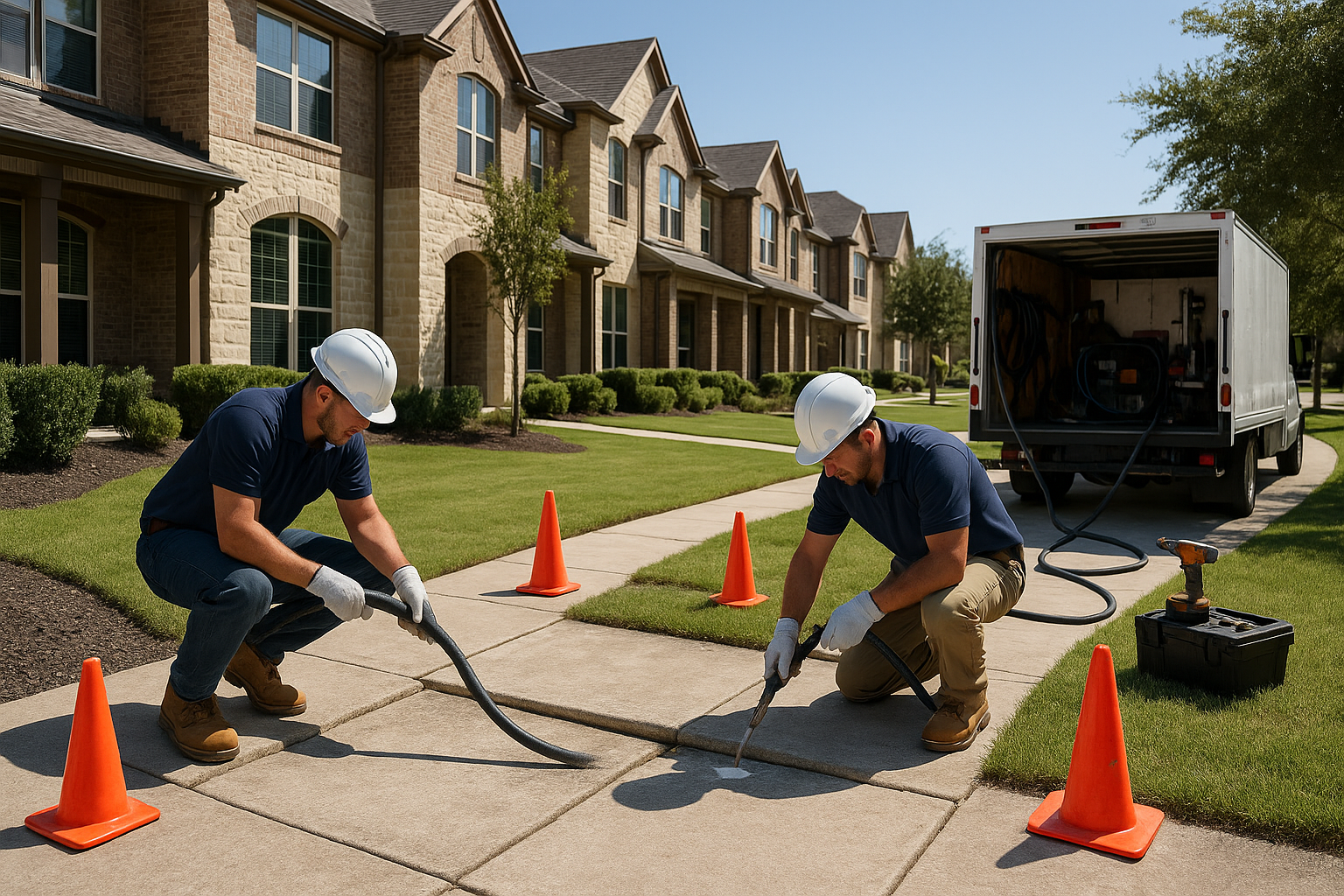
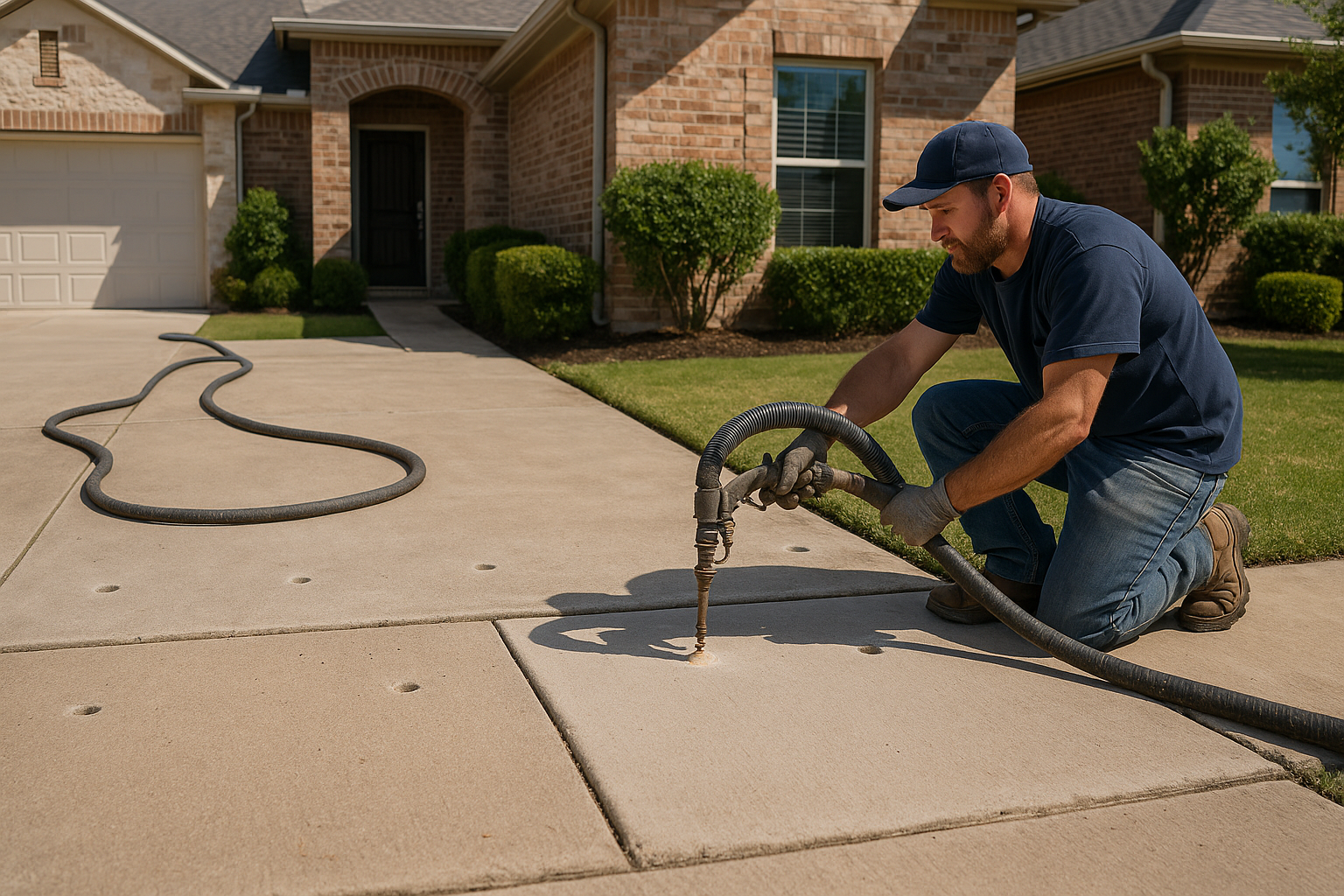
You should also expect the contractor to explain the repair process. With foam leveling, small holes are drilled through the slab and a polyurethane material is injected underneath to fill voids and lift the concrete. It is precise, quick, and usually ready for use the same day. That is one reason many homeowners choose it over replacement.
If the joints are open or washed out, it is smart to ask about expansion joint repair and sealing. Keeping water out of the joints helps protect the base below the slab. For more information on why joint sealing matters, you can also visit sealmyjoints.com.
What Affects Concrete Leveling Pricing in Texas?
The biggest question most folks have is cost. The honest answer is that every estimate depends on site conditions, but there are a few main drivers behind the number.
Amount of settlement
A slab that has dropped a half inch is usually simpler than one that is down two or three inches with voids underneath. More movement often means more material, more setup, and a more careful lift plan.
Size of the area
Larger driveways and multi-panel walkways naturally take more time and material than a single sidewalk panel or small patio corner.
Void size under the slab
Sometimes the concrete itself looks fine, but there is a big washed-out cavity underneath. Filling that void before lifting adds to the scope. This is common near downspouts, pool decks, and driveway edges where runoff has been chewing away at the base for years.
Soil conditions
Texas is not one-size-fits-all. In Central Texas, we deal with a lot of clay movement. In other areas, sandy soils or erosion may be the bigger issue. Blackland prairie soils around the Austin area are notorious for expansion and contraction. That movement is hard on flatwork and should be factored into the estimate.
Accessibility
If our crew can back right up to the work area, the job is easier. If we are working behind a house with narrow access, around decorative stone, or near a pool, that can affect labor and setup time.
Condition of the existing concrete
Foam leveling works best when the slab is still a good slab. If the concrete is badly broken, severely spalled, or crumbling apart, replacement may be the better move. A trustworthy estimate will tell you when a slab is beyond lifting.
For budgeting purposes, homeowners in Texas often find that leveling costs significantly less than full replacement. While every project is different, foam lifting can commonly save property owners 30% to 70% compared to demolition and repour, especially when you factor in haul-off, forming, reinforcement, and cure time.
Foam Leveling vs Concrete Replacement Cost
This is where estimates really matter. A cheap number is not helpful if it points you toward the wrong repair. The goal is to fix the problem in a way that makes sense for the slab, the site, and your budget.
Concrete replacement usually makes sense when the slab is structurally shot. That could mean major breakage, extensive surface failure, or drainage and subgrade problems so severe that lifting would just be a short-term patch.
But if the slab is intact and the main problem is settlement, foam leveling is usually the smarter buy. Here is why:
- Lower cost than tear-out and replacement in many cases
- Faster turnaround with same-day use on most projects
- Less mess with no major demolition
- Minimal disruption to landscaping, fencing, and nearby surfaces
- Accurate lifting for trip hazards, driveways, patios, and pool decks
Replacement also comes with hidden costs people do not always think about. You may be paying for demolition, disposal, new base prep, forms, steel, fresh concrete, and several days of cure time before the slab can take normal traffic. On a driveway or commercial approach, downtime matters.
For many Texas homeowners, a leveling estimate comes in at a number that feels much more manageable than replacement. That is especially true when the repair is caught early, before cracks widen and erosion gets worse. Waiting too long usually does not make concrete cheaper to fix.
How to Prepare for Your Free On-Site Estimate
If you want the estimate to go smoothly, a little prep helps. You do not need to do much, but there are a few things that make the inspection more productive.
- Clear the area so the slab edges and joints are visible. Move vehicles, planters, grills, or patio furniture if needed.
- Make note of problem spots where you have noticed puddling, rocking concrete, or doors that no longer line up right near the slab.
- Watch where water goes during rain or sprinklers. Drainage patterns tell us a lot about why the slab moved.
- Point out past repairs if anyone has patched cracks, mudjacked the slab, or replaced nearby sections before.
- Ask about joint sealing and long-term maintenance after the lift is done.
During the visit, do not be afraid to ask direct questions. A contractor should be able to explain what caused the settlement, whether the slab is a good candidate for lifting, how much elevation can realistically be recovered, and what steps you can take to reduce future movement. In Texas, that often includes better water control around the slab and keeping joints sealed so runoff does not get under the concrete.
If you are dealing with uneven concrete in Austin, Round Rock, or the surrounding Hill Country, the best next step is to get eyes on it. A real estimate should be based on the slab in front of you, not a guess over the phone. Some jobs are straightforward. Others need a closer look because of tree roots, drainage, or years of soil movement. Either way, you want a contractor who understands Texas conditions and gives you a straight answer.
Need a free concrete leveling estimate in Texas? Contact Hill Country Slabs to schedule an on-site evaluation. We will tell you whether lifting or replacement makes more sense and give you a clear plan for the repair. Visit /contact or call (737) 287-4308 today.