If you're getting ready to sell a house in Texas, the outside of the property matters more than a lot of folks realize. Buyers notice cracks, trip hazards, and drainage problems before they ever start thinking about paint colors or kitchen counters. A sunken driveway, uneven sidewalk, or dropped porch slab can make the whole place feel neglected, even when the house itself is in great shape. That is why concrete leveling before selling a house in Texas is often a smart, cost-effective move.
Here in Texas, we see this all the time in places like Austin, Round Rock, and Georgetown. Expansive clay soils, dry summers, sudden heavy rain, and poor drainage all work together to move concrete around. One season the slab looks fine, and the next you've got a driveway lip at the garage or a sidewalk panel that has dropped enough for buyers to notice right away.
Before you put a home on the market, it helps to take a hard look at the concrete around the property. In many cases, leveling gives you a cleaner look, safer access, and better first impression without the cost and mess of tearing everything out.
Why sunken concrete can hurt your home sale
Texas buyers are already paying close attention to foundation movement, drainage, and exterior condition. When they see settled concrete, they start asking questions. Is the soil moving badly? Is water draining toward the house? Is the foundation next? Even if the issue is limited to a driveway or sidewalk, the appearance can create doubt.
First impressions matter. A crooked walkway or sinking front porch can hurt curb appeal in the first few seconds. If a buyer walks up and sees separation at the stoop, a cracked path, or water ponding near the slab, they may start discounting the property in their mind before they ever get inside. A small exterior issue can turn into a negotiating point worth thousands of dollars.
There is also the safety side of it. Uneven concrete is a trip hazard, plain and simple. Buyers with kids, older family members, or anyone thinking long term are going to notice that. Home inspectors notice it too. If they call out settled flatwork, drainage concerns, or movement around entry points, that gives the buyer one more reason to ask for repairs or concessions.
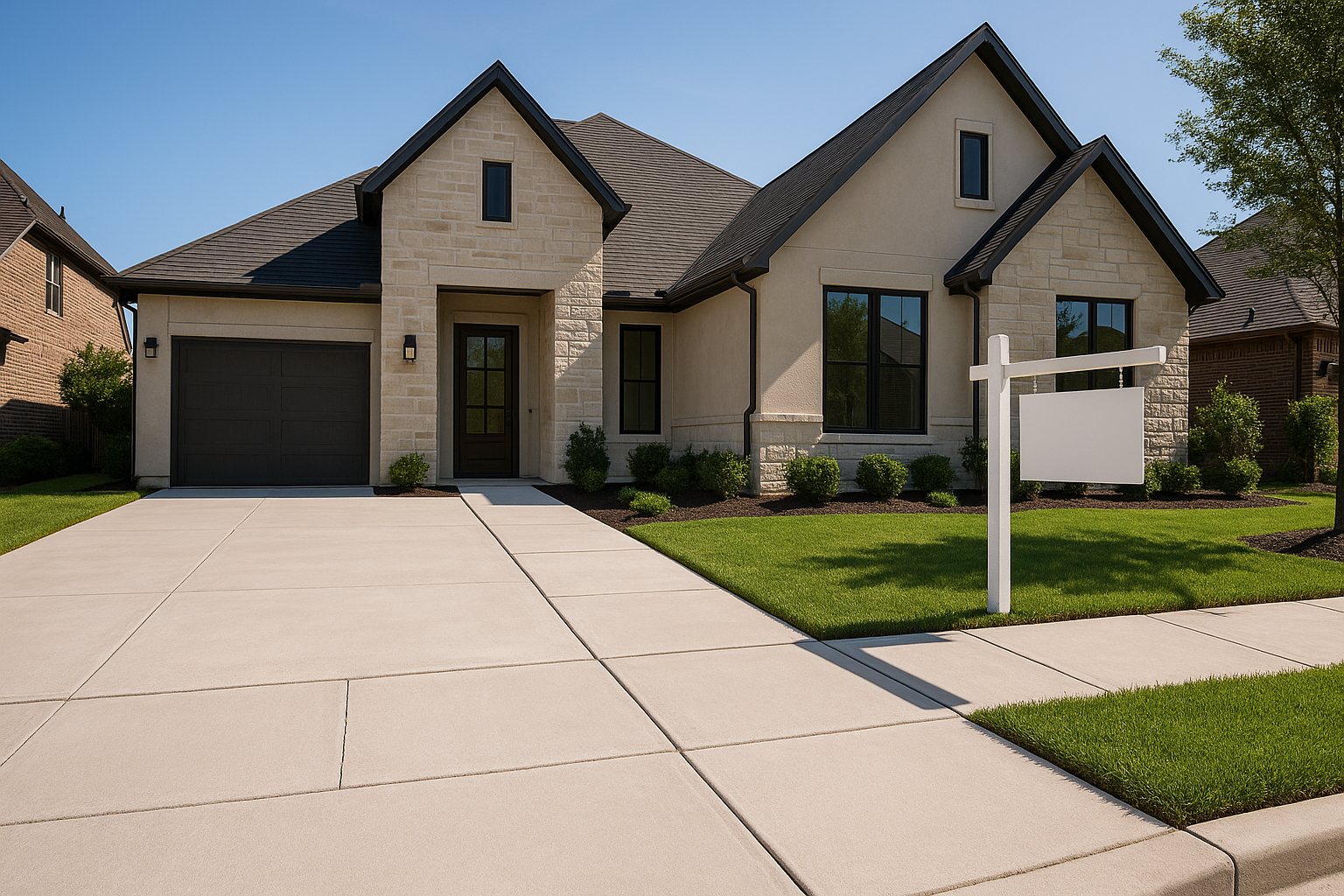
In competitive markets, clean exterior presentation helps. If two homes are similar in price and condition, the one with a straight driveway, even sidewalk, and solid front entry usually feels better maintained. That confidence matters during showings.
When concrete leveling makes sense before listing
Not every crack means you need to do work before selling, but some conditions are worth fixing. If the concrete is structurally sound and just needs to be lifted back into position, leveling is often the right call. That includes sunken driveways, settled walkways, patio sections, pool decks, and approach slabs that have dropped due to soil movement.
In Central Texas and across the Hill Country, we deal with a lot of clay-heavy soils that swell when wet and shrink when dry. Add summer heat, a long drought, then a hard rain, and slabs start shifting. Homes in newer subdivisions around Austin and Round Rock can see washout under flatwork when drainage wasn't handled well from the start. Older neighborhoods in Georgetown may have long-term settlement that has slowly gotten worse over time.
Concrete leveling makes sense before listing when:
- The driveway has a visible drop near the garage or street
- The front walk has become uneven and creates a trip hazard
- The porch or stoop has settled and looks separated from the house
- Water is ponding against the slab after rain
- The patio or pool deck has dropped but is not badly broken
- You want to improve curb appeal without paying for full replacement
For sellers, timing matters too. Leveling is usually faster and less disruptive than replacement. In many cases, the work can be completed in a short window, and the area is ready to use quickly. That helps when you are trying to get photos taken, hold showings, or keep the property accessible.
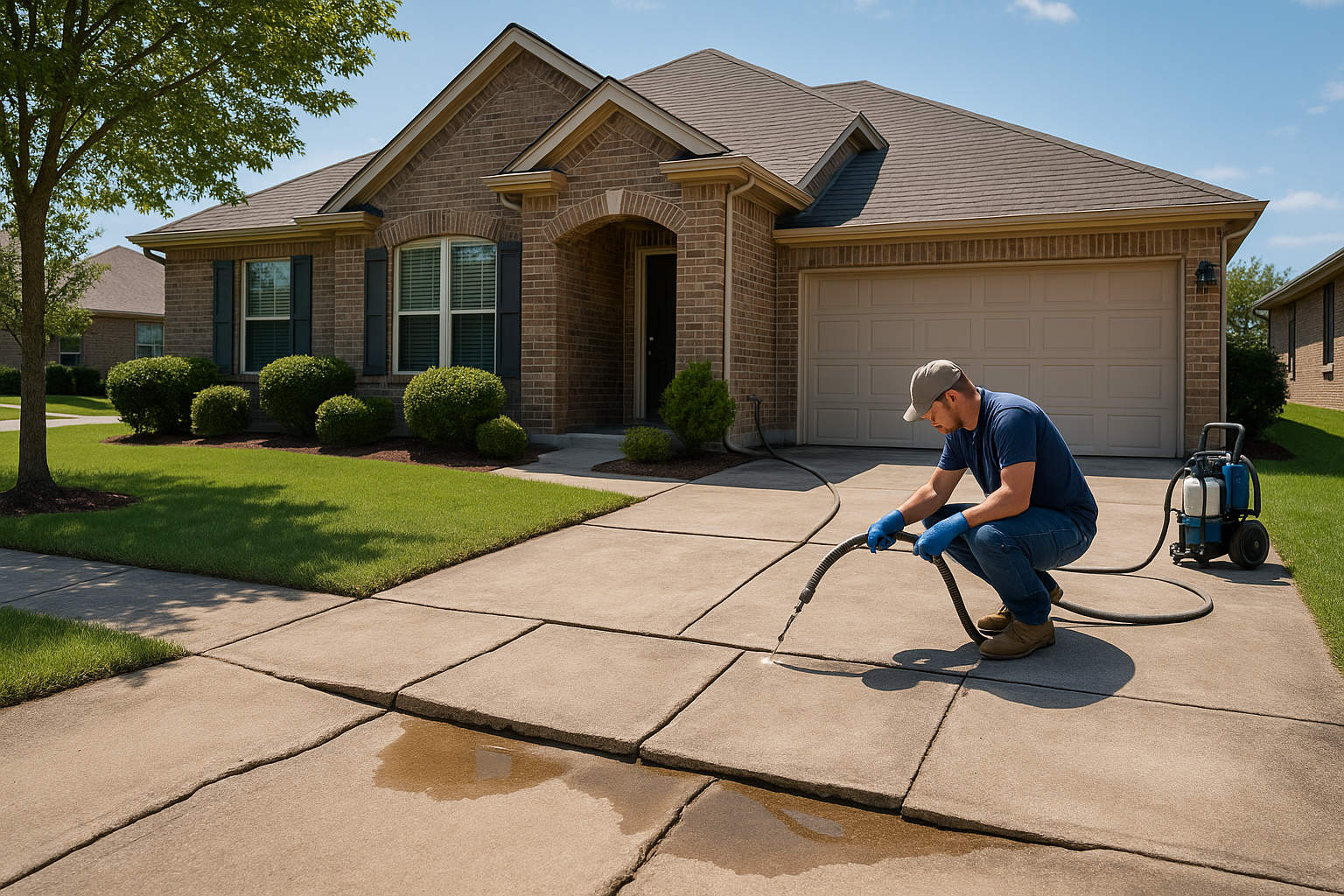
If the issue is tied to joints opening up or allowing water intrusion, it is also worth addressing sealant failure. Proper joint sealing helps keep water out and protects the slab from more washout. You can learn more at /expansionjoints and sealmyjoints.com.
What buyers and inspectors notice first
Most buyers are not concrete experts, but they are very good at spotting things that feel off. They notice when the driveway slopes wrong, when one sidewalk panel is lower than the next, or when the front entry looks patched together. These details affect confidence.
Inspectors tend to focus on practical concerns. They look for trip hazards, negative drainage, cracking patterns, and movement where concrete meets the home. A settled section near the garage, front steps, or side yard path can end up in the report. Once it is documented, the buyer has leverage.
Here are a few items that get attention fast:
- Driveway settlement at the garage. This can look like larger movement than it really is, and buyers may immediately connect it to foundation problems.
- Uneven sidewalks and walkways. These are obvious safety issues and can make the property feel poorly maintained.
- Front porch or stoop separation. If the entry looks sunken or pulled away, it creates concern right at the front door.
- Standing water. In Texas storms, bad drainage is a big red flag. Ponding near slabs suggests future movement and possible moisture issues.
- Broken joint sealant. Open joints invite water below the slab, which is exactly what you do not want on expansive soils.
If you are preparing a listing, it can help to walk the property like a buyer would. Start at the curb, come up the driveway, step onto the front walk, and look down. The defects you have gotten used to over the years are often the first things a buyer sees.
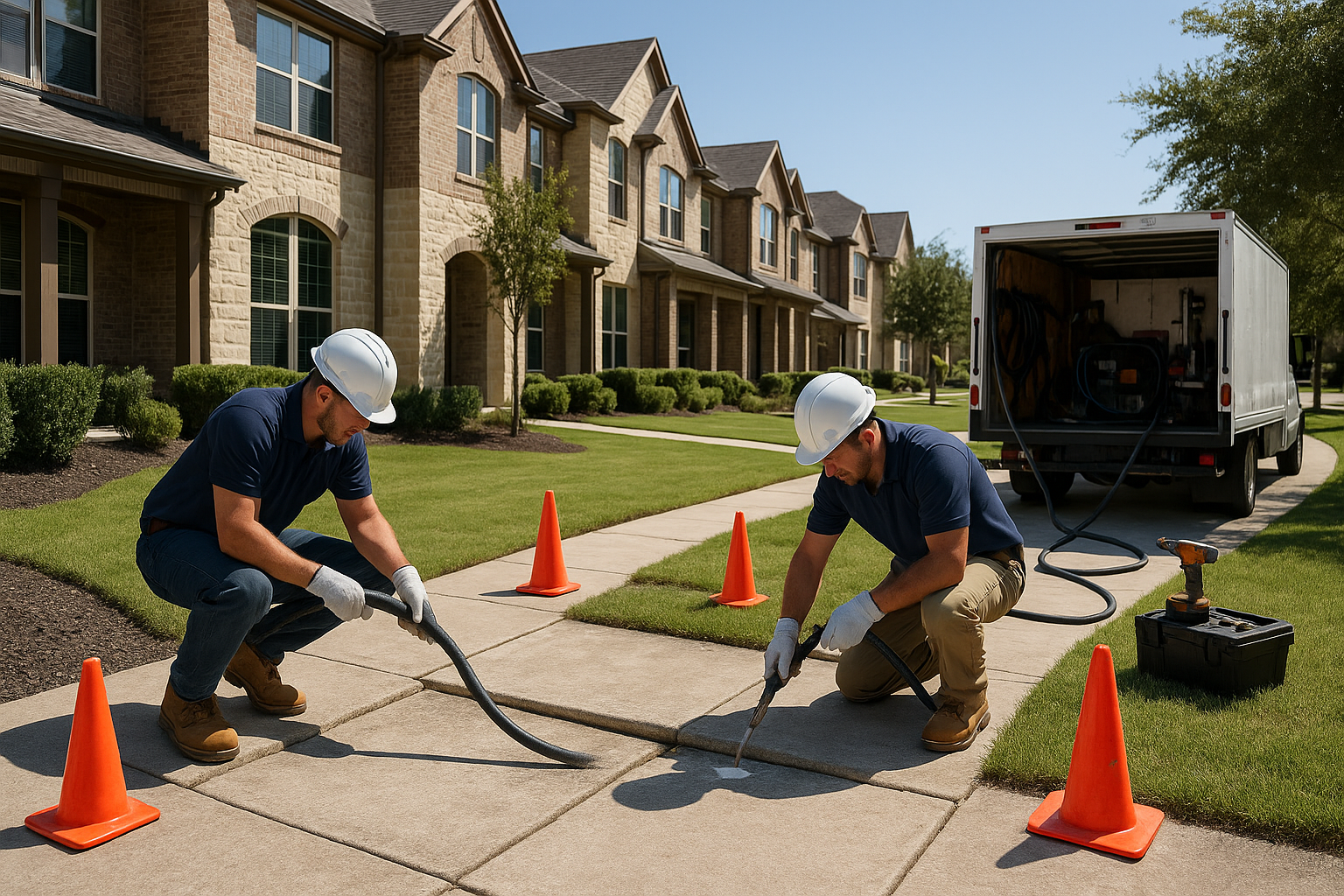
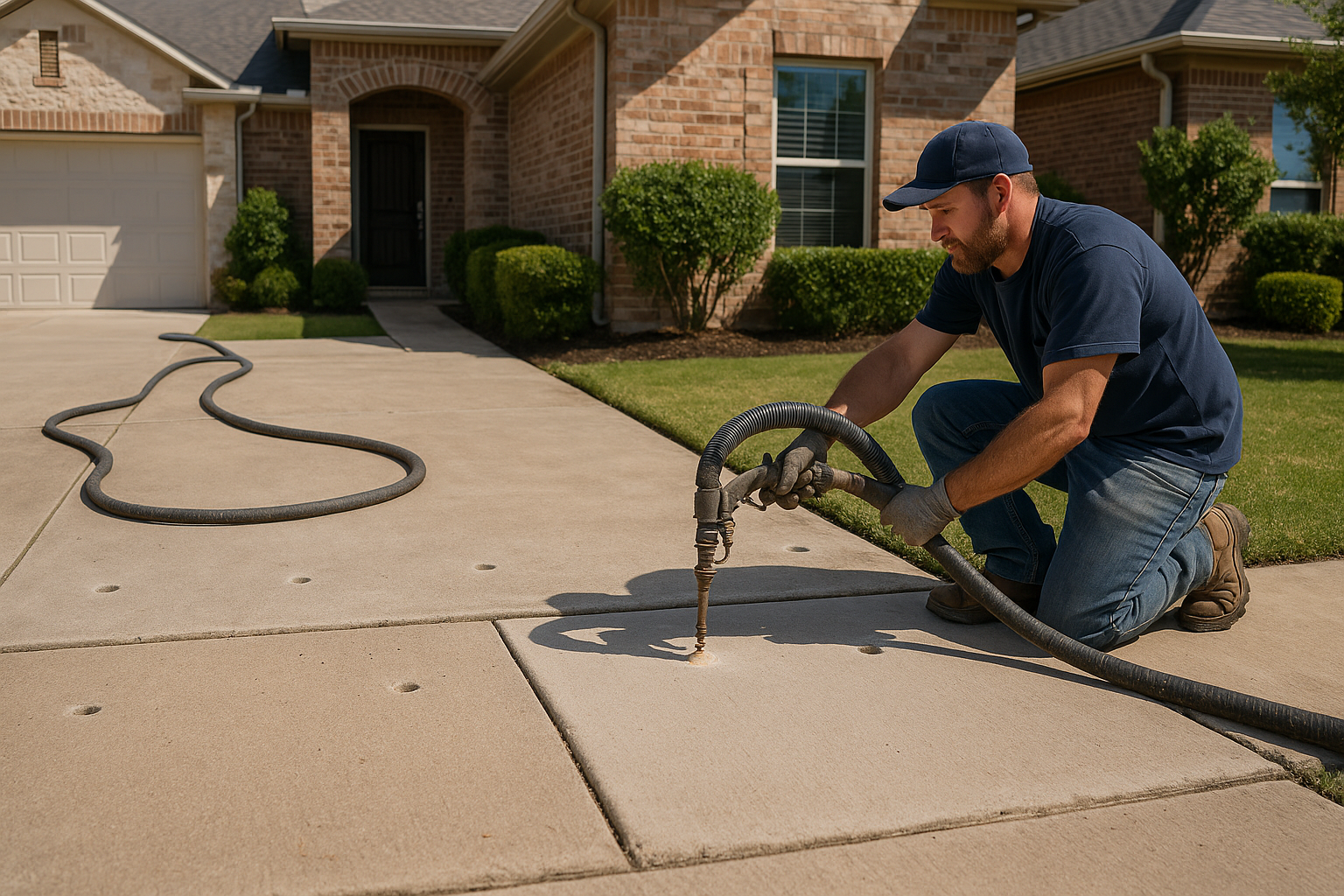
When these issues show up, targeted repairs like Driveway Leveling, Sidewalk Repair, or Concrete Slab Repair can improve appearance and reduce objections before they come up in negotiation.
Why leveling is often better than replacement
For many sellers, the biggest question is cost. Full tear-out and replacement can be expensive, noisy, and hard to schedule around a listing timeline. Concrete leveling is often the better option when the slab itself is still in decent condition.
With leveling, the goal is to raise settled concrete back toward proper position, improve drainage, and remove dangerous offsets without replacing the whole section. That usually means less disruption to landscaping, less downtime, and a lower price point than starting over.
In a lot of cases, sellers are comparing a repair that may cost hundreds to a few thousand dollars versus replacement that can run several thousand dollars more depending on the area and condition. Exact pricing always depends on access, slab thickness, amount of settlement, and underlying soil conditions, but the savings can be substantial.
Leveling is also a good fit when the goal is marketability. Before a sale, you do not always need every surface to be brand new. You need it to be safe, presentable, and function the way it should. If lifting the existing concrete gets you there, replacement may not make financial sense.
That said, replacement can still be the right answer if the concrete is badly shattered, severely undermined, or has reached the end of its life. The key is getting an honest assessment from a crew that understands Texas soils and drainage patterns, not just somebody looking to sell the biggest ticket.
Texas conditions make local experience matter
What works in another state does not always apply here. In Texas, black clay soils can move a lot. Limestone terrain in parts of the Hill Country changes drainage behavior. Intense summer heat dries soils out fast, then thunderstorms dump water back in. Those cycles are tough on driveways, sidewalks, and patio slabs.
A contractor who works in Austin, Round Rock, Georgetown, and surrounding areas should understand how to spot settlement caused by washout, poor compaction, shrinking clay, or drainage coming off the roofline. Fixing the visible problem is only part of the job. You also want to reduce the chance of the same section moving again.
If you're selling soon, think of leveling as part of pre-listing prep, right along with touch-up paint and landscaping. Buyers may not compliment your concrete out loud, but they definitely notice when it is uneven. A smoother driveway and walkway help the whole property show better.
Bottom line: concrete leveling before selling a house in Texas can help with curb appeal, safety, buyer confidence, and negotiation. It is often faster and more affordable than replacement, and it can keep a minor exterior issue from becoming a major deal point during inspection.
If you want straight answers on whether leveling makes sense before you list, talk with Hill Country Slabs. We help homeowners across Central Texas evaluate settled concrete and choose the repair that fits the property and the timeline. Contact us today or call (737) 287-4308 to schedule an estimate.