A sunken front stoop is more than an eyesore. Around Texas, it turns into a trip hazard, pulls water back toward the house, and leaves homeowners wondering if they need to tear everything out and start over. In a lot of cases, you do not need replacement. With the right repair method, a sinking stoop can often be lifted, stabilized, and put back in service without demolition.
At Hill Country Slabs, we see this problem all over Austin, Round Rock, Cedar Park, and surrounding Central Texas communities. Between expansive clay soils, drought, heavy rain, and poor drainage, entry stoops take a beating here. If you are searching for sunken stoop repair in Texas, the main thing to know is this: the cause under the concrete matters just as much as the crack or settlement you can see on top.
What Causes a Sunken Stoop in Texas?
Most stoops sink because the soil underneath them moves or washes out. Texas soils are notorious for that. In the Hill Country and across much of Central Texas, we deal with expansive clay that swells when it gets wet and shrinks when it dries out. That constant expansion and contraction creates voids under concrete over time. Once support is lost, the stoop starts dropping.
Here are the most common causes we run into:
- Expansive clay soil movement: Texas clay can shift a lot between wet and dry seasons, especially after long summer droughts followed by hard rains.
- Poor drainage: If gutters dump near the entry, or the grade slopes toward the house, water can soften or erode the base under the stoop.
- Inadequate compaction during construction: Some stoops were poured over fill that was never compacted properly, so settlement shows up years later.
- Plumbing or irrigation leaks: Small leaks can keep soil wet around the entry and gradually weaken support.
- Tree roots and nearby vegetation: Large roots can dry soil unevenly or physically disturb the supporting base.
We also see sunken stoops tied to broader slab movement. If the front stoop, walkway, and nearby foundation areas are all showing signs of settlement, it may be worth looking at a full Concrete Slab Repair plan instead of treating the stoop as a standalone issue.
One thing Texas homeowners should watch for is water getting directed toward the front door. A stoop that has settled even 1 to 2 inches can change drainage enough to hold water against thresholds, brick ledges, and adjacent expansion joints. When those joints fail, water intrusion usually gets worse. That is why we often recommend evaluating the joint condition too. You can learn more at /expansionjoints and see joint sealing options at sealmyjoints.com.
Can Foam Leveling Lift a Sunken Stoop?
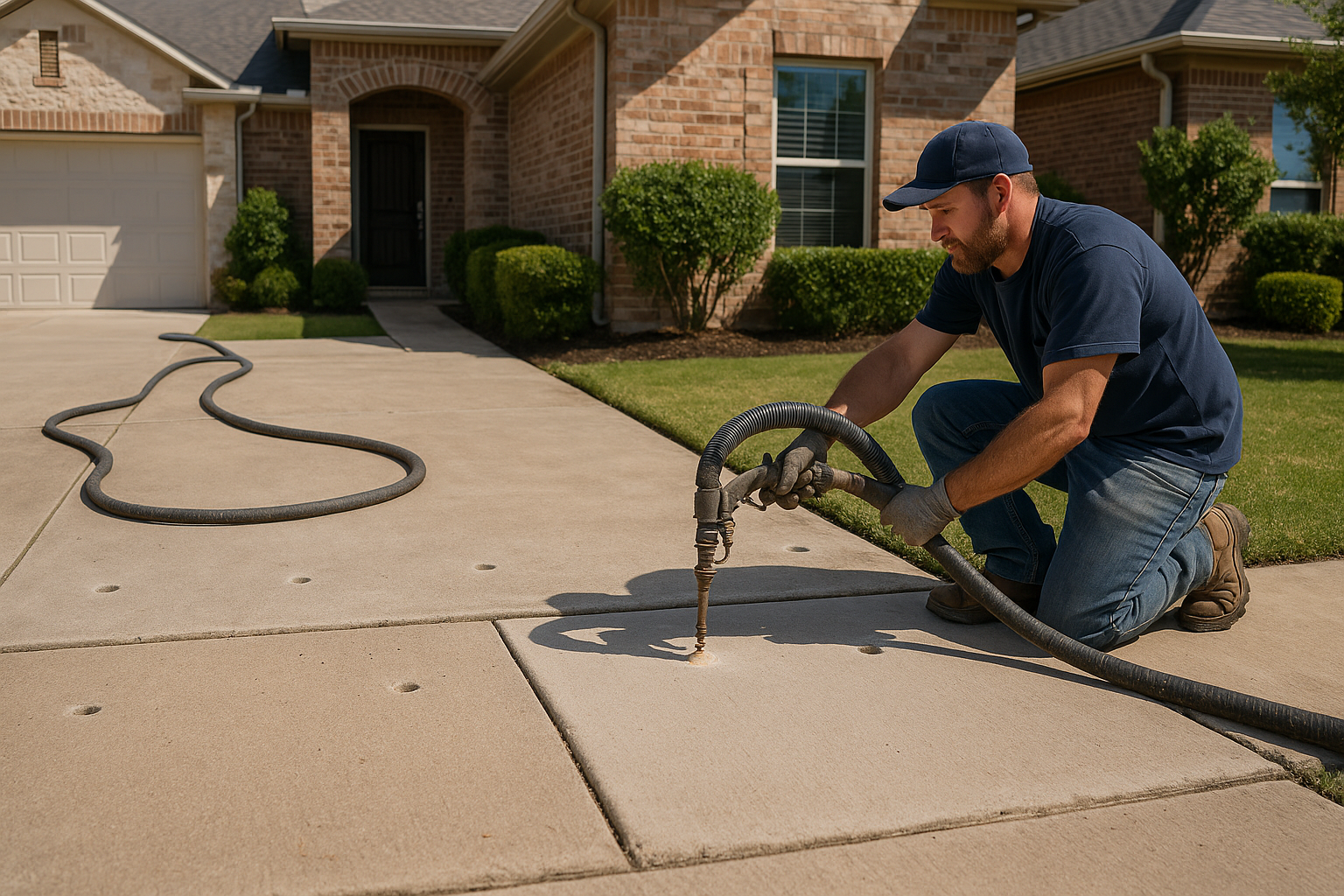
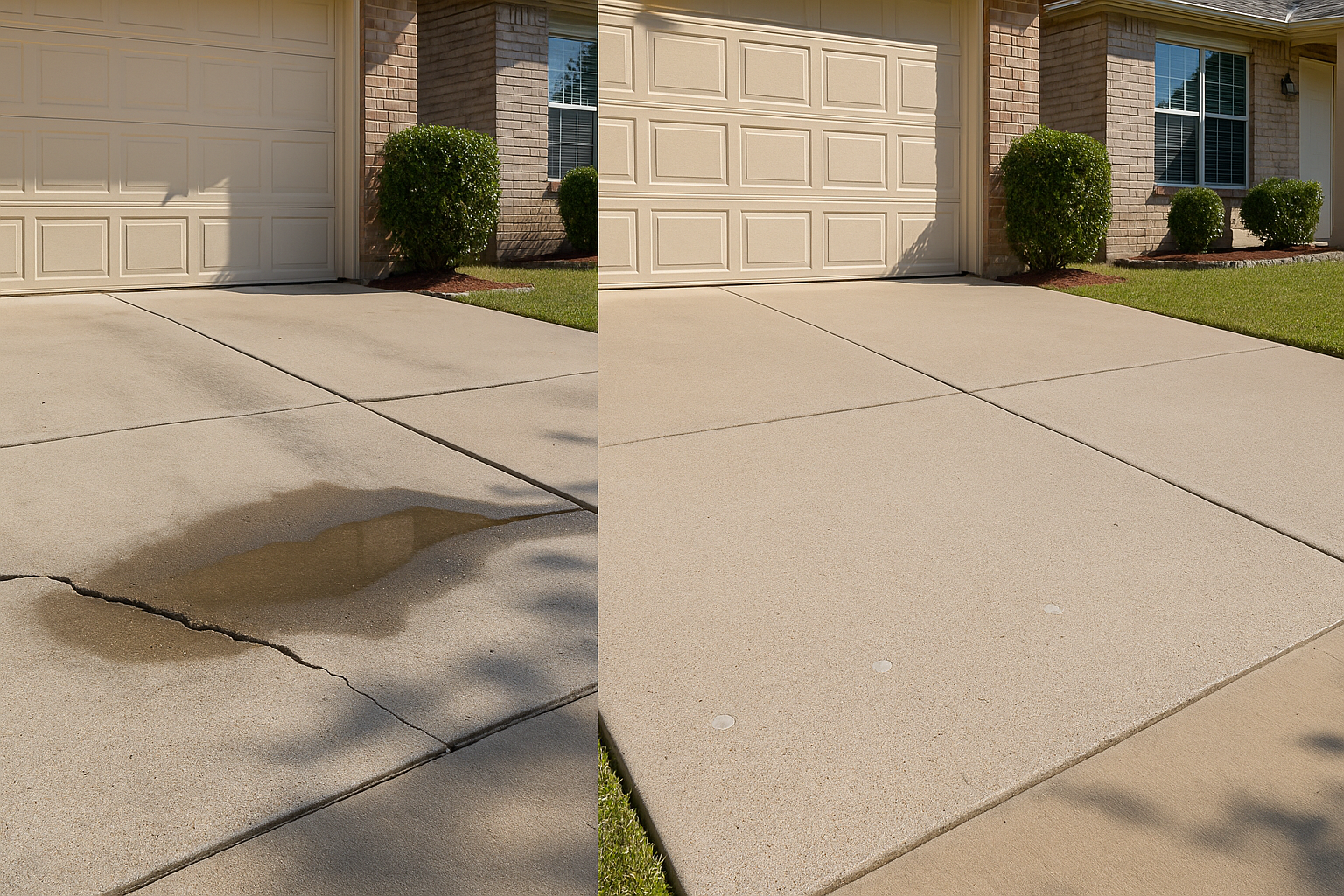
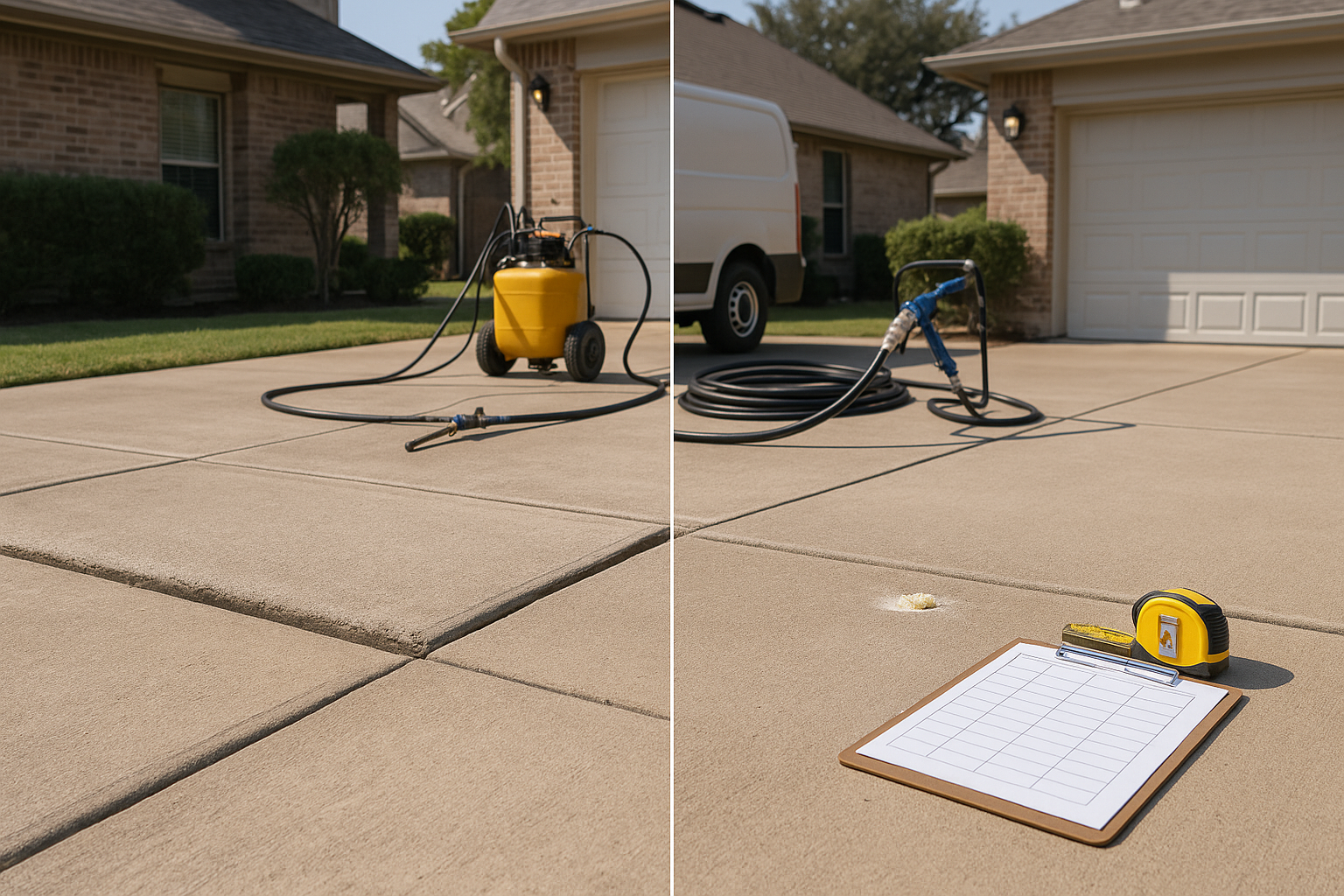
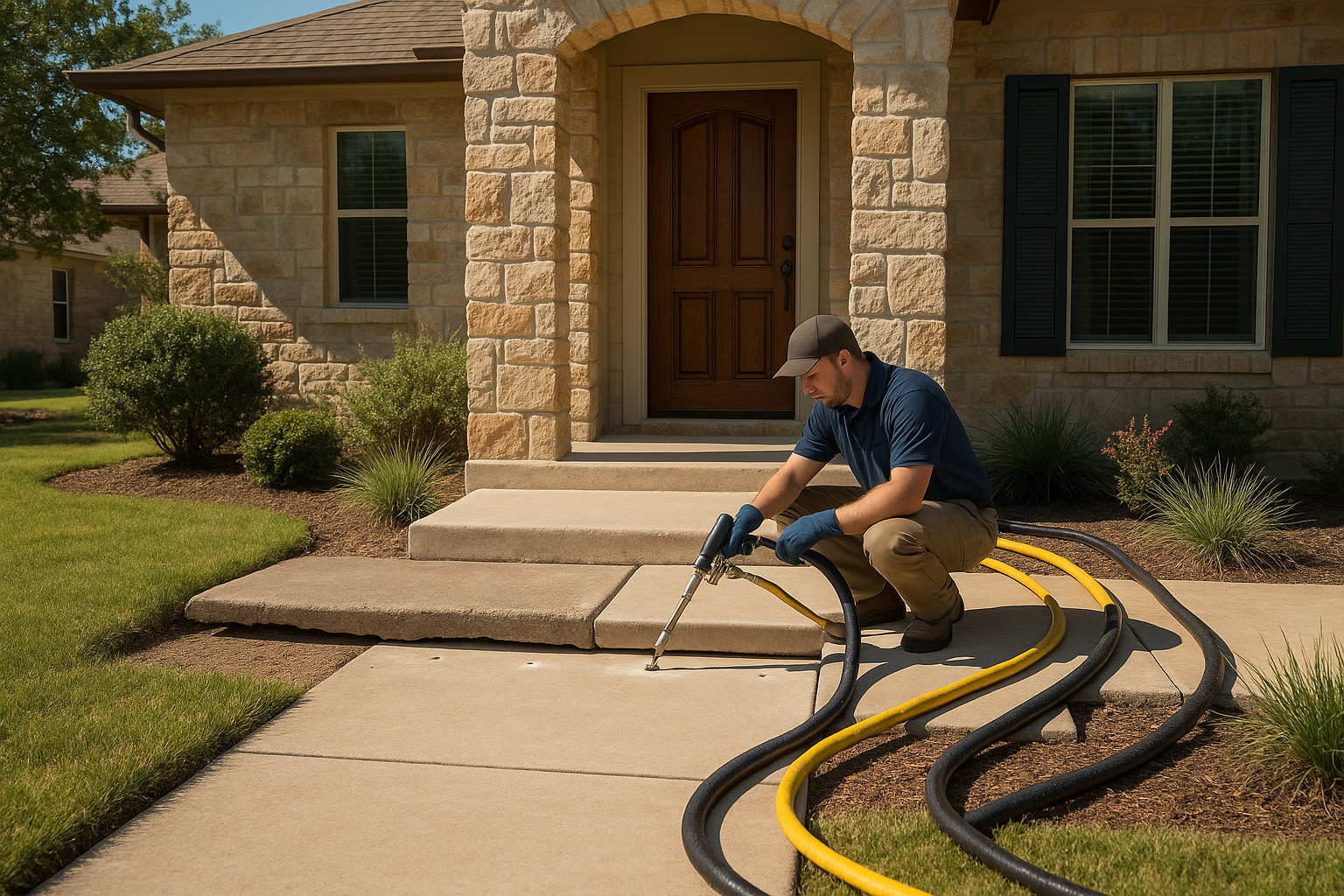
Yes, in many cases it can. Polyurethane foam leveling is one of the best options for sunken stoop repair in Texas when the concrete is still in decent shape. Instead of breaking out the stoop and repouring it, we drill small holes through the slab and inject expanding polyurethane beneath it. The foam fills voids, compacts loose material, and lifts the stoop back toward its proper elevation.
This method works well for stoops because they are usually smaller slabs with a defined footprint, which makes controlled lifting possible. It is especially useful when the concrete surface is structurally sound but the support underneath has failed.
Benefits of foam leveling include:
- No major demolition: The existing stoop stays in place.
- Small injection holes: Much cleaner than replacement.
- Fast turnaround: Many repairs are completed in just a few hours.
- Minimal disruption: Homeowners can usually use the area much sooner than with replacement.
- Water-resistant material: Polyurethane does not wash out like mudjacking slurry can in some conditions.
For Texas properties dealing with active soil movement, foam is also helpful because it is lightweight. That matters when you are working over softer or moisture-sensitive soils. If you want to read more about the process, visit our Polyurethane Concrete Leveling in Texas service page.
That said, foam leveling is not magic. The slab has to be a good candidate. If the stoop is shattered, badly undermined, or poured as part of a larger failed structure, replacement may still be the smarter move. A good contractor should inspect the stoop, the adjacent foundation, the drainage pattern, and the joint conditions before recommending a fix.
When to Repair vs Replace a Concrete Stoop
This is where experience matters. A lot of contractors jump straight to replacement because it is what they know. But tearing out a stoop is not always necessary. In plenty of Texas homes, repair is the better value if the concrete itself is still serviceable.
Repair usually makes sense when:
- The stoop has settled but is mostly intact.
- Cracks are minor or limited.
- The drop is caused by voids or soil movement underneath.
- The goal is to eliminate trip hazards and improve drainage without changing the whole entry.
- The surrounding masonry, siding, or door threshold would be disturbed by replacement.
Replacement may make more sense when:
- The stoop is severely cracked or broken into multiple loose sections.
- The concrete is crumbling from age, poor mix, or repeated water damage.
- The stoop was formed incorrectly to begin with.
- There is major structural failure tied into the porch, columns, or foundation.
- You need a full redesign for height, size, or code access reasons.
In older neighborhoods around Austin and Round Rock, we often find stoops that have simply settled out of level but are otherwise solid enough to save. In newer developments in Cedar Park and nearby suburbs, the issue is often poor drainage or fill settlement near the front entry. Different neighborhoods, same basic lesson: fix the support problem, not just the symptom.
Another factor is timing. If you catch the settlement early, repair is usually simpler and cheaper. Once the stoop continues dropping, you can start seeing secondary problems like separated caulk joints, brick step gaps, sticking doors, and water tracking toward the slab edge. Those are signs to get it looked at sooner rather than later.
How Much Sunken Stoop Repair Costs in Texas
Cost depends on size, access, depth of settlement, and what is happening under the slab. But for homeowners trying to budget, here is a realistic Texas range.
- Foam leveling for a small to medium stoop: often around $900 to $2,500
- Stoop repair with added joint sealing or drainage corrections: often around $1,500 to $3,500
- Full stoop demolition and replacement: often around $3,500 to $8,000+ depending on finish, forming, and tie-in work
Those are general numbers, not one-size-fits-all pricing. A simple front stoop with good access is very different from a custom entry with stone veneer, adjacent steps, and landscaping in the way. Still, the big picture is consistent: if the concrete can be saved, lifting it is often a much better value than replacement.
It is also worth looking at the hidden costs of waiting. A sunken stoop can lead to falls, worsen drainage at the front entry, and increase damage to adjacent joints and sealants. If water is getting through open joints, protecting those areas after leveling is money well spent. That is another reason we point homeowners to /expansionjoints and sealmyjoints.com when we see separation around the slab.
For many Texas homeowners, the best approach is straightforward: inspect the stoop, confirm whether the slab is sound, identify the soil or drainage issue, and choose the least invasive repair that actually solves the problem. In a lot of cases, that means polyurethane lifting instead of tear-out.
If your front stoop is sinking in Austin, Round Rock, Cedar Park, or anywhere nearby, Hill Country Slabs can take a look and give you a straight answer on whether it can be lifted or needs replacement. Contact us at /contact or call (737) 287-4308 to schedule an estimate.