If you have a section of concrete that has dropped out of place, you are not alone. We see sunken slabs all over Texas, from older neighborhoods in Austin to newer developments around San Antonio. One corner settles, water starts pooling, and before long you have a trip hazard, drainage problem, or a driveway and walkway that just looks rough.
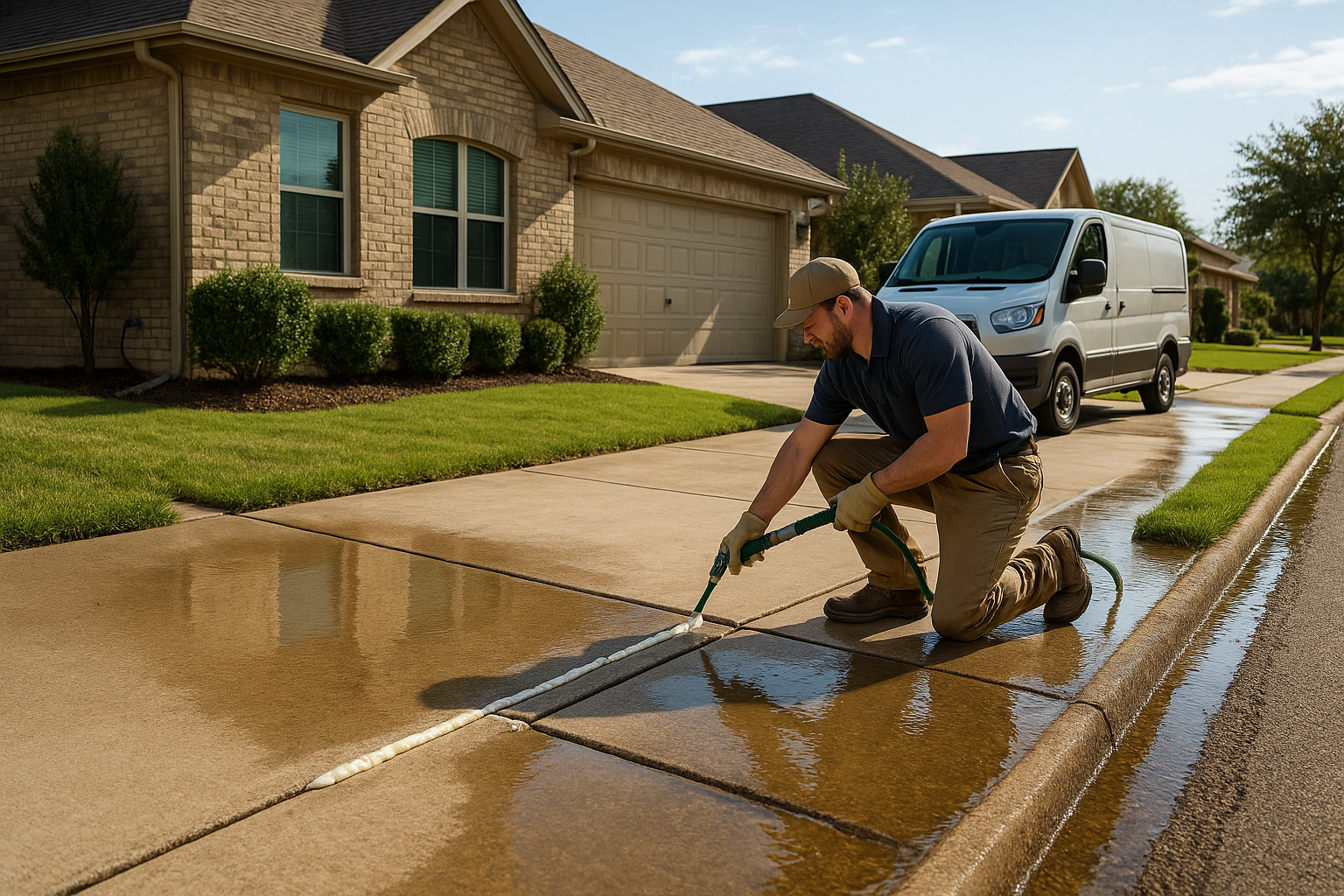
The good news is a sunken slab does not always need to be torn out and replaced. In a lot of cases, we can lift and stabilize the concrete with polyurethane foam injection. That means less mess, less downtime, and a lower price than full replacement. For homeowners and property managers dealing with sunken slab repair in Texas, that can make a big difference.
Below, we will walk through what causes concrete to settle here in Texas, how lifting works, when repair makes sense, and what you can expect to pay.
What Causes a Sunken Concrete Slab in Texas?
Texas soil is hard on concrete. A lot of the slab movement we repair comes back to what is happening under the concrete, not the concrete itself. When the base loses support, the slab starts to drop.
Expansive clay soils
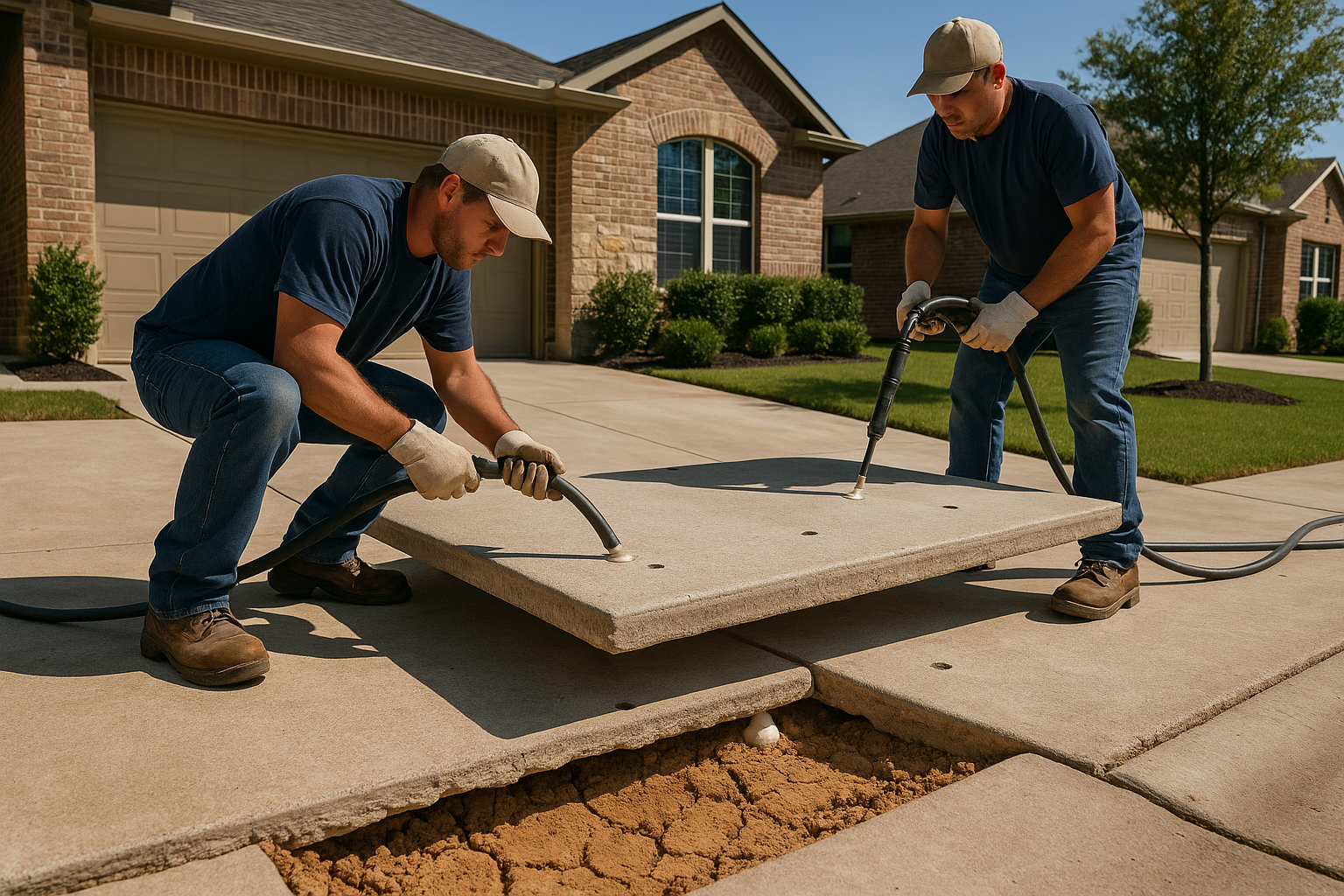
Across Central Texas and South Texas, expansive clay is one of the biggest reasons slabs move. This soil swells when it gets wet and shrinks when it dries out. That constant expansion and contraction creates voids under the slab. Once enough support is gone, the concrete settles.
We see this all the time in areas with heavy clay and long dry spells followed by hard rain. After a hot Texas summer, the ground can pull away and leave empty space under a walkway, patio, driveway, or garage floor.
Poor compaction during construction
Some slab settlement starts before the concrete is ever poured. If fill soil was not compacted properly, the ground can compress later under traffic and normal use. This is common around driveways, sidewalks, approach slabs, and new construction where grade work moved fast.
That does not always show up right away. A slab may look fine for a year or two, then begin to dip as the base settles.
Water erosion and drainage problems
Water is another major issue. Downspouts, negative grading, leaking hose bibs, irrigation overspray, and runoff can wash out supporting soil under the slab. When that happens, the concrete bridges the gap for a while, then cracks or drops.
If water is part of the problem, repair should include correcting drainage. Otherwise, you are just fixing the symptom. This is also why we tell customers to pay attention to their expansion joints. Open joints let water run down below the slab, and sealing them can help protect the base. For more on joint sealing, visit sealmyjoints.com.
Tree roots and changing moisture conditions
Mature trees can change moisture levels in the soil fast, especially during drought. Roots draw water from the ground, and that can dry out one side of a slab more than the other. The result is uneven support and differential settlement.
In places like Austin, San Antonio, New Braunfels, Round Rock, and Georgetown, we often see a combination of clay soil, heat, and inconsistent moisture create the perfect setup for slab movement.
How Sunken Slab Repair Works Without Replacement
When the concrete is still structurally worth saving, lifting is usually the fastest way to deal with settlement. Our preferred method for many projects is polyurethane foam injection.
Step 1: Inspect the slab and identify the cause
First, we look at how far the slab has moved, whether it is cracked, and what likely caused it to settle. We also check drainage, joint condition, and whether the slab is a good candidate for lifting instead of replacement. If you need broader help with settled flatwork, our Concrete Slab Repair service covers common slab issues across residential and commercial properties.
Step 2: Drill small injection holes
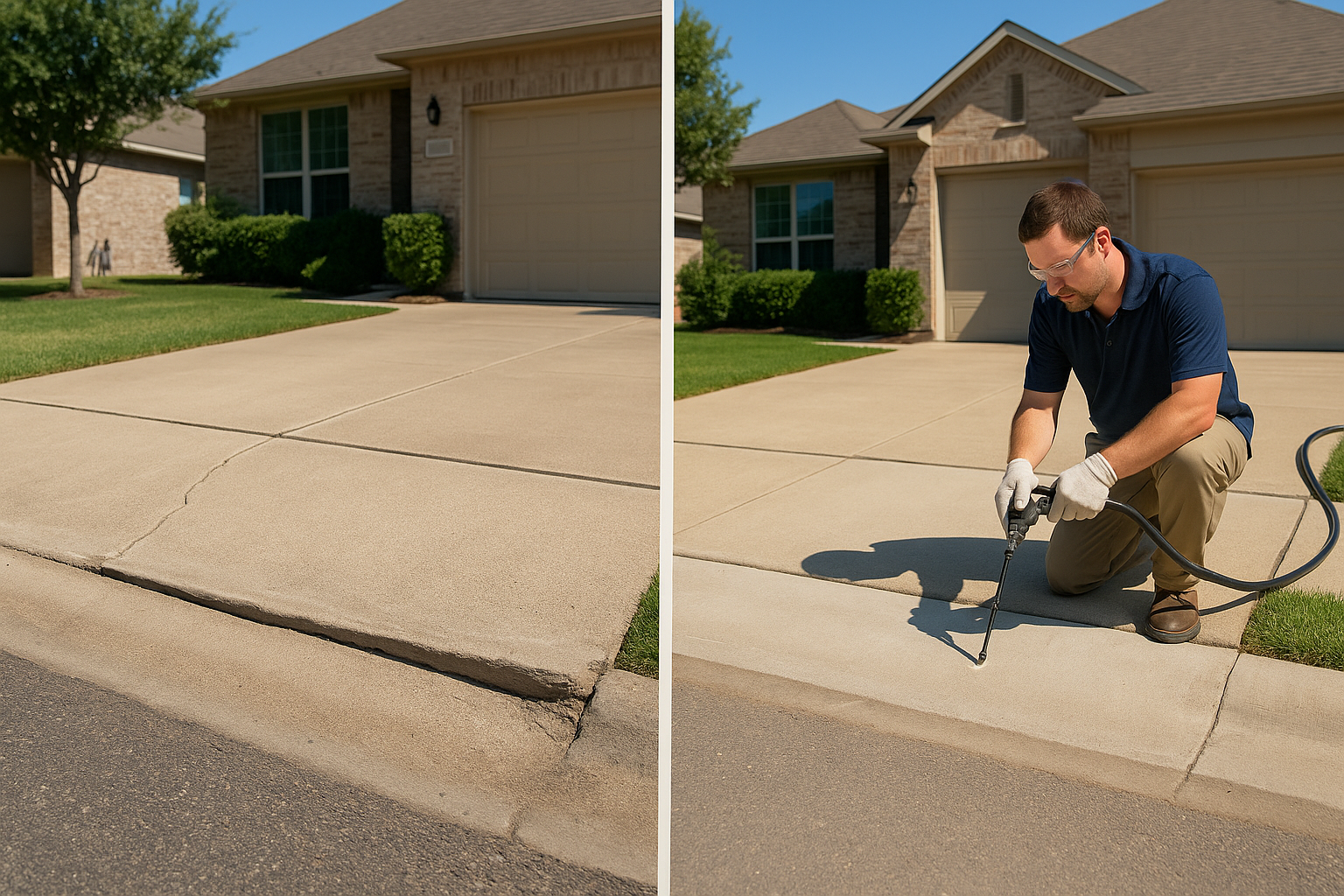
We drill small holes through the slab in strategic spots. These are much smaller than what you would see with older mudjacking methods. That means a cleaner finished look and less disruption to the slab surface.
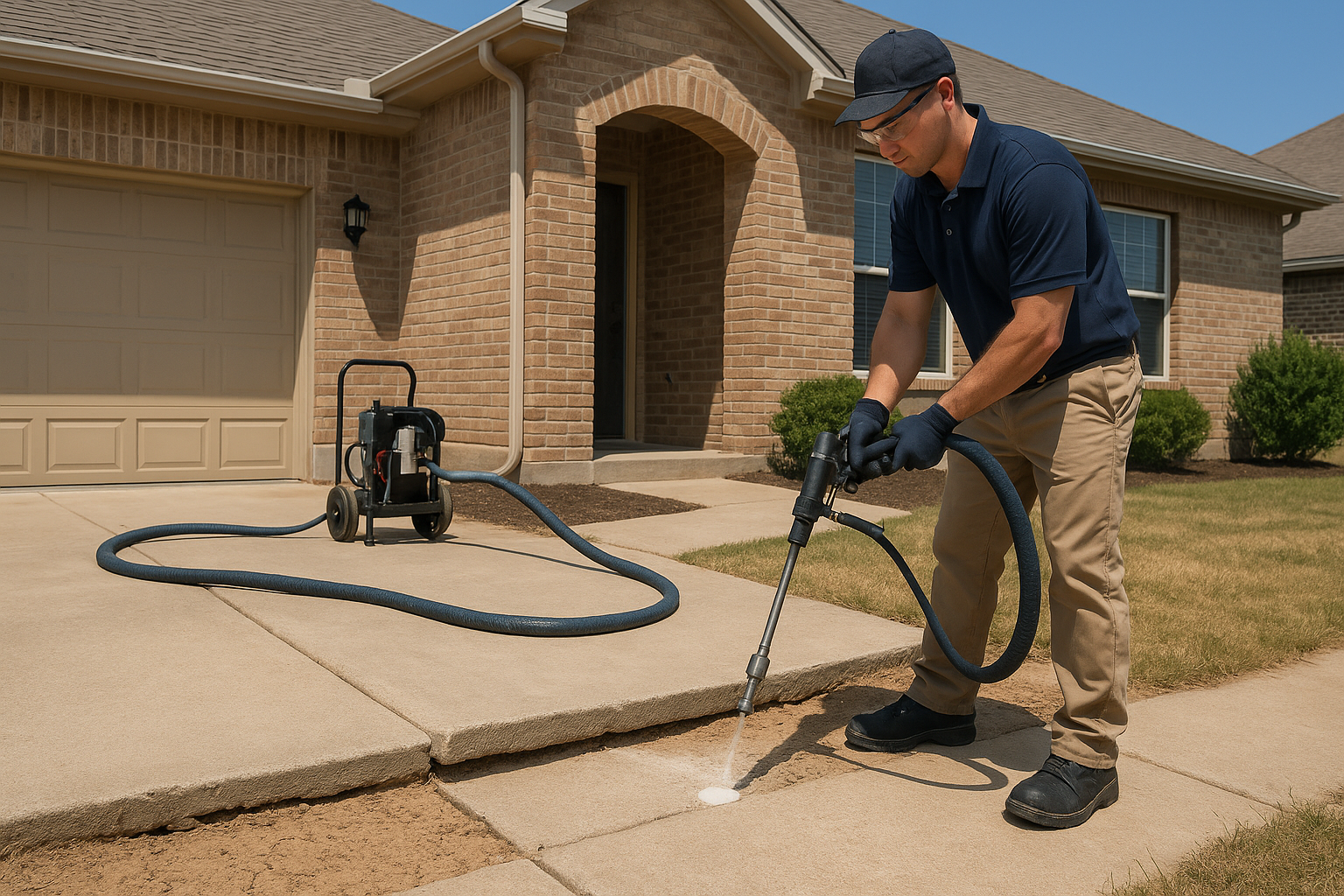
Step 3: Inject polyurethane foam under the slab
The foam goes in as a liquid and expands below the concrete. As it expands, it fills voids, compacts weak spots in the base, and gently raises the slab. Because the material is lightweight, it does not overload the soil below the way heavy fill materials can.
We control the lift carefully, watching the slab as it moves. On the right project, we can bring the concrete back close to original elevation and reduce the trip hazard without tearing everything apart.
Step 4: Patch the holes and reopen the area quickly
Once the slab is lifted and stabilized, we patch the drill holes. One of the biggest advantages of foam lifting is downtime. In many cases, the slab can be used the same day. That is a big deal for busy driveways, walkways, and entry areas.
For driveways specifically, our Driveway Leveling service is a good fit when panels have settled but are still in repairable shape.
Why Texas property owners choose lifting
- Faster turnaround than demolition and replacement
- Lower cost on many repairable slabs
- Minimal mess compared to tear-out
- Same-day use in many situations
- Void filling and stabilization at the same time
That is why foam lifting has become a solid option for sunken slab repair in Texas, especially when the slab is intact enough to save.
When to Repair vs Replace a Sunken Slab
Not every slab should be lifted. Some are good repair candidates, and some are too far gone. The right answer depends on the condition of the concrete and what caused the movement.
Repair usually makes sense when:
- The slab is sunken but mostly intact
- Cracks are minor to moderate
- The main issue is loss of support under the slab
- You want to correct trip hazards or drainage without a full rebuild
- You need a quicker, less invasive option
This is common for sidewalks, pool decks, patios, garage floors, and driveway sections with isolated settlement.
Replacement may be the better option when:
- The slab is severely broken or crumbling
- There are multiple major structural cracks
- The concrete was poured too thin or was badly installed
- The area has repeated movement from unresolved drainage or subgrade failure
- You are dealing with widespread damage across the whole slab
If the concrete has lost structural integrity, lifting will not turn bad concrete into good concrete. In that case, replacement is usually the smarter investment.
We are straight with customers about that. If a slab can be saved, we will say so. If it needs to come out, we will say that too. The goal is to fix the problem the right way, not sell the wrong method.
How Much Sunken Slab Repair Costs in Texas
Cost depends on how much the slab has settled, how accessible the area is, how much void space is underneath, and whether there are drainage issues that need to be handled too. But in general, lifting is often more affordable than replacement.
For many residential projects in Texas, sunken slab lifting lands well below the cost of demolition, haul-off, base prep, forming, pouring, and curing new concrete. A full replacement also means you may be without use of the area for several days or longer.
While every project is different, property owners often find repair appealing because it can reduce total costs and downtime at the same time. On the right slab, that is a win both ways.
- Minor isolated lifts: often the lowest-cost repair category
- Driveways and larger panels: pricing increases with size, settlement depth, and void volume
- Replacement: commonly costs significantly more once demolition and repouring are included
The biggest thing is catching settlement early. A slab that has only dropped a little is usually easier to correct than one that has been ignored for years while water keeps washing out the base.
How to protect your slab after repair
- Keep water moving away from the slab with proper grading and drainage
- Seal open joints and cracks where water can get below the concrete
- Avoid overwatering near flatwork during dry periods
- Watch for new low spots, pooling water, or changes at the joints
- Address settlement early before it gets worse
Texas weather is not going to get easier on concrete. Between drought, sudden rain, clay movement, and heat, slabs are always under stress. But if the concrete is still in decent shape, lifting it can be the practical fix that gets you back to level without starting from scratch.
If you need help with sunken slab repair in Texas, Hill Country Slabs can take a look and tell you whether lifting or replacement makes more sense. We serve homeowners and property managers across Austin, San Antonio, and surrounding areas. Contact us at /contact or call (737) 287-4308 to schedule an inspection.