Warehouse floors in Texas take a beating. Between heavy forklift traffic, loaded racking, moisture swings, and expansive soils, it does not take long for one section of slab to settle lower than the next. Once that happens, you start dealing with trip hazards, rough forklift travel, pallet instability, drainage issues, and more wear on equipment. In a busy warehouse, even a small lip in the concrete can turn into a safety problem fast.
That is where warehouse concrete leveling comes in. If the slab is still structurally usable and the problem is settlement instead of total failure, leveling can often restore the floor without the cost, mess, and downtime of tear-out and replacement. At Hill Country Slabs, we help property owners and facility managers across Texas make that call every day.
If you are comparing repair options, take a look at our Commercial Concrete Leveling Texas and Concrete Slab Repair in Texas services to see where your building fits.
Signs a Warehouse Floor Needs Concrete Leveling
Most warehouse slab problems do not start with a dramatic crack. Usually, the first signs are operational. Drivers feel a bump in the same lane every day. Pallet jacks hang up on a joint. Water starts collecting where the floor used to drain clean. Someone marks off an area because a lift wheel keeps catching an edge.
Common signs your warehouse may need concrete leveling include:
- Uneven slab sections at saw cuts, control joints, or panel edges
- Trip hazards at pedestrian walkways, loading zones, and dock approaches
- Forklift bounce and vibration caused by settled concrete
- Cracking that accompanies vertical movement, not just surface shrinkage
- Water ponding after cleaning, rain blow-in, or HVAC condensation
- Joint separation that points to one slab panel dropping below another
- Rack or equipment alignment issues tied to slab movement
In commercial settings, we are often called after clients notice safety complaints or maintenance problems. In reality, the floor has usually been moving for a while. Catching settlement early matters because a slab that is only slightly out of plane is often much easier to correct than one that has continued dropping under traffic.
Another thing to watch in Texas warehouses is joint damage. Once one slab panel settles, wheel impact gets worse at every pass. That repeated impact can break down concrete edges and open the door to more costly repairs. If your floor has uneven joints, it is smart to look at expansion joints and joint performance as part of the repair plan, especially in larger industrial buildings.
What Causes Warehouse Concrete to Settle in Texas
Texas is not one soil condition. What we see in Austin and the Hill Country can be different from what shows up in Dallas, Houston, San Antonio, or along the Gulf Coast. But the big story is the same: slab support changes over time, and warehouse floors respond to that movement.
Expansive clay soils
Large parts of Texas sit on clay-heavy soils that swell when wet and shrink when dry. That cycle can create voids beneath concrete or shift support from one area to another. In North Texas and Central Texas, this is a common reason interior and exterior slabs start moving. A warehouse floor may look fine for years and then begin settling after enough seasonal movement.
Sandy and mixed soils
In some regions, especially where fill material was brought in during site development, settlement can happen because soils were not compacted evenly. Over time, vibration from forklift traffic and loading can reveal those weak spots. One panel drops while the neighboring slab stays put.
Moisture intrusion and drainage issues
Houston and other humid Gulf Coast markets bring another challenge: water. Poor drainage around a building, leaking plumbing, roof runoff near the slab edge, or repeated moisture exposure can soften supporting soils. Once support is lost, the slab starts bridging over voids until it finally settles. If you are seeing floor movement in Southeast Texas, drainage should be part of the conversation.
Heavy point loads
Warehouses are designed for use, but certain areas carry more stress than others. Rack legs, equipment pads, shipping lanes, and dock approaches can concentrate loading. If support below the slab is already marginal, these high-traffic or high-load zones tend to show problems first.
We see these patterns in facilities from Dallas to Houston. The cause may vary, but the result is the same: an uneven floor that affects safety and operations.
Why Foam Leveling Works for Active Warehouse Floors
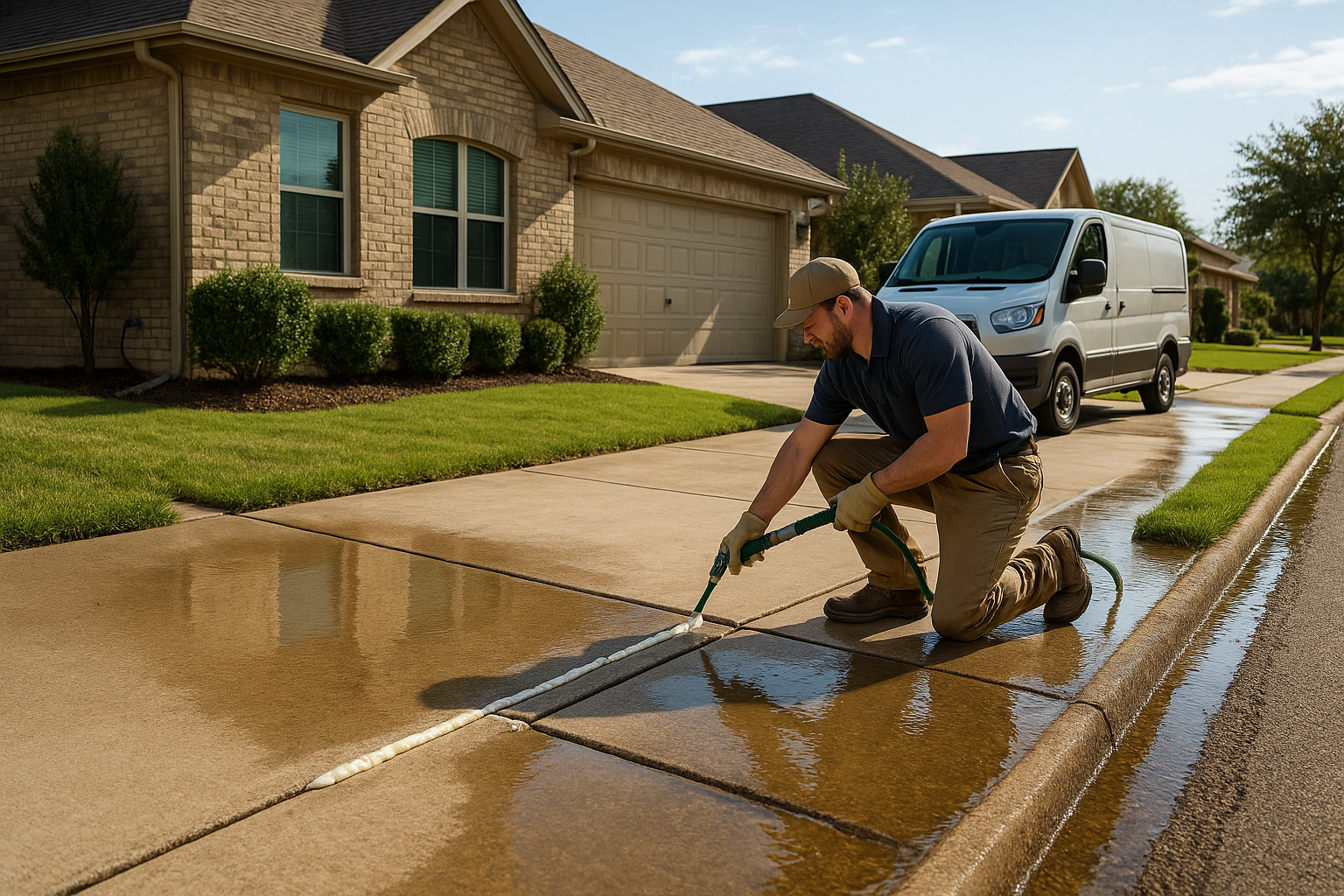
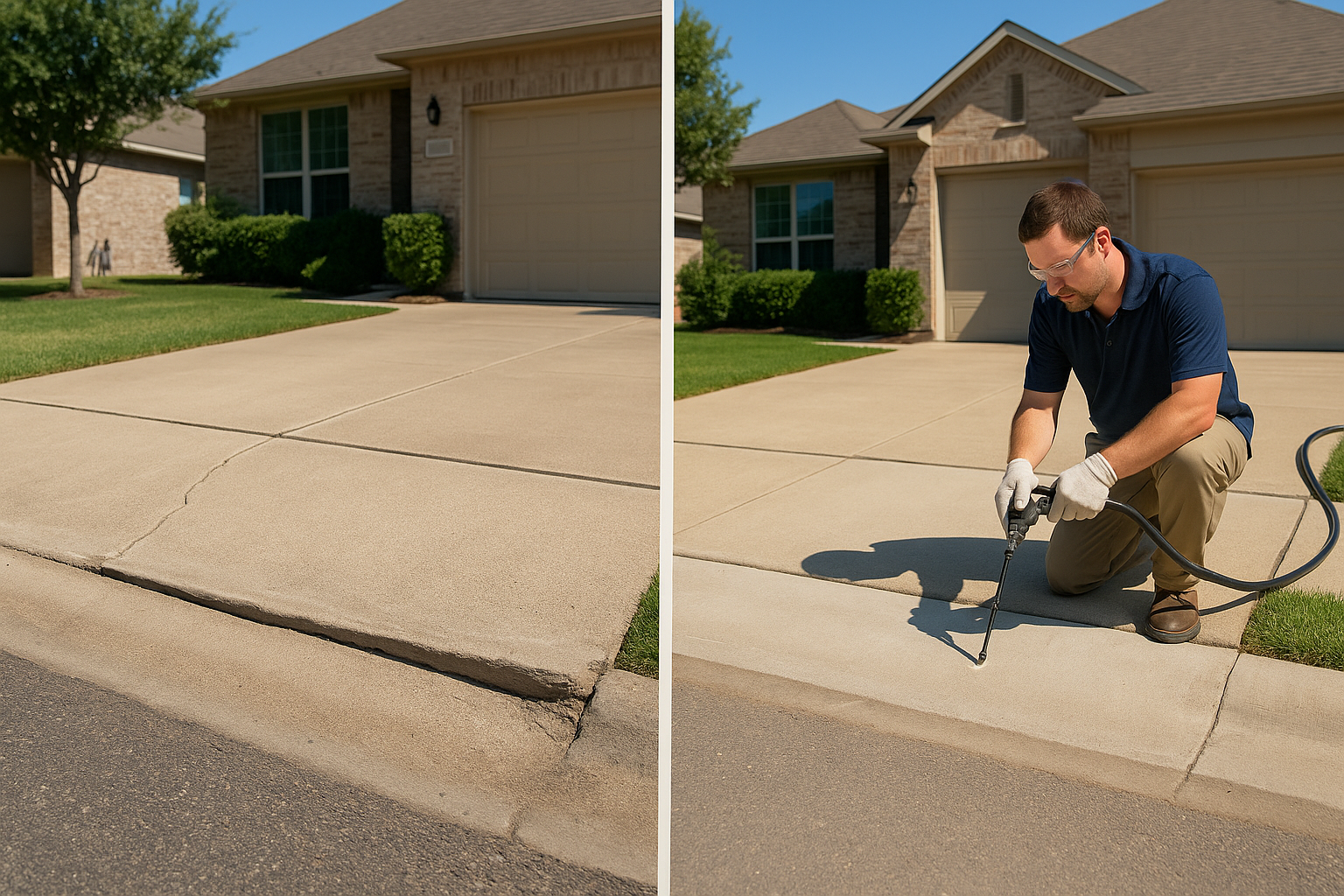
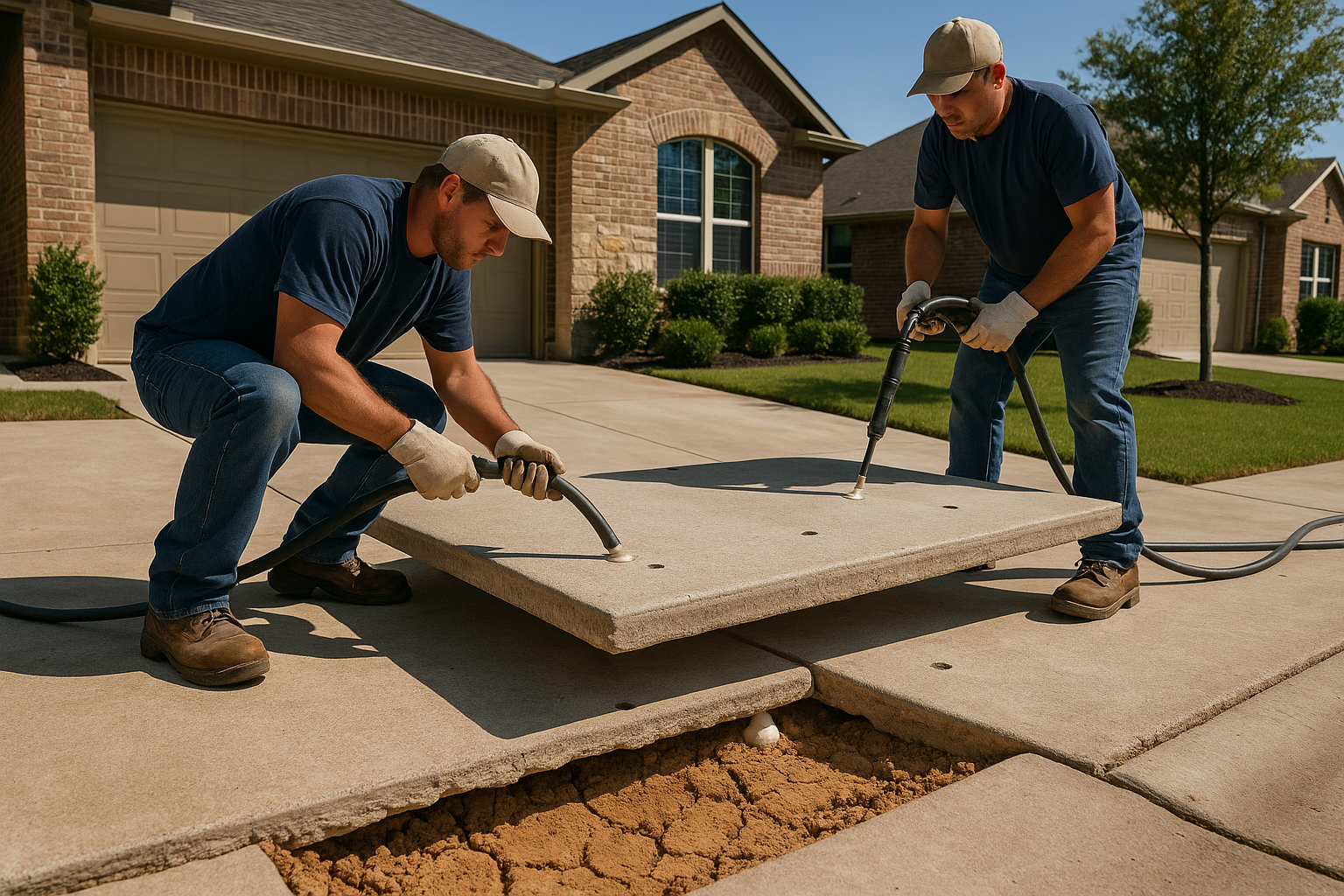
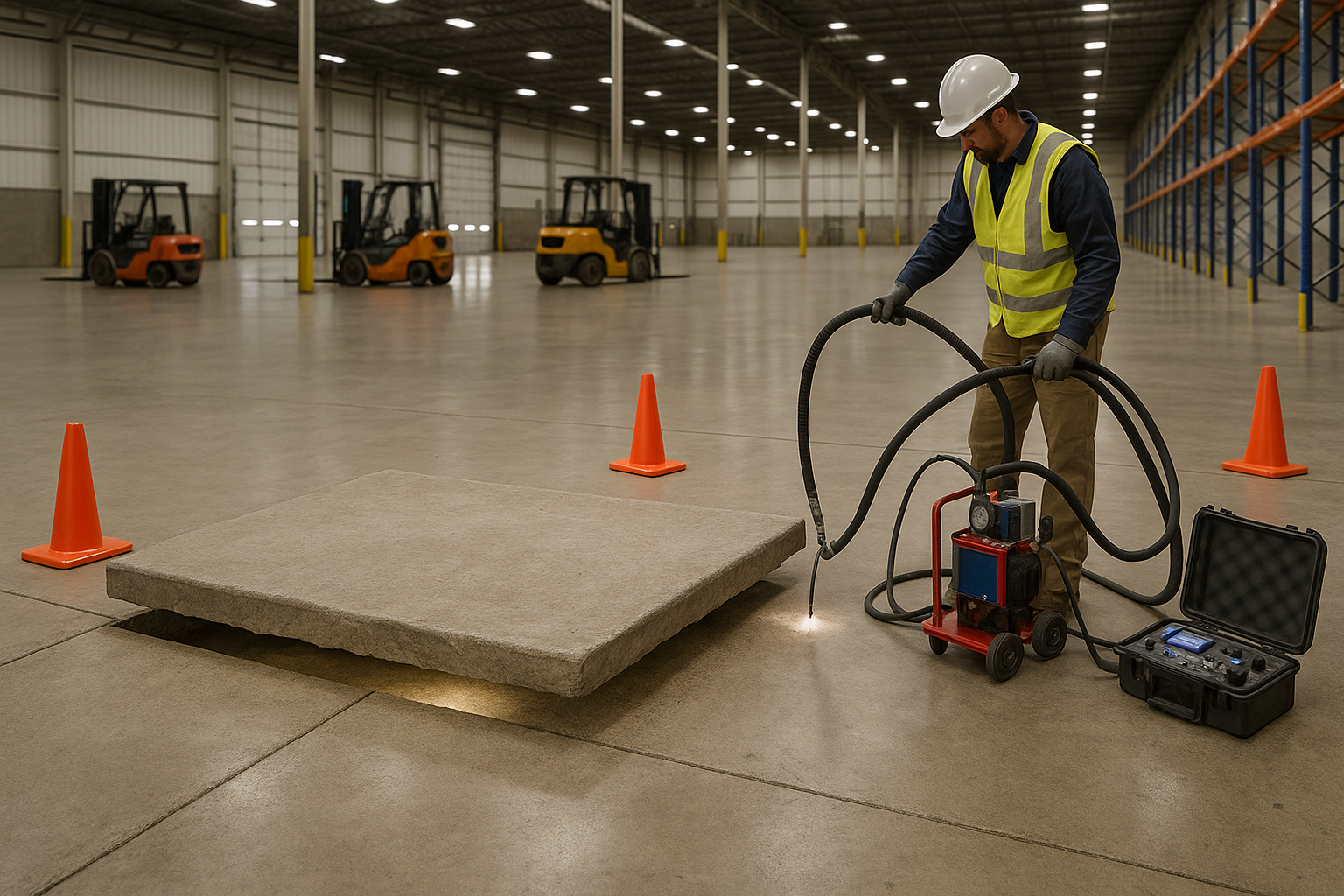
For many commercial buildings, polyurethane foam leveling is one of the best ways to correct settled concrete with minimal disruption. Instead of demolishing the slab, we inject high-density foam beneath it through small holes. The foam expands, fills voids, and applies controlled lift to bring the slab back up.
That matters in a warehouse because downtime is expensive. A full slab replacement can shut down lanes, create dust, require demolition equipment, and leave you waiting on cure time. Foam leveling is different.
- Fast return to service so warehouse traffic can often resume much sooner than replacement
- Small injection holes instead of major demolition
- Lightweight material that adds less burden to underlying soils
- Precise lifting for isolated settled panels and joint offsets
- Void filling to help restore support below the slab
In the right conditions, foam leveling can save a facility a lot of money compared to replacement. While every job is different, commercial slab replacement often runs far higher once you factor in demolition, haul-off, downtime, new concrete placement, and lost productivity. Leveling is frequently the better value when the slab is intact enough to be saved.
On many warehouse projects, owners want to know the real question first: what will it cost? The answer depends on slab thickness, amount of settlement, accessibility, and how much floor area is involved. In general, leveling is often dramatically less than replacement, and the operational savings can be just as important. If replacement would force major disruption, the value of a faster repair goes up quickly.
We also recommend looking at the joints after lifting. If the slab edges have been taking impact, sealing and protecting those joints helps extend the life of the repair. You can learn more about joint sealing options at sealmyjoints.com.
How to Get a Warehouse Concrete Leveling Estimate
The best estimates start with good field information. In a commercial warehouse, we want to know where the floor has dropped, how much movement exists, what traffic runs through the area, and whether there are signs of a bigger structural issue. A walkthrough usually tells us a lot.
- Identify problem areas. Mark lanes, joints, racks, dock areas, or workstations where the floor is uneven or causing operational problems.
- Measure elevation differences. Even a lip of 1/4 inch to 1/2 inch can create trouble for wheels and foot traffic in the wrong location.
- Review access and scheduling. Active warehouses need repairs planned around shifts, shipping windows, and safety protocols.
- Check for root causes. Drainage, leaks, failed joints, or soil-related movement should be considered so the repair holds up.
- Compare leveling versus replacement. If the slab is badly broken or unsupported across a wide area, replacement may still be needed. But if the issue is localized settlement, leveling is usually worth serious consideration.
We work with warehouse owners, general contractors, and facility teams that need a practical answer, not a sales pitch. If the slab can be lifted, we will tell you. If it is too far gone, we will tell you that too. The goal is to fix the floor in a way that makes sense for safety, service life, and operations.
Texas warehouses deal with real slab movement because Texas soils and Texas weather are hard on concrete. Hot dry stretches, sudden heavy rain, and long-term moisture variation all affect support below the slab. In many cases, though, a settled warehouse floor does not need to be torn out. Concrete leveling can correct trip hazards, improve forklift travel, reduce joint impact, and cut downtime at a lower cost than replacement.
If you need help with warehouse concrete leveling in Texas, contact Hill Country Slabs for an honest evaluation. Visit /contact or call (737) 287-4308 to schedule a site review.