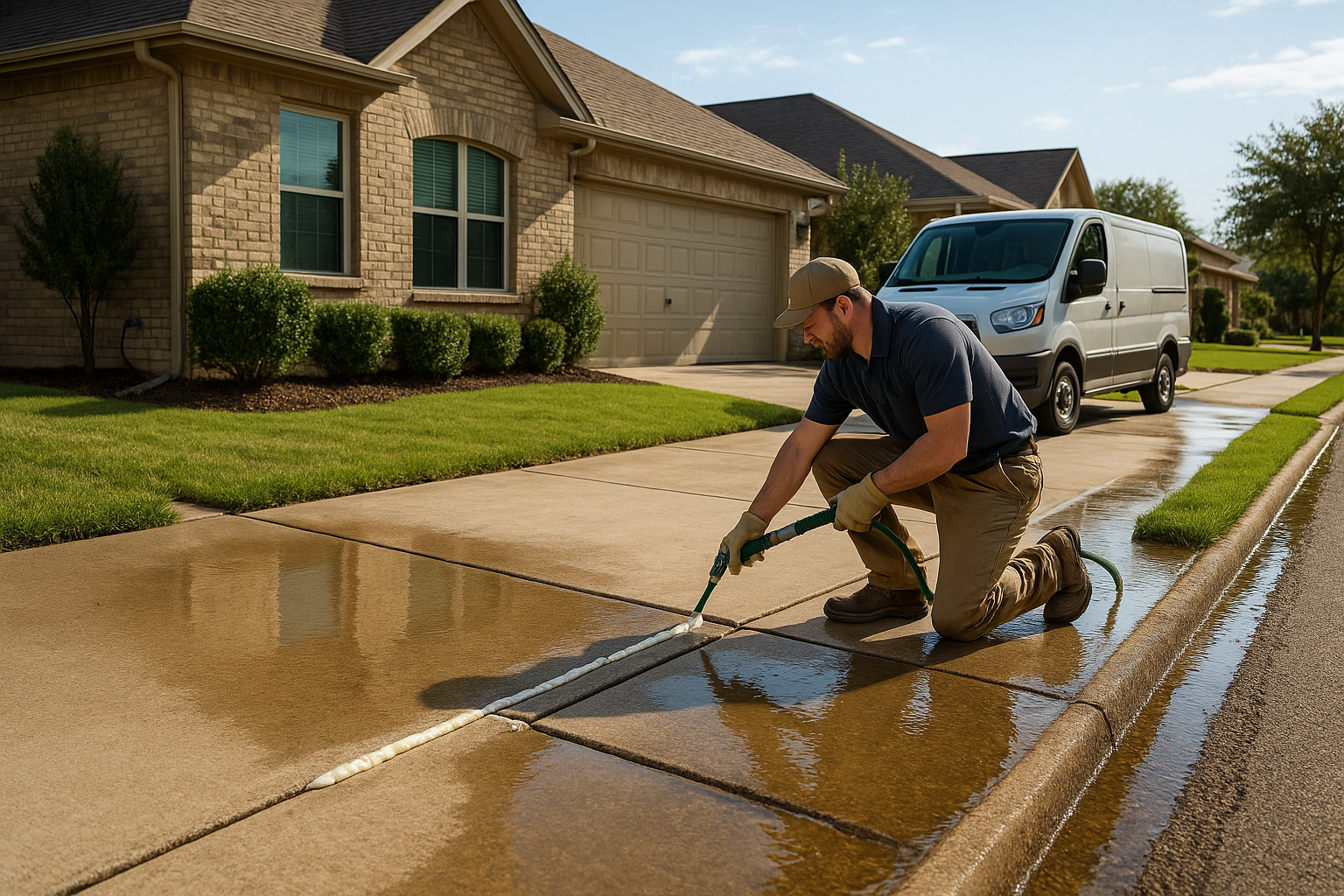
In Texas, a concrete driveway can look solid on top while losing support underneath. We see it all the time in Austin, Round Rock, and surrounding areas. A slab may still be intact, but if water has washed out the soil below, that driveway is one hard rain away from cracking, rocking, or dropping at the edge. That is what homeowners mean when they talk about a driveway void.
If you are dealing with a hollow spot, a sinking panel, or a growing gap under the concrete, the good news is you usually do not need to tear the whole driveway out. In many cases, targeted void filling and lifting can stabilize the slab, restore support, and help you avoid a much more expensive replacement. For Texas properties built on shifting clay, that matters.
At Hill Country Slabs, we handle this kind of repair with practical solutions built for local conditions. Whether the slab needs Driveway Lifting, deeper Concrete Slab Repair, or joint protection tied to expansion joints, the key is catching the problem before unsupported concrete starts breaking apart.
What Is a Void Under a Concrete Driveway?
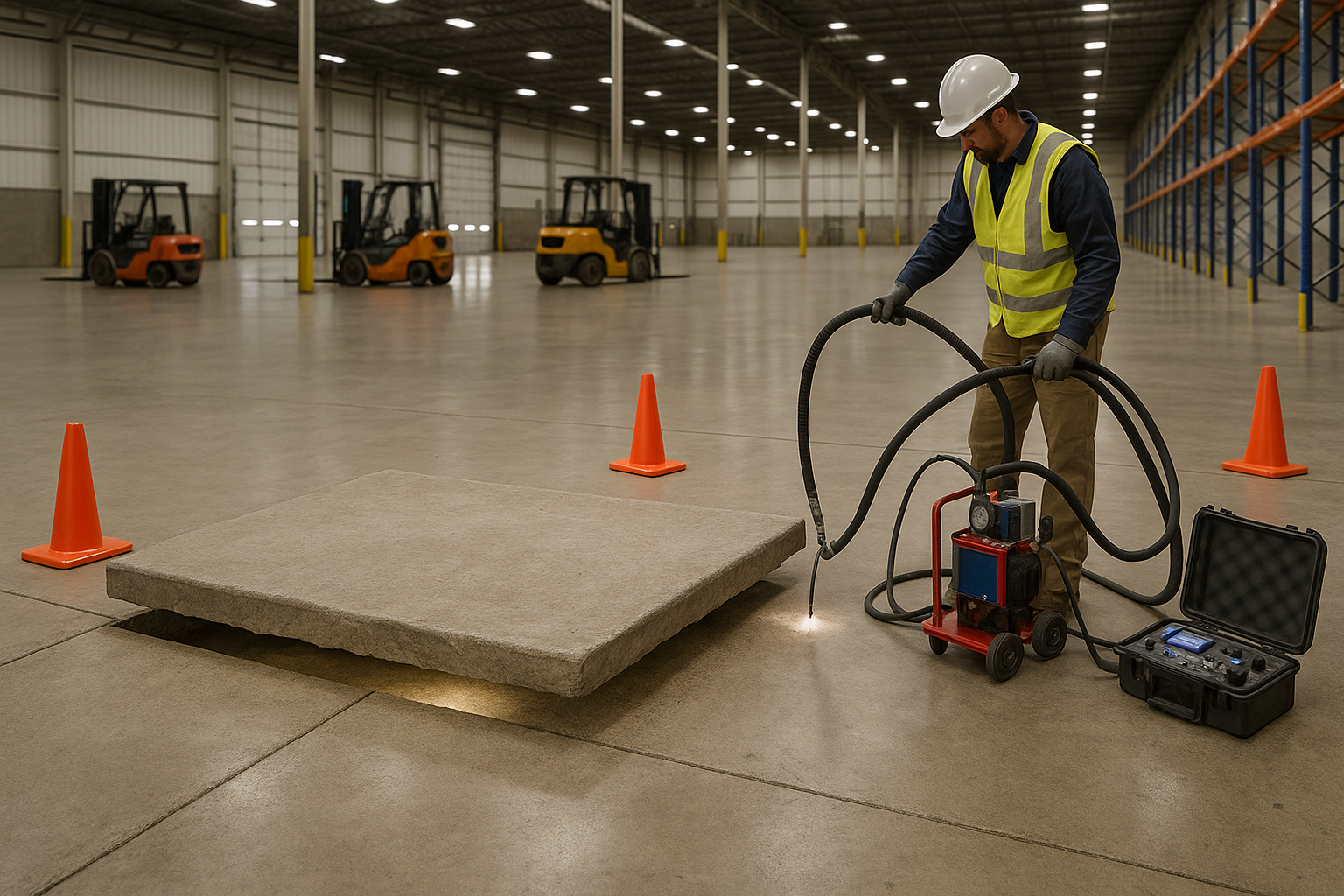
A void is simply an empty space between the underside of the concrete and the soil that is supposed to support it. Concrete is strong in compression, but it is not meant to span open air for long. Once support disappears, the slab starts acting like a bridge. Every vehicle load puts stress on the concrete until it cracks, settles, or both.
In Texas, voids commonly form because of soil movement and water. Expansive clay soils shrink during hot dry stretches and swell when moisture returns. That repeated cycle can pull soil away from the slab. We also see washout from poor drainage, downspouts dumping near the driveway, irrigation leaks, and water moving through open joints. If the base was not compacted well during construction, the risk goes up even more.
Some neighborhoods around Austin and Round Rock deal with heavy clay that moves seasonally. In other parts of Central Texas, you may have rocky soils with pockets that still erode when runoff is concentrated. Either way, once water gets where it should not, it can carry fines out from under the slab and leave a hollow area behind.
The size of the void matters, but even a smaller washed-out section can lead to trouble. A driveway panel does not have to sink right away to be at risk. We often find slabs that sound hollow, flex slightly under load, or show early cracking before there is any dramatic settlement.
Signs Your Driveway May Have Soil Washout
Homeowners usually notice symptoms before they know the cause. If you are seeing any of the following, there is a good chance the slab has lost support underneath.
- A visible gap along the driveway edge or beneath the slab
- Cracks forming across one panel, especially near mid-span
- One section sitting lower than the next
- A driveway that sounds hollow when tapped
- Water disappearing under the slab during rain
- Separation at joints or worsening joint movement
- Small rocking or bounce when a vehicle rolls over the area
One of the most important warning signs is active water movement. If rainfall or sprinkler runoff is entering an open joint, a side gap, or a crack, that water can keep removing soil every time it runs through. That is why void repair often goes hand in hand with sealing joints. If you fill the void but leave a pathway for future washout, the problem can come back. For long-term protection, property owners should pay attention to joint maintenance and review options at sealmyjoints.com.
We also tell customers to watch the edges where the driveway meets the garage, sidewalk, or street approach. Differential movement in those transition areas often points to support loss below. If one slab corner starts to drop, the stress tends to spread. What begins as a void issue can turn into a trip hazard, drainage issue, and crack repair all at once.
How Foam Injection Repairs Voids Without Replacement
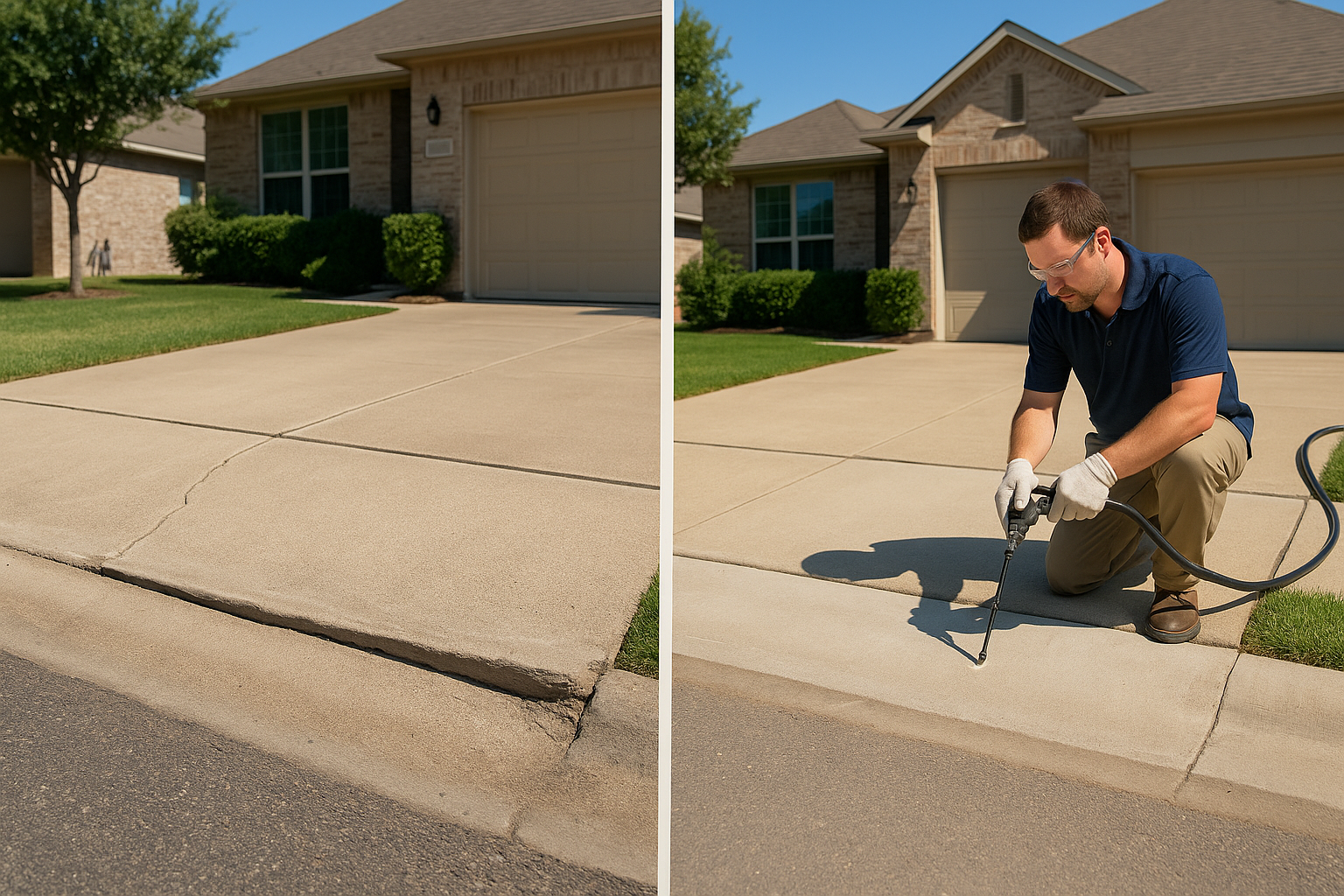
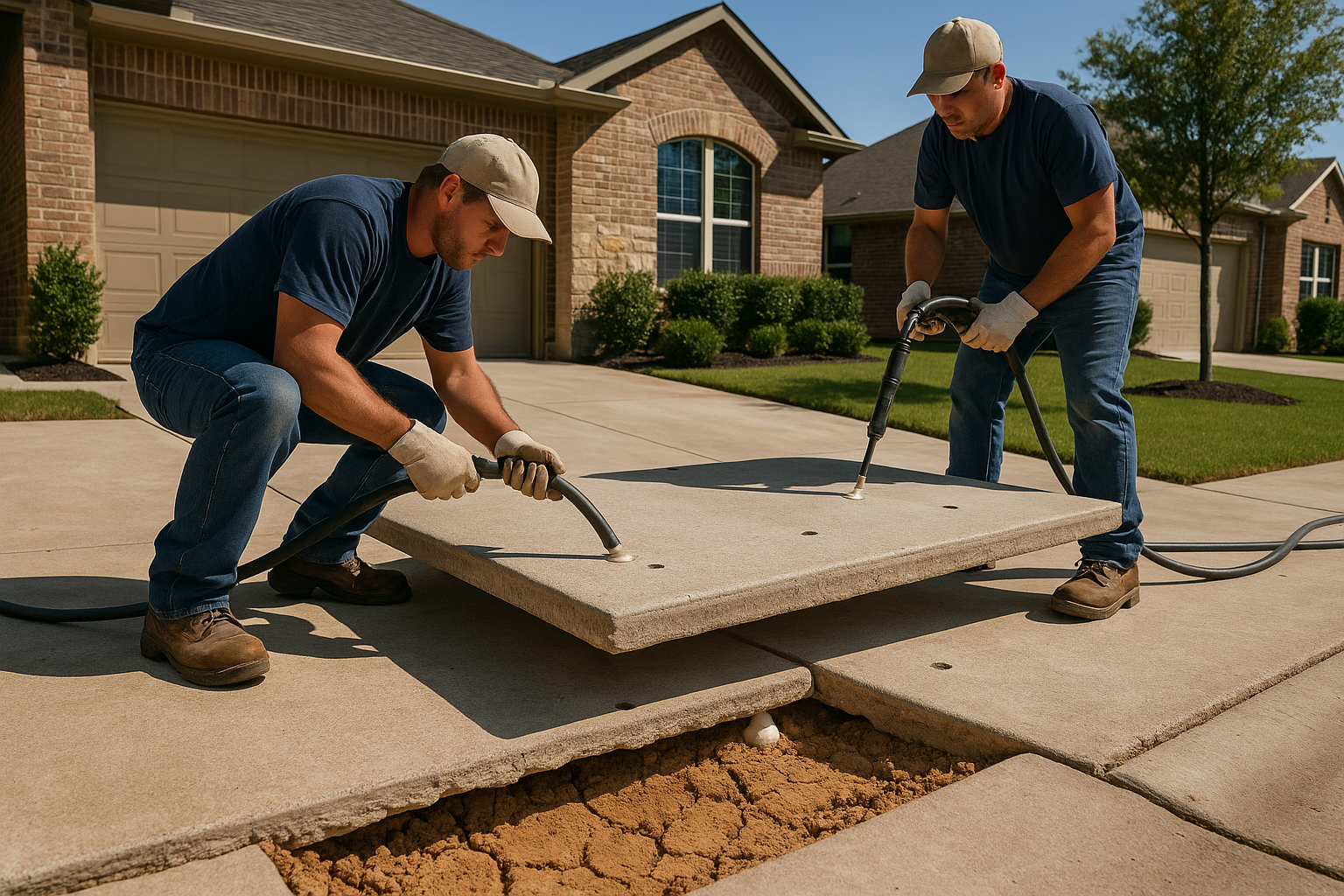
For many Texas driveway voids, polyurethane foam injection is the cleanest repair option. Instead of demolishing the slab, we drill small access holes through the concrete and inject a two-part expanding foam beneath it. The foam fills the empty space, firms up the weak area, and can lift the slab back toward proper grade when settlement has already happened.
This repair works well because the foam is lightweight, water resistant, and precise. We are not overloading already unstable soils with heavy fill material. We can target the voided zones, monitor lift as we go, and stop when the slab is supported and aligned. On residential driveways, the holes are small and the area can often be used much faster than with full replacement.
Typical benefits of foam void repair include:
- No need to remove and replace large sections of concrete in many cases
- Small drill holes instead of major demolition
- Fast cure time and minimal disruption
- Ability to both fill voids and correct settlement
- Less mess around landscaping, garage entries, and walkways
Homeowners naturally ask about cost. In Texas, driveway void repair with foam is often far less expensive than replacement, especially when the slab surface is still in decent shape. While every project depends on access, slab thickness, void size, and amount of lift needed, foam repair is commonly the better value when the goal is to stabilize and save the concrete. Full driveway replacement can run into the many thousands quickly, while targeted lifting and void filling is often a fraction of that. The main thing is to act before unsupported concrete breaks beyond repair.
As a broad rule, if the driveway is structurally sound and the problem is loss of support, foam injection is worth a hard look. If the slab is shattered, severely heaved, or has multiple failed panels, replacement may be the better route. A contractor should evaluate not just the visible crack pattern but also where the water is coming from and whether the surrounding joints are doing their job.
That is where related repairs matter. If joints are open or failed, they should be addressed so water does not continue attacking the base. If drainage is pushing runoff toward the slab, that should be corrected too. And if the settlement ties into a broader slab issue near the house or garage apron, broader Concrete Slab Repair may be needed along with standard Driveway Lifting.
When to Repair a Driveway Void in Texas
The best time to repair a driveway void is when you first notice it, not after the slab fails. Texas weather does not usually improve these conditions on its own. Summer drought can dry and shrink clay soils. Then a heavy storm can dump water into the same weak areas, washing out more material and accelerating settlement. That cycle is especially common across Central Texas.
If your driveway already has a visible gap or a section that has started to move, do not wait for a major crack. A supported slab can often be saved. An unsupported slab carrying vehicle traffic may not stay intact long. Once a panel snaps, options get more limited and more expensive.
Here are good times to schedule an inspection:
- After seeing water run under the driveway during rain
- When a joint opens up and the adjacent slab starts to settle
- After a drought followed by rapid soil movement
- Before listing a home for sale if the driveway shows separation or sinking
- As soon as you hear hollow areas or notice rocking under vehicle loads
Texas homeowners should also think about prevention. Keep runoff directed away from the slab, maintain positive drainage, and do not let downspouts discharge where water can track under the driveway. Seal joints as needed, especially where movement has created an entry point. Good joint maintenance and water control are what help a successful void repair last.
At Hill Country Slabs, we approach driveway void repair like contractors, not salesmen. First we figure out why support was lost. Then we recommend the repair that fits the slab condition, the soil, and the amount of movement. In many cases, that means foam injection to fill the void and restore bearing. In others, it may involve lifting, joint sealing, drainage corrections, or a combination of repairs to keep the problem from coming right back.
If you are in Austin, Round Rock, or nearby Texas communities and you suspect a hollow or washed-out driveway, it is better to address it early. Waiting can turn a manageable repair into a broken slab replacement. Contact Hill Country Slabs today or call (737) 287-4308 to schedule an evaluation and get a practical plan for your concrete driveway void repair in Texas.