In Texas, driveway joints take a beating. Between long stretches of heat, sudden downpours, shifting clay soils, and heavy vehicle traffic, those gaps in your concrete are doing more work than most homeowners realize. When the joint sealant dries out, cracks, or pulls loose, water starts getting where it should not. That is when small maintenance issues can turn into slab movement, edge cracking, washout, and expensive repairs.
At Hill Country Slabs, we see this all over Austin, Houston, and the surrounding areas. In Central Texas, expansive clay soils swell when wet and shrink when dry. Around Houston, wetter conditions and poor drainage can keep moisture working under a driveway for longer than it should. Either way, failed joint sealant lets water reach the base under the slab, and that is how driveways start sinking, separating, or breaking apart.
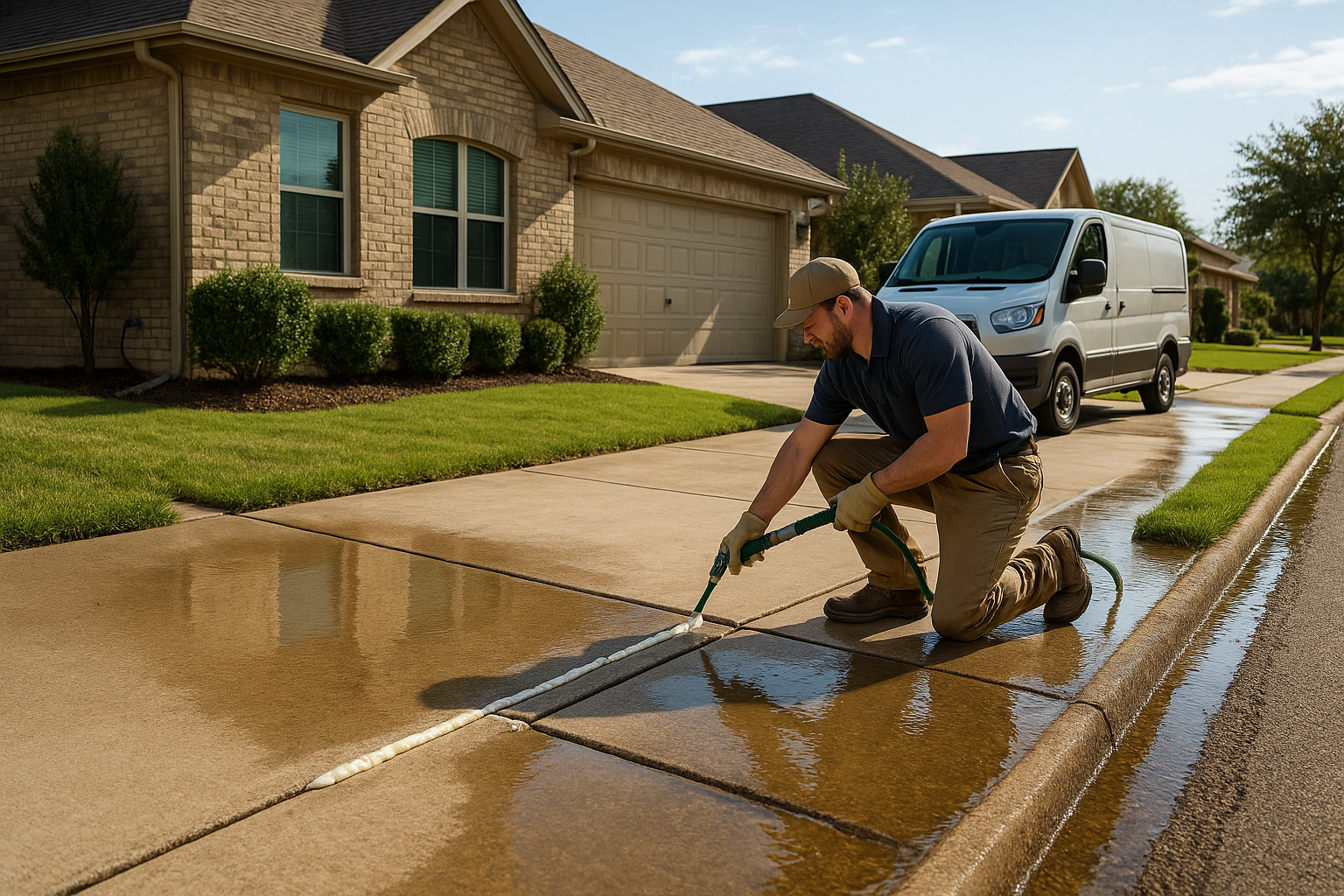
Driveway expansion joint sealing in Texas is a simple maintenance step that helps protect your slab. In many cases, sealing a joint at the right time can help you avoid bigger repairs later, especially if the driveway is still structurally sound.
What driveway expansion joint sealing does
An expansion joint is there to give concrete room to move. Texas concrete expands in summer heat and contracts during cooler weather. Without joints, that movement puts pressure on the slab and increases the odds of cracking. The problem is that the joint only works properly when it stays clean, open, and protected with the right sealant.
Good joint sealing does a few important things:
- Blocks surface water from running down into the base material under the driveway
- Reduces soil erosion that can create voids beneath the slab
- Helps limit weed growth and debris buildup inside the joint
- Protects slab edges from chipping and spalling
- Supports long-term concrete movement without letting the joint fail early
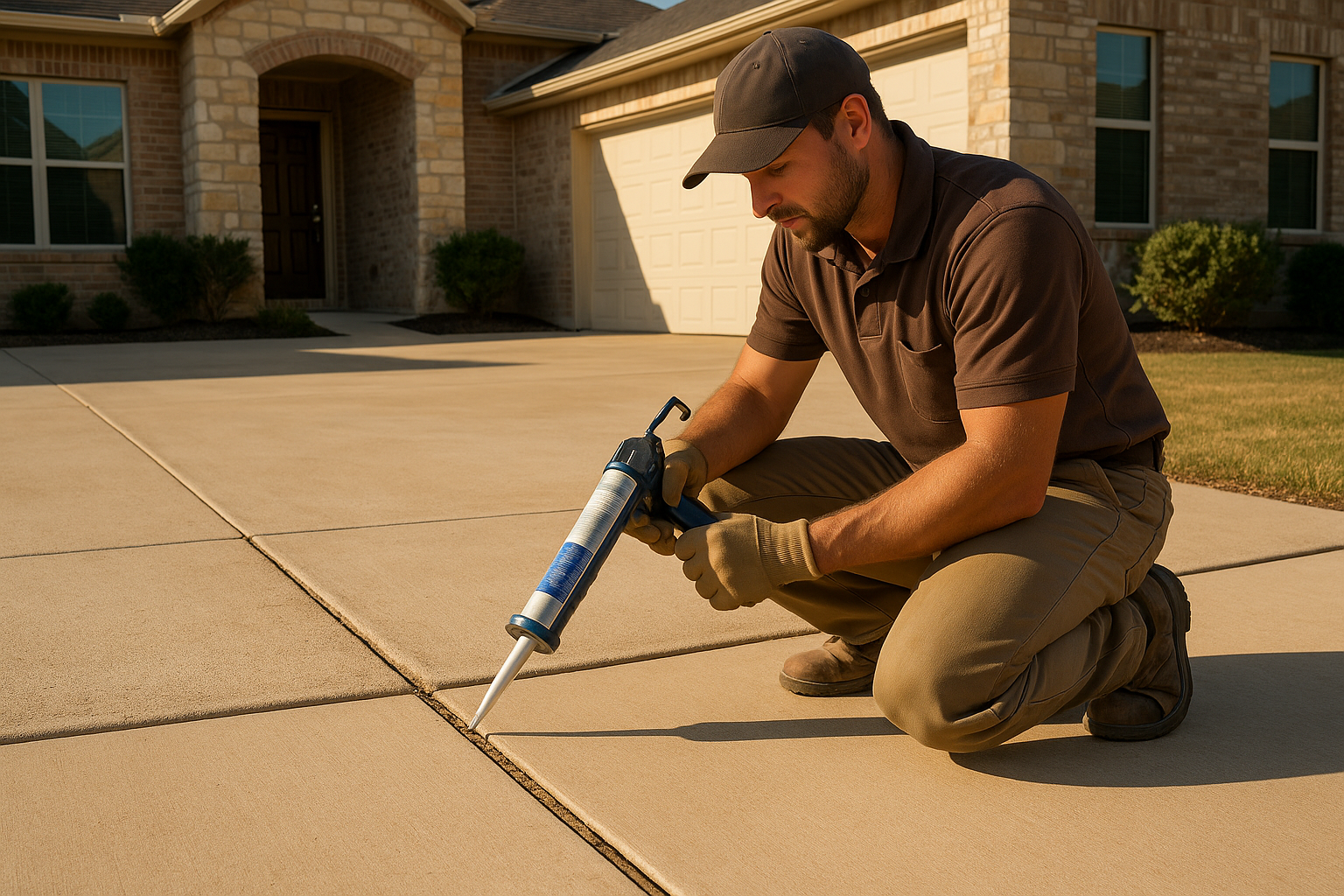
Think of the sealant as a flexible barrier. It is not there just to make the driveway look finished. It is there to keep water and debris out while still allowing the concrete to move. In Texas, that matters because our weather swings are hard on concrete and our soils react fast to moisture changes.
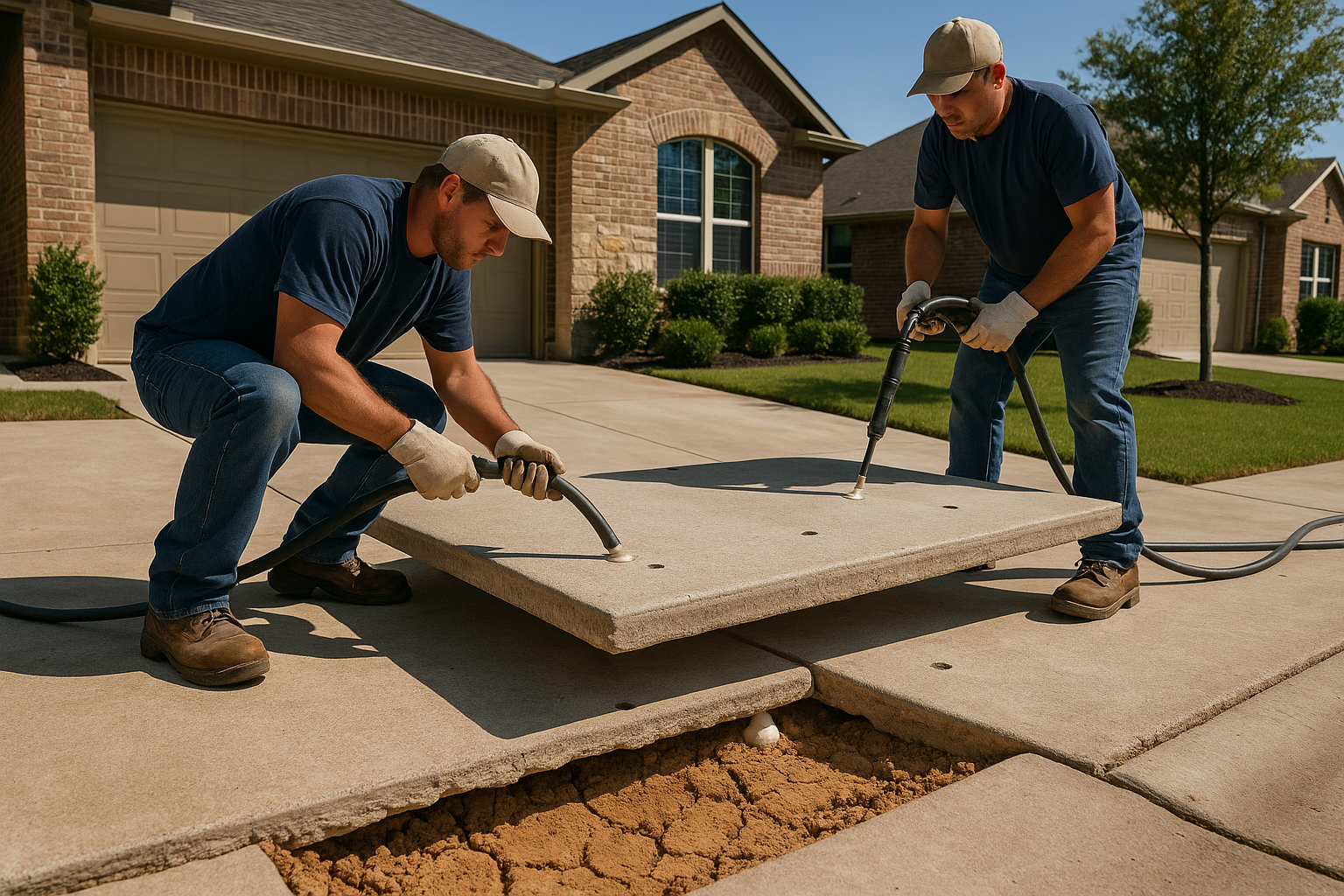
If water keeps getting into open joints, the base can soften, wash out, or settle unevenly. Once that happens, the driveway may need more than maintenance. It may need Driveway Leveling or even broader Concrete Slab Repair depending on the amount of movement.
Signs your driveway joints need new sealant
Most homeowners do not notice joint failure until the driveway already shows visible damage. The good news is there are usually warning signs. If you catch them early, sealing is often straightforward and far less expensive than repairing settled concrete.
Here is what to look for:
- Cracked, brittle, or missing sealant
- Gaps opening between slabs or between the driveway and garage floor
- Old fiberboard or filler sticking up, rotting, or falling apart
- Weeds or grass growing through the joints
- Standing water near joints after rain
- Joint edges chipping or breaking away
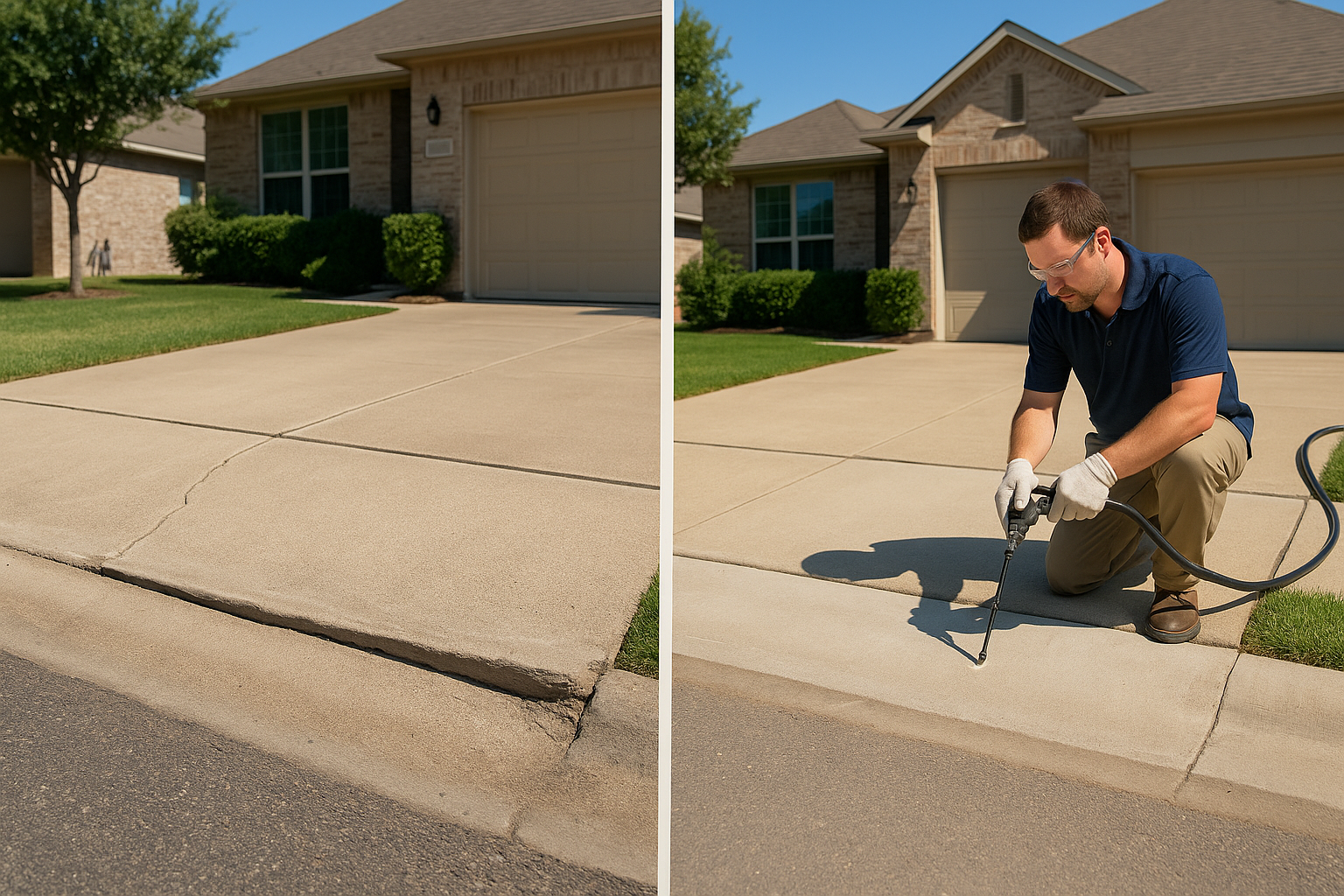
- One slab sitting lower than the next
In newer neighborhoods around Austin and other fast-growing Texas cities, we often see original builder-grade joint material fail sooner than people expect. The driveway may be only a few years old, but the sealant has already shrunk, separated, or deteriorated from UV exposure and traffic. In older areas of Houston, moisture intrusion and soft subgrade conditions can speed up the same problem.
If the joint is simply open or the sealant has failed, resealing may be enough. If the concrete has already dropped or a void has formed below the slab, sealing should be paired with correcting the movement first. Sealing a bad joint without addressing settlement is just trapping the symptom, not fixing the cause.
How sealing helps prevent sinking and cracks
One of the biggest reasons we recommend driveway expansion joint sealing in Texas is because of what it does below the surface. Concrete does not usually sink because the slab itself gets weak. It sinks because the supporting soil or base under it changes.
When water enters unsealed joints, several things can happen:
- Water moves down through the joint into the base material.
- Fine soils begin to wash away or soften.
- Expansive clay absorbs moisture, swells, then shrinks again during dry periods.
- Voids develop under portions of the slab.
- The slab loses support and starts to crack, rock, or settle.
That cycle is common in Texas. In the Hill Country and Central Texas, highly plastic clay soils are notorious for expansion and shrinkage. During drought, they pull away and leave gaps. During heavy rains, they swell fast. Along the Gulf Coast near Houston, prolonged moisture and drainage issues can keep soils unstable under concrete. Both situations put stress on driveways, especially at joints where water gets direct access underneath.
Proper joint sealing helps interrupt that process. It is not a guarantee against all movement, but it does reduce one of the biggest avoidable sources of water intrusion. For a homeowner, that can mean the difference between a basic maintenance job and a repair bill in the thousands.
As a rough rule of thumb, professional driveway joint sealing may cost around a few hundred dollars depending on linear footage and condition, while driveway settlement repairs can climb into the low thousands or more once lifting, stabilization, or slab repair is needed. If cracking spreads and sections have to be removed and repoured, costs go up even more. That is why we tell people not to ignore open joints.
We also recommend using quality materials made for concrete movement and exterior exposure. A proper installation includes cleaning the joint, removing failed material, making sure the depth is correct, and installing a flexible sealant that can handle Texas heat. If you want more detail on why joint protection matters, visit /expansionjoints or check out sealmyjoints.com.
When to seal vs replace driveway joints
Not every joint needs the same fix. Some just need to be cleaned out and resealed. Others have deteriorated so badly that the old filler has to be removed completely and rebuilt with the right joint system. In more serious cases, the joint is not the main problem at all. The slab has already moved, and the repair plan needs to address elevation, support, or cracking before sealing happens.
Seal the joint when:
- The concrete panels are still in good shape
- The gap is visible but the slab edges are mostly intact
- The old sealant is dried out, split, or missing
- There is minor water intrusion but no major settlement yet
- The driveway drains reasonably well overall
Replace or rebuild the joint when:
- Old expansion material has rotted or collapsed
- The joint walls are dirty, uneven, or damaged enough that a simple top-off will not hold
- The opening has widened or deformed over time
- Previous patch materials have failed repeatedly
Address slab movement first when:
- One side of the driveway has dropped
- Cracks are spreading across slab sections
- The driveway rocks under vehicle load
- Water is clearly washing out soil beneath the concrete
- There is separation at the garage, walkway, or curb
A good contractor will look at the whole driveway, not just the gap. If we see active settlement, soft spots, or drainage issues, we are going to talk about those first. Sometimes the best plan is leveling the slab and then sealing the joints so the repair lasts longer. Other times, if the joint is the only issue, we can keep it simple and protect the driveway before bigger damage starts.
Timing matters too. In Texas, the best time to inspect driveway joints is after extreme summer heat, after heavy rain periods, or anytime you notice the sealant pulling away from the concrete. Waiting until the driveway has obvious vertical displacement usually means the problem has already moved past basic maintenance.
Protect your driveway before small joint problems become big concrete repairs
Driveway expansion joint sealing in Texas is one of those jobs that does not look like much from the street, but it plays a big role in how long your concrete holds up. With our heat, rain, and shifting soils, open joints can let in enough water to start erosion, settlement, and cracking faster than most people expect.
If your driveway joints are brittle, open, or missing sealant, now is the time to deal with it. Hill Country Slabs helps homeowners identify whether the fix is simple sealing, joint replacement, or a larger repair like leveling or slab stabilization. We serve homeowners across the region, including Austin and Houston.
Ready to protect your driveway? Contact Hill Country Slabs at /contact or call (737) 287-4308 to schedule an inspection.