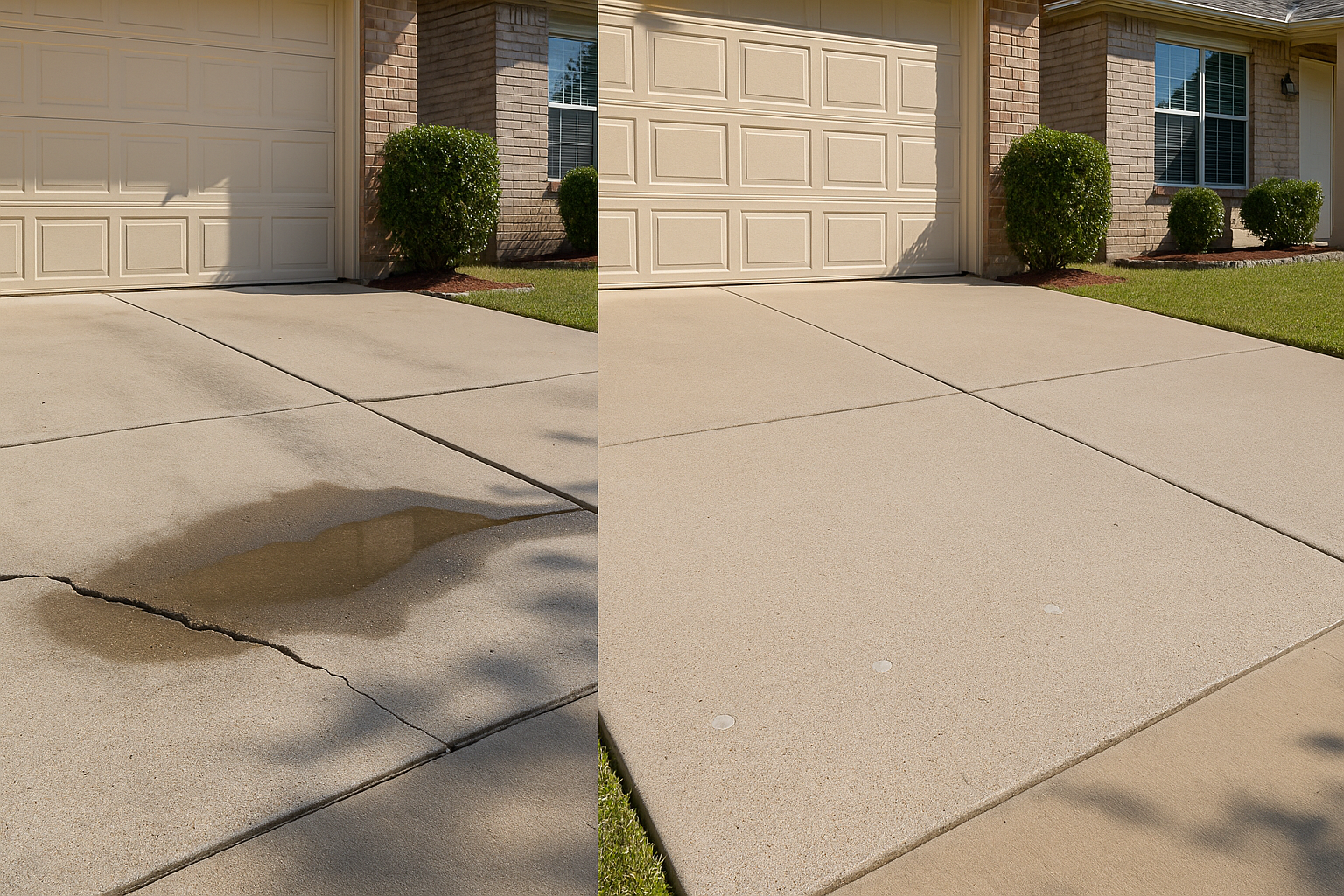
In Texas, a sunken sidewalk usually starts as a small dip and turns into a real problem fast. One slab drops, water starts collecting, and before long you have a trip hazard in front of the house or business. We see it all over Austin, Round Rock, and Cedar Park, especially after long dry stretches followed by heavy rain.
The good news is that a lot of sidewalk settling can be repaired without tearing everything out. With polyurethane foam leveling, we can lift and stabilize a sunken panel through small injection holes instead of replacing the whole section. In many cases, that means less mess, less downtime, and a lower bill. For property owners looking into Sidewalk Repair or broader Concrete Slab Repair, this is often the first option worth considering.
What Causes a Sidewalk to Sink in Texas?
Texas concrete moves because Texas soil moves. Around Central Texas, you deal with expansive clay that swells when it gets wet and shrinks when it dries out. That constant cycle leaves voids under sidewalks and walkways. Once the base loses support, the slab starts dropping.
In other parts of the state, sandy or loosely compacted fill can wash out under the concrete. We also see trouble where builders backfilled utility trenches and the soil never fully compacted. Add runoff from downspouts, irrigation overspray, or poor grading, and it does not take much for a sidewalk panel to settle unevenly.
Common Texas causes of sunken sidewalks
- Expansive clay soils shrinking during drought and shifting during heavy rain
- Washout from drainage problems around flower beds, downspouts, and sloped yards
- Poor soil compaction after construction or utility work
- Tree roots changing soil moisture or physically displacing the slab
- Expansion joint failure letting water run below the concrete
Joint issues are a big one. When the joints between slabs open up or the sealant fails, water gets down into the base material and starts eroding support. That is why we always recommend maintaining your expansion joints. If you need more information on keeping joints sealed and protected, take a look at sealmyjoints.com.
How Foam Leveling Repairs a Sunken Sidewalk
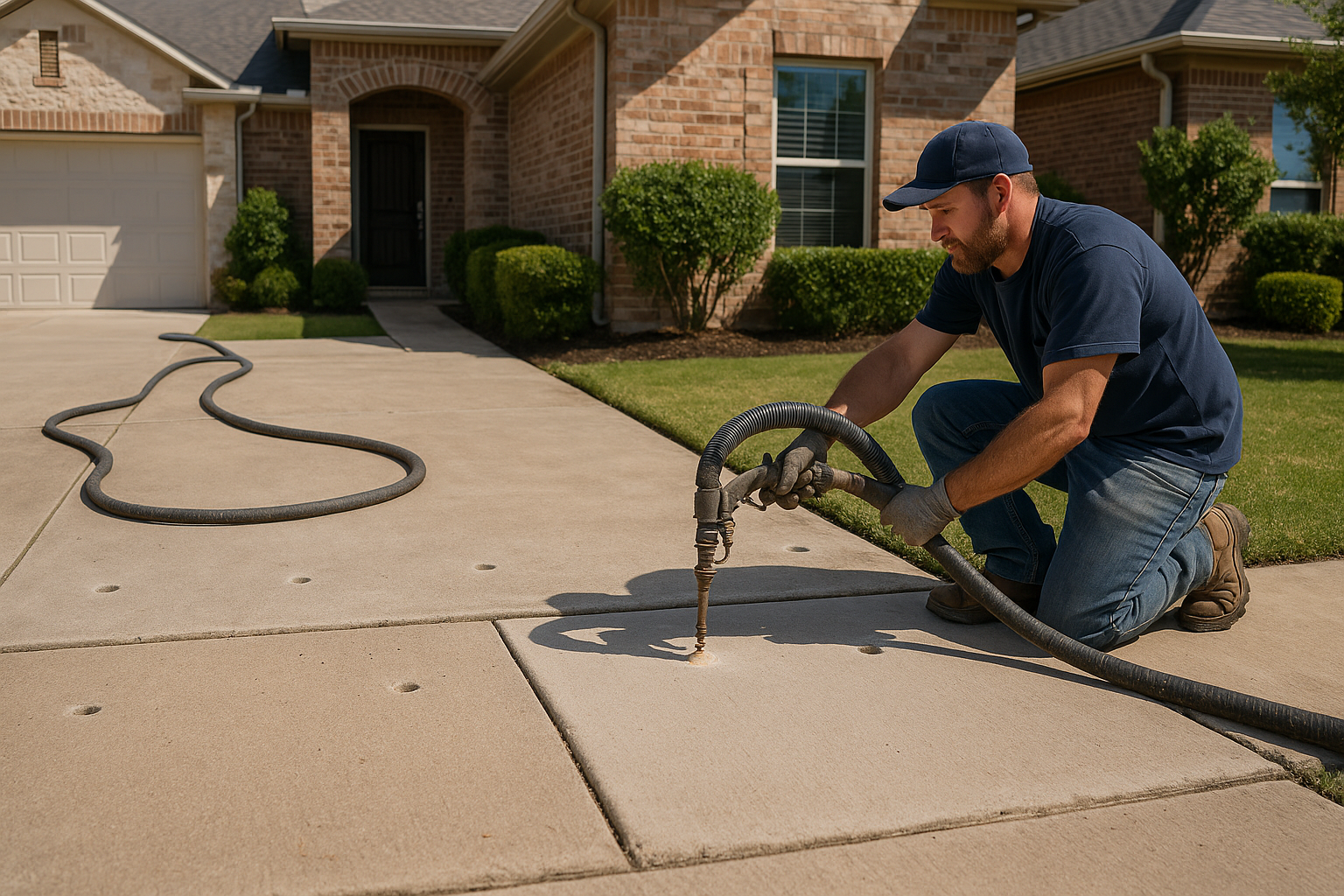
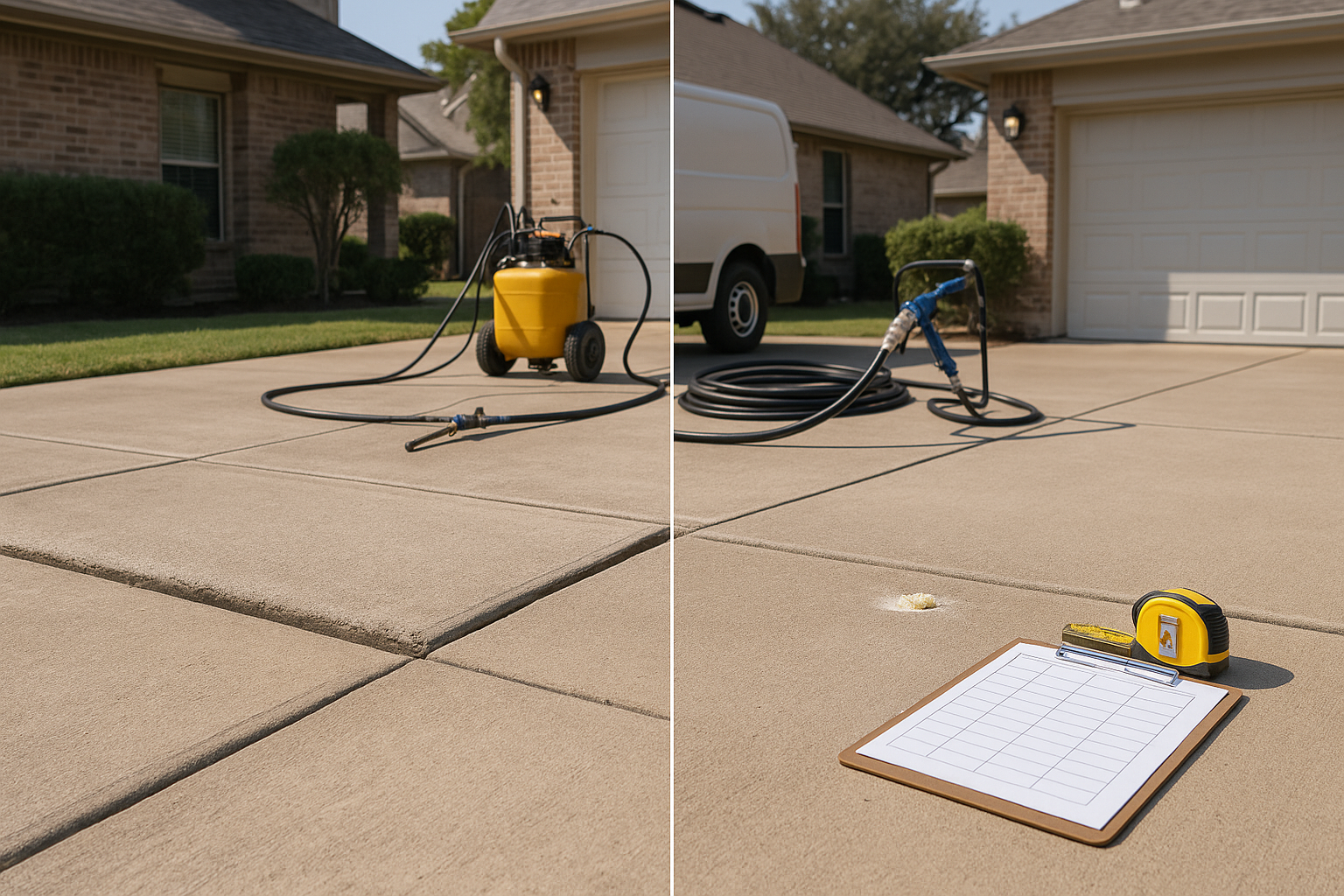
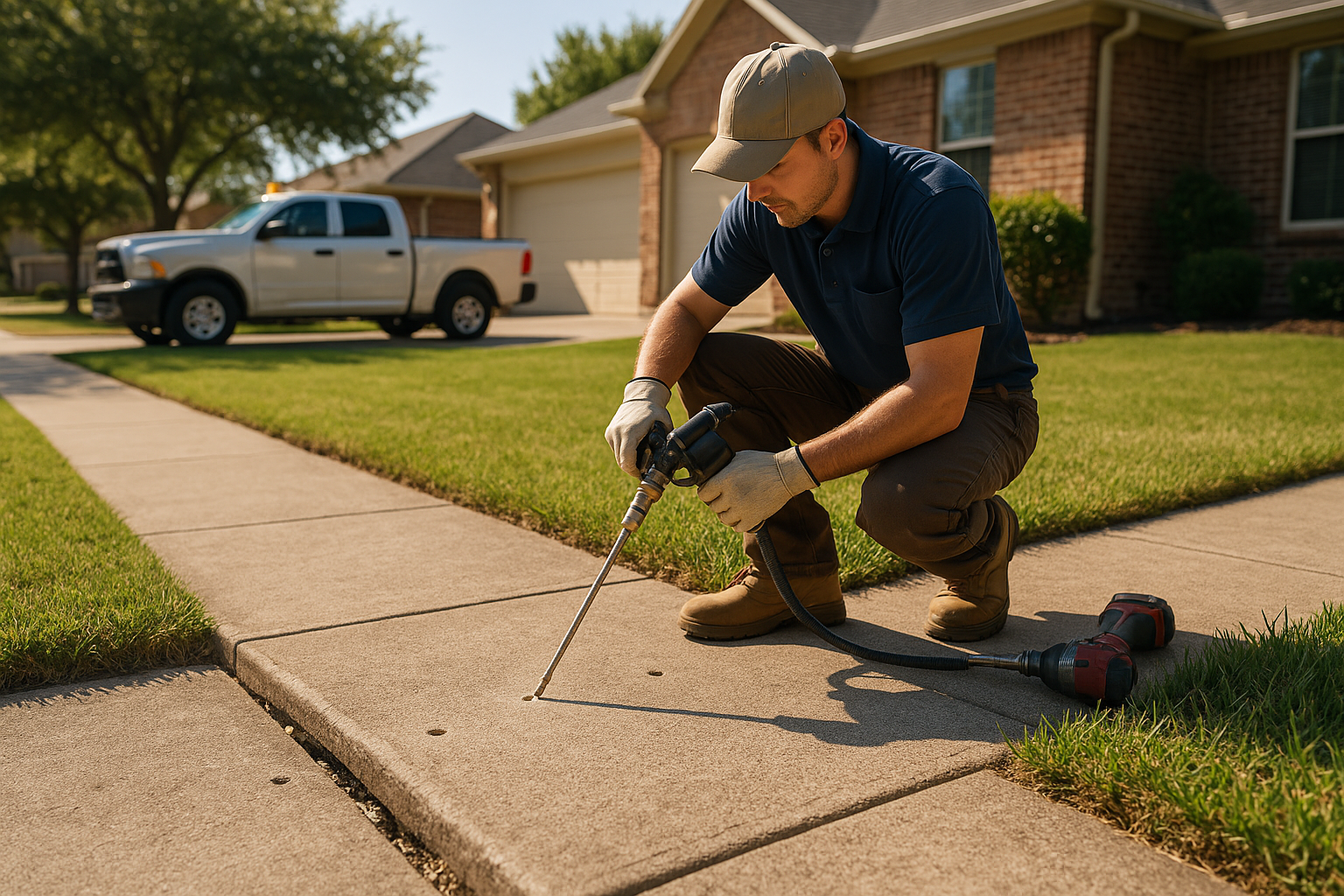
Foam leveling is a straightforward repair when the concrete is still in decent shape. Instead of demolishing the slab, we drill small holes through the settled section and inject high-density polyurethane foam underneath. As the material expands, it fills voids, compacts loose soil, and gently raises the concrete back toward its original position.
For most sidewalk repairs, the process moves quickly. There is no need for large equipment tearing up the yard, and there is usually very little disruption to the surrounding area. Once the slab is lifted and stabilized, the holes are patched and the walkway can often be used the same day.
Why Texas property owners choose foam leveling
- Faster turnaround than full replacement
- Smaller drill holes and less visible repair work
- Less mess around landscaping, fencing, and irrigation
- Lightweight material that will not overload weak soils
- Same-day use in many cases
This method works especially well when one or two panels have settled but the rest of the sidewalk is still sound. If the slab is badly broken, crumbling, or has major root damage, replacement may be the better route. But if the concrete is structurally intact and the main problem is loss of support underneath, foam lifting is usually the more practical fix.
On Texas jobs, we also look at what caused the sinking in the first place. Lifting the slab without addressing drainage, open joints, or active washout is only half the job. A proper repair should include stabilizing the base and fixing the conditions that let the slab drop.
When to Repair vs Replace a Sunken Sidewalk
Not every uneven sidewalk needs to be replaced. A lot of homeowners assume demolition is the only answer, but that is not true. The main question is whether the slab still has enough structural integrity to be lifted safely.
Foam leveling is usually the better option when:
- The slab is sunken but mostly intact
- The height difference is creating a trip hazard
- There are minor cracks but no major breakage
- The base has voids or washout that can be stabilized
- You want a faster repair with minimal disturbance
Replacement is usually the better option when:
- The concrete is severely cracked or shattered
- The slab has heaved from root pressure beyond practical repair
- The sidewalk was poured too thin or was built poorly to begin with
- There is widespread failure across multiple sections
- Drainage and grade problems require reworking the whole area
For a typical Texas home, the biggest benefit of repair is avoiding a drawn-out replacement project. Tearing out and repouring means demo, haul-off, forming, new concrete, curing time, and often more interruption around the property. Foam leveling can often correct the hazard in a fraction of the time and at a lower cost.
We see this a lot in neighborhoods around Austin and Round Rock where sidewalks settle at driveway approaches, front walkways, and side-yard paths. In Cedar Park, it is common to find panels dropping near irrigation lines or after years of moisture swings in clay-heavy soil. In those situations, lifting the slab can restore safety without replacing good concrete just because the subgrade moved.
How Much Sunken Sidewalk Repair Costs in Texas
Cost depends on how far the slab has settled, how much void space is underneath, how accessible the area is, and whether there are drainage issues to correct. But in general, foam leveling is usually more affordable than replacement.
For many residential repairs in Texas, foam leveling a sunken sidewalk section may fall around $600 to $1,500, while larger or more complex jobs can run higher. Full sidewalk replacement for the same area often ends up at 2 to 3 times the cost once you include demolition, disposal, forming, pouring, and finishing.
Here is what commonly affects price:
- Amount of settlement and number of slabs involved
- Void size under the concrete
- Access to the repair area
- Condition of the slab and whether patching is needed
- Drainage corrections or joint sealing recommended with the repair
It is also worth thinking beyond the repair ticket. Uneven sidewalks create liability issues and are one of the most common trip hazards we see on residential and commercial properties. Fixing a settled panel early is usually cheaper than waiting until the slab breaks apart or the surrounding sections start moving too.
If you have a sunken sidewalk in Texas, the best first step is getting it evaluated before the problem spreads. In a lot of cases, you do not need a full tear-out. You just need the slab lifted, stabilized, and the water intrusion handled correctly.
Hill Country Slabs provides practical repair options for uneven concrete across Central Texas. If your walkway is settling in Austin, Round Rock, Cedar Park, or nearby areas, we can help determine whether foam leveling or replacement makes more sense for the site. Contact us at /contact or call (737) 287-4308 to schedule an estimate.