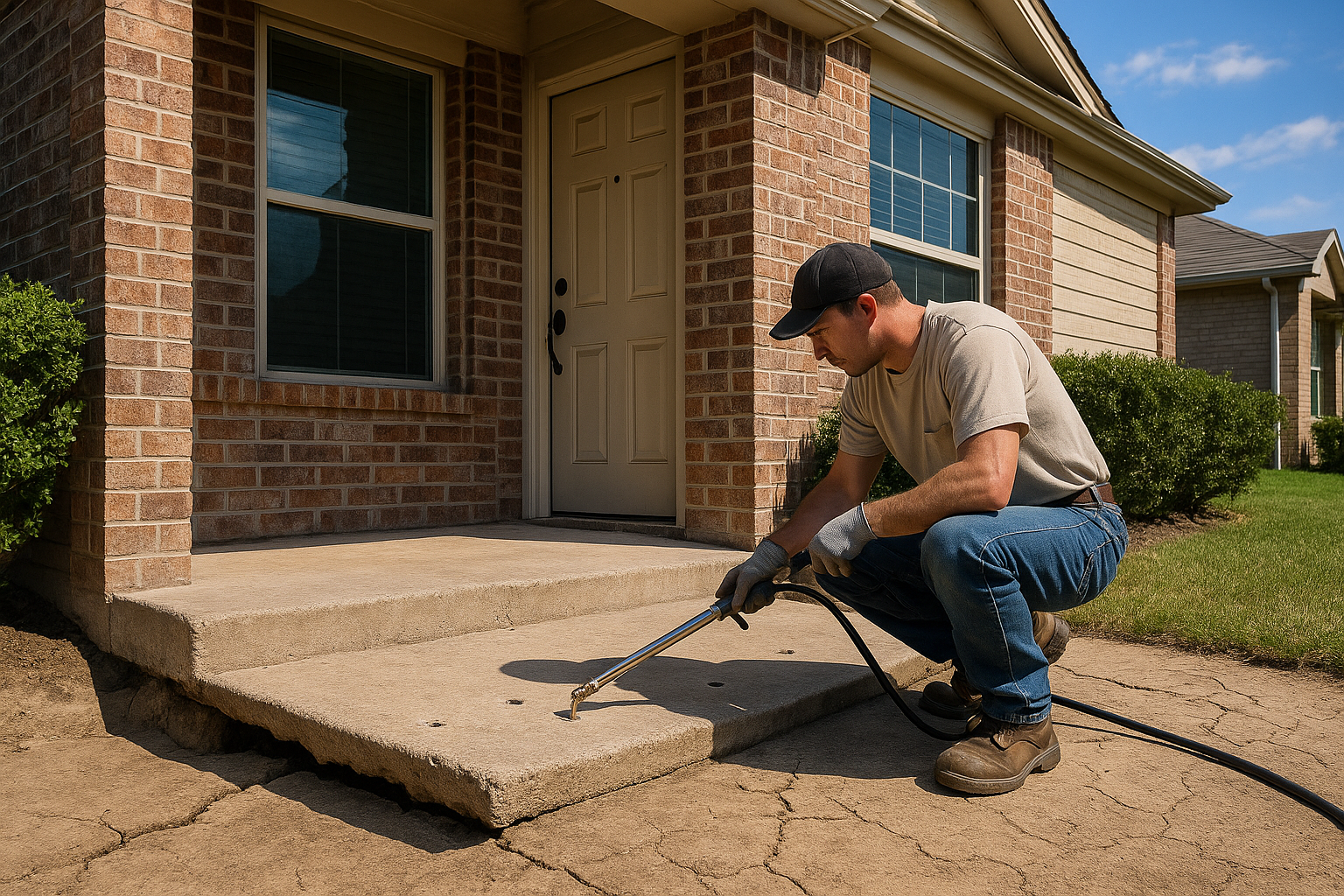
If you’ve got a front porch that’s dropped, tilted, or started pulling away from the house, you’re not alone. We see sunken porch slabs all over Texas, especially around Austin, Round Rock, and other areas where shifting soils and long dry spells beat up concrete. A porch that settles is more than an eyesore. It can create a tripping hazard, hold water against the house, and start stressing the entry steps, brick veneer, and nearby foundation.
The good news is that a lot of porch slabs do not need to be torn out and replaced. In many cases, sunken porch repair in Texas can be handled by lifting the slab back into position with polyurethane foam injection. That means less mess, faster turnaround, and often a lower cost than replacement. The key is catching the problem before the settlement gets worse and starts affecting more of the structure.
What Causes a Porch to Sink in Texas?
Texas is rough on concrete, plain and simple. A big reason is soil movement. In Central Texas and across a lot of the state, we deal with expansive clay soils that swell when they get wet and shrink when they dry out. That constant movement creates voids under slabs and leaves sections of concrete unsupported. Once that support is gone, the porch starts to drop.
Weather makes it worse. We get long stretches of summer heat, followed by heavy rain events that soak the ground fast. That cycle is hard on porch slabs because the soil underneath is expanding and contracting over and over. In areas around Austin and Round Rock, it’s common to see concrete settlement tied directly to clay-heavy soils and drainage problems.
Here are the most common causes we run into:
- Expansive clay soil movement under the porch
- Poor compaction when the porch was originally built
- Drainage issues that wash out or soften the supporting soil
- Gaps at expansion joints that let water get underneath the slab
- Plumbing or irrigation leaks near the front entry
- Erosion from downspouts dumping too close to the house
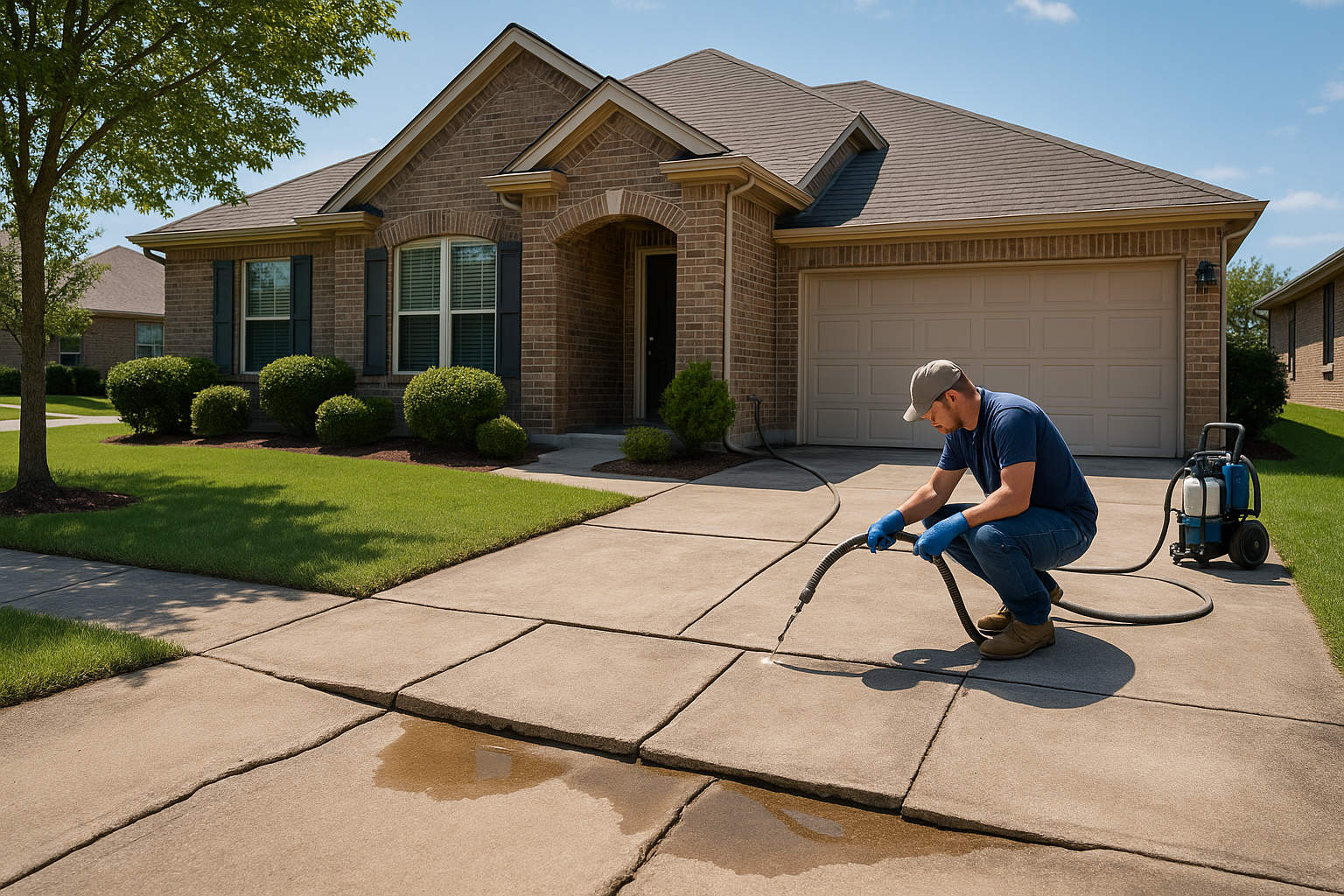
One thing homeowners miss is the role of joints. If the joint between the porch and the house, steps, or walkway is open, water can run straight down where you don’t want it. That’s why we always recommend sealing joints as part of a long-term fix. You can learn more on our expansion joints page, and for joint sealing materials and info, visit sealmyjoints.com.
Can a Sunken Porch Be Lifted Instead of Replaced?
In a lot of cases, yes. If the porch slab is still structurally decent and not completely shattered, lifting it is usually worth a close look. We handle many settled entry slabs with the same approach used in Concrete Slab Repair and Patio Leveling. The idea is simple: stabilize the soil conditions, fill the voids, and bring the slab back up as close as safely possible.
A replacement may be necessary if the concrete is badly broken, the slab is too thin, or the supporting conditions are beyond repair. But homeowners are often surprised to learn that a porch with noticeable settlement can still be salvaged. If the slab has dropped 1 to 3 inches, foam leveling is often a strong option. Even when the porch has settled more than that, we can sometimes improve the position enough to remove trip hazards and stop further damage.
Here’s what we look at before recommending repair over replacement:
- The overall condition of the concrete
- How much the porch has settled
- Whether there are major cracks or just minor separation
- The condition of the supporting soil
- Drainage and water control around the front entry
- Whether the porch is independent or tied into other structural elements
From a cost standpoint, lifting is often easier on the budget. Full demo and replacement can climb fast once you factor in removal, disposal, forming, pouring, curing, and possible finish matching. Porch leveling with foam is often the more practical route when the slab is still usable. In many situations, homeowners are looking at a repair cost that is significantly less than full replacement, especially when the problem is caught early.
How Polyurethane Foam Porch Leveling Works
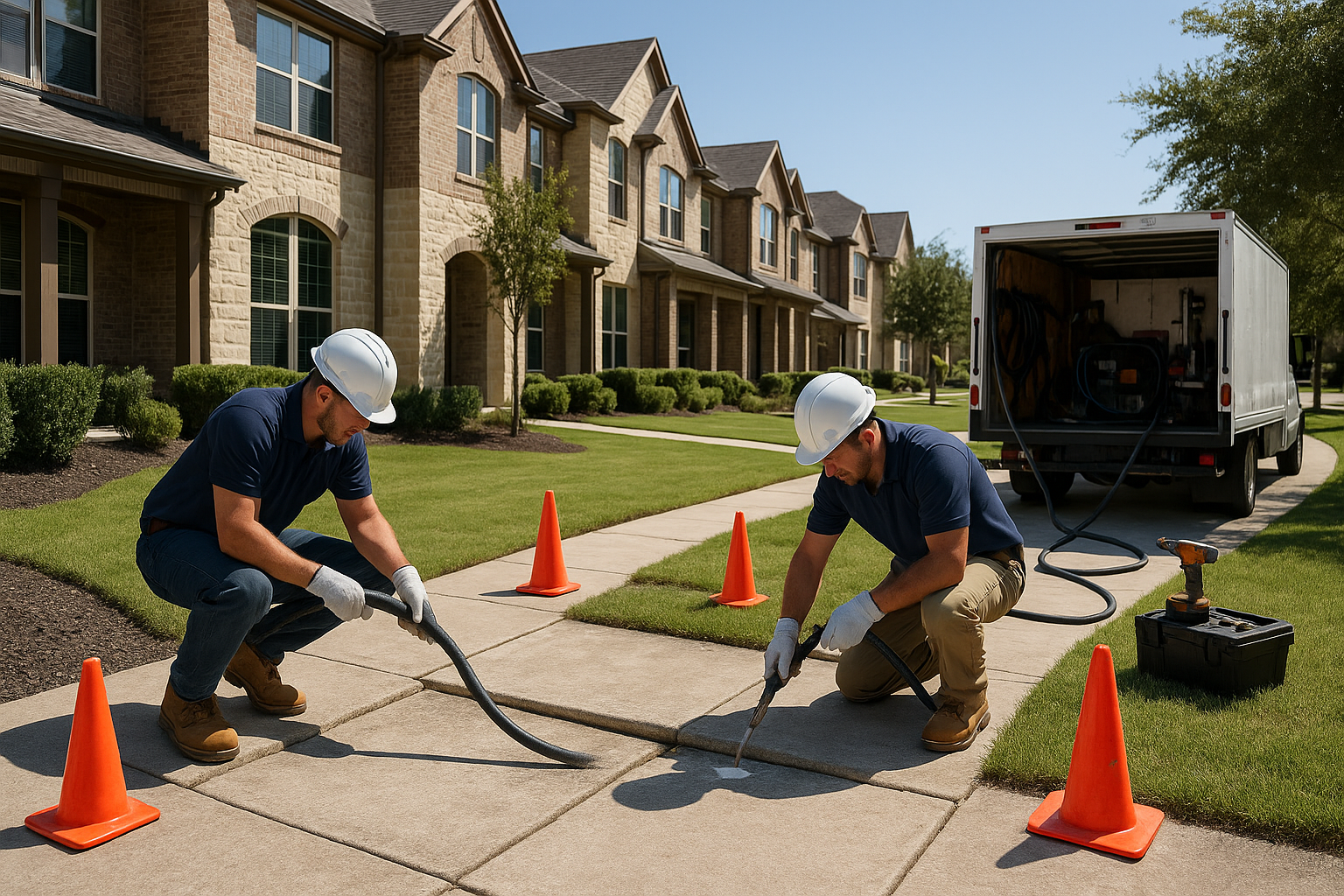
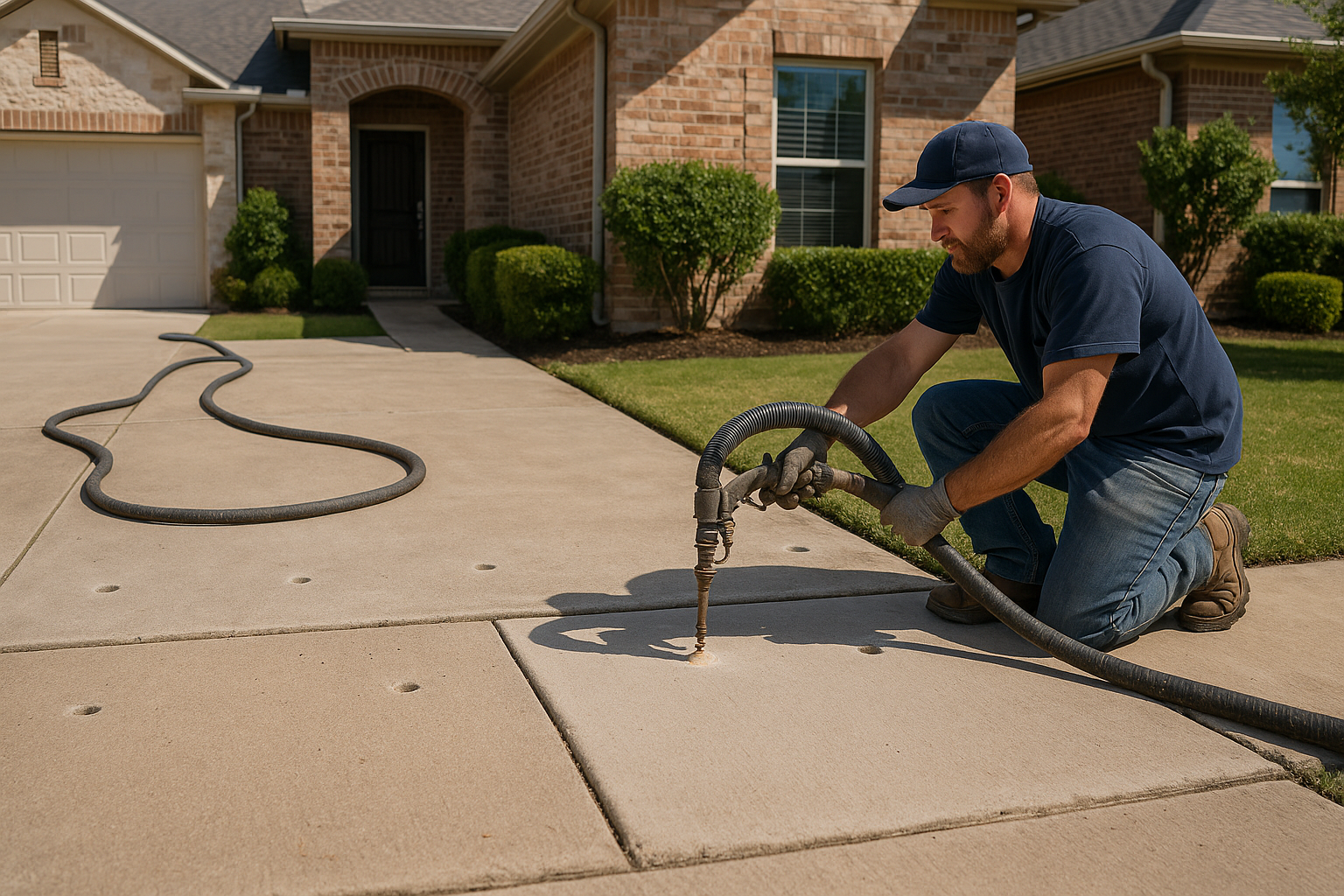
Polyurethane foam leveling is a clean and efficient way to raise settled concrete. We drill small holes through the porch slab and inject a two-part structural foam underneath. As the material expands, it fills empty space, compacts loose soil, and gently lifts the slab. The process is controlled in real time so we can make small adjustments as the porch comes up.
This method works well for porches because it doesn’t add much weight to already unstable soils. Traditional mudjacking uses a heavier slurry. Foam is lighter, fast-curing, and usually gets the slab back in service the same day. That matters on a front porch where people are walking in and out of the house every day.
Typical benefits of foam porch leveling include:
- Small drill holes instead of major demolition
- Fast cure time with minimal downtime
- Lightweight material that won’t overload weak soils
- Void filling and stabilization under the slab
- Lower disruption to landscaping and entry access
On most jobs, the repair is done in a matter of hours, not days. That doesn’t mean every porch is a perfect candidate, but for the right slab, it’s one of the best repair methods we have. It’s especially useful when the porch has separated slightly from the step or doorway and you want to correct the slope before water starts draining back toward the house.
After the lift, we also pay attention to the surrounding details. If a joint is left open, or if a downspout keeps dumping beside the porch, you can end up right back where you started. That’s why the repair plan should include drainage corrections and proper sealing where needed. Leveling the slab is only part of the job. Keeping water out from under it is what helps the repair hold up.
When to Repair Your Porch Before the Damage Spreads
A lot of porch repairs get more expensive because the warning signs were ignored too long. A slab that starts with a small drop can keep moving. Once that happens, you may also see cracked brick at the front entry, separation at trim lines, sticking doors, or water ponding near the threshold. None of that gets better by waiting.
Here are signs it’s time to get your porch checked:
- The slab is visibly lower than the step or doorway
- There’s a tripping edge at the front walk
- Water drains toward the house after rain
- Cracks are widening or the porch is pulling away
- Gaps at the joints are open and letting in water
- The soil around the porch shows shrinkage or erosion
In Texas, timing matters. If you wait through another drought and rain cycle, that porch can settle farther and create a bigger repair. We tell homeowners all the time that early intervention is usually the cheapest move. A straightforward lift and seal job is a lot better than replacing the porch and then addressing water damage at the entry on top of that.
For homes in Central Texas, North Texas, and other regions with active clay soils, it makes sense to inspect concrete around the house every year. Check the porch, driveway, walkways, and patios for movement. If one slab is dropping, others may be showing the same soil issues. Our crews regularly help homeowners in Austin, Round Rock, and nearby communities solve these problems before they spread across the property.
If your front porch has started to sink, don’t assume replacement is your only option. There’s a good chance it can be lifted, stabilized, and put back into service without tearing everything out. Hill Country Slabs handles concrete settlement problems across Texas with practical repair methods that fit the slab, the soil, and the site conditions.
Need help with sunken porch repair in Texas? Contact Hill Country Slabs for an evaluation. We’ll tell you straight whether the porch can be lifted or if replacement makes more sense. Visit /contact or call (737) 287-4308 to get started.