If you’ve got a pool deck that’s dropped on one side, pulled away from the coping, or started holding water after every storm, you’re not alone. We see this all over Central Texas and beyond. Sunken pool deck repair in Texas is usually less about bad concrete and more about what’s happening under it. Expansive clay soils, long dry spells, sudden heavy rains, and poor drainage can all leave sections of deck uneven and unsafe.
The good news is most pool decks do not need to be torn out and replaced. In many cases, we can lift and stabilize the slab with modern foam injection, restore drainage, and reduce trip hazards without turning your backyard into a demolition zone. For homeowners in Austin, Round Rock, and surrounding areas, that usually means faster repairs, less mess, and lower cost.
What Causes a Pool Deck to Sink in Texas?
Texas soil is tough on concrete. Around Austin, Round Rock, San Antonio, Georgetown, Temple, and plenty of other parts of the state, we deal with expansive clay that swells when it gets wet and shrinks when it dries out. That constant movement creates voids beneath concrete slabs. Once the support under a pool deck starts to disappear, the slab can settle.
Here are the most common reasons we see pool decks sink:
- Expansive clay soils that shrink during drought and shift during wet periods
- Soil washout caused by splash-out, poor grading, broken drainage lines, or runoff from heavy Texas storms
- Improper compaction when the deck was originally poured
- Leaks around the pool or plumbing that soften or erode the subgrade
- Tree roots changing moisture levels in nearby soil
- Failed or missing expansion joints that let in water and accelerate movement
A lot of homeowners first notice the problem after a hot summer followed by a stretch of rain. The deck may have looked fine in June, then by fall there’s a lip at a control joint, ponding water near the pool edge, or a corner that feels lower underfoot. That pattern is common in Texas because our weather swings hard. One season the soil is baked dry, the next it gets saturated fast.
Expansion joints matter more than most people realize too. When joints fail, water gets down along the slab edge and starts working on the soil underneath. If your joints are cracked, missing, or pulling loose, it’s smart to address that along with leveling. You can learn more about that at /expansionjoints or visit sealmyjoints.com.
Signs You Need Sunken Pool Deck Repair
Some settlement is easy to spot. Some isn’t. Around a pool, even a small drop can become a safety issue because wet concrete and uneven surfaces don’t mix. If you’re seeing any of the following, it’s worth getting the deck checked before the problem gets worse.
- Trip hazards where one slab panel sits higher than the next
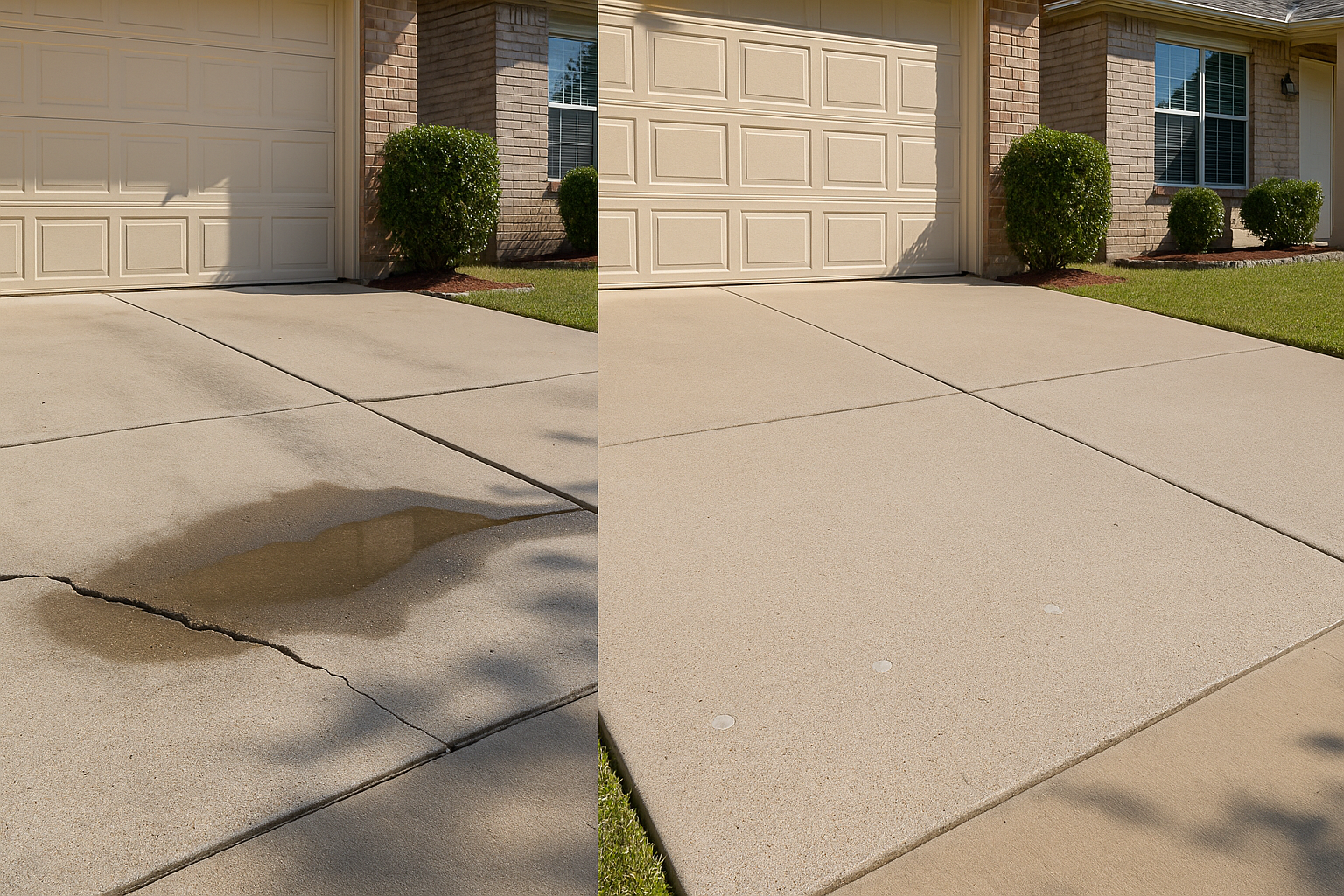
- Standing water or birdbaths that stay on the deck after rain or cleaning
- Separation at the pool coping or gaps opening between the deck and pool structure
- Cracks widening over time, especially near corners or joints
- Water draining toward the house or pool instead of away from it
- Loose mastic or failed joint sealant between deck sections
- Areas that sound hollow because soil support underneath has washed away
One thing we tell homeowners all the time: don’t wait until the deck gets bad enough that someone catches a flip-flop on it. A height difference that seems minor on a dry day can be a real hazard once the deck is wet. It can also put extra stress on adjoining concrete and nearby features, which means a smaller repair today can turn into a larger one later.
If the issue extends beyond the pool area, you may also want to look at broader Concrete Slab Repair options. Settlement around patios, walkways, and adjoining flatwork is often connected.
How Foam Leveling Repairs a Sunken Pool Deck
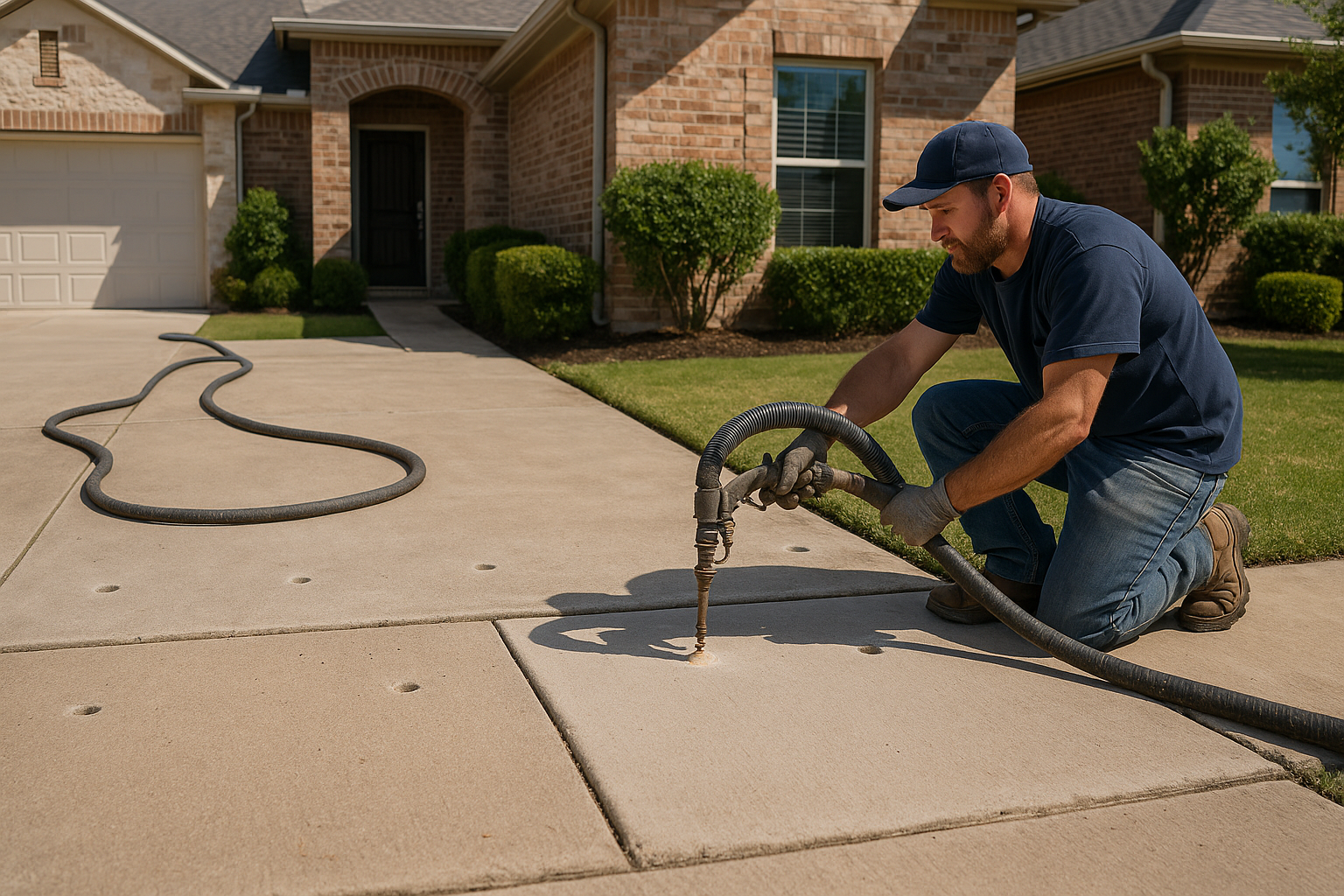
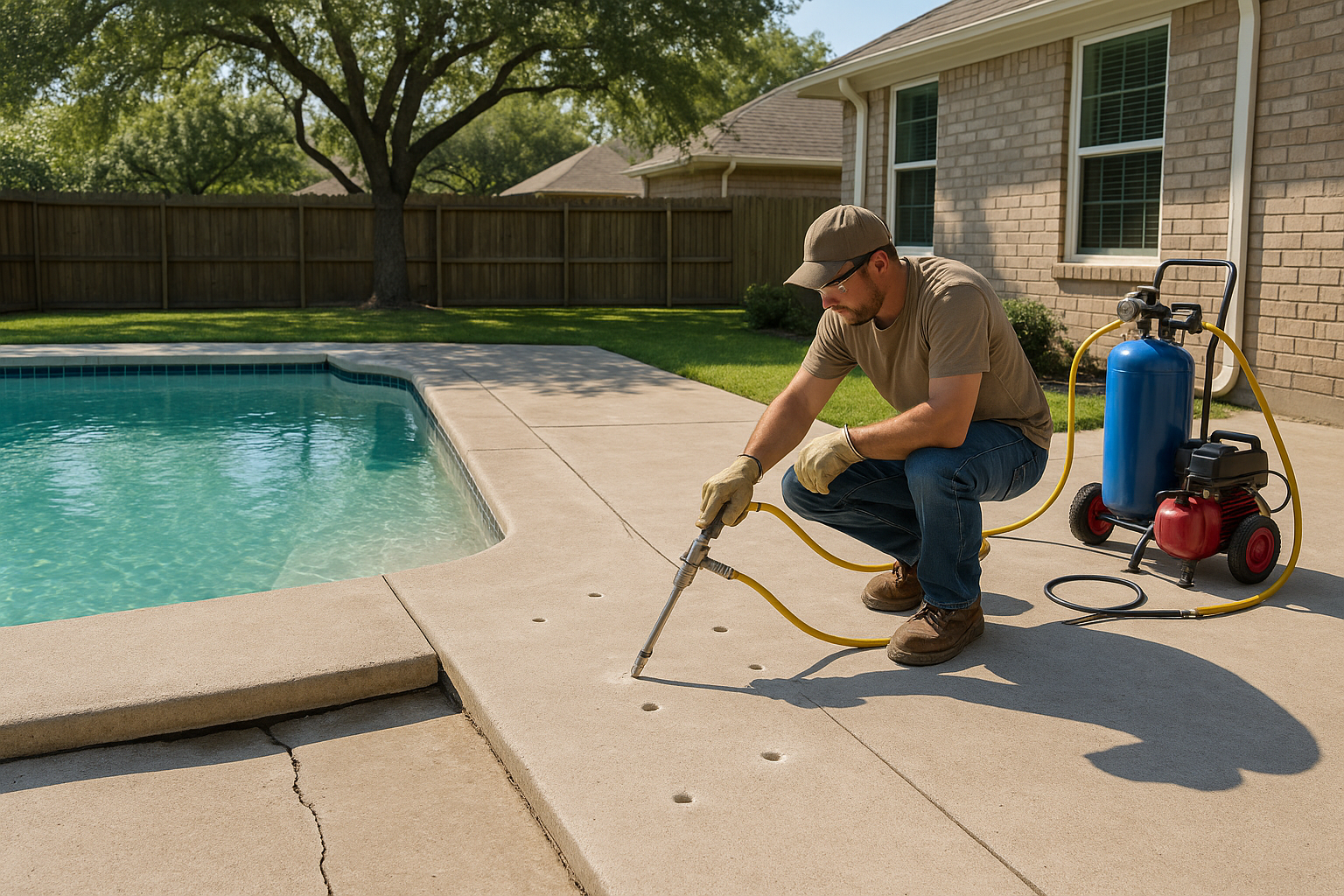
For most settled pool decks, polyurethane foam injection is the right fix. This process is also called foam leveling or slab lifting. Instead of tearing out the concrete, we drill small holes through the affected section, inject high-density foam underneath, and use that material to fill voids, stabilize the soil interface, and carefully raise the slab back toward grade.
It works well around pools because it is controlled, clean, and fast. We’re not bringing in heavy demolition equipment, and we’re not waiting on new concrete to cure for days. In many cases, the repaired area can be used much sooner than replacement.
What the process usually looks like
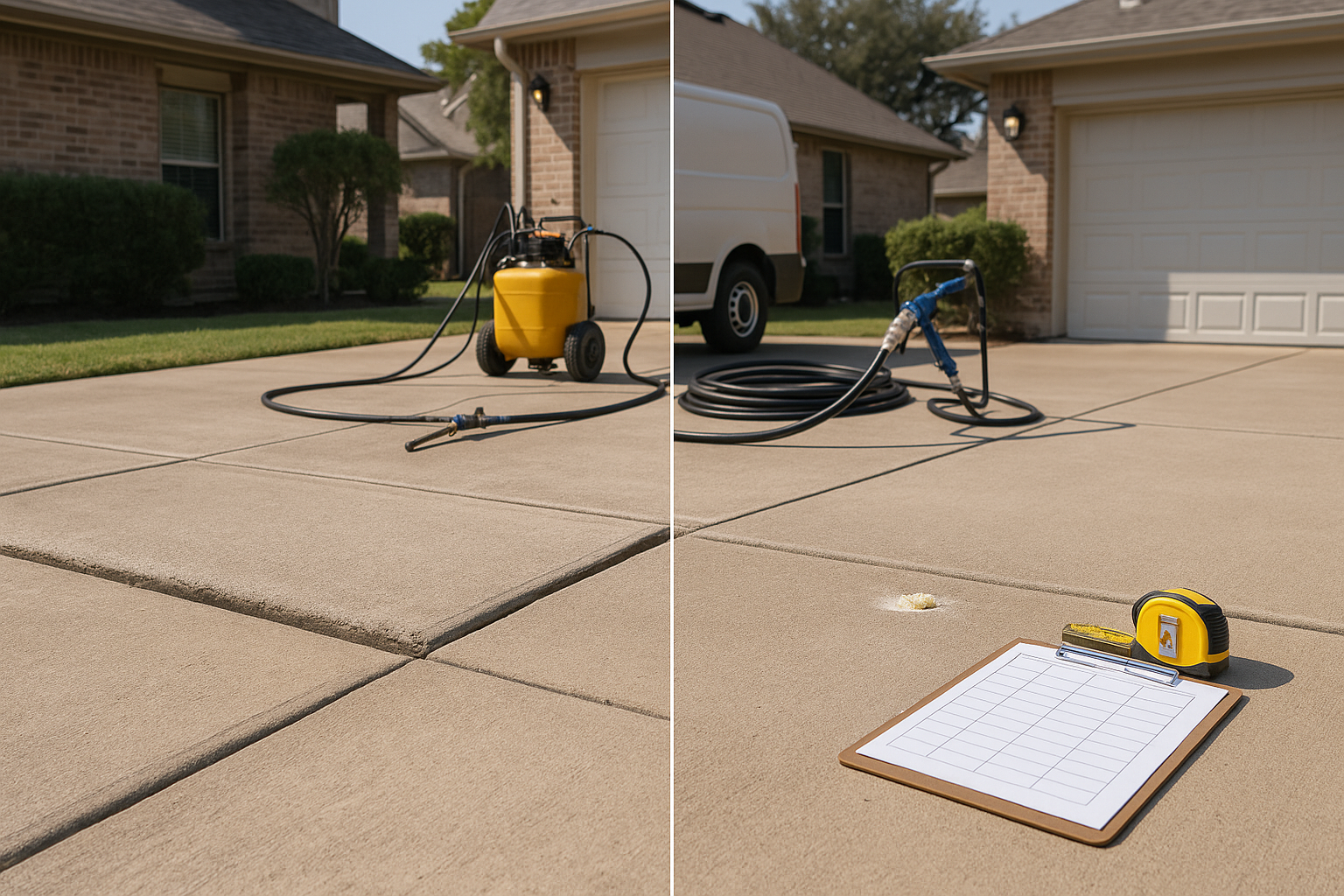
- We inspect the deck, identify settlement patterns, and check drainage and joint conditions.
- We determine where voids likely exist and where lift points are needed.
- Small holes are drilled in the concrete.
- Polyurethane foam is injected beneath the slab in measured stages.
- The slab is lifted gradually to reduce the uneven transition and improve drainage.
- The holes are patched, and we review any remaining joint sealing or water management recommendations.
The biggest advantage is that foam adds support without overloading the soil. It is lightweight compared to old-school mudjacking materials, and it doesn’t require large injection holes. Around decorative pool decks, that matters. Homeowners want the repair done right, but they also want to keep the space looking clean.
We use this same basic approach on other residential flatwork too, including Pool Deck Leveling. If a deck has settled because of voids, washout, or shrink-swell soil movement, foam leveling is often the most practical way to correct it.
Now, there are limits. If the concrete is completely broken apart, badly heaved, or the base conditions are severely compromised by an active leak, we may recommend additional repairs before or along with leveling. But in a lot of Texas backyards, the slab itself is still in decent shape. It just lost support.
Why Homeowners Choose Repair Over Replacement
Replacement has its place, but it’s often the more expensive and disruptive option. If the concrete can be saved, most homeowners would rather repair it. That is especially true around a pool where demolition can affect landscaping, fencing access, and daily use of the backyard.
Here’s why repair is usually the first route people consider:
- Lower cost: Repair is often significantly less than full replacement. Depending on the size of the affected section and severity of settlement, homeowners may spend hundreds to a few thousand dollars instead of several thousand to well over $10,000 for removal and replacement.
- Faster turnaround: Foam leveling is typically completed in a fraction of the time required for demo, repour, and curing.
- Less mess: No major tear-out, haul-off, or extended backyard disruption.
- Improved safety: Trip hazards and drainage issues can often be corrected the same day.
- Preserved appearance: Existing concrete, layout, and surrounding features stay in place.
In Texas, repair also makes sense because soil movement does not stop just because you poured new concrete. If drainage and joint maintenance are ignored, a brand-new deck can end up dealing with the same issues later. That’s why we look at the full picture: soil conditions, runoff, expansion joints, and where water is going when it leaves the deck.
For homeowners in places like Austin and Round Rock, we often recommend combining leveling with better joint sealing and drainage management. That helps protect the repair and reduce future washout. Again, failed joints are one of the most overlooked causes of recurring settlement around pool decks.
Repair Early and Protect the Rest of the Deck
A sunken pool deck rarely fixes itself. What usually happens is the low area starts catching more water, the unsupported section gets worse, and the movement spreads to neighboring panels or joints. Catching it early can help you avoid bigger costs and keep the deck safer for kids, guests, and anyone walking around the pool with wet feet.
If your concrete has dropped, separated, or started draining the wrong direction, don’t assume replacement is your only option. A proper evaluation can tell you whether lifting and stabilization will solve the problem. In many cases, it will.
Hill Country Slabs provides sunken pool deck repair in Texas with practical solutions built for our soil and weather conditions. If you need help with settlement around your pool, patio, or adjoining flatwork, contact us today at (737) 287-4308 or visit /contact to schedule an inspection.