If you have a driveway slab that has dropped in front of the garage or settled near the sidewalk, you are not alone. Sunken driveway repair in Texas is one of the most common calls we get, especially around Austin, Cedar Park, and Round Rock. Between shifting clay soils, long dry spells, sudden heavy rain, and everyday vehicle traffic, concrete takes a beating here. The good news is you usually do not have to tear the whole thing out.
In many cases, a sunken driveway can be lifted back into place with polyurethane foam injection. That means less mess, less downtime, and a lower bill compared to full replacement. For Texas homeowners, that can be the difference between a repair that costs hundreds to a few thousand dollars and a replacement that runs several thousand more once demolition, hauling, forming, and repouring are included.
If you are dealing with a trip hazard, standing water, or a rough transition into the garage, take a look at our Driveway Leveling and Concrete Slab Repair services. A lot of driveways that look finished can still be repaired without starting over.
What Causes a Driveway to Sink in Texas?
Texas has some of the toughest soil conditions in the country for concrete. In Central Texas and across the Hill Country, expansive clay soils are a big part of the problem. These soils swell when they get wet and shrink when they dry out. That repeated movement creates voids under the slab and weakens support over time.
We also see driveway settlement caused by erosion. When water runs along the driveway edge, downspouts dump near the slab, or poor grading pushes rainwater underneath the concrete, the base material can wash out. Once that support is gone, the slab starts to settle. In places like Austin, Cedar Park, and Round Rock, quick weather swings make this worse. A dry summer followed by a hard storm is a perfect recipe for movement.
Here are the most common reasons we see driveways sink in Texas:
- Expansive clay soil movement from drought and heavy rain cycles
- Washout under the slab from drainage problems or leaking irrigation
- Poor compaction when the driveway was originally installed
- Tree root activity that shifts soil and changes moisture levels
- Heavy vehicle loads parked repeatedly in the same area
- Open joints and cracks that let water work under the concrete
That last point matters more than most homeowners realize. Once water gets through joints, it can start undermining the slab from below. That is why we always tell people not to ignore joint maintenance. If your control joints or slab separations are open, learn more about expansion joints and proper sealing. For homeowners who want to understand why sealing matters, sealmyjoints.com is a useful resource too.
How Sunken Driveway Repair Works
The right repair depends on how far the slab has settled, what caused it, and whether the concrete is still structurally worth saving. If the slab is in decent shape and the main issue is settlement, foam leveling is usually the fastest fix.
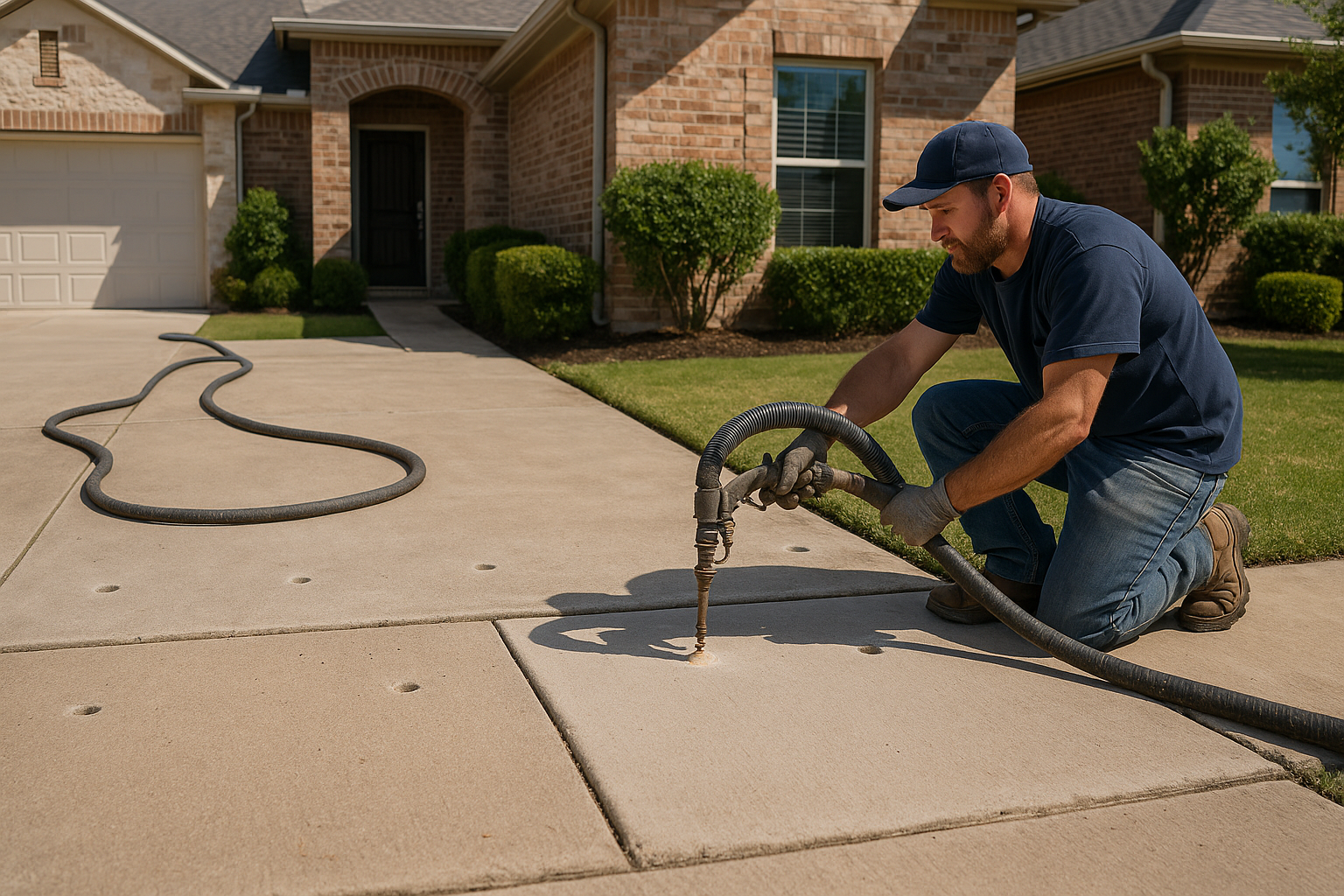
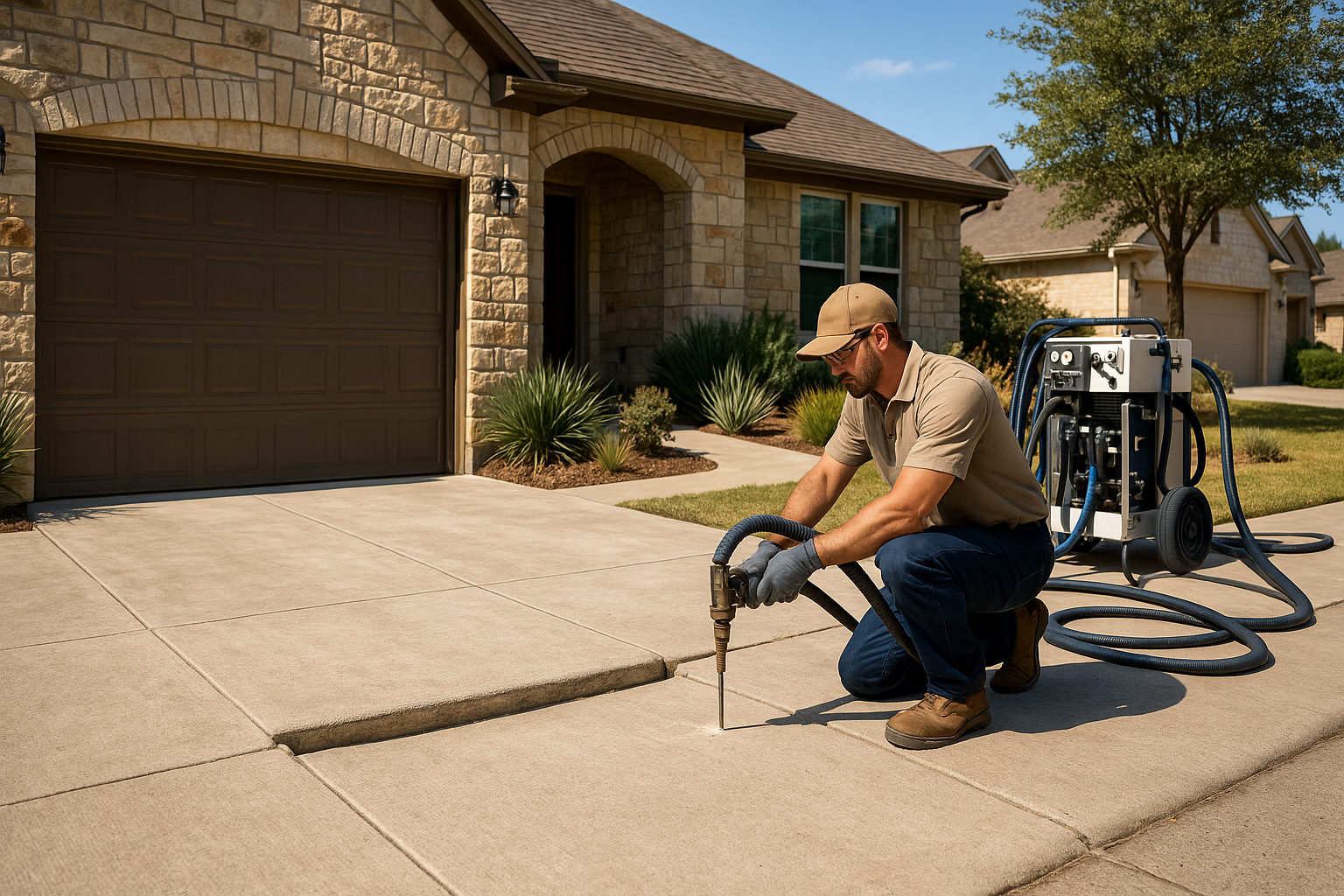
With polyurethane foam leveling, we drill small holes through the sunken concrete and inject a high-density expanding foam underneath. The foam fills empty spaces, compacts loose soil, and gently lifts the slab back toward grade. Once the slab is where it needs to be, the holes are patched and the driveway can often be used again the same day.
That is a big deal for homeowners. Traditional replacement takes demolition, disposal, regrading, forming, pouring, finishing, and curing. Foam leveling skips most of that. In many cases, the repair is completed in a few hours, not multiple days.
Typical steps in the process
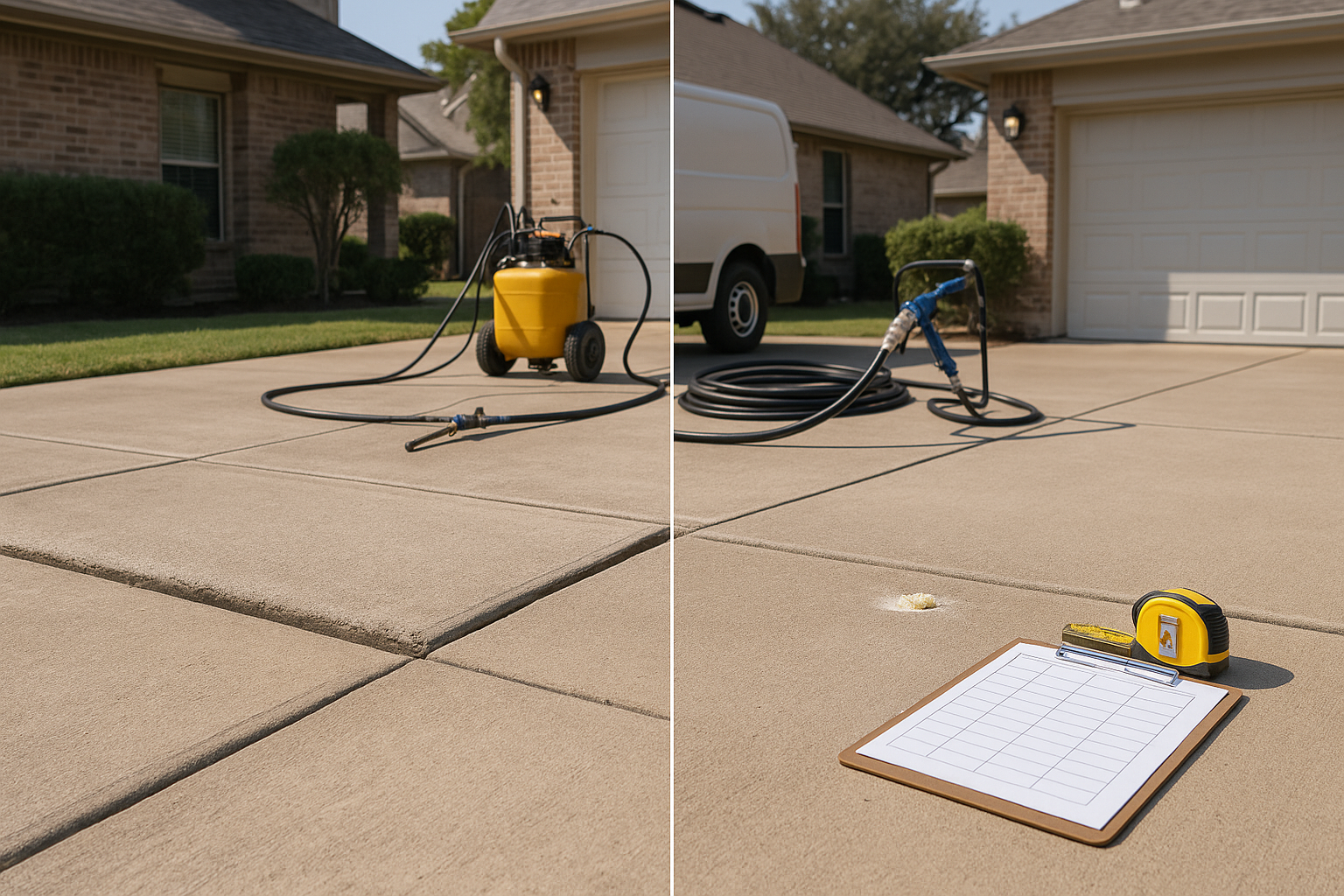
- Inspect the driveway and identify the cause of settlement
- Check for voids, weak spots, cracks, and drainage issues
- Drill small access holes in the affected slab section
- Inject polyurethane foam in controlled lifts
- Monitor slab movement and bring the panel back into alignment
- Patch drill holes and review joint sealing recommendations
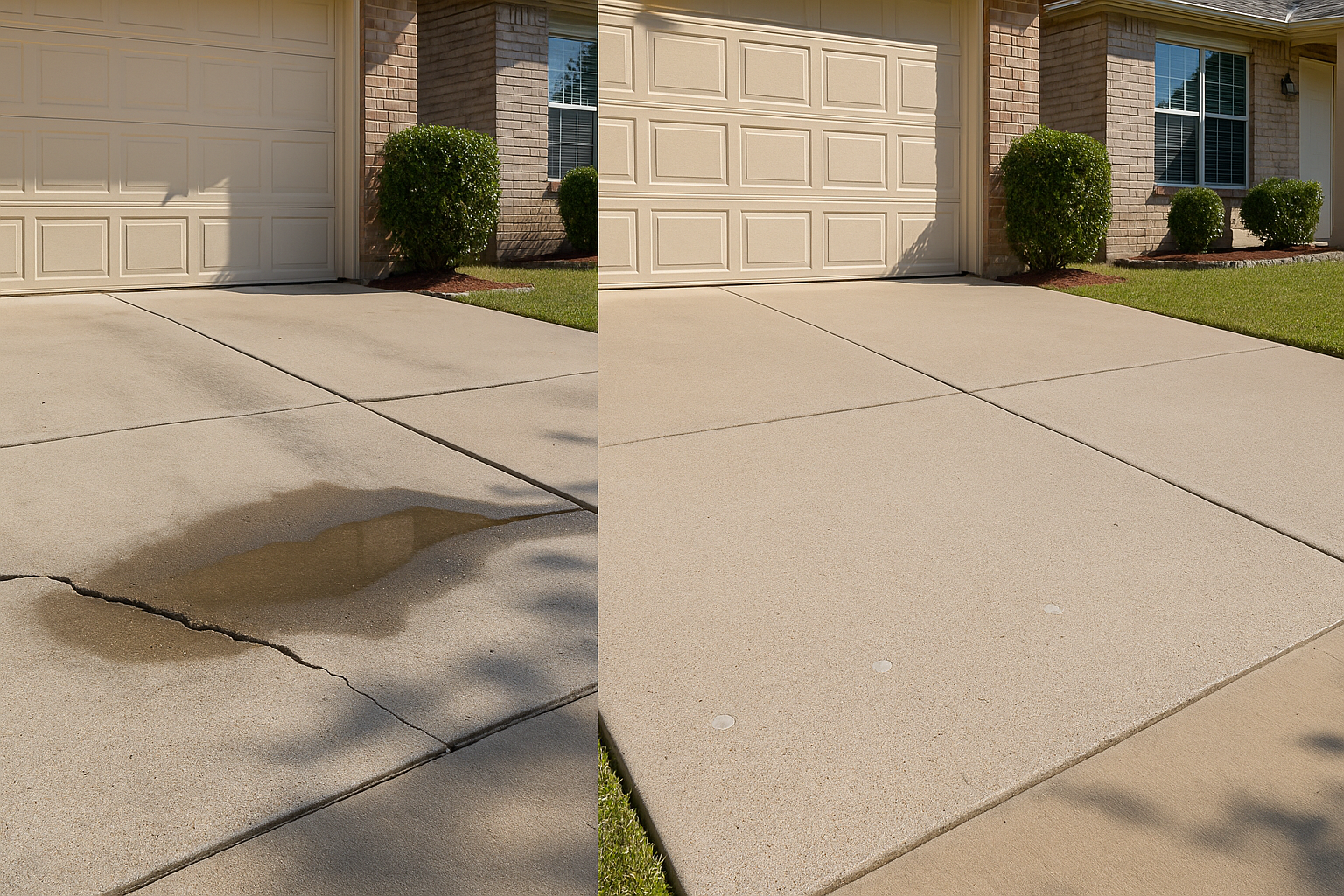
The goal is not just to make the driveway look better. It is to restore support, reduce tripping hazards, improve drainage, and prevent further damage. If water is flowing back toward the garage or pooling against the house, getting that elevation corrected can help protect more than the driveway.
When to Repair vs Replace a Sunken Driveway
Not every driveway should be lifted. Some are too far gone. If the concrete is badly broken, crumbling, or has major surface failure throughout, replacement may be the better investment. But a lot of slabs get replaced when they really only needed leveling and joint repair.
Repair usually makes sense when:
- The slab is mostly intact and has settlement in one or more sections
- Cracks are limited and the concrete surface is still in fair condition
- The drop is creating a trip hazard or water drainage issue
- You want a faster, less invasive option
- You want to avoid the cost of complete demolition and replacement
Replacement may make more sense when:
- The slab is severely cracked in multiple directions
- The concrete is scaling, spalling, or deteriorating badly
- The base failure is widespread across the entire driveway
- The original pour was too thin or poorly built from the start
For many Texas properties, leveling is the smarter first option because of cost and downtime. Depending on the size of the affected area, foam leveling is often 30% to 70% less expensive than replacement. Full driveway replacement can also leave you waiting on weather, inspections, and cure times, which is not ideal during a busy week or a rainy stretch.
A contractor should also look at what caused the sinking in the first place. If there is a drainage problem, broken sprinkler line, or unsealed joint letting water underneath, that should be addressed or the slab may settle again later.
Why Foam Leveling Is a Smart Texas Solution
Foam leveling works well in Texas because it is lightweight, water-resistant, and effective in areas where soil movement is common. Unlike older mudjacking methods that add more weight below the slab, polyurethane foam adds support without overloading the already unstable subgrade.
That matters in our region. In places with expansive clay and variable moisture, you want a repair method that stabilizes voids and lifts cleanly without creating a bigger burden below the concrete. Foam is also precise, which helps when matching elevations at garage entries, sidewalks, and adjoining driveway panels.
Homeowners also like it because it is cleaner. We are drilling small holes, not tearing out large sections of concrete. There is less disruption to landscaping, less noise, and less cleanup. In a lot of jobs, the driveway is ready for traffic in 15 minutes to a few hours after the lift, depending on the repair conditions.
If you live in the Austin area, Texas weather alone is reason enough not to wait. Summer heat can dry out clay fast. Fall storms can wash out support just as quickly. Small settlement today can turn into a larger crack pattern next season. Fixing a sunken slab early is usually cheaper than waiting until you need a full replacement.
Signs it is time to call for driveway repair
- One slab has dropped near the garage or sidewalk
- Water pools in low spots after rain
- You feel a bump driving in or out
- The driveway creates a trip hazard for family or guests
- Joints are open and allowing water below the slab
- Cracks are growing around a settled section
If you catch these issues early, there is a good chance the slab can be lifted and stabilized before the damage spreads.
At Hill Country Slabs, we help homeowners across Central Texas figure out whether a driveway can be repaired or needs replacement. We give you a straight answer based on the slab condition, soil behavior, drainage, and cost. If leveling is the right fix, we can usually restore the slab with less time, less mess, and less expense than replacement.
If you need sunken driveway repair in Texas, contact Hill Country Slabs today. We serve homeowners throughout the region and can help evaluate settlement, voids, and drainage problems before they get worse. Visit /contact or call (737) 287-4308 to schedule an estimate.