In Texas, a front porch takes a beating. Between long dry spells, hard rain, shifting clay, and summer heat, it does not take much for a concrete porch to start settling out of place. We see it all over Austin, Round Rock, and the surrounding Hill Country. One corner drops, the step pulls away from the house, and before long you have a trip hazard right at your front door.
The good news is most sinking porches do not need to be torn out. With professional porch leveling in Texas, we can lift and stabilize settled concrete without the cost and mess of full replacement. In many cases, homeowners are back to normal the same day. If the porch movement is tied to larger slab issues, it also makes sense to look at Concrete Slab Repair so the whole structure is addressed, not just the symptom.
What Causes a Porch to Sink in Texas?
Texas soil is the biggest reason porches settle. In Central Texas especially, expansive clay soils swell when they get wet and shrink when they dry out. That constant movement leaves voids under concrete. Once the support under the porch is gone, the slab starts to drop.
There are a few common causes we run into on porch leveling jobs:
- Expansive clay soil that shrinks during drought and shifts after heavy rain
- Poor compaction when the porch was originally poured
- Water runoff washing out soil near the porch edge
- Broken sprinklers or plumbing leaks keeping one side of the porch saturated
- Missing or failed joint protection that allows water to get where it should not
In places like Austin, Round Rock, Georgetown, Cedar Park, and San Antonio, we often see porches settle after weather swings. A hot, dry summer bakes the soil. Then a big storm rolls through and water rushes toward the foundation. That cycle is rough on flatwork. Keeping control joints and expansion joints sealed matters more than most homeowners realize, which is why we recommend learning more about expansion joints and long-term joint maintenance at sealmyjoints.com.
Signs Your Porch Needs Leveling
A sinking porch usually gives you warning signs before it becomes a bigger repair. Some are obvious, and some are easy to miss if you are not looking for them.
- The porch slopes toward one side or away from the front door
- Cracks form in the porch slab, steps, or where the porch meets the house
- Gaps open up between the porch and brick, siding, or trim
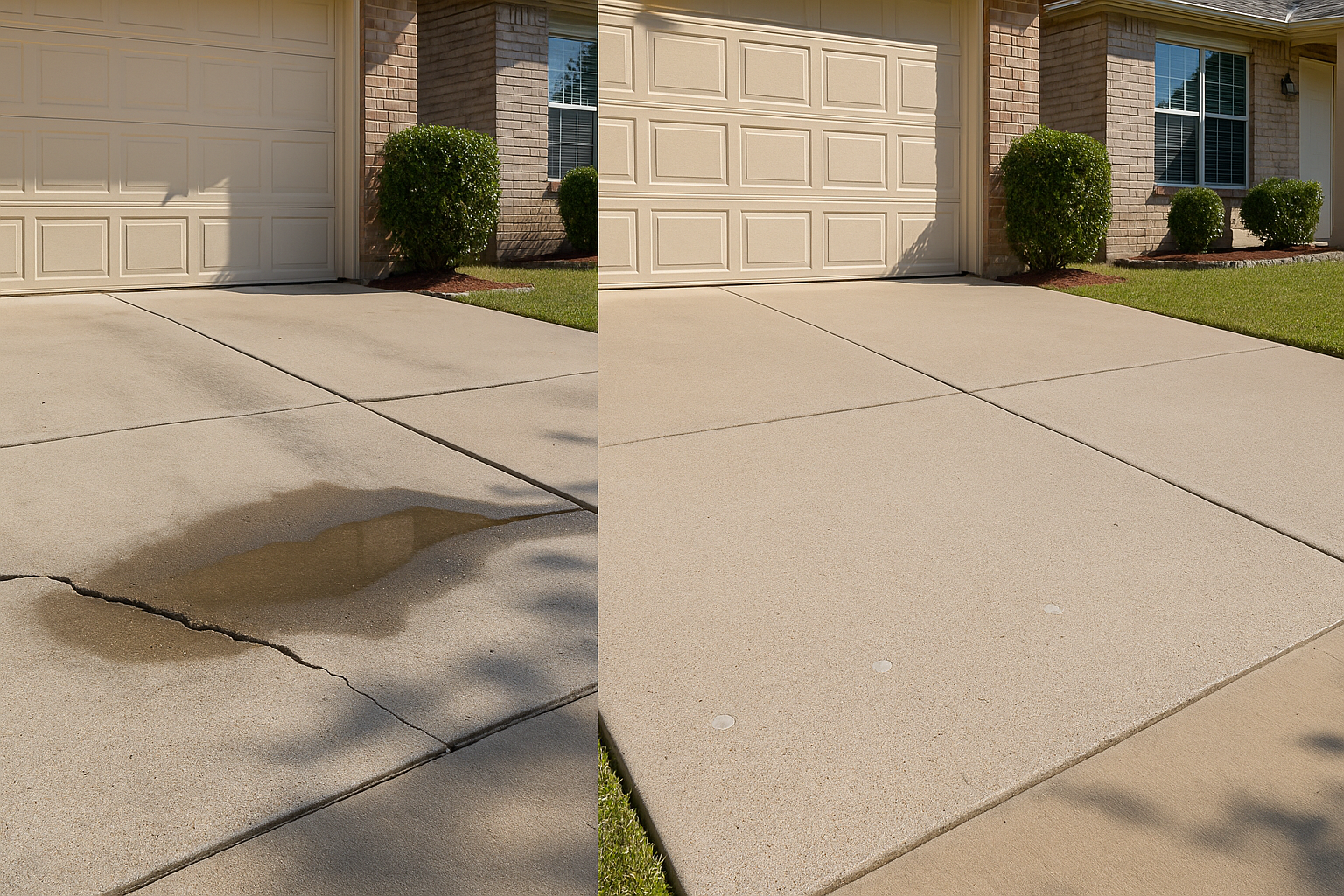
- Water ponds on the porch after rain instead of draining off properly
- Steps become uneven and create a tripping hazard
- Doors stick near the entry because the concrete has shifted enough to affect alignment
If you catch settlement early, leveling is usually straightforward. Wait too long and the porch can crack beyond a simple lift, or drainage can start pushing water back toward the home. That is when a small porch problem can turn into a larger foundation or moisture issue.
Porch Leveling vs Porch Replacement
A lot of homeowners assume a sunken porch has to be demolished and repoured. Sometimes that is true, but not nearly as often as people think. If the concrete is mostly intact and the slab still has structural integrity, leveling is usually the better option.
When leveling makes sense
- The porch has settled but is not badly broken apart
- The slab is still in one main section or has limited cracking
- The goal is to remove trip hazards and restore drainage
- You want a faster repair with less disruption
When replacement may be needed
- The porch is shattered or heaved beyond repair
- The concrete is too thin or poorly built to hold up long term
- There is severe erosion or underlying construction failure
For most homeowners, leveling wins on speed and cost. Full replacement often means demolition, haul-off, forming, pouring, curing, and dealing with color mismatch against existing concrete. Porch leveling is much cleaner and usually done in hours, not days.
On cost, Texas homeowners commonly spend around $900 to $2,500 for porch leveling depending on size, access, and how much lift is needed. Full replacement can easily run $4,000 to $10,000+ once demolition and re-pour are included. Every job is different, but that price gap is one reason leveling is worth looking at first.
How Polyurethane Foam Lifts a Sunken Porch
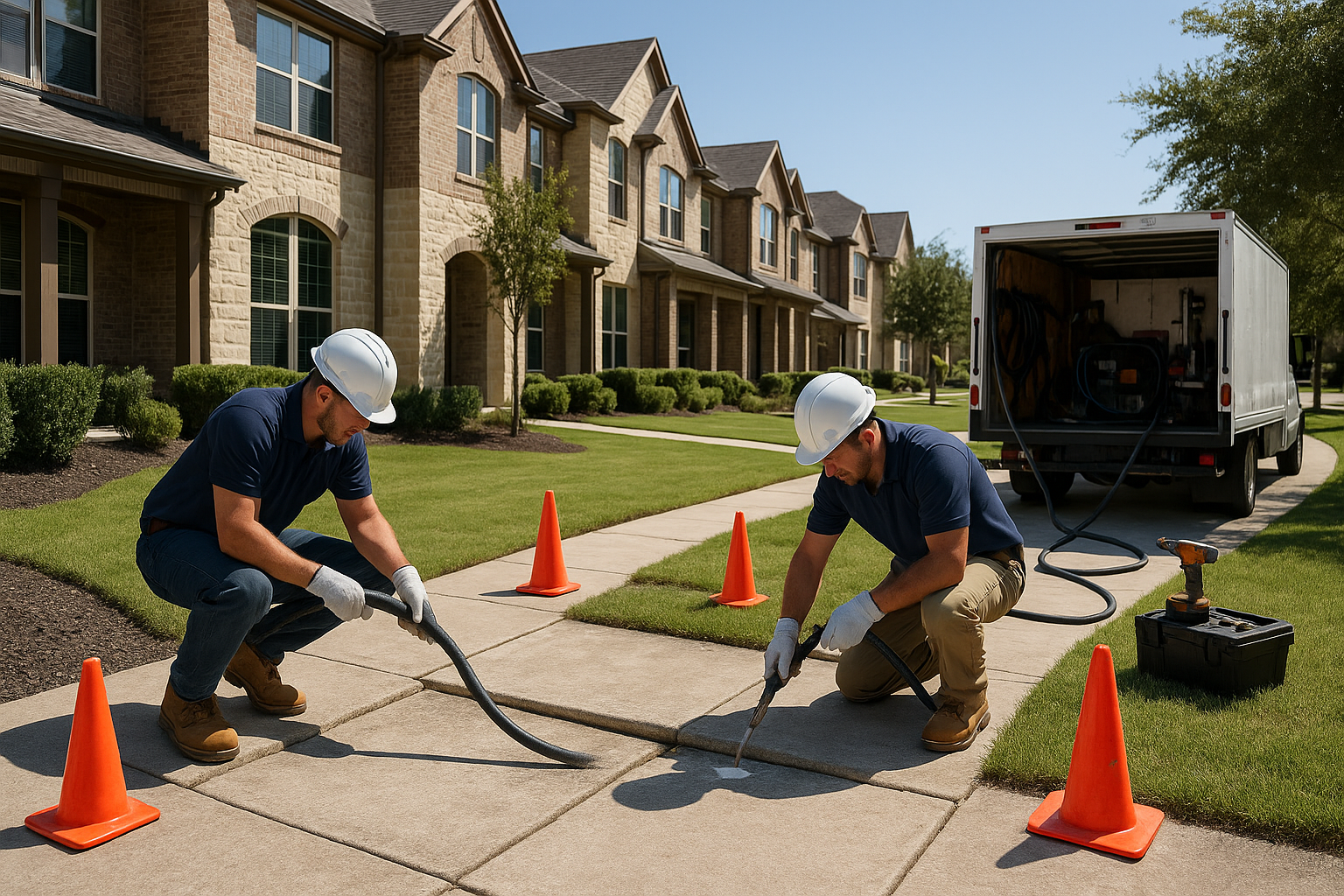
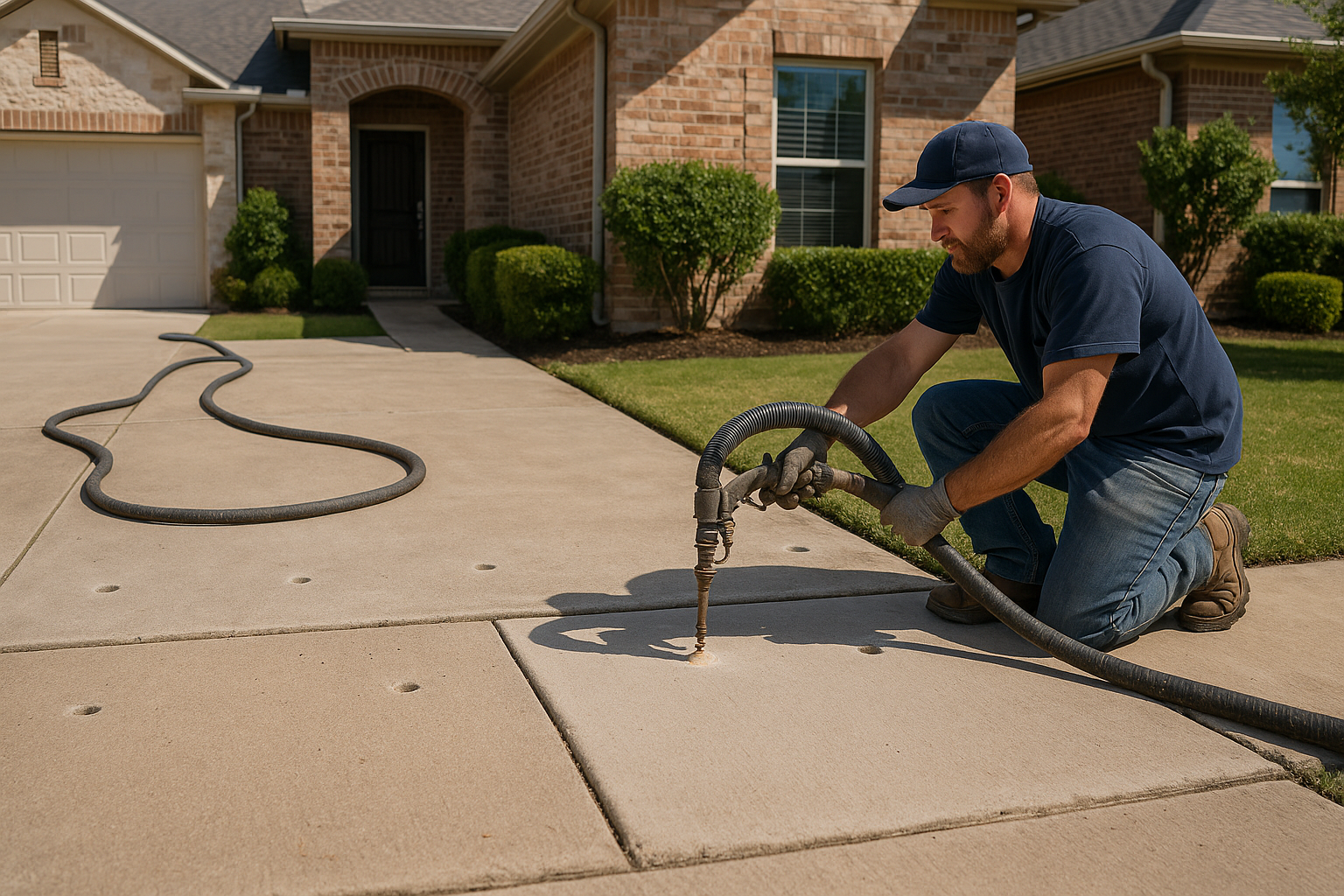
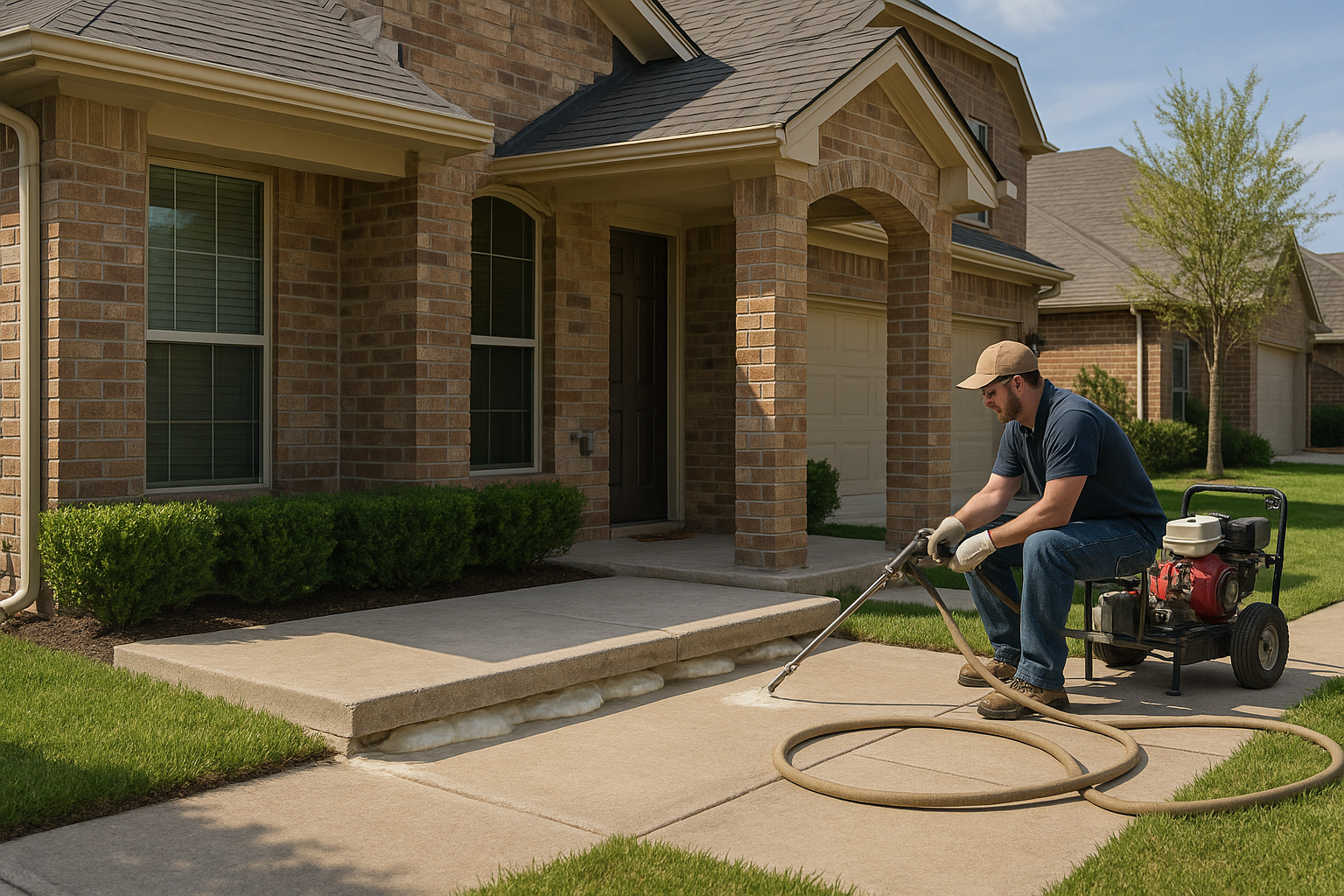
At Hill Country Slabs, one of the best repair methods for porch leveling in Texas is polyurethane foam injection. You may hear it called foam leveling, slab lifting, or polyjacking. The idea is simple: we inject a high-density expanding foam beneath the settled porch through small drilled holes. As the foam expands, it fills voids, compacts loose soil, and lifts the concrete back toward its proper position.
- We inspect the porch, measure the settlement, and identify what caused it.
- Small injection holes are drilled in the slab.
- The polyurethane foam is injected under controlled pressure.
- The foam expands, fills empty space, and raises the porch.
- We fine-tune the lift and patch the drill holes.
This method works well in Texas because the foam is lightweight, water-resistant, and fast-curing. Traditional mudjacking uses a heavier slurry, which can add more weight to already unstable soils. Foam gives us better control and puts less stress on the subgrade.
Another advantage is speed. Most porch leveling jobs are completed in a few hours, and the area is often ready for foot traffic the same day. That is a big deal when this repair is right at your main entrance.
Why Texas Homeowners Choose Foam Leveling
There is no shortage of concrete repair methods out there, but foam leveling has become a go-to solution for settled porches across Texas for a reason.
- Minimal downtime compared to replacement
- Small drill holes instead of major demolition
- Fast cure time so the porch can be used quickly
- Accurate lifting for better control near doorways and steps
- Lower overall cost than tearing out and replacing sound concrete
That said, a good contractor should still look beyond the slab itself. If the real issue is drainage, leaking irrigation, or open joints around the porch, those problems need to be corrected too. Otherwise, the soil can keep moving and the porch may settle again over time.
Preventing Porch Settlement from Coming Back
Leveling the porch is the repair. Preventing future movement is the protection plan. In Texas, that usually comes down to moisture control and keeping water from undermining the slab.
- Make sure downspouts move roof water away from the porch
- Repair leaking hose bibs, sprinklers, and nearby plumbing lines
- Maintain positive drainage around the front entry
- Seal joints and cracks so water does not wash into the subgrade
- Avoid overwatering flower beds right beside the porch
Joint maintenance is a simple step that pays off. Open joints let water seep below concrete and start the washout process. If your porch, driveway, or walkway joints are separating or drying out, take a look at expansion joint repair and the resources at sealmyjoints.com.
Get Porch Leveling in Texas Before the Damage Spreads
If your porch is sinking, cracking, or pulling away from the house, do not wait for it to become a bigger and more expensive problem. In a lot of cases, porch leveling in Texas can restore the slab without replacement, improve safety, and help keep water draining the way it should.
At Hill Country Slabs, we work with Texas soil conditions every day and know what it takes to lift settled concrete the right way. Whether you are dealing with a front porch in Austin, a settling entry in Round Rock, or slab movement tied to broader structural issues, we can point you in the right direction. If needed, we can also help you evaluate related repairs like Concrete Slab Repair.
Need an estimate? Contact Hill Country Slabs today at (737) 287-4308 or visit /contact to schedule your inspection.