If you’ve got a pool in Texas, your deck takes a beating. Between long dry spells, heavy rain, shifting clay soils, and summer heat that cooks concrete all day, it doesn’t take much for one section of deck to start settling lower than the rest. Around a pool, that’s more than an eyesore. It becomes a trip hazard, a drainage problem, and in some cases a bigger issue for the coping and surrounding flatwork.
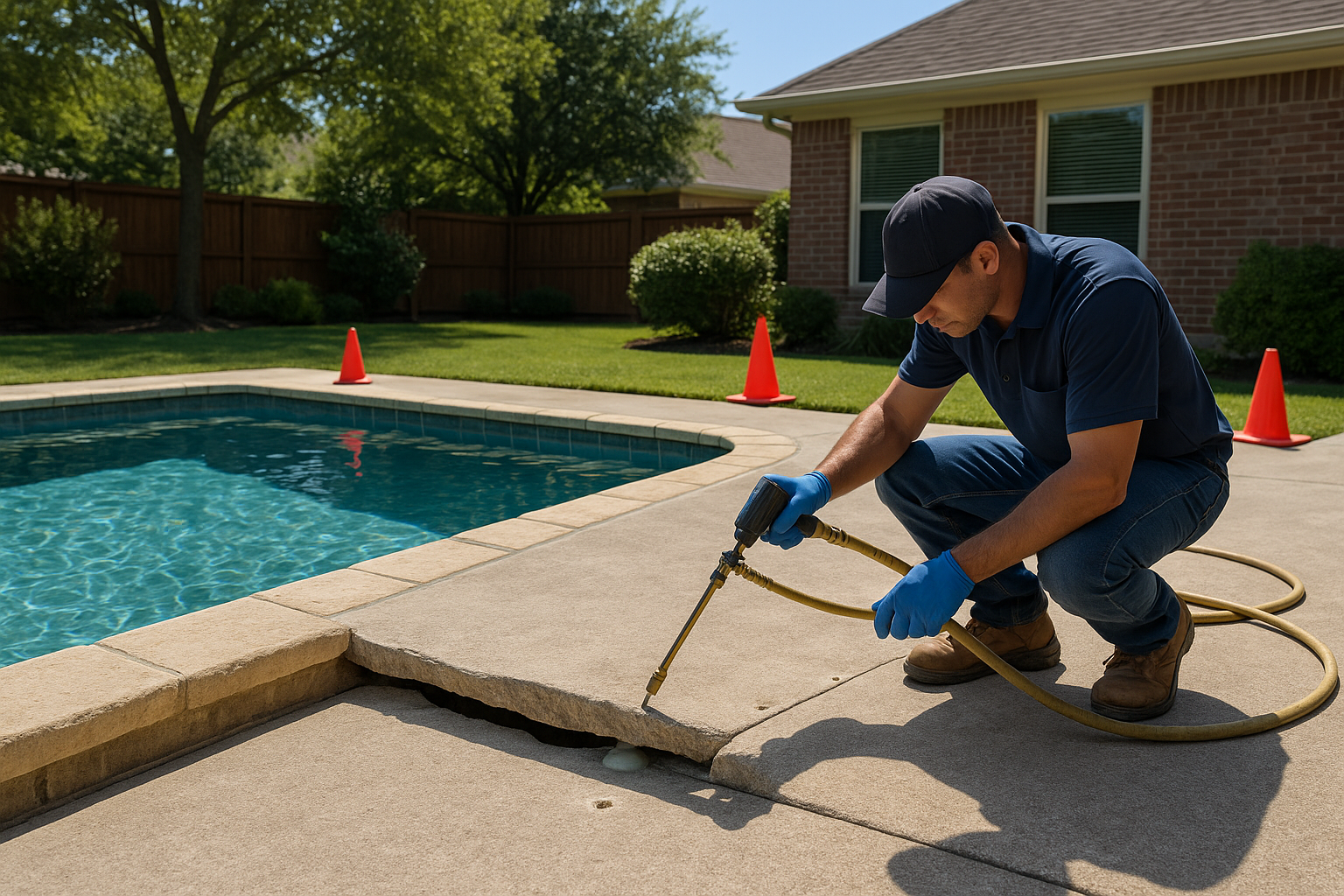
We see this a lot in Austin, Round Rock, and across Central Texas. Homeowners usually notice one corner dropping, a gap opening near the pool edge, or water collecting where it never used to. The good news is that many decks can be lifted without tearing out and replacing the slab. With professional Pool Deck Leveling, foam injection can raise settled concrete with minimal disruption.
In a lot of cases, leveling is faster and more affordable than replacement. If the slab is still structurally sound, lifting it back into position can often restore safety and improve drainage for a fraction of the cost. For many Texas homeowners, that means addressing the problem before it spreads to more of the deck or nearby walkways.
Signs Your Pool Deck Needs Leveling
Pool deck settlement usually shows up in a few predictable ways. Some are obvious, and some are easy to ignore until somebody catches a toe on the edge.
- One slab sits lower than the next, creating a lip around the pool or along the walkway.
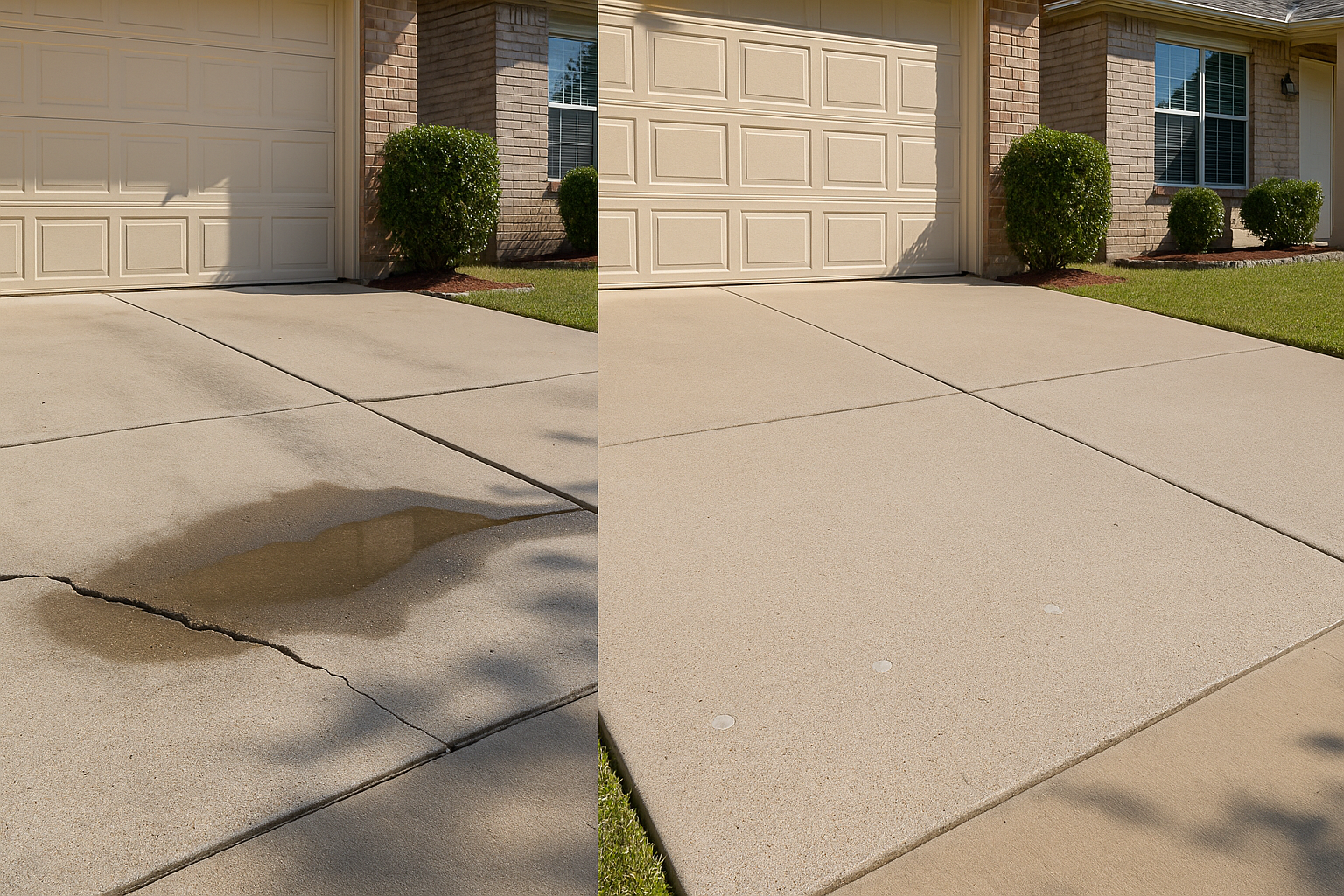
- Water puddles after rain or splash-out instead of draining away like it should.
- Gaps open at joints or near the coping, especially where the deck has pulled away slightly.
- Cracks begin to spread across otherwise solid sections of concrete.
- Furniture rocks or sits uneven on part of the deck.
- Bare feet find the problem before your eyes do because the surface feels tilted or offset.
Near a pool, even a height difference of 1/2 inch to 1 inch can be a real safety concern. Wet concrete already raises the slip risk. Add an uneven edge and it becomes the kind of problem that causes falls fast, especially for kids and older family members.
Another sign we tell folks to watch is drainage. If water starts flowing back toward the house, toward the pool equipment pad, or just sits against the slab, that often means a section has dropped. Standing water also tends to work its way into joints and weak spots, which can make the soil movement worse over time.
If your joints are failing or opening up around the deck, it’s smart to address those too. Proper joint maintenance helps limit water intrusion and protects the repaired slab. You can learn more at /expansionjoints and at sealmyjoints.com.
What Causes Pool Decks to Sink in Texas?
Texas is tough on concrete, and pool decks are no exception. The main culprit is usually movement in the soils underneath the slab. Around Central Texas, we deal with a mix of expansive clay, rocky areas with thin topsoil, and fill that was never compacted quite right during construction.
Expansive clay soils
In much of the Austin area and surrounding communities, clay soils swell when they get wet and shrink when they dry out. That constant cycle creates voids under slabs. Once support is lost, the concrete starts to settle. With pool decks, water from splash-out, irrigation, and rain can make the moisture swings even more dramatic.
Poor compaction around the pool
After a pool is built, the backfilled areas around it need good compaction. If that fill settles later, the deck above it can drop with it. We see this often in newer subdivisions where backyard construction moved fast and the surrounding soils didn’t get enough time or attention.
Drainage and washout
Texas storms can dump a lot of water in a hurry. When runoff moves under the slab, it can erode fine soils and leave empty pockets. On the flip side, drought conditions can dry the ground out so severely that the soil pulls away from the underside of the concrete. Both ends of the weather cycle can cause settlement.
Plumbing leaks or irrigation issues
A leaking line near the pool deck, a constantly wet flower bed, or sprinkler heads hitting the slab every day can soften the soils below. Over time that extra moisture weakens the support and contributes to movement.
That’s why pool deck settling in Texas is rarely just about the concrete itself. Most of the time, the slab is telling you what the soil underneath has been doing for months or years.
How Foam Pool Deck Leveling Works
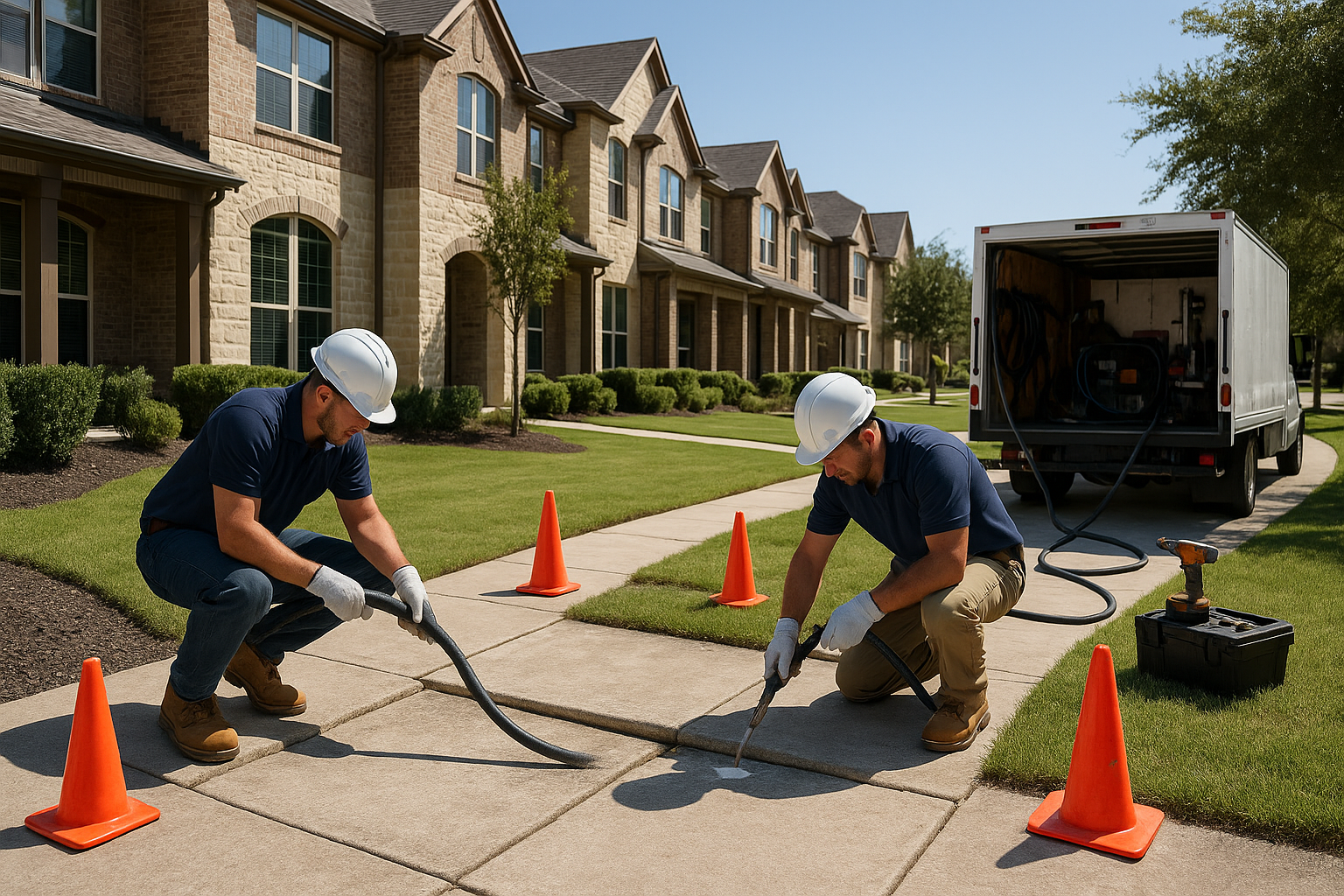
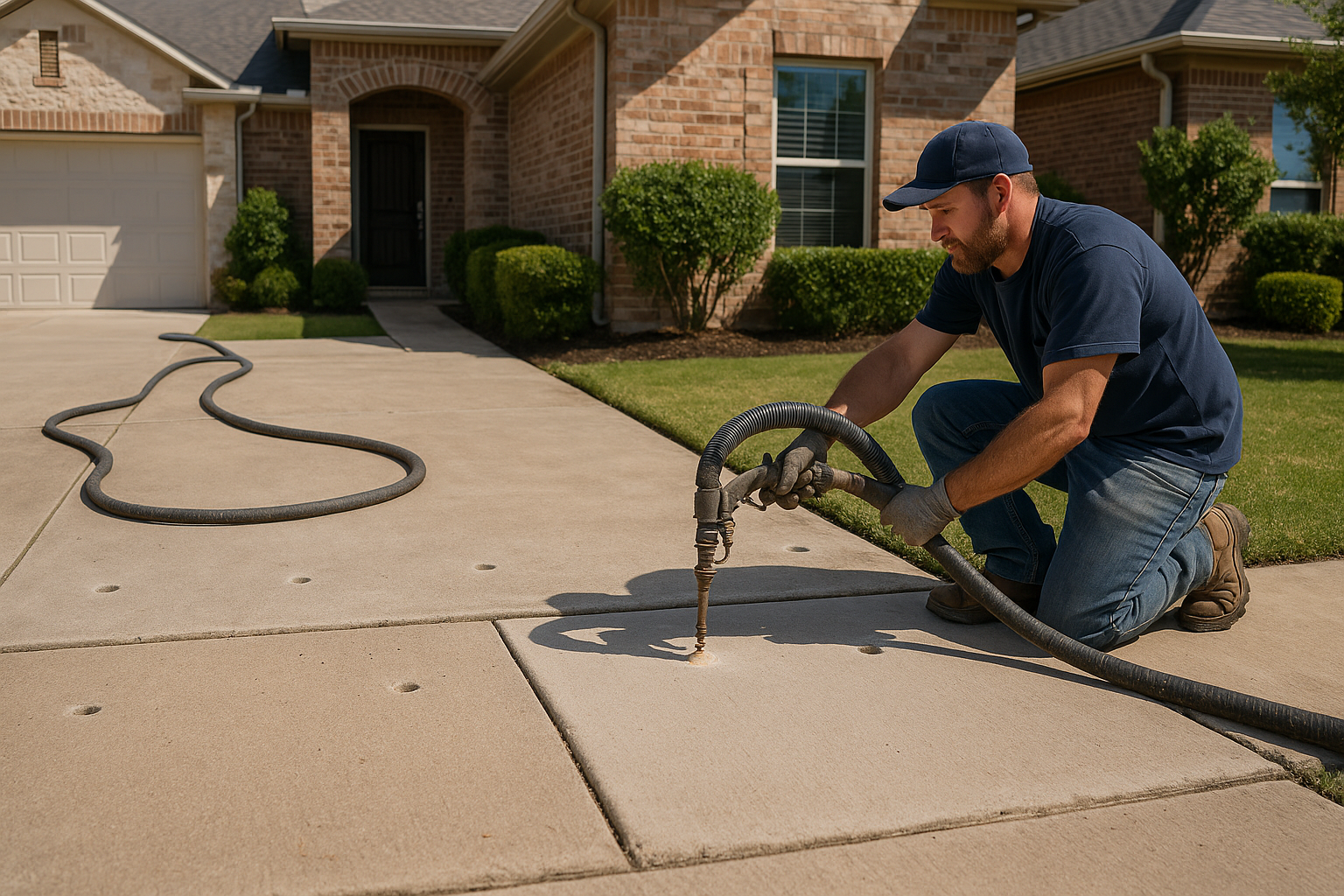
For the right slab, polyurethane foam leveling is one of the cleanest ways to correct settlement. Instead of removing the concrete, we drill small holes through the affected section and inject expanding foam beneath it. As the foam fills voids and builds pressure, it lifts the slab back toward its proper elevation.
- We inspect the slab, joints, drainage, and surrounding conditions to confirm the deck is a good candidate.
- Small injection holes are drilled in targeted spots.
- Specialized polyurethane foam is injected under the slab.
- The foam expands, fills empty space, and gently raises the concrete.
- We monitor the lift closely so the slab comes up evenly.
- The holes are patched, and the area is cleaned up.
The big advantage is speed and minimal disruption. In many cases, the repaired area can be used much sooner than if you demolished and repoured the deck. There’s also less mess in a finished backyard, which matters when you’ve got landscaping, fencing, and a pool to work around.
Foam leveling is also lightweight, which makes it a solid option where you want support without adding a lot of extra load to already unstable soils. For many homeowners, the cost comes in well below replacement. Exact pricing depends on access, slab thickness, amount of settlement, and how much area is affected, but leveling is often the more economical route when the concrete is otherwise in decent shape. In many Texas projects, homeowners find lifting costs significantly less than full replacement, which can easily run into the several-thousand-dollar range once demolition, disposal, forming, and finishing are included.
Not every slab can or should be lifted, but when it can, it’s a practical fix that gets the deck safer and more functional without starting from scratch.
When to Level vs Replace a Pool Deck
This is the question most homeowners ask first: should you lift it, or is it time to tear it out?
Level it when:
- The slab is mostly intact and not badly broken apart.
- Settlement is the main issue rather than widespread structural failure.
- The surface finish is still serviceable and you want to preserve the existing deck.
- You need a faster repair with less disruption to the backyard.
- You want to control costs while correcting trip hazards and drainage issues.
Replace it when:
- The concrete is severely cracked with multiple failed sections.
- The slab has major surface deterioration, spalling, or crumbling edges.
- The layout or slope is wrong from the start and needs full redesign.
- There is significant damage around the coping or adjacent structures that lifting alone will not solve.
A good contractor will tell you honestly which direction makes sense. If leveling is the right call, it can save a lot of money and preserve a pool deck that still has years of life left in it. If replacement is the better long-term solution, it’s better to know that up front than waste money trying to patch a slab that’s too far gone.
At Hill Country Slabs, we look at the whole picture: soil movement, drainage, joint condition, severity of settlement, and how the deck is performing around the pool. In Texas, those details matter. A repair that ignores the underlying cause usually doesn’t stay fixed for long.
If you’ve noticed uneven concrete around your pool, don’t wait for it to get worse. A small drop can turn into bigger cracking, more washout, and more expensive repairs down the road. We help homeowners across Central Texas figure out whether lifting is the right move and what it will take to make the deck safer again.
Need help with pool deck leveling in Texas? Contact Hill Country Slabs for an evaluation at /contact or call (737) 287-4308 today.