In Texas, garage slabs take a beating. Between long dry spells, sudden heavy rains, shifting clay soils, and day-after-day heat, it doesn’t take much for a garage floor to settle, crack, or drop out of level. We see it all over Austin, Round Rock, and Cedar Park: one side of the garage door opening sinks, the center of the slab dips, or a corner settles enough that water starts running back toward the house instead of out to the driveway.
If you’re dealing with a sunken slab, the good news is you usually do not have to tear the whole thing out. In many cases, garage floor leveling with polyurethane foam can lift and stabilize the slab without the cost, mess, and downtime of replacement. For Texas homeowners, that often means a faster repair, less disruption, and a better shot at fixing the real problem before it gets worse.
Below, we’ll walk through what causes garage floors to sink in Texas, what signs to watch for, when leveling makes more sense than replacement, and how foam injection works. If your garage floor is uneven, cracked, or dropping near the door, it’s worth addressing early. A small settlement issue is a lot cheaper to fix than a slab that keeps moving year after year.
Why Garage Floors Sink in Texas
Texas soil is the main reason we see so many uneven garage slabs. In Central Texas especially, expansive clay soils swell when they get wet and shrink when they dry out. That constant movement creates voids under concrete. Once support is lost, the slab starts settling into those empty spaces.
This is common in areas with highly reactive clay around Austin and nearby suburbs, but it also shows up in mixed fill soils, rocky areas with poor compaction, and neighborhoods where drainage pushes water along the slab edge. Garage floors are especially vulnerable because they are often poured separately from the main home foundation or in a way that leaves them more exposed to edge washout and surface water intrusion.
Some of the most common causes of garage slab settlement in Texas include:
- Expansive clay movement from drought and heavy rain cycles
- Poor soil compaction during original construction
- Erosion under the slab from roof runoff, poor grading, or plumbing leaks
- Failed or missing joint protection that allows water to work down into slab gaps
- Heat and moisture extremes that speed up soil shrinkage and separation under concrete
We also see problems where the garage floor meets the driveway or stem wall. If the joint has opened up, cracked, or deteriorated, water can get underneath the slab every time it rains. That is why joint maintenance matters. If your slab has open joints or deteriorated filler, take a look at Expansion Joint Replacement. Good joint protection helps reduce water intrusion and soil loss below the slab. For more on long-term joint sealing, visit sealmyjoints.com.
Signs Your Garage Floor Needs Leveling
Most homeowners notice the problem before they know what caused it. Maybe the garage door doesn’t seal evenly at the bottom anymore. Maybe one side of the slab sits lower than the other. Maybe you’ve got a crack that keeps widening or a low spot that holds water after a storm.
Here are the signs we tell Texas homeowners to watch for:
- Uneven slab height at cracks or control joints
- Sunken edges near the garage door opening
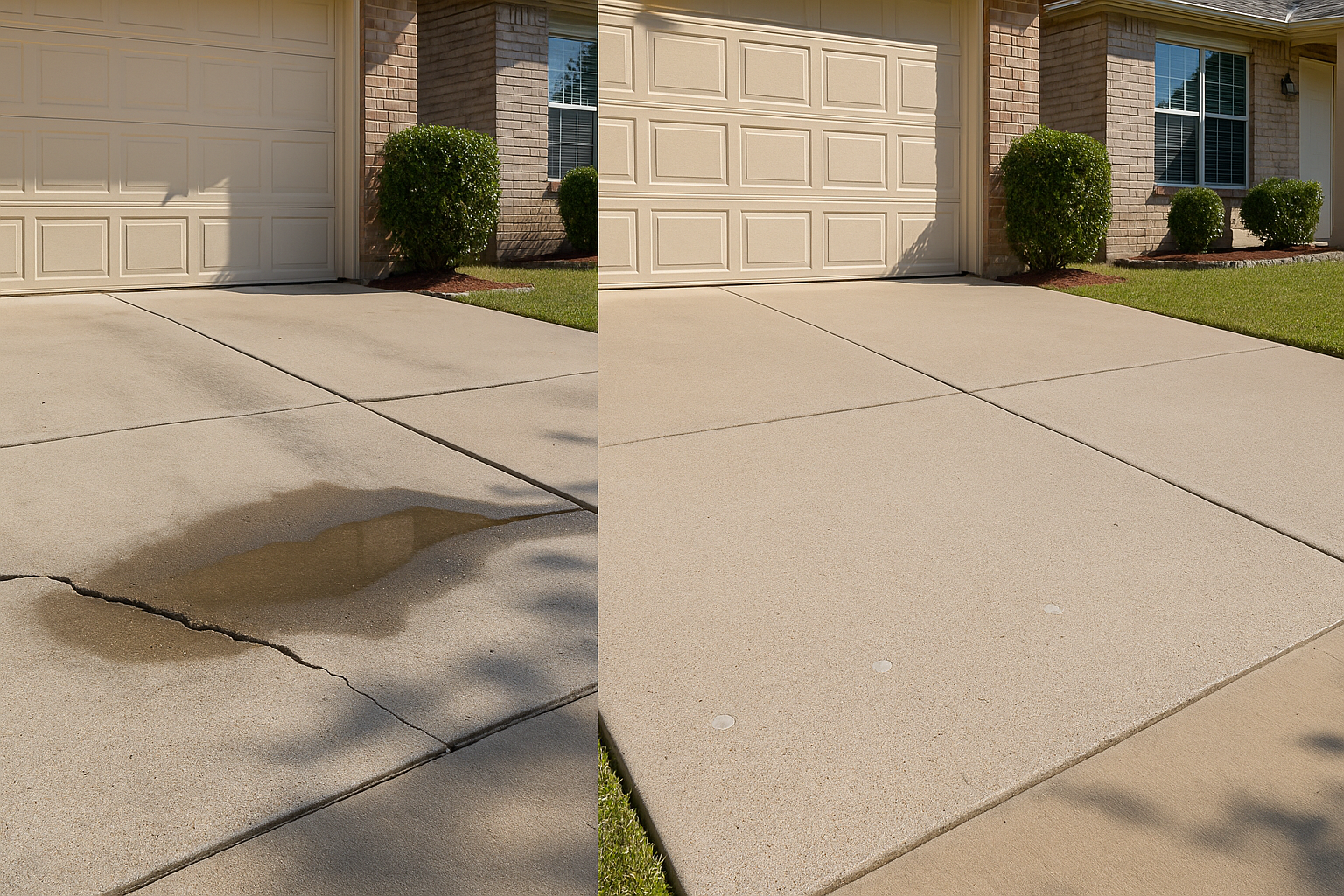
- Pooling water inside the garage or at the threshold
- Trip hazards where one section of slab has dropped
- Cracks that continue to separate over time
- Gaps under base framing or along walls
- Garage door misalignment caused by floor movement
If you notice one or more of these, it’s smart to get the slab checked before the problem spreads. A settled garage floor can put stress on walls, door tracks, and the connection point between the driveway and garage slab. It can also turn into a drainage issue fast, especially during Texas storm season.
One thing we tell homeowners all the time: not every crack means the slab needs replacement. A lot of garage floors with settlement damage can still be lifted and stabilized if the concrete is structurally sound overall. That is where a proper evaluation matters. In many cases, the issue is loss of support below the slab, not the slab itself being beyond repair.
Garage Floor Leveling vs Replacement
This is the question most people ask first: should you level the slab or replace it?
For many garages in Texas, leveling is the better first option when the slab is intact enough to lift. If the concrete is not badly shattered and there is not major structural failure, foam leveling can restore elevation and support at a fraction of the cost and time of replacement.
Here’s the practical comparison:
- Foam leveling cost: often around 40% to 70% less than full replacement, depending on slab size and settlement severity
- Replacement cost: higher due to demolition, haul-off, repouring, and cure time
- Leveling downtime: usually much faster, with many slabs ready for normal use in hours
- Replacement downtime: often several days to over a week once demolition, forming, pouring, and curing are included
If your garage slab is simply dropped due to voids or soil movement, leveling usually makes more sense. If the slab is broken into multiple loose sections, severely undermined, or poured too thin to perform long term, replacement may be necessary. But a lot of homeowners assume replacement is the only solution when it really isn’t.
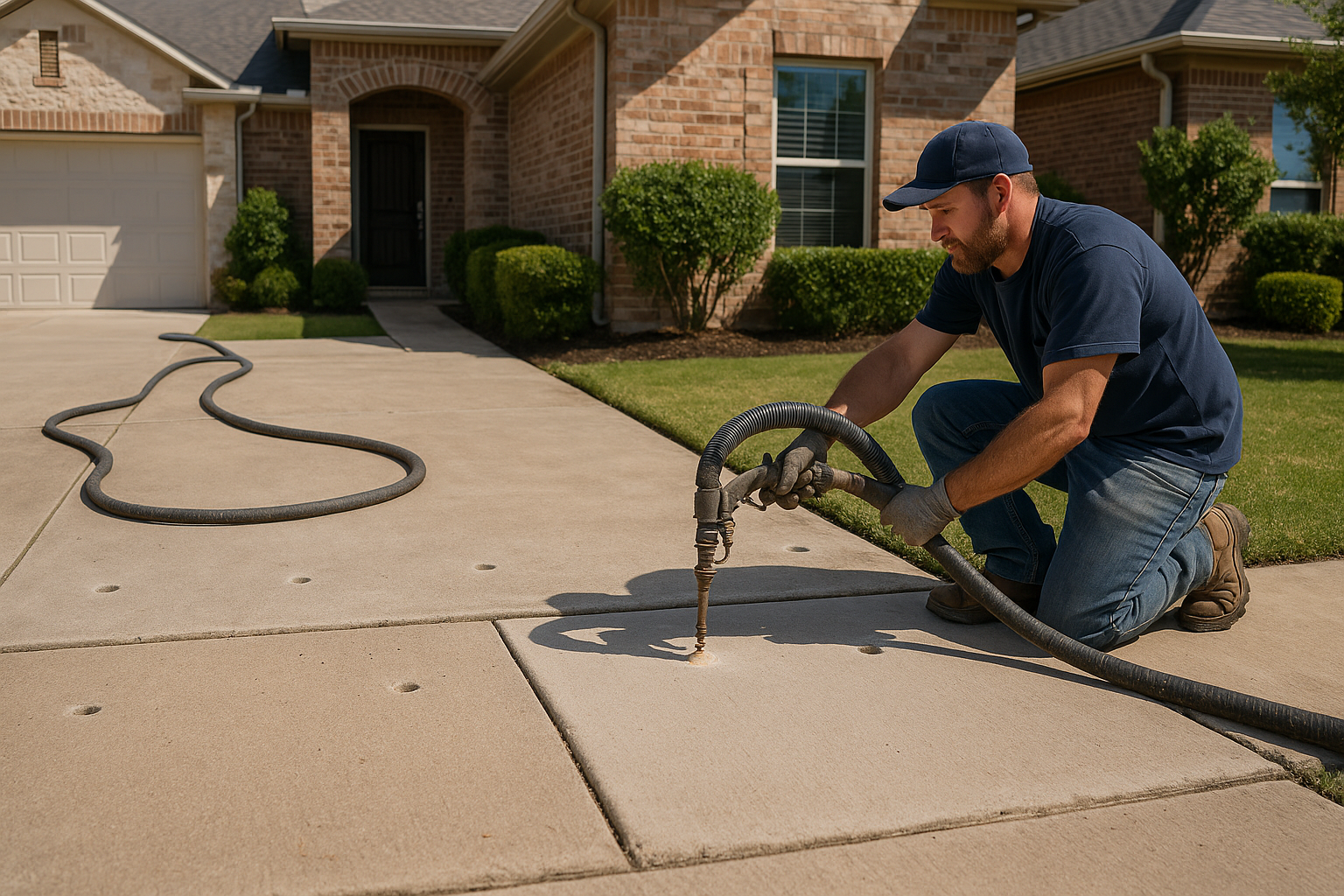
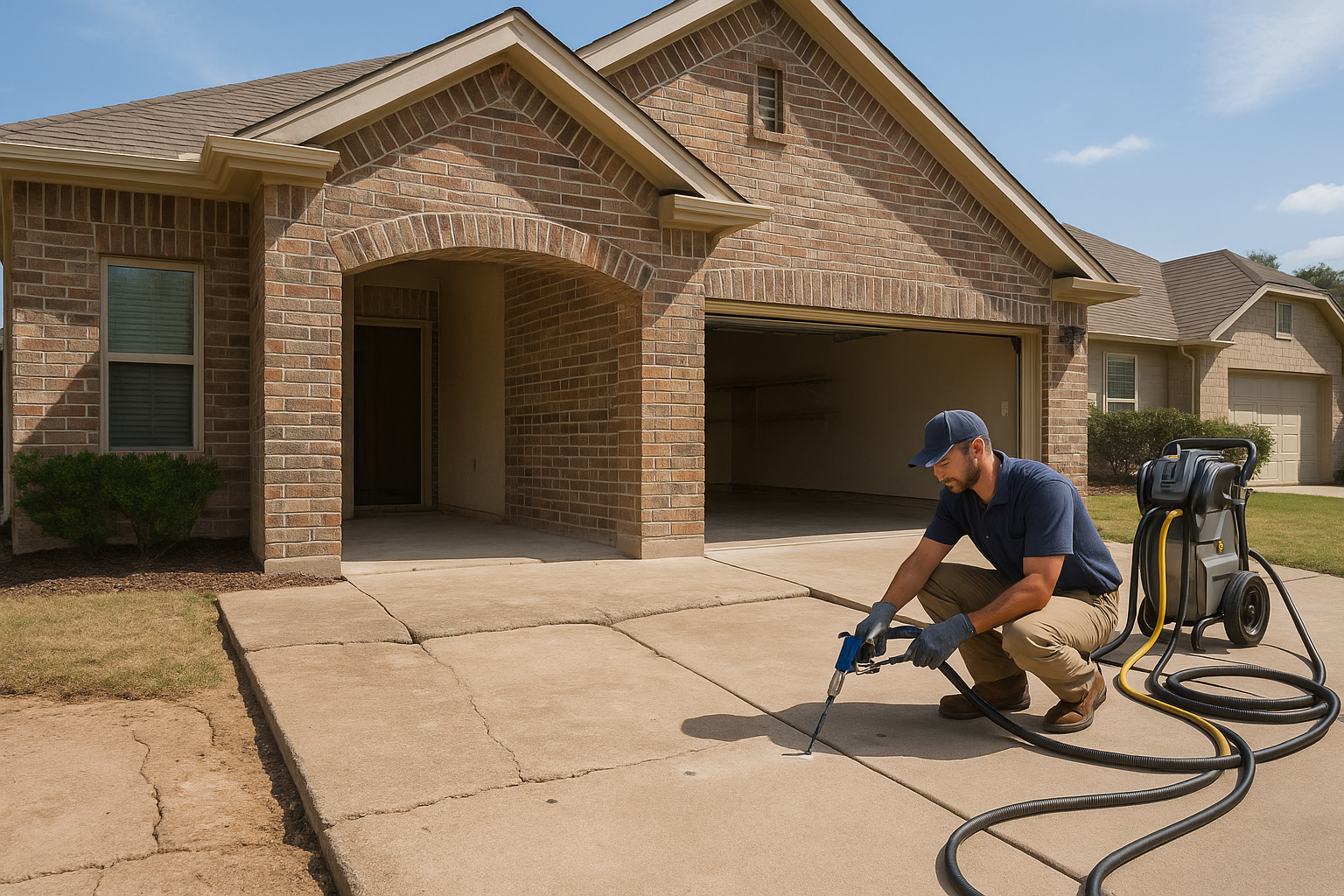
Another thing to think about is disruption. Full replacement means jackhammers, debris, forming, new concrete placement, and waiting on cure strength. Foam leveling is a much cleaner process. We drill small holes, inject material under the slab, lift it carefully, and patch the access points. That makes it a strong fit for occupied homes where people want the problem fixed without turning the garage into a construction zone for days.
If the settlement issue ties into broader slab movement around the property, it may also make sense to look at Concrete Slab Repair solutions for nearby walkways, patios, or adjoining flatwork. The key is treating the slab movement and the water management conditions that caused it.
How Foam Leveling Works for Garage Floors
Polyurethane foam leveling works by filling voids beneath the concrete and gently lifting the slab back toward its proper position. It is a precise process when done right, and it is especially useful for garage floors because it adds support without overloading weak soils.
Here’s how the process usually goes:
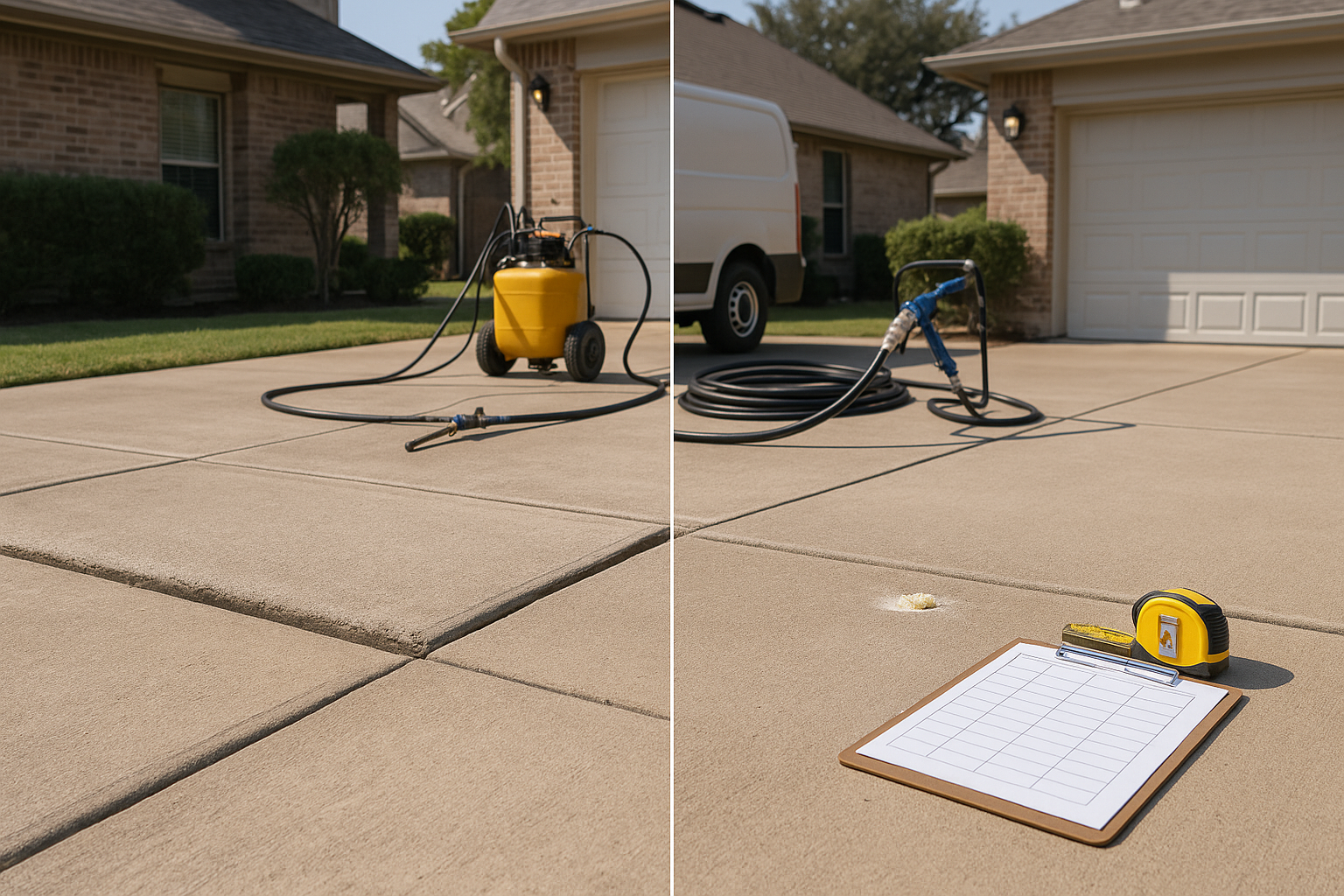
- Inspection and measurement. We check slab elevation, crack patterns, drainage, and likely causes of settlement.
- Small holes are drilled. These access points are much smaller than what you’d see with older mudjacking methods.
- High-density foam is injected. The material expands beneath the slab, filling voids and creating lift.
- The slab is raised gradually. We monitor lift closely to avoid overcorrection and to bring the floor back into better alignment.
- Holes are patched. Once the slab is stabilized, the access holes are cleaned up and patched.
The big advantage of foam in Texas is that it is lightweight, fast-curing, and effective for void filling. On garage floors, that matters. You want support restored under the slab without introducing excess weight into already-problematic soils. Foam also works well where there has been washout along slab edges or shrinkage under the floor from long dry periods.
Of course, leveling the slab is only part of the job if water is still getting where it shouldn’t. We always recommend paying attention to drainage, gutter discharge, grading, and open joints. If the joint at the garage opening or driveway connection has failed, replacing that material can help reduce future water intrusion. That’s one reason homeowners often pair slab lifting with joint repair.
Texas weather is not easy on concrete. Between summer heat, sudden downpours, and clay that moves every season, a garage floor that has started sinking will usually keep moving if it is ignored. The sooner you deal with it, the more repair options you tend to have and the less likely you are to end up paying for full replacement.
When to Call for an Inspection
If your garage floor has dropped enough to create standing water, visible separation, or a tripping edge, it’s time to get it looked at. The same goes for cracks that keep changing, joints that are opening up, or any slab movement that is affecting the garage door opening. In Texas, small slab problems rarely stay small for long once moisture starts moving under the concrete.
At Hill Country Slabs, we help homeowners figure out whether a garage floor can be lifted, stabilized, and protected without unnecessary replacement. If you’re seeing signs of settlement in Austin, Round Rock, Cedar Park, or nearby areas, contact us for an honest evaluation. Visit /contact or call (737) 287-4308 to schedule a garage floor inspection.