If you have a driveway slab that has dropped, cracked, or started holding water after every rain, foam jacking may be the fastest way to get it back in shape. Here in Texas, we see this all the time. Expansive clay soils, long dry spells, hard rains, and poor drainage can leave one section of a driveway sitting lower than the rest before you know it. The good news is you usually do not have to tear the whole thing out.
At Hill Country Slabs, we use foam jacking to lift settled concrete with less mess and less downtime than replacement. For homeowners in Austin, Round Rock, and surrounding Central Texas areas, this repair is often the practical middle ground between living with a trip hazard and paying for a brand-new driveway.
If you are researching foam jacking driveway Texas, this guide covers how it works, when it makes sense, what it costs, and how it compares to replacement. If you want to see related services, visit our Driveway Leveling and Concrete Slab Repair pages.
What Is Foam Jacking for Driveways?
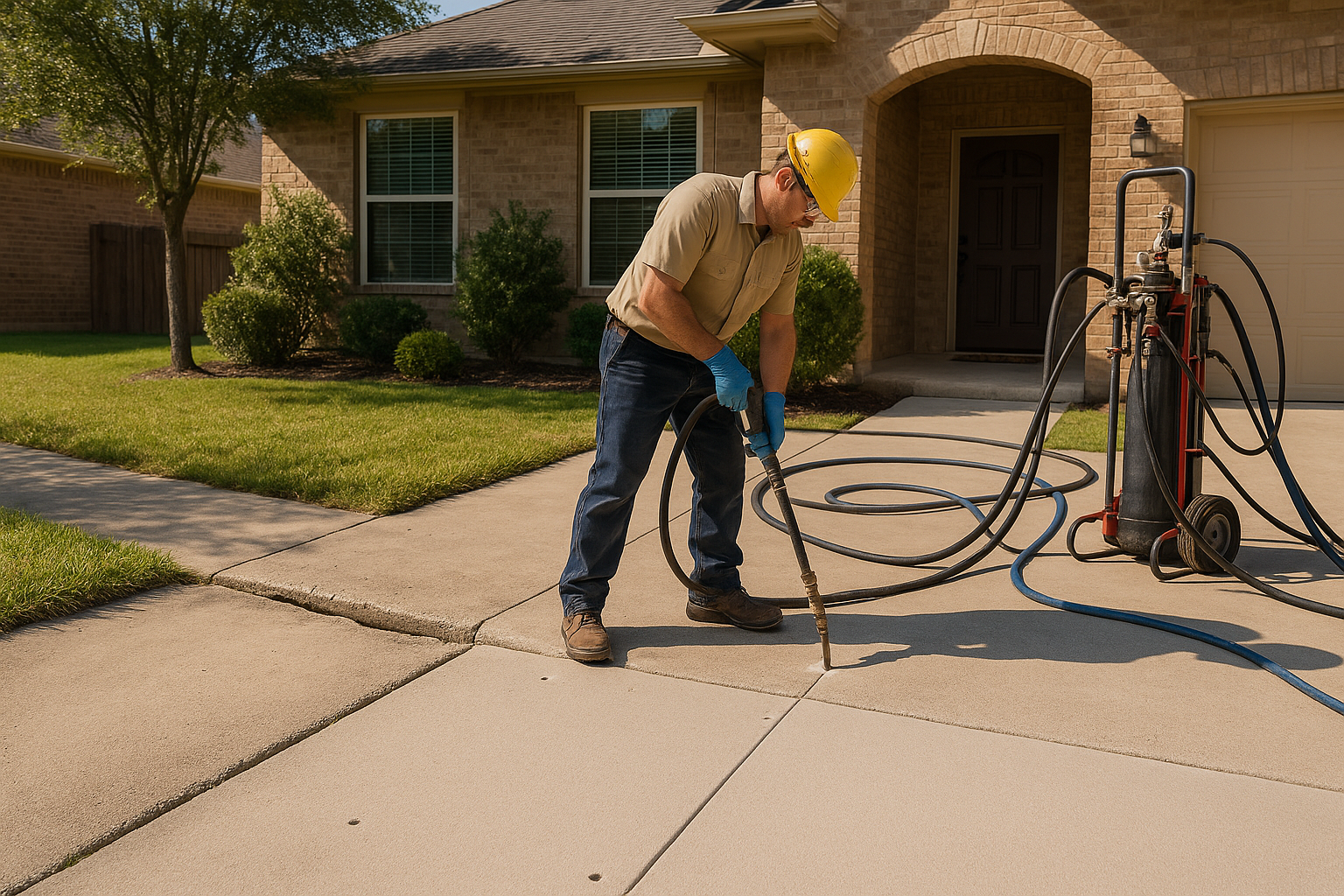
Foam jacking is a concrete lifting method that uses expanding polyurethane foam injected beneath a sunken slab. We drill small holes through the concrete, inject the material under pressure, and the foam expands to fill voids and raise the slab back toward grade. Once the driveway is lifted and stabilized, the holes are patched and the surface is ready for normal use much faster than a full replacement job.
In Texas, foam jacking is especially useful because driveway settlement is often tied to soil movement. Around the Hill Country and I-35 corridor, we deal with a mix of expansive clay, rocky limestone soils, and fill material around newer homes. In blackland clay areas, the ground swells when wet and shrinks when dry. That constant cycle can wash out support or create voids under driveway panels. Foam jacking helps restore support without demolishing sound concrete.
One big advantage is cure time. Traditional replacement means demo, haul-off, form work, a new pour, and waiting on concrete strength. Foam jacking jobs are usually much faster. In many cases, the driveway can be used the same day, often within 15 to 30 minutes after lifting depending on the repair area and conditions.
It is also cleaner than old-school mudjacking. Polyurethane foam uses smaller drill holes and lighter material, which matters when you are trying to lift a driveway slab without adding extra weight to already unstable subgrade.
Signs Your Driveway Needs Foam Leveling
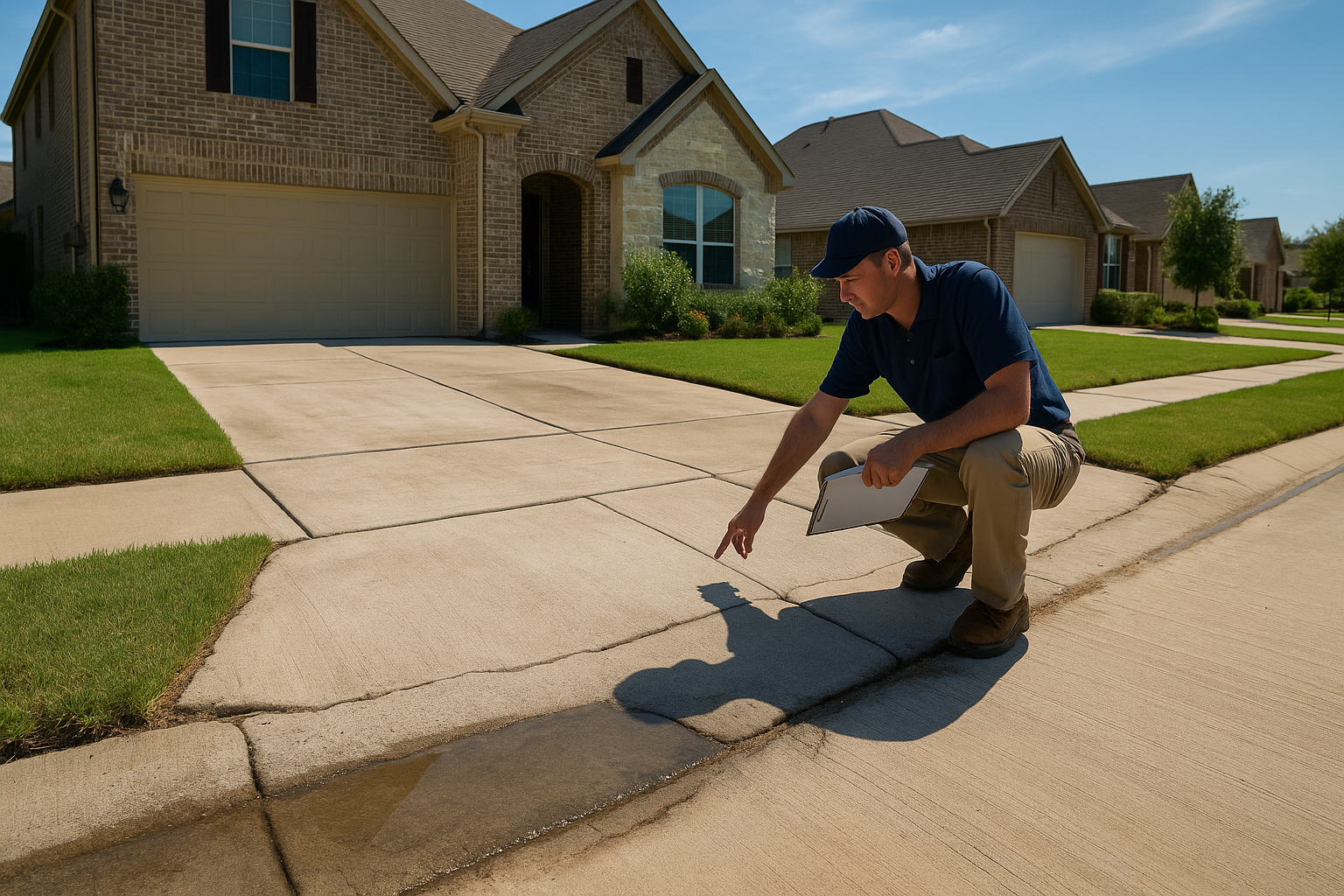
Not every crack or stain means your driveway needs lifting, but there are a few signs we see over and over on Texas properties.
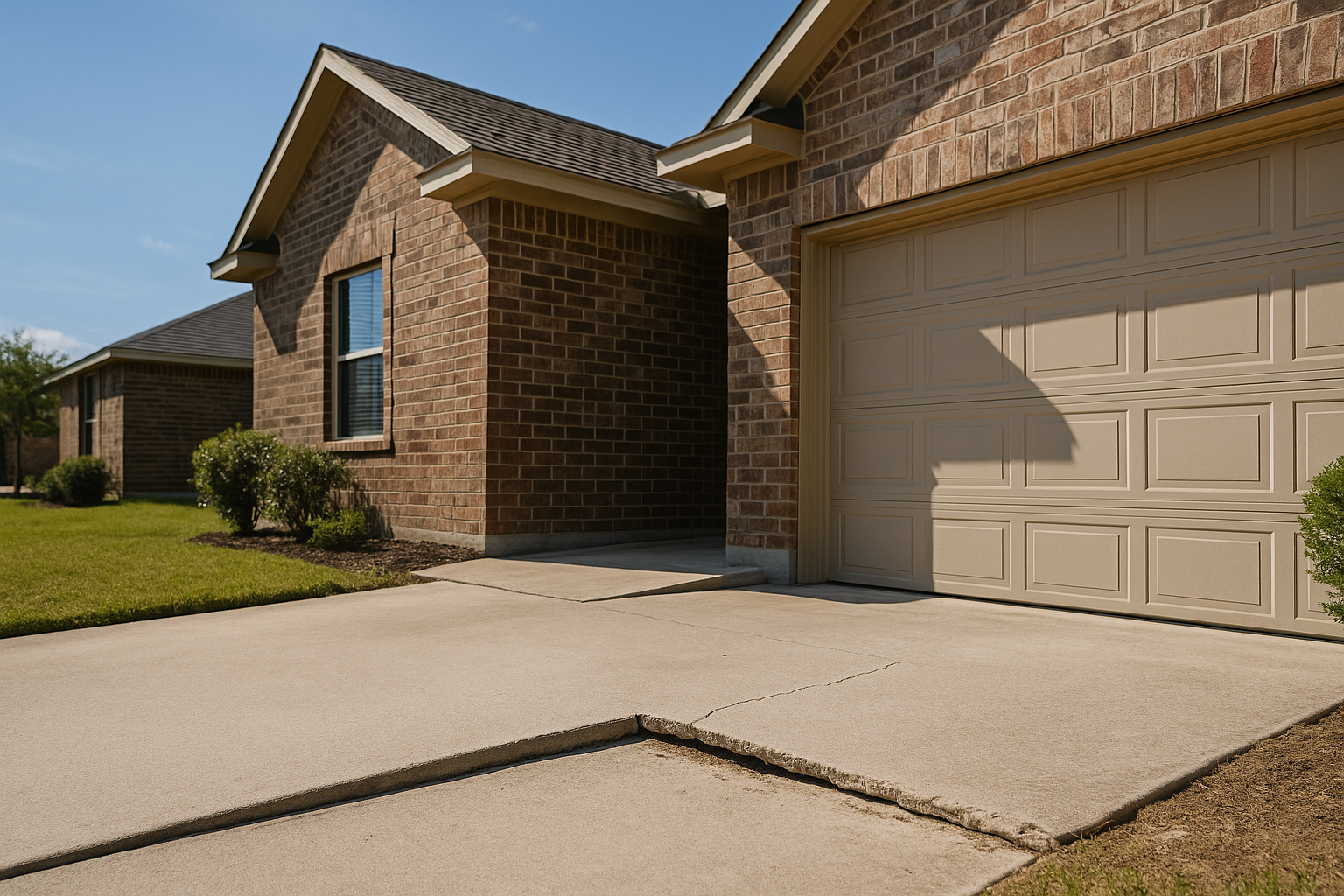
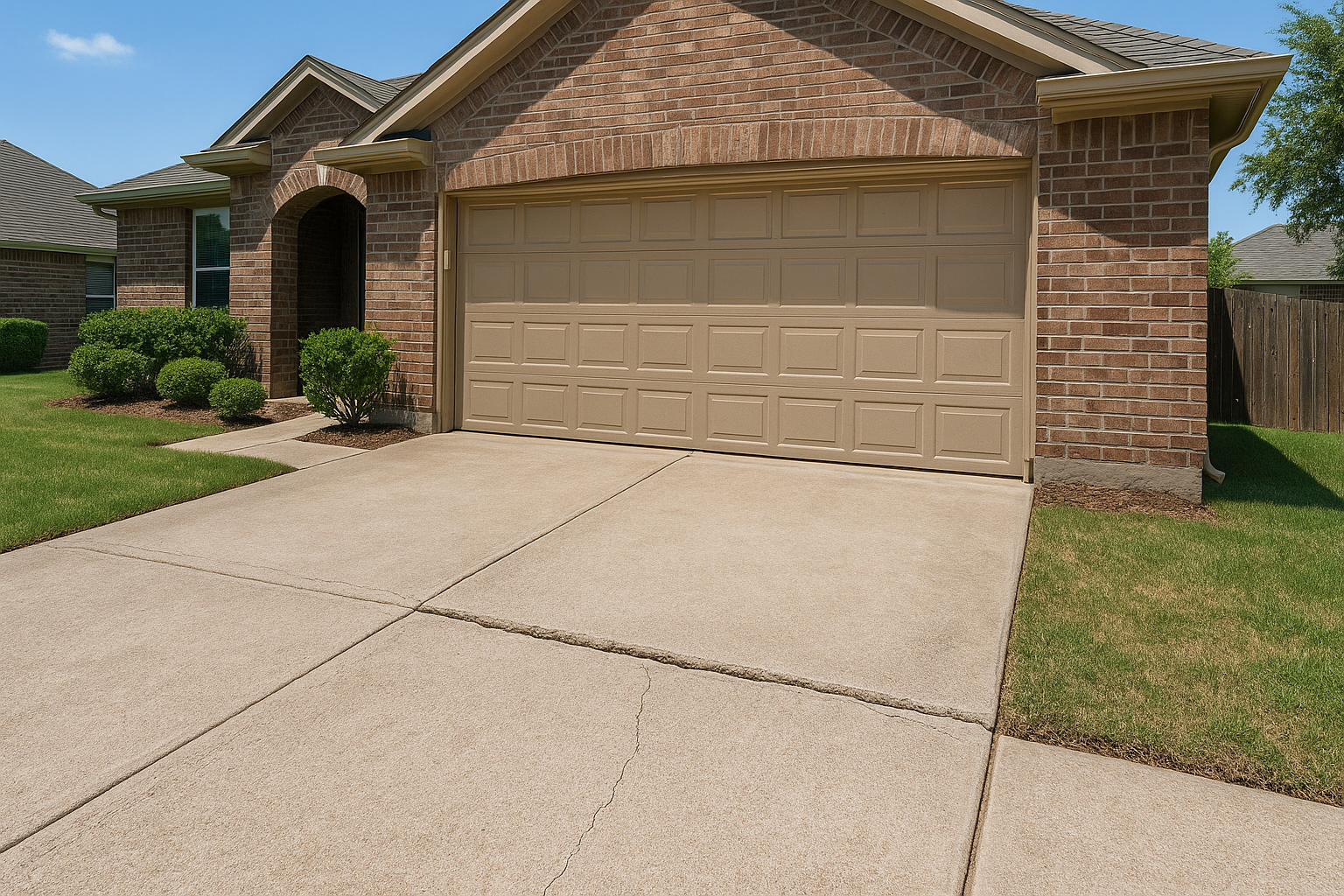
- One slab sits lower than the next, creating a lip at the joint.
- Water ponds on the driveway after rain instead of draining away.
- Cracks keep getting worse because part of the slab has lost support.
- The garage approach has dropped, leaving a bump where vehicles bottom out.
- Sidewalk-to-driveway transitions are uneven and create a trip hazard.
- Gaps under the slab edges show visible voids or erosion.
Driveways around Austin and Round Rock often settle where downspouts dump water near the edge, where drainage runs across the concrete, or where utility trenches were backfilled and compacted poorly. We also see trouble in subdivisions with heavy clay soils after extreme weather swings. A summer drought can pull moisture out of the ground, then a fall rain event saturates the area fast. That movement can leave slabs unsupported.
If your joints are open or failing, it is smart to address that along with the lifting work. Water intrusion at joints is one of the main reasons erosion starts below a slab. You can learn more on our expansion joints page, and for joint sealing products and information, visit sealmyjoints.com.
Foam Jacking vs Driveway Replacement in Texas
Homeowners usually call us wanting to know one thing: should I lift it or replace it? The answer depends on the condition of the concrete.
If the slab is structurally decent and the main issue is settlement, foam jacking is usually the better value. If the driveway is shattered, badly spalled, or poured too thin to begin with, replacement may be the better long-term call.
When foam jacking makes sense
- The concrete is still mostly intact.
- The main problem is settlement or loss of support.
- You want a faster repair with minimal disruption.
- You want to avoid the cost of demolition and replacement.
- You need to reduce a trip hazard at joints or approaches.
When replacement may be necessary
- The slab has severe structural cracking throughout.
- The surface is heavily deteriorated from age or salt damage.
- The concrete thickness or original base work was inadequate.
- The driveway layout or drainage needs major redesign.
For many Texas homes, foam jacking is the right first step because it addresses the actual problem under the slab. Replacing concrete without correcting voids, drainage, or soil movement can put you right back in the same spot a few years down the road.
There is also the question of downtime. A replacement can leave you without full driveway access for days, and sometimes longer depending on weather and scheduling. Foam jacking is often finished in a few hours. That matters if you have a busy household, short garage access, or limited street parking.
Texas weather is another factor. Heat, sudden storms, and shifting moisture conditions can make scheduling replacement tricky. Foam lifting is less invasive and easier to complete quickly between weather windows.
How Much Does Driveway Foam Jacking Cost?
The cost of foam jacking a driveway in Texas depends on how much settlement there is, how many slabs are affected, how accessible the work area is, and how much material is needed to fill voids and raise the concrete.
As a general ballpark, homeowners can expect driveway foam leveling to run around $900 to $2,500 for smaller to moderate repairs, while larger or more complex driveway sections can cost $2,500 to $5,000+. Full driveway replacement in Texas is usually much higher once you factor in demolition, haul-off, new base prep, forming, and concrete placement.
That is why foam jacking is so appealing when the slab is still worth saving. You are often restoring function and appearance for a fraction of replacement cost, and you are getting the benefit of fast turnaround.
Here are the biggest factors that affect price:
- Amount of settlement: A slab that dropped one inch is a different repair than one that dropped three inches with washout underneath.
- Size of the repair area: One panel costs less than several connected panels that all need adjustment.
- Void size below the slab: Large hidden voids require more foam to stabilize properly.
- Access and layout: Tight side yards, fences, or steep driveways can add labor time.
- Joint and crack condition: Sealing joints after lifting helps protect the repair and may be recommended.
Keep in mind that the cheapest fix is not always the best one. If somebody just squirts material under a slab without checking drainage, joint failure, and surrounding soil conditions, the driveway may settle again. A proper repair looks at the whole picture, especially in Texas where moisture movement is a major part of the problem.
What to Expect During a Foam Jacking Job
The process is straightforward when the driveway is a good candidate.
- We inspect the driveway to identify settlement, voids, drainage issues, and joint condition.
- Small injection holes are drilled in the affected slab sections.
- Polyurethane foam is injected beneath the concrete in controlled stages.
- The slab is monitored as it lifts back toward the correct elevation.
- The holes are patched and the area is cleaned up.
- We review any recommendations for drainage or joint sealing to help protect the repair.
Most homeowners are surprised at how little disturbance there is compared to replacement. No major demo. No pile of broken concrete. No waiting a week to drive on it. That is a big reason foam jacking has become such a popular option for residential driveways across Central Texas.
Why Texas Homeowners Choose Foam Jacking
At the end of the day, Texas homeowners want a repair that is practical. They want the trip hazard gone, the drainage improved, and the driveway looking right again without turning the front of the house into a construction zone. Foam jacking checks those boxes when the concrete is still salvageable.
It works well for settlement caused by clay shrinkage, erosion near joints, poor compaction, and changing moisture patterns. It is fast, clean, and cost-effective. And when paired with proper joint maintenance and drainage corrections, it can hold up well in tough Texas conditions.
If your driveway has settled in Austin, Round Rock, or nearby areas, Hill Country Slabs can take a look and let you know whether lifting makes sense. Visit our contact page or call (737) 287-4308 to schedule an estimate. We will give you a straight answer on whether foam jacking or replacement is the right move for your driveway.