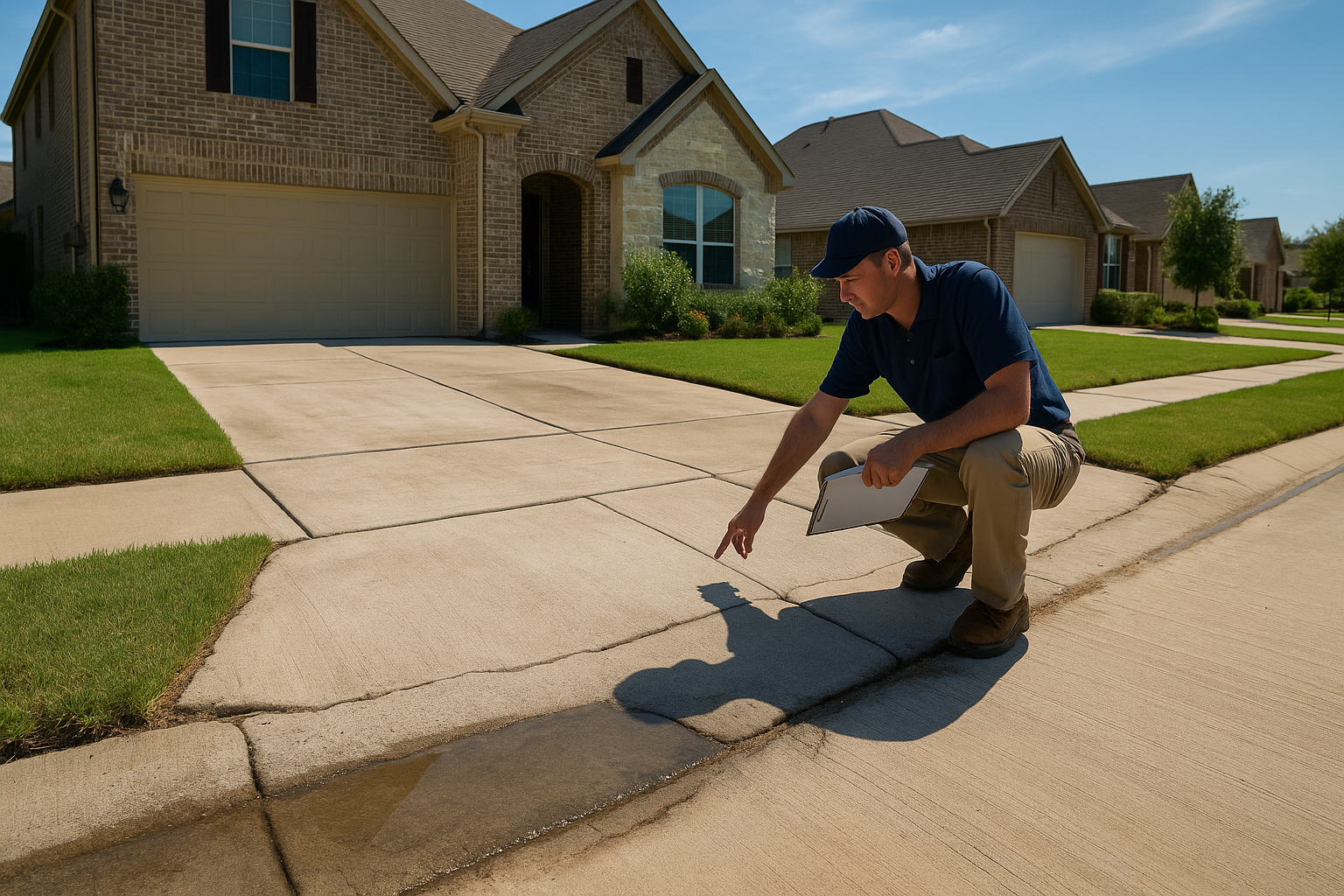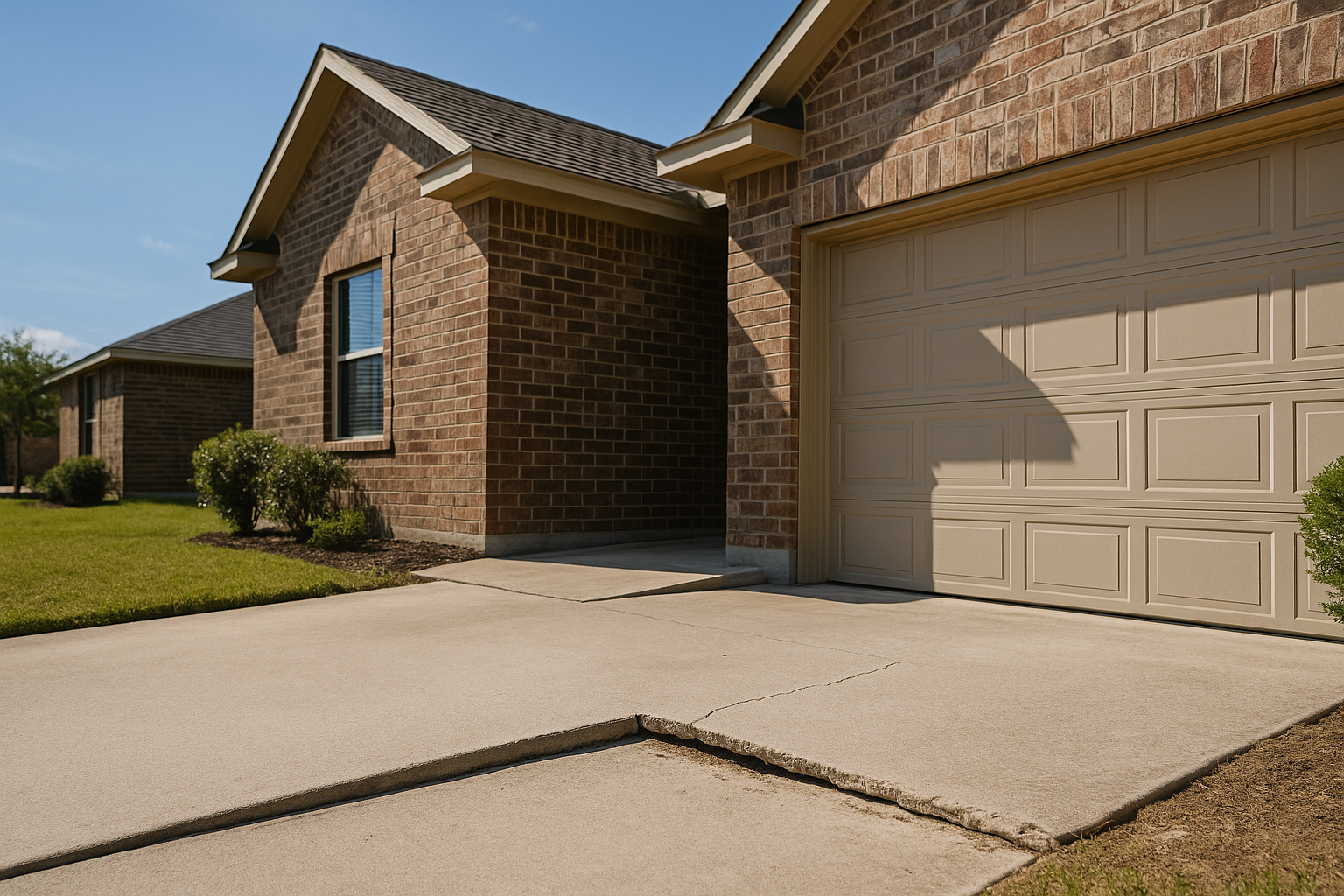
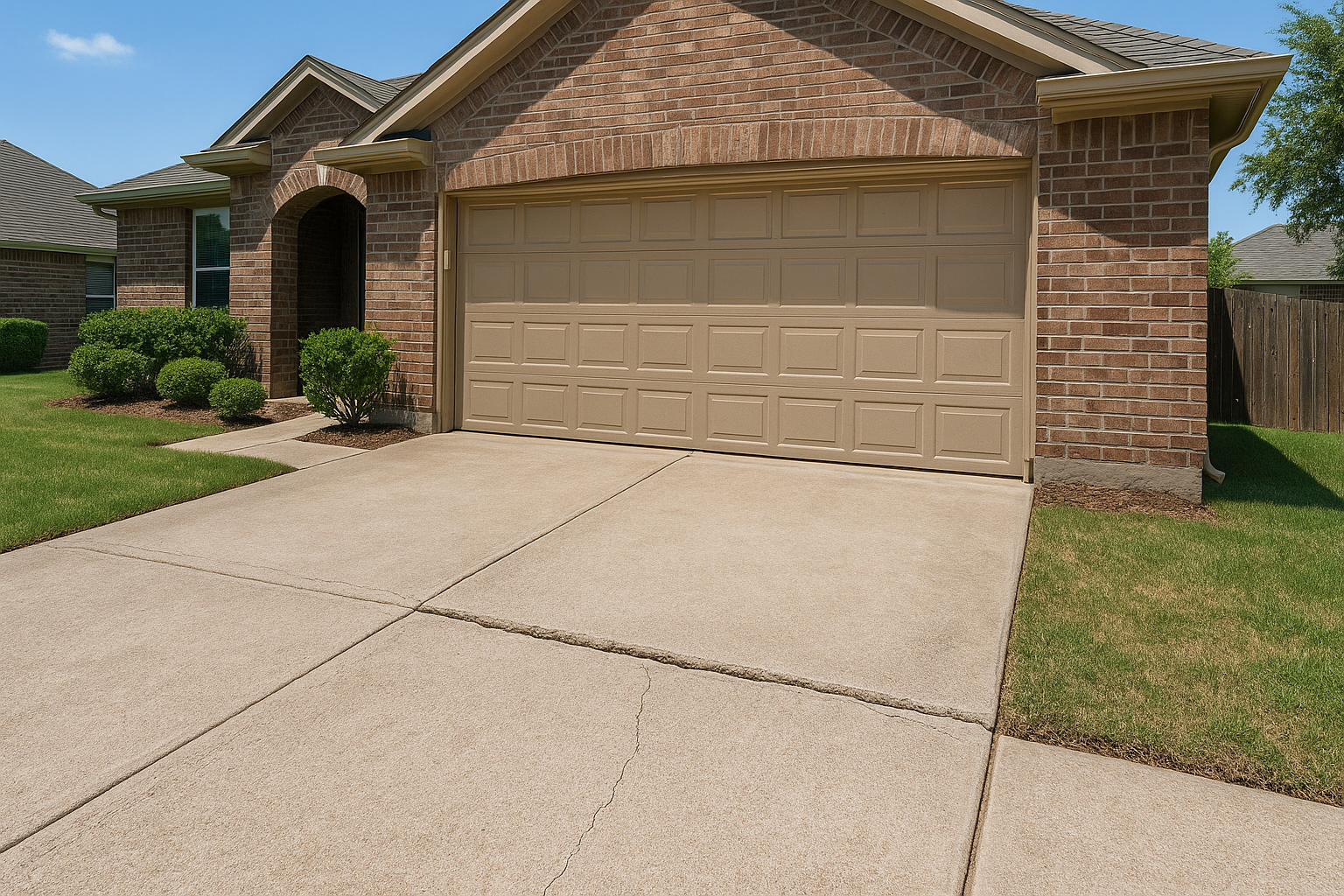
If you’ve got a gap opening up where your driveway meets the garage slab, you’re not the only Texas homeowner dealing with it. We see this all over Austin, Leander, and Houston. One day it looks like a normal joint, and the next thing you know the driveway has dropped, the garage edge is exposed, and water is running straight toward the foundation.
Most of the time, this problem starts small. A little separation at the joint. Maybe a small lip. Maybe the old filler is dried out or missing. Then Texas weather and soil movement take over. If you catch it early, repair is usually straightforward. If you let it go, that same joint can turn into a trip hazard, a drainage issue, and in some cases a bigger slab movement problem.
In this guide, we’ll cover what causes concrete driveway separation from a garage slab, how to tell when it’s getting worse, and when Driveway Lifting, Garage Floor Lifting, or Expansion Joint Replacement makes the most sense.
What causes a driveway to separate from a garage slab?
In Texas, the main culprit is usually soil movement. A driveway and a garage slab may look connected, but they often behave like two separate pieces of concrete. The garage slab is usually more protected and tied into the home structure. The driveway is out in the weather, taking direct rain, heat, runoff, and vehicle load every day.
Across Central Texas, we deal with expansive clay soils that swell when they get wet and shrink when they dry out. Around Austin and Leander, that movement shows up as seasonal rise and fall. In Houston, you’ve also got moisture swings, heavy rainfall, and soft subgrades that can wash out or compress. That movement under the driveway causes settlement, while the garage slab may stay more stable.
Here are the most common causes we see:
- Expansive clay soils causing repeated swelling and shrinkage under the driveway.
- Poor compaction of fill soil during original construction.
- Water intrusion from downspouts, irrigation, or poor drainage washing out support below the slab.
- Failed expansion joint material letting water and debris get down between the slabs.
- Thermal movement from extreme Texas heat causing concrete expansion and contraction.
- Heavy vehicle traffic adding stress to a slab that already has weak support.
A normal control or isolation joint is supposed to allow movement. The trouble starts when that joint stops functioning like a joint and starts acting like an opening. Once water gets down into it and the subgrade starts shifting, the separation usually accelerates.
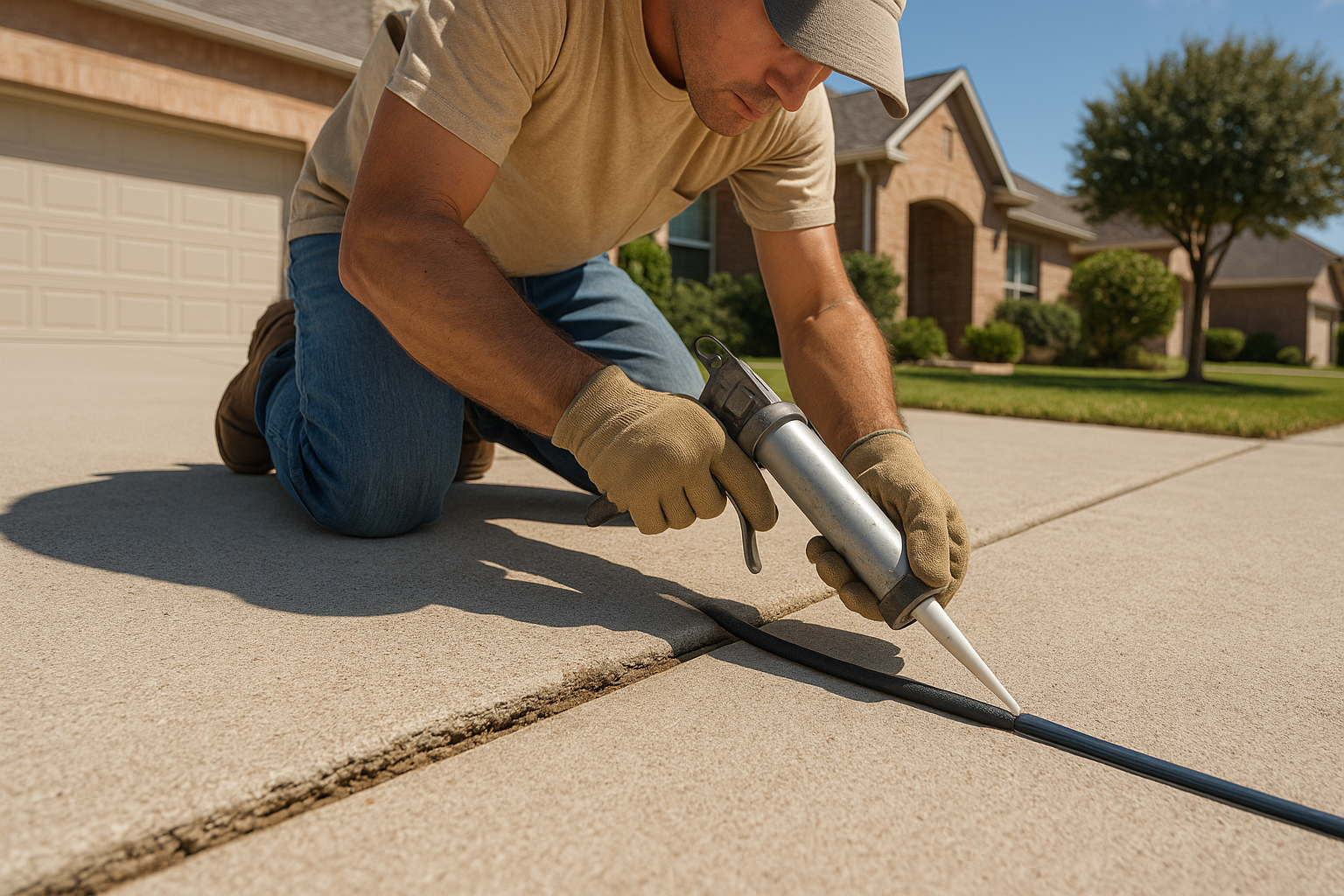
That’s why the joint itself matters. If the material in that space is deteriorated, missing, or hard as a rock, it’s no longer protecting the slab edge the way it should. In a lot of cases, replacing that joint filler and sealing it properly is just as important as correcting the height difference. For more on that side of the repair, take a look at sealmyjoints.com.
Signs the gap is getting worse
Not every separation means you need a full replacement. But there are some signs that tell you the problem is active and needs attention sooner rather than later.
1. The gap is wider than it used to be
If you can visibly tell the space between the driveway and garage slab is growing, that usually means there is ongoing movement underneath. A small joint can become a real problem once it starts collecting runoff and exposing slab edges.
2. One side is lower than the other
A vertical offset is one of the clearest signs of settlement. If the driveway has dropped below the garage slab, the issue is no longer cosmetic. It becomes a drainage problem and a tripping hazard. Even a difference of 1/2 inch to 1 inch is enough to justify repair in many homes.
3. Cracks are forming near the garage opening
When a driveway loses support near the joint, you’ll often see cracking at the corners or across the panel. These cracks may start hairline, but if the slab keeps moving, they can spread and widen.
4. Water sits or runs toward the garage
This is a big one. If separation changes the slope and starts sending water toward the garage door, that can lead to moisture intrusion and long-term damage. Standing water also speeds up soil softening and erosion below the slab.
5. The joint filler is gone, split, or sunken
In Texas sun, old fiberboard and sealants break down fast. Once the expansion joint material fails, water gets an easy path below the concrete. If the filler is missing or crumbling, that’s usually a sign the joint needs attention even if the slab movement is still moderate.
How concrete leveling and joint repair can help
For many homes, the best repair is not tearing out the whole driveway. If the slab is still in decent shape and the main problem is settlement at the garage connection, lifting and joint repair can correct the issue without the cost and mess of replacement.
Driveway lifting
With Driveway Lifting, the settled driveway slab can be raised closer to its original elevation. That helps reduce the lip at the garage, improves drainage, and takes stress off the slab edge. This is often the right move when the concrete is structurally sound but unsupported underneath.
In many Texas jobs, lifting works well because the slab itself is still usable. The problem is the base. Re-supporting the slab is usually much more practical than replacing an entire panel if the concrete hasn’t completely failed.
Garage slab edge correction
Sometimes the garage side also has movement, especially if the edge has settled or the interior floor is out of plane near the opening. In those cases, Garage Floor Lifting may be part of the repair plan. The goal is to get the transition working properly again without forcing one slab against the other.
Expansion joint replacement
After the height issue is addressed, the joint itself needs to be rebuilt correctly. A failed joint is often what allowed the problem to get worse in the first place. Replacing old material with proper joint products helps keep water out and preserves the space needed for movement. You can learn more on our expansion joint page.
As a general range, homeowners often find that lifting and joint repair cost far less than replacement. While every project is different, targeted repair may land in the hundreds to low thousands of dollars, while full tear-out and replacement can quickly run into the several-thousand-dollar range once demolition, haul-off, and repour are included.
When to repair vs replace in Texas
This is where a lot of homeowners get stuck. The question isn’t just whether the slabs have separated. The real question is whether the concrete is still a good candidate for correction.
Repair is usually the better option when:
- The driveway slab is mostly intact with limited cracking.
- The main issue is settlement at the garage joint.
- The slab can be lifted safely without excessive internal damage.
- The joint can be re-established and sealed properly.
- You want to stop water intrusion before bigger damage develops.
Replacement may be necessary when:
- The slab is badly broken or shattered into multiple unstable sections.
- There is major erosion or voiding that has compromised the slab beyond practical lifting limits.
- The concrete was poured with poor thickness or poor reinforcement and is failing broadly.
- The driveway has extensive drainage and grading issues that require full reconstruction.
In Texas, we always look at the soil and water conditions around the slab before recommending anything. Blackland clay, gumbo soils, improper roof drainage, and sprinkler overspray can all keep feeding the same movement cycle. If you repair the concrete but ignore the moisture source, there’s a good chance the separation comes back.
That’s why the best results usually come from a combined approach: correct the elevation, restore the joint, and fix the drainage conditions that caused the movement. On a lot of homes in Austin and Leander, that means managing runoff and keeping moisture more consistent around the slab. In Houston, it often means paying closer attention to saturation and washout after storms.
If your driveway is separating from the garage slab, don’t wait for the gap to turn into a bigger structural and water problem. In many cases, early repair can save you a lot of money and preserve the concrete you already have. If the slab is still sound, lifting and proper joint repair are often the most practical fix for Texas conditions.
Need a contractor to take a look? Hill Country Slabs handles driveway settlement, garage slab transitions, and joint repair across Central Texas. Contact us through /contact or call (737) 287-4308 to schedule an evaluation.