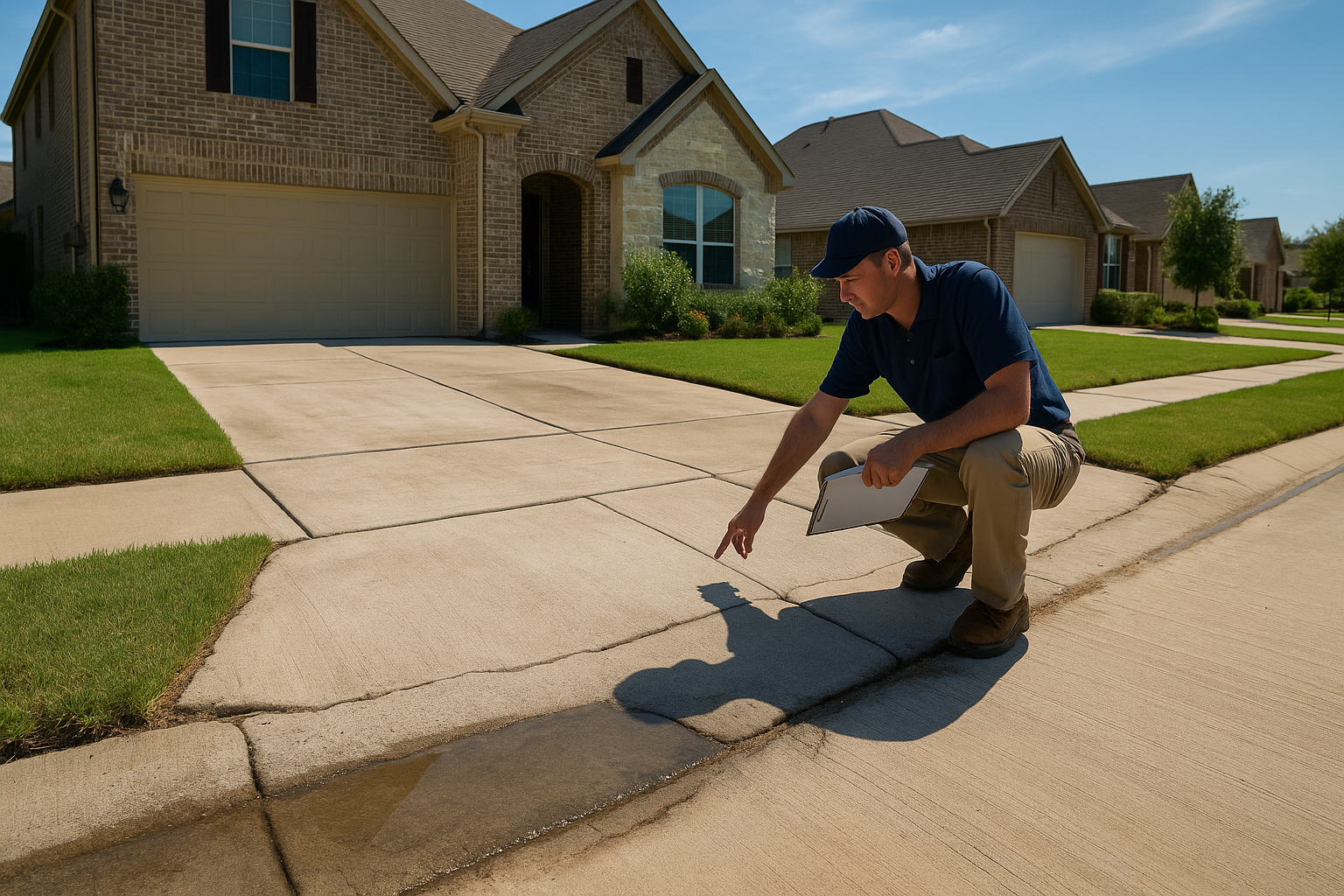
In Texas, driveway joints take a beating. Between long dry spells, sudden heavy rain, clay soil movement, and summer heat that can cook a slab all afternoon, those joints are not just there for looks. They are there to manage movement and keep water from getting down between slabs. When the joint material fails, the driveway starts taking on water where it should not, and that is where bigger trouble begins.
At Hill Country Slabs, we see this all over Austin, Round Rock, and surrounding Central Texas neighborhoods. A lot of homeowners notice a cracked or missing expansion joint and assume it is minor. In reality, that open gap can let water run straight to the base under the concrete, soften supporting soils, wash out fines, and help set the stage for cracking, voids, and settlement. In many cases, expansion joint repair costs far less than slab correction later.
If you are dealing with concrete driveway expansion joint repair in Texas, the goal is simple: stop water intrusion, protect the base, and preserve the slab before one panel starts dropping or separating from the next.
What Concrete Driveway Expansion Joint Repair Fixes
A driveway expansion joint is supposed to allow the slabs to move a little without pushing against each other, while also helping keep surface water out of the gap. Over time, the old filler dries out, cracks, rots, or pulls away from the concrete edges. Once that happens, the joint quits doing its job.
Repairing the joint addresses several problems at once:
- Water intrusion that flows between driveway sections
- Soil washout under the slab during heavy Texas rains
- Edge spalling where concrete corners start breaking down
- Weed growth and debris buildup that hold moisture in the joint
- Early slab settlement caused by loss of base support
In much of Central Texas, expansive clay soils are a major factor. These clays shrink during drought and swell when moisture returns. That movement alone can stress a driveway. Add uncontrolled water entering through a failed joint, and now you have uneven moisture conditions under the slab. One side may stay stable while the other side softens or loses support. That is a common recipe for one panel settling lower than the next.
We also see driveway problems in areas with rocky or mixed soils where water can still travel fast along slab joints. Whether the home is in newer subdivisions around Round Rock or older neighborhoods in Austin, the pattern is the same: failed joints often show up before bigger concrete movement does.
That is why homeowners looking into Expansion Joint Replacement are usually making a smart preventative repair, not just cleaning up appearance.
Signs Your Driveway Expansion Joints Need Repair
You do not have to wait until a driveway panel sinks to know the joints need attention. Most of the warning signs are visible from the surface.
Common signs to watch for
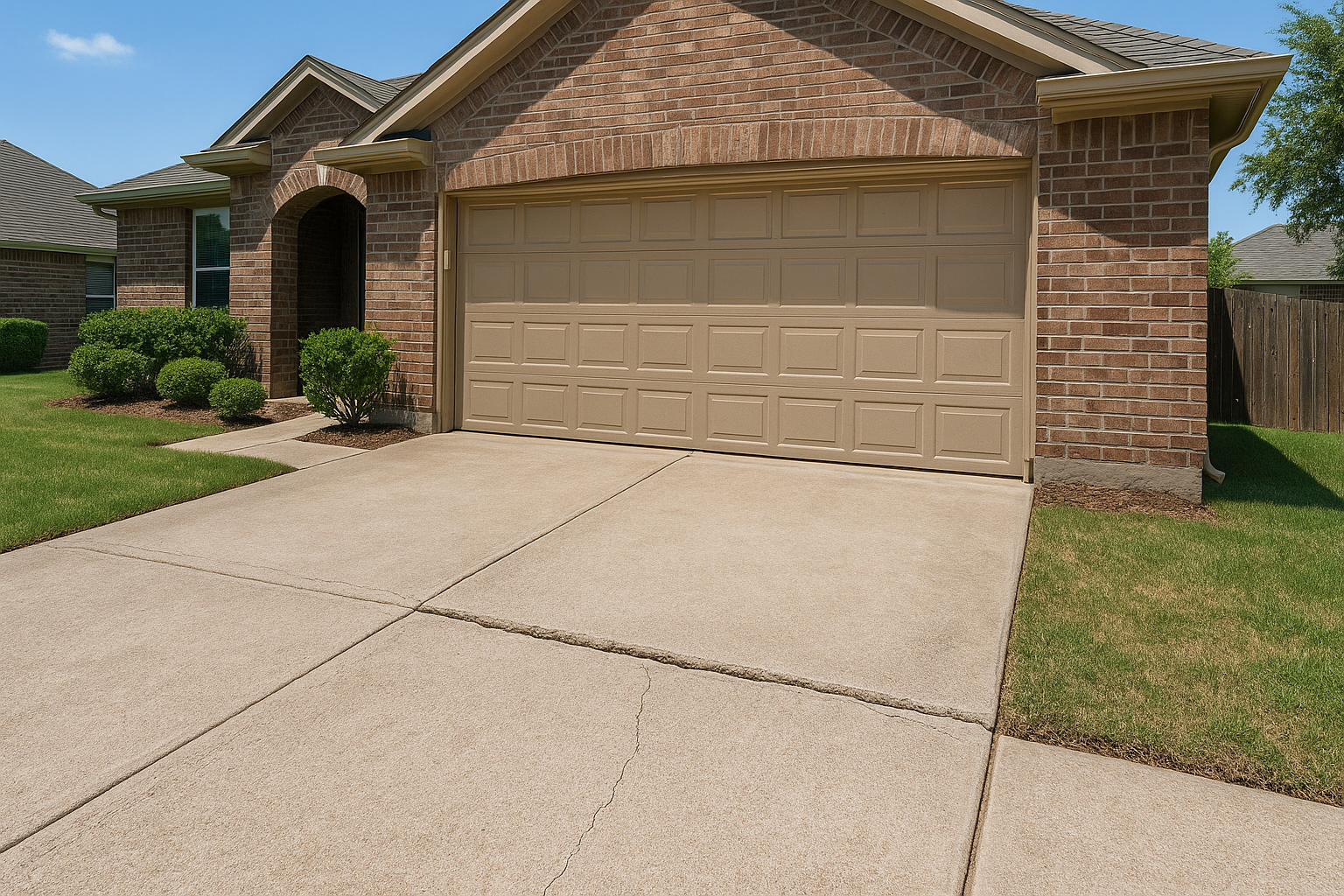
- The old joint filler is cracked, brittle, missing, or sunken down
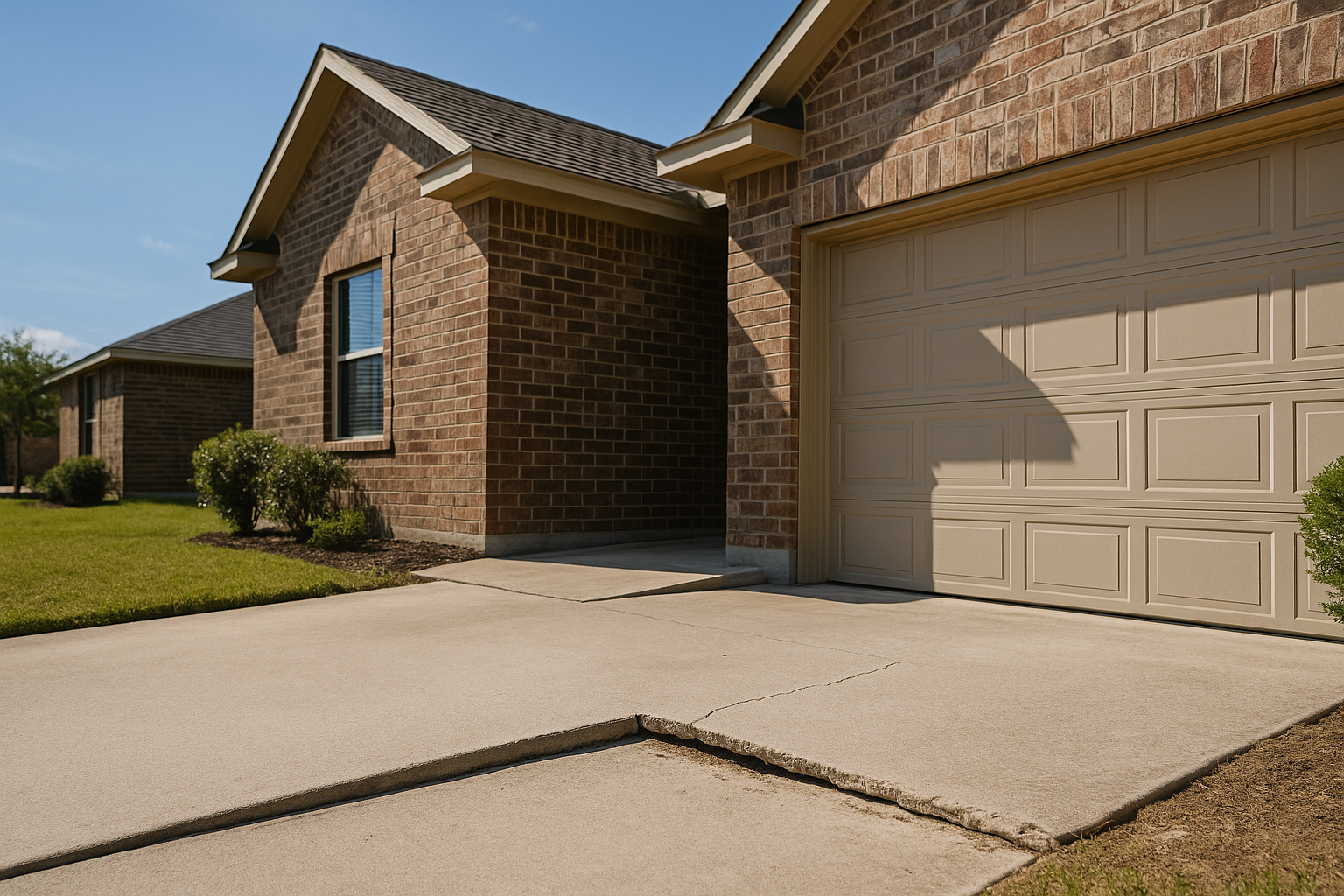
- There is a visible open gap between concrete slabs
- Water stands in or disappears quickly into the joint during rain
- The concrete edges along the joint are chipping or breaking
- Weeds or ants are coming up through the joint line
- One slab is starting to sit slightly lower than the next
- Hairline cracks are forming near the joint edges
Texas weather speeds this up. UV exposure bakes old filler. Summer heat expansion stresses the joint edges. Then a hard rain event can dump a lot of water into that same opening. Around homes with poor drainage, short downspouts, or negative grade toward the driveway, the problem gets worse fast.
If you notice the joint has opened up where the driveway meets the garage approach, sidewalk, or another slab section, it is worth repairing sooner rather than later. Those transition points usually see the most movement and the most water.
One thing homeowners miss is that a joint can look bad for a long time before visible settlement shows up. By the time a height difference becomes obvious, the base may already have been compromised. That is when a joint repair alone may not be enough.
How Silicone Joint Replacement Helps Prevent Sinking
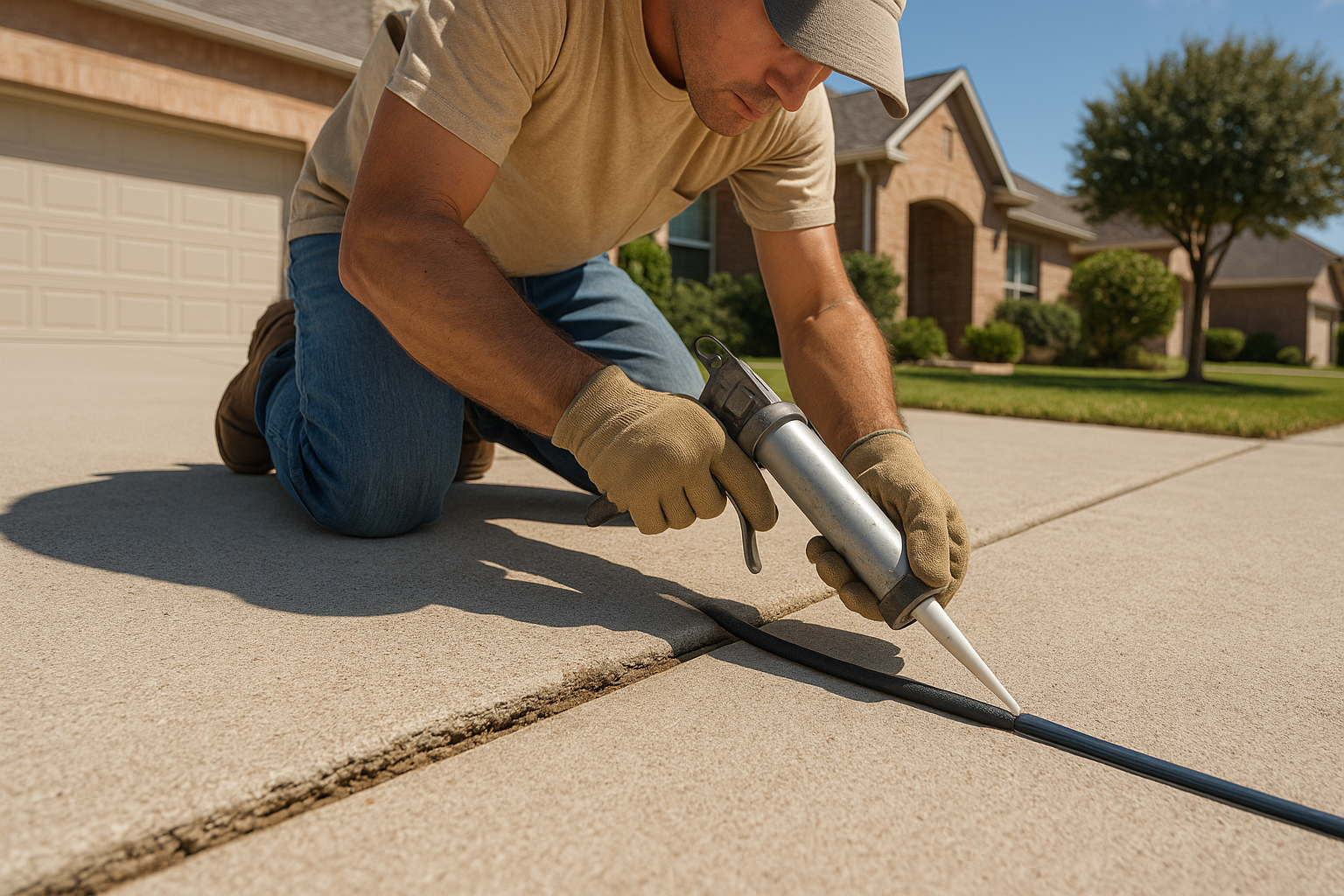
The right repair is not stuffing any random filler into the gap. For long-term performance in Texas conditions, the goal is to clean the joint, install proper backer rod where needed, and apply a professional-grade silicone sealant designed to flex with slab movement and resist weather exposure.
Silicone joint replacement helps because it creates a flexible, watertight seal near the top of the joint while still allowing movement. When installed correctly, it reduces the amount of surface water that can get below the slab and start eroding the base.
That matters because driveway settlement often begins with water. Once enough moisture gets under one section, several things can happen:
- The supporting soil softens
- Fine material begins moving or washing out
- Voids develop beneath parts of the slab
- Traffic loads from vehicles flex the unsupported area
- The slab cracks or starts to settle
In our line of work, we have seen homeowners spend hundreds on joint repair versus thousands on slab correction or replacement later. While every project is different, it is common for preventative joint sealing to be one of the most cost-effective steps you can take to protect a driveway.
A proper silicone system also tends to outperform old fiberboard or cheap filler materials that break down quickly. In Texas, flexibility matters. The slab is going to move with heat and soil conditions. The joint material needs to move with it instead of tearing loose.
If you want more detail on the materials and process, visit /expansionjoints. For product information and joint sealing education, sealmyjoints.com is also a helpful resource.
When to Repair Driveway Joints Before Leveling
This is where timing matters. If your driveway joints are failing but the concrete is still mostly even, repair the joints now. That is the best-case scenario. You are addressing the water entry point before significant soil loss and settlement occur.
If one slab has already dropped, then the repair plan may need to include leveling along with joint replacement. In those cases, sealing the joint without correcting the underlying support issue may not solve the full problem. The slab could continue moving if voids or weak soils are already present.
As a general rule, joint repair should happen before leveling when:
- The slabs are still in plane or only minimally out of plane
- The joint filler has failed but there is no major crack pattern
- There is no obvious rocking, pumping, or hollow sound from the slab
- The driveway drains reasonably well aside from the open joint
Leveling may need to come first, or be done together with joint repair, when:
- One section has settled enough to create a trip hazard
- Water has likely been entering for a long period
- There are voids under the slab
- The driveway has separated at the joint and the height difference is growing
In those situations, homeowners often need both Driveway Leveling and joint sealing to fully protect the slab. Level the section, restore support, and then close up the joint properly so the same water problem does not start the cycle again.
That combination is especially important in Texas neighborhoods with expansive clay, where repeated wet-dry cycles can exaggerate any weakness in support soils. A driveway in Austin or Round Rock may look stable during a dry stretch, then show movement after a season of rain. Once moisture gets under there, the soils do not behave uniformly.
Texas Driveway Repair Is About Prevention as Much as Repair
Most driveway problems do not start with a dramatic failure. They start small. A little cracking in the joint. A missing strip of filler. A gap that catches runoff during storms. Then over time, the subgrade changes, the edges wear down, and one section starts to move.
That is why concrete driveway expansion joint repair in Texas is such a practical service. It is not just cosmetic maintenance. It is part of protecting the slab from water intrusion, base erosion, and early settlement. For many homeowners, handling the joints early can help delay or avoid much more expensive concrete work.
If your driveway has open, deteriorated, or missing joints, now is the time to get it looked at. Hill Country Slabs works with homeowners across Central Texas to identify whether the fix is straightforward joint replacement, leveling, or a combination of both.
Need help with failing driveway joints in Austin, Round Rock, or nearby areas? Contact Hill Country Slabs through /contact or call (737) 287-4308 to schedule an evaluation and get ahead of the problem before minor joint failure turns into major slab movement.