In Texas, a driveway can look fine one season and be dropping at the garage edge, cracking at the joint, or holding water by the next. We see it all over Central Texas, from Austin to Round Rock to Georgetown. The reason is simple: our soil moves, our weather swings hard, and concrete pays the price.
If your slab is still structurally decent, driveway leveling is usually the smart fix. Instead of tearing out good concrete, we lift the settled section back into place, restore drainage, and cut down the trip hazard without turning your front yard into a demo site. In a lot of cases, leveling costs far less than full replacement and the work is finished in hours, not days.
At Hill Country Slabs, we use modern foam injection methods to raise sunken concrete with minimal disruption. If you are comparing options, this guide breaks down what causes driveway settlement in Texas, when leveling makes more sense than replacement, how foam lifting works, and what kind of pricing homeowners usually see.
What Causes Driveways to Sink in Texas?
Texas driveways do not settle for just one reason. Most of the time, it is a combination of soil movement, moisture problems, and wear over time.
Expansive clay soils
A big part of Central Texas sits on clay-heavy soils that swell when they get wet and shrink when they dry out. That constant expand-and-contract cycle leaves voids under concrete. Once support disappears, sections of the driveway start dropping. This is common around Austin, Round Rock, Georgetown, and across a lot of the I-35 corridor.
Drought and sudden rain
Texas weather is rough on slabs. Long dry stretches pull moisture out of the ground, then hard rains come through and shift everything again. That repeated movement is one of the biggest reasons a driveway that was poured level years ago starts separating at the joints or sinking near one corner.
Poor drainage
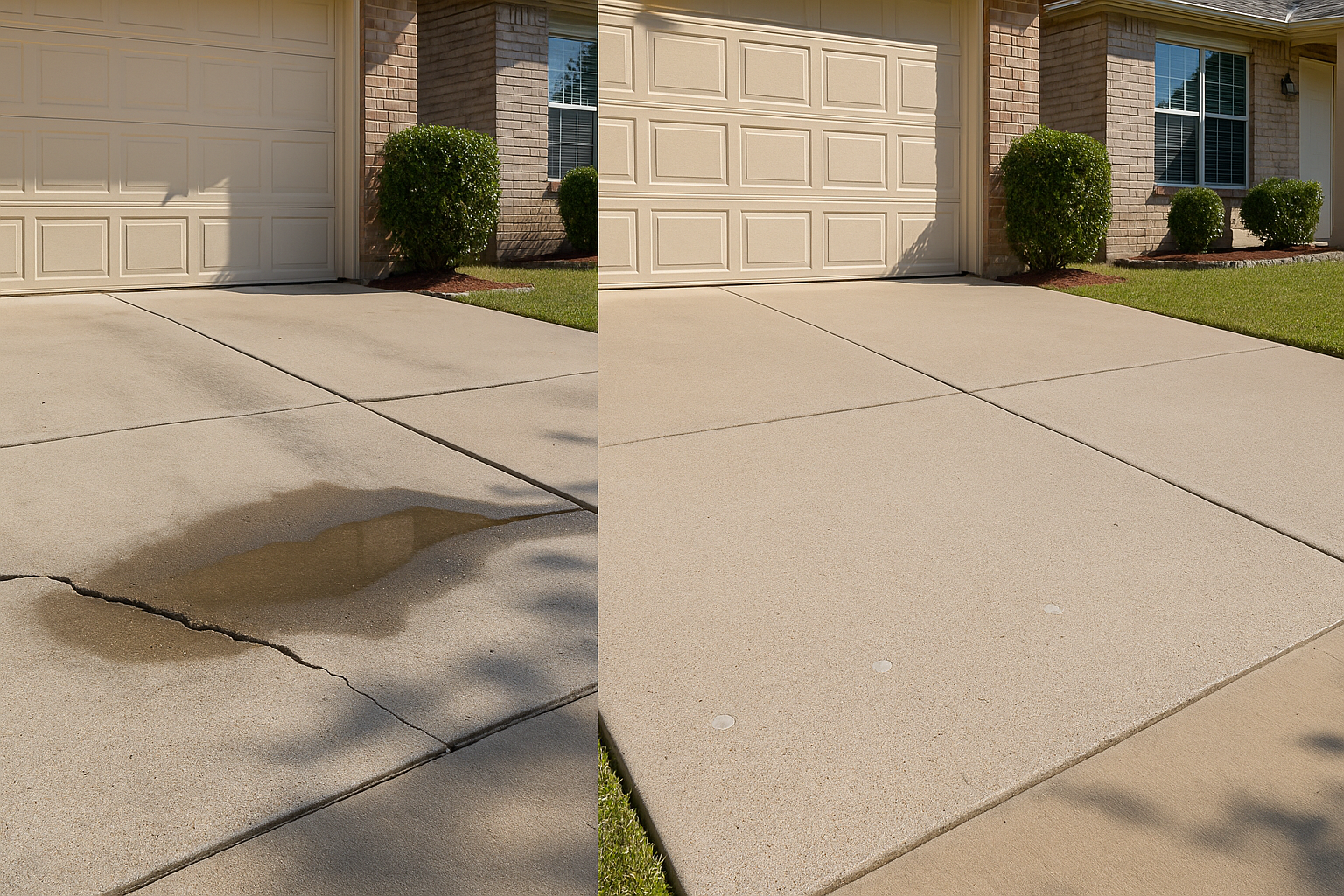
If water runs under the slab, washes out base material, or ponds next to the driveway, settlement speeds up. We often find low areas near garage entries, sidewalks, and approach sections where drainage was never controlled correctly. Once water gets under the concrete, it softens the subgrade and creates empty pockets that the slab eventually falls into.
Weak base preparation
Not every driveway was built on a properly compacted base. If the soil underneath was not prepared well the first time, normal traffic and weather will expose that weakness. Heavier vehicles, delivery trucks, and work trailers can make the issue show up faster.
Joint failure
Expansion joints matter more than most homeowners realize. When joints dry out, split open, or let water run below the slab, the concrete loses protection right where it needs it most. Keeping those joints sealed helps prevent future settlement. If your joints are open or deteriorated, take a look at expansion joint repair and learn more about proper joint sealing at sealmyjoints.com.
When Driveway Leveling Makes More Sense Than Replacement
A lot of contractors go straight to replacement because it is easy to sell. But replacement is not always necessary. If the concrete is mostly intact and the problem is settlement, leveling is often the better route.
Leveling is a good fit when:
- The slab is sunken but not badly broken apart
- You have trip hazards between panels
- Water is draining toward the house or garage
- Cracks are minor to moderate, not signs of total slab failure
- You want to avoid demolition, haul-off, and long cure times
In these situations, Driveway Leveling can restore the slab without the mess and price tag of replacement.
Replacement may be the better choice when:
- The concrete is shattered or severely spalled
- There are major structural breaks through multiple sections
- The slab was poured too thin and cannot carry expected loads
- Tree roots or major drainage failures have caused widespread damage
For the average settled driveway panel, though, leveling is usually the practical call. Homeowners like it because it is fast, clean, and usually runs at a fraction of replacement cost. Contractors like it because we can correct elevation and drainage without removing otherwise usable concrete.
Another point that matters in Texas: once you replace a driveway, you still have to deal with the same soil conditions that caused the settlement in the first place. If drainage and joint protection are ignored, new concrete can run into the same trouble later on.
How Polyurethane Foam Driveway Leveling Works
Foam leveling is one of the most efficient ways to lift settled concrete in Texas. The process is straightforward, but it needs to be done by somebody who understands slab behavior, soil conditions, and how much lift the concrete can safely take.
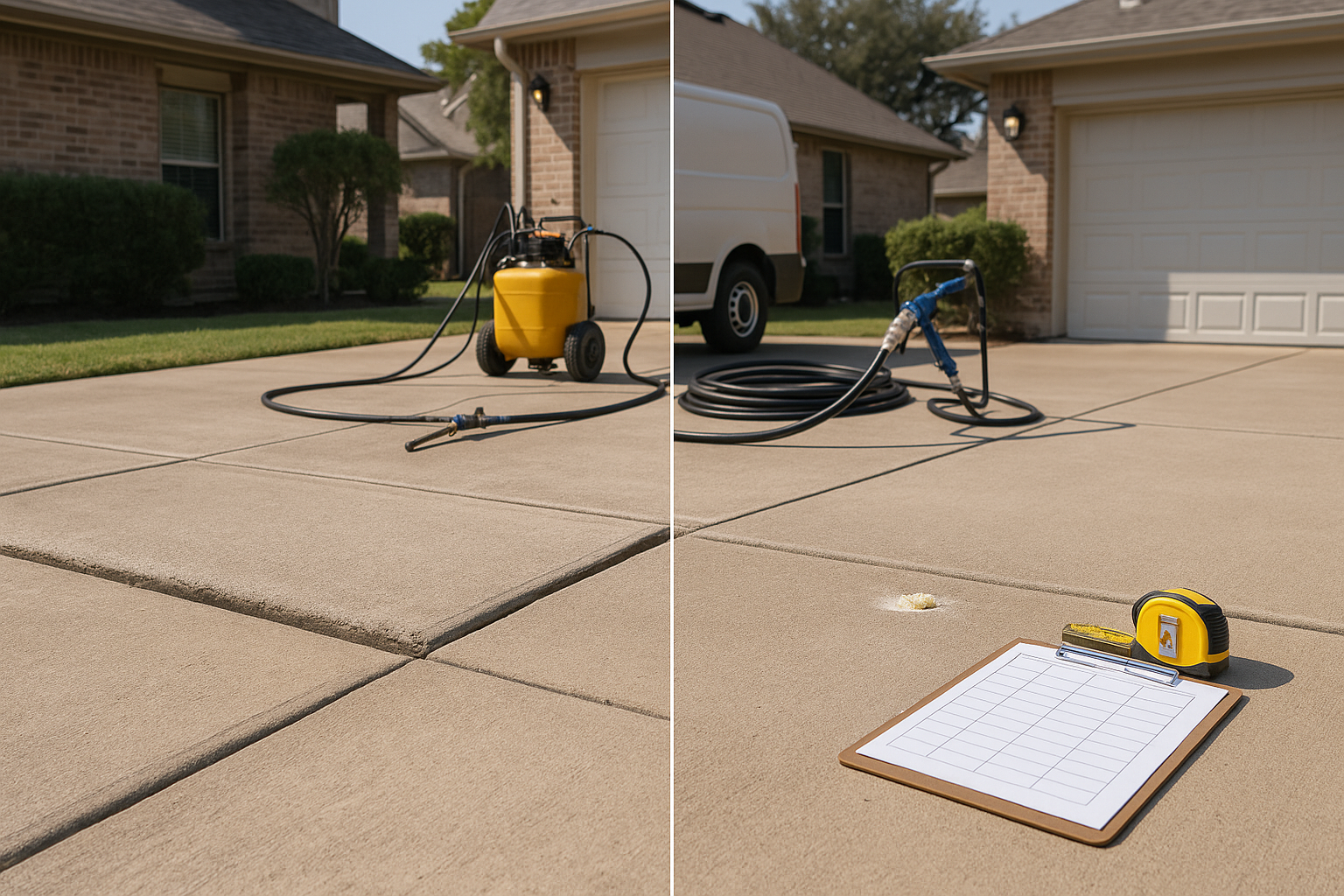
- We inspect the slab. First, we check the amount of settlement, look at cracks, identify voids, and figure out why the slab moved. If water intrusion or failed joints are part of the problem, we note that too.
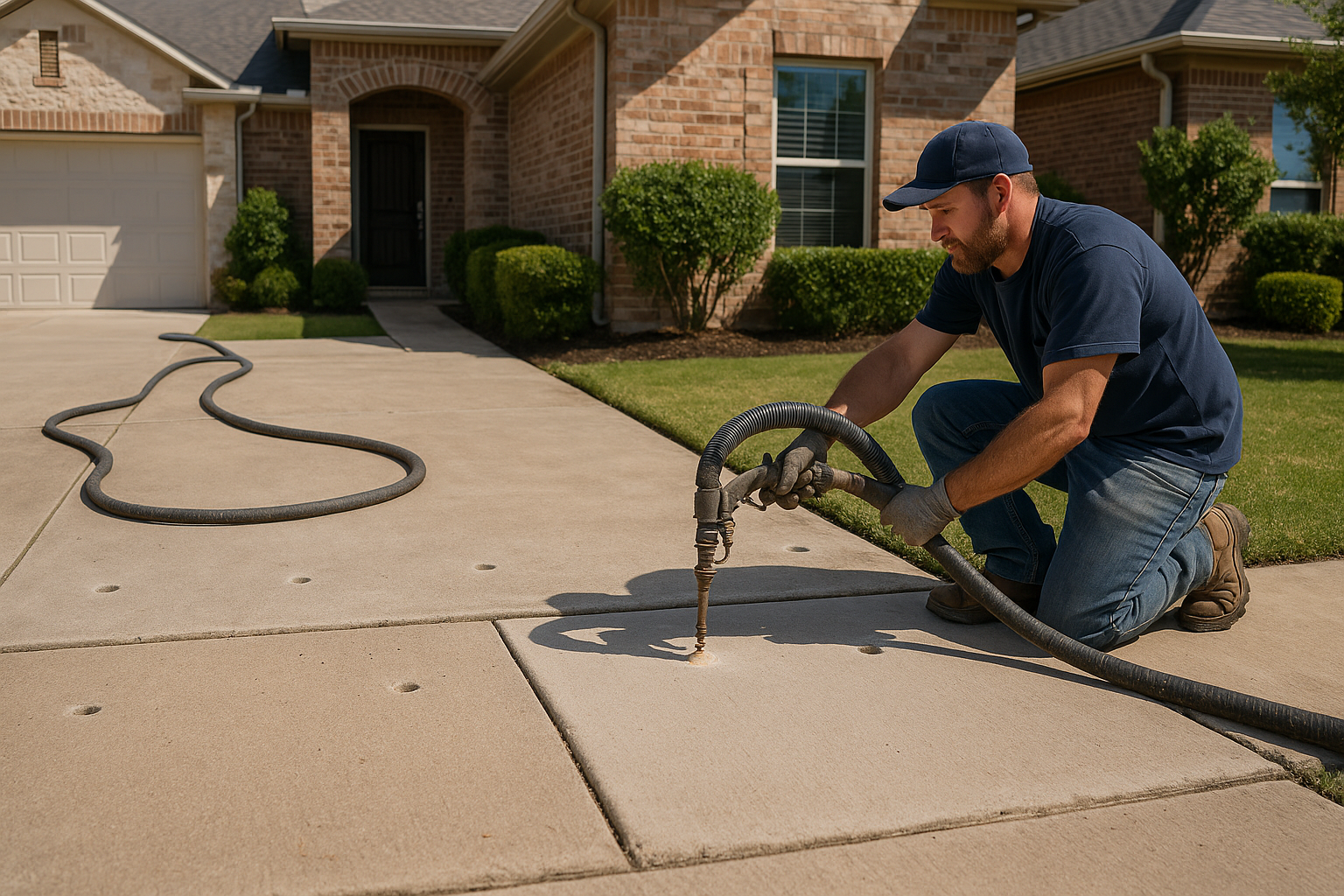
- We drill small access holes. These holes are much smaller than what you would see with old-school mudjacking. That means a cleaner finished appearance.
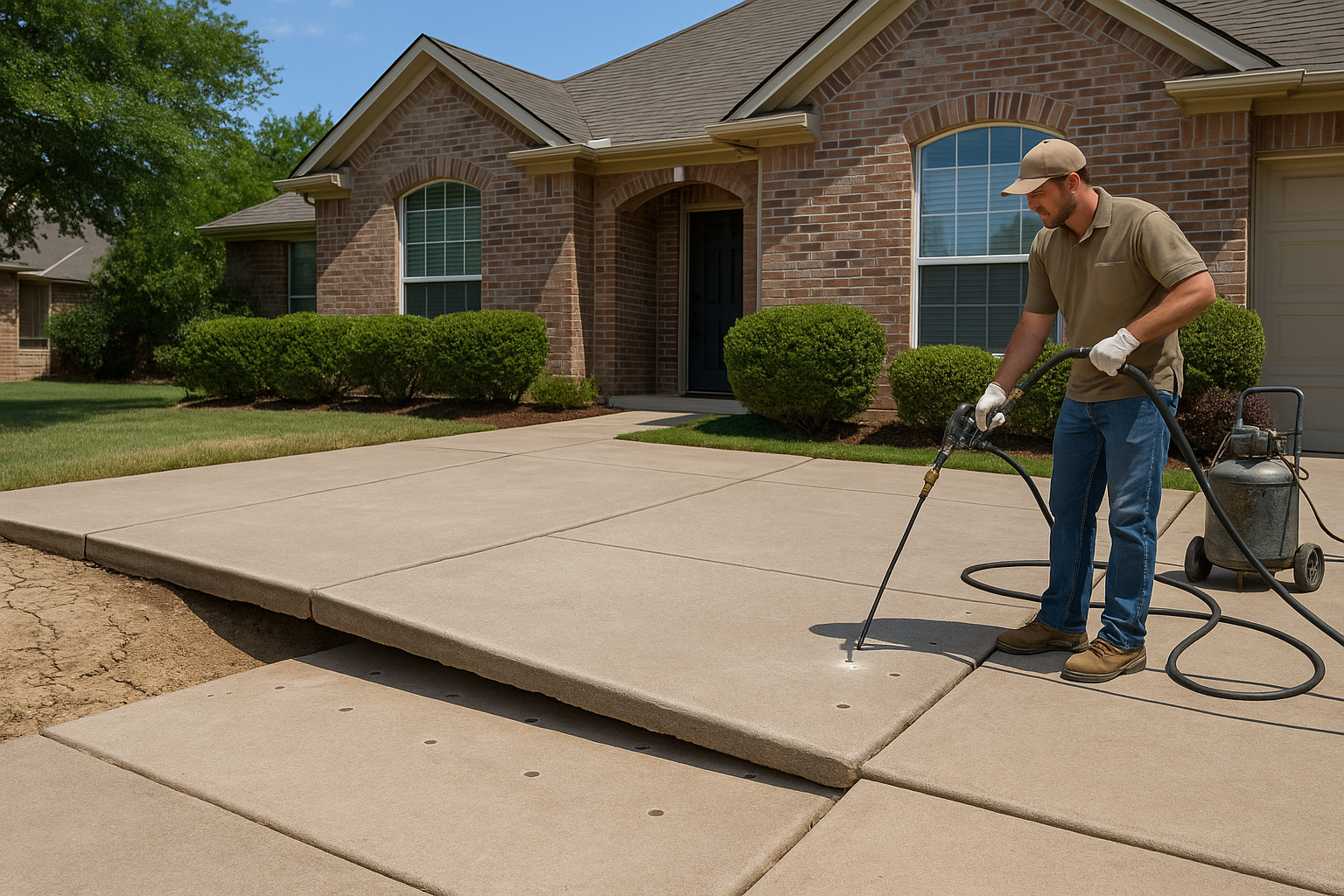
- We inject high-density polyurethane foam. The foam expands below the slab, fills empty space, and applies upward pressure to raise the concrete.
- We fine-tune the lift. As the slab comes up, we monitor the elevation and bring it back into alignment as closely as the condition of the concrete allows.
- We patch the drill holes. Once the slab is stable and level, we clean up the site and patch the access points.
The big advantage of foam is that it is lightweight, precise, and cures quickly. In many cases, the driveway can be used again in the same day. That is a big deal for busy homeowners who do not want a driveway blocked off for the better part of a week.
Compared to traditional replacement, the process is less invasive and much easier on landscaping. You are not dealing with jackhammers, dumpsters, torn-up grass, and multiple days of concrete crew traffic. For many homes in Austin-area neighborhoods, that alone makes leveling worth a hard look.
Foam leveling also helps with more than appearance. When we bring a slab back up, we can improve drainage, reduce edge stress at adjoining panels, and lower the risk of further cracking caused by uneven support. It is not magic, and it will not fix every bad driveway, but for the right slab it is a solid repair.
How Much Driveway Leveling Costs in Texas
This is the question everybody asks first, and the honest answer is that it depends on how far the slab has settled, how many sections need to be lifted, how accessible the work area is, and whether void filling or joint repair is also needed.
That said, most homeowners find driveway leveling costs significantly less than replacement. In many Texas cases, leveling comes in at roughly one-third to one-half the cost of tearing out and repouring. Full replacement includes demolition, haul-off, forming, base work, new concrete, and cure time. That adds up fast.
Cost factors that affect price
- Size of the affected area — One dropped panel costs less than lifting multiple sections.
- Depth of settlement — A slab that has sunk two inches is different from one that has dropped four or more.
- Void size under the slab — Larger empty areas require more material.
- Access and setup — Tight spaces or unusual layout can affect labor time.
- Condition of joints and cracks — If sealing and follow-up repairs are needed, that changes the total.
For homeowners trying to protect resale value, leveling can also save money indirectly. A sunken driveway hurts curb appeal, creates a visible maintenance issue, and can become a liability if somebody trips on it. Fixing it early is usually cheaper than waiting until the slab drops farther and cracks worse.
We always tell people the same thing: the cheapest option is not automatically the best one, but ignoring settlement is almost always the most expensive choice in the long run. Once water starts draining the wrong way or more support washes out underneath, the repair gets more involved.
Why Texas Homeowners Choose Leveling First
For a lot of homes across Central Texas, driveway leveling checks the boxes that matter most:
- Fast turnaround — Many jobs are completed in a few hours
- Lower cost — Usually much less than replacement
- Minimal disruption — No major demolition or long cure period
- Improved drainage — Helps move water away from the house and garage
- Safer surface — Reduces trip hazards and uneven transitions
If your driveway is sinking but the concrete is still worth saving, leveling is often the right first move. The key is getting it evaluated before minor settlement turns into major slab damage.
If you are seeing a sunken panel, standing water, or a lip someone can trip over, Hill Country Slabs can take a look and tell you straight whether leveling makes sense. We serve homeowners across the region, including Austin, Round Rock, and Georgetown.
Ready to fix your driveway without the cost and mess of replacement? Contact Hill Country Slabs through our contact page or call (737) 287-4308 to schedule an estimate.