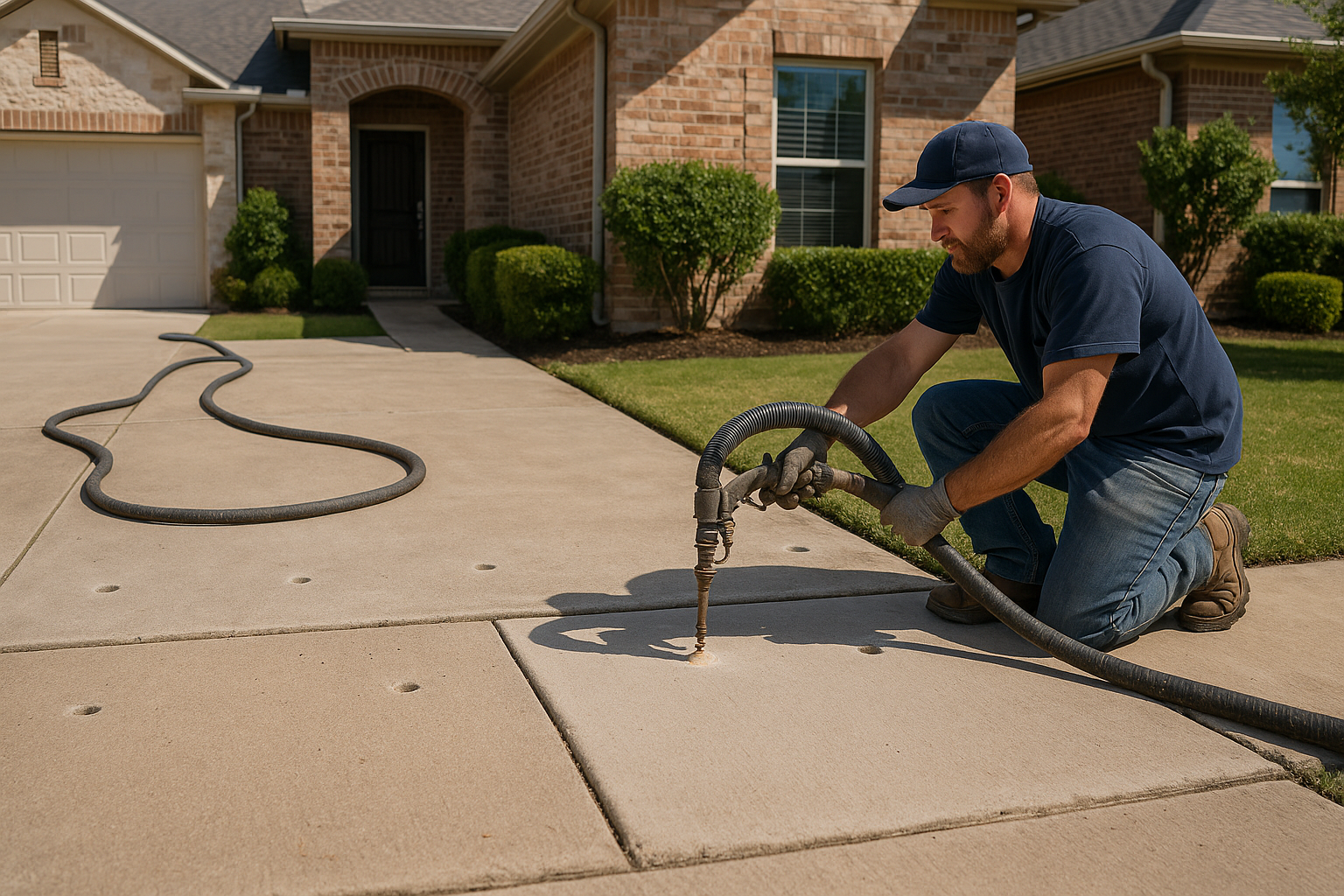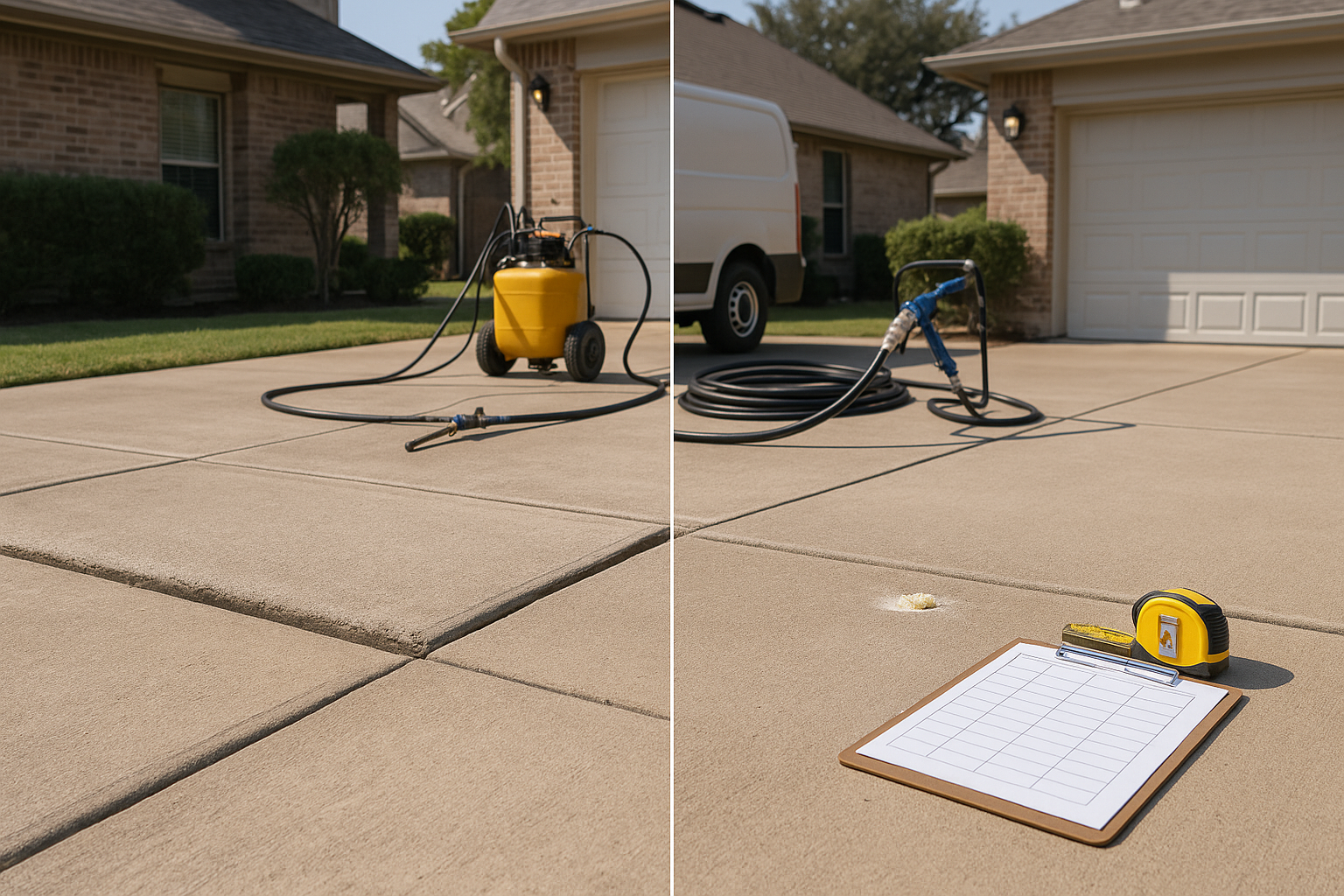
In Texas, driveway expansion joints take a beating. Between long stretches of summer heat, hard rain, shifting clay soils, and dry spells that pull moisture out of the ground, those joints are doing more work than most homeowners realize. When they fail, water gets down between the slabs, washes out support, and starts the chain reaction that leads to cracks, settlement, and expensive concrete problems.
If you are searching for driveway expansion joint replacement in Texas, the good news is that catching the problem early can save you a lot of money. In many cases, replacing worn-out filler with a proper silicone joint system is far more practical than tearing out a whole driveway. For homeowners dealing with early movement, cracking, or separation, this is often one of the smartest repair steps you can take before moving on to bigger work like Driveway Leveling or Concrete Slab Repair.
What driveway expansion joints do
An expansion joint is the gap placed between sections of concrete to allow the slabs to move a little without pushing directly against each other. Concrete expands in heat and contracts in cooler weather. In Texas, where driveway surfaces can get extremely hot in the sun, that movement is not minor. The joint gives the slab room to breathe.
It also helps control water intrusion when it is properly sealed. That matters a lot here because much of Central Texas sits on highly active clay soils. In places like Austin, Cedar Park, and Round Rock, we regularly see driveways built over expansive soils that swell when wet and shrink when dry. If the joint fails and lets water run straight down into the base, those moisture swings get worse. That is when slabs start to edge down, corners break, and the driveway develops uneven sections.
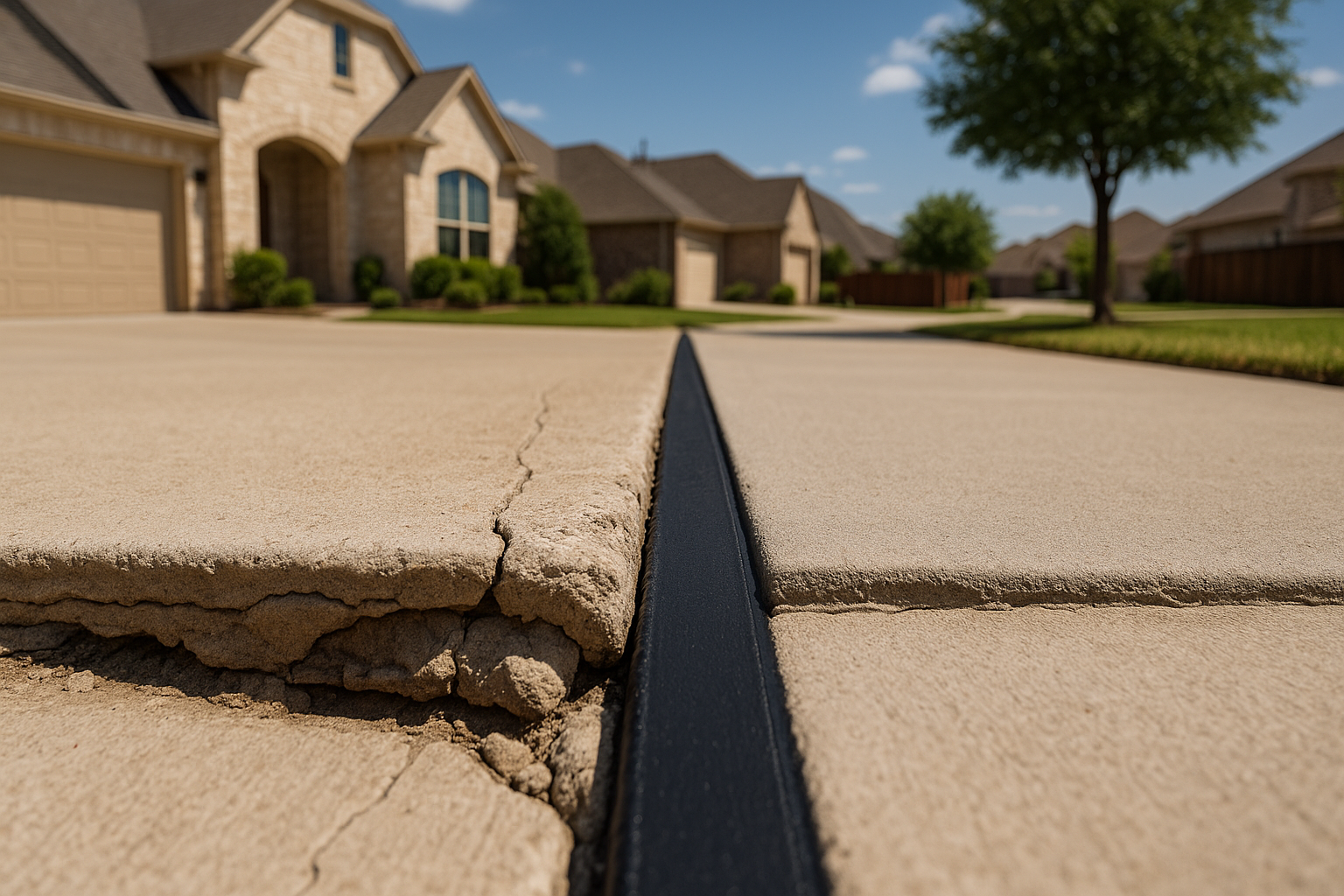
Older driveways often have fiberboard or similar filler in the joints. Over time, that material dries out, rots, compresses, or pulls away from the concrete. Once that happens, the joint is no longer protecting the slab the way it should. Replacing it with a flexible sealant system is usually the better long-term move, especially when using a product designed for exterior concrete joint movement. You can learn more about this process at /expansionjoints and at sealmyjoints.com.
Signs your expansion joints need replacement
Most homeowners do not think about driveway joints until the damage spreads. Usually, by the time we get called out, there are a few clear signs the old joint has already quit doing its job.
- The joint filler is cracked, rotted, or missing. If you can see open gaps, plant growth, or loose material, the seal is gone.
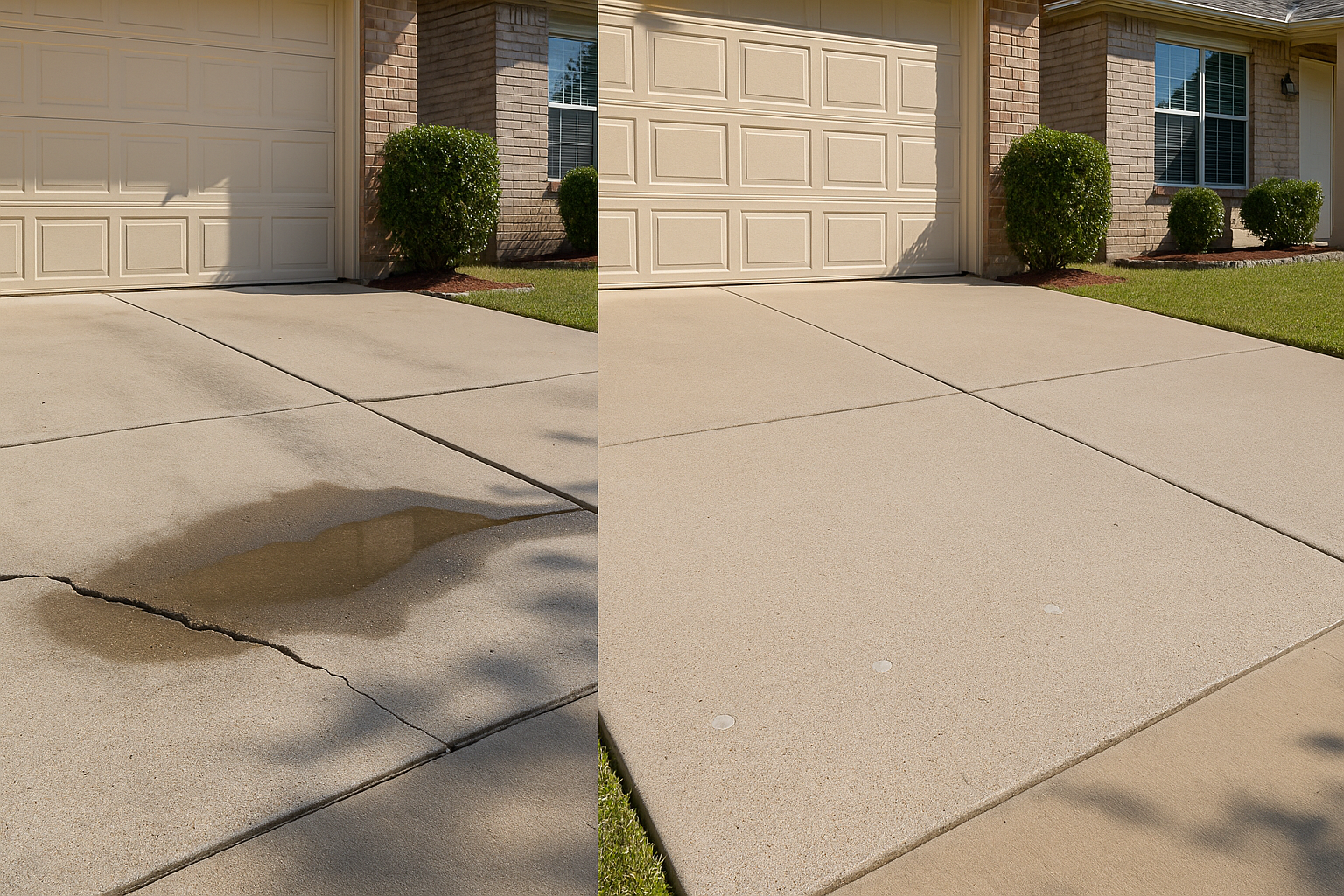
- Water stands in or disappears into the joint. That means moisture is likely getting below the slab and into the base.
- The concrete edges are chipping or spalling. Once the slab edge is exposed, traffic and weather break it down faster.
- One side of the driveway is lower than the other. That can be an early sign of soil washout or base loss.
- You see hairline cracks running out from the joint. These often start near weak spots where movement is no longer controlled.
- Ants, weeds, or debris keep collecting in the gap. Open joints turn into entry points for all kinds of problems.
Texas weather speeds all this up. We go from triple-digit heat to sudden heavy rain, sometimes in the same week. North Texas and Central Texas both deal with this, but in the Hill Country corridor we especially see issues tied to limestone-based subgrades mixed with clay pockets. That combination can create uneven support under driveways. A failed joint lets water find the weak spots fast.
If the slab is already dropping or rocking, joint replacement alone may not be the full answer. But even then, sealing the joints is still part of protecting the repair. It works hand in hand with leveling and stabilization.
Why failed joints lead to cracks and sinking
This is where small maintenance turns into bigger structural trouble. When an expansion joint opens up, rainwater runs down the gap instead of shedding off the driveway surface. That water can soften the base material, erode fines, and create voids under the slab. Once a vehicle drives over that unsupported section, the concrete flexes more than it was meant to.
Concrete is strong in compression, but it does not like bending. That is why you start seeing corner cracks, broken edges, and settled panels. In Texas clay soils, the problem gets worse because moisture is not staying consistent. One side of the slab may be getting repeated water intrusion while the surrounding soil dries out and shrinks. That uneven moisture profile creates differential movement.
We see this all the time on residential driveways around Austin-area neighborhoods. One failed joint near the garage approach or sidewalk connection can lead to a section dropping just enough to hold water. From there, the cycle keeps going. More water gets in, more support washes out, and the slab settles further.
The cost difference between handling the joint early and replacing concrete later is not small. Joint replacement and sealing is often a maintenance-level repair compared to full tear-out. A homeowner might spend a few hundred to a couple thousand dollars depending on footage and condition for professional joint work, while full driveway replacement can run several thousand to well over $10,000 depending on size, access, and damage. That is why we tell folks not to ignore open joints.
If your driveway is already moving, combining joint sealing with Driveway Leveling may be the best route. If the movement ties into broader foundation or slab concerns, Concrete Slab Repair may also come into play. The main point is this: leaving failed joints open almost always makes the repair bill worse.
Why silicone joint replacement makes sense in Texas
For Texas driveways, silicone joint replacement makes sense because it stays flexible, handles movement, and seals out water much better than old fiberboard left exposed at the surface. When installed correctly, the old material is removed, the joint is cleaned, backing material is placed where needed, and a proper self-leveling or tooled silicone sealant is installed to create a durable weather-resistant seal.
That flexibility matters in our climate. Concrete expands hard in summer heat, especially on driveways with full sun exposure. Then we get cooler nights, winter fronts, and seasonal moisture changes in the subgrade. A rigid patch or cheap filler does not hold up well under that cycle. Silicone is built to move with the slab instead of tearing loose as quickly.
It also looks better. A clean black silicone joint gives the driveway a finished, maintained appearance and helps define the slab lines without looking patched together. For homeowners thinking about resale, curb appeal matters. Fresh joints tell buyers the concrete has been cared for.
Another big advantage is water control. The whole point is to keep runoff from dropping straight into the joint and undermining the base. In Texas, that can be the difference between a stable driveway and a section that starts settling after every storm. Properly sealed joints are one of the cheapest ways to help prevent washout-related damage.
We usually recommend homeowners inspect driveway joints at least once or twice a year, especially after a hot summer or a stretch of heavy rain. If the filler is shrinking, splitting, or pulling away from the concrete edges, it is time to act. Waiting until the slab cracks or sinks is where the cost jumps.
For more details on joint sealing options, visit /expansionjoints or check out sealmyjoints.com. If you are in Austin, Cedar Park, Round Rock, or surrounding Texas areas, getting the joints evaluated early can help you avoid much larger repairs down the road.
Bottom line
Driveway expansion joint replacement in Texas is not cosmetic maintenance. It is preventive concrete repair. Good joints help control slab movement, block water intrusion, and protect the base under your driveway. Once the old material fails, the odds of cracking, edge damage, and settlement go up fast in our soil and weather conditions.
If your driveway joints are open, rotted out, or letting water through, now is the time to deal with them. Hill Country Slabs can inspect the joint condition, recommend whether sealing alone is enough, and let you know if leveling or slab repair should be part of the plan. Contact us at /contact or call (737) 287-4308 to schedule an estimate.