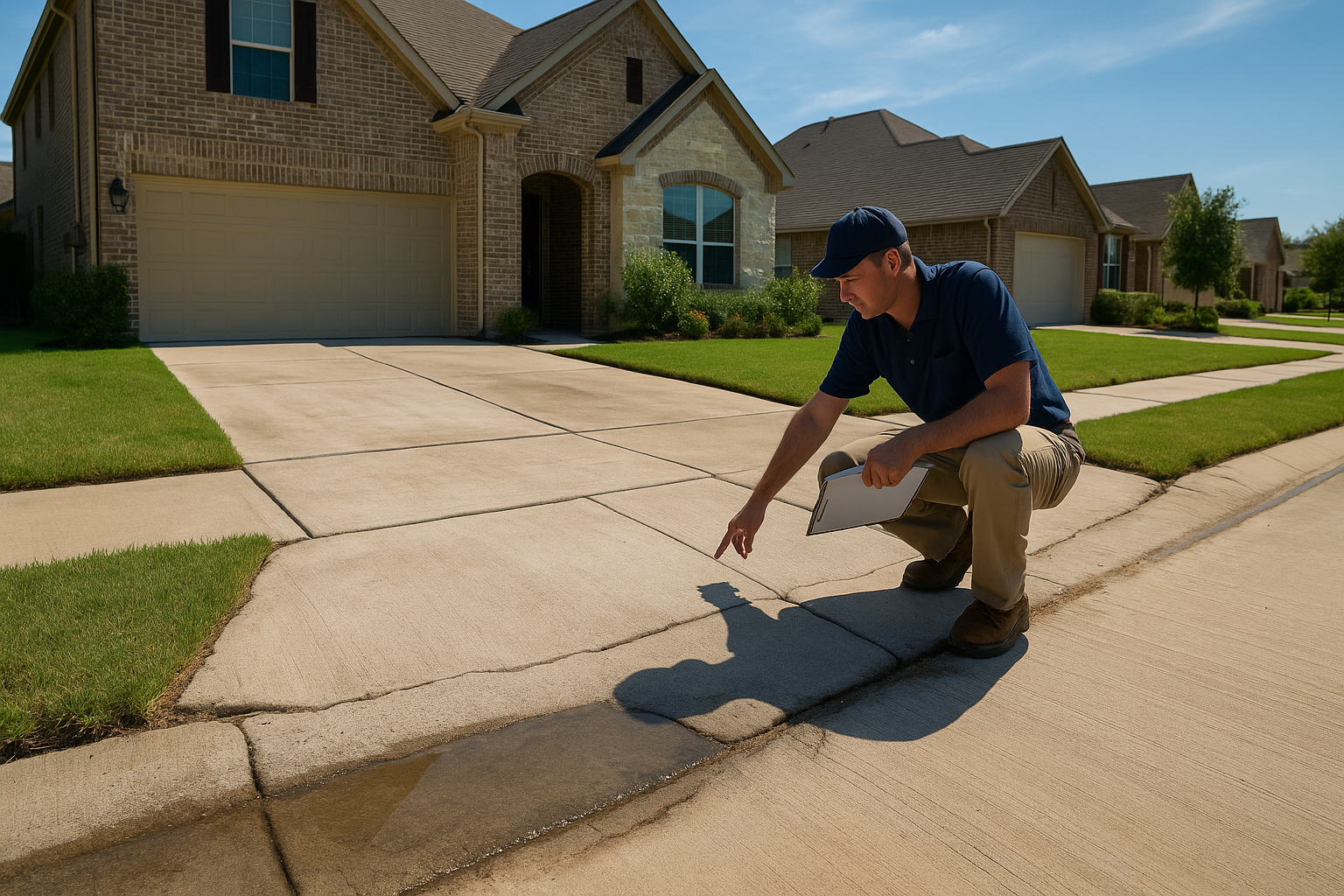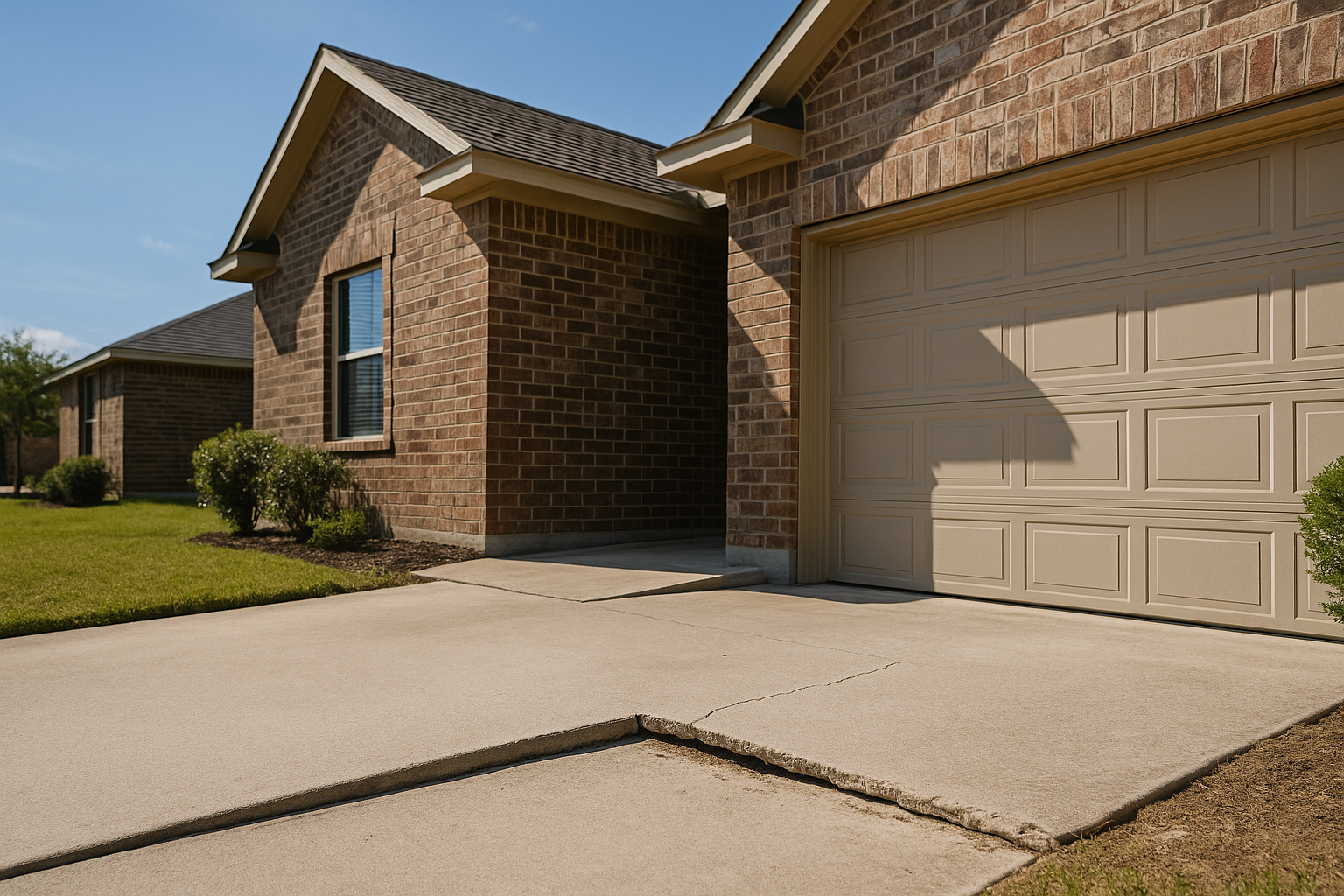
In Texas, a driveway can look solid one year and start dropping the next. We see it all the time across Austin, Round Rock, and surrounding areas. Between expansive clay soils, long dry spells, hard rain, and heat that bakes the ground, concrete slabs move. The good news is a sunken driveway does not always need to be torn out and replaced. In a lot of cases, concrete driveway lifting in Texas costs far less than full replacement and gets the slab back where it belongs without the mess of demolition.
If your driveway has one panel lower than the next, water running back toward the garage, or a trip hazard at the joint, lifting may be the right fix. At Hill Country Slabs, we look at the slab condition, the soil underneath, drainage, and the joint spacing before recommending anything. If the concrete is still structurally sound, foam lifting can often restore it quickly and keep you from paying for a brand-new driveway before you really need one.
What Is Concrete Driveway Lifting?
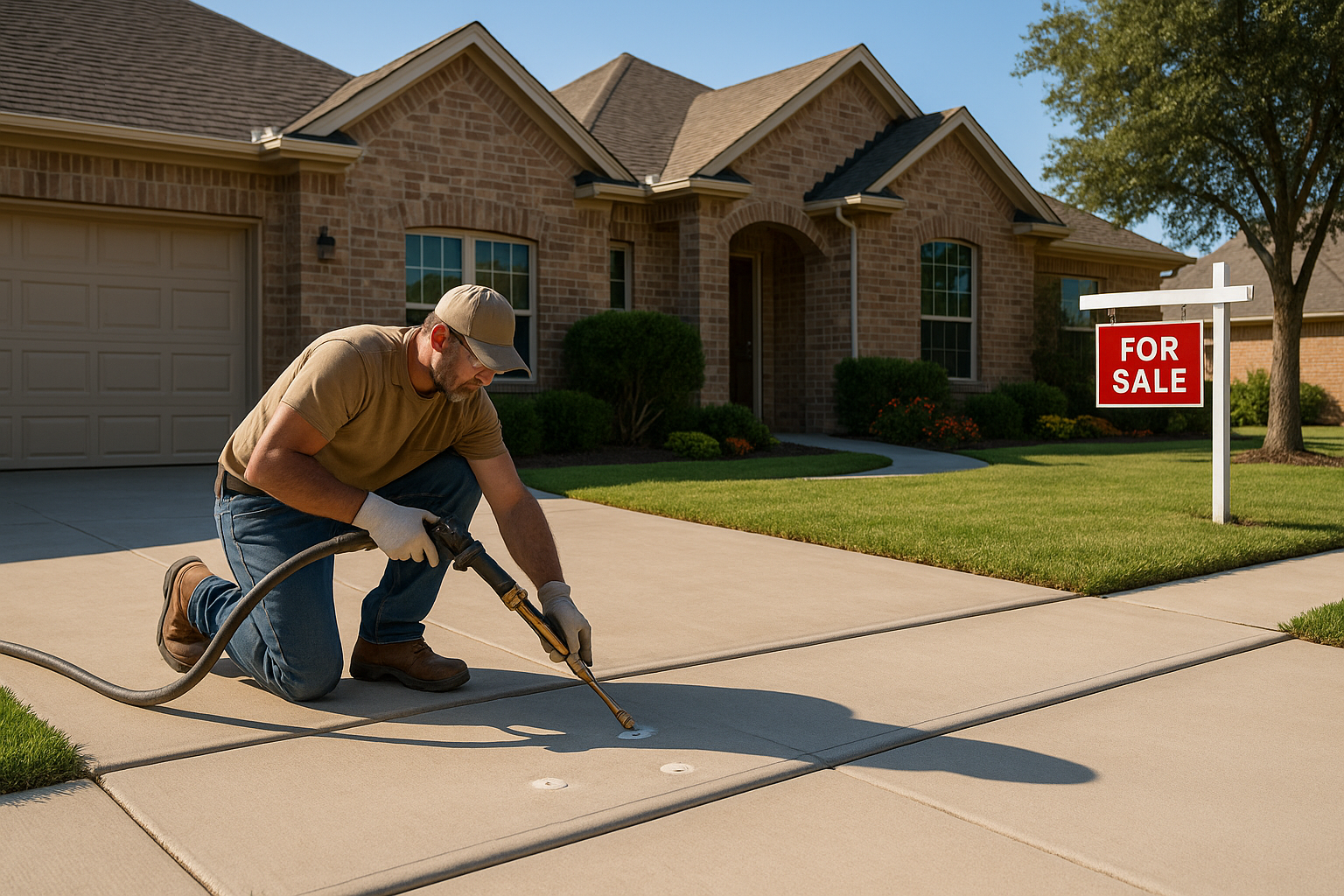
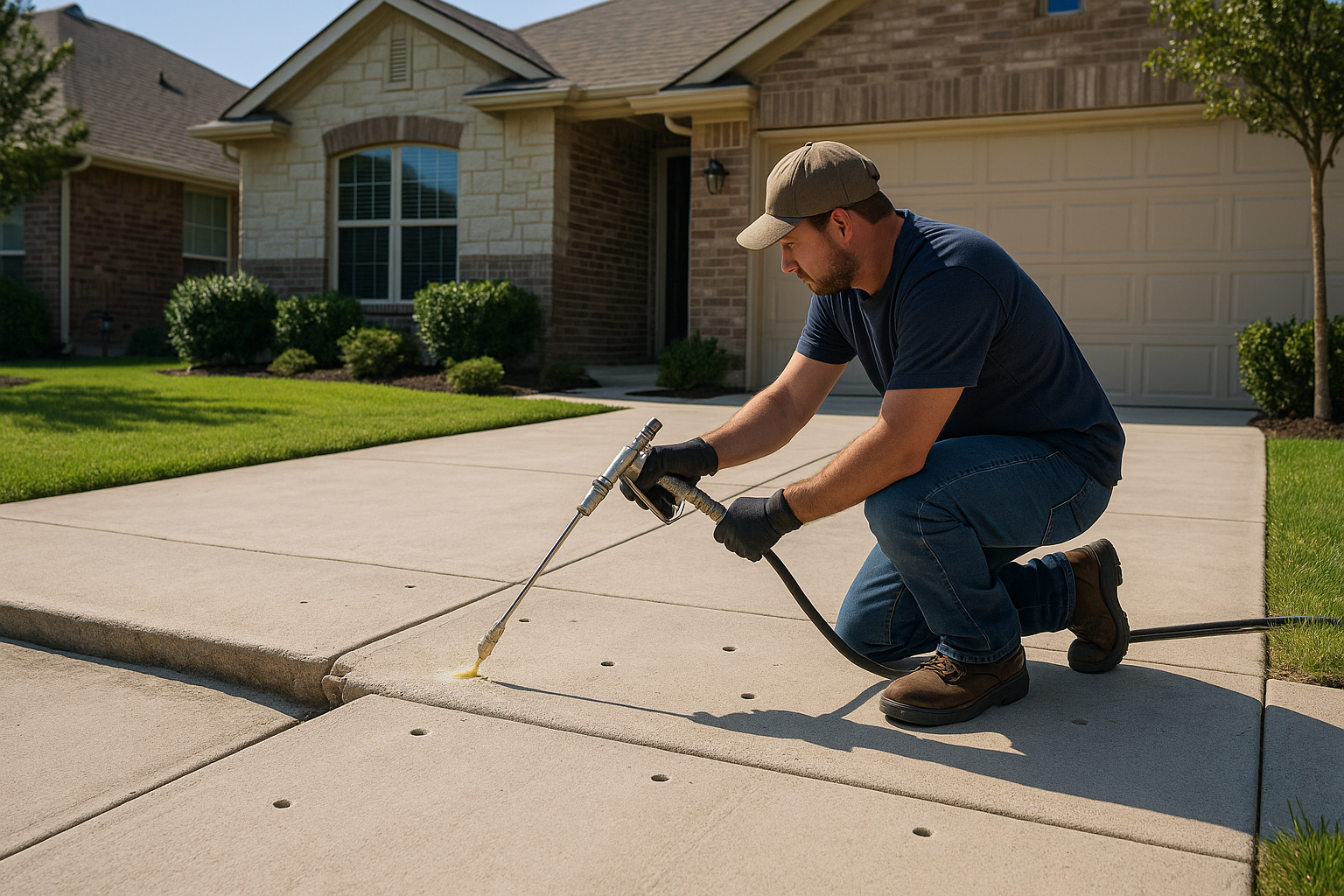
Concrete driveway lifting is a repair process that raises settled slabs back toward their original height. Instead of removing the driveway, we drill small holes through the slab and inject material underneath it. In most modern residential repairs, that material is polyurethane foam. As the foam expands, it fills voids and gently lifts the concrete.
For Texas homeowners, this repair makes sense because so many driveway problems start below the slab, not in the concrete itself. Soil shrinks, washes out, or shifts. The slab loses support and settles. Lifting addresses that loss of support directly.
Compared to replacement, the advantages are pretty straightforward:
- Lower cost in many situations
- Faster turnaround, often in a matter of hours instead of days
- Minimal disruption to landscaping and adjacent flatwork
- Small injection holes instead of full demolition
- Driveway can often be used the same day
If you are comparing options, take a look at our Driveway Leveling and Concrete Slab Repair services. In many cases, a settled driveway panel is a repair problem, not a replacement problem.
Signs Your Driveway Needs Lifting Instead of Replacement
Not every bad-looking driveway is a total loss. A lot of homeowners assume cracks or settlement mean they need to start over, but that is not always true. The main question is whether the slab still has enough integrity to be lifted safely.
Here are some of the most common signs a driveway may be a good candidate for lifting:
- One slab has dropped lower than the slab beside it
- A lip has formed at a control joint or expansion joint
- Water puddles in low spots after rain
- Runoff drains toward the garage instead of away from it
- You see voids under the slab edge
- The concrete is mostly intact, with minor to moderate cracking
- The surface is sound but has become uneven over time
On the other hand, replacement may make more sense if the driveway is badly shattered, the concrete is crumbling, or there is severe surface deterioration from age and wear. We also pay close attention to joints. Good joint performance matters in Texas because slabs need room to move as temperatures swing. If you have open or failing joints, proper joint maintenance is part of protecting the repair. Learn more about expansion joints and joint sealing at sealmyjoints.com.
As a general rule, if the slab is solid and the issue is settlement, lifting is usually worth a hard look. Homeowners are often able to save thousands compared to replacement when the driveway can be restored instead of removed.
What Causes Driveways to Sink in Texas?
Texas is rough on concrete, and the reason usually starts with the soil. In Central Texas especially, we deal with expansive clays that swell when wet and shrink when dry. That constant movement creates trouble under driveways, sidewalks, patios, and foundations.
Expansive Clay Soil
Areas around Austin, Round Rock, Georgetown, Temple, and San Antonio are known for clay-heavy soils. During dry weather, that soil can pull away and leave gaps below the slab. When rain finally comes, the soil does not always settle back evenly. That is how one section ends up lower than the next.
Washout From Poor Drainage
Driveways also sink when water is allowed to run along the slab edges or through open joints. Heavy Texas storms can move a lot of water in a hurry. If downspouts discharge near the driveway, if the grade funnels runoff toward the slab, or if joints are open, water can carry fines out from under the concrete. Once that support is gone, settlement follows.
Drought and Heat
Extended drought is a major factor. A hot Texas summer can dry the soil hard enough to create voids under slabs. Then when the weather breaks and rain returns, the subgrade can shift again. That cycle is one reason concrete movement is so common here.
Inadequate Base Preparation
Sometimes the driveway problem started the day it was poured. If the base was not compacted well or the soil underneath was not prepared correctly, the slab is more likely to settle over time. We see this on older driveways and sometimes on newer construction where the flatwork was installed fast and the subgrade work was not what it should have been.
Tree Roots and Nearby Moisture Changes
Large trees can pull moisture from one side of a driveway and leave the moisture content uneven across the slab. That difference matters more in clay soil. One side stays supported, the other side drops, and now you have differential settlement.
That is why driveway repair in Texas cannot be treated like a one-size-fits-all job. You have to understand the local soils, weather patterns, and drainage conditions. The slab may be the symptom, but the ground underneath is usually the cause.
How Foam Driveway Lifting Works
Foam driveway lifting is a clean, efficient way to raise settled concrete. The process starts with evaluating the slab to make sure it is a good candidate. We check elevation differences, cracking, joint condition, drainage, and likely void areas underneath.
- Small holes are drilled through the affected slab sections.
- Polyurethane foam is injected beneath the concrete.
- The foam expands to fill voids and apply upward pressure.
- The slab is lifted carefully to improve level and reduce trip hazards.
- The holes are patched and the area is cleaned up.
The big advantage of foam is control. The material is lightweight, strong, and sets quickly. That allows for precise adjustments without adding a lot of weight to already unstable soil. For many driveways, repairs can be completed in a few hours, and vehicles can often return to service the same day.
Cost depends on how many panels are involved, how far the slab has settled, how accessible the area is, and how much void fill is needed. But in many residential cases, driveway lifting is substantially less expensive than replacing the slab. Replacement usually means demolition, haul-off, forming, pouring, finishing, curing time, and often more disruption to the property. Lifting skips most of that.
That said, lifting is not magic. It works best when the concrete still has life left in it. If your driveway is heavily broken apart, scaling badly, or failing across multiple sections, replacement may be the smarter long-term move. A good contractor should tell you that straight.
Why Texas Homeowners Choose Lifting First
Most folks are not looking for the most dramatic repair. They want the one that makes sense. If the slab can be saved, lifting is usually the practical first option. You avoid tear-out, protect the look of the existing driveway, and deal with the settlement before it gets worse.
We also tell homeowners not to ignore the cause. If drainage is pushing water under the slab, that needs to be corrected. If joints are open, they need attention. If the surrounding grade is wrong, it should be improved. The best repair is not just getting the slab up. It is helping it stay there.
In Texas, timing matters too. Waiting on a settled driveway can lead to bigger vertical displacement, more cracking, and more water intrusion under the slab. What starts as a liftable section can become a replacement job if it is left alone too long.
Get an Honest Answer Before You Replace Your Driveway
If your concrete is sinking but not destroyed, there is a good chance lifting can solve the problem without a full replacement. At Hill Country Slabs, we help homeowners across Central Texas figure out whether foam lifting is the right fix and what conditions need to be addressed around the slab.
If you are seeing uneven panels, pooling water, or trip hazards in your driveway, contact us for a straightforward evaluation. Visit /contact or call (737) 287-4308 to talk with Hill Country Slabs about concrete driveway lifting in Texas.