If you manage a retail center, office building, warehouse, school, or church in Texas, uneven concrete is not something you can ignore for long. One lifted sidewalk panel or a sunken loading area can turn into a trip hazard, a drainage problem, and a liability issue all at once. Commercial concrete leveling in Texas gives property owners a way to correct settled slabs without tearing everything out and starting over.
At Hill Country Slabs, we work with Texas property owners who need practical repairs that hold up in real-world conditions. Around Austin, San Antonio, and surrounding areas, concrete movement is common because of shifting clay soils, long dry spells, sudden heavy rain, and heat that beats on slabs month after month. In a lot of cases, lifting and stabilizing the slab is faster and more cost-effective than replacement.
What Is Commercial Concrete Leveling?
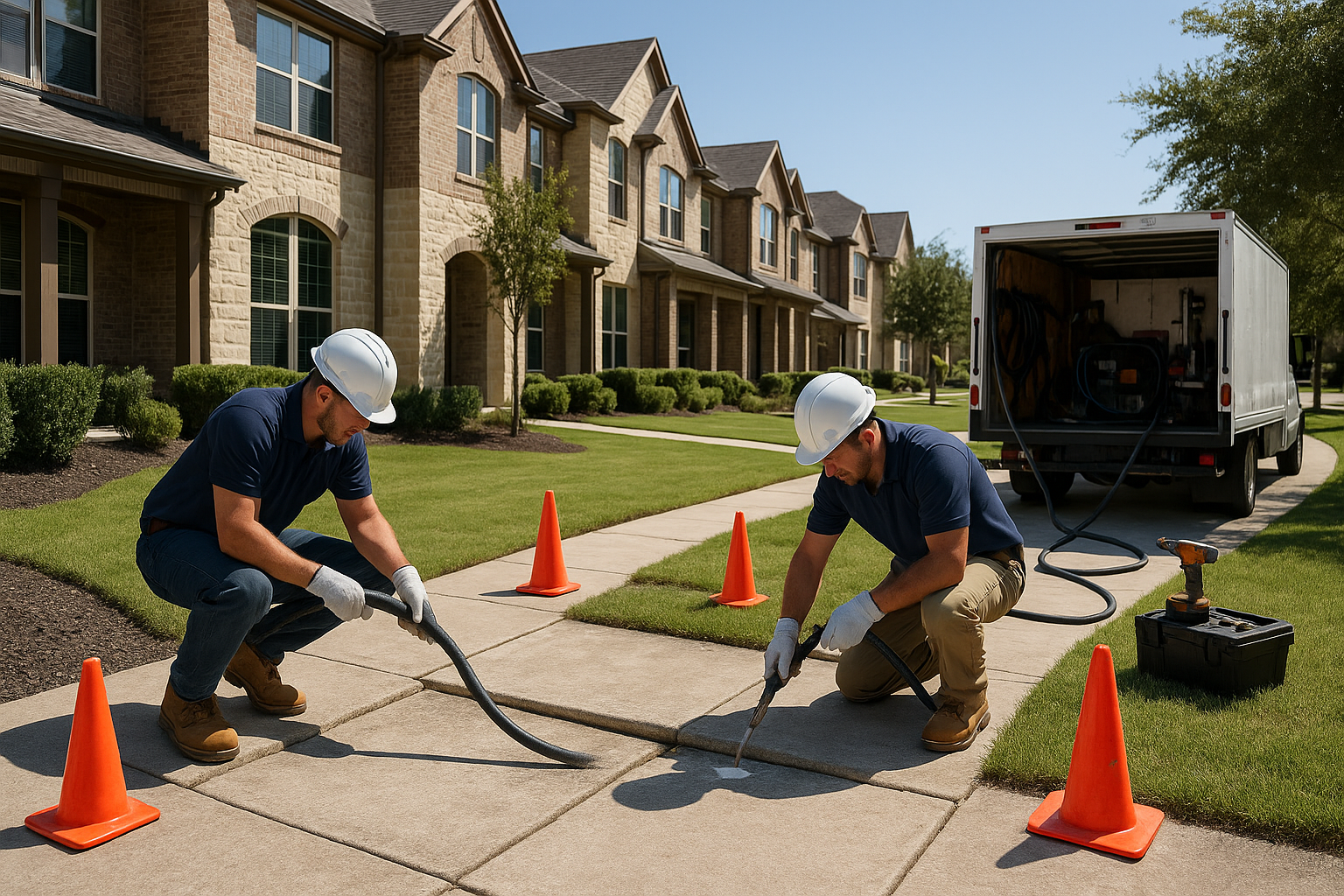
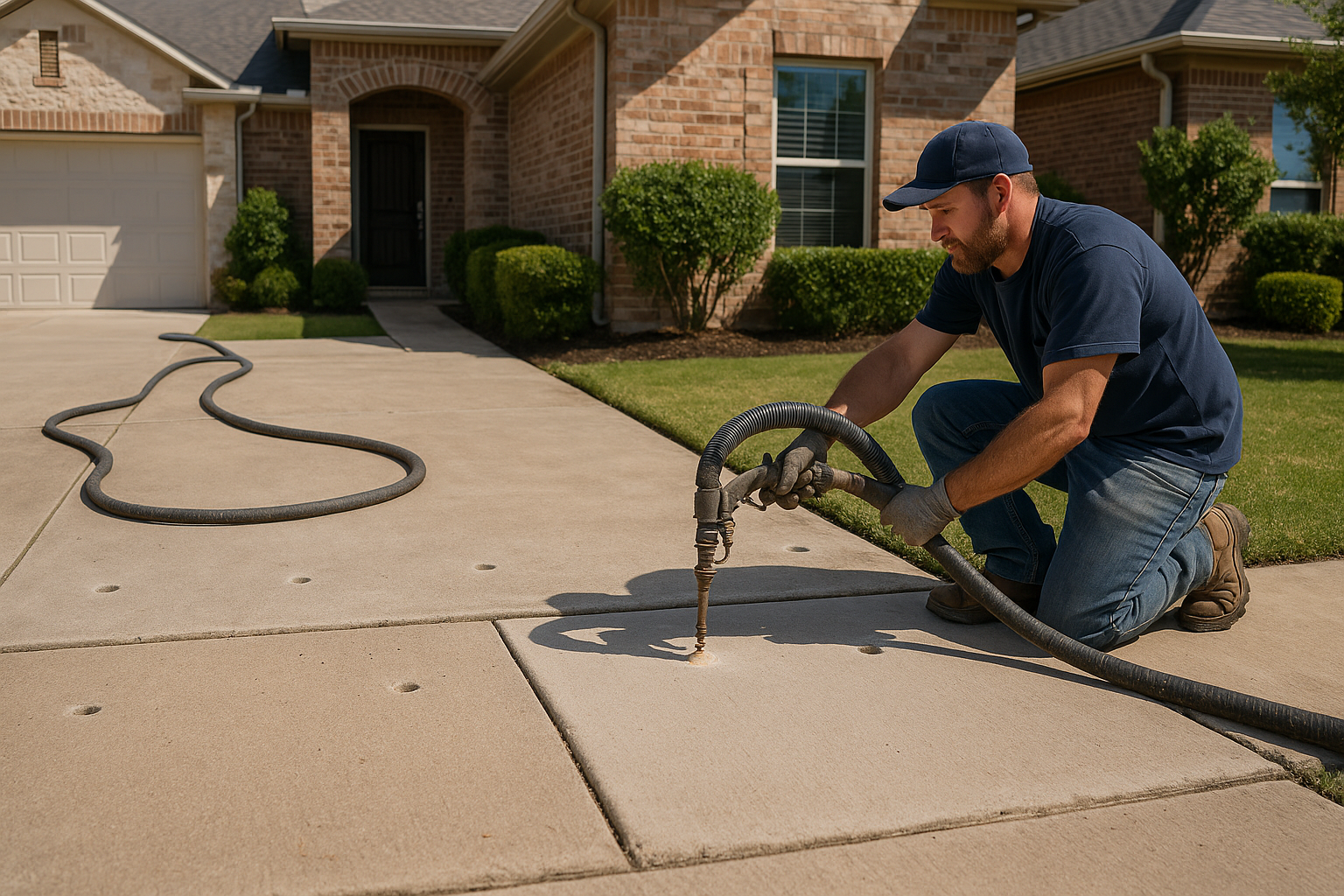
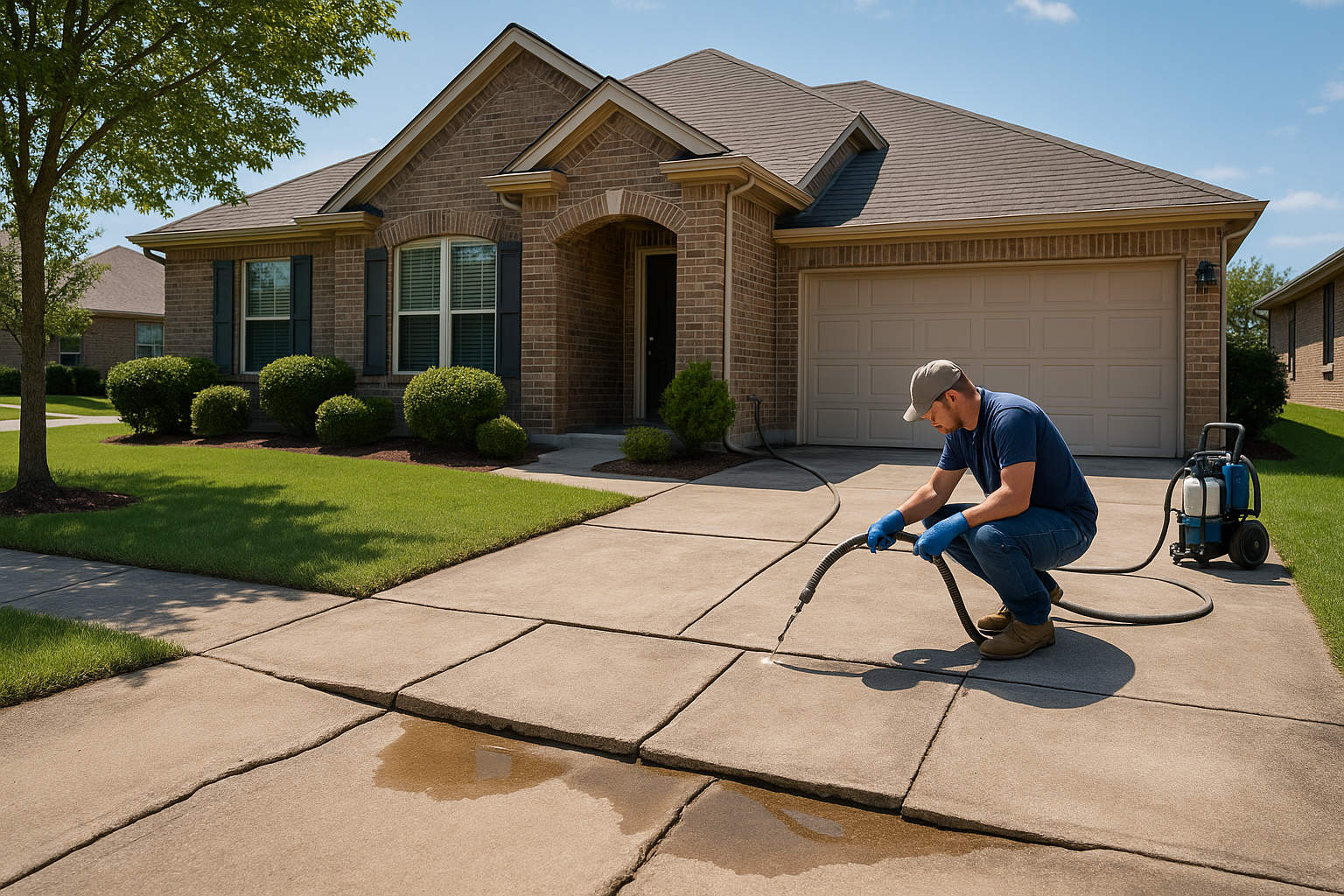
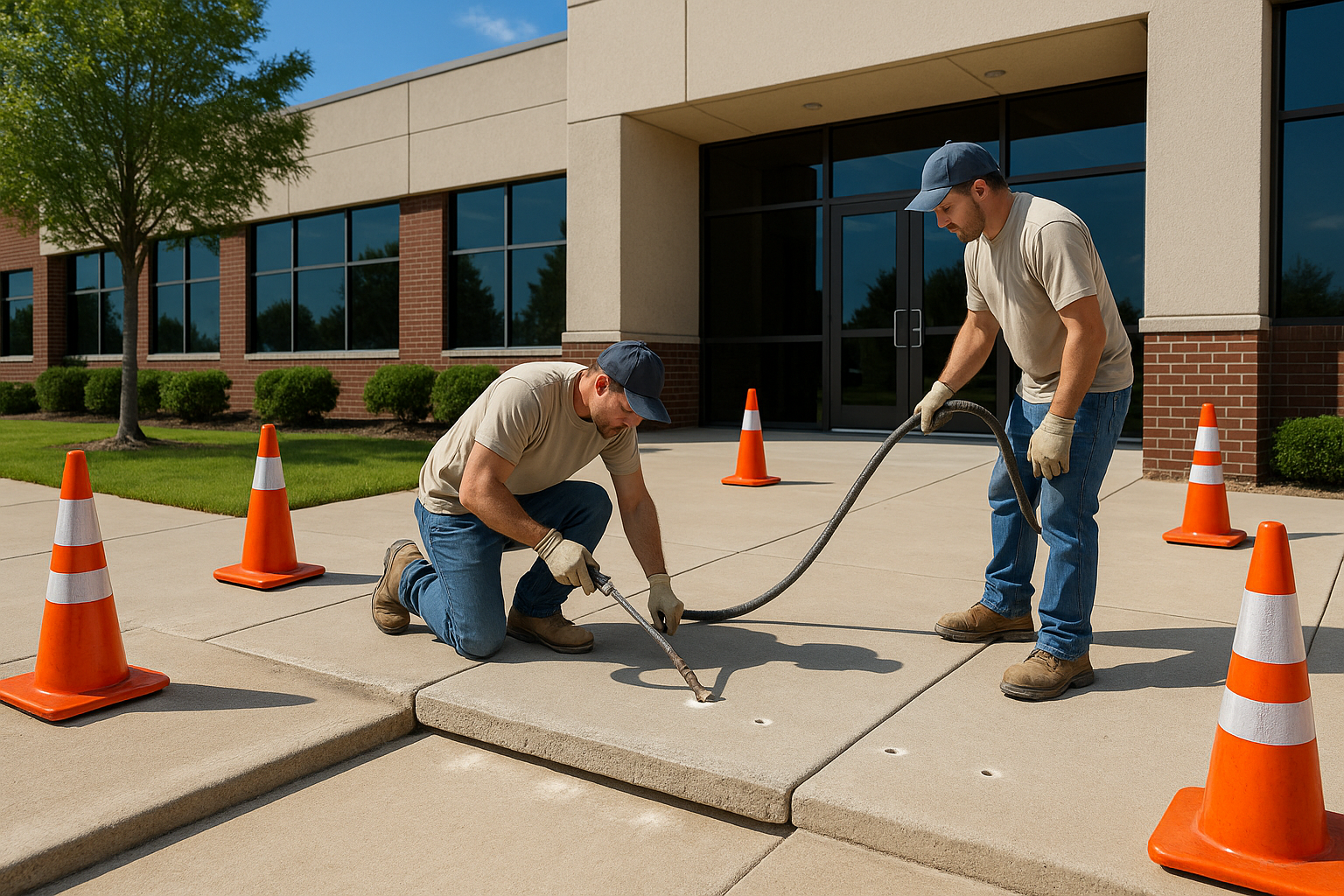
Commercial concrete leveling is the process of raising settled concrete back toward its proper elevation. Instead of demolishing the slab, small holes are drilled through the concrete and a lifting material is injected below it. As that material fills voids and applies pressure, the slab comes back up in a controlled way.
For many commercial jobs, polyurethane foam is the preferred option because it is lightweight, precise, and cures fast. That matters when you have customers, tenants, employees, delivery drivers, or residents using the property every day. In the right conditions, a walkway, approach, or entry can often be returned to service the same day.
Leveling can be used on a range of surfaces, including:
- Sidewalks and pedestrian routes
- Office and retail entryways
- Warehouse floors and aprons
- Loading dock approaches
- Parking lot panels
- Dumpster pads and service areas
- School and church walkways
- Multifamily common areas
Not every slab is a good candidate for lifting. If concrete is badly shattered, washed out beyond repair, or has major structural failure, replacement may still be the better route. But when the slab is generally intact and the main issue is settlement, leveling is often the smarter play.
If you are comparing options for broader site work, take a look at our Commercial Concrete and Concrete Slab Repair services.
Signs Your Property Needs Concrete Lifting
Most commercial slab problems do not show up overnight. They usually start small, then get worse as water gets under the concrete and the supporting soils continue to move. Texas expansive clay is a big part of that story. In Central Texas and South Texas, you will see a lot of clay-heavy soils that shrink in drought and swell when rain returns. That constant cycle leaves voids, shifts support, and puts concrete out of level.
Here are some common signs your property may need commercial concrete leveling:
- Trip hazards at joints where one panel sits higher or lower than the next
- Standing water near entrances, sidewalks, or service areas after rain
- Sunken sections at ramps, approaches, or walkways
- Gaps under slabs caused by erosion or soil movement
- Cracking that follows settlement rather than surface-only shrinkage
- Loose or separated joint sealant that lets in more water
- Complaints from tenants, visitors, or staff about uneven walking surfaces
Some of the worst settlement problems start with bad drainage. When roof runoff, irrigation, or poorly directed surface water keeps saturating the soil along a building edge, the slab support starts changing. In other cases, drought pulls moisture out of the soil and the ground contracts. Then a hard Texas rain hits, and movement shows up fast.
Joint condition matters too. If your expansion joints are missing, dried out, or split open, water has an easy path under the slab. That is why we tell commercial owners to look at prevention as well as repair. Learn more about protecting slab edges and joints at /expansionjoints and at sealmyjoints.com.
Why Texas Businesses Choose Foam Leveling
We talk to a lot of property managers and facility teams who assume replacement is their only option. In plenty of situations, it is not. Foam leveling is popular because it addresses settlement while avoiding the mess, downtime, and cost that come with full demo and re-pour work.
1. Faster turnaround
For an active commercial property, time matters. Tearing out and replacing concrete can mean closures, barricades, noise, haul-off, forming, pouring, and cure time. Foam lifting is usually much quicker. Many projects can be completed in hours instead of days, and the slab is often ready for use the same day.
2. Lower overall cost
In many cases, commercial concrete leveling costs 30% to 70% less than replacement, depending on slab condition, access, and scope. You are not paying for full demolition, export, new concrete placement, and extended downtime. For budget-conscious commercial owners, that can make a big difference.
3. Less disruption to business
For shopping centers, medical offices, apartment communities, and industrial sites, shutting down access is expensive and frustrating. Leveling allows targeted repair with a smaller work footprint. That means fewer disruptions for foot traffic, deliveries, and daily operations.
4. Better performance in settled areas
Polyurethane foam is lightweight, which helps reduce additional stress on weak subgrade. It can fill voids and help stabilize support beneath the slab. On Texas properties where erosion or shrink-swell soil movement has created hidden empty space, that matters.
5. Cleaner repair process
The injection holes used for foam leveling are small, and the jobsite is generally cleaner than full replacement. That is a practical advantage at office entries, storefront sidewalks, and occupied commercial spaces where appearance matters.
In areas like Austin and San Antonio, we also see foam leveling chosen because it helps owners respond faster to liability issues. If a raised edge is creating a known trip hazard, waiting weeks for a replacement schedule is not always realistic. A fast lifting repair can reduce risk sooner.
How Commercial Concrete Repair Minimizes Downtime
Downtime is where repair decisions really hit the bottom line. A bad sidewalk at a restaurant, office, hotel, or retail entrance affects more than appearance. It affects access, safety, and customer experience. The same goes for loading zones, service drives, and common-area walkways.
A commercial concrete repair plan should do three things: fix the immediate elevation problem, address the cause of movement, and keep the area usable as much as possible. Leveling checks those boxes better than replacement in a lot of situations.
- Site review and planning
We start by looking at slab condition, elevation change, drainage, nearby structures, and signs of voids or soil movement. We want to know whether lifting is a good fit and what caused the settlement in the first place.
- Controlled lifting
Small holes are drilled and foam is injected under the slab in stages. The goal is controlled movement, not overcorrection. On commercial work, accuracy matters because doors, curbs, ramps, and adjacent panels all have to tie together properly.
- Limited closure area
Because the work is targeted, closures can often be limited to the affected section instead of a whole frontage or access lane. That helps properties stay operational.
- Fast return to service
Foam cures quickly, so many slabs can handle traffic the same day. That is a major difference from replacement, where cure schedules can drag out access issues.
- Follow-up prevention
Once the slab is back in place, drainage and joint sealing should be part of the conversation. If water keeps getting under the slab, the same problem can come back. Proper maintenance protects the repair.
Texas weather is hard on commercial concrete. Summer heat can be relentless. Drought cycles dry out subgrade soils. Thunderstorms dump a lot of water in a short time. In blackland prairie soils and other expansive clay zones, those swings are especially rough on slab support. That is why a quick cosmetic patch is usually not enough. You need a repair that deals with settlement and the conditions causing it.
Property owners also need to think about exposure. Uneven concrete at a commercial site is not just an eyesore. It can lead to claims, complaints, accessibility concerns, and maintenance headaches. Getting ahead of the issue is usually cheaper than waiting until the slab drops more or breaks apart.
What Commercial Properties in Texas Benefit Most?
We see the biggest demand for commercial concrete leveling from properties that cannot afford long closures or ugly demolition work in front of customers. That includes:
- Retail centers and strip malls
- Office complexes
- Industrial facilities and warehouses
- Schools and daycare facilities
- Churches and community buildings
- HOA and multifamily properties
- Medical and professional offices
- Hotels and hospitality sites
If the slab is stable enough to lift and the problem is mainly settlement, leveling is often the fastest route to a safer surface. And compared to replacement, the savings can be significant when you factor in labor, haul-off, and operational disruption. On many jobs, owners are looking at a repair that is completed in one day and priced well below a full tear-out.
Final Thoughts on Commercial Concrete Leveling Texas
Commercial concrete leveling in Texas is about more than making a slab look even again. It is about reducing liability, keeping properties accessible, and avoiding unnecessary replacement costs. With the way Texas clay soils, heat, and storm cycles affect concrete, settled slabs are common. The good news is that many of them can be lifted and stabilized without shutting down the property for days.
If you have uneven sidewalks, sunken entry panels, or settled commercial flatwork, Hill Country Slabs can take a look and tell you whether leveling is the right fix. We serve commercial properties across Central Texas, including Austin and San Antonio. To schedule an evaluation, contact us or call (737) 287-4308.