If you own a home in Texas, your driveway takes a beating. Between long dry spells, heavy rains, shifting soils, and summer heat, it does not take much for a concrete driveway to start cracking, sinking, or pulling apart at the joints. The good news is you do not always need to tear it out and start over. In a lot of cases, concrete driveway repair in Texas costs far less than full replacement and can restore both the look and function of the slab.
At Hill Country Slabs, we see these problems every week in Austin, Round Rock, and surrounding Central Texas communities. Some driveways settle near the garage. Others drop at the street approach. Some start with a hairline crack and turn into a trip hazard after one wet season and one hot summer. Knowing what caused the damage helps determine whether the slab can be repaired, lifted, sealed, or whether replacement is the better call.
Below, we will walk through the most common warning signs, what causes driveway damage in Texas, the repair options that actually work, and how to decide between repair and replacement.
Signs Your Concrete Driveway Needs Repair
Not every crack means your driveway is failing, but there are a few signs that tell you the slab needs attention before the damage spreads.
- Sections of the driveway are sinking or uneven
- Cracks are widening or beginning to separate vertically
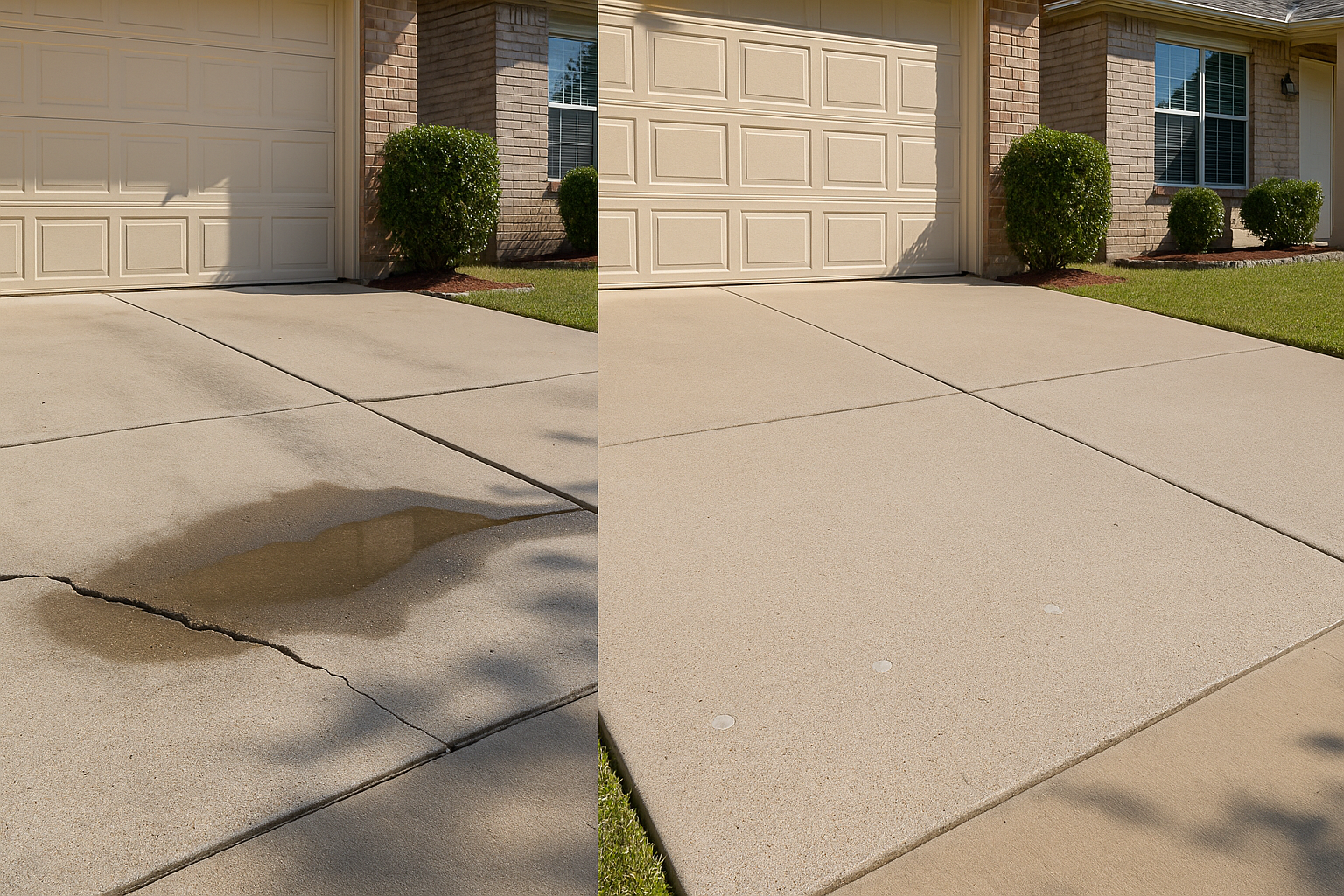
- Water pools on the surface after rain
- The slab has dropped near the garage, sidewalk, or curb
- Expansion joints are broken down or missing
- One wheel path is lower than the rest of the slab
- The driveway has become a trip hazard or scrapes low vehicles
In Texas, minor problems tend to get worse fast. A slab that is just a half inch low today may be more than an inch low after another season of expansion and contraction. Water gets into the cracks, runs under the concrete, and softens the supporting soil. Once that base starts moving, the slab follows.
If your driveway is mostly intact but has settlement or isolated cracking, repairs like Driveway Leveling or Concrete Slab Repair are often the most practical solution. These repairs are usually faster, less disruptive, and more affordable than replacing the entire driveway.
What Causes Driveway Damage in Texas?
Texas concrete fails for Texas reasons. The biggest one is soil movement. Much of Central Texas sits on expansive clay soils that swell when wet and shrink when dry. That constant cycle puts stress on the slab and the base underneath it.
Expansive Clay Soils
In areas around Austin, Round Rock, Georgetown, Temple, San Marcos, and other parts of the Hill Country and I-35 corridor, clay-heavy soils are common. These soils can move a lot from season to season. During drought, they shrink and pull away. During heavy rain, they swell and create pressure under or around the slab. That movement is a major reason driveways crack, tilt, or sink.
Washout From Rain and Drainage Problems
Texas storms can dump a lot of water in a short time. If downspouts discharge next to the driveway, or if the grade sends water underneath the slab, the supporting base can wash out. Once voids form, the concrete loses support. That is when you start seeing corners drop, panels rock under pressure, or sections settle near the garage apron.
Extreme Heat and Sun Exposure
Texas summers are hard on concrete. Heat alone may not ruin a slab, but it speeds up drying, joint breakdown, and surface stress. If the slab was poured without proper joint spacing, base prep, or reinforcement, the heat makes those weaknesses show up quicker.
Tree Roots and Nearby Landscaping
Large trees can cause trouble in two ways. Roots may push against the concrete from below or along the edges, and the tree itself can pull moisture out of the soil unevenly. That leaves one part of the driveway stable and another part moving. Over time, that uneven moisture pattern can create cracks and height changes.
Heavy Vehicle Loads
Not every residential driveway is built for work trucks, trailers, or repeated heavy parking. If the concrete is thin or the base was not compacted properly, the slab can start settling in the wheel paths. Once one section drops, more stress gets transferred to the surrounding concrete.
Repair Options for Cracked or Sunken Driveways
The right repair depends on the type of damage. The goal is not just to make the driveway look better. It is to stabilize the slab, address the cause, and help prevent the same issue from coming right back.
Polyurethane Foam Leveling
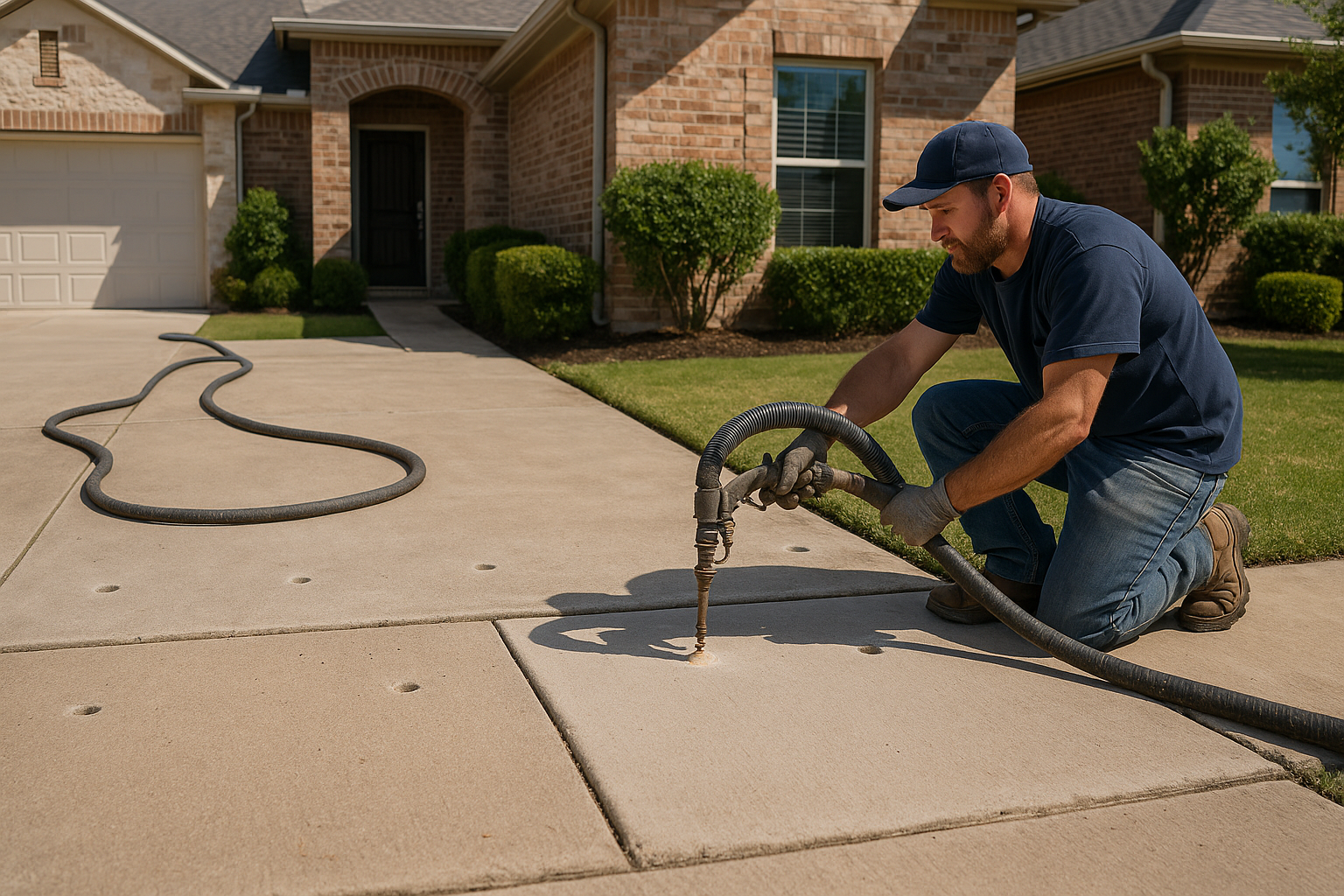
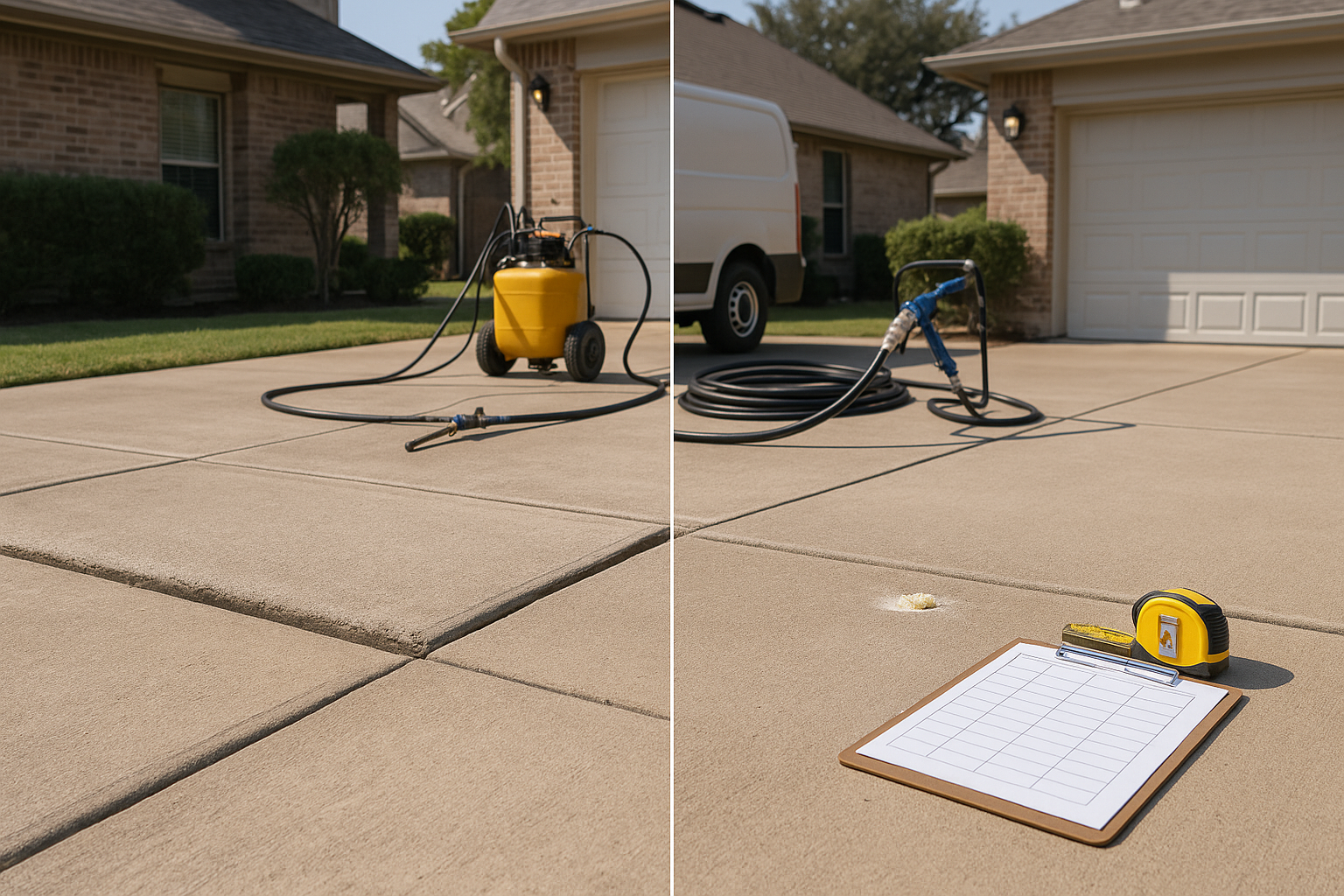
For sunken concrete, polyurethane foam leveling is one of the best repair methods available. Small holes are drilled through the affected slab, and a structural foam is injected underneath. The foam expands, fills voids, and lifts the concrete back toward grade.
This works well when the slab is structurally sound but has settled because of weak or washed-out soil support. It is commonly used for driveway panels that have dropped near a garage, sidewalk connection, or curb.
Foam leveling usually costs much less than replacement, and the driveway can often be used again the same day. It also avoids the mess and downtime of demolition.
Crack Repair and Joint Sealing
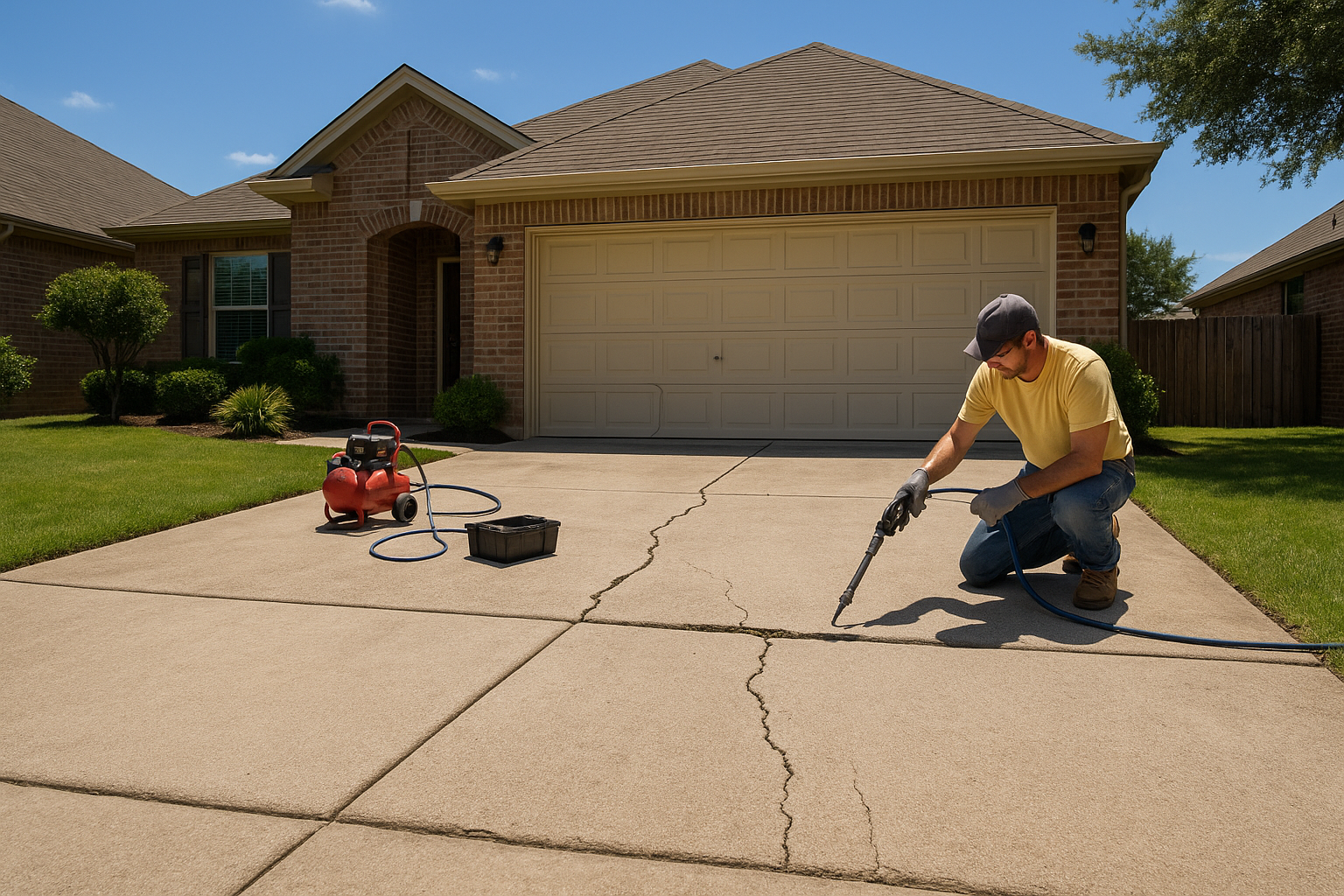
Cracks and open joints let water under the slab. In Texas, that is where small problems become bigger settlement issues. Sealing joints and cracks helps keep water out and protects the base.
If your driveway joints are open, brittle, or missing sealant, this is worth addressing early. Learn more about protecting slab gaps and movement areas at /expansionjoints. For joint sealing materials and maintenance guidance, visit sealmyjoints.com.
Joint and crack sealing is one of the lowest-cost repairs you can make, especially compared to the cost of slab replacement after continued water intrusion.
Surface Patching for Minor Spalls and Edge Damage
If the surface is flaking, chipped, or damaged at the edges, patching may help cosmetically. That said, patching is not a fix for active movement. If the slab is still sinking or shifting, the patch will usually fail. Surface repairs make the most sense after the underlying support problem has been corrected.
Drainage Corrections
A lot of driveway problems are really drainage problems. If water is dumping off the roof next to the slab, flowing back toward the garage, or running beneath the driveway from the yard, that needs to be corrected. Downspout extensions, grading changes, and better runoff control can make a big difference in how long a repair lasts.
Partial Replacement
When one panel is broken beyond repair but the rest of the driveway is in decent shape, partial replacement may be an option. This can work if the damaged section is isolated and the base conditions are addressed first. It is not always the prettiest option, but it can be a practical middle ground between repair and full replacement.
When to Repair vs Replace a Concrete Driveway
This is the question most homeowners ask first. The honest answer is it depends on the condition of the slab. We always tell people to repair what can reasonably be saved and replace what cannot.
Repair Makes Sense When
- The slab is mostly intact
- The damage is limited to settlement, isolated cracks, or open joints
- The concrete still has decent surface condition
- The height difference can be corrected with lifting
- You want the lower-cost option with less downtime
In many cases, repair is the smart move because it can cost a fraction of full replacement. If the slab has good bones, lifting and sealing can buy you years of additional service life.
Replacement Makes Sense When
- The driveway has severe structural cracking throughout
- Multiple panels are shattered or badly heaved
- The concrete is at the end of its life across the entire surface
- The base failure is widespread
- You are changing the layout, width, or thickness of the driveway
If more of the driveway is broken than sound, replacement may be the better investment. The key is making that decision based on actual slab condition, not just appearance.
A homeowner in Austin with one settled driveway panel near the garage likely does not need a whole new driveway. A property in Round Rock with widespread cracking, drainage washout, and multiple failed sections may be a different story. Texas driveways fail in different ways, and the repair plan needs to match the cause.
What Texas Homeowners Should Do First
- Look for trip hazards, pooling water, and dropped sections.
- Check whether cracks are active or if the slab has vertical separation.
- Inspect joints to see if they are open and allowing water below the slab.
- Pay attention to drainage around the driveway and garage.
- Get the slab evaluated before the damage spreads.
The longer you wait, the more likely a repair turns into a larger project. A driveway that can be lifted and sealed today may need partial replacement later if water keeps washing out the base.
At Hill Country Slabs, we help Texas homeowners figure out whether their driveway can be repaired, leveled, or needs replacement. We focus on practical solutions that fit Texas soil, Texas weather, and the way slabs actually behave here.
If your driveway is cracked, sinking, or uneven, contact Hill Country Slabs for an evaluation. We serve homeowners across Central Texas and can help you determine the most cost-effective next step. Visit /contact or call (737) 287-4308 today.